Last week, a lawyer from Bangalore was thrown out of a television news channel debate when he questioned the “constitutionality” of Indian soldiers shouting “Bholo Bharat Maata Ki Jai” during the Prime Minister’s visit to Ladakh. I made some research on this. Hence this write-up.
Article 1 of the Constitution of India which deals with ‘Name and territory of the Union’ reads as under:
“India, that is Bharat, shall be a Union of States.”
Perhaps the first reference to Bharata is found in Vishnu Purana (400-300 BC). A Sanskrit shloka reads thus;
उत्तरंयत्समुद्रस्यहिमाद्रेश्चैवदक्षिणम्।
वर्षंतद्भारतंनामभारतीयत्रसंततिः।।
This shloka means: “The country (Varsam) that lies north of the ocean and south of the snowy mountains is called Bharatam; there dwell the descendants of Bharata.
The Bharat Empire i.e.Bharatvarsha originally included the present day of Pakistan, Afghanistan, China, Iran, Tajikistan, Uzbekistan, Kyrgyzstan, Russia, Turkmenistan, North-West Tibet, Nepal and Bangladesh.
In ‘The Discovery of India’, a book that he composed in the Ahmednagar Fort during his years of captivity (1942-1946) and published in 1946, Pandit Jawaharlal Nehru (1946: 38-39) wrote:
“Often, as I wandered from meeting to meeting, I spoke to my audiences of this India of ours, of Hindustan and of Bharata, the old Sanskrit name derived from the mythical founders of the race.”
When ‘The Discovery of India’ was published, these names, Hindustan, Bharat (also Bharata), India, coexisted in the subcontinent. The constant usage also was ‘Jai Hind’ by Nehru and several other political leaders who liked to proclaim “Jai Hind” at the end of speeches.
Historians believe it was during Moghul rule rather than during British rule, when India was called Hindustan. This led to political and cultural unity of Bhārata, allowing Indians to develop a complete sense of belonging together, irrespective of their religions.
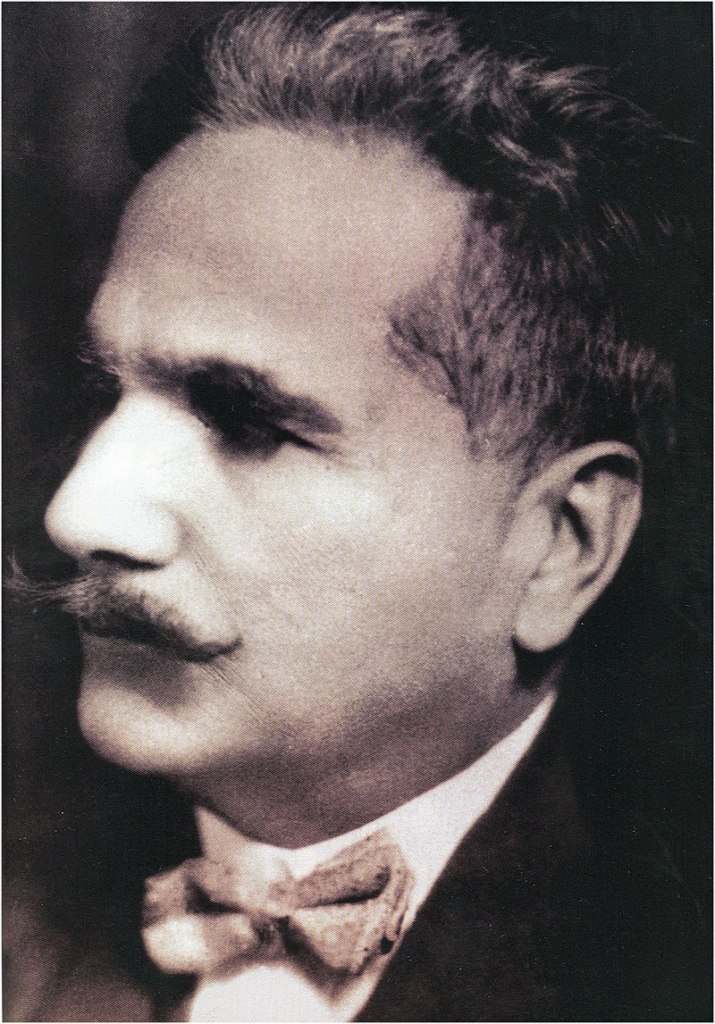
The name Hindustan got its proudest moment when in 1904 Sir Allama Muhammad Iqbalpenned his famous patriotic poem “Sāre jahāṉ se acchā, Hindositāṉ hamārā”. Sir Allama Muhammad Iqbal was a poet, philosopher, theorist, and barrister in British India. He is held as the national poet of Pakistan.
Sir. Allama Muhammad Iqbal (1877-1938)
The Constituent Assembly on 29 August 1947 constituted the Constitution Drafting Committee under the Chairmanship of Dr. B.R. Ambedkar. From February 1948 to November 1949, the members of the Constituent Assembly examined the draft, moving and discussing in the process almost 2,500 amendments.
On 26 November 1949, we finally adopted the Constitution of India and signed it on 24 January 1950. On 26 January 1950, the Constitution of India officially came into force, and the Constituent Assembly became the Provisional Parliament of India until the first general elections of 1952. It was Dr. Ambedkar who favoured the name Bharat and wanted Constituent Assembly to adopt Article 1 without much debate. However the name was approved after prolonged debates among the members of the Constituent Assembly.
So, four years after the publication of Nehru’s Discovery of India, the drafters of the Constitution decided to write “India, that is Bharat, shall be a Union of States”. The alternative Article “Hind, or, in the English language, India, shall be a Union of States” was not accepted.
The last speech ofShri Hargovind Pant on this issue is memorable. Let me extract it in full.
“Mr. President, during the early sittings of the Assembly I had moved an amendment to the effect that for the name of the country, we should have the word “Bharat” or “Bharat Varsha” in place of ‘India’. I am gratified to see that some change in the name has at last been accepted. I, however, fail to understand why the word ‘Bharat Varsha’ is not acceptable to the House when the importance and glory of this word is being admitted by all here. I do not want to repeat what the other Members have said in regard to the acceptance of this glorious word, but I would make only a few observations in respect of this word.
‘The word “Bharat” or “Bharat Varsha” is used by us in our daily religious duties while reciting the Sankalpa. Even at the time of taking our bath we say in Sanskrit:
It means that I so and so, of Aryavart in Bharat Khand, etc………..
The most celebrated and word-famous poet Kalidasa has used this word in his immortal work depicting the story of his two great characters-King Dushyanta and his queen Shakuntala. The son born of them was named ‘Bharat’ and his Kingdom was known as “Bharat”. There are many fascinating descriptions of the heroism of Bharat in our ancient books. It is said that in his childhood he used to play with lion cubs and overpowered them. We are well acquainted with the story of Bharat. I fail to understand, in view of all this, why we are reluctant to accept, from the core of our heart the word ‘Bharat Varsha’ as the name of our country,
So far as the word ‘India’ is concerned, the Members seem to have, and really I fail to understand why, some attachment for it. We must know that this name was given to our country by foreigners who having heard of the riches of this land were tempted towards it and had robbed us of our freedom in order to acquire the wealth of our country. If we, even then, cling to the word ‘India’, it would only show that we are not ashamed of having this insulting word which has been imposed on us by alien rulers. Really, I do not understand why we are accepting this word.
‘Bharat’ or ‘Bharat Varsha’ is and has been the name of our country for ages according to our ancient history and tradition and in fact this word inspires enthusiasm and courage in its; I would, therefore, submit that we should have no hesitation at all in accepting this word. It will be a matter of great shame for us if we do not accept this word and have some other word for the name of our country. I represent the people of the Northern part of India where sacred places like Shri Badrinath, Shri Kedarnath, Shri Bageshwar and Manasarovar are situated. I am placing before you the wishes of the people of this part. I may be permitted to state, Sir, that the people of this area want that the name of our country should be ‘Bharat Varsha’ and nothing else.”
Shri. Hargovind Pant 1855-1957
Mahatma Gandhi preferred Vande Mataram, which is part of Bankim Chandra’s novel Anandmath published in 1882.
Bharath Matha: It is interesting to note that almost all countries call their Homeland as ‘Motherland’. Only Nazis called their land as ‘Fatherland’. Russians refer to Mother Russia as a personification of the Russian nation. Within the British Empire, many natives in the colonies came to think of Britain as the mother country of one, large nation. India is personified as Bharat Mata i.e. Mother India. The French commonly refer to France as “la mère patrie”. Hispanic Americans and 19th century-upper-class-Filipinos, commonly referred to Spain as “la Madre Patria”. Romans and the subjects of Rome saw Italy as the motherland. “Fatherland” was mostly featured in news reports associated with Nazi Germany.
The word “Bharat” has a primary place in the foundational document of this nation i.e. the Constitution of India, in the very first article. The insertion was after much debate and discussion by some of the greatest legal/constitutional minds.
Indians calling their homeland as motherland has naturally made the slogan “Bharath Matha Ki Jai” a patriotic gesticulation.
Proclaiming “Bharath Matha Ki Jai” by citizens and soldiers is part of our constitutional spirit. Nothing can inspire a solider in the frontline than proudly shouting this slogan.
The controversy over this issue is the result of half-baked knowledge of lawyers participating in serious debates. This needs to be avoided and curbed.
S.Basavaraj, Advocate, Daksha Legal, Member, Karnataka State Bar Council, 9845065416
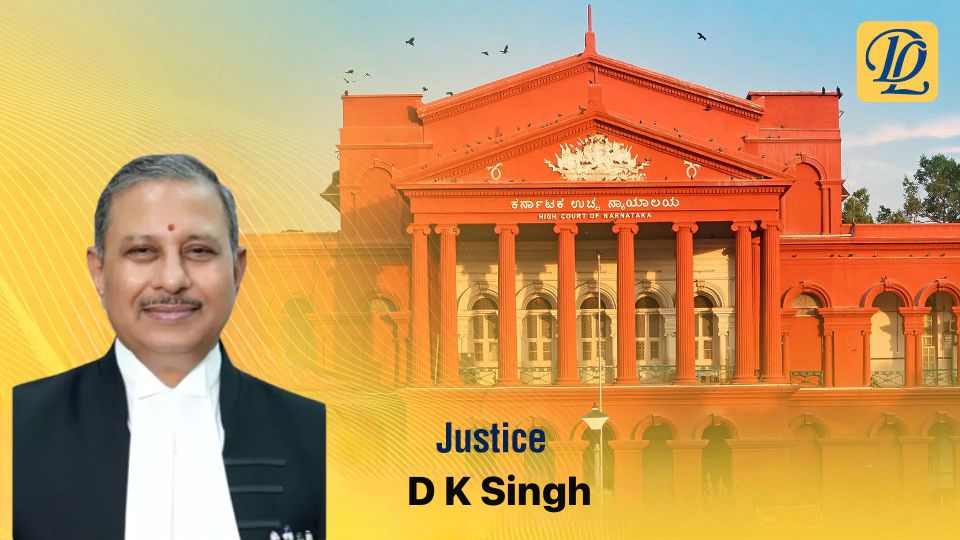
Hon’ble Mr. Justice D K Singh celebrates his 60th birthday today.
Hon’ble Mr. Justice D K Singh: Born to late Guru Prasad Singh and Phool Kunwar on 18.08.1966 at Lucknow, Uttar Pradesh. Did intercollegiate education in Sri Vidhya Mandir Inter College, Harimpur, U.P. obtained Bachelor’s Degree in Bipin Behari Degree College, Jhansi, U.P., Bachelor’s of Degree in Law from Allahabad University and LL.M. From Delhi University. Enrolled as an Advocate in the Bar Council of Delhi and set up legal practice in Allahabad High Court till 1997 and thereafter in Supreme Court from 1998 till the date of appointment, expertising in all matters including Constitutional, Administrative, Civil, Taxation, Arbitration and Criminal laws, was Additional Advocate General for State of Uttar Pradesh and Jharkhand till elevated to the Bench besides Senior Panel Counsel for Union of India.
On 22.09.2017 was appointed as an Additional Judge and took oath as Permanent Judge on 06.09.2019 and later on transferred as Judge of the High Court of Kerala w.e.f. 21.07.2023.
His Lordship was transferred as a Judge of Karnataka High Court and assumed office on 19.07.2025.
Important Judgements delivered by Hon’ble Mr. Justice D K Singh.
Land acquisition. A landowner who has unequivocally expressed ‘No Objection’ to the land acquisition proceedings and sought compensation is not entitled to subsequently seek deletion of their lands from the acquisition. The deletion of such lands cannot be justified on the principle of negative equality, especially when the land forms a large, compact, vacant block suitable for the layout, and any administrative order for deletion is without a proper BDA Board resolution. Karnataka High Court.
Labour Law. When a reinstatement award is passed in favor of a workman, and the implementation of that award is subsequently stayed by an appellate court upon the employer’s challenge, the principle of ‘no work no pay’ will not apply for the period the stay order was in operation, as the workman was prevented from working due to the employer’s legal challenge. Karnataka High Court.
A lease renewal or extension clause is not absolute and cannot be specifically enforced where it expressly makes renewal subject to the lessor’s consent. If the landlord refuses consent after the original term expires, the tenancy lawfully ends and the tenant’s continued possession becomes unlawful. Karnataka High Court.
NICE Project. Karnataka Industrial Areas Development Act. Even in the absence of an express ‘lapsing’ provision, the admitted failure on the part of the authorities to pass the awards for many decades coupled with the absence of any satisfactory explanation for such an inordinate delay renders the land acquisition proceedings unsustainable. Karnataka High Court.
Though a Lokayukta report is not a decree, it becomes binding on statutory authorities once affirmed by the High Court and the Supreme Court. Karnataka High Court deprecates the BDA for violating the rules and depriving a landowner of his right of way to benefit a real estate developer, in disregard of the affirmed Lokayukta report.
Land Acquisition. Principles of res judicata, doctrine of merger, and finality of litigation do not apply when a transaction, administrative action, or judicial decree is subsequently discovered to be tainted by fraud, suppression of material facts, or manipulation of official records. Karnataka High Court quashes the land acquisition proceedings after 37 years.
Adverse Possession. Possession that originates under an agreement of sale or any other permissive or derivative arrangement cannot ripen into adverse possession unless the occupant clearly, unequivocally, and hostilely repudiates the true owner’s title, and such repudiation is brought to the owner’s knowledge. Karnataka High Court.
Hindu Law. When a Mitakshara Hindu father partitions his self-acquired property among his sons, the shares allotted to the sons become their separate and absolute properties. Such property does not acquire the character of ancestral or coparcenary property in the hands of the sons with reference to their own children. Karnataka High Court.
Specific performance. While there is a general presumption that time is not of the essence, this presumption stands rebutted where the parties, by express terms of the contract, employ clear, unambiguous, and unequivocal language indicating their intention to prescribe a definite and mandatory period for performance. Karnataka High Court.
The Courts and Tribunals have inherent power to recall their own orders or judgments if those orders were obtained by fraud, even when statutory review is not available or has been exhausted in the earlier round of litigation. Karnataka High Court.
Land acquisition process initiated by the State for the benefit of a non-existent legal entity is void ab initio and constitutes a ‘statutory and constitutional fraud.’ Karnataka High Court orders criminal investigation by the CBI while quashing the acquisition.
BDA Act. Development scheme does not lapse if it has been substantially implemented. Where possession is taken, infrastructure is formed, sites are allotted, conveyances are registered and third-party rights are created, the acquisition becomes complete and irreversible. Deposit of compensation in the government treasury amounts to valid payment. Karnataka High Court.
Karnataka Town and Country Planning Act. The requirement to relinquish a portion of private land for public purposes as a prerequisite for the sanctioning of a building plan or layout does not amount to ‘compulsory acquisition’. Since such relinquishment is a statutory condition for the grant of a development permit, the landowner is not entitled to compensation. Karnataka High Court.
Indian Contract Act. When a creditor accepts new guarantee agreements and hypothecation deeds from the partners of a reconstituted firm in respect of an existing loan, it constitutes a novation of the contract. Such a substitution of the contract serves to extinguish the liability of the outgoing or retired partners under the original agreements. Karnataka High Court.
Interpretation of Statutes. An amendment styled as ‘for the removal of doubts’ that substantively alters legal liabilities or expands the tax base cannot retroactively impose penal or withholding consequences on past transactions conducted lawfully under the prevailing judicial interpretation at that time. Karnataka High Court.
Income Tax Act. An assessee cannot be held in default for failure to deduct tax pursuant to a retrospective statutory amendment. The obligation to deduct tax is governed by the law prevailing on the date of payment or credit, as no person can be compelled to perform an impossible obligation retrospectively. Karnataka High Court.
Service Law. A cadre created under statutory service rules cannot be abolished by an executive order; such abolition must be effected only by amending the relevant statutory rules or through appropriate legislation. Karnataka High Court.
Service Law. When the State Government provides an explicit assurance through official correspondence that candidates securing a minimum qualifying mark in a selection process will be appointed, such candidates acquire a ‘Legitimate Expectation’ of appointment. The State cannot subsequently deny these appointments by citing the abolition of the cadre or changes in recruitment rules. Karnataka High Court.
A party cannot be held ‘jointly and severally’ liable for a monetary claim in the absence of any oral or documentary evidence linking that party to the transaction. An admission by the plaintiff during cross-examination that a particular defendant was not involved in the deal or the receipt of funds is fatal to the claim against that individual. Karnataka High Court.
Urban Planning. A person who voluntarily relinquishes portion of land in favour of Planning Authority is deemed to have ‘acquiesced’ to that action. Such a party cannot later belatedly challenge the validity of the notification simply because other similarly situated persons succeeded in a legal challenge. Karnataka High Court.
Land acquisition. The power of eminent domain can be exercised by the State only for a legitimate ‘public purpose’ and must strictly adhere to the ‘due process of law.’ Any acquisition initiated on the basis of an incomplete application or conducted with undue haste to benefit a private entity at the cost of original landowners is arbitrary, violates the principles of natural justice, and is liable to be quashed. Karnataka High Court.
Companies Act 1956. The Court will not interfere with a Scheme of Arrangement approved by an overwhelming majority unless it is patently illegal, fraudulent, or based on a perverse valuation; pending misfeasance proceedings or minority share disputes do not bar sanction of an otherwise viable scheme. Karnataka High Court.
When a special statute prescribes a specific time limit for filing an appeal and expressly restricts the period for which delay can be condoned, the Courts cannot exercise discretionary powers to extend that period further. Mere filing and subsequent withdrawal of proceedings before the High Court does not reset the limitation timeline. Karnataka High Court.
‘’Nandi Infrastructure Corridor Enterprise Limited is sitting on a huge land bank without much progress’’. Karnataka High Court directs the State Government to bring fresh planning by discarding the Framework Agreement at the earliest.
The development of townships adjacent to a major infrastructure corridor is considered an integral and inseparable part of the ‘public purpose’ of the project. Once the overarching validity of an infrastructure project and its land requirements have been upheld by the Supreme Court, individual challenges to specific land parcels on the same grounds are barred by the principles of finality of litigation. Karnataka High Court.
Karnataka Lokayukta Act. Chairman of a government company is a ‘public servant’ under the Act. The collective nature of board decisions does not absolve the Chairman of responsibility for ensuring adherence to statutory rules. Karnataka High Court.
Prevention of Money Laundering Act. A transaction concerning a corporate asset that is already under liquidation, executed by a promoter or director without lawful title or authority, and undertaken in circumstances demonstrating absence of good faith, is liable to be declared void. Karnataka High Court.
Karnataka Land Revenue Rules. The State cannot unilaterally re-classify privately owned or previously granted land as ‘B-Kharab’ land for public purposes unless the land is already and factually occupied by public infrastructure like roads, footpaths, tanks, or streams, or be actively used as a burial/cremation ground. Karnataka High Court.
Industrial Disputes Act. A finding on the fairness and propriety of a domestic enquiry recorded in proceedings under Section 33(2)(b) operates as res judicata in subsequent proceedings under Section 10, provided that the finding was reached after a comprehensive enquiry where parties were permitted to lead oral and documentary evidence. Karnataka High Court.
BDA development scheme does not lapse if substantially implemented. Once significant land is taken, layouts formed, sites allotted, and possession lawfully vested in the State, the acquisition cannot be challenged for lapse merely because all land was not used within five years. Karnataka High Court.
Service Law. Seniority in a service cadre must be determined by the employee’s actual date of entry into that cadre. A rule granting a notional appointment date or weightage of past service is arbitrary and void if it confers seniority from a time when the employee was not yet ‘born in the cadre.’ Any such weightage can operate only for assessing eligibility for promotion, not for fixing inter-se seniority between direct recruits and promotees. Karnataka High Court.
Karnataka Lokayukta Act 1984. The Lokayukta has no authority under the Act to adjudicate questions of right, title, or interest in property; such issues can be determined only in appropriate civil proceedings. Karnataka High Court.
A Court Order obtained by misleading the court cannot be the basis for initiating contempt proceedings for its non-compliance. Such order cannot be given effect to and no contempt can be said to have been committed by its non-compliance. Karnataka High Court.
Prevention of Money Laundering Act. The Appellate Tribunal does not possess the inherent power to remand a case back to the Adjudicating Authority. The Appellate Tribunal is a creature of Statute with limited, specifically conferred powers, and the Act does not explicitly vest the power of remand in the Appellate Tribunal. Karnataka High Court.
Though a Lokayukta report is not a decree, it becomes binding on statutory authorities once affirmed by the High Court and the Supreme Court. Karnataka High Court deprecates the BDA for violating the rules and depriving a landowner of his right of way to benefit a real estate developer, in disregard of the affirmed Lokayukta report.
Companies Act. A lease agreement executed by a company’s former management in favor of a related party just before the filing of a winding-up petition, involving valuable assets at a nominal rent, constitutes a fraudulent preference and is void against the Official Liquidator. The Official Liquidator’s right to recover such assets cannot be defeated by a narrow interpretation of limitation, especially given the statutory exclusions provided under Section 458A. Karnataka High Court.
While a General Power of Attorney that is irrevocable and coupled with interest cannot be unilaterally cancelled, the mere use of the term “irrevocable” does not confer such protection if no interest is created. A GPA not coupled with interest, even if registered, is capable of being unilaterally cancelled, and such cancellation does not require prior notice by the Sub-Registrar. Karnataka High Court.
Trademarks Act. A company in liquidation loses its proprietary rights and goodwill over a trade mark when it has been continuously out of use for a long period. Its non-use is not covered by ‘special circumstances’ under Section 47(3). Karnataka High Court.
Karnataka Civil Services (Classification, Control and Appeal) Rules. Departmental proceedings initiated against a retired government servant more than four years after the date of the event are void and barred by limitation. Karnataka High Court.
Karnataka Civil Services (Classification, Control and Appeal) Rules. Natural justice requires that a delinquent officer be given notice and an opportunity to represent before the Disciplinary Authority records its final findings and imposes a penalty. No such hearing is required at the stage of merely recording disagreement with the Inquiry Officer’s findings. Karnataka High Court.
Properties mortgaged to a Bank as collateral security, and acquired prior to the alleged offenses, do not constitute ‘proceeds of crime’ under the PMLA. The attachment of such properties undermines the Bank’s rights as a secured creditor to recover public money under the SARFAESI Act, especially if the Bank was not issued notice under Section 8 of the PMLA. Karnataka High Court.
A land grant made by the Government for a specific purpose with right of resumption does not constitute a full alienation or sale of the land. Neither a mortgage of these limited rights nor the winding-up of the grantee company extinguishes the Government’s power of resumption. Karnataka High Court.
Suit for specific performance. Though the limitation period for filing a suit is three years, the plaintiff’s inaction in waiting until the fag end of the limitation period is a relevant factor in assessing his readiness and willingness to perform the contract. Karnataka High Court.
‘’High-rise buildings containing pocket apartments, irrespective of the luxury and amenities they offer, cannot be permitted to stand where they pose a risk to public safety, particularly to the residents of the building and those residing in the neighbouring and surrounding areas.’’ Karnataka High Court upholds suspension of the sanctioned plan.
Cyber Crime. Where a customer did not initiate or authorised the fraudulent transaction the Bank cannot shift the loss to the customer merely by alleging that the customer shared One Time Password. Karnataka High Court.
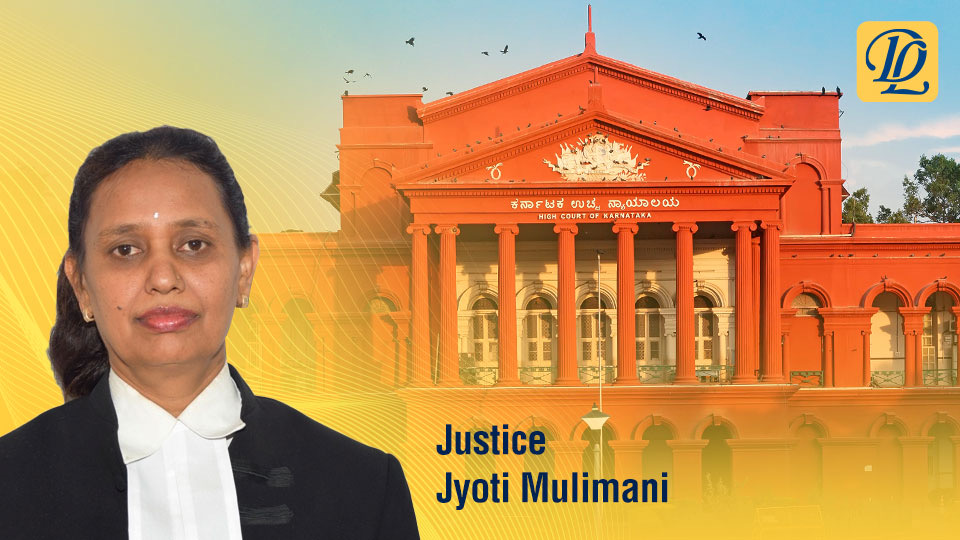
Hon’ble Mrs. Justice Jyoti Mulimani celebrates her 58th birthday today.
Hon’ble Miss. Justice Jyoti Mulimani: Born on 15.08.1968. Enrolled as an Advocate on 31.07.1992. Handled all types of Civil Cases. Hindu Law, Probate, Company, Arbitration. Constitutional, Tax & Tariff. Electricity, Education, Service, Motor Vehicles, and Excise matters. Served as a Mediator and Trainer in Bengaluru Mediation Centre for the past 12 years.
Appointed as Additional Judge of the High Court of Karnataka and taken oath on 11.11.2019 and Permanent Judge on 08.09.2021
Important judgments delivered by Hon’ble Miss. Justice Jyoti Mulimani.
Civil court cannot enhance compensation under the Indian Telegraph Act towards diminution value if the Deputy Commissioner has already awarded under a particular head. Karnataka High Court.
Tribunal under the Maintenance and Welfare of Parents and Senior Citizens Act can invalidate Gift only if the Gift has condition that the transferee shall provide basic amenities and basic physical needs to the transferor. Karnataka High Court.
Hindu Law. Gift by a coparcener of his undivided interest in the coparcenary property either to a stranger or to his relation without the consent of the other coparcener is void. Comprehensive Judgement of the Karnataka High Court.
Recognition of Trade Union cannot be demanded as a matter of right. Recognition depends on the discretion of the employer which cannot be imposed by invoking Articles 226 of the Constitution of India. Karnataka High Court.
Where title of the plaintiff is disputed by the defendant, mere suit for bare injunction without supporting prayer for declaration is not maintainable. Karnataka High Court.
Transfer of property in violation of law against fragmentation is void and does not confer title. Suit based on such transfer is liable to be dismissed. Karnataka High Court.
When an officer is entrusted with the duty to decide the issue, detailed order and not an official memorandum is required to be passed. Karnataka High Court.
Though mortgage by deposit of title deeds can be created by handing over title deeds to lender, if the parties reduce the contract to writing, the document alone would be the sole evidence of its terms. Karnataka High Court.
Corporation cannot cancel khata without passing a speaking order and without giving an opportunity to person who may adversely be affected. Karnataka High Court.
Prohibition of transfer of land under the Karnataka Land Reforms Act applies even to agreement of sale. Specific performance of such agreement cannot be granted. Karnataka High Court.
KIADB Act. Terms of lease-cum-sale agreement prevail over Regulations governing disposal of lands. Once a lease-cum-sale agreement is executed, the Board cannot revoke the allotment citing the Regulations. Karnataka High Court.
Payment of Gratuity Act. Controlling Authority cannot entertain application claiming gratuity after inordinate delay beyond the period of limitation. Karnataka High Court.
Senior Citizens Act. Petition against non-relatives is not maintainable especially when the gift deed is silent about maintenance. Karnataka High Court.
Hindu Law. Gift by a coparcener of his undivided interest in the coparcenary property either to a stranger or to his relation without the consent of the other coparcener is void. Comprehensive Judgement of the Karnataka High Court.
Hon’ble Ms. Justice Tara Vitasta Ganju: Afirst-generation lawyer, was born in 12thAugust 1971 in New Delhi. She enrolled at Sardar Patel Vidyalaya, Lodhi Estate, New Delhi in 1989 from which she obtained her High School Certificate. She read Political Science for her Bachelor’s degree from Lady Shriram College, University of Delhi in 1992 and graduated with Honours. Ms Ganju then obtained her Bachelor of Law degree in 1995 from the Faculty of Law, University of Delhi and enrolled as an Advocate with the Bar Council of Delhi in the same year. Ms Ganju continued her education in law in the United Kingdom receiving the British Chevening scholarship, awarded by the British High Commission (British Council), New Delhi in 1999. This allowed her to complete a course in English, and EC Commercial Law and Practice, from the College of Law at York. Ms Ganju also pursued an online Diploma in International Acquisitions and Mergers at College of Law, U.K. in 2005. In 2018, she was certified as a Mediator at Samadhan: Delhi High Court Mediation & Conciliation Centre. Thereafter, Ms. Ganju attended an advanced International Seminar on Mediating Effectively at Pepperdine Law School – Strauss Institute of Dispute Resolution, USA in June, 2018.
Ms Ganju was appointed an Executive Member of the Women in Law and Litigation (WILL) Association in 2019. She has also served on the Prevention of Sexual Harassment Committee for Manipal Hospitals, New Delhi and Estocorp Group of Companies in New Delhi.
Before being elevated to the Bench, Ms Ganju practiced primarily before the Hon’ble Delhi High Court. She also steered cases before the Hon’ble Supreme Court and other courts in Delhi. In addition to this, she advised and undertook matters in a wide range of legal areas including property, inheritance law, civil laws, arbitration, company, criminal and intellectual property litigation under the original, appellate and writ jurisdictions of the Courts at Delhi and its neighbouring jurisdictions. Ms Ganju has also worked extensively in advising clients on a variety of legal issues concerning their business transactions, contractual matters and commercial and legal issues. She has also assisted the Delhi High Court as an Arbitrator, Mediator and Amicus Curiae in third party disputes.
Ms Ganju had been invited as a speaker at various conferences in India including the Legal India Conference 2018 on Alternate Dispute Redressal Mechanisms and Indian Oil Corporation’s Research & Development Centre in a seminar on Provision and Management of Intellectual Property Rights in the year 2007. Tara Vitasta Ganju was appointed as a Permanent Judge of the Delhi High Court on May 18, 2022.
Her Lordship transferred to Karnataka High Court and assumed the office as the Judge of the Karnataka High Court on 28.10.2025.
Important Judgements delivered by Hon’ble Ms. Justice Tara Vitasta Ganju.
Motor Vehicles Act. Income Tax Returns are reliable statutory documents that cannot be disregarded by a Claims Tribunal for assessing the income of a deceased person merely because supporting educational certificates or business licenses were not produced. Karnataka High Court.
Rejection of plaint. A plaintiff cannot selectively challenge a recent transaction while ignoring the foundational registered sale deeds executed by the predecessors-in-title decades earlier; failure to challenge the root of the title within the prescribed period renders any subsequent challenge to the derivative title barred by limitation. Karnataka High Court.
A suit for partition coupled with a prayer for cancellation of a sale deed is required to be instituted within the period of three years under Articles 58 and 59 of the Limitation Act. Where the suit is instituted beyond the period of limitation, the plaint is liable to be rejected as being barred by law. Karnataka High Court.
A suit for partition coupled with a prayer for cancellation of a sale deed is required to be instituted within the period of three years under Articles 58 and 59 of the Limitation Act. Where the suit is instituted beyond the period of limitation, the plaint is liable to be rejected as being barred by law. Karnataka High Court.
Specific performance. While there is a general presumption that time is not of the essence, this presumption stands rebutted where the parties, by express terms of the contract, employ clear, unambiguous, and unequivocal language indicating their intention to prescribe a definite and mandatory period for performance. Karnataka High Court.
Rejection of plaint. A plaintiff cannot selectively challenge a recent transaction while ignoring the foundational registered sale deeds executed by the predecessors-in-title decades earlier; failure to challenge the root of the title within the prescribed period renders any subsequent challenge to the derivative title barred by limitation. Karnataka High Court.
Stamp Act. The authority to impound a document for insufficient stamp duty applies exclusively to the ‘original instrument’. A photocopy cannot be impounded, nor can it be validated by the payment of duty and penalty to make it admissible as secondary evidence. Karnataka High Court.
Commercial Courts Act. Bar under Section 8 against challenge to interlocutory orders does not curtail the constitutional supervisory jurisdiction of the High Court under Article 227 of the Constitution though interference to be limited to errors causing manifest injustice. Karnataka High Court.
Land acquisition. The power of eminent domain can be exercised by the State only for a legitimate ‘public purpose’ and must strictly adhere to the ‘due process of law.’ Any acquisition initiated on the basis of an incomplete application or conducted with undue haste to benefit a private entity at the cost of original landowners is arbitrary, violates the principles of natural justice, and is liable to be quashed. Karnataka High Court.
Transfer of Property Act. Section 11 which voids ‘’restriction repugnant to interest created upon transfer’’ applies only when the transfer is absolute and creates a complete interest in favour of the transferee. Non- exclusive rights over shared common facilities in a real estate project do not amount to an absolute interest. Karnataka High Court.
Motor Vehicles Act. Permanent functional disability to the extent of 82% caused to a housewife. Karnataka High Court holds that compensation must include the lifelong cost of caregiving and awards Rs 20 lakhs towards ‘caretaker expenses’, taking into account the expected need for care over a 50-year lifespan.
Motor Accidents Claims Tribunal cannot reject or downscale a permanent physical disability assessment solely because the testifying medical expert was not the original treating doctor. If a qualified medical professional subsequently examines the patient and reviews their medical history, their assessment is legally valid. Karnataka High Court.
Adverse Possession. Possession that originates under an agreement of sale or any other permissive or derivative arrangement cannot ripen into adverse possession unless the occupant clearly, unequivocally, and hostilely repudiates the true owner’s title, and such repudiation is brought to the owner’s knowledge. Karnataka High Court.
Land Acquisition. Where direct evidence in the form of contemporaneous sale instances or exemplars pertaining to the same village is available, such evidence constitutes the most desirable and preferred basis for determination of market value. Karnataka High Court.
Evidence Act. Where some defendants support the case of the plaintiff and other defendants contest, the supporting defendants must first cross-examine the plaintiff’s witnesses before the contesting defendant. Permitting supportive defendants to cross-examine after the contesting defendant may enable them to fill lacunae left in the earlier cross-examination and cause prejudice to the contesting party. Karnataka High Court.
Suit for specific performance. A person who asserts an independent title to the subject property through a registered instrument is a ‘proper party’ under Order I Rule 10(2) of the CPC. Although such a person may not be a party to the underlying agreement to sell, their impleadment is essential to ensure a complete and effective adjudication of the dispute and to avoid the risk of conflicting judicial findings or a multiplicity of subsequent litigations regarding the same property. Karnataka High Court.
Arbitration and Conciliation Act. The appellate jurisdiction under Section 37 is supervisory and narrower than the scope under Section 34. The Court cannot re-appreciate evidence or substitute its own interpretation of the contract in place of that adopted by the Arbitral Tribunal, so long as the Tribunal’s view is a ‘plausible’ or ‘possible’ one. Karnataka High Court
Arbitration and Conciliation Act. Interpretation of a contract is a matter for an Arbitrator to determine. Even if the interpretation gives rise to an erroneous application of law, the Courts will generally not interfere, unless the error is palpably perverse or illegal and goes to the root of the matter. Delhi High Court.
Evidence Act. Where some defendants support the case of the plaintiff and other defendants contest, the supporting defendants must first cross-examine the plaintiff’s witnesses before the contesting defendant. Permitting supportive defendants to cross-examine after the contesting defendant may enable them to fill lacunae left in the earlier cross-examination and cause prejudice to the contesting party. Karnataka High Court.
Motor Vehicles Act. Assessment of physical disability made by a qualified ‘Medical Practitioner’ can validly be relied upon. Such assessment cannot be rejected merely because the doctor is not an Orthopaedic Surgeon. Karnataka High Court.
Motor Vehicles Act. While computing compensation in cases involving the death of a housewife, addition towards future prospects is permissible. The contribution of a housewife to the care, welfare and upbringing of the family increases with age and experience, and therefore future prospects must be added to the notional income while assessing loss of dependency. Karnataka High Court.
Order VIII Rule 1 CPC. Extension of time to file Written Statement beyond the prescribed period can be granted only in exceptional cases upon showing cogent and bona fide reasons. Mere change of Advocate or negligence cannot justify condonation of enormous delay, as it defeats the legislative object of expeditious disposal of civil suits. Karnataka High Court.
Motor Vehicles Act. A driving licence covers ‘class of vehicle’ and not ‘specific type’. Light Motor Vehicle includes transport vehicles falling within that class and a person holding a valid LMV licence is legally competent to drive such transport vehicles and no separate transport endorsement is necessary. Karnataka High Court.
Motor Vehicles Act. In appeals arising out of awards passed under the Act, the Court is required to apply and examine the law prevailing as on the date of consideration of the appeal. The determination of compensation must be made in accordance with the contemporaneous legal position governing the field. Karnataka High Court.
A suit for partition coupled with a prayer for cancellation of a sale deed is required to be instituted within the period of three years under Articles 58 and 59 of the Limitation Act. Where the suit is instituted beyond the period of limitation, the plaint is liable to be rejected as being barred by law. Karnataka High Court.
Preventive detention. Failure to specifically state the grounds of detention in the Detention Order vitiates the exercise of preventive detention. Preventive detention cannot be invoked merely on the existence of pending criminal cases, particularly when the allegations are capable of being effectively addressed under the ordinary criminal law. Karnataka High Court.
Habeas Corpus. Custody of child with father cannot be termed as illegal detention since the issue can be considered by a competent Family Court. Karnataka High Court
Specific performance. While there is a general presumption that time is not of the essence, this presumption stands rebutted where the parties, by express terms of the contract, employ clear, unambiguous, and unequivocal language indicating their intention to prescribe a definite and mandatory period for performance. Karnataka High Court.
The Courts and Tribunals have inherent power to recall their own orders or judgments if those orders were obtained by fraud, even when statutory review is not available or has been exhausted in the earlier round of litigation. Karnataka High Court.
Rejection of plaint. A plaintiff cannot selectively challenge a recent transaction while ignoring the foundational registered sale deeds executed by the predecessors-in-title decades earlier; failure to challenge the root of the title within the prescribed period renders any subsequent challenge to the derivative title barred by limitation. Karnataka High Court.
Land acquisition process initiated by the State for the benefit of a non-existent legal entity is void ab initio and constitutes a ‘statutory and constitutional fraud.’ Karnataka High Court orders criminal investigation by the CBI while quashing the acquisition.
Stamp Act. The authority to impound a document for insufficient stamp duty applies exclusively to the ‘original instrument’. A photocopy cannot be impounded, nor can it be validated by the payment of duty and penalty to make it admissible as secondary evidence. Karnataka High Court.
Land acquisition. The power of eminent domain can be exercised by the State only for a legitimate ‘public purpose’ and must strictly adhere to the ‘due process of law.’ Any acquisition initiated on the basis of an incomplete application or conducted with undue haste to benefit a private entity at the cost of original landowners is arbitrary, violates the principles of natural justice, and is liable to be quashed. Karnataka High Court.
Constitution of India. A petition under Article 227 is not maintainable against an order of a Civil Court refusing to grant ex-parte injunction when a specific statutory remedy is available under Order XLIII, Rule 1 (r) of the Code of Civil Procedure. High Courts must refrain from exercising their power of superintendence in such cases as a matter of judicial discipline. Karnataka High Court.
Suit for specific performance. A person who asserts an independent title to the subject property through a registered instrument is a ‘proper party’ under Order I Rule 10(2) of the CPC. Although such a person may not be a party to the underlying agreement to sell, their impleadment is essential to ensure a complete and effective adjudication of the dispute and to avoid the risk of conflicting judicial findings or a multiplicity of subsequent litigations regarding the same property. Karnataka High Court.
Karnataka Stamp Act. Where the parties are already in possession of the property prior to the agreement, or where possession is not delivered under the document, the document cannot be subjected to the higher stamp duty and penalty associated with ‘possession delivered’ agreement. Karnataka High Court.
Industrial Disputes Act. A finding on the fairness and propriety of a domestic enquiry recorded in proceedings under Section 33(2)(b) operates as res judicata in subsequent proceedings under Section 10, provided that the finding was reached after a comprehensive enquiry where parties were permitted to lead oral and documentary evidence. Karnataka High Court.
BDA development scheme does not lapse if substantially implemented. Once significant land is taken, layouts formed, sites allotted, and possession lawfully vested in the State, the acquisition cannot be challenged for lapse merely because all land was not used within five years. Karnataka High Court.
Land acquisition. A landowner who has unequivocally expressed ‘No Objection’ to the land acquisition proceedings and sought compensation is not entitled to subsequently seek deletion of their lands from the acquisition. The deletion of such lands cannot be justified on the principle of negative equality, especially when the land forms a large, compact, vacant block suitable for the layout, and any administrative order for deletion is without a proper BDA Board resolution. Karnataka High Court.
Service Law. Seniority in a service cadre must be determined by the employee’s actual date of entry into that cadre. A rule granting a notional appointment date or weightage of past service is arbitrary and void if it confers seniority from a time when the employee was not yet ‘born in the cadre.’ Any such weightage can operate only for assessing eligibility for promotion, not for fixing inter-se seniority between direct recruits and promotees. Karnataka High Court.
In a suit for partition, no period of limitation is prescribed, as the right to seek partition is an incident of joint ownership, giving every co-sharer a continuing cause of action to claim partition whenever they choose to sever their share from the joint property. Karnataka High Court.
Motor Vehicles Act. Interest awarded under Section 171 must be just, fair and reasonable. In death and grievous injury claims, compensation should ordinarily carry interest at 9% per annum, Karnataka High Court reiterates.
Motor Vehicles Act. Future prospects can be awarded even to cases where the deceased was not employed. No person can remain as static since there is always an incessant effort to enhance one’s income for sustenance and income. Karnataka High Court.
Arbitration and Conciliation Act. Non-impleadment of firm as party before the arbitrator is not fatal where all partners are already parties. Karnataka High Court.
Arbitration and Conciliation Act. Interference with Arbitral Award is permissible only when the award is patent illegal, which is limited to situations where the findings of the arbitrator are arbitrary, capricious or perverse, or when the conscience of the Court is shocked, or when the illegality is not trivial but goes to the root of the matter. Karnataka High Court.
Arbitration and Conciliation Act. Interpretation of a contract is a matter for an Arbitrator to determine. Even if such interpretation gives rise to an erroneous application of law, the Courts will generally not interfere, unless the error is palpably perverse or illegal and goes to the root of the matter. (Ref). Karnataka High Court.
Arbitration and Conciliation Act. In commercial arbitration matters, delay in filing appeals under Section 37 can be condoned only by way of exception and not as a rule. ‘Sufficient cause’ is not flexible so as to cover long delays, which are beyond the period provided for in the appeal. Karnataka High Court.
Plaintiff can seek specific performance by amending the plaint, even where the suit was originally filed for refund of the sale consideration. Where the plaint already contains all the material facts and discloses a complete cause of action for specific performance of an agreement to sell, omission of the specific relief prayer due to counsel’s oversight or erroneous legal advice is a curable procedural defect. Karnataka High Court.
A trial court’s order granting or refusing to grant ex-parte injunction order under Order 39 Rule 1 & 2 CPC can be questioned only by way of an appeal under Order 43 Rule 1. Writ Petition under Article 227 of the Constitution of India is not maintainable. Karnataka High Court.
Motor Vehicles Act. A comprehensive motor insurance policy covers inter se tortious liability between spouses. Where a wife dies in a motor accident caused by the negligent driving of her husband, her legal representatives are entitled to claim compensation from the insurer. Karnataka High Court.
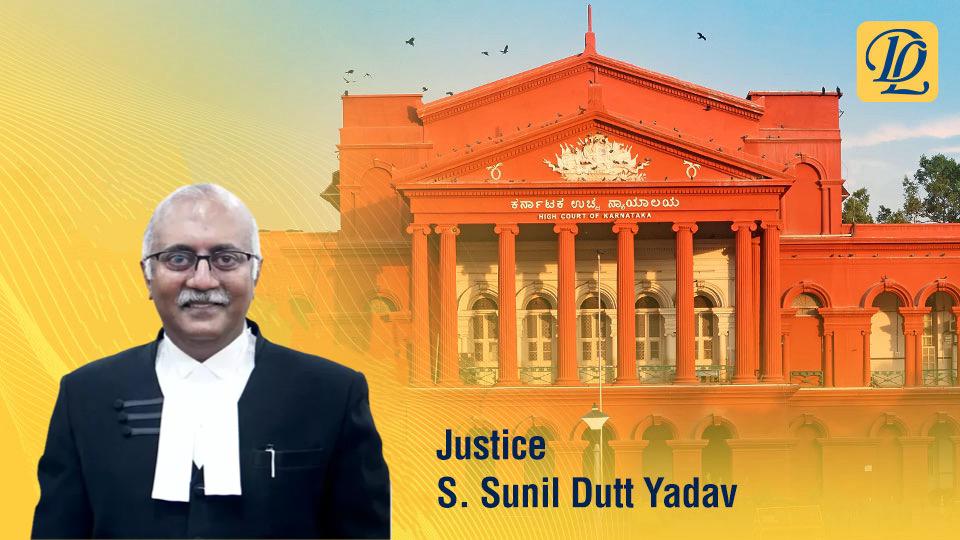
Hon’ble Mr. Justice S. Sunil Dutt Yadav celebrates his 54rd birthday today.
Hon’ble Mr. Justice Siddappa Sunil Dutt Yadav: Born on 3rd August 1972. Appointed as Additional Judge of the High Court of Karnataka and took oath on 14.02.2018 and Permanent Judge on 07.01.2020
Important judgments delivered by Hon’ble Mr. Justice Sunil Dutt Yadav.
Compensation towards tortious acts of State entities. Concurrent remedy no bar to exercise writ jurisdiction. Karnataka High Court awards compensation of Rs. 1.19 Crore for death and injury due to electrocution.
Claim to property based on adverse possession. Period starts from the time of giving up the claim based on title. Plea of title and adverse possession are mutually inconsistent. Karnataka High Court.
Unlike access to justice, forum convenience is not a fundamental right. Only the Chief Justice of High Court has power to allocate work to puisne judges of respective benches of High Court. Karnataka High Court clarifies.
Service Law. Stigmatic termination of an employee cannot be done by following termination simplicotor Rule abandoning disciplinary proceedings. Karnataka High Court.
Ineligible candidate cannot plead his innocence in the selection process. Permitting ineligibility to triumph would have the effect of perpetuation of illegality which cannot be allowed. Karnataka High Court.
False allegation of impotency by wife would cause mental disharmony to husband and amounts to mental cruelty, which would enable the husband to seek divorce on the ground of cruelty. Karnataka High Court.
Assessee is entitled for ‘Nil Tax Deduction at Source’ for payments made towards reimbursement of salaries of deputed expatriate employees. Karnataka High Court.
Service Law. Wherever horizontal reservation of eligible candidates are not found, it is the duty of the authorities concerned to then have a vertical reservation. Karnataka High Court.
Service Law. Transfer order, after the period of general transfers without showing place of posting, is not permissible. Place of transfer must be to a vacant post. Karnataka High Court.
Prevention of Corruption Act. Previous sanction is not required before passing an order for investigation under Section 156(3) of Cr.P.C. Authoritative pronouncement of the Karnataka High Court.
Karnataka Grama Swaraj and Panchayat Raj Act. Chief Executive Officer cannot terminate employees of the Grama Panchayat since the competent authority is the Gram Panchayat. Karnataka High Court.
There must be a specific allegation that the action complained of amounts to interference or attempt to interfere with the free exercise of electoral right by undue influence at an election to constitute offence under Section 171C, IPC. Karnataka High Court.
Where driver of vehicle had no valid and effective driving licence, the insurance company shall pay the compensation to the claimant and recover the same from owner of the vehicle. Karnataka High Court reiterates.
MVC Act. Amputation of leg need not always result in 100% disability for the purpose of awarding compensation when the claimant can do the work which is not strenuous in nature. Karnataka High Court.
Borrower of motor vehicle steps into the shoes of the owner of the vehicle and hence the borrower of the vehicle or his legal heirs are not entitled for compensation. Karnataka High Court.
Arbitration and Conciliation Act, 1996. Even non-signatories will be bound by the arbitration agreement, if there is implied consent to be bound and a direct relationship with the signatory. Karnataka High Court.
Election Law. Purchase of Medi Assist Policies by a candidate prior to nomination but distribution of the same after the nomination would amount to bribery in terms of Section 123 of the R.P. Act. Karnataka High Court.
Escaped assessment under the IT Act. ‘Income chargeable to tax’ is income as arising out of the capital gains and not the entire sale consideration. Karnataka High Court.
Service Law. Person ineligible for the post cannot question the appointment of another person to the post since Public Interest Litigation is impermissible in Service matters. Karnataka High Court.
Re-assessment under Section 148A (d) of the Income Tax Act against a Company already merged with another Company is a substantive illegality and without jurisdiction. Karnataka High Court.
Reopening assessment under Section 148 IT Act. Reasons for issuing notice once communicated and objections received, the officer is duty bound to adjudicate upon the same before reassessment order is passed. Karnataka High Court.
“Disputes between the governmental bodies cannot be dragged before the constitutional courts”. Karnataka High Court sets up committee to resolve the dispute between APMC and BMRCL regarding compensation.
Grant of sanction u/s 197 Cr.P.C. is an administrative function and the presumption under Section 114(e) of the Indian Evidence Act that official acts have been performed regularly can be applied. Karnataka High Court.
Grant of NOC from the Ministry of Defence for construction within the vicinity of Defence Establishment can only be as per the provisions of the Works of Defence Act, 1903. Executive instructions cannot be relied on. Karnataka High Court.
Determination of market value under Section 26 of 2013 Land acquisition Act shall be as per the guidelines in Section 26 of 2013 Act and not based on earlier Gazette Notification. Karnataka High Court.
Amendment of pleading cannot be rejected on the ground of delay when the Court exercises power under Section 26 (4) of the Specific Relief Act. Karnataka High Court.
Alternate appellate remedy. If exercise of jurisdiction by a Tribunal ex-facie appears to be an exercise of jurisdiction in futility, it will be permissible for the High Court to interfere in exercise of its writ jurisdiction. Karnataka High Court.
Judicial proceedings initiated by a third party other than the employer cannot be a reason to withhold pension payable to public servant. Karnataka High Court.
Right to privacy of Aadhaar number holder has to be protected. Marriage does not eclipse the right to privacy which is protected by the procedure of hearing under Section 33 of the Aadhaar Act. Karnataka High Court.
Employees Compensation Act. Commissioner is bound to consider the aspect of penalty in accordance with statutory provision when there is delay in payment of even the partial liability. Karnataka High Court.
Re-assessment under the Income Tax Act. Assessee duty to disclose does not extend beyond full and truthful disclosure of all primary facts and does not include inferences. Karnataka High Court.
Whether BBMP can demand full property tax from the Educational Institutions? High Court of Karnataka takes up the issue and grants stay of the demand notice.
Procedure to be followed by BBMP in cases of reopening self-assessment where returns are not filed and in cases of random scrutiny. Karnataka High Court lays down guidelines.
Indian Succession Act. While granting Letters of Administration to the sole legal heir of the deceased, Court has no power to impose condition of non-alienation of the property on the petitioner. Karnataka High Court.
Disqualification to hold Office in local bodies. Work done for the Gram Panchayat at an earlier point of time would not operate as a disqualification. Karnataka High Court.
Karnataka Co-operative Societies Act. Disqualification for not clearing loan due to the Society as on the date of election. Subsequent clearing of dues will not wipe out the disqualification. Karnataka High Court.
Demonetisation. Confiscation of specified Bank notes by the investigating agencies. Person can seek exchange of the notes from the Union of India only on production of direction of the Court to that effect. Karnataka High Court.
Suit for specific performance. Purchaser of the property from the owner is a necessary party in the proceedings and hence requires to be arrayed as a party defendant. Karnataka High Court.
Sexual Harassment of Women at Workplace (Prevention, Prohibition and Redressal) Act. Appellate authority has powers to pass interim orders in appeals under Section 18 of the Act. Karnataka High Court.
Memo for withdrawal of a case does not require signature of the litigant since the Advocate is fully authorised to take action on behalf of the clients in the vakalat itself. Nevertheless, it is prudent for advocates to obtain written instructions from their clients prior to withdrawing the case. Karnataka High Court.
Karnataka SC/ST (PTCL) Act. The initiation of suo moto proceedings for resumption within five years from the date of commencement of the Act cannot be considered illegal or vitiated by delay. Karnataka High Court.
Legitimate expectation. An order which has the effect of reversing a pay hike has the consequence of upsetting financial planning of employee visiting civil consequences which cannot be resorted to without affording an opportunity of hearing. Karnataka High Court.
A suit seeking a declaration regarding matrimonial status, whether affirmative or negative, falls within the exclusive jurisdiction of the Family Court under Section 7(1)(b) of the Family Courts Act, 1984. The nature of relief sought does not affect maintainability, and Civil Courts are barred from entertaining such suits. Karnataka High Court.
Criminal Law. A conviction under Section 302 IPC can be upheld without an independent eyewitness if res gestae witnesses, forensic evidence, and motive prove guilt beyond a reasonable doubt. Testimony from the deceased’s family cannot be dismissed for bias, and minor contradictions or hostile witnesses do not weaken a well-supported prosecution case. Karnataka High Court.
Temporary employees performing the same duties as regular employees are entitled to equal pay. Prolonged engagement at exploitative wages violates Article 23, and courts can mandate compensation equivalent to the minimum prescribed salary. Karnataka High Court.
Grama Panchayat property tax. The determination of tax liability and entitlement to exemptions must be in accordance with the applicable rules at the time the tax is levied. Karnataka High Court.
Claim to property based on adverse possession. Period starts from the time of giving up the claim based on title. Plea of title and adverse possession are mutually inconsistent. Karnataka High Court.
Where a principal employer utilizes contract labor for essential, permanent, and perennial work, especially to bypass recruitment bans and in violation of the Contract Labour (Regulation and Abolition) Act, such employees are entitled for regularization. Karnataka High Court.
A person from the ‘Veerashaiva Lingayat’ community cannot claim the benefits of the ‘Beda Jangama’ Scheduled Caste. Mere grant of ‘Beda Jangama’ Certificate to a member of the family would not permit issuance of certificate to other claimant if they belong to ‘Veerashaiva Lingayat’ Community. Karnataka High Court.
Postal Department, as a public utility, cannot deny or suspend services or agreement renewals to an entity based on mere allegations of criminal or fraudulent activities or pending investigations without a conclusive judicial finding. Karnataka High Court.
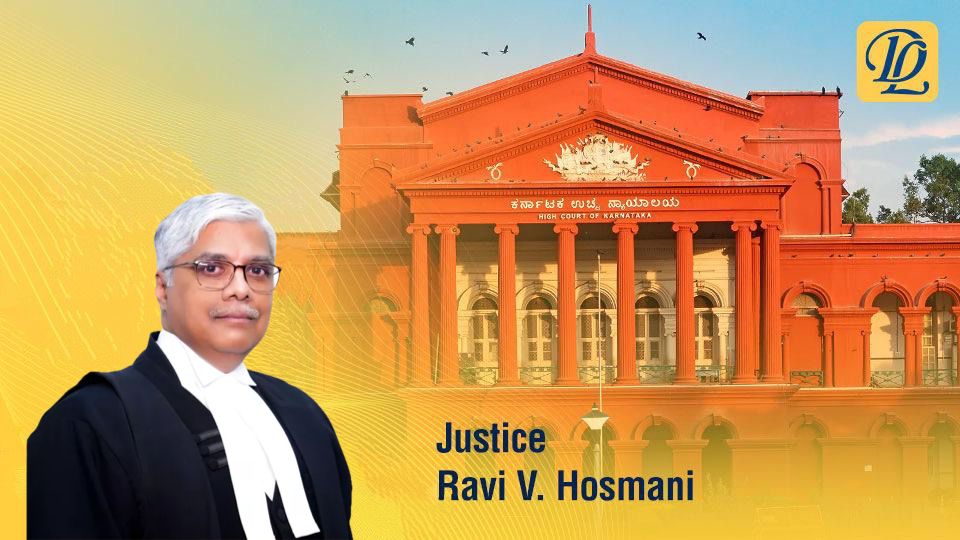
Hon’ble Mr. Justice Ravi V. Hosmani celebrates his 55th birthday today.
Hon’ble Mr. Justice Ravi Venkappa Hosmani: Born on 29.07.1971. Enrolled as an Advocate on 07.07.1995 at Bengaluru. Started practice before the High Court of Karnataka at Bangalore both on the Original and Appellate stages in Writ Jurisdiction as well as on the Civil Appellate side. Also appeared before the Trial Courts, Appellate Authorities, Tribunals etc. And from July 2008 practised before the High Court of Karnataka Dharwad Bench. Appointed as Additional Judge of the High Court of Karnataka and taken oath on 07.01.2020 and Permanent Judge on 25.09.2021.
Important judgments delivered by Hon’ble Mr. Justice Ravi V Hosamani.
The specified value and suit valuation in IPR suits below Rs. 3 lakhs shall be examined by the Courts to ensure it is not arbitrary or unreasonable and the suit is not undervalued. Karnataka High Court.
Motor Vehicles Act, 1988. Death of employee. Amount received by dependents under group insurance scheme is NOT a pecuniary advantage and can NOT be deducted from the MVC compensation. Karnataka High Court.
Criminal Law. Testimony of a witness who identified the accused for the first time in Court without knowing him before, and in the absence of any Test Identification Parade, would be valueless and unreliable. Karnataka High Court.
When suit for specific performance is dismissed and in the absence of prayer against dispossession, defendant/owner has a right to get back possession of the property in accordance with law. Karnataka High Court.
Suit for partition. Défense of prior partition becomes weak when revenue entries do not stand separately and exclusively in the name of the family members. Karnataka High Court.
Defendant cannot be placed exparte merely on process server report unless the court is satisfied that each one of the steps contemplated for service of notice is complied with. Karnataka High Court.
A co-owner cannot seek temporary injunction against another co-owner on the ground of adverse possession unless there is a partition of the property by metes and bounds. Karnataka High Court.
Registration Act. When refusal of registration is endorsed on a deed, the only remedy is appeal under Section 72. The refusal cannot be recalled under Section 68(2). Karnataka High Court.
A husband, as a Class-I heir, is entitled to compensation for loss of dependency due to the death of his wife in a motor vehicle accident, unless the insurer can conclusively prove separation or a second marriage. Karnataka High Court.
Suit for declaration of title based on mere mutation entries without written and registered instrument of title in suit property cannot be decreed. Karnataka High Court.
Transfer of Property Act. Duration of lease of immovable property for agricultural or manufacturing purposes under Section 106 need not necessarily be from year to year when the contract between the parties is for a lesser period. Karnataka High Court.
Intestate succession. Deceased leaving his brother and widow of his second brother. Brother, as Class-II heir, excludes the widow who falls in entry VI. Karnataka High Court.
Karnataka Municipalities Act. Without issuing Notification specifying the area within which construction is prohibited, action cannot be initiated under Section 189 of the Act. Karnataka High Court.
When property is registered as Wakf contrary to law and in violation of principles of natural justice, such registration is liable to be quashed without driving the aggrieved parties to avail alternate remedy. Karnataka High Court.
The active involvement of beneficiaries in the preparation of a Will is a significant factor that can raise suspicions about the document’s authenticity and potentially discredit it. Karnataka High Court.
Specific performance. Lack of pleadings in a particular format cannot be a ground to deny specific performance of the agreement when the plaintiff exhibits blemishless conduct, readiness and willingness. Karnataka High Court.
Partition. Merely establishing sufficient income from HUF properties, plaintiff cannot seek to lay claim property on the basis of general presumption without specific evidence that it was purchased with HUF funds. Karnataka High Court.
When suit for specific performance is dismissed and in the absence of prayer against dispossession, defendant/owner has a right to get back possession of the property in accordance with law. Karnataka High Court.
An ex-parte decree can be challenged in a regular appeal under Section 96 CPC for improper summons service, even without availing the remedy under Order IX Rule 13, especially if procedural irregularities or factual discrepancies regarding service are evident from the record. Karnataka High Court.
Interim maintenance for a wife and child should be granted consistently, liberally to ensure survival during proceedings. An order denying interim maintenance to a wife while granting it to the child, without sufficient grounds, is unsustainable, especially when considering the respondent’s admitted high income. Karnataka High Court.
A husband, as a Class-I heir, is entitled to compensation for loss of dependency due to the death of his wife in a motor vehicle accident, unless the insurer can conclusively prove separation or a second marriage. Karnataka High Court.
Hindu Minority and Guardianship Act. The requirement of prior court permission under Section 8 does not extend to an agreement of sale executed by a natural guardian. A suit for specific performance cannot be dismissed solely for want of such permission. Karnataka High Court.
Urban Land (Ceiling and Regulation) Act. Where the State’s assertion of taking possession is corroborated by contemporaneous documentary evidence and sketches showing demarcation, the challenge to the acquisition lacks merit and the property remains vested with the State, regardless of subsequent claims by the original landholders. Karnataka High Court.
Motor Vehicles Act. Insurance Company is liable under ‘pay and recover’ principle even in cases of ‘Act Liability Only Policy’ and no premium was paid to cover risk of driver, owner or gratuitous passenger in motor vehicle. Karnataka High Court.
An Executing Court has no authority to ignore decree for specific performance of sale agreement on the ground that the decree violates SC/ST (PTCL) Act. Karnataka High Court.
Order XXIII Rule 3A CPC. A fresh suit to set aside a compromise decree on the ground that the compromise was not lawful is strictly barred for any party who was a signatory to the compromise. A party cannot circumvent this statutory bar by joining additional properties or impleading new parties to give the appearance of a new cause of action. Karnataka High Court.
Urban Land (Ceiling and Regulation) Act. Where the State’s assertion of taking possession is corroborated by contemporaneous documentary evidence and sketches showing demarcation, the challenge to the acquisition lacks merit and the property remains vested with the State, regardless of subsequent claims by the original landholders. Karnataka High Court.
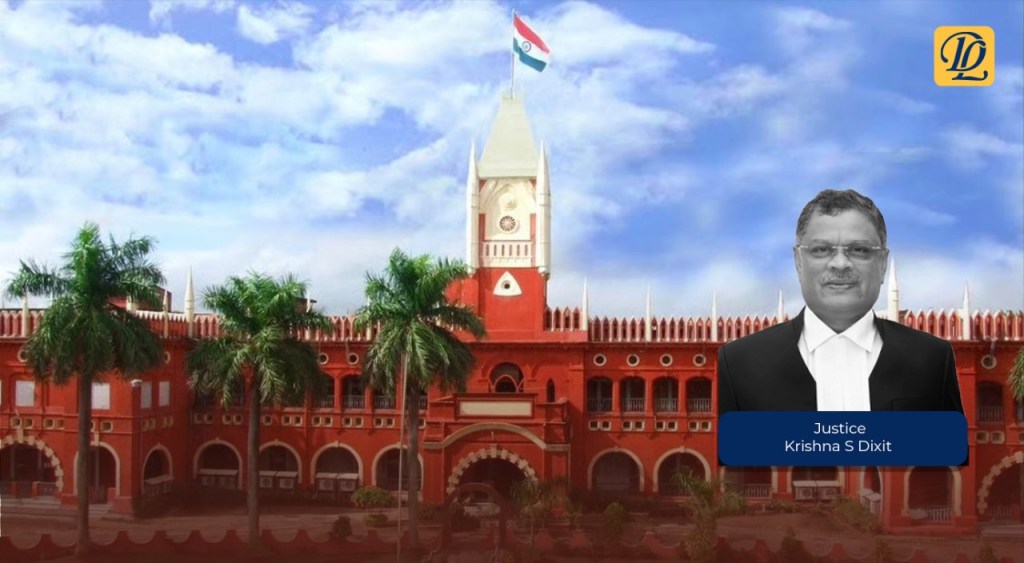
Hon’ble Mr. Justice Krishna S Dixit celebrates his 62nd birthday today.
Justice Dixit Krishna Shripad was born on July 20, 1964. He completed his Graduation in Science in 1986 and obtained Law Degree with Second Rank from Karnataka University, Dharwad in 1989. During college days, he was a debater and mooter.
He was enrolled as an advocate in July 1989 in Karnataka State Bar Council, Bangalore. He practised predominantly in the High Courts of Karnataka and Madras, specializing in law relating to election, service, agrarian reforms, banking, etc. His legal acumen led to appointment as: Senior Standing Counsel for the Election Commission of India in 1999, Central Government Standing Counsel in 1999, Assistant Solicitor General of India in 2014 for representing Central Government. Additionally, he served as Standing Counsel for statutory bodies including, such as University Grants Commission (UGC), Competition Commission of India (CCI), Telecom Regulatory Authority of India (TRAI), Bhabha Atomic Research Centre (BARC), National Institute of Unani Medicine, University of Animal Sciences & Fisheries, National Institute of Engineering, etc. He continued with said assignments until his Elevation as a Judge of High Court of Karnataka in February, 2018.
Justice Dixit was a Para-academician, being associated with prominent Law Colleges in Bangalore. He has been contributing articles to a few News Dailies on contemporary issues. He participated in many television debates/discussions on prominent topics of public importance. He has also delivered several public speeches on various subjects.
During his tenure at the Karnataka High Court, Justice Dixit was part of Benches that decided cases of seminal importance like Hijab, Online Gaming, Twitter, Compulsory Medical Service, Contested Probate Proceedings, Refund of Income Tax, GST on Set Top Box, Exemption of Universities from GST, Prohibition of Blast Mining around Reservoirs, Reclaiming of Reserved Forests, Fraudulent Borrowing from Banks, Retrieving of Acquired Lands, Educational Rights of Overseas Citizens of India, Prerogative of Central Government to deny VISA to foreigners, Right to Road Show during Election Process, Parole/Furlough of Convicts, Duty of Quasi-Judicial Authorities to communicate appealable orders to the parties, Minimum Wages to Labourers, Pensioners’ rights, Privileges of Defence Personnel, Duty to maintain aged parents, wife & children, Duty of Courts to protect public properties & properties of absentee owners, Breast Feeding Rights of Lactating Mothers, Government Non-Interference in the Administration Hindu Religious Institutions/Mutts, etc.
He was sworn in as a Judge of Orissa High Court on May 12, 2025.
Important Judgments delivered by Hon’ble Mr. Justice Dixit Krishna Shripad.
Cr.P.C. Incriminating material. Can be utilized against the accused only if the same is brought to his attention with opportunity to explain it.
Dying Declaration anatomised- “Death waiting at the doorsteps gives a unique serenity to the mind compelling the maker to state nothing but the truth.”
Private Schools. State action should be facilitative and complimentary to the establishment of private schools. “Don’t compare grant of permission to start educational institution with that of a wine shop. Adopt fair standards”.
https://dakshalegal.com/judgements/actionView/OKxPDk1BkPUlbM2xHbaAMljnmCivil Procedure Code. Transposition of Defendant as Plaintiff. Filing of counterclaim by defendant is not a condition for transposition. What is required for transposition is not the Counterclaim but an identity of interest. Karnataka High Court.
Transfer of Property Act 1882. Section 114. Relief against forfeiture for non-payment of rent. The section does NOT come to the rescue of a tenant who lacks bonafides in conduct. Karnataka High Court.
Arbitration and Conciliation Act. Amendment to Section 8. Application by any person claiming through or under the party to arbitration agreement-is prospective and does NOT apply to suits instituted prior to 23:10:2015. Karnataka High Court.
‘Perjury has become a way of life in the Law Courts.’ – Karnataka High Court while dismissing appeal arising out of a false claim under the Motor Vehicles Act with exemplary costs.
Electricity Supply. Purchaser of industry is liable to pay arrears towards electricity supply to earlier owner. However, there shall be apportionment of purchaser’s liability when only a part of industry is purchased. Karnataka High Court.
Bank loans. One Time Settlement. Once the OTS payment is made by the principal borrower, the surety is also discharged. Law on One Time Settlement discussed. Karnataka High Court.
Muslim man marrying second wife. First wife can stay away from the matrimonial home, seek divorce and retain exclusive custody of her minor child. Karnataka High Court.
Games of skill involve elements of expression and enjoy protection under Article 19(1)(a). State cannot criminalize online games involving skill. Karnataka High Court.
Once the lands have vested in the State for a public purpose, the erstwhile owners cannot seek their restoration on the ground that they were put to use for some other public purpose. Karnataka High Court.
SC /ST (Prevention of Atrocities Act),1989 is prospective in operation. No prosecution for the acts committed prior to coming into force of the Act. Karnataka High Court.
Renewal of passport. Authorities cannot insist on production of facilitative order from the Court simply because criminal case is pending against the passport holder. Karnataka High Court.
“Political rallies have some elements of dissemination of knowledge & information to the public at large and they generate lot of political awareness in the voting masses”. Karnataka High Court on PM Modi’s Road Show.
Only in rare circumstances a lady acquires the caste status of her husband provided she pleads and proves her admission to the community of the husband by social acceptance. Karnataka High Court.
”Vajpayee led NDA–Government was toppled for want of one vote.” Election set aside by a very small margin is not a ground to set aside judgement in election petition. Karnataka High Court.
Lodging of accounts of electoral expenditure is aimed at transparency, purity and accountability. Disqualification due to failure cannot be avoided on flimsy grounds. Karnataka High Court.
“Delay in completion of acquisition and payment of compensation is akin to State taking away the ‘oxygen mask’ from the gasping patient”. Karnataka High Court. permits landowner to sell 50% of the land under acquisition to payoff debts.
”Judges some times make law if the statutes made by the Parliament fall short of meeting the requirements of the time”. Karnataka High Court while awarding just compensation in motor vehicle case.
Motor Vehicle Tribunal should adopt philosophy of the Constitution of India on ‘life’ and ‘dignity of human-being’ in assessing loss of future prospects to award just compensation. Karnataka High Court.
Universities are not the notional extensions of the government departments, nor their vassals. Govt should stop poking nose in the affairs of the Universities. Karnataka High Court.
Ordinarily in matters of recruitment, only aggrieved candidate can complain against illegalities in the process. Association of employees cannot espouse individual/personal cause of its members. Karnataka High Court.
Land acquisition cannot be frowned upon for lack of detailed consideration in Section 5-A report unless it is shown to be violative of provisions of the Act or in colourable exercise of power. Karnataka High Court.
Courts cannot don the hat of a town planner or that of an Accountant to minutely examine a lesser extent of land would have fulfilled the objective or whether the project could have been implemented satisfactorily at another location. Karnataka High Court.
Substantial question of law under Section 260A of the Income Tax Act need not necessarily be a question of law of general importance. Karnataka High Court explains the meaning and scope of Section 260A. (DB)
”Ordinarily, in civilized jurisdictions functionaries of the constitutional bodies are not subjected to subpoena”. Karnataka High Court, while setting aside summons issued to the Election Commissioner of India in election petition.
Sale of explosive substance being ‘res extra commercium’ like the liquor, poison, etc., no citizen can claim an unrestricted fundamental right. Karnataka High Court.
Re-determination of property tax by the Corporation under the KMC Act without prior consultation with Property Tax Board is impermissible. Karnataka High Court.
Transactions between banker and borrower are purely contractual. Private lending agency/Bank does not fit into the term ‘other authorities’ within the meaning of Article 12 of the Constitution. Karnataka High Court.
Intra-Court appeal is maintainable against an interlocutory order passed in an Election Petition under the Representation of the People Act, 1951. Karnataka High Court.
“The dead have no rights and can suffer no wrongs’’ (G W Paton). Section 394 Cr.P.C. providing for abatement of proceedings on the death of the accused is not unconstitutional. Karnataka High Court.
”Mere possibility of ‘grave consequences’ is no ground to quash proceedings under Section 26 of the Competition Act, 2002”. Karnataka High Court imposes cost of Rs. 10 lakhs on Intel for abusing process of Court.
Unless there is a ‘true dispute’ between the parties, arbitration clause in government contracts cannot be invoked on the basis of a ‘make believe dispute’ to withhold bills. Karnataka High Court.
An accused who secures anticipatory bail with condition to co-operate in the investigation cannot normally seek quashment of the criminal proceedings. Karnataka High Court.
Writ petition is maintainable against banks like Punjab National Bank functioning under the umbrella of the National Housing Bank Act, 1987. Karnataka High Court.
Where the Statute does not prescribe the minimum fine amount, but, only prescribes the maximum, the authority levying substantial amount as fine has to give cogent reasons in support thereof. Karnataka High Court.
Renewable energy. Licensing authority must take appropriate measures at the time of granting license to see that huge projects are not imperilled by avoidable litigations. Karnataka High Court.
Federation of Karnataka Chambers of Commerce and Industry is not ‘State’ within the meaning of Article 12 of the Constitution of India. Karnataka High Court.
Merely because the avowed objects of a private body linguistically partake the nature of certain functions which ordinarily governmental bodies do, it does not thereby become a limb or agency of the State. Karnataka High Court.
Karnataka Certain Inams Abolition Act, 1977. Application in Form 1 seeking regrant of land filed after 31 March 1991 cannot be entertained by the Land Tribunal.
Devotees can question grant of occupancy rights in favour of Archak/Poojary under the Karnataka Certain Inams Abolition Act, 1977. Karnataka High Court.
“Principle that the tiller of the land should be conferred occupancy rights is not applicable to the lands held by the Ex-serviceman”. Karnataka High Court orders restoration of tenanted lands to Soldier.
Punja lands in Dakshina Kannada District can be brought under cultivation and occupancy rights can be granted u/s 48A of the Karnataka Land Reforms Act, 1961. Karnataka High Court.
Karnataka Land Reforms Act. Tenancy cannot be claimed against a person who is not a landlord even within the extended definition. Karnataka High Court quashes Land Tribunal order after 25 years.
Government cannot act as a robber of citizens lands; taking away private lands for the purported public purpose without compensation against the spirit of constitutional guarantee enacted u/a 300A. Karnataka High Court.
Land acquisition. Enormous delay in passing awards. Karnataka High Court awards additional interest at 12% per annum from the date of the notification/possession.
When a public function/duty is to be discharged by a statutory authority, even when no time period is prescribed, the same has to be done within a reasonable time. Karnataka High Court.
‘Our Constitution is founded on human values’. Displaced slum dwellers who were granted Hakku Patraas and Possession Certificates are also entitled to Transferable Development Rights. Karnataka High Court.
Acquiring body denotifying land from the acquisition proceedings; retaining the possession and allotting the land for industrial purposes. Fresh acquisition proceedings to rectify the mistake cannot be said to be illegal. Karnataka High Court.
Forcible takeover of land for road widening simply because other landowners voluntarily surrendered their lands is impermissible. Karnataka High Court restrains Govt from interfering with landowners properties except in accordance with law.
‘Doctrine of Substituted Security’ entitles mortgagee to anything that is substituted for the mortgaged property. Bank can claim compensation amount if the mortgaged property is acquired. Karnataka High Court.
Acquisition of lands under the National Highways Act, 1956. Landowners are entitled for solatium as if the acquisition has been made under the provisions of Land Acquisition Act, 1894. Karnataka High Court.
The amendment of 2022 to the KIADB Act incorporating the provisions of land acquisition 2013 Act is prospective in operation, notwithstanding the word ‘deemed’ occurring therein. Karnataka High Court.
Decree for specific performance of sale agreement against allottee of a site can be enforced against the allotter BDA even when the BDA was not a party to the suit. Karnataka High Court.
When a judgment is stayed, ordinarily, it is not prudent to press them into service as a binding rule, since its precedential force is in suspended animation. Karnataka High Court.
Karnataka High Court invokes the principle of “Full faith and credit clause” under Article 261 to bind statutory body BDA to comply with intra-party decree even though BDA was not party to the suit.
“Records of acquisition proceedings missing” cannot be pleaded in a Writ Petition to declare lapsing of acquisition proceedings especially when the names of the owners continue in the revenue records. Karnataka High Court.
Karnataka Land Revenue Act, 1964. Section 133. Where the RTC entries are made without any ‘title facts’ such as grants, alienations, they do not enjoy presumptive value even if they are long standing. Karnataka High Court.
”It is incongruous not to acknowledge the contribution of Veerashaiva/Lingayat Mutts in achieving the constitutional aspiration of eradicating illiteracy and its associated evils by providing free education without discrimination”. Karnataka High Court.
Transferable Development Rights. Once lands are surrendered by the owners, State is bound to issue TDR. State cannot contend that the lands are no longer required. Karnataka High Court.
Confinement of Pontiff in prison/custody cannot be a ground to appoint Administrator to the Mutt in the absence of legislative sanction. Karnataka High Court.
“The Act is aimed at ‘distribution of material resources of community’ in the sense of Article 39(b) of the Constitution.” Karnataka High Court upholds the validity of the Karnataka Conferment of Ownership on Mulageni or Volamulageni Tenants Act.
Copyright infringement. Merely because a civil dispute is being fought between the parties, the criminal proceedings cannot be halted, per se, on that ground. Karnataka High Court.
Prevention of Corruption Act. Giving effect to the orders of the superior officer/authority is part of official duty and cannot be construed as misconduct. Karnataka High Court.
We are living in different times, of terrorism. ‘’Bail is a rule & jail is an exception’’ has spent itself when it comes to acts of terrorism. Karnataka High Court reject bail plea of accused involved in ‘K.G.Halli Riots’.
Abuse of social media is antithetical to the democratic process which has led to manipulation and fragmentation of society on the tainted lines of political ideologies. It alters civic engagement that may hijack democracy. Karnataka High Court.
Information Technology Act. Power to block under section 69A(1) of the Act read with Website Blocking Rules is not tweet-specific but extends to user accounts in their entirety. Karnataka High Court.
Education. Admission to Government seats in professional colleges. Persons of Indian Origin and Overseas Citizen of India cannot be treated as Non Resident Indian.
Merely because a particular evidence which ought to have been adduced but had not been adduced, the Appellate Court cannot adopt the soft course of remanding the matter. Supreme Court.
Allotment and conditional sale deed of Civic Amenity site to establish private educational institution can be cancelled if the purpose is not fulfilled by the allottee. Karnataka High Court.
Even the Minority Educational Institutions are bound to follow the Karnataka Education Act in the matter of service conditions of its employees. Karnataka High Court.
‘’Fraud, suppression of material facts and the systematic abuse of law and judicial process is a ground to review the Court judgment’’. Karnataka High Court imposes exemplary costs on the ex MLA for obtaining the judgment by fraud.
Compassionate appointment. ‘’bharta rakshati yavvane…’’ it is the duty of husband to provide maintenance to his dependent wife. A married daughter residing in matrimonial home ordinarily cannot be treated as a dependent on her father. Karnataka High Court.
Karnataka Gram Swaraj and Panchayat Raj Act. Provisions of CPC and the Indian Evidence Act do not strictly apply to the Election Petition proceedings under the Act. Karnataka High Court.
General proposition that Service Tax can be passed on by the service provider to the recipient of service does not apply when the service provider has already remitted certain sums of money to the service recipient. Karnataka High Court.
Writ of Prohibition cannot be issued in anticipation on par with the criminal courts granting anticipatory bail in the absence of infringement of right or at least a well-founded apprehension of infringement. Karnataka High Court.
Caste certificate cannot be construed as a China Wall that prevents any action being taken. Caste certificate secured by playing fraud can be rescinded in an appropriate proceeding. Karnataka High Court.
Report of C&AG/AG cannot be the basis for fastening of liability when the foundational facts on which such liability is sought to be levied, is disputed by one of the parties to the contract. Karnataka High Court.
Doctrine of alternate remedy is only a judicial invention and not a constitutional constraint; it is not a China Wall built between the Writ Court and the litigants. Karnataka High Court.
If a contract involves sufficient intrinsic material to catapult it to the realm of public law, the principles of natural justice apply while adjudging the breach of such a contract. Karnataka High Court.
Citizen adjudged innocent after a due trial cannot be subjected to fresh investigation or trial in Public Interest Litigation jurisdiction. Karnataka High Court.
“The provisions of parole/furlough are structured on humanistic grounds for the reprieve of those lodged in gaols for long”. Karnataka High Court while ordering parole to Muslim man to perform nikah of his daughter.
Foreign nationals over-staying in India disobeying Leave India Notices cannot be granted indulgence by the constitutional courts. Karnataka High Court.
’A borrower is a borrower, whether he is a practising lawyer or a sitting Judge. Loan laws do not provide for favourable treatment to them when they become chronic defaulters.’ Karnataka High Court.
‘’A lender cannot lend his ears for cock & bull stories of the borrower’’. Karnataka High Court rejects plea of Senior Advocate & chronic loan defaulter challenging loan recovery proceedings.
‘Life is lost in living’. Matrimonial case involving prayer for dissolution of marriage should be decided at the earliest so that in the event of decree, the parties may restructure their lives. Karnataka High Court.
A banker who answers description of State under Article 12 of the Constitution cannot act like a private lender. Abrupt stoppage of release of sanctioned loan is justiciable under Article 226 of the Constitution of India. Karnataka High Court.
General proposition that Service Tax can be passed on by the service provider to the recipient of service does not apply when the service provider has already remitted certain sums of money to the service recipient. Karnataka High Court.
Writ Petition challenging the order in Election Petition before the Tribunal/Civil Judge. Intra-Court Writ Appeal is not maintainable against the order in the Writ Petition. Karnataka High Court.
Karnataka Land Reforms Act. Pursuant to the amendment removing the bar to acquire agricultural lands, an entity which was prohibited from owning and possessing agricultural land can claim occupancy rights. Karnataka High Court.
Decision in the writ proceedings becomes res judicata in the subsequent proceedings relating to the same subject matter involving the issue dealt with in the writ petition. Karnataka High Court.
Authority entertaining proceedings barred by limitation without adverting to condoning delay acts without jurisdiction or in usurpation of jurisdiction. Karnataka High Court.
Rule of continuity of Government. Mistakes committed by the party in power earlier can be corrected only by following due process of law lest it gives scope for the allegation of legal malafide. Karnataka High Court.
Appeal is a continuation of the original proceeding and therefore both the Appeal and the original proceeding can be withdrawn with the leave of court unconditionally. Karnataka High Court.
When a Constitutional Court quashes a legislation or a delegated legislation, the operation of such quashment transcends the parties to the lis and operates as against all others, who were not parties eo nomine or persons claiming under them. Karnataka High Court.
Land acquisition. Grant of land only for the purpose of growing trees does not confer title on the grantee. Compensation is payable only for the trees grown by the grantee and not for the land. Karnataka High Court.
Karnataka Land Grant Rules, 1969. Government cannot favour one single entity by using power under Rule 27 when many other similarly circumstanced aspirants are in the fray. Karnataka High Court.
‘Persons in public employment are not slaves of the Government, nor of their higher ups in the echelon of administration’. Karnataka High Court quashes dismissal order against public servant honorably acquitted in the criminal case.
Widow adopting son. Doctrine of ‘relation-back’ makes sonship retroactive from the moment of death of the late husband and the new entrant is deemed to have been born on the date of death of the adoptive father. Karnataka High Court.
‘Howsoever high you may be, law is above you’. Karnataka High Court rejects plea of Chief Minister Siddaramaiah and others against criminal prosecution for unlawful assembly.
Adoption validly made by widow of deceased coparcener. Adopted son can claim a share in the family properties as if the joint family exits though partition had taken place after the death of the adoptive father. Karnataka High Court.
Banks cannot issue Look Out Circulars only for the purpose of loan recovery. Such an attempt violates Article 21 of the Constitution of India. Karnataka High Court.
Hindu Law. Doctrine of blending of individual’s property into joint family can be inferred by the words and if there are no words, then from his conduct. Karnataka High Court.
Pendency of civil or criminal case cannot be a ground to refuse entry in the property registers as to the encumbrance in respect of a registered document. Karnataka High Court.
”Political parties and elected representatives deserve reasonable protection of reputation from insulting words which are a form of uncivilised violence and intimidation”. Karnataka High Court while rejecting BJP challenge to prosecution u/s 500 IPC.
Compromise decree in respect of ancestral properties among the coparceners can be passed even when the shares of the compromising parties to the suit are not defined by partition. Karnataka High Court.
Service Law. Disciplinary authority cannot go on holding enquiry after enquiry against an employee till the desired report is given by the enquiry officer. Karnataka High Court.
When a registered conveyance takes place, no duty is cast on the purchaser to intimate such transfer to the Revenue Authorities. Mutation entry has to take place as per Section 128(4) of the Karnataka Land Revenue 1964 Act. Karnataka High Court.
Singing the National Anthem facing the National Flag in Schools and public offices is necessary to teach students and citizens patriotism and respect for the country. Karnataka High Court.
Money belonging to a citizen is his property. If that is retained by the State, that amounts to temporary acquisition of property for which compensation has to be paid going by Article 300A of the Constitution of India. Karnataka High Court.
Banking Regulation Act. Bank can discontinue employment of a person who is convicted for an offence involving moral turpitude, whether he is sentenced or not. Karnataka High Court.
‘’Judges cannot act like Mughals of bygone era’’. High Court cannot issue writ in derogation of law or transcend the barriers of law. Karnataka High Court.
Stay of suits under Section 10 CPC. Once the petition under Section 276 of Indian Succession Act is converted into a full-fledged civil suit, all other suits touching title to the same property shall remain stayed. Karnataka High Court.
High Court in writ jurisdiction cannot enter into the arena of interpretation of contractual term, its enforcement and the questions regarding breach or otherwise thereof since they are questions to be subjected to evidence. Karnataka High Court.
Land acquisition. Denotification and rescinding the denotification has to be gazetted so that the stakeholders challenge it; and the unscrupulous landowners would not prey the potential buyers on the basis of Denotification. Karnataka High Court.
Minimum one kilometre distance from the notified National Parks and Wildlife Sanctuary has to be maintained in establishing, running and operating the quarry units. Karnataka High Court upholds ban on quarrying near Kappathagudda.
‘’Women are the epicenters of family life’’. Women by their very nature deserve preferential treatment inter alia in matters relating to bail, regular or anticipatory. Karnataka High Court.
Land acquisition. Value of casurina trees, eucalyptus tree and firewood trees cannot be excluded while determining the compensation payable for the land. Karnataka High Court.
In the absence of statutory mandate for issuance of final notification within the particular time, delay in issuing the final notification cannot be a ground to quash the acquisition proceeding or to declare that the acquisition has been abandoned. Karnataka High Court.
Unlike agreement of lease which transfers interest in the property; agreement to lease does not effect demise praesenti. Agreement to lease cannot be impounded on the ground of inadequate stamping. Karnataka High Court.
Land acquisition. Income Tax exemption provided under Section 96 of 2013 Act does not apply to acquisition of land under any other statutes such as the Karnataka Highways Act. Karnataka High Court.
Exemption of nursery from acquisition. ‘Make believe’ nursery without registration with Indian Horticulture Board cannot be considered for exemption. Karnataka High Court.
Service Law. When a person is placed in independent charge of a post, albeit being eligible for promotion to that post, and later receives retrospective promotion, he is entitled to salary arrears corresponding to the pay scale of the said post. Karnataka High Court.
Service Law. ‘’It is the prerogative of the employer to deploy his staff suitable to the requirement of work/place unless the conditions of service otherwise provide’’. Employees cannot sit in self-judgment as to the validity of transfer order and disobey the same with impunity. Karnataka High Court.
Land acquisition. When large extent of land is acquired and gigantic financial implications are involved, hearing all the stake holders/beneficiaries regarding enhancement/reduction of compensation would infuse a sense of justice in them. Karnataka High Court.
Service Law. Deemed suspension of an employee would continue even after his detention comes to an end by virtue of enlargement on bail or otherwise till after the competent authority issues a formal order revoking the suspension. Karnataka High Court.
The limitation period for instituting probate proceedings for a Will is three years, as per the residuary provision of the Limitation Act, subject to specified exceptions. Karnataka High Court.
Compromise entered before the Lok Adalat. Persons unconnected to the dispute do not have the legal standing to question or overturn the compromise agreement reached through the Lok Adalat. Karnataka High Court.
Income Tax Act, 1961. Although there is no specific time limit to initiate penalty proceedings under 271-D, such proceedings are not immune to the principles of delay and laches, and undue delay can invalidate them. Karnataka High Court.
Income Tax Act. Proceedings against the legal representatives of a deceased assessee can be continued only if the proceedings were initiated during the lifetime of the assessee and not otherwise. Karnataka High Court.
A member cannot be disqualified under Section 43-A(1)(iii) of the Karnataka Gram Swaraj and Panchayat Raj Act, 1993, when reasonable cause is shown by the member for remaining absent for four consecutive meetings. Karnataka High Court.
Karnataka Value Added Tax Act. Concessional benefits can be availed only if the goods bought by the assessee are included in its certificate of registration and the purchases meet the test of ‘integral connection’ to the ultimate production of goods. Karnataka High Court.
SARFAESI Act. When there are multiple appeals, pre-deposit under Section 18 in one of the appeals enures to the benefit of other, provided that debt is the same. Karnataka High Court.
Land Acquisition. The decision to notify acquisition is essentially of the Executive, be it by way of urgency or in usual course. Writ Courts cannot undertake a deeper examination of such decisions, that are made on the basis of a host of factors which by their very nature are not judicially assessable. Karnataka High Court.
A secured creditor cannot offer a property to the second-highest bidder through private negotiations if the highest bidder defaults. A fresh auction is mandatory under Rule 9(3) of SARFAESI Rules, 2002. Karnataka High Court.
Income Tax Act. A bonafide belief based on legal opinion from tax experts and legal professionals can constitute a reasonable cause under Section 273B, thereby exempting the assessee from penalty under Section 271C for non-deduction of TDS. Karnataka High Court.
Parliament can levy service tax on restaurants and accommodations under Entry 97 of List I. Service tax and sales tax target different aspects of the same transaction, allowing states to impose sales tax on food sales while the Union taxes the service component. Karnataka High Court.
Set Top Boxes qualify as ‘goods’ under the KVAT Act, and their transfer to subscribers for a fee constitutes a ‘sale’. The Karnataka GST Act, 2017, does not nullify past VAT liabilities, and retrospective taxation through government notification is legally valid. Karnataka High Court.
The 45-day limitation period under Section 17(1) of the SARFAESI Act is mandatory and cannot be extended. The DRT lacks the power to condone delay, and courts cannot intervene to relax statutory time limits based on equitable considerations. Karnataka High Court.
A service provider is entitled to reimbursement of additional tax liability arising due to statutory changes. An arbitration clause does not bar writ jurisdiction when public law principles or contractual fairness are involved. Karnataka High Court.
Service Law. Candidates who join service late, even with authorized extensions, will have their seniority determined by their actual date of joining, rather than their position in the select list. However, once the seniority lists are finalized and have been in effect for a long period of time, they cannot be retroactively revised to unsettle established rights. Karnataka High Court.
When there are two agreements to sell with different price components, the court must examine the intent of the parties and the circumstances surrounding the agreements to determine the actual terms of the transaction. A mere change in price alone may not constitute novation unless the new contract completely substitutes, rescinds, or alters the original contract. Karnataka High Court.
Municipal Corporation cannot rescind a khata in its entirety when the dispute involves only portions of the land. Appellate Tribunal must tailor its orders to the scope of the dispute and the parties involved, rather than issuing blanket cancellations. Karnataka High Court.
Contract employees also have right to maternity benefits. Such right is rooted in the constitutional mandate under Article 42 and strengthened by international conventions unless the policy expressly excludes them in a manner consistent with constitutional and international obligations. Orissa High Court.
Service Law. Initial absence from duty may constitute misconduct; however, prolonged and unexplained absence can amount to voluntary abandonment of service. In such cases, the employment relationship stands terminated automatically, without the necessity of any formal order by the employer. Orissa High Court.
An order or decree of the Supreme Court passed on the basis of a settlement is enforceable by the executing court. If specific execution of such a decree becomes impossible, the executing court is duty-bound to grant an alternative remedy so that the decree holder secures the benefits of the litigation. Orissa High Court.
Hon’ble Mr. Justice T.M. Nadaf celebrates his 50th birthday today.
Hon’ble Mr. Justice T. M. Nadaf: Born on 07.07.1976, Native of Shiggaon, Haveri District. Graduated in Law from Vivekananda College of Law, Rajaji Nagar Bengaluru. Enrolled as an Advocate on 11.08.2000. Appeared before Civil Courts, Magistrate Courts, Tribunals, and High Court. In 2008, he shifted his practice to the High Court of Karnataka, Bench at Dharwad, where he distinguished himself through his expertise in civil, constitutional, service, labour, and criminal law. Empanelled as an Advocate in the High Court Legal Cell from 2020 till his elevation. Appointed as an Additional Judge of the High Court of Karnataka on 17.02.2025.
Important Judgments delivered by Hon’ble Mr. Justice T.M. Nadaf.
Even though the amended Section 5 of the PTCL Act removes the limitation period for initiating proceedings, the principle of laches continues to apply. Courts can deny relief in cases where there is an unreasonable delay in seeking restoration of land, especially if such delay causes prejudice to the other party. Karnataka High Court.
Service Law. Termination of a probationer simpliciter is valid when the order merely mentions unsatisfactory performance and does not carry stigma. Previous complaints and actions taken thereon are immaterial if the termination order does not refer to them. Karnataka High Court.
Consumer Protection Act. Complaints against banks alleging deficiency in service, particularly those arising from marital disputes or involving criminal allegations, are not suitable for adjudication through the summary procedure of consumer forums. Such complaints are liable to be dismissed, especially where the complainant had prior knowledge of the transactions in question. Karnataka High Court.
When adjudicating an industrial dispute involving contract labour, the Labour Court has the authority to examine whether the labour contract is a sham or camouflage to deny statutory benefits to the workmen, regardless of the specific terms of the reference. Karnataka High Court.
State Financial Corporations Act. Proceedings under the Act are akin to the execution proceedings and the investigation is summary in nature and not a full-fledged civil trial. Karnataka High Court.
Municipal authorities cannot issue trade licenses that violate zonal regulations governing land use. If a property is designated primarily for residential use with limited permission for commercial use, the issuance of a trade license for commercial activities exceeding the permissible limit does not legalize the unauthorized commercial use. Karnataka High Court.
Karnataka SC/ST (PTCL) Act. A sale deed executed in respect of granted land under the Act and presented for registration prior to obtaining permission is not void ab initio if the registration is completed after obtaining valid permission. Karnataka High Court.
State Financial Corporations Act. Proceedings under the Act are akin to the execution proceedings and the investigation is summary in nature and not a full-fledged civil trial. Karnataka High Court.
Consumer Protection Act. Complaints against banks alleging deficiency in service, particularly those arising from marital disputes or involving criminal allegations, are not suitable for adjudication through the summary procedure of consumer forums. Such complaints are liable to be dismissed, especially where the complainant had prior knowledge of the transactions in question. Karnataka High Court.
Where no proper notice is served on all parties after a prior remand, and the Land Tribunal fails to record who was in actual cultivation as tenant on the relevant date, a fresh remand is justified. Delay in challenge does not bar such relief if the petitioners were unaware of the proceedings due to lack of notice. Karnataka High Court.
When a court grants a legal benefit to certain individuals, the principle of treating similarly situated persons equally requires that the same benefit be extended to all others in identical circumstances, without necessitating separate litigation. Authorities are duty-bound to apply such decisions uniformly to all comparable cases. Karnataka High Court.
The High Court, under Article 226, should not adjudicate property title disputes, especially when a civil suit on the same matter is pending. While a land designation in a master plan may lapse if not acquired or utilized within five years, any subsequent action on a change of land use application depends on the outcome of the title dispute in the civil court. Karnataka High Court.
The regularization of unauthorized land occupation and the subsequent issuance of a Saguvali Chit are invalid if the granting committee’s order lacks a reasoned basis and fails to follow the prescribed legal procedures. Karnataka High Court.
Karnataka SC/ST (PTCL) Act. Mere allegations of fraud against the purchaser and illiteracy on the part of the original grantee, without specific details, are insufficient to invalidate the transaction, particularly when the application for resumption is filed after an inordinate delay. Karnataka High Court.
A disciplinary enquiry and criminal proceedings against a government employee cannot proceed when the foundational report and FIR on which they are based have been quashed. Karnataka High Court.
A subordinate court order based on a submission or concession made by the petitioner’s counsel cannot be questioned in a writ petition since the appropriate course is to seek modification of the order before the same court. Karnataka High Court.
Preventive detention. When the detaining authority has correctly distinguished a ‘public order’ issue from a ‘law and order’ issue, and if all mandatory procedural requirements, such as supplying the detenue with all relied-upon documents, have been strictly complied with, the court will not substitute its own opinion for the subjective satisfaction of the detaining authority. Karnataka High Court.
Motor Vehicles Act. Even non-dependent legal representatives of a deceased person are entitled to compensation for loss of dependency. A married daughter also is considered a legal representative and is entitled to compensation. Karnataka High Court.
Motor Vehicles Act. Combination of tractor and trailer is a goods carriage. Even if only the trailer and not the tractor is insured, the insurer of the trailer remains liable to compensate third-party claims arising from its use. Karnataka High Court.
BDA Act. Development scheme does not lapse if it has been substantially implemented. Where possession is taken, infrastructure is formed, sites are allotted, conveyances are registered and third-party rights are created, the acquisition becomes complete and irreversible. Deposit of compensation in the government treasury amounts to valid payment. Karnataka High Court.
When a special statute prescribes a specific time limit for filing an appeal and expressly restricts the period for which delay can be condoned, the Courts cannot exercise discretionary powers to extend that period further. Mere filing and subsequent withdrawal of proceedings before the High Court does not reset the limitation timeline. Karnataka High Court.
‘High-rise buildings containing pocket apartments, irrespective of the luxury and amenities they offer, cannot be permitted to stand where they pose a risk to public safety, particularly to the residents of the building and those residing in the neighbouring and surrounding areas.’ Karnataka High Court upholds suspension of the sanctioned plan.
When adjudicating an industrial dispute involving contract labour, the Labour Court has the authority to examine whether the labour contract is a sham or camouflage to deny statutory benefits to the workmen, regardless of the specific terms of the reference. Karnataka High Court.
Karnataka Lokayukta Act. An order entrusting a disciplinary enquiry to the Lokayukta based merely on its report under Section 12(3), without independent application of mind or establishment of a prima facie case, and merely reproducing the report despite contrary departmental findings, is liable to be quashed. Karnataka High Court.
Motor Vehicles Act. Insurance company is liable for accidents involving insured machinery like crane on public roads when a specific additional premium ‘third party liability cover’ has been paid for. Karnataka High Court.
Motor Vehicles Act. Holder of licence to drive a Light Motor Vehicle (LMV) can drive/operate mobile crane, it being a non-transport vehicle with an unladen weight below 7,500 kgs. Karnataka High Court.
Indian Registration Act. When a General Power of Attorney holder vested with full powers executes a sale deed, he is deemed to be the ‘person executing’ the document under Section 32(a). In such a case, authentication of the GPA by the Sub-Registrar is not required. Authentication is necessary only when an agent merely presents the document on behalf of the principal. Karnataka High Court.
Writ jurisdiction. The State is not exempt from the application of the doctrine of delay and laches, as an unexplained delay is fatal and prevents the re-opening of a finality attained by an order of the Tribunal. Karnataka High Court.
Urban Planning. A person who voluntarily relinquishes portion of land in favour of Planning Authority is deemed to have ‘acquiesced’ to that action. Such a party cannot later belatedly challenge the validity of the notification simply because other similarly situated persons succeeded in a legal challenge. Karnataka High Court.
When a non-executant seeks declaration that the sale deed is null or void and does not bind on him, he has to merely pay court fee on the value of the reliefs sought and not ad valorem court-fee on the sale consideration mentioned in the sale deeds. Karnataka High Court.
Specific Relief Act. Where the executant of a deed wants it to be annulled, he has to seek cancellation of the deed. But if a non-executant seeks annulment of a deed, he has to seek a declaration that the deed is invalid, or non est, or illegal or that it is not binding on him. (Referred) Karnataka High Court.
Hindu Law. When a Mitakshara Hindu father partitions his self-acquired property among his sons, the shares allotted to the sons become their separate and absolute properties. Such property does not acquire the character of ancestral or coparcenary property in the hands of the sons with reference to their own children. Karnataka High Court.
Hon’ble Mr. Justice M.G.S. Kamal celebrates his 55th birthday today.
Hon’ble Mr. Justice M. G. Shukure Kamal: Born on 30th June, 1971 at Kodlipet, Kodagu District. Did his Primary & Secondary education both at Kodlipete and Suntikoppa of Kodagu District. Completed his PUC at Govt. Senior College, Madikeri and did his BAL.,LL.B. at Vidyavardhaka Law College, Mysuru. He was enrolled as an Advocate with the Karnataka State Bar Council on 05.08.1994. He appeared before the High Court of Karnataka, City Civil and Sessions Court, Chief Metropolitan Magistrate Courts, Debt Recovery Tribunals at Bengaluru, mainly in Civil, Criminal, Constitutional, Labour, Arbitration, Revenue and Wakf matters. His Lordship appointed as Additional Judge of the High Court of Karnataka and taken oath on 17.03.2021 and Permanent Judge on 30.09.2022.
Important judgments delivered by Justice M.G. Shukure Kamal.
Principles of Natural Justice. In the absence of any legal right, the principles do not apply. Authority passing resolution in favour of a person without any statutory backing can withdraw it without prior notice. Karnataka High Court.
Land Acquisition Act 1894. Land acquired and vested with the Government can NOT be withdrawn. Unless there is material to rebut statutory presumption, notification under Section 16(2) is evidence of taking possession. Karnataka High Court.
Land Acquisition Act, 1894. Market value. Amount awarded under consent award in respect of similarly situated land acquired for similar purpose can be treated to be the base price. Karnataka High Court.
A representative suit cannot be permitted to the withdrawn or compromised without complying with mandatory procedure under Order 1 Rule 8 (4) of the Civil Procedure Code. Karnataka High Court.
Though a minor can be beneficiary/ recipient under a contract, he cannot be subjected to any obligation or burden of performance of any reciprocal promise. Karnataka High Court.
Action taken pursuant to and upon an insufficiently stamped document cannot be termed as illegal, null and void and nonest in the eye of law in the absence of any specific provisions thereof. Karnataka High Court.
Suit for specific performance. Merely because the agreement does not stipulate any time, the same cannot be expected remain unperformed for all the time to come. Karnataka High Court.
Bombay-Karnataka area. Succession among Hindus coming under the Bombay School of Inheritance. Sister was entitled for a share if the succession had opened prior to 1956. Karnataka High Court.
“Writ Petition seeking revision of voters list cannot be maintained except by the persons aggrieved.” Karnataka High Court, while dismissing the petition filed by MLA seeking rectification of voters list of his constituency.
Indian Succession Act. Succession Certificate cannot be issued in respect of immovable property in Karnataka. Authorities cannot insist on production of Succession Certificate for transfer of khata of the property bequeathed under a Will.
State or its authorities cannot levy tax on the properties belong to Union of India constructed after the commencement of the Constitution of India in view of Article 285. Karnataka High Court.
Limitation Act. When calculating the delay in filing an appeal, the time spent prosecuting a Civil Revision Petition that was dismissed on jurisdictional grounds must be excluded, as per Section 14. Karnataka High Court.
Karnataka Stamp Act. If a document is already adjudicated and the stamp duty is paid, the trial court cannot impound the same document again under Section 34 of the Act and direct payment of stamp duty and penalty for a second time. Karnataka High Court.
Upon execution of the sale deed and payment of stamp duty, the agreement to sell merges with the sale deed. No additional stamp duty is payable on the agreement unless the sale consideration differs between the two documents. Karnataka High Court.
Mere execution of lease-cum-sale deed and possession certificate without actual delivery of possession will not absolve the BDA to allot alternate site when the site itself is not handed over to the allottee. Karnataka High Court.
Land acquisition initiated under the 1894 Act. If compensation amounts in respect of majority of land holdings are not deposited as on the date of the commencement of the 2013 Act, the compensation is required to be determined as per the provisions of the said 2013 Act. Karnataka High Court.
BDA scheme for residential apartments. Purchaser of a residential property is liable to pay GST if booking is made prior to completion of construction. Karnataka High Court.
A court fee dispute in civil suit should be decided as a preliminary issue only if it affects the court’s pecuniary jurisdiction; otherwise, it can be considered along with other issues in the suit. Karnataka High Court.
Karnataka Court Fees and Suit Valuation Act. In partition suits, if a plaintiff claims joint possession, the suit can be valued under Section 35(2). The possession of one co-owner is presumed to be possession of all unless specifically excluded. Karnataka High Court.
Allotment of compensatory sites. Once a sale deed is executed and registered, the BDA loses all rights over the property. Unilateral cancellation of the sale deed by the authority is arbitrary, illegal, and unenforceable. Karnataka High Court.
Inordinate delay in land acquisition appeals requires valid justification. Mere plea of illiteracy or ignorance is insufficient. Prior compensation awards are not binding precedents unless land similarity is proven. Compensation enhancement must be based on independent valuation evidence. Karnataka High Court.
Land acquisition lapses under Section 11A of the 1894 Act if the award is not made within two years. Lapse of acquisition occurs automatically by operation of law when statutory conditions are not met. Karnataka High Court.
When delay in payment of the auction balance is caused by factors attributable to the auctioning authority such as dispute resolution, interest cannot be levied on the purchaser. Karnataka High Court.
Once a property is notified as Waqf property under the Waqf Act, the notification is binding on all parties unless challenged within the stipulated time and in the manner prescribed under the Act. Karnataka High Court.
Power to appoint and remove the Mutawalli is exclusively vested with the Waqf Board under the Waqf Act. Jurisdiction of the Civil Court in this regard is ousted. Karnataka High Court.
Objection regarding jurisdiction over the subject matter can be raised even in the second appeal. Objection with respect to territorial or local jurisdiction and pecuniary jurisdiction shall be raised at the earliest stage. Karnataka High Court.
Partition. Court cannot appoint an advocate for the purpose of division of the property. Division of property can be done either by a Collector or any Gazetted subordinate of the Collector deputed by him. Karnataka High Court.
Maintenance and Welfare of Parents and Senior Citizens Act. Bank, to which property is mortgaged, can file Writ Petition questioning the order cancelling the gift deed in favour of the borrower, to enforce the security interest. Karnataka High Court.
“Once a Waqf is always a Waqf’’ phrase cannot be used to justify adding properties to the Waqf list that were previously excluded. Karnataka High Court.
Maintenance and Welfare of Parents and Senior Citizens Act. Failure to challenge gift deeds in favour of other children does not constitute grounds for dismissing an application. Karnataka High Court.
Plea of adverse possession must be proved by independent evidence and the parties cannot depend on the documents of non-contesting parties. Karnataka High Court.
Purchaser of joint family property from one of the co-owners can assert his right under Section 44 of the Transfer of Property Act only to the extent of his vendor’s share though the entire property was sold to him. Karnataka High Court.
Respondent in an appeal can state that finding against him on a particular issue ought to have been in his favour without filing appeal or cross objection. Appellate court cannot reject the plea when cross appeal is not filed. Karnataka High Court.
Accident involving parked and moving vehicle. Foremost obligation/burden is on the owner of the vehicle which is parked on the road and prove that he had indeed complied with the requirement of Section 122 of MV Act. Karnataka High Court.
Statutory body allotting sites by merely mutating names of the allottees in the revenue records without causing execution and registration of title document will not confer any right. Karnataka High Court.
Land acquisition. Once award is passed, Land Acquisition Officer becomes functus officio and except carrying out clerical or arithmetical mistakes if any in the award, there cannot be any further re-consideration of the award. Karnataka High Court.
Khatha of property cannot be unilaterally cancelled alleging encroachment of Village Panchayat property without following the procedure under the Karnataka Panchayat Raj (Removal of Obstructions and Encroachment) Rules. Karnataka High Court.
Non consideration of application for production of additional evidence under Order 41 Rule 27 while disposing the appeal is a mistake and an error apparent on the face of the record providing “sufficient reason” for review. Karnataka High Court.
Post of primary school teacher is a ‘civil post’. Only the Administrative Tribunal and not the High Court has jurisdiction to deal with the issue pertaining to the selection. Karnataka High Court.
Acquisition of lands for BMRCL under the KIAD Act. Compensation is payable under the provisions of land acquisition Act, 2013 without deducting the Tax at source under the Income Tax Act. Karnataka High Court.
Writ of mandamus. To meet the ends of justice, Writ Court itself can grant relief to aggrieved persons without relegating them to the authorities. Karnataka High Court.
Societies Registration Act applies to educational institutions run by a religious mutt if the institutions are registered under the Act. Karnataka High Court.
Suit for bare injunction is not maintainable when defendant apart from denying title and possession of plaintiff sets-up title to himself. Karnataka High Court.
State or its authorities cannot levy tax on the properties belong to Union of India constructed after the commencement of the Constitution of India in view of Article 285. Karnataka High Court.
Indian Succession Act. Succession Certificate cannot be issued in respect of immovable property in Karnataka. Authorities cannot insist on production of Succession Certificate for transfer of khata of the property bequeathed under a Will.
“Writ Petition seeking revision of voters list cannot be maintained except by the persons aggrieved.” Karnataka High Court, while dismissing the petition filed by MLA seeking rectification of voters list of his constituency.
Orders and recovery certificates issued by the Real Estate Regulatory Authority are binding and enforceable as arrears of land revenue. The State must identify, attach, and auction the defaulting developer’s assets to satisfy homebuyers’ claims within a reasonable, court-fixed timeframe. Karnataka High Court.
In a suit for declaration, the Court can ‘mould the relief’ to order a partition among the legitimate branches of the lineage. The absence of certain legal heirs as formal parties does not preclude the Court from ordering a partition; their specific entitlements can be adjudicated and protected during the ‘Final Decree’ proceedings. Karnataka High Court.
Partnership Act. Unless otherwise agreed between the parties or unless contrary intention appears, the property brought in as a capital contribution or business of a firm by a partner shall be treated as a property of the firm. Karnataka High Court.
A document evidencing the transfer of an interest in immovable property to a partnership firm, towards a partner’s share, does not require compulsory registration under the Registration Act. Karnataka High Court.
Karnataka Stamp Act. While determining the market value of a leased property, registration authorities cannot rely solely on the guidance value. They are required to consider any restrictive clauses in the lease such as limitations on use, transfer, or enjoyment which may diminish the property’s value in comparison to an unencumbered freehold property. Karnataka High Court.
Representation of the People Act. The non-disclosure of substantial immovable assets in the affidavit constitutes a ‘material non-compliance’. Since the right to know the financial antecedents of a candidate is a fundamental right of the voters, any significant suppression of wealth or property ownership vitiates the election process. Karnataka High Court.
Transfer of Property Act. A sale of joint family property executed by a single co-owner, who obtained exclusive mutation of the property in their name through the suppression of other legal heirs, is binding only to the extent of that co-owner’s actual share. A purchaser from such a co-owner does not acquire a valid title over the entire property. Karnataka High Court.
Mohammedan Law. ‘A living person has no heir’. Partition of property among heirs is only possible upon the death of the owner. A living person cannot effect a ‘partition’ of his property with his heirs, as no one is an heir to a living person. Karnataka High Court.
The right of pre-emption under Mahomedan Law requires strict and literal compliance with the dual formalities of Talab-i-Mowasibat and Talab-i-Ishhad. A co-sharer who remains in joint possession and asserts their demand immediately upon the knowledge of a sale to a stranger, while invoking witnesses and offering the same price paid by the stranger, is entitled to a decree of pre-emption. Karnataka High Court.
Suit for declaration. A mere misdescription of a property, such as a wrong survey number in a title deed or a compromise decree, will not vitiate a transaction or negate ownership if the identity of the property is otherwise established by the evidence on record, including boundaries and the clear intent of the parties. Karnataka High Court.
A person who enters upon a property as an agent, caretaker, or agricultural laborer cannot assert ownership against the true owner. Such possession is ‘permissive’ in nature and remains the constructive possession of the owner. Karnataka High Court.
Order 23 Rule 1(3) CPC. The discretionary power to permit withdrawal of a suit with liberty to file a fresh suit cannot be invoked where the alleged ‘formal defect’ relates to a mere imperfection in the pleadings which can be cured by way of an amendment to the plaint. Karnataka High Court.
In a suit for cancellation of a sale deed where the deed itself reflects the property’s value, the court fee must be paid ad valorem on that stated value. Valuation based on land assessment applies only when no material exists to determine market value. Karnataka High Court.
Karnataka Excise (General Condition of Licences) Rules. A legal heir can claim transfer of an excise licence only if the licence was valid and subsisting on the date of the original licence holder’s death. A lapsed or expired licence cannot be revived through renewal to create such a right. Karnataka High Court.
Land Acqusition Act. A final notification is unsustainable if the State Government fails to duly consider the report submitted by the Special Land Acquisition Officer under Section 5A(2) and the objections filed by the landowners. The preliminary notification may remain valid, allowing the State to restart the acquisition process from the stage of Section 5A. Karnataka High Court.
‘Criminal Law. Investigation agencies dishing out charge sheet under public pressure only to quench and quell the public angst resuling in perfunctory and lopsided investigation requires introspection’. Karnataka High Court, while acquitting the accused in tripple muder case.
Title in immovable property cannot be created solely through a ‘varadhi’ (report) or revenue entries. The presumption of truth attached to revenue entries is rebuttable and can be nullified by producing valid, legally acceptable evidence, such as a deed of sale. Karnataka High Court.
A will bequeathing property for which occupancy rights were granted under the Karnataka Land Reforms Act is deemed to be an ‘alienation’ and is invalid if it violates a statutory condition of non-alienation attached to the grant of those rights. The property vests with the State Government free from all encumbrances. Karnataka High Court.
Karnataka Land Reforms Act. Married daughters are entitled to share in tenanted lands for which occupancy rights were granted to their father, as the grant benefits all legal heirs. The definition of word ‘family’ in Section 2 (12) would not be a bar to claim share in the said property. Karnataka High Court.
‘’Doctrine of lost grant’’ is a legal fiction developed to confer title by prescription, even when a right cannot be established through immemorial use. The presumption of a lost grant is not absolute unless the right originated legally, was exercised openly and peacefully, and was valid and enforceable against all. Karnataka High Court.
If a vendor refuses to register a sale deed that has already been executed, the appropriate remedy is to seek registration under the Registration Act. A suit for specific performance seeking such relief is not maintainable. Karnataka High Court.
The burden to prove that a Will was properly executed, including the testator’s signature as required lies fully on the person who relies on the Will. While appellate court can adjust relief to account for later developments to ensure justice, it will not accept late efforts to bring in additional evidence unless it is backed by necessary foundational material. Karnataka High Court.
Hon’ble Mr. Justice Pradeep Singh Yerur celebrates his 56th birthday today.
Hon’ble Mr. Justice Pradeep Singh Yerur: Born on 21.06.1970. Enrolled as an Advocate on 30.05.1997.
Practiced in the field of Constitutional law, Labour Laws, Company Laws, Intellectual Property, Penal Laws, Banking Laws, Negotiable Instrument Laws, Property Laws, Consumer Protection Laws, Service law, House Rent Laws, Family Laws, Land Acquisition, Economic Offence Laws, Education Law before High Court of Karnataka, Punjab and Haryana High Court and Supreme Court of India.
Appointed as Additional Judge of the High Court of Karnataka and taken oath on 11.11.2019 and Permanent Judge on 08.09.2021.
Important judgments delivered by Justice Pradeep Singh Yerur. N.I. Act. Cheque issued to managing partner of partnership firm. Complaint filed in the name of partnership firm not maintainable. Karnataka High Court.
Indian Penal Code. Section 304A. There must be a direct nexus between death of a person and rash and negligent act of accused. Death due to electrocution. Criminal negligence against Section officer of the electric company not proved. Karnataka High Court.
Writ Jurisdiction. Petition under Article 226 would NOT lie for issuance of a writ of Habeas Corpus for tracing missing persons. Only in cases of illegal detention or custody, such writ can be issued. Karnataka High Court.
Judicial review. A rule cannot be challenged on grounds of individual hardship. Courts cannot question wisdom behind policy decisions. Karnataka High Court upholds Rule increasing age limit of doctors for posts of General Duty Medical Officers.
Judicial review. Look Out Circular issued by Bank against debtor in larger public interest and economic interest of the nation cannot be the subject matter of judicial scrutiny. National interest is paramount. Karnataka High Court.
‘Perjury has become a way of life in the Law Courts.’ – Karnataka High Court while dismissing appeal arising out of a false claim under the Motor Vehicles Act with exemplary costs.
Electricity Supply. Purchaser of industry is liable to pay arrears towards electricity supply to earlier owner. However, there shall be apportionment of purchaser’s liability when only a part of industry is purchased. Karnataka High Court.
Bank loans. One Time Settlement. Once the OTS payment is made by the principal borrower, the surety is also discharged. Law on One Time Settlement discussed. Karnataka High Court.
Bar under Section 132 of the Karnataka Land Reforms Act does not apply to a suit where the very jurisdiction of the Land Tribunal to grant occupancy rights is questioned. Karnataka High Court.
Employees Compensation Act, 1923. Section 4A(3)(a). Interest at 12% per annum shall be awarded from the date of the accident and not after expiry of thirty days thereafter. Karnataka High Court.
RTE Act. Government has no power to conduct examinations of its own other than the regular examinations conducted by the schools. Karnataka High Court.
Karnataka SC/ST PTCL Act. Delay of 20 years in applying for cancellation of the sale. Such application cannot be entertained by the authorities. Karnataka High Court.
We are living in different times, of terrorism. ‘’Bail is a rule & jail is an exception’’ has spent itself when it comes to acts of terrorism. Karnataka High Court reject bail plea of accused involved in ‘K.G.Halli Riots’.
Transfer of license for distribution of essential commodities is governed by the Control Order prevalent at the time of grant of license. Restrictions imposed in the subsequent Order cannot be applied. Karnataka High Court.
Statutory authority cannot take away property of the Citizen without paying compensation. Karnataka High Court directs conveyance of the alternate property.
Fair price shop. Compassionate allotment of licence on the ground of death of authorized original dealer. Control Order of 2016 and 2021 would not be applicable for the licenses issued earlier. Karnataka High Court.
Motor Vehicles Act. Renewal of permit is a privilege and preferential right of permit holders which shall be considered within a stipulated time failing which deemed renewal kicks in. Karnataka High Court.
‘’It is the duty of the State to take care of the widows and children of ex-servicemen who served this country’’. Karnataka High Court directs proper consideration of application for grant of land by widow of soldier.
Government Advocate has only fiduciary relation with the Government and cannot claim the benefit of forcing the Government to continue his services if the Government does not wish to do so. Karnataka High Court.
Order XXII Rule 10 of CPC. Procedure in case of assignment before final order in suit applies even to a suit for permanent injunction. Karnataka High Court.
When property is transferred by way of a registered document, Revenue authorities are duty bound to make entry in the revenue records/mutation records without application of the parties. Karnataka High Court.
Party whose presence would enable the Court to completely and effectively and adequately adjudicate upon all matters in dispute in the suit can be impleaded though no specific relief is sought against such party. Karnataka High Court.
Land acquisition Act of 2013. There is no bar for the land-loser to make an application even after the period of thirty days for reference under Section 64. Karnataka High Court.
When once the tenanted land is vested with the State Government under the Karnataka Land Reforms Act, the same cannot be subsequently declared as Wakf property. Karnataka High Court.
’Direction to mutate name of Government in respect of private property, without following due process of law, is illegal’. Karnataka High Court orders restoration of the owner’s name in the revenue records.
Cr.P.C. Inherent power to recall judgment applies only in cases of lack of jurisdiction, abuse of process, or denial of natural justice. Karnataka High Court.
Change of khata in respect of a purchased site cannot be refused on the ground that the original layout is unauthorised and illegal or that the site falls within the park or other civic area. Karnataka High Court.
A preliminary notification for land acquisition could be quashed if the authorities fail to proceed with the acquisition process within a reasonable time, even if the law does not prescribe a specific time limit. A reasonable period for issuing the final notification is two years. Karnataka High Court.
Labour Law. A Certified Standing Order or condition of service, specifically the age of superannuation, cannot be unilaterally amended by the Certifying Officer during the subsistence of a binding settlement that prohibits the raising of demands involving additional financial burden. Karnataka High Court.
Industrial Disputes Act. A bipartite settlement under Section 18(1) is binding only on the parties to the agreement and does not bind other workers who belong to a separate, non-signatory Union. Karnataka High Court.
Order XXXVII of the CPC. Summary suit. The issuance of summons in the specific format prescribed in Form No. 4-A of Appendix B is a mandatory requirement and not a mere technicality. A general summons issued in an ordinary format cannot set the summary clock in motion against the defendant. Karnataka High Court.
Order VII Rule 14(3) CPC. The production of a document is a procedural step distinct from its admission or proof in evidence. Since, mere production of a document does not amount to its proof and the opposing party retains the right to object to its marking or admissibility at the relevant stage of the trial, the Court should allow such application to ensure that all relevant material is available for a just decision on the merits of the case. Karnataka High Court.
Karnataka Police Act. An externment order must follow a structured procedure, which includes serving the person with a written notice of the allegations, granting a reasonable opportunity to respond, and allowing him to engage legal counsel and present witnesses. Karnataka High Court.
Grant of ad-interim ex-parte order of temporary injunction must comply with the mandatory requirement of the Proviso to Order XXXIX Rule 3 of the CPC, which obligates the Court to record specific reasons for its opinion that the object of granting the injunction would be defeated by delaying the issuance of notice to the opposite party. The failure to record such reasons renders the order unsustainable. Karnataka High Court.
An order of externment is an extraordinary measure that restricts a citizen’s fundamental right to freedom of movement; therefore, it cannot be passed on the basis of vague or ‘omnibus’ allegations. Failure to meet the mandatory requirements renders the externment order arbitrary and liable to be quashed. Karnataka High Court.
Negotiable Instruments Act. Cheque issued towards refund of advance sale consideration upon the failure to execute the sale deed, attracts the provisions of the Act. 2026 Daksha Legal Kar 139-146
Hon’ble Mr. Justice H.T. Narendra Prasad celebrates his 60th birthday today.
Hon’ble Mr. Justice Harekoppa Thimmana Gowda Narendra Prasad: Born on 1st June 1966. Studied B.Sc., from D.V.S.College, Shivamoga in the year 1990 and LL.B., from Vidyavardhaka Law College, Mysuru in the year 1993.
Enrolled as an Advocate in the High Court of Karnataka in the year 1993. Started Practice in the Chambers of Prof. Ravivarma Kumar.
Initially for a period of two years practiced in Trial Courts, Bengaluru.
Practiced in the field of Constitutional Law, Service Law, administrative Law, Public Law, Property Law, Arbitration and Conciliation mattes, Environmental Law, Revenue Matters, Company matters, Banking Laws, Civil and Criminal matters before the High Court of Karnataka, Karnataka State Administrative Tribunal and Central Administrative Tribunal.
Appointed as High Court Government Pleader in the year 2006 till 2013 and as Additional Government Advocate from 2013 till the date of elevation, i.e., 2018.
Appointed as an Additional Judge, High Court of Karnataka on 02.06.2018 and as Permanent Judge on 26.02.2020.
Important Judgments delivered by Hon’ble Mr. Justice H.T. Narendra Prasad.
Issuance of fifteen days notice for moving no confidence motion under the Karnataka Panchayat Raj Act and the Rules is mandatory. Karnataka High Court.
Maintenance and Welfare of Parents and Senior Citizens Act, 2002. Right of appeal under Section 16 (1) is conferred on both sides and not confined only to senior citizen and parents. Karnataka High Court.
Protection of Women from Domestic Violence Act, 2005. Order passed under Section 12 can be enforced in the same manner as laid down under Section 125, Criminal Procedure Code. Karnataka High Court.
Motor Vehicles Act, 1988. Section 147. Person travelling on mud-guard of a tractor is NOT an authorized passenger. Persons working on ploughing/crushing machines attached to tractor are NOT employees. Karnataka High Court.
Law of precedent. Observations made by the court must be read in context in which they appear to have been stated. The judgments of the courts are not to be construed as statutes. Karnataka High Court.
Tax laws. Interpretation. There is no equity about tax. No presumption as to tax. Nothing to be read in. Nothing to be implied except the actual language used. Karnataka High Court.
Technical objection which defeats justice should be discouraged. If infraction of procedural provision does not provide for any consequences such a provision has to be construed as directory and not mandatory.
“Removing minor girl from the lawful custody of parents is clear case of kidnap”. Karnataka High Court convicts the accused while confirming his acquittal for the offence under the POCSO Act.
“Interest of the child is paramount in cases under the POCSO Act and the Court cannot appreciate the evidence on sentimental values.” Karnataka High Court sets aside the acquittal of the sexual offender.
Civil suit barred by limitation touches the very jurisdiction of the court. Even a compromise decree cannot be passed by the original or appellate court in such a proceeding. Karnataka High Court.
MV Act. When the income declared by a person engaged in a profession or business is not stable, in order to assess the income, the average of the income of the years considered would be appropriate. Karnataka High Court.
Hindu Law. Widow who is remarried after the succession opened due to the death of her husband is entitled to a share in her late husband’s properties. Karnataka High Court.
Purchaser cannot maintain a civil suit against the land acquisition body (BDA) for declaration and injunction when the acquisition proceedings are already completed. Karnataka High Court.
Civil suit for injunction against acquiring body in respect of property acquired under a statute is not maintainable and is barred under Section 9 of CPC. Karnataka High Court.
Karnataka SC/ST (PTCL) Act. Even the suo motu proceedings for resumption of alienated lands can be initiated only within the reasonable time. Karnataka High Court.
Karnataka Panchayat Act. Adhyaksha of Zilla Panchayats can interfere with an order or resolution of the Grama Panchayat only when the Adhyaksha of the Panchayat makes a reference to him. Karnataka High Court.
Municipal Corporation cannot insist on probate of a Hindu Will for change of khata since the Will executed by Hindus are not covered by Clauses (a) and (b) of Section 57 of the Indian Succession Act. Karnataka High Court.
To enforce right of pre-emption, the suit has to be filed within one year from the date of registration of the instrument. Suit for specific performance cannot be filed to avoid limitation issue. Karnataka High Court.
Court can pass an exparte order appointing a court commissioner under Order XXVI Rules 1 and 9 of the Civil Procedure Code in an intellectual property rights case. Karnataka High Court.
A dispute arising out of a Share Purchase Agreement does not amount to a commercial dispute under the Commercial Courts Act, 2015. Such matters should be adjudicated by a regular civil court and not by a Commercial Court. Karnataka High Court.
Trial court has no power to determine stamp duty and penalty on insufficiently stamped documents. Such matters must be referred to the District Registrar, who alone has the power to assess and certify compliance. Karnataka High Court.
Objections regarding pecuniary jurisdiction of trial court can be raised in an appeal against an interlocutory order when the suit is still pending. Bar under Section 21 of CPC applies only to appeals against final judgment and decree. Karnataka High Court.
Statements made by an employee to the press in public interest are protected under Article 19 of the Constitution of India. Such expressions do not warrant dismissal unless they are knowingly false or disruptive. Karnataka High Court.
Sexual Harassment of Women at Workplace (Prevention, Prohibition and Redressal) Act. Where service rules do not provide for an appeal, the aggrieved party may file an appeal under Rule 11 of the Rules framed under the Act. A writ petition is not maintainable in such circumstances. Karnataka High Court.