Hon’ble Mr. Justice G. Basavaraja celebrates his 61st birthday today.
Hon’ble Mr. Justice Gurusiddaiah Basavaraja: Born on 03.05.1965. Native of Methikurika Hiriyur Taluk, Chitradurga District. Enrolled as Advocate and practiced at Chitradurga. Appointed as Munsiff on 18.10.1993. Appointed as District Judge on 27.06.2009. Served as Prl. District & Sessions Judge, Chamarajanagar, Member Secretary, Karnataka State Legal Services Authority and as Prl. Judge, Family Court, Bengaluru. Sworn-in as Additional Judge of the High Court of Karnataka on 16.08.2022 and Sworn-in as Additional Judge of the High Court of Karnataka on 16.04.2024.
Important Judgments delivered by Hon’ble Mr. Justice G. Basavaraja.
Violation of the Income Tax Act in monetary transaction cannot be a defence in proceedings under Section 138 of the Negotiable Instruments Act.
Property derived by a female Hindu post the amendment to Section 6 of the Hindu Succession Act would become her absolute property and a coparcenary or joint family cannot be created by or under her.
When the prosecution fails to prove major offence, the minor and related offence falls into insignificance and the accused will be entitled to acquittal. Karnataka High Court.
Digitalize the criminal investigation by videographing dying declaration and recording statements electronically with digital signatures. Karnataka High Court issues guidelines.
POCSO Act. Increasing cases of minor girls above the age of 16 years having love/sexual relationship resulting in criminal prosecutions. Karnataka High Court asks Law Commission of India to rethink on the age criteria.
”Award of death sentence must be preceded by psychological and physiological evaluation, examination of early and present family background, history of violence and criminal antecedent of the accused”. Karnataka High Court lays down guidelines.
Motor Vehicles Act. Non-registration of police case regarding the accident or failure of the Medical Officer to report medico-legal case to the Police is not a ground to deny claim of the victim. Karnataka High Court.
Hindu Marriage Act. Wife not honouring decree for restitution of conjugal rights and refusing to join her husband is sufficient ground for divorce. Karnataka High Court.
Expenditure incurred by assessee towards construction of houses for flood victims as per of the Government directions is liable for deduction under Section 37(1) of the Income Tax Act. Karnataka High Court.
“When the murder is in broad daylight, evidence of the eyewitnesses cannot be brushed aside.” Karnataka High Court reverses acquittal of four persons and convicts them for murder.
Karnataka Education Act. Mere change in the composition of the Governing Council or its members from time to time would not tantamount to change in the Governing Council. Karnataka High Court.
‘Persons in public employment are not slaves of the Government, nor of their higher ups in the echelon of administration’. Karnataka High Court quashes dismissal order against public servant honorably acquitted in the criminal case.
Hindu Law. Doctrine of blending of individual’s property into joint family can be inferred by the words and if there are no words, then from his conduct. Karnataka High Court.
When counsel for appellant is absent and counsel for the respondent is present, the only course open to the appellate Court is to dismiss the appeal for non-prosecution. The appeal cannot be decided on merits. Karnataka High Court.
Residual provision of Article 137 of the Limitation Act, 1963 cannot be applied to prefer Revision Petition against the order passed by the Karnataka Waqf Tribunal. Karnataka High Court.
Plaintiff furnishing fictitious/false address of defendant and then seeking substituted service is a serious issue. Courts must verify the facts before ordering substituted service. Karnataka High Court.
Service Law. Disciplinary authority cannot go on holding enquiry after enquiry against an employee till the desired report is given by the enquiry officer. Karnataka High Court.
Test. When a case relies heavily on a dying declaration, the court must meticulously examine its veracity, consistency, and the surrounding circumstances. If the dying declaration is inconsistent, appears doubtful, or is not adequately corroborated by other reliable evidence, and if the prosecution’s case is marred by significant inconsistencies and procedural lapses, the accused is entitled to acquittal. Karnataka High Court.
In a suit for partition of joint Hindu family property, the wife and children of a coparcener have an independent right to challenge a compromise decree that adversely affects their pre-existing rights in the ancestral property. Order VII Rule 11(d) of the CPC should not be used to reject a plaint in a partition suit at a preliminary stage when there are substantive rights of the parties that need to be adjudicated through a full trial. Karnataka High Court.
Mere utterance of the words ‘go and die’ does not, by itself, fulfill the ingredients of abetment to suicide. Statements made during a quarrel or in the heat of the moment cannot be presumed to have been made with the requisite mens rea. Karnataka High Court.
When there are two agreements to sell with different price components, the court must examine the intent of the parties and the circumstances surrounding the agreements to determine the actual terms of the transaction. A mere change in price alone may not constitute novation unless the new contract completely substitutes, rescinds, or alters the original contract. Karnataka High Court.
Appeal under Section 372 of Code of Criminal Procedure against acquittal. The appellate court should not disturb a trial court’s acquittal unless the trial court’s appreciation of evidence is capricious or its conclusions are without evidence. Karnataka High Court.
Land acquisition. Compensation for acquired land must reflect its market potential and proximity to developed areas. Comparable sale transactions serve as reliable indicators of fair valuation, with reasonable deductions for development costs. Karnataka High Court.
Resjudicata applies only when a former suit has been decided on the same cause of action, involving identical parties and issues. An ex-parte decree without substantive findings does not bar a subsequent suit where ownership and possession claims are distinct from prior proceedings. Karnataka High Court.
The 45-day limitation period under Section 17(1) of the SARFAESI Act is mandatory and cannot be extended. The DRT lacks the power to condone delay, and courts cannot intervene to relax statutory time limits based on equitable considerations. Karnataka High Court.
Set Top Boxes qualify as ‘goods’ under the KVAT Act, and their transfer to subscribers for a fee constitutes a ‘sale’. The Karnataka GST Act, 2017, does not nullify past VAT liabilities, and retrospective taxation through government notification is legally valid. Karnataka High Court.
Parliament can levy service tax on restaurants and accommodations under Entry 97 of List I. Service tax and sales tax target different aspects of the same transaction, allowing states to impose sales tax on food sales while the Union taxes the service component. Karnataka High Court.
Income Tax Act. A bonafide belief based on legal opinion from tax experts and legal professionals can constitute a reasonable cause under Section 273B, thereby exempting the assessee from penalty under Section 271C for non-deduction of TDS. Karnataka High Court.
When the scheme formulated under the Karnataka Urban Development Authorities Act to form residential layout is lapsed, the Authority cannot refuse sanction of residential layout plan submitted by the landowners. Karnataka High Court.
Family Courts Act. Suit for declaration regarding marital status between two ladies claiming to be the legally wedded wife of a certain person falls within the jurisdiction of the family court and not the civil court. Karnataka High Court.
Dismissal of the complaint under Section 138 N.I.Act for default amounts to acquittal Section 256(1) of Cr.P.C. Appeal is maintainable under Section 378(4) Cr.P.C. Karnataka High Court.
Disposal of corner sites. ‘Power of the BDA to accept or reject auction bid without explanation is traceable to a Rule which is not under challenge.’ Karnataka High Court upholds rejection of the auction bid.
Hon’ble Mr. Justice M.I. Arun celebrates his 56th birthday today.
Hon’ble Mr. Justice Maralur Indrakumar Arun: Born on 24.04.1970, studied SSLC from MES High School, Jayanagar, Bengaluru; PUC from Mari Mallappa Junior College, Mysore; Graduated from the National Law School of India University, Bengaluru in the year 1993. Enrolled as an Advocate on 09.06.1993; practiced under Shri A.N. Jayaram, Former Advocate General of Karnataka and Shri B.N. Dayanand; started independent practice as an Advocate from the year 1996 and represented several Universities and various State Government Undertaking; was a Central Government Senior Panel Counsel and also Additional Government Advocate for a brief period. Elevated as an Additional Judge in High Court of Karnataka, Bengaluru on 07.01.2020 and assumed charge as a Permanent Judge on 25.09.2021.
Important Judgements delivered by Hon’ble Mr. Justice M.I. Arun.
When civil suit touching upon the constitution of the Managing Committee of the Trust is pending, petition under the Charitable and Religious Trusts Act, 1920 cannot be entertained. Karnataka High Court.
Land acquisition. Though KIAD Act doesn’t specify time within which final notification has to be issued, the same shall be done within a reasonable time. Karnataka High Court quashes final notification issued 14 years after the preliminary notification.
In a suit for ejection, Court fee is payable only on the rental amount and not on security deposit, premium or an advance or as a security deposit. Karnataka High Court.
Court in exercise of its power under Article 226 of the Constitution of India cannot sit as an Appellate Authority over the order passed by a statutory authority. Karnataka High Court.
Income Tax Act. Exemption from restriction on cash transaction can be claimed only for special exigencies the burden of proving is on the assessee. Karnataka High Court.
Hindu Succession Act, 1956. Ancestral property partitioned and sold prior to 2005 amendment. Suit for partition by daughter is maintainable under the 1994 Karnataka amendment. Plaint cannot be rejected.
Authoritative pronouncement of the Karnataka High Court on the tests of motive eye witness interested witness independent witness unlawful assembly in a criminal trial.
Criminal Procedure Code. Appeal against conviction is not continuation of the prosecution. Victim has no right to be impleaded in such appeal and be heard on suspension of sentence. Karnataka High Court.
‘The House Committees are an extension of the legislature itself and do informed work’. Karnataka High Court upholds constitution of Special House Committee to examine irregularities in Nursing Colleges in Karnataka.
Court cannot take cognizance of any offence under the Factories Act, 1948 unless a complaint is made within three months from the date on which the alleged commission of the offence came to the knowledge of Inspector. Karnataka High Court.
Existence of a competing co-operative society in the area is only a guiding factor and not a restriction to permit new co-operative society under the Karnataka Co-operative Societies Act. Karnataka High Court.
Administrator under Section 27A of the Societies Registration Act cannot be appointed on vague allegations of irregularities in conducting election. Karnataka High Court.
Karnataka State Commission for Scheduled Castes and Scheduled Tribes has no power to direct the Government to withhold grants being made to an educational institution. Karnataka High Court.
National Calamity Contingent Duty is a surcharge which can be levied independently of the excise duty. NCCD can be levied even in the absence of levy of excise duty. Karnataka High Court.
Wife cannot be held liable under the N.I Act for dishonour of the cheque issued by her husband though the loan transaction is joint. Karnataka High Court.
Suit cannot be dismissed simply because Specified Value as contemplated under the Commercial Courts Act is not mentioned in the plaint. Court can order valuation and return the plaint if the valuation is more than Rs. three lakhs. Karnataka High Court.
Confiscation of goods under Section 130 of the CGST Act must be preceded by an opportunity of being heard and not mere opportunity of filing objections to the action contemplated. Karnataka High Court.
Industrial Disputes Act, 1947. Pendency of disciplinary proceedings cannot be a ground to deny the status of a protected workman unless the workman is also involved in criminal cases. Karnataka High Court.
Cooperative society. Except meeting notice, supply of copy of the motion to the person against whom the no confidence motion is moved is not necessary. Karnataka High Court.
Karnataka Gram Swaraj and Panchayat Raj Act. Adhyaksha can only stay the execution of order or resolution of Taluk Panchayat if it is unjust and unlawful etc. He cannot sit as an appellate authority and decide the dispute. Karnataka High Court.
When civil suit touching upon the constitution of the Managing Committee of the Trust is pending, petition under the Charitable and Religious Trusts Act, 1920 cannot be entertained. Karnataka High Court.
Authoritative pronouncement of the Karnataka High Court on the tests of motive eye witness interested witness independent witness unlawful assembly in a criminal trial.
SARFAESI Act. Jurisdiction of Civil Court is NOT ousted to adjudicate dispute prior to mortgage in favour of bank. Suit challenging very validity of mortgage in favour of bank is maintainable. Karnataka High Court.
Karnataka Gram Swaraj and Panchayat Raj Act. Minor procedural flaws do not invalidate a no-confidence motion if the essential legal requirements are met. A distinction exists between illegality, which violates a fundamental principle of law, and irregularity, which involves a deviation from established procedures that can be remedied. Karnataka High Court.
Central Goods and Services Tax Act. When the initial action of search and seizure conducted by an improper officer is illegal, all further actions undertaken are also rendered illegal and unenforceable. Karnataka High Court.
Karnataka High Court directs the State Government to devise a mechanism to conduct phodi, durasti and hudbast in respect of granted lands and the lands alienated by any person.
Land acquisition. Grant of a house site under the rehabilitation package shall be determined by ownership rights over the land, rather than actual cultivation of the land at the time of acquisition. Karnataka High Court.
Auction purchaser cannot be asked to pay interest on the sale amount when the delay in execution of the sale deed is solely attributable to the vendor authority. Karnataka High Court.
Karnataka Land Grant Rules. Mortgage to a Co-operative Bank is not an alienation. Mortgagee is entitled to sell the property while enforcing the mortgage even within the prohibited period. Karnataka High Court.
Karnataka Gram Swaraj and Panchayat Raj Act. Power conferred on Adhyaksha to stay the execution of any order or resolution of Taluk Panchayat is not appellate in nature to decide the dispute itself. Karnataka High Court.
Land acquisition. Though KIAD Act doesn’t specify time within which final notification has to be issued, the same shall be done within a reasonable time. Karnataka High Court quashes final notification issued 14 years after the preliminary notification.
Income Tax Act. Exemption from restriction on cash transaction can be claimed only for special exigencies the burden of proving is on the assessee. Karnataka High Court.
Prevention of Money Laundering Act. Arrest of an accused under Section 19 is legally valid and not arbitrary if the Enforcement Directorate demonstrates sufficient material and a reason to believe that the accused is involved in money laundering, provided that at least one scheduled/predicate offense is alive. Karnataka High Court.
Court is not an expert in handwriting and cannot reject an application to refer disputed signatures to an expert solely based on its own visual comparison. When the outcome of a case under rests primarily on the identity of a denied signature, and there is no other corroborative evidence to form a conclusion, the court must refer the matter to a handwriting expert. Karnataka High Court.
Wife cannot be held liable under the N.I Act for dishonour of the cheque issued by her husband though the loan transaction is joint. Karnataka High Court.
The Legislature has the competence to alter the forum and coram for appeals to reduce judicial pendency. However, a legislative provision giving an amendment retrospective effect of nullifying past final judgments without a saving clause is arbitrary. Karnataka High Court.
Legal insanity under Section 84 IPC requires proof of incapacity at the time of the offence. Mere medical evidence is insufficient. Failure to meet this burden bars any later claim, including relief under Section 105 of the Mental Healthcare Act. Karnataka High Court.
Criminal complaint for cheating and a complaint for cheque dishonour arising from the same transaction are maintainable simultaneously, as they are based on two distinct acts, the initial fraudulent inducement and the subsequent failure to honour a legally dischargeable debt. Karnataka High Court.
An error in the FIR relating to the description of the offence is not fatal, as it can be corrected after investigation while filing the police report, and the Trial Court retains the power to amend or alter the charge accordingly. Karnataka High Court.
Negotiable Instruments Act. A statutory demand notice under Section 138 must require payment to be made to the payee or holder in due course. A notice demanding payment to a third party is invalid, and any proceedings based on such a defective notice are unsustainable in law. Karnataka High Court.
Urban Land (Ceiling and Regulation) Act. Land that is primarily used for agricultural purposes and is not designated for non-agricultural use in the prevailing Master Plan is expressly excluded from the definition of ‘vacant land.’ Consequently, the State has no legal authority to acquire or take possession of such agricultural land under the Act. Karnataka High Court.
An arbitral award is liable to be set aside if it is rendered by an authority lacking jurisdiction. An award passed under the National Highways Act by a Deputy Commissioner who has no territorial jurisdiction is a nullity. Such a defect goes to the root and cannot be cured by consent or waiver of the parties. Karnataka High Court.
Land acquisition. A landowner who voluntarily enters into a price-fixation agreement and accepts a ‘consent award’ cannot subsequently seek enhancement of compensation through writ jurisdiction. A challenge filed years after the acceptance of such compensation is barred by both the principle of finality of contracts and the doctrine of laches. Karnataka High Court.
SARFAESI Act. Where a plaintiff alleges that a mortgage was created through fraud or that the title documents held by the bank are forged, bar under Section 34 does not apply. When a suit is filed for a declaration of title and a challenge is made to the validity of the mortgage on the grounds of fraud, plaint cannot be rejected under Order VII Rule 11 CPC. Karnataka High Court.
Negotiable Instruments Act. Proceedings under Section 138 does not preclude the payee from maintaining a civil suit for recovery of money. To prevent unjust enrichment the courts may take into consideration the amounts recovered in one proceeding while passing appropriate orders in the other proceedings. Karnataka High Court.
Hon’ble Mrs. Justice Geetha K B Shetty celebrates her 60th birthday today.
Hon’ble Mrs. Justice Geetha KB Shetty: Born in Shivamogga on 22.04.1966. Graduated in Bachelors of Arts during 1986 from Sahyadri College, Shivamogga from Mysore University, secured 8th Rank, 2-Gold Medals and cash prizes in Samskruta. Post-graduate in Economics from Manasa Gangothri-Mysuru during 1988. Studied LLB at National Law College from Mysuru University during 1991, secured 1st Rank, 2-Gold Medals and cash prizes. Post-graduate in Samskruta through correspondence course from Manasa Gangothri-Mysuru during 1993. Enrolled as an Advocate in Karnataka State Bar Council, Bengaluru on 09.07.1991. Joined the chambers of Sri H.N. Srinivasa Rao, a Senior Advocate in Shivamogga Bar in July, 1991 and practiced as an Advocate in civil side till joined the services in judiciary. On 11.02.1997, appointed as Civil Judge, on 05.08.2009 promoted as Fast Track Judge, on 01.06.2013 promoted as District Judge. Served as Principal District & Sessions Judge in Davanagere, Tumakuru, Chitradurga and Bengaluru Rural District.
Appointed as an Additional Judge of the High Court of Karnataka on 30.09.2025.
Important Judgements delivered by Hon’ble Mrs. Justice Geetha K B Shetty.
Kartha of a Hindu Joint Family possesses the legal authority to alienate ancestral property without the consent of other coparceners, provided the alienation is for ‘legal necessity’ or for the ‘benefit of the estate’—such as meeting the expenses for a daughter’s marriage or family maintenance. Once such necessity is proved, the sale is binding on all members of the joint family. Karnataka High Court.
Hindu Succession Act. A daughter’s right to a share in ancestral coparcenary property is a birthright that remains unaffected by revenue-based mutation entries and sale based on such entries. Any denial of a coparcenary share based on the presence or absence of revenue entries is legally unsustainable, as title must be adjudicated based on the source of acquisition and the nature of the property rather than administrative record-keeping. Karnataka High Court.
POCSO Act and Section 376 of the IPC. Enemity between the families of the accused and the victim coupled with negative DNA report are factors to be taken note of. Where the victim’s testimony is inconsistent, the medical evidence is inconclusive, and there is an unexplained, inordinate delay in filing the FIR, the accused is entitled to the benefit of the doubt. Karnataka High Court.
ಭಾರತದ ಸರ್ವೋಚ್ಚ ನ್ಯಾಯಾಲಯದ 9 ನ್ಯಾಯಮೂರ್ತಿಗಳ ಮುOದೆ ವಾದ ಮOಡಿಸಿದ ಭಾರತದ ಸಾಲಿಸಿಟರ್ ಜನರಲ್ ಶ್ರಿ. ತುಶಾರ್ ಮೆಹತಾರವರು ‘ಸಾಂವಿಧಾನಿಕ ನೈತಿಕತೆ’ಯ ಮೂಲಕ ಕಾನೂನುಗಳನ್ನೂ ಹಾಗೂ ಭಾರತೀಯ ಪರOಪರೆ/ಪದ್ದತಿಗಳನ್ನೂ ಪರಿಶೀಲಿಸುವ ಕುರಿತು ತೀವ್ರ ಅಸಮದಾನ ವ್ಯಕ್ತಪಡಿಸಿದ್ದಾರೆ. ತಮ್ಮ ಸುದೀರ್ಘ ವಾದದಲ್ಲಿ “ಸಾಂವಿಧಾನಿಕ ನೈತಿಕತೆ ಮಾರ್ಗದರ್ಶಕ ತತ್ವವಾಗಬಹುದು; ಆದರೆ ಕಾನೂನುಗಳ ಮಾನ್ಯತೆಯನ್ನು ನಿರ್ಧರಿಸುವ ಸ್ವತಂತ್ರ ಕಾನೂನು ಪರೀಕ್ಷೆಯಾಗಿ ಬಳಸಬಾರದು“ ಎOದು ಪ್ರತಿಪಾದಿಸಿದರು.
ಶ್ರಿ. ತುಶಾರ್ ಮೆಹತಾರವರ ಪ್ರಕಾರ ನ್ಯಾಯಾಲಯವು ಕಾನೂನನ್ನು ರದ್ದುಪಡಿಸಬೇಕಾದರೆ ಸ್ಪಷ್ಟವಾದ ಸಂವಿಧಾನ ಉಲ್ಲಂಘನೆ ಇರಬೇಕು. “ನೈತಿಕತೆ” ಆಧಾರದ ಮೇಲೆ ಮಾತ್ರ ಕಾನೂನು ರದ್ದುಪಡಿಸುವುದು ಪ್ರಜಾಪ್ರಭುತ್ವದ ಸಿದ್ಧಾಂತಕ್ಕೆ ವಿರುದ್ಧ.
ನ್ಯಾಯಮೂರ್ತಿ ಬಿ. ವಿ. ನಾಗರತ್ನರವರು ಸಾಂವಿಧಾನಿಕ ನೈತಿಕತೆ Constitutional Morality ಎOಬುದನ್ನು ಸಾಂವಿಧಾನಿಕ ಧರ್ಮ Constitutonal Dharma ಎOದು ವ್ಯಾಕ್ಯಾನಿಸಿದರು.
ಸಾಂವಿಧಾನಿಕ ನೈತಿಕತೆ ಎಂದರೆ ಏನು? – ದೇಶದ ಸಂವಿಧಾನದಲ್ಲಿ ಪ್ರತಿಪಾದಿಸಲಾದ ಮೌಲ್ಯಗಳು, ತತ್ವಗಳು ಮತ್ತು ಆದರ್ಶಗಳನ್ನು ಗೌರವಿಸುವುದು, ಅನುಸರಿಸುವುದು ಹಾಗೂ ಸಂರಕ್ಷಿಸುವುದು. ಇದು ಕೇವಲ ಕಾನೂನು ಪಾಲನೆ ಮಾತ್ರವಲ್ಲ; ಸಂವಿಧಾನದ ಆತ್ಮವನ್ನು ಅರಿತು, ಅದರ ಪ್ರಜಾಪ್ರಭುತ್ವ, ಸಮಾನತೆ, ಸ್ವಾತಂತ್ರ್ಯ ಮತ್ತು ನ್ಯಾಯದ ಮೌಲ್ಯಗಳನ್ನು ಜೀವನದಲ್ಲಿ ಅಳವಡಿಸಿಕೊಳ್ಳುವ ಮನೋಭಾವ.
ಸರಳವಾಗಿ ಹೇಳುವುದಾದರೆ: ಸಮಾಜದ ಪದ್ಧತಿ, ಪರಂಪರೆ ಅಥವಾ ಬಹುಮತದ ಅಭಿಪ್ರಾಯವು ಸಂವಿಧಾನದ ಮೂಲಭೂತ ಹಕ್ಕುಗಳಿಗೆ ವಿರುದ್ಧವಾದರೆ, ಸಂವಿಧಾನದ ಮೌಲ್ಯಗಳನ್ನು ಮೊದಲಿಗವಾಗಿ ಗೌರವಿಸುವುದು ಸಾಂವಿಧಾನಿಕ ನೈತಿಕತೆ.
ಮುಖ್ಯ ಅಂಶಗಳು: ಸಂವಿಧಾನದ ಮೇಲುಗೈ – ಎಲ್ಲಾ ಕಾನೂನುಗಳು ಮತ್ತು ಕ್ರಮಗಳು ಸಂವಿಧಾನದೊಂದಿಗೆ ಹೊಂದಿಕೆಯಾಗಬೇಕು. ಮೂಲಭೂತ ಹಕ್ಕುಗಳ ರಕ್ಷಣೆ – ವ್ಯಕ್ತಿಯ ಗೌರವ, ಸ್ವಾತಂತ್ರ್ಯ ಮತ್ತು ಸಮಾನತೆಯನ್ನು ಕಾಪಾಡುವುದು. ಸಾಮಾಜಿಕ ನ್ಯಾಯ – ದುರ್ಬಲ ವರ್ಗಗಳಿಗೆ ನ್ಯಾಯ ಮತ್ತು ರಕ್ಷಣೆ ಒದಗಿಸುವುದು. ಅಲ್ಪಸಂಖ್ಯಾತರ ಹಕ್ಕುಗಳು – ಬಹುಮತದ ಒತ್ತಡಕ್ಕೆ ಒಳಗಾಗದೆ ಅವರ ಹಕ್ಕುಗಳನ್ನು ಕಾಪಾಡುವುದು. ಪ್ರಜಾಪ್ರಭುತ್ವ ಮೌಲ್ಯಗಳು – ಸಹಿಷ್ಣುತೆ, ಭಿನ್ನಾಭಿಪ್ರಾಯಗಳ ಗೌರವ ಮತ್ತು ಕಾನೂನಿನ ಆಳ್ವಿಕೆ.
ಸಾಂವಿಧಾನಿಕ ನೈತಿಕತೆ ಎಂದರೆ “ಸಂವಿಧಾನದ ಆತ್ಮದ ಪ್ರಕಾರ ನಡೆದುಕೊಳ್ಳುವ ನೈತಿಕ ಬದ್ಧತೆ”. ಇದು ನ್ಯಾಯಾಂಗ, ಸರ್ಕಾರ ಮತ್ತು ನಾಗರಿಕರೆಲ್ಲರಿಗೂ ಮಾರ್ಗದರ್ಶಕ ತತ್ವವಾಗಿದೆ.
ಡಾ. ಬಿ. ಆರ್. ಅಂಬೇಡ್ಕರ್ ಅವರ ಪ್ರಕಾರ ಸಾಂವಿಧಾನಿಕ ನೈತಿಕತೆ ಎಂದರೆ, ಸಂವಿಧಾನದ ಪುಸ್ತಕ ಮಾತ್ರವಲ್ಲ, ಅದರ ಆತ್ಮ ಮತ್ತು ಮೌಲ್ಯಗಳನ್ನು ಗೌರವಿಸಿ ಅನುಸರಿಸುವ ನೈತಿಕ ಬದ್ಧತೆ.
ಭಾರತದ ಸರ್ವೋಚ್ಚ ನ್ಯಾಯಾಲಯ ತನ್ನ State (NCT of Delhi) v. Union of India, (2018) 8 SCC 501 ತೀರ್ಪಿನಲ್ಲಿ ಹೀಗೆ ಹೇಳಿದೆ “ಸಾಂವಿಧಾನಿಕ ನೈತಿಕತೆ ಎಂಬ ಪದದ ಕಠಿಣ ಅರ್ಥದಲ್ಲಿ, ಸಂವಿಧಾನದ ವಿವಿಧ ಭಾಗಗಳಲ್ಲಿ ಅಂಕಿತಗೊಂಡಿರುವ ತತ್ವಗಳಿಗೆ ಕಟ್ಟುನಿಟ್ಟಾಗಿ ಹಾಗೂ ಸಂಪೂರ್ಣವಾಗಿ ಅನುಸರಿಸುವುದನ್ನು ಸೂಚಿಸುತ್ತದೆ. ಒಂದು ದೇಶವು ಸಂವಿಧಾನವನ್ನು ಹೊಂದಿದಾಗ, ಅದರೊಂದಿಗೆ ಒಂದು ಭರವಸೆ ಕೂಡ ಇರುತ್ತದೆ; ಅದು ಏನೆಂದರೆ, ಸಾಮಾನ್ಯ ನಾಗರಿಕರಿಂದ ಹಿಡಿದು ಉನ್ನತ ಸಾಂವಿಧಾನಿಕ ಹುದ್ದೆಧಾರಿಗಳವರೆಗೆ ದೇಶದ ಪ್ರತಿಯೊಬ್ಬ ಸದಸ್ಯರೂ ಸಂವಿಧಾನದ ಮೂಲಭೂತ ತತ್ವಗಳನ್ನು ಅತ್ಯುನ್ನತವಾಗಿ ಗೌರವಿಸಬೇಕು ಎಂಬುದು.
ಸಂವಿಧಾನ ವಿಧಿಸುವ ಈ ಕರ್ತವ್ಯವು, ಸಂವಿಧಾನವು ಪ್ರಜಾಪ್ರಭುತ್ವ ವ್ಯವಸ್ಥೆಯನ್ನು ರಕ್ಷಿಸಿ, ಅದು ಅಲುಗಾಡದೆ ಮುಂದುವರಿಯುವಂತೆ ಮಾರ್ಗದರ್ಶಕ ಶಕ್ತಿಯಾಗಿ ಕಾರ್ಯನಿರ್ವಹಿಸುವ ಅನಿವಾರ್ಯ ಮೂಲಾಧಾರವಾಗಿರುವುದರಿಂದ ಉಂಟಾಗಿದೆ. ಸಾಂವಿಧಾನಿಕ ಹುದ್ದೆಧಾರಿಗಳು ಈ ಮಹತ್ವದ ದಸ್ತಾವೇಜಿನತ್ತ ಇನ್ನಷ್ಟು ಹೆಚ್ಚಿನ ಹೊಣೆಗಾರಿಕೆಯನ್ನು ಹೊಂದಿರುತ್ತಾರೆ; ಏಕೆಂದರೆ ಅವರು ತಮ್ಮ ಅಧಿಕಾರ ಮತ್ತು ಶಕ್ತಿಯನ್ನು ಇದೇ ದಸ್ತಾವೇಜಿನಿಂದ ಪಡೆಯುತ್ತಾರೆ. ಆದ್ದರಿಂದ, ಸಹಜ ಪರಿಣಾಮವಾಗಿ, ಅವರು ಕೈಗೊಳ್ಳುವ ಪ್ರತಿಯೊಂದು ಕ್ರಮವೂ ಸಂವಿಧಾನದ ಮೂಲಭೂತ ತತ್ವಗಳಿಗೆ ಅನುಗುಣವಾಗಿರುವಂತೆ, ಸಂವಿಧಾನಾತ್ಮಕತೆಯ ಮನೋಭಾವವನ್ನು ಬೆಳೆಸಿ ಅಭಿವೃದ್ಧಿಪಡಿಸಬೇಕು.“
ಶಬರಿಮಲೆ ಪ್ರಕರಣದಲ್ಲಿ ಸಾಂವಿಧಾನಿಕ ನೈತಿಕತೆಯ ಬಳಕೆ. Indian Young Lawyers Association v. State of Kerala ಪ್ರಕರಣದಲ್ಲಿ, ಭಾರತದ ಸರ್ವೋಚ್ಚ ನ್ಯಾಯಾಲಯವು ಸಾಂವಿಧಾನಿಕ ನೈತಿಕತೆ ಎಂಬ ತತ್ವವನ್ನು ಪ್ರಮುಖ ಆಧಾರವಾಗಿ ಬಳಸಿತು. ಇದು ಶಬರಿಮಲೆ ದೇವಾಲಯಕ್ಕೆ 10–50 ವಯಸ್ಸಿನ ಮಹಿಳೆಯರ ಪ್ರವೇಶದ ಮೇಲಿನ ನಿರ್ಬಂಧದ ಮಾನ್ಯತೆಯನ್ನು ಪರಿಶೀಲಿಸಲು ಉಪಯೋಗಿಸಲಾಯಿತು.
ಈಗ ಮತ್ತೆ ಶಬರಿಮಲೆ ವಿಚಾರ ಭಾರತದ ಸರ್ವೋಚ್ಚ ನ್ಯಾಯಾಲಯದ 9 ನ್ಯಾಯಾದೀಶರ ಮುOದೆ ವಿಚಾರಣೆಗೆ ನಡೆಯುತ್ತಿದೆ. ಶ್ರಿ. ತುಶಾರ್ ಮೆಹತಾರವರ ವಾದದ ಪ್ರಕಾರ ಸಾಂವಿಧಾನಿಕ ನೈತಿಕತೆ ಎOದರೆ ಸOವಿದಾನದ ಅಡಿಯಲ್ಲಿ ಸರ್ಕಾರಗಳು ಅದರ ಅOಗಗಳು ಹಾಗೂ ವ್ಯಕ್ತಿಗಳು ಹೇಗೆ ನಡೆದುಕೊಳ್ಳಬೇಕು ಎನ್ನುವ ಬಗೆಗಿನ ವಿಚಾರಗಳೆ ಹೊರೆತು, ಒOದು ಕಾನೂನಿನ ಮಾನ್ಯತೆಯನ್ನು ಪರಿಶೀಲಿಸಲು ಅಥವಾ ಒOದು ಪದ್ದತಿ, ಪರOಪರೆಯ ಅಭಿವ್ಯಕ್ತಿಗಳನ್ನು ಒರೆಹಚ್ಚಲು ಬಳಸಬಾರದು.
ಶ್ರಿ. ತುಶಾರ್ ಮೆಹತಾರವರ ವಾದವನ್ನು ಸರ್ವೋಚ್ಚ ನ್ಯಾಯಾಲಯ ಒಪ್ಪುತ್ತದೆಯೋ ಎOಬುದನ್ನು ಕಾದು ನೋಡಬೇಕಿದೆ.
Hon’ble Mr. Justice E.S. Indiresh celebrates his 54th birthday today.
Hon’ble Mr. Justice Engalaguppe Seetharamaiah Indiresh: Born on 16th April, 1972. Had early education at Pandavapura Town. Secured B.Sc degree from Yuvaraja’s College, Mysore. Obtained degree in Law from Sharada Vilas College, Mysore and LL.M. from University of Mysore. Secured First Rank in Constitutional Law Branch.
Enrolled as an Advocate in the Karnataka State Bar Council on 12.1.1996. Joined the Office of Smt. B.V. Nagarathna, who is presently serving as Judge of Hon’ble Supreme Court of India. Practiced in different branches like Service, Labour, Education etc.
Served as Panel Advocate for Mysore Sugar Company, KSFC, Karnataka Marketing Federation, Oriental Insurance Company, United India Insurance Company etc.
Worked as Part-time Lecturer in Sharada Vilasa Law College, Mysuru and later worked at Havanur College of Law and Bangalore Institute of Legal Studies at Bangalore. Was a regular faculty at Karnataka Police Academy and had given lectures on preventive Detention matters, particularly, GOONDA Act and Conservation of Foreign Exchange and Prevention of Smuggling Activities Act, 1974 (COFEPOSA).
Served as Government Pleader and as Additional Government Advocate between 2009 till elevation.
Appointed as an Additional Judge of the Karnataka High Court on 07th February, 2020 and Permanent Judge on 25th September, 2021.
Important Judgements delivered by Hon’ble Mr. Justice E S Indiresh.
Important Judgements delivered by Hon’ble Mr. Justice E S Indiresh. Sale of property attached towards permanent alimony granted under the Hindu Marriage Act is hit by the provisions of Section 64 of Code of Civil Procedure and Sections 52 and 100 of Transfer of Property Act, 1882. Karnataka High Court. https://www.dakshalegal.com/judgements/actionView/yNcbnEmI19cgFMjp208uETNd1 Karnataka Co-operative Society Rules. Auction purchaser who fails to deposit entire bid amount within time under Rule 38(2)(i) loses all claims to the property and becomes liable for loss occasioned by the subsequent sale. Karnataka High Court. https://www.dakshalegal.com/judgements/actionView/GJ99QhLk4S01LfwFPyeSFsMGe Procedural laws should advance substantial justice to the parties. Technicalities should not come in the way of extending benefits to litigants who approach the Court with clean hands. Karnataka High Court. https://www.dakshalegal.com/judgements/actionView/AtRgC9gN30fizTFKXRpS0zPXO
Auction purchaser withdrawing from the sale due to the property embroiled in further litigation is entitled for refund of the deposit amount under Order XXI Rule 86 of CPC. Karnataka High Court.
Bombay Public Trust Act. Though alienation of immovable property by the public trust without the previous sanction of the Charity Commissioner is null and void, the challenge to such alienation shall be made within reasonable time. Karnataka High Court.
Arbitration and Conciliation Act, 1996. Erroneous part of an award can be separated under proviso to section 34(2) instead of ordering fresh arbitration. Karnataka High Court.
Civil Procedure Code. When written statement is not filed, the court cannot straightway decree the suit. Court must carefully consider ex-parte evidence and give adequate reasons for its judgment. Karnataka High Court.
Even adopted children are entitled for compassionate appointment. Rule to the contrary is violative of Article 14 of the Constitution of India. Karnataka High Court.
In proceeding under Section 125 Cr.P.C, family Court must accept address provided in the petition supported by an affidavit. Technicality shall not defeat the purpose of the provision aimed at safeguarding wife and children. Karnataka High Court.
Award of compensation in land acquisition is not as a matter of right and the same is dependent on the persons establishing their title over the property. Karnataka High Court.
Passing of second award for lands acquired under the National Highways Act, 1956 is without jurisdiction which can be quashed by a Writ despite the availability of alternate remedy under the Act. Karnataka High Court.
Government has no power to prescribe fee structure in private unaided Schools. Karnataka High Court strikes down offending provisions of the Karnataka Education Act as unconstitutional.
Hindu Succession Act. Amended Section 6 has no application in respect of property already sold prior to 20th December, 2004 even though the daughters have not joined the sale transaction. Karnataka High Court.
Unregistered relinquishment deed can be relied on for the collateral purpose of proving earlier partition and division of joint family status as recited in the deed. Karnataka High Court.
Karnataka Cooperative Societies Act. Authorities under the Act have no jurisdiction to decide title of parties. Validity of registered Sale Deed cannot be gone into under Sections 70 and 118 of the Act. Karnataka High Court.
Suit for partition. Mere purchase of property in the name of co-sharer does not prove self acquisition when there is joint family nucleus and when independent income is not proved. Karnataka High Court.
Reclassification of kharab lands after prolonged delay of several decades is impermissible. Revenue authorities must adhere to the established land classifications in the revenue records when determining the nature of the land. Karnataka High Court.
Disputes regarding service conditions of employees in private unaided educational institutions fall under the jurisdiction of the Karnataka Education Act and cannot be adjudicated by Civil Courts under Section 9 of CPC. When a special statute provides a specific remedy, the jurisdiction of civil courts is impliedly barred. Karnataka High Court.
A plaintiff recognized as the owner in an earlier declaratory suit can file a subsequent suit for possession if possession was not previously sought. Mere long-term possession without an intention to exclude the rightful owner does not constitute adverse possession. Karnataka High Court.
Children from a second marriage are entitled to a share in their father’s share in ancestral property, even if their mother had relinquished her rights. Any sale of joint family property without the consent of all co-owners does not affect the inheritance rights of non-consenting legal heirs. Karnataka High Court.
If an acquiring authority fails to take possession of the land and does not issue the award notice within a reasonable time, particularly after three decades, the land acquisition proceedings lapse. Mere issuance of notifications and deposit of compensation belatedly does not validate an acquisition that has effectively been abandoned. Karnataka High Court.
A plaintiff seeking recovery of possession of property alleging dispossession must establish the date and manner of dispossession from the property; failure to do so defeats the claim. Karnataka High Court.
A coparcener has no inherent right of pre-emption over joint family property unless explicitly provided by law or a valid agreement. Suit to enforce pre-emption rights must be filed within one year from the date of knowledge of the sale, failing which it is barred by limitation under Section 97 of the Limitation Act. Karnataka High Court.
Once the land falls within the Corporation area, Planning Authority cannot insist on change in the revenue documents under the Karnataka Land Revenue Act for sanction of development/modified plan. Karnataka High Court.
Issuance of Hakkupatras by the Government in respect of private property and change of revenue entry amount to deemed acquisition. Landowner is entitled for payment of suitable compensation. Karnataka High Court.
When party marks secondary evidence to establish the existence of primary evidence, there is no requirement of filing application under Section 65(c) of the Evidence Act. Karnataka High Court.
Children of predeceased brother are also entitled to succeed to the property of the prepositus under the Mysore Hindu Law Women’s Rights Act, 1933. Karnataka High Court.
Specific performance. Subsequent escalation in market value is not a ground to refuse specific performance of the agreement when all other factors are proved. Karnataka High Court.
In matters of inheritance for families previously governed by Aliyasanthana Law, if the property owner dies after the enactment of the Hindu Succession Act, 1956, the provisions of the 1956 Act—specifically Section 7(2) and Section 17—shall override the customary Madras Aliyasanthana law. Karnataka High Court.
Wakf. A suit instituted by a Wakf Institution cannot be dismissed as not maintainable or abated solely because the Mutawalli who filed the suit has been removed from office or has seen their term expire. Since the Institution itself is the suitor, the litigation must continue to protect the underlying public or religious interest. Karnataka High Court.
A registered Sale Deed executed by a Housing Co-operative Society in favor of its member cannot be cancelled unilaterally by the Society through a subsequent Deed of Cancellation. The power to cancel a registered instrument vests exclusively with the Civil Court under Section 31 of the Specific Relief Act. Any subsequent allotment or sale of the same property to a third party, predicated upon such a void cancellation deed, is invalid and does not affect the absolute ownership of the original purchaser. Karnataka High Court.
Maintenance and Welfare of Parents and Senior Citizens Act. Order of eviction should not be passed mechanically if the primary objective of maintenance and welfare can be achieved otherwise. Where a residential property contains sufficient separate living space, and the presence of the children in a
separate portion does not impede the well-being or safety of the senior citizens, a summary order of eviction is contrary to the spirit of the Act and constitutes a legal error. Karnataka High Court.
Tender blacklisting. Members of a consortium are jointly and severally liable for the actions of the lead member in the tender process. Even a ‘non-active’ partner who claims to have withdrawn from the consortium can be legally debarred if they failed to notify the tendering authority of the fraud immediately upon discovery, thereby acting as a ‘fence-sitter’. Karnataka High Court.
Karnataka Stamp Act. Recovery of deficit duty in cases of suppression, cannot be invoked against a Co-operative Housing Society for a sale deed executed for the purchase of undeveloped land meant for distribution as sites to its members. The liability for deficit stamp duty based on the subsequent sale of developed sites to members is a future event that materializes only upon the execution of those subsequent sale deeds by the allottees. Karnataka High Court.
Karnataka Slum Areas (Improvement and Clearance) Act. Statutory authorities under the Act are required to complete the compulsory acquisition process within a reasonable time after issuing a declaration of a ‘slum area’. An undue and unexplained delay in initiating or pursuing the acquisition constitutes a failure to discharge their statutory duty and justifies quashing the original slum declaration on the ground of delay and laches. Karnataka High Court.
A mortgagee cannot claim right over the mortgaged property just because long period of time has been lapsed since in the case of usufructuary mortgage, unlike other types of mortgages, the Mortgagee cannot claim ownership over the suit property even after the expiry of thirty years from the date of mortgage. Karnataka High Court.
An unregistered document, which is compulsorily registrable, even if admitted in evidence without objection from the opposing party, does not become admissible in law and cannot confer any rights upon the parties. Karnataka High Court.
An agreement to sell property, when execution of the sale deed is postponed due to the Karnataka Prevention of Fragmentation and Consolidation of Holdings Act, is not void. A suit for specific performance can be decreed once the Fragmentation Act is repealed. Karnataka High Court.
Rectification of an instrument is permissible only by the original parties or all their legal successors in interest. A Rectification Deed executed by only some of the legal representatives, excluding others, is void ab initio and cannot be considered legally enforceable. Any Sale Deed executed based on such an invalid Rectification Deed is also rendered void and not binding upon the parties lawfully entitled to the property. Karnataka High Court.
Property obtained by a person through a partition of joint family property retains its ancestral character. On the father’s death, all his children are entitled to an equal share, and he cannot gift such ancestral property to one child to the exclusion of the others. Karnataka High Court.
Karnataka Land Reforms Act. A person who has been previously evicted by a court order is not entitled to occupancy rights, especially when the eviction order has reached finality and there is no evidence of a continuing tenancy. A land tribunal cannot disregard final judgments and decrees from civil and tenancy courts that have established the landlord’s possession and the tenant’s eviction. Karnataka High Court.
Karnataka Land Reforms Act. A family dispute concerning agricultural land cannot be treated as a landlord–tenant matter under the Act. Mere possession and cultivation of the land do not establish tenancy; the burden lies on the claimant to prove the existence of a tenancy. Karnataka High Court.
Writ Jurisdiction. When authorities fail to comply with repeated remand directions despite the settled legal position, the Court may grant appropriate relief directly rather than remanding the matter once again. Karnataka High Court.
Karnataka Land Revenue Act. The order of the Deputy Commissioner under Section 67(2) is considered final, and the Regional Commissioner has no power to review or act on it under Section 56 of the Act. Karnataka High Court.
When certified copies of land grant orders are issued by the Tahsildar and the Regional Commissioner, the authenticity of the grants cannot be questioned, as it shows that the originals were held in their custody. Karnataka High Court.
Karnataka Land Revenue Rules. An appeal against an order made by the Tahsildar must be filed by an aggrieved party, and not by the Tahsildar himself. An appeal filed by the Tahsildar to the Assistant Commissioner under Rule 108-D (6) is invalid and renders the entire proceedings illegal. Karnataka High Court.
Karnataka Land Reforms Act. A mortgagee in possession of a property cannot be considered a ‘deemed tenant’. An order of a Land Tribunal granting occupancy rights to a person who is a mortgagee is contrary to the law. Karnataka High Court.
Karnataka Land Reforms Act. An established Land Tribunal order granting occupancy rights, found in official records and reflected in long-standing mutation entries, prevails over a conflicting, unsigned, and procedurally flawed handwritten order. Karnataka High Court.
Where ancestral property of the original propositus devolves upon one of his sons through partition, his wife and daughter from the first marriage are each entitled to an equal share in the properties that devolved to the son’s share. Karnataka High Court.
Karnataka Municipal Corporation Act. Prior notice under Section 482 is mandatory for suits against municipal authority, officers and agents even when it pertains to permanent as well as mandatory injunction. Karnataka High Court.
Civil Court has no jurisdiction in matters relating to service conditions of employees of educational institutions where such issues are governed by a special statute, Karnataka Education Act, which provides a specific and exclusive forum for the redressal of such grievances. Karnataka High Court.
A suit for partition of joint family properties is based on a ‘continuing cause of action’ and is generally not barred by Order II Rule 2 of the Code of Civil Procedure, 1908, even if certain properties were omitted from a previous suit, unless the causes of action in both suits are identical in substance. Karnataka High Court.
A second suit for partition of joint family properties is not maintainable if such properties were known to the parties at the time of a previous, comprehensive partition suit. Second suit violates the principles of res judicata under Order II Rule 2 of the Civil Procedure Code. Karnataka High Court.
Partition. Mere filing of ‘Vardi’ does not prove family arrangement. Prior partition must be supported by strong evidence. If no such arrangement is convincingly proven, the property of the deceased should be divided equally among the legal heirs. Karnataka High Court.
When lands are acquired under the Petroleum Pipelines (Acquisition of Right of User in Land) Act, Court cannot award solatium and interest as provided under the Land Acquisition Act. Karnataka High Court.
Hon’ble Mr. Justice C.M. Poonacha celebrates his 52nd birthday today.
Hon’ble Mr. Justice C M Poonacha: Born on 06th April 1974. Completed Law from University Law College, Bangalore and enrolled as an Advocate in October 1997.
Joined the chambers of Sri. S.K.V. Chalapathy, Senior Advocate and later his father Sri C. M. Monnappa, Advocate. Co-founded a law firm ‘Lexplexus’ in August 2001. Handled various matters before the District Courts, High Court of Karnataka and Supreme Court of India as well as before various Forums and Tribunals as also numerous Arbitration matters.
Represented various Government Entities, Banks, Insurance Companies and other institutions apart from private clientele. Empanelled with the Karnataka State Legal Services Authority, High Court of Karnataka since 2015.
Appointed as Addl. Government Advocate, High Court of Karnataka in August 2020.
Appointed as Additional Judge, High Court of Karnataka and taken oath on 13.06.2022.
Important Judgements delivered by Hon’ble Mr. Justice C M . Poonacha.
Alienation of the re-granted ‘Service Inam Land’ from the period 1:2:1963 to 7:8:1978 is valid and permission for sale is only a formality since the Deputy Commissioner is bound to give permission. Karnataka High Court reiterates.
Stay of execution proceedings under Order 21 Rule 29 during pendency of suit does not apply when the suit if filed after initiation of the execution proceedings. Karnataka High Court.
Sale deed executed in violation of an order of injunction passed by a competent Court is unlawful under Section 23 of the Contract Act and the purchaser cannot claim any right or equity under the sale transaction. Karnataka High Court.
Employer is not liable to deposit provident fund contribution in respect of payments made in compliance of Section 17-B of the Industrial Disputes Act. Karnataka High Court.
Industrial Disputes Act. Proportionality of the punishment cannot be gone into by the Tribunal while considering the application of the employer under Section 33(2)(b). Karnataka High Court.
Suit for recovery of arrears of rent. Landlord cannot claim enhanced rent under the lease deed which requires registration but not registered. Karnataka High Court.
Provision regarding regulation of erection of buildings under the Panchayat Raj Act does apply to erection of mere compound wall. Karnataka High Court.
Sufficiency of cause for wife to live separately from husband cannot be gone into in a proceeding under Section 125 Cr.P.C. Negligence or refusal by husband to maintain is sufficient. Karnataka High Court.
Execution of decree. If objector claims through Judgment Debtor, the application is to be rejected. If the claim is based on an independent right, such an application shall be enquired into. Karnataka High Court.
Remand of the entire suit for fresh trial when the first appellate Court records a finding that the decree was a collusive one and material facts having been suppressed, is permissible. Karnataka High Court.
Civil Procedure Code. Summons served on wife of defendant is sufficient service. Presumption arises that the defendant had knowledge of the suit and the date of hearing mentioned in the summons. Karnataka High Court.
The only relevant issue in a suit under Section 6 of the Specific Relief Act is prior possession and illegal dispossession therefrom. Title to the property is irrelevant. Karnataka High Court.
Withdrawal of suit without liberty to institute a fresh suit as contemplated under sub-rule (3) of Order XXIII Rule 1 of the CPC operates as res judicata for fresh suit on the same cause of action. Karnataka High Court.
Question of limitation in a suit for partition arises only if defendants prove ouster of plaintiff from the joint family properties. Karnataka High Court.
Suit for partition. When one co-sharer is in possession of the properties, all other co-sharers are presumed to be in possession on the basis of joint title. Karnataka High Court.
Execution Court must consider whether a portion of the property is sufficient to satisfy the decree. Failure amounts to ‘substantial injury’ within the meaning of Order 21 Rule 90. Karnataka High Court.
Karnataka Co-operative Societies Act. Once the calendar of events is published, the District Election Office loses jurisdiction and cannot order postponement of the elections. Karnataka High Court.
If majority of members of a Co-operative Society resign thus bringing strength below the quorum, then all other members shall be deemed to have vacated their office and fresh election shall be held to all the posts. Karnataka High Court.
“Land acquisition for public purpose. Procedural defects which do not go to the root of the matter should not be permitted to defeat a just cause’’. Karnataka High Court while upholding land acquisition by the BDA.
Employers Compensation Act is a beneficial Legislation which requires liberal interpretation. Liability of the insurer cannot be limited to the actual wages paid by the employer. Karnataka High Court.
MV Act. Tribunal cannot simply rely on the pleadings by claimant about his income while applying Section 163A. Tribunal can independently assess the income to give benefit of the section. Karnataka High Court.
Payment of Gratuity Act. Impleading principal instead of the management in claim before the Controlling Authority will not vitiate the proceedings. Karnataka High Court.
Decree of mere declaration of title granted by trial court cannot be set aside when the plaintiffs had sought for other consequential reliefs also in their suit. Karnataka High Court.
Commercial Courts Act. Suit for ejection in respect of a commercial premises with prayer for award of mesne profit falls within the jurisdiction of commercial court under Section 2(1)(c)(vii). Karnataka High Court.
Guardians and Wards Act. The custody of a minor child should be with the natural parents unless they are found unfit. While the child’s preference is a factor, the paramount consideration is their long-term welfare, emotional stability, financial security, and sibling bonding. Prior custody agreements can be revised based on changing circumstances. Karnataka High Court.
A compromise decree that excludes legal heirs is not binding on them. Courts have the power to grant partition instead of mere declaration when justified by the facts of the case. Karnataka High Court.
Hindu Law. Purchaser of a coparcenary share does not acquire title to any defined share in the property and is not entitled to joint possession. He can work out his rights only by a suit for partition and his right to possession would date from the date when a specific allotment is made in his favour. Karnataka High Court.
Pursuant to the amendment introducing Rule 3A to Order 23 of the Civil Procedure Code, appeals against orders recording a compromise, as well as suits challenging the validity of a compromise, are no longer maintainable. Karnataka High Court.
Civil Procedure Code. A party can file a counterclaim until the stage of framing of issues, but the court’s permission to do so cannot be granted thereafter. Karnataka High Court.
Arbitration and Conciliation Act. District Court in a suit filed under Section 34 of the Act has only power either to confirm the order passed by the Arbitrator or set aside the order and remand the matter to the Arbitrator. The award cannot be modified. Karnataka High Court.
Section 92 of the CPC is for the purpose of proper administration of a trust and deals with its internal management. Suit filed against the third parties does not come within the purview of Section 92. Karnataka High Court.
Indian Succession Act. Individuals not party to probate proceedings must seek revocation of probate under Section 263 of the Act, rather than filing an appeal against the probate order. Karnataka High Court.
An officer in-charge of a superior post is empowered to perform all functions, including statutory powers, and not merely routine administrative tasks. ARCS in charge of DRCS post can exercise all powers under the Karnataka Co-operative Societies Act. Karnataka High Court.
Karnataka Co-Operative Societies Act. Certificate of award issued by the Registrar or his authorized representative is equivalent to a decree of a Civil Court and may be executed before the Civil Court accordingly. Karnataka High Court.
Notwithstanding its classification as agricultural land in official records, the market value of land situated within the municipal limits of a city corporation shall be taken into account for the purpose of determining court fees. Karnataka High Court.
When defendant raises a genuine dispute regarding title, thereby casting a cloud on the plaintiff’s title, the plaintiff cannot pursue a suit for mere injunction either preventive or mandatory. Karnataka High Court.
Service Law. Corruption cases warrant severe penalties. Tribunal cannot replace dismissal order with compulsory retirement solely based on sympathy. Karnataka High Court.
Insolvency and Bankruptcy Code. Even statutory dues owed to Government get extinguished if such claims are not part of the insolvency resolution plan. Karnataka High Court.
Questions to be determined by the Court executing decree. Section 47 of the CPC cannot be resorted in a proceeding to execute an arbitral award. Karnataka High Court.
Expiry of arbitration mandate. For the purpose of calculating the period of twelve months, time during which arbitration proceedings were stayed by the Court has to be excluded. Karnataka High Court.
Expiry of the arbitration. When parties file claim, defence, counter-claim, rejoinder and surrejoinder, the last of the pleadings shall be taken as the starting point to calculate twelve months. Karnataka High Court.
Pre-emption under Muslim Law. Party seeking to enforce a customary right must rigorously comply with all the requisite elements and stipulations, as failure to do so will disentitle their claim. Karnataka High Court.
Hindu Succession Act. Daughters cannot claim share in the properties of a person dying intestate before the commencement of the Hindu Succession Act. Karnataka High Court.
Independent suit challenging compromise decree is not maintainable even by persons who were not parties to the suit. Such plaint is liable to be rejected. Karnataka High Court.
Karnataka Excise Rules. Licence is not a saleable commodity. The rights and liabilities arising from a private agreement between the transferor and transferee are outside the scope of the statutory rules. Once the application is filed with the requisite fees and the transfer process is triggered, the licensee can no longer control the process and withdraw. Karnataka High Court.
Karnataka Minor Mineral Concession Rules. In the matter of granting quarry leases, an applicant cannot claim a right of priority over the subject land if their application has already been rejected by the competent authority. The existence of a general land-specific report does not create an indefeasible right in favor of a former applicant whose request is no longer live. Karnataka High Court.
The amendments to the CPC brought about by the enactment of the Commercial Courts Act empower the Court to decree or dismiss a suit where it is demonstrated that the plaintiff has no real prospect of success, or that the defendant has no real prospect of effectively defending the claim. In such circumstances, recourse to rejection of the plaint cannot be resorted to. Karnataka High Court.
Arbitration and Conciliation Act. The period of limitation stops running on the date on which the request for referring the dispute to arbitration is received by the respondent and not the date on which the statement of claims was filed. Karnataka High Court.
Where civil suit seeking declaration of ownership was abandoned, writ proceedings premised on the same claim ought not to be entertained in absence of any explanation as to why the suit was abandoned. Order of the single judge based on non-existing order set aside. Karnataka High Court.
A Civil or Commercial Court lacks the jurisdiction to grant an injunction restraining a secured creditor from invoking its rights under the SARFAESI Act against a guarantor. Any grievance regarding the measures taken by the Bank under the SARFAESI Act must be addressed exclusively before the Debts Recovery Tribunal under Section 17, and a suit designed to bypass this statutory mechanism is barred under Section 34 of the Act. Karnataka High Court.
A Civil or Commercial Court lacks the jurisdiction to grant an injunction restraining a secured creditor from invoking its rights under the SARFAESI Act against a guarantor. Any grievance regarding the measures taken by the Bank under the SARFAESI Act must be addressed exclusively before the Debts Recovery Tribunal under Section 17, and a suit designed to bypass this statutory mechanism is barred under Section 34 of the Act. Karnataka High Court.
Limitation Act. Section 18(1) is attracted only where an acknowledgment of liability is made before the expiry of the prescribed period of limitation for instituting a suit or application in respect of any property or right. The benefit of the Section can be availed only if such acknowledgment is issued within the subsisting limitation period and not after its expiration. Karnataka High Court.
Arbitration and Conciliation Act. An award that grants a claim barred by the law of limitation suffers from patent illegality and is liable to be set aside as it fails to adhere to the fundamental legal principles governing the admissibility of claims. Karnataka High Court.
Land acquisition. Where a landowner participates in deliberations to determine the quantum of compensation and accepts a portion of that compensation, he is deemed to have acquiesced to the acquisition and cannot subsequently challenge its validity. Karnataka High Court.
Land acquisition. Mere proximity of two villages does not entitle landowners to uniform compensation if there is a clear evidentiary basis for differentiation, such as distinct guidance values and verified sale exemplar data. Differential compensation is legally sustainable when it is based on a rigorous analysis of local market transactions and official guidance values. Karnataka High Court.
Land acquisition. Where the owner possesses excess land under the Karnataka Land Reforms Act, the State is justified in not paying the compensation to that portion. Karnataka High Court.
Commercial Courts Act. An appeal against an order rejecting the application under Order VII Rule 10 of CPC is not maintainable in view of Section 13 of the Act. No appeal is maintainable against an interlocutory order of a Commercial Court unless that specific order is enumerated under Order XLIII of the Code of Civil Procedure. Karnataka High Court.
Karnataka SC/ST (PTCL) Act. An order for the resumption and restoration of land not supported by original grant records or authentic copies is unsustainable. A claim for resumption of land cannot be entertained after an inordinate delay especially when the alienation was carried out through registered sale deeds for valuable consideration. Karnataka High Court.
A mining lease granted in contravention of the mandatory minimum area requirements is void. Such a lease is ineligible for the benefit of ‘deemed extension’ since a statutory legal fiction cannot be invoked to validate or extend an interest that was void at its inception. Karnataka High Court.
Karnataka Land Reforms Act. Occupancy rights arise only after the land vests in the State and the claimant proves tenancy through reliable revenue records showing actual cultivation. Absence of the claimant’s name in the Record of Rights for the relevant period cannot establish tenancy though there are later entries. Karnataka High Court.
Article 14 of the Constitution of India does not envisage any negative equality and the fact that any person has been wrongfully granted any benefit, would not be a ground for extending the benefit to all. Karnataka High Court.
A tenant cannot withhold possession of the subject property till the security deposit is refunded. The remedy available to the tenant is to sue the landlord for refund of the security deposit after handing over possession. Karnataka High Court.
A party to a registered lease agreement cannot seek to modify its essential terms, such as the quantum of rent, based on a disputed oral understanding without documentary proof. A lessor’s failure to exercise a contractual right to terminate a lease for non-payment of rent does not constitute a waiver of their right to recover arrears of rent or damages for the period of occupation. Karnataka High Court.
A fraudulently executed deed of transfer can be quashed under Article 226 of the Constitution of India. Division bench confirms the order of the single judge. Karnataka High Court.
Insolvency and Bankruptcy Board of India has the locus standi to seek a review of orders that affect the objectives of the IBC. However, a review petition cannot be granted if there is no error apparent on the face of the record. Mere pendency of a disciplinary investigation against a Liquidator does not invalidate a sale conducted under a valid e-auction notice. Karnataka High Court.
Insolvency and Bankruptcy Code. The Liquidator is entitled to forfeit the entire earnest money deposit and participation deposit money when a successful bidder in an e-auction fails to unconditionally accept the Letter of Intent as per the terms of the auction memorandum. Karnataka High Court.
An appellate court exercising its jurisdiction under Section 13(1-A) of the Commercial Court Act ought not to interfere with the discretionary order of an interlocutory injunction passed by the Commercial Court unless that discretion is shown to have been exercised arbitrarily, capriciously, or perversely. Karnataka High Court.
Backward Class reservation. For determining whether a candidate is excluded on the ground of belonging to the creamy layer, the salary income of the candidate’s parents must be taken into account. Karnataka High Court.
Resjudicata. A mixed question of law and fact once decided between the same parties cannot be reopened in later proceedings and the interpretation of a statute will operate as res judicata where the cause of action remains the same. A pure question of law involving the court’s jurisdiction or validating an illegality is not barred by res judicata, since procedural rules cannot override substantive law. Karnataka High Court.
Karnataka Minor Mineral Concession Rules. A quarrying lease for an area less than the mandatory minimum of two acres can be granted only if it falls under a cluster approach and implements common Environmental Management Plan. In the absence of such material, the rejection of the application is valid and cannot be faulted. Karnataka High Court.
Code of Civil Procedure. In a summary suit, an application to set aside an ex parte decree is maintainable under Order XXXVII Rule 4 and not under Order IX Rule 13. The applicant must demonstrate special circumstances for non-appearance and also establish existence of a triable defense that would entitle him to leave to defend the suit. Karnataka High Court.
A suit for recovery of possession simpliciter for possessing property based on encroachment without a prayer for declaration of title is maintainable if the defendant’s pleadings and evidence do not cast a cloud upon the plaintiff’s title. Karnataka High Court.
Karnataka Excise (General Conditions of Licences) Rules. ‘Transfer of property’ is different from ‘transmission of property’. Change in the constitution of a partnership firm resulting from death of a constituent partner cannot be termed as transfer to impose transfer fee. Karnataka High Court.
Once an order of regrant under the Karnataka Certain Inams Abolition Act attains finality, the Civil Court’s jurisdiction to review or revisit it is impliedly barred. The Court retains jurisdiction to grant reliefs such as declaration or injunction based on the finalized regrant order. Karnataka High Court.
The utilization of private land by the State for a public purpose without following due process of acquisition constitutes a violation of the landowner’s constitutional right to property guaranteed under Article 300-A of the Constitution. In such circumstances, the Court is duty-bound to direct the State to initiate compulsory acquisition proceedings in accordance with law and ensure payment of just and fair compensation for the land so appropriated. Karnataka High Court.
Hindu Succession Act. Property inherited by a female from her mother becomes her absolute, separate property under Section 14(1). Daughter has no right by birth to challenge the disposition of the property by her mother. Karnataka High Court.
Alienation of the re-granted ‘Service Inam Land’ from the period 1:2:1963 to 7:8:1978 is valid and permission for sale is only a formality since the Deputy Commissioner is bound to give permission. Karnataka High Court reiterates.
Employees’ Compensation Act. Principal employer is liable for compensation to a contractor’s worker if the work forms part of the principal’s trade or business, even without direct contract. ‘Business’ is to be interpreted broadly, covering all undertakings, not just profit-making ones. Karnataka High Court.
Karnataka Lokayukta jurisdiction extends to probing misconduct in recruitment, even before formal appointment, as a ‘public servant’ includes anyone ‘who is or was at any time’, a government servant. Karnataka High Court.
An individual can be permitted to prosecute an appeal as an indigent person under Order 44 Rule 1 of the Civil Procedure Code, 1908, when a solvency report from the jurisdictional Tahsildar confirms their lack of means, and there is no substantiated evidence to the contrary. Karnataka High Court.
A written statement, once filed, cannot be completely withdrawn or replaced, even if there are allegations of fraud concerning its initial filing. The appropriate legal recourse for a defendant seeking to introduce new facts, add paragraphs, or alter their defense after filing a written statement is to file an application for amendment. Karnataka High Court.
The insurer is liable to pay the compensation awarded even with an expired driver’s license but has the right to recover the amount from the vehicle owner. Karnataka High Court.
When amendment to plaint seeking additional relief is allowed, it relates back to the original suit’s filing date. Consequently, the court fee for the additional relief is calculated based on the market value of the property as of the original suit’s filing date, not the amendment application date. Karnataka High Court.
An irrevocable General Power of Attorney, where full sale consideration for the property has been received by the principal, cannot be unilaterally terminated. Consequently, a party cannot seek temporary injunction based on such an attempted unilateral termination. Karnataka High Court.
Order of injunction restraining alienation or interference with possession in a suit challenging a registered sale deed on grounds of misrepresentation or non-receipt of consideration should be denied when complex factual issues necessitate a full trial, especially if there is a significant delay in filing the suit and the plaintiffs’ interests regarding subsequent alienations are adequately protected by the doctrine of lispendens. Karnataka High Court.
A caretaker or servant, even with long-term possession of a property, does not acquire any right or interest in that property and is obligated to vacate upon the owner’s demand. The courts will not protect the possession of such a person against the true owner, especially when there is no valid rent, lease, or license agreement to support a claim of tenancy, and evidence suggests a caretaker arrangement. Karnataka High Court.
Land Acquisition Act. When determining enhanced compensation for acquired land, particularly land with potential for non-agricultural use but not yet converted, the market value can be calculated based on the Sub-Registrar’s rate for residential property in the vicinity, subject to a deduction for development charges. Karnataka High Court.
A coparcener or sister cannot relinquish the share in favour of one coparcener only. The relinquishment benefits the entire joint family and does not confer an exclusive share upon a named beneficiary. Karnataka High Court.
Land acquisition. Strict pleading rules do not apply in reference cases for enhancement of compensation. The court’s priority is to determine the true market value, and claims for enhanced compensation should not be dismissed due to minor discrepancies between pleadings and evidence. Karnataka High Court.
Industrial land allotment by KIADB. When there is enormous delay in issuing final notification forcing the allottee to cancel the project, the KIADB cannot forfeit portion of the upfront payment made by the allottee. Karnataka High Court.
Arbitration and Conciliation Act. Limitation period for a Section 34 application to set aside an arbitral award commences from the date a party receives the signed award. If formal service is not proven, the date of applying for a certified copy can be deemed the start of the limitation period. Karnataka High Court.
Commercial Courts Act. Suit for ejection in respect of a commercial premises with prayer for award of mesne profit falls within the jurisdiction of commercial court under Section 2(1)(c)(vii). Karnataka High Court.
Guardians and Wards Act. The custody of a minor child should be with the natural parents unless they are found unfit. While the child’s preference is a factor, the paramount consideration is their long-term welfare, emotional stability, financial security, and sibling bonding. Prior custody agreements can be revised based on changing circumstances. Karnataka High Court.
Hon’ble Mr. Justice V. Srishananda celebrates his 60th birthday today.
Hon’ble Mr. Justice Vedavyasachar Srishananda: Born on 29.03.1966. Appointed as Additional Judge of the High Court of Karnataka and taken oath on 04.05.2020 and Permanent Judge on 25.09.2021.
Important Judgments delivered by Hon’ble Mr. Justice V Srishananda.
Provisions of Order 41 Rule 27, production of additional evidence in Appellate Court, cannot be used to plug loopholes in the case of a party especially when such evidence was available earlier. Karnataka High Court.
Copyright Act. When once positive action is taken by the copyright holder of infringement, action under Section 60 challenging groundless threat of legal proceedings would no longer survive. Karnataka High Court.
Suit challenging a compromise decree passed before the Lok Adalath on the ground of fraud is not maintainable since the only remedy is to question the same under Article 226 and 227 of the Constitution of India. Karnataka High Court.
Plea of prior partition in a suit for partition is available only if all the necessary parties were included in the earlier partition. Karnataka High Court.
Income Tax Act 1961. Company ceasing to exist on the day of passing assessment order as a result of its merger under the approved scheme of amalgamation. Assessment order against such non-existent company is invalid. Karnataka High Court.
‘Acid attack is not only a crime against victim, but a crime against the entire civilized society. It is high time to deal with the acid attackers with iron hand.’ Karnataka High Court upholds life sentence to acid attacker.
Criminal Procedure Code. Section 267. Accused can NOT be detained by the jail authorities only on the basis of ”body warrant” without there being any detention order or judicial order. Karnataka High Court.
Public nuisance. Executive Magistrate must afford sufficient opportunities to the parties and record evidence and arrive at a legal finding that the action complained has resulted in nuisance to the general public at large. Karnataka High Court.
Bulk allotment of lands in favour of house building co-operative societies by BDA is valid and the society can seek permanent injunction on the basis of such bulk allotment. Karnataka High Court.
Statutory body using public money to indulge in frivolous litigation. Karnataka High Court imposes cost of Rs. 5 lakhs on the Bangalore Development Authority.
POCSO Act. Special Judge has no power to reduce minimum sentence of seven years for the penetrative sexual assault punishable under Section 4. Karnataka High Court.
Acceptance of ‘B’ report by the Magistrate cannot be reversed by the District Judge in revision without issuing notice to the defacto complainant. Karnataka High Court.
Protection of Women from Domestic Violence Act. Husband cannot be forced to keep both first and second wives in the same house. Karnataka High Court modifies trial court order.
Wills. Attesting witness is not just a ritualistic signer of a document. He is a key player in putting the plan of action of the testator into reality after the death of testator. Karnataka High Court.
Being physically handicapped by itself is not a favourable factor in considering the bail application of the accused when the gravity of the offence is serious in nature. Karnataka High Court.
POCSO Act. Undertaking by the accused that he would marry the victim girl if released on bail cannot be countenanced either to grant bail or to quash the proceedings. Karnataka High Court.
Initiation of criminal proceedings under the Karnataka Protection of Interest of Deposits in Financial Establishment Act against director of a company without preliminary enquiry is illegal. Karnataka High Court.
Anticipatory bail. Though Court can’t hold a mini trial on merits, usage of deadly weapon and attack on vital part of the body are factors to be considered to reject the petition. Karnataka High Court.
Violation of privacy. There is no requirement for the Police to take permission of the Magistrate to register the case under Section 66E of the Information Technology Act. Karnataka High Court.
Second marriage by Muslim woman without divorcing the first husband is ‘Batil’ and void-ab-initio. Children born out of such marriage are illegitimate with no right of succession. Karnataka High Court.
Summons to produce document or other thing under Section 91 of Cr.P.C. The power is not limited to the enquiry or investigation but it would also extend for trial. Karnataka High Court.
Motor vehicle accident. Criminal prosecution against subsequent purchaser cannot be launched unless the erstwhile owner gets his name removed from the RTO register and enters the name of the subsequent purchaser. Karnataka High Court.
Provisions of Order 41 Rule 27, production of additional evidence in Appellate Court, cannot be used to plug loopholes in the case of a party especially when such evidence was available earlier. Karnataka High Court.
A charge sheet is deemed to be filed within the statutory period if it bears the judicial endorsement of receipt within the prescribed timeframe, even if it is later processed by the court registry. The right to default bail is extinguished once the charge sheet is filed within the mandatory period. Karnataka High Court.
Negotiable Instruments Act. Once the issuance of a cheque is admitted, the presumption under Section 139 applies, and the burden shifts to the accused to prove the absence of liability. A legal notice sent to the correct address, if returned unclaimed, is deemed served under Section 27 of the General Clauses Act. Karnataka High Court.
Accused in prosecutions under Section 138 of the Negotiable Instruments Act should not be treated similarly to those convicted under other penal statutes. If the accused pays the entire cheque amount and fine, courts have the discretion to reduce or set aside the imprisonment sentence. Karnataka High Court.
Karnataka Rent Act. Cout has no power to extend the statutory five-year period granted to the legal representatives of an original tenant to vacate rented premises. Karnataka High Court.
When a tenant denies ownership of landlord, such tenant must vacate the premises and then establish his right or the contra title over the suit property and then take back possession of the property. Karnataka High Court.
Criminal appeal. When appellant’s counsel is absent, the appeal cannot be dismissed for default. The court must reassess the judgment on merits or provide legal assistance to the appellant. Karnataka High Court.
Karnataka Rent Act. There is a presumption in favour of landlord regarding his bonafide requirement, which needs to be rebutted by the tenant by cogent evidence. Karnataka High Court.
In the absence of rival claims the Magistrate shall release seized properties ensuring that the material objects would be available for identification during the trial. Karnataka High Court.
“Do not allow expensive and sophisticated goods to be damaged/ruined”. Karnataka High Court lays down guidelines for release of seized materials by the Police.
Drawing up of high-tension electricity lines on private lands. Writ Court cannot go into the technical aspects especially when the experts have drawn the route to cause as little damage as possible. Karnataka High Court.
Police cannot file FIR based on report of a private organisation or correspondence between government officers without there being independent evidence showing cognizable offence. Karnataka High Court.
A person who purchases the property in a Court auction would be purchasing such property free from all encumbrances including the tenancy claims. Karnataka High Court.
Proceedings before the Lok–Adalat are not judicial proceedings. Lok-Adalat cannot entertain applications where Judicial orders are required to be passed. Karnataka High Court.
Non-compliance with procedural safeguards during arrest may constitute an irregularity, but it does not automatically entitle the accused to bail. Karnataka High Court.
Negotiable Instruments Act. Magistrate is duty-bound to first consider the application for condonation of delay, after due notice to the parties, and pass a speaking order before proceeding to record the sworn statement or take cognizance of the offence. Karnataka High Court.
Bharatiya Nagarik Suraksha Sanhita. High Court has no revisional or appellate power over the discretionary order of grant of bail even in heinous offences. Grave and serious error while granting bail can be corrected only under Article 227 of the Constitution of India. Karnataka High Court.
Electricity Act. A prior assessment of unauthorized electricity use is not a mandatory condition precedent for initiating criminal proceedings for theft of electricity. The Special Court constituted under the Act has the jurisdiction to determine both the civil and criminal liability in cases of electricity theft. Karnataka High Court.
Land specifically reserved for a public park in a residential layout cannot be transferred by the City Municipal Council to another department for a different purpose. Such reserved spaces are intended as ‘lung space’ for residents and must be developed as park. Karnataka High Court.
Once evidence is recorded, the trial court is required to return findings on all issues, not merely on a preliminary one. Limitation, being generally a mixed question of law and fact, cannot be treated as a preliminary issue to dismiss the suit in its entirety. Karnataka High Court.
Specific Relief Act. A contract to sell a co-parcener’s defined share in joint family property is specifically enforceable, provided the vendor limits the sale to his own lawful share and not the entire property. Section 17, which bars enforcement against a person without title, is inapplicable when the vendor conveys only his legitimate share. Karnataka High Court.
Transfer of Property Act. A transferor’s legal representative cannot question a sale deed by claiming the transferor lacked full title when executing it. Section 43 operates to protect the transferee, not the transferor or their successors. The principle of feeding the grant by estoppel validates the title of the purchaser once the transferor acquired ownership rights through the re-grant of the land. Karnataka High Court.
Suit for partition. A property acquired by a female through a sale deed and subsequently gifted to another person cannot be subjected to partition especially during her lifetime, unless the plaintiffs establish a pre-existing right in that property. Karnataka High Court.
Land Reforms Act. Grant of occupancy rights to one member of a joint family enures to the benefit of the entire joint family and is subject to partition, provided the land was cultivated by the family’s ancestors and the application was filed by that member on behalf of the joint family. Karnataka High Court.
Doctrine of Finality. Land Acquisition. A highly belated appeal by the legal heirs is not maintainable when the deceased claimant had accepted the enhanced compensation and failed to seek further enhancement within the limitation period during his lifetime. Karnataka High Court.
Order XI Rule 21 of CPC. If a plaintiff fails to comply with a clear court order directing production of documents, the suit may be dismissed for non-prosecution. Likewise, a written statement may be rejected if the defendant fails to comply with such an order. Karnataka High Court.
Land acquisition Act of 2013. Claimants who did not initially seek enhancement are entitled to seek redetermination of compensation under Section 28A(3), in line with the final award. The Reference Court cannot dismiss such a petition as time-barred, since there is no prescribed limitation period for challenging an order passed under Section 28A(2) while seeking a reference under Section 28A(3). Karnataka High Court.
Karnataka Co-operative Societies Act. The bar of jurisdiction of Civil Courts under Section 118 limited only to those specific matters expressly provided for within the Act. A civil suit filed by a third party or a leaseholder to protect possession of a property is maintainable, as such a dispute does not fall within the ambit of ‘business of the society’ or internal management disputes. Karnataka High Court.
Arbitration and Conciliation Act. Where a dispute entails serious and specific allegations of fraud including fabrication or forgery of documents and the adjudication requires voluminous evidence, criminal-style inquiry, or detailed investigation beyond the scope of arbitral proceedings, the Arbitral Tribunal can decline to exercise jurisdiction. Karnataka High Court.
When arbitrator validly declines to exercise his jurisdiction, the time spent in the infructuous arbitration proceedings is excludable under Section 14 of the Limitation Act to ensure the right to a remedy is not jeopardized. Karnataka High Court.
Negotiable Instruments Act. The statutory presumption under Section 139 is not absolute and can be rebutted by the accused through a preponderance of probabilities. Referred. A conviction under Section 138 cannot be sustained if the ‘legally recoverable debt’ is disproven by showing the transaction did not reach its logical conclusion. Karnataka High Court.
In a criminal appeal filed by a convict challenging his conviction and sentence, the High Court cannot enhance the punishment awarded by the Trial Court if the State has not filed a cross-appeal or a separate petition for enhancement of sentence. Karnataka High Court.
A police investigation and subsequent legal proceedings, including the taking of cognizance and issuance of process, for an offence classified as non-cognizable under the Bharatiya Nagaraik Suraksha Sanhita, 2023 (BNSS, 2023), are void and must be quashed if conducted without the explicit prior order of a jurisdictional Magistrate, as mandated by Section 174(2) of the BNSS, 2023. Karnataka High Court.
Convictions in fatal road accident cases can be modified if the accused’s statement was improperly recorded or if rigorous imprisonment was imposed without justification. Karnataka High Court.
SC/ST (Prevention of Atrocities) Act. An appeal against an acquittal must be filed within 90 days. After 180 days, the appeal cannot be accepted, no matter what the reason for the delay is. Courts have to follow this strict rule. Karnataka High Court.
”While recording the accused’s statement under Section 313 of the Code of Criminal Procedure, use simple language and translate it into the accused’s language to ensure understanding”. Karnataka High Court cautions trial courts against using complex legal and medical terminology, emphasizing the need for clear and simple language.
Karnataka Land Revenue Act. ‘Pot Kharab (a)’ also belongs to the owner and cannot be treated as a separate and distinct parcel of land. The conversion fee for such land cannot be levied at the market rate as a separate entity. Karnataka High Court.
A suit for mandatory and perpetual injunction seeking removal of an encroachment on a public road, when filed by a user of that road, is maintainable even without a prayer for declaration of title or public right, especially when the fact of encroachment is established by the evidence. Karnataka High Court.
Karnataka Certain Inams Abolition Act. When a holder of service inam land, possessing the right to regrant, alienates the property, the subsequent regrant in favour of the alienor perfects the alienee’s previously imperfect title by application of the doctrine of feeding the grant by estoppel. Karnataka High Court.
Specific Relief Act. In a summary suit for recovery of possession under Section 6, the plaintiff bears the absolute burden of proving actual physical possession of the property within six months preceding the date of filing. A claim of illegal dispossession cannot be maintained solely on the basis of unsubstantiated oral contentions. Karnataka High Court.
Hon’ble Mrs. Justice K S Hemalekha celebrates her 51st birthday today.
Hon’ble Mrs. Justice Kannankuzhyil Sreedharan Hemalekha: Born on 28th March 1975 at Belgaum to Late Sreedharan who was serving in Airforce and Late Chandramati who was homemaker. Passed S.S.L.C. from Divine Providence Convent School, Belgaum in the year 1990. Awarded with Student of Indian Classical Dance and practised Bharatanatyam, Kathak and folk-Dance forms since the age of 6 years and completed 2 exams in the field of dance. Obtained Bachelors Degree in Commerce from Gogte College of Commerce, Belgaum in the year 1996 and Law Degree from Raja Lakhamgouda Law College, Belgaum in the year 1999. Enrolled as an advocate on 31st July 1999. Practiced as an advocate from 1999 to 2000 in the chambers of Sri Ashok M. Potdar, Advocate at Belgaum and continued practice from 2000 to 2008 in the chambers of Sri G. Balakrishna Shastry, Advocate at Bangalore practiced before Hon’ble High Court. In 2008 established independent office and practiced as an advocate in High Court of Karnataka, Dharwad Bench. Appeared before Civil Court, Magistrate Courts, Administrative Tribunal, Appellate Tribunal, Land Tribunals, State Commission and District court. Practiced in the areas of Civil, Service, Land Laws and other allied laws. Appointed as Central Govt. Standing Counsel in March 2018. Sworn in as Additional Judge of the High Court of Karnataka on 08.11.2021 and as Permanent Judge on 21.09.2023.
Important judgments delivered by Hon’ble Mrs. Justice K S Hemalekha.
Arbitration & Conciliation Act. Even when limitation period to challenge arbitral award under Section 34 expired during closure/vacation of Courts, provisions of Section 4 of the Limitation Act cannot be invoked by the applicant. Karnataka High Court.
Ineligible candidate cannot plead his innocence in the selection process. Permitting ineligibility to triumph would have the effect of perpetuation of illegality which cannot be allowed. Karnataka High Court.
Where information obtained under the RTI Act is not challenged as regards its veracity, the source of information is irrelevant and cannot be excluded from consideration. Karnataka High Court.
False allegation of impotency by wife would cause mental disharmony to husband and amounts to mental cruelty, which would enable the husband to seek divorce on the ground of cruelty. Karnataka High Court.
Court can allow amendment of pleadings even after commencement of trial if it is satisfied that inspite of due diligence the party “could not have raised” the issue before commencement of the trial. Karnataka High Court.
Judges cannot maintain angelic silence when the court orders are violated with impunity. Karnataka High Court convicts husband who failed to pay maintenance to wife despite repeated court orders.
Preventive detention. Detaining authority cannot plead ignorance of representation by detainee. Non-consideration of the representation renders the detention illegal. Karnataka High Court.
Willful disobedience of the Court order to survey land of the aged/poor farmer. Karnataka High Court imposes cost of Rs. 3 lakhs recoverable from the Tahsildars responsible for the inaction.
Muslim couple enter into agreement to adopt unborn child of Hindu couple to overcome Muslim Law barrier. Karnataka High Court expresses shock while nixing the agreement.
Association providing recreational activities such as Rummy Card Games, Chess, Carom, Billiards/Snooker and other Skilled games only to its members is not required to obtain license under the Karnataka Police Act. Karnataka High Court.
Property of grandfather directly inherited by grandson, when his father had predeceased the grandfather, becomes the self-acquired property of the grandson. Karnataka High Court.
“It is the duty of the Court to uphold and maintain the dignity of the Courts and Majesty of the law”. Karnataka High Court sends the contemnor to jail for selling property in gross violation of interim order.
Right to Information Act. Second appeal under Section 19(3) of the Act by the Public Information Officer is maintainable even in the event no first appeal is preferred under Section 19(1). Karnataka High Court reiterates.
Maintenance and Welfare of Parents and Senior Citizens Act. Transfer must have been made subject to the condition that the transferee shall provide the basic amenities and basic physical needs to the transferor. Karnataka High Court reiterates.
Establishment of circuit Benches ensures speedy and qualitative justice to the needy citizens to their door steps and creates an opportunity to young advocates to excel in profession. Karnataka High Court.
When Civil Court has already dismissed suit for specific performance of sale agreement, the Registrar cannot order registration of the agreement under the Registration Act. Karnataka High Court.
Unconditional allotment of property under a partition will not attract the provisions of the Maintenance and Welfare of Parents and Senior Citizens Act. Karnataka High Court.
Karnataka Court Fees and Suits Valuation Act. Agricultural land coming within municipal area shall be valued as urban land though it is not converted for non-agricultural purposes. Karnataka High Court.
Suit for declaration of the title based on fraud, coercion and misrepresentation shall be filed within three years from the date of registration known to the plaintiff or when the right to sue first accrues. Karnataka High Court.
Suit for partition based on amended Section 6 of the Hindu Succession Act. Plaint can be rejected in respect of a particular item of property which was already sold prior to coming into force of the amendment. Karnataka High Court.
Karnataka SC/ST and OBC (Reservation of Appointments) Rules. Only the Director of Civil Rights Enforcements can prosecute regarding fake caste certificate on the report submitted by the District Caste Verification Committee. Karnataka High Court.
Foreign Contribution (Regulation) Act. Mere possession of permanent registration does not permit recipient to get amounts credited to designated savings bank account. Karnataka High Court.
Pleas of title and adverse possession are mutually inconsistent and the latter does not begin to operate until the former is renounced. Karnataka High Court.
Mere entry in the revenue records would not confer any title without there being a registered document conveying the title to the property. Karnataka High Court.
Adoption. Except the genitive parents, adoptive parents and the adoptive son, others have no locus standi to question the validity of the adoption deed. Karnataka High Court.
Transfer of immovable property by way of sale can only be by a deed of conveyance duly stamped and registered as required by law. No right, title or interest in the immovable property can be transferred by way unregistered document. Karnataka High Court.
Transferee under an agreement of sale cannot resist suit for possession when there is a failure on his part to bring a suit for specific performance of contract within the period of limitation. Karnataka High Court.
Employees State Insurance Act. Authorities cannot straightway issue garnishee order under Section 45G without affording an opportunity to the employer. Karnataka High Court.
Industrial Disputes Act. Employees who voluntarily retire from service having accepted benefits under voluntary retirement package cannot raise industrial dispute. Karnataka High Court.
Labour Law. Minor punishment imposed by the management cannot be interfered with by the Labour Court unless there is want of good faith, victimization, unfair labour practice and violation of principles of natural justice. Karnataka High Court.
Payment of Gratuity Act. Service rendered by an employee as daily wager before his regularisation shall also be taken into account for the purpose of calculating the gratuity. Karnataka High Court.
Though scope of an appeal is not allowed to be broadened at the instance of the parties, a party who has not filed appeal can be permitted to raise objections to the findings of the lower Court in the Court of appeal. Karnataka High Court.
Limitation Act. A suit for possession is not barred by limitation under Article 65 unless the defendant proves adverse possession by demonstrating clear, hostile, continuous, and exclusive possession. Mere long-standing possession with permissive origin does not confer ownership rights. A counter-claim for adverse possession requires strict proof, and failure to establish hostile animus leads to its rejection. Karnataka High Court.
Where father dies prior to coming into force of Hindu Succession Act, 1956, daughter cannot claim any right in the property of her father. Only widow can claim such right under the Hindu Women’s Right to Property Act, 1937. Karnataka High Court.
Urban Land (Ceiling and Regulation) Act. Merely recording the State’s name in revenue records does not constitute taking over possession from landowners. Actual/legal transfer of possession must be established. Karnataka High Court.
Upon receipt of an application under Order 41 Rule 27 of the CPC for acceptance of additional evidence, the appellate court is duty-bound to consider it on merits. Failure to do so renders the judgment unsustainable. Karnataka High Court.
Adoption of a married person having children. Children born after the adoption cannot claim right in the original family of their father since the father and the children born after the adoption are transplanted to the adoptive family. Karnataka High Court.
Hindu Law. When a married person having children is taken in adoption, children born before the adoption are not transplanted to the adopted family and continue to be the grandchildren in the original family. Their right to partition in that branch is not affected. Karnataka High Court.
Hyderabad Certain Inams Abolition Act does not impose a non-alienation period on lands granted under the Act. Consequently, reliance on other tenancy abolition enactments to cancel land transfers is not permissible. Karnataka High Court.
After the commencement of the Hindu Succession Act, undivided interest of a Hindu in a joint family property can be disposed of by Will as per Section 30. Karnataka High Court examines the position prior to and after the Act.
Limitation Act. When plaintiff’s title is not in dispute and the plea of adverse possession fails, suit for possession based on title cannot be said to be barred by time under Section 65. Karnataka High Court.
Children born to second/void marriage are entitled to equal share in the self-acquired property of their father along with the children from the first marriage. Karnataka High Court.
Transfer of Property Act. In the case of an usufructuary mortgage there is no limitation to seek redemption. Right to seek redemption arises on the date when the mortgagor tenders mortgage money. Karnataka High Court.
Courts shall not adopt hyper-technical ground to dismiss suit for default. Past negligence is not a ground not to restore the suit. Karnataka High Court.
International workers of Indian origin and foreign origin cannot be brought under the purview of the Employees Provident Fund Scheme and the Employees Pension Scheme. Karnataka High Court.
Property of grandfather directly inherited by grandson, when his father had predeceased the grandfather, becomes the self-acquired property of the grandson. Karnataka High Court.
A 30-year lease deed is not mandatory for establishing a pre-primary school. The Government notification exempts pre-primary schools from the land requirements applicable to other educational institutions. Karnataka High Court.
Karnataka SC/ST (PTCL) Act. Lands granted at an upset price to SC/ST individuals are ‘granted lands’ under the Act. The intent of the PTCL Act is to protect the ownership rights of SC/ST communities, regardless of whether the land was granted freely or at a concessional rate. Karnataka High Court.
Unlawful Activities (Prevention) Act. An individual is deemed a ‘terrorist’ based on their involvement in acts defined by Section 15, regardless of scheduled status. Bail under Section 43D(5) is denied if there are prima facie reasonable grounds to believe the accusations are true, without requiring a mini-trial. Karnataka High Court.
When a property is exclusively used or intended for residential apartments, the association of apartment owners must be formed and registered under the specific provisions of the Karnataka Apartment Ownership Act and not under the more general Karnataka Co-operative Societies Act. Karnataka High Court.
Karnataka Civil Services (Appointment on Compassionate Grounds) Rules. The one-year limit for compassionate appointments should not be strictly applied if authorities fail to act on a timely, although informal, application from an illiterate widow, as their inaction deprives eligible dependents of a fair chance to apply. Karnataka High Court.
Hindu Law. In partition of joint family property, a coparcener’s wife is entitled to a share if she is a part of the partition proceedings. On a son’s death, his share devolves equally on his wife and mother as Class I heirs under Section 8 of the Hindu Succession Act, 1956. Karnataka High Court.
In a partition suit, no decree can be granted in favour of a person holding an agreement with a co-sharer. The defendant must prove the sale agreement and possession, which are not deemed admitted merely because the co-sharer has not filed a written statement. The appropriate remedy is a separate suit for specific performance or damages, not a claim within partition proceedings. Karnataka High Court.
A Sub-lessee is bound by a decree for possession obtained by the lessor against the lessee, irrespective of whether a sub-lease was created before or after the suit, provided the ground for eviction determines the sub-lessee’s rights as well. Karnataka High Court.
When a sufficient joint family nucleus formed by pooling income from inherited property and family benefits is proven to exist, the burden shifts to the individual co-sharer to affirmatively demonstrate that any subsequent acquisition was made solely from their independent, separate funds; failure to discharge this burden leads to the acquisition being treated as joint family property subject to partition. Karnataka High Court.
Upon transfer of a leased property, the transferee automatically steps into the shoes of the lessor by operation of law, and the tenant is estopped from questioning the transferee’s title. An ejectment suit filed by the transferee is maintainable once the lease has determined either by efflux of time or by a valid quit notice. Karnataka High Court.
Transfer of Property Act. Quit notice issued to tenant by registered post returned with postal shara ‘’insufficient address’’ is presumed served under Section 27 of the General Clauses Act. Karnataka High Court.
The right to challenge the transfer on the ground that all the co-owners or their heirs have not joined vests exclusively in those non-joining heirs and not in third parties. Karnataka High Court.
Plaintiff in a suit for declaration of title and possession could succeed only on the strength of its own title and that could be done only by adducing sufficient evidence to discharge the onus on it, irrespective of the question whether the defendants have proved their case or not. Karnataka High Court.
Transfer of property under an unregistered General Power of Attorney is void in law. The possession delivered under such a document cannot override the lawful ownership of the true owner. Karnataka High Court.
Specific Relief Act. A decree for specific performance cannot be enforced against subsequent purchasers who successfully establish that they are bonafide purchasers for value without notice of the prior agreement, thereby qualifying for protection under Section 19(b). Karnataka High Court.
Office of an Advocate cannot be treated as a commercial establishment for the purpose of imposing a commercial electricity tariff, since the legal profession is a regulated intellectual and ethical vocation in aid of justice, founded on personal skill, integrity, and fiduciary responsibility, and not a business or trade activity. Karnataka High Court.
Karnataka Industrial Areas Development Act. Provisions which facilitate determination of compensation through a voluntary and amicable consent award are mandatory in nature. The acquiring authority is bound to consider a landowner’s request for a consent award upon such willingness being expressed, notwithstanding the prior passing of a general award. Karnataka High Court.
Land Acquisition Act. A claimant who has previously entered into a consent agreement or accepted a negotiated settlement with the acquiring body for a specific amount of compensation is barred by the principle of estoppel and waiver from subsequently seeking re-determination or enhancement of compensation, as the consent agreement constitutes a final settlement of the claim. Karnataka High Court.
Revised Master Plan, 2015. In private layouts, Civic Amenity sites shall be handed over to the local residents association for maintenance since they are community assets for residents’ maintenance. Karnataka High Court.
Land Acquisition Act 1894. Interest under Section 28 is an accretion to the value of the land and hence forms part of the enhanced compensation. Land acquisition authorities cannot deduct Tax deduction at source (TDS) on such payments made to the landowners. Karnataka High Court.
Karnataka Public Premises (Eviction of Unauthorised Occupants) Act. Once the Bangalore Development Authority transfers ownership of a property to a private party via a registered sale deed, the property no longer falls under the definition of ‘public premises’. The BDA loses the jurisdiction to invoke eviction procedures under the Act. Karnataka High Court.
Land Acquisition. Payment of solatium and interest under the Land Acquisition Act, 1894 are applicable to acquisitions made under the National Highways Act, 1956. Karnataka High Court.
A partition decree obtained by natural legal heirs cannot be reopened or remanded at the instance of a third party claiming under a Will, unless that claimant establishes a strong prima facie legal right through the strict proof of the Will’s execution and attestation. In the absence of such proof, the court will not interfere with the settled rights of the natural heirs. Karnataka High Court.
Once land is formally de-notified from acquisition, the proceedings stand terminated and ownership reverts to the original owner. Any later interference based on payment of compensation to a third party based on fraudulent revenue entries is void. Karnataka High Court.
Bangalore Development Authority Act. An acquisition can be declared abandoned in fact and unenforceable in law if the authority fails to tender compensation and take physical possession over several decades. The acquisition though not automatically lapsed under Section 24(2), stands abandoned in fact and unenforceable in law. Karnataka High Court.
Right to Fair Compensation and Transparency in Land Acquisition, Rehabilitation and Resettlement Act, 2013 does not apply to acquisitions under special statutes such as Bangalore Development Authority Act, since the BDA Act is a self-contained Code for planned development and does not adapt the 2013, Act by reference. Karnataka High Court.
Land Acquisition Act. A request for a reference under Section 18 that is barred by the law of limitation cannot be revived or validated by a subsequent direction of the Lok Adalat. However, the dismissal of a Section 18 application solely on the grounds of limitation does not act as a bar to the land loser’s right to maintain an independent application for re-determination of compensation under Section 28A of the Act. Karnataka High Court.
Executive authorities, including the Special Deputy Commissioner, has no inherent statutory jurisdiction to cancel a registered instrument under the Registration Act since a registered sale deed can only be cancelled or set aside by a competent Civil Court through a substantive suit. Any such order of cancellation is a nullity, and the mere passage of time or delay in challenging such an order does not validate an action taken without the authority of law. Karnataka High Court.
The determination of a Grama Panchayat headquarters is an administrative and policy decision within the exclusive domain of the State. Such a decision cannot be invalidated by the Court merely because one village has a higher population than the designated headquarters. In the absence of manifest illegality or procedural impropriety, the choice of a headquarters based on factors of accessibility, central location, and administrative feasibility is final and not subject to judicial second-guessing. Karnataka High Court.
Statutory authority like BDA has no power to unilaterally cancel or ignore a registered sale deed executed by it, even on the grounds that the allotment was made in violation of its Rules. To cancel a registered instrument, the BDA must initiate appropriate proceedings before a competent Civil Court under the Specific Relief Act, rather than issuing administrative endorsements to dispossess long-standing owners. Karnataka High Court.
Land acquisition. When a statutory fact-finding authority recommends the deletion of specific lands from acquisition based on objective grounds and site inspections, the State Government cannot override such recommendations in a mechanical or arbitrary manner. A final notification issued without addressing the specific grounds for deletion recommended by the Officer is liable to be quashed. Karnataka High Court.
Karnataka Municipal Corporations Act. The Commissioner has no power to initiate, investigate, or adjudicate proceedings concerning the disqualification or cessation of a municipal councilor’s membership. The power to determine such a question is vested exclusively with the State Government under Section 19(3), and such power can only be triggered by a valid reference made by the ‘Corporation’. Karnataka High Court.
Compassionate appointment. State authority does not have the jurisdiction to unilaterally declare a registered adoption deed as invalid or refuse to recognize it based on the personal law of the employee. Karnataka High Court.
The allotment of Civic Amenity sites by an Urban Development Authority is not a matter of pure discretion but is a quasi-judicial process governed strictly by statutory rules. An allotment made without recorded reasons for preferring one applicant over others, or one that ignores the comparative merits of competing institutions is liable to be quashed. Karnataka High Court.
Karnataka Land Revenue Act. Assistant Director of Land Records has a statutory duty to apportion land revenue assessment whenever land is divided into multiple parts under Section 109(2). The ADLR, acting as a subordinate authority, is legally bound to implement the directions and orders issued by superior revenue officers. Karnataka High Court.
‘Pot Kharab’ lands falling under Rule 21(2)(a) of the Karnataka Land Revenue Rules belong to the landowner. When such lands are acquired, the landowners are entitled for compensation. Karnataka High Court.
Karnataka Court Fees and Suit Valuation Act. In a suit for a perpetual injunction concerning immovable property, the plaintiff is permitted under Section 26(c) to value the relief sought. The trial court has the discretion to allow an amendment to a plaint to correct a clerical mistake in the suit’s valuation, as long as it aligns with the relief sought and does not change the nature of the suit itself. Karnataka High Court.
A plaint cannot be rejected merely because the plaintiff disputes her signature on the vakalat, as this is not a ground under Order 7 Rule 11. Such a procedural defect should be allowed to be cured and cannot defeat the party’s substantive rights. Karnataka High Court.
Civil Procedure Code. Rejection of plaint under Order VII Rule 11 constitutes a decree under Section 2 (2) and is appealable under Section 96. Karnataka High Court.
“It is better to wear out; than rust out’. Gender neutral provision i.e. Section 24 of the Hindu Marriage Act cannot be used by lethargic husband to seek maintenance from wife. Karnataka High Court.
Karnataka SC ST PTCL Act. Conversion and sale of granted land by original grantee after prohibition period. Conversion amounts to deemed permission. Sale is valid. Karnataka High Court.
Public procurement cannot be frustrated due to delay in disposing the appeals by the Appellate Authority. Karnataka High Court stresses the need for speedy disposal.
Industrial Disputes Act 1947. Section 17B. Payment of full wages to workman pending proceedings in higher Courts is not absolute especially when relation of employer and employee is in serious dispute. Karnataka High Court.
Payment of Gratuity Act 1972. Payment of gratuity would NOT depend upon an application being made by the employee. Employer is duty bound to dispense gratuity immediately after cessation of service of an employee. Karnataka High Court.
‘’Pension is trite, not a bounty’’. In genuine cases where pensioners are unable to visit up to the Bank, it is the duty of the Bank officers to visit those persons and take Life Certificate and update them on the system. Karnataka High Court.
‘To err is human. Infallibility is unknown to humanity.’ Mistake in mentioning caste status shall not result in loss of employment. Karnataka High Court.
Karnataka High Court quashes imposition of Ground rent, License fee, Scrutiny fee and Lake Rejuvenation fee by Bruhat Bangalore Mahanagara Palike as without jurisdiction and ultravires.
Karnataka Cooperative Societies Act. Person seeking employment, who has not yet become employee of the Co-operative Society, need not raise dispute under Section 70. Writ Petition is maintainable. Karnataka High Court.
‘It’s high time the haves stop despoiling the rights of have-nots; the haves, I mean, those who have power.’ Karnataka High Court restores property to the widow of the manual scavenger, which was illegally snatched by the statutory authority.
“Law abhors Statelessness of children”. Karnataka High Court comes to the rescue of minor child who lost Indian citizenship after the mother renounced Indian citizenship. Directs issuance of passport till the child attains majority.
“Section 12 is the salt of the statute; if by delay the salt would lose its savour; the statute would lose its flavour”. Karnataka High Court issues directions for speedy disposal of applications under the Protection of Women from Domestic Violence Act.
Criminal Procedure Code. Court trying criminal case has no power to impound passport of accused since impounding of passport can be done only under the Passports Act, 1967. Karnataka High Court.
Period spent by an accused pursuant to a body warrant must be counted for the purpose of default bail under Section 167(2) Cr.P.C. Karnataka High Court.
Externment under the Karnataka Police Act. Authorities must remember that what is being taken away from the citizen is a fundamental right. Reasonable opportunity mandated under the Act must be followed. Karnataka High Court.
“Disqualification of a tenderer or termination of contract can happen only in tune with clauses of the tender”. Karnataka High Court orders restoration of tender which was recalled arbitrarily.
There can be no criminal liability against landlord if the tenanted premises is used for immoral trafficking without his knowledge. Karnataka High Court.
Merely because charge sheet did not accompany FSL report, accused cannot contend that he is entitled for bail especially when Police report with necessary details is filed within time. Karnataka High Court.
Period spent by an accused pursuant to a body warrant must be counted for the purpose of default bail under Section 167(2) Cr.P.C. Karnataka High Court.
Criminal proceedings against public servant for defamation cannot be initiated without prior sanction under Section 197 of the Cr.P.C. Karnataka High Court.
A woman accused is entitled to bail even in a murder case under the first proviso to Section 437(1)(ii) Cr.P.C, when the accused has no grave criminal antecedents. Karnataka High Court.
”Bald and imaginary allegations do not constitute foundation for criminal offences”. Karnataka High Court quashes criminal proceedings by wife against the entire family of the husband.
Wife filing complaint under Section 498A, IPC simultaneously or immediately after husband issuing a notice for divorce will not and can by no stretch of imagination result in the complaint rendering itself insignificant. Karnataka High Court.
Second petition under Section 482 Cr.P.C to quash criminal proceedings is maintainable only in exceptional cases where there are changed circumstances. Karnataka High Court.
Power of attorney holder of an accused in a criminal case cannot maintain a Petition be it under Article 226 or 227 of the Constitution of India or Criminal Petition under Section 482 Cr.P.C. Karnataka High Court.
Pure official communication between two people does not amount to ‘publication’ within the meaning of Section 499 IPC to constitute the offence of defamation. Karnataka High Court.
To constitute offence under the SC /ST (Prevention of Atrocities) Act, hurling of abuse must be in in a public place or in a place of public view. Karnataka High Court.
Causing death by negligence. Section 304A, IPC. Architect who designed the house cannot be prosecuted for death of construction worker in on-site accident. Karnataka High Court.
Interim compensation in cheque bounce cases. Magistrate can award compensation ranging from 1% to 20% in a cautious manner and after recording the reasons. Karnataka High Court.
Criminal Law. Doctrine of sameness does not apply when the complainants are different and there is no certainty of time and period. Karnataka High Court.
Cheque bounce case. Directors/Chairman of a company cannot claim that they are not privy to the transaction between the accused and the complainant when the complaint clearly narrates their role in the transaction. Karnataka High Court.
Mere breach of a development agreement cannot be made use of by the prospective purchaser to set criminal law in motion alleging criminal breach of trust. Karnataka High Court.
Special Power of Attorney holder who is aware of the transaction can initiate proceedings under Section 138 of the Negotiable Instruments Act. Karnataka High Court.
IPC. Section 304B. Wife committing suicide even after two years of leaving the matrimonial house can in certain circumstances come within the meaning of ‘soon before death’ since it would be a matter of evidence. Karnataka High Court.
Setting the criminal law in motion for recovery of disputed money is not what criminal law should be used for as it would amount to misuse of criminal law as a shortcut to seek recovery of money. Karnataka High Court.
“ACB blissfully ignored the ABC of procedure’’. Karnataka High Court quashes criminal proceedings initiated pursuant to casual act of drawing up source information report, registering FIR and conducting the search by the Anti-Corruption Bureau.
Employee of Karnataka Milk Federation is ‘public servant’ under the Prevention of Corruption Act, 1998. Karnataka High Court upholds criminal prosecution against General Manager of Nandini Milk Products.
Bank cannot initiate criminal proceedings alleging loan fraud when borrower’s declaration as ‘willful defaulter’ is stayed by Court. Karnataka High Court.
A teacher is the lamp of knowledge who moulds the life of children. State must stop appointing teachers on contract basis through outsourced agencies by process of inviting tender. Karnataka High Court.
Look Out Notice. An accused who is enlarged on bail should be made known as to why his travel is being interrupted. He must be served with copy of Look Out Notice. Karnataka High Court.
“Fair trial includes fair investigation which is part of Article 20 and 21 of the Constitution of India.’’ Taking note of utter failure of the Police to deal with powerful accused, Karnataka High Court refers murder case to CBI for further investigation.
If a document having direct nexus with Court proceeding is fabricated outside Court and produced later in Court proceeding, inquiry under Section 340 Cr.P.C can be initiated for the offence punishable under Section 195 IPC. Karnataka High Court.
Maximum period seized gold bullion/gold ornaments could be held is 15 days or one month and later interim custody should be handed over to the victim/complainant/applicant. Karnataka High Court.
Public procurement cannot be frustrated due to delay in disposing the appeals by the Appellate Authority. Karnataka High Court stresses the need for speedy disposal.
Collision in high seas. Provisions of the IPC apply even when the ship is flagged outside India and the flag ship does not come within the territory of India so long as the accident takes place within Exclusive Economic Zone. Karnataka High Court.
Standing Counsel of a statutory body cannot be booked for cheating for the adverse Court orders. Karnataka High Court admonishes the Registrar of RGUHS.
Karnataka Societies Registration Act. Pre-registration acts cannot be considered for the purpose of invoking Section 27 since the Act makes acts to be unlawful activity only after the registration of the Society. Karnataka High Court.
N.I.Act. Where there are clear averments in statutory notice and complaint about the role of the directors and their responsibility, proceedings cannot be quashed merely on the plea that they had no direct role in the transaction. Karnataka High Court.
District Registrar has no power under Section 25 of the Karnataka Societies Registration Act to decide the validity of elections held in a Society. Karnataka High Court.
Notification declaring the organisation to be unlawful with immediate effect contains sufficient reasons. Karnataka High Court rejects the challenge to the ban of Popular Front of India.
Increasing litigation in public distribution system. “Stop indiscriminate allotment of fair price shops or discriminate distribution of cards”. Karnataka High Court.
Administrative Law. If a show cause notice is for a particular purpose and the party replies for that particular purpose, the authorities cannot pass order on something more to which the party had no notice. Karnataka High Court.
Real Estate (Regulation and Development) Act does not apply to completed projects or to which completion certificate is issued and hence the Authority has no power to deal with complaints in respect of such projects. Karnataka High Court.
Karnataka SC ST PTCL Act. Repeated sale by grantee constitutes offence of cheating under Section 420 IPC. Such person is not entitled to seek restoration of the granted land and also to retain the consideration received by him. Karnataka High Court.
“Registration of an FIR on a cognizable offence on a reference being made by the Magistrate under Section 156(3) of the Cr.P.C. is imperative.” Karnataka High Court orders enquiry against the delinquent Police Officer.
Cancellation of tender after tender process got concluded, award being notified, and contract being signed amounts to arbitrary exercise of power and violative of tenets of Article 14 of the Constitution of India. Karnataka High Court.
“When the State or its agents fear the people there is LIBERTY; when the people fear the State or its agents, there is TYRANNY”. Karnataka High Court awards Rs. 3 lakhs compensation to Advocate who was illegally arrested and tortured by the Police.
Allegation of corruption charges against officers of the Tender Scrutiny Committee cannot result in cancellation of a valid tender. Karnataka High Court.
Public employment. Caste and income of the parents of the applicant and not that of her husband should be taken into consideration. Karnataka High Court.
Architects Act, 1972. Karnataka High Court directs Union of India to notify criteria for nomination of Members of the Council qua the qualification and experience which would become binding on every State Government.
‘Proliferation of mobile loan apps haunts gullible customers’. Karnataka High Court rejects the challenge against freezing of the Chinese company account under the Prevention of Money Laundering Act, 2002.
Grant of conversion from agriculture to non-agricultural purposes under the KLR Act does NOT amount to change of land use under Section 14A of the KTCP Act. Karnataka High Court.
Execution Court cannot mechanically issue notice on application of third party claiming right over the property in execution. Karnataka High Court dismisses frivolous claim by imposing cost of Rs. 2 lakhs. Karnataka High Court.
Agency of the Life Insurance Corporation cannot be terminated without strictly following the Regulations. Karnataka High Court restores the agency with consequential benefits.
Consensual and longtime sexual relationship cannot be given the colour of rape simply because the promise of marriage could not be fulfilled by the accused. Karnataka High Court.
Foreign citizen pretending to be Indian citizen to avail educational benefits is reprehensible. Karnataka High Court orders issuance of exit permit subject to payment fee payable by NRI for the entire course.
Arbitration and Conciliation Act, 1996. Writ petition challenging interlocutory order of the Arbitrator is not maintainable. The Act defers the remedy till the stage of section 34. Karnataka High Court.
“Consider & dispose applications for premature release of life convicts without any loss of time. Committee meetings to be held once in two months.” Karnataka High Court orders grant of parole to the convict till his application is disposed.
“If Government wants to curb corruption, such intention should be reflected in swift action.” Competent Authority must pass orders on the requisitions for sanction to prosecute public servant within the outer limit of six months. Karnataka High Court.
If a person has no role to play in the entire loan transaction with the bank, issuance of Look Out Circular against him cannot be justified. Karnataka High Court.
Order XVIII Rule 17 of CPC. To recall the witness, there should be demonstrable bonafides in filing applications and the application should be filed without any delay. Karnataka High Court.
E-Auction. Court cannot telescope its imagination into the intricate details of conduct of e-auction since it does not possess expertise to sit in the armchair of experts. Karnataka High Court.
Grant of Indian citizenship under the Citizenship Act, 1955. Mere surrender of foreign passport does not amount to renunciation of foreign citizenship. Karnataka High Court rejects the plea of minor children of Indian citizen holding Pakistan citizenship.
“Keep your house in order so that common man does not bear the brunt of unnecessary litigation.” Karnataka High Court orders grant of interest to HUF in the Post Office Public Provident Fund Scheme deposit.
“Don’t reduce the fundamental right of children under Article 21-A of the Constitution of India, to a “mere rope of sand”. Karnataka High Court directs the Govt to identify land and rebuild Government School.
Insolvency and Bankruptcy Code, 2016. Tribunal has no jurisdiction to entertain any issue arising out of any statutory requirement and it cannot exercise jurisdiction over matters de hors insolvency proceedings. Karnataka High Court.
“Facilitating Woman who plays the God”. Karnataka High Court evolves Genetic Test, Physical Test and Economic Test while directing Surrogacy Board to consider application of man who crossed 55 years age bar.
“In our criminal justice system, it is not the end result of the proceedings, that is agonizing, it is the rigmarole of proceedings which by itself can become a punishment.”. Karnataka High Court quashes proceedings against person dragged in POCSO case.
Karnataka High Court repels the challenge to constitutional validity of Section 37A of the Foreign Exchange Management Act based on manifest arbitrariness.
Prevention of Corruption Act. Sanction for prosecution is necessary in respect of retired public servant when the allegations levelled him are the ones in discharge of his official duties while he was in service since. Karnataka High Court.
Lands earmarked in the Master Plan for minor or major roads, State or National highways would not lapse if they are not acquired within five years. Planning Authority has a right to hold on to the lands in terms of KTCP Act. Karnataka High Court.
POCSO Act. Reporting of offences under the Act, particularly by doctors, requires strict compliance failing which the very object of the Act would be defeated. Karnataka High Court.
Disputes arising out of contract of employment do not fall within the jurisdiction of the commercial court under the Commercial Courts Act, 2015. Karnataka High Court.
‘’Breach of contract between the protagonists in the agreements cannot be the subject matter to set the criminal law into motion’’. Karnataka High Court quashes criminal proceedings initiated by partner alleging breach of the partnership.
‘Unless the offences are found prima facie, criminal proceedings in matrimonial cases should not be permitted to continue’. Karnataka High Court quashes proceedings against husband who refused to consummate marriage following Bramhakumari preaching.
To constitute the offence of abetment to commit suicide, the instigation should be of the kind that it drives a person to commit suicide. Instigation should be proximate to the occurrence of death. Karnataka High Court.
Courts exercising power under Section 482, Cr.P.C. should not interfere if the case involves disputed questions of fact as the Court won’t become a fact-finding authority at the stage of crime or analysis of the charge sheet. Karnataka High Court.
KathaSangam of Corruption. “It is high time the menace of corruption is nipped in the bud by making the bribe giver susceptible for prosecution like the bribe taker”. Karnataka High Court rejects plea of accused in Madal Virupakshappa case.
Cheque bounce case. An independent non-executive director, who is not aware of day-to-day affairs of the company, cannot be held liable under the N.I. Act. Karnataka High Court.
Advocates have a right to appear before the Deputy Commissioner in the proceedings under the Maintenance and Welfare of Parents and Senior Citizens Act, 2007. Karnataka High Court.
“Sexual harassment of law intern has a chilling effect on the entire legal profession”. Karnataka High Court refuses to quash criminal proceedings against Advocate.
“Proceeding under the IPC is the flesh and the proceeding under the PMLA is the blood.” Provisional attachment under the PMLA shall be suspended when the predicate offence proceedings under the IPC are stayed by the Court. Karnataka High Court.
Disaster Management Act, 2005. No prosecution can be launched for the offence under Section 51, (Punishment for obstruction, etc), without first issuing notice to the person against whom complaint is said to be made. Karnataka High Court.https://www.dakshalegal.com/judgements/actionView/cRfqTqPHeoZPgT7Y3wZWsVYOa
Section 319 Cr.P.C. Power to proceed against other persons appearing to be guilty of offence. Karnataka High Court upholds summoning of the Senior Sub-Registrar for the alleged fraud in the registration of gift deeds.
Cheque Dishonor. When the signatory to the cheque was a sole proprietor of a firm, on his death, the liability would not move upon the legal heirs of such sole proprietor. Karnataka High Court.
Collection of Statistics Act, 2008. Conviction for neglect or refusal to supply particulars under Section 15 (1) will not absolve furnishing data. Second complaint under Section 15 (2) does not amount to double jeopardy. Karnataka High Court.
When company was not made party to the criminal proceedings and there is material to proceed against the company, summoning of the company under Section 319 of the CrPC. cannot be questioned. Karnataka High Court.
Woman seeking relationships with people on social media platforms and after prolonged consensual sexual relationship, registering crimes alleging rape; such conduct amounts to abuse of process of law. Karnataka High Court.
Karnataka Police Act. Externment takes away fundamental right and shall not to be passed as a matter of course but to be resorted in extraordinary circumstances and meet Article 19 (5) of the Constitution of India. Karnataka High Court.
Where the allegations in the FIR are absurd, inherently improbable, manifestly attended with mala fides or is maliciously instituted with a view to spite the accused, such proceedings should be quashed. Karnataka High Court.
“Set your house in order’’. Karnataka High Court lambasts at the lackadaisical attitude on the part of the Karnataka Lokayukta in completing investigations under the Prevention of Corruption Act in time.
‘’Even on a money claim, the Writ would be maintainable, if the action of the State smacks arbitrariness’’. Karnataka High Court directs Bank to refund sale consideration arising out of a fraudulent auction sale.
No Court can take cognizance of the offence against a public servant without a valid sanction from the hands of the competent authority placed before the concerned Court, by the Investigating Officer. Karnataka High Court.
”It has become a habit to lay Sections 504 and 506, IPC in every offence merely because they are non-cognizable and the criminal cases are filed on glorified trivialities between husband and wife”. Karnataka High Court while quashing criminal proceeding.
When earlier suit is dismissed for default, the same acts as resjudicata for the subsequent suit on the same cause of action. Plaintiff cannot contend that he has no duty to disclose dismissal of the earlier suit. Karnataka High Court.
After taking cognizance, it is impermissible for the Magistrate to take cognizance again for the offence that had already been taken cognizance. Karnataka High Court quashes proceedings under the Protection of Wildlife Act.
Negotiable Instruments Act. Death of the drawer of the cheque cannot and will not efface the offence when the cheque is issued on behalf of the Company. Karnataka High Court.
Traffic Police accepting bribe to let vehicles ply against the regulation amounts to demand and acceptance. Such cases would not require approval under Section 17A of the Prevention of Corruption Act. Karnataka High Court.
Police officers causing traffic congestion in the city of Bangalore by accepting bribe and letting vehicles to ply against regulation is a serious crime. Government shall deal with iron hand. Karnataka High Court.
Surrogacy. Couple having a medical condition that becomes impossible for the woman to conceive can opt for surrogacy by a gamete which is that of the woman not genetically related to the intending couple. Karnataka High Court.
‘’Temples are symbols of unity and inclusivity’’. Karnataka High Court condemns denial of rights of temple entry and worship to persons belonging to scheduled castes and scheduled tribes. Karnataka High Court.
Railway Services Pension Rules. Second wife of deceased employee is also entitled for equal pension along with the legally wedded first wife. Karnataka High Court.
Prevention of Corruption Act. Alleged demand and acceptance of bribe by son on behalf of his father does not render the father culpable. Karnataka High Court quashes proceedings against ex MLA Madal Virupakshappa.
Karnataka Hindu Religious Institutions and Charitable Endowments Act. Term of the Managing Committee commences from the date of its constitution and not from the first meeting to elect the Chairman. Karnataka High Court.
SARFAESI Act as amended. Once the sale notice is issued, right to redeem mortgaged property by the borrower is lost and the right of enforcement of security interest by the Bank is absolute. Karnataka High Court.
‘Policies which are in the realm of regulatory, economic and quality cannot be interfered by a Writ Court’. Karnataka High Court upholds quality control policy on import of plastic into the shores of the nation.
Karnataka Industrial Areas Development Act. Allottee of an industrial plot who fails to make full payment as per terms of the allotment cannot insist on issuance of show cause notice before cancellation of the allotment. Karnataka High Court.
“Governments may come and Governments may go, the Writ of Constitutional Courts would run and run for all times to come.’’ Karnataka High Court while quashing Govt notification de-notifying committee members of Ramachandrapura Math.
Arms Act. Deputy Commissioner cannot sit over application of Arms license holder to add or delete Arms. Karnataka High Court allows plea of licensee under the ‘Renowned Shooter’ category to possess 10 arms and 1 lakh ammunition.
The Commissioner of Police has the authority to transfer an investigation within the same jurisdiction under Section 36 Cr.P.C. A petition under Section 482 Cr.P.C. for quashing a criminal case involving serious charges like Section 302 IPC should not be entertained when prima facie evidence exists. Statements recorded under Section 164 Cr.P.C. carry evidentiary value and must be tested in trial. Mere absence of dowry demand does not negate cruelty under Section 498A IPC. Karnataka High Court.
An FIR cannot be quashed at the investigation stage merely on the ground of political vendetta if the allegations disclose a cognizable offense. Karnataka High Court.
The Karnataka Victim Compensation Scheme applies only to victims of crimes requiring rehabilitation and explicitly excludes compensation for road accident victims covered under the Motor Vehicles Act. Karnataka High Court.
Cruelty under Section 498A IPC is not confined to dowry-related demands but includes any form of harassment or abuse that causes physical or mental harm to the woman. Criminal proceedings cannot be quashed merely because the dowry charges were dropped. Karnataka High Court.
Power to record additional evidence under Section 391 of the Cr.P.C. should be exercised only when the party making such request was prevented from presenting the said evidence in the trial, despite due diligence. Once a request for additional evidence is rejected at the trial stage, the same relief cannot be sought at the appellate stage. Karnataka High Court.
State Tax Officers under the KGST Act are cross-empowered under the IGST Act to act as proper officers without the need for a separate notification unless explicitly excluded by the Government of India. In GST-related disputes, alternative remedy under Section 107 of the KGST Act must be exhausted unless there is a jurisdictional challenge. Karnataka High Court.
A Disciplinary Authority cannot withhold 100% of pension and gratuity unless legally justified. Arbitrary withholding of pensionary benefits violates fundamental rights and entitles the petitioner to full restoration with interest. Karnataka High Court.
The State Government cannot unilaterally transfer staff in aided institutions without consultation. Section 133 of the Karnataka Education Act does not override this requirement. Withholding salaries to enforce compliance violates Article 23 of the Constitution and constitutes forced labor. Karnataka High Court.
A long-serving temporary employee working in a sanctioned vacant post cannot be denied regularization based on procedural technicalities, especially when barred from direct recruitment due to age restrictions. Arbitrary denial of regularization violates Articles 14 and 16 of the Constitution, and courts can issue mandamus to ensure fair employment practices. Karnataka High Court.
‘’State practising exploitation of human labour should by judicial orders, be curbed’’. Karnataka High Court orders regularisation of employees who worked for three decades without being regularised.
Disciplinary proceeding initiated after inordinate and unexplained delay stands vitiated due to prejudice caused to the employee. Further, when multiple employees are involved in the same misconduct, the penalty imposed must be proportionate and maintain parity. Karnataka High Court.
Dowry harassment leading to suicide. Even if the deceased’s note does not explicitly blame anyone, if the circumstances surrounding the death suggest prima facie evidence of guilt, the criminal case cannot be quashed. Karnataka High Court.
“Just because a man and woman have had consensual sex, it doesn’t give the man a free pass to assault the woman’’. Karnataka High Court refuses to quash criminal proceedings terming the case as ‘gross misogynist brutality’.
Whether the legislators are immune from criminal prosecution for the alleged offences committed inside the House? Karnataka High Court to consider the issue.
Service Law. Administrative exigency may justify employee transfers, as it’s an inherent aspect of service. However, such transfers must comply with the statute and guidelines. Any violation is unacceptable and unsustainable. Karnataka High Court.
“You spend crores of rupees elsewhere and take preposterous plea of financial constraints when it comes to education of the poor”. Karnataka High Court quashes Government notification that reduced education assistance to children of construction workers.
Merely designating private land as a forest under forest legislation does not automatically convert it into government land or a reserved forest. Karnataka High Court.
Pardon. Application under Section 306 of the Cr.P.C. is akin to seeking enlargement on bail, where a second application would be maintainable, but only on changed circumstances. Karnataka High Court.
When an offence is punishable up to ten years, the threshold punishment being less than ten years, the police custody can only be for forty days. Section 187 of BNSS in comparison to Section 167 of the Cr.P.C. has not brought any changes. Karnataka High Court.
Pardon. Co-accused has a right to question the order granting pardon under Section 306 of the Cr.P.C., only insofar as it pertains to procedural aberration and not on its merits. Karnataka High Court.
Application for pardon under Section 306 Cr.P.C cannot be considered once the trial has commenced and the matter is committed to the Court of Sessions/Special Court. Karnataka High Court.
“Complainant projects a huge hocus-pocus, but alas, he has no locus’’. Karnataka High Court quashes criminal proceedings against Naleen Kumar Kateel in the alleged ‘’Extortion by Electoral Bonds’’ case.
Cybercrimes and online frauds have completely changed the conventional acts of robbery and dacoity. Courts should exercise caution when considering the quashing of such criminal cases and should allow a proper trial to take place. Karnataka High Court.
Information of grounds of arrest under Section 50 of the Cr.P.C., must be followed and must be indicated to every accused who is to be arrested even for the offences under the Indian Penal Code. Karnataka High Court.
“You played with lives of poor home buyers.’’. Karnataka High Court rejects challenge to criminal proceedings against developers who received huge advance amounts and failed to honor the commitment.
Negotiable Instruments Act. Partners who have retired from the partnership firm before the issuance of the cheque cannot be prosecuted for an offence punishable under Section 138 unless their involvement even after the retirement is shown. Karnataka High Court.
“Application of mind that is necessary in law and not application of ink’’. Order sanctioning prosecution in non-cognizable offence must be preceded by application of mind by the Magistrate. Karnataka High Court reiterates.
Pension is a property under Article 300-A of the Constitution and it constitutes a fundamental right to livelihood under Article 21. Karnataka High Court.
Mere breach of promise to marry is different from false promise to marry. Consensual sex in the first case cannot be called rape. Sexual relation with false promise, given in bad faith and with no intention of being adhered to at the time it was given amounts to rape. Karnataka High Court.
Banking Companies (Acquisition and Transfer of Undertakings) Act. Power of the Reserve Bank of India to give directions does not empower banks to seek entrustment of investigation in any crime, to the hands of any particular agency like CBI. Karnataka High Court.
Exemption of nursery from acquisition. ‘Make believe’ nursery without registration with Indian Horticulture Board cannot be considered for exemption. Karnataka High Court.
N.I.Act. Filing a civil suit for recovery of cheque amount will not bar complaint for the offence under Section 138, though both spring from the same cause of action. Karnataka High Court.
Authorities cannot keep application for renewal of registration of the medical establishment in cold storage and then initiate criminal prosecution for non-registration. Karnataka High Court prescribes time-limit.
Mere change of counsel is not a ground to recall the witness under Section 311 Cr.P.C. Recalling of witnesses should not be permitted at the fag end of the trial. Karnataka High Court.
“Alleged acts of the petitioner depict wanton lust, depravity of senses, and has a chilling effect down the spine of the society”. Karnataka High Court rejects bail plea of Prajwal Revenna, ex MP in rape case.
Shifting of under-trial prisoners from one jail to another cannot be at the whim and fancy of the prosecution and such orders when sought, the learned Magistrates ought to apply their mind. Karnataka High Court.
Raising religious slogans near a place of worship belonging to another faith does not constitute ‘outraging religious feelings’ under Section 295-A of the Indian Penal Code. Karnataka High Court.
‘’Sloganeering Bharath Matha Ki Jai would only lead to harmony and never a discord.’’ Karnataka High Court quashes criminal proceedings initiated under Section 153 IPC for shouting pro-India slogans and taking the name of PM Narendra Modi.
’Withholding of evidence in defence would undoubtedly defeat the voyage towards discovery of truth in a criminal trial.’’. Karnataka High Court permits playing video footage in criminal trial as ‘previous statement’ on the day of the crime.
Accused who breaches settlement agreement in a cheque dishonour case cannot be allowed to go scot-free on hyper-technical grounds without adhering to the conditions of the settlement. Karnataka High Court.
Negotiable Instruments Act. Accused who breaches settlement agreement to pay cheque amount cannot later take the contention that the original complaint was defective for not making company a party. Karnataka High Court.
”The Writing Is On The Wall – that acts of sexual violence against women must be dealt with sternly”. Karnataka High Court rejects plea of man booked for writing a woman’s phone number on the toilet wall with the prefix ‘Call Girl’.
”Consensual relationship is not a license for a man to cause bodily injury to a woman”. Karnataka High Court rejects the plea challenging criminal proceedings under Section 323 IPC while quashing rape charges.
‘Breach of marriage engagement’ cannot be construed as ‘false promise to marry’. Sexual intercourse after engagement cannot be termed as rape when the engagement is breached. Karnataka High Court.
Maintenance and Welfare of Parents and Senior Citizens Act. Assistant Commissioner has no jurisdiction to annul gift deed if there are no recitals in the gift deed to maintain the donor. Karnataka High Court.
Coram Non-Judice. If Caste Certificate is cancelled by Tahsildar on the direction of Deputy Commissioner, appeal against such order to the Assistant Commissioner is not maintainable on the principle of coram non-judice. Karnataka High Court.
‘’Compulsory rural service from medical graduates cannot be enforced without publishing the notification in the Gazette’’. Karnataka High Court declares pre-notification bonds from the doctors unenforceable.
Medical graduates who are the beneficiaries of the welfare of the State like Government seat etc have obligation of rural service to make the Society ‘’Egalitarian’’ resulting in an ‘’Utopian Land’’. Karnataka High Court.
Sub-Registrar cannot refuse registration of Sale Certificate issued pursuant to public auction on the ground that Income Tax dues are pending against the borrower. Karnataka High Court.
NCLT cannot entertain petition under Section 95 IBC when personal guarantee of the corporate guarantor is already waived. High Court can entertain plea challenging the proceedings. Karnataka High Court.
Guardian and Ward’s Act. Residence of father or mother does not determine jurisdiction of Courts. ‘’Ordinarily resides’’ under Section 9 has to be construed accordingly. Karnataka High Court.
Insolvency and Bankruptcy Code. Resolution Professional has to be independent and his action should be just and fair. Karnataka High Court castigates Resolution Professional for his biased actions.
Insolvency and Bankruptcy Code. Suspended directors have right to participate in the resolution proceedings denial of which results in annulment of the entire resolution process. Karnataka High Court.
Water Supply and Sewerage Board cannot levy impost fee/charge as a condition to issue ‘No Objection Certificate’ to a proposed residential building in the absence of ‘quid pro quo’. Karnataka High Court.
Petition against a partnership firm or its directors is not maintainable under Section 95 of the Insolvency and Bankruptcy Code. Karnataka High Court quashes registration of the petition before the NCLT.
Disputes arising out of a joint development agreement or sharing agreement cannot be converted into criminal proceedings invoking Section 420 IPC. Karnataka High Court.
Municipal Corporation cannot demand arrears of property tax as a condition for transfer of khata since property tax can be demanded only after entry of name of the owner in the Tax Payment Register. Karnataka High Court.
‘’Procedural safeguards are the life blood of liberty’’. Order of externment under the Karnataka Police Act should be passed only when there is minimum proximity or necessity for passing such order. Karnataka High Court.
Stigma of divorce cannot haunt widow forever. Grant of Identity Card to widow of an ex-serviceman cannot be denied merely on the ground of exparte divorce decree obtained by husband. Karnataka High Court.
Government Tender. Constitutional Court cannot sit in the seat of Tender Scrutiny Committee and go on interfering at every stage of tender. Karnataka High Court.
“Indian parents adopting child in Uganda which is not a signatory to Hague Convention or under the Hindu Adoptions and Maintenance Act cannot be rendered remediless’’. Karnataka High Court directs issuance of No Objection Certificate.
“Provide video-conferencing facility for the undertrial prisoners to interact with their counsel and family members’’. Karnataka High Court directs establishment of robust video conferencing facility in the prisons.
Power of the Courts to order a person to undergo medical test can be exercised only if there is a strong prima facie case and sufficient material. Karnataka High Court rejects husband’s plea to subject his wife to medical test, with exemplary costs.
Criminal Law. Charge sheet filed by prosecution alleging several charges need not form a part of framing of charge in every case. Karnataka High Court orders redrawing of chargesheet in Murugha Mutt case.
“Public authority withholding pension by imposing penalty after penalty without holding enquiry shocks the conscience of the Court’’. Karnataka High Court directs payment of costs and pension to the retired employee.
“Job of wife also as a mother is indefatigably round the clock.’’ Karnataka High Court awards higher maintenance to wife who was forced by husband to quit her job to take care of the children.
Negotiable Instruments Act. When conviction is set aside based on compromise, Court must impose condition that the deviation from the compromise will automatically result in restoration of the proceedings. Karnataka High Court.
“High Court cannot sit in the armchair of experts to scrutinize or monitor commercial decisions of the State’’. Karnataka High Court, while upholding Railway Catering Policy.
“Economic offences have become a real threat to the functioning of the financial system of the country’’. Karnataka High Court approves entrustment of investigation under Section 210, Companies Act to the Serious Fraud Investigation Office.
Pendency of investigation into affairs of company under Section 210, Companies Act 2013 will not prevent the Central Government from handing over investigation to the Serious Fraud Investigation Office. Karnataka High Court.
Pendente lite purchaser has no right to intervene or seek impleadment as objector in the execution proceedings taking shelter under Order 21 Rule 97 of the CPC. Karnataka High Court.
RERA. Issuance of Occupancy Certificate shall be preceded by due inspection of the property. Officers issuing illegal occupancy shall be made responsible and accountable. Karnataka High Court issues directions to Govt.
Representation of Peoples Act. Election petition without attestation by the petitioner suffers from an incurable defect and the same is liable to be dismissed. Karnataka High Court.
Clear case of ‘malicious parent syndrome’. Karnataka High Court laments at fighting parents using girl child as false victim of sexual harassment. Quashes proceedings against stepfather of girl child.
Tender. Experience gained by holding company can be taken into consideration for the purpose of experience or eligibility of a subsidiary company. Karnataka High Court.
Question of jurisdiction is always a ‘yes’ or a ‘no’ and can never be a ‘may be’. Challenge to jurisdiction cannot be rejected on the ground of delay or acquiescence. Karnataka High Court.
Company not registered as Micro, Small or Medium Enterprise under the MSMED Act cannot approach the Council to conciliate or to refer the matter to arbitral tribunal. Karnataka High Court.
”Stop fighting with each other and provide accommodation/ rehabilitation to slum dwellers”. Karnataka High Court orders two government wings to work together for the benefit of beggars and slum dwellers.
Mere criticism or questioning of a public representative in a political or public discourse does not amount to defamation unless it demonstrably lowers their reputation in the eyes of right-thinking members of society. Statements made in good faith for public interest fall under the exception to Section 499 IPC and are not actionable as defamation. Karnataka High Court.
The right to dissent in a legitimate and lawful manner is an integral part of the fundamental rights. A social media post or political criticism based on government documents does not amount to an offense under Sections 153A or 505 IPC unless it explicitly incites enmity or public disorder. Karnataka High Court.
Freedom of speech under Article 19(1)(a) of the Constitution includes the right to dissent and criticize government policies. Criminal prosecution for such expression constitutes an abuse of the legal process. Karnataka High Court.
Pardon under Section 306 Cr.P.C. When accused himself seeks pardon and the prosecution supports such pardon it is deemed acceptance of pardon. There is no need for the Court to record or deduce the acceptance in writing. Karnataka High Court.
Criminal Law. Co-accused can question grant of pardon to an accused only on the procedural illegality in granting pardon and not the order granting pardon or its content. Karnataka High Court.
“Constitution of India mandates protection of the monuments and places of historic importance from spoilation and disfigurement. Corporations cannot sanction building plan within the prohibited area’’. Karnataka High Court directs issuance of circular barring grant of permission to put up new constructions.
A hereditary and rotational religious office like Thantriship in a Hindu temple, established by long-standing tradition and confirmed by administrative orders, cannot be transferred or bequeathed to a non-lineage individual through a Will or Power of Attorney. Karnataka High Court.
‘’The law when misused ceases to be a shield and becomes a sword’’. Criminal proceeding involving offenses under the SC/ST (Prevention of Atrocities) Act is liable to be quashed when the allegations arise primarily from a pre-existing financial or civil dispute between the parties. Karnataka High Court.
‘’The cat named Daisy appears to have driven every one crazy and even the criminal justice system’’. Karnataka High Court quashes criminal proceedings for the alleged kidnap of the cat by the neighbour.
Commercial disputes. The 120-day limit for filing a written statement from the date of summons service is a strict statutory mandate that cannot be extended by the courts, even if an application for extension is filed within the 120-day period, if the actual filing occurs after this limit. Karnataka High Court.
An application for stay under Section 10 CPC cannot be entertained if filed after inordinate delay at an advanced stage of trial, as it indicates a malafide intent to protract long-pending litigation, overriding the strict requirements of res sub judice. Karnataka High Court.
An execution petition for an arbitral award in a commercial dispute is maintainable before a Commercial Court, as the commercial nature of the dispute remains intact even after the award is passed. Karnataka High Court.
A voluminous complaint and detailed, tailor-made chargesheet alone are insufficient to establish criminality if the fundamental ingredients of the offense are lacking. In such cases, the complaint and chargesheet are liable to be quashed. Karnataka High Court.
A subsequent land purchaser, after preliminary and final acquisition notifications, has no legal standing to challenge the acquisition proceedings since the purchase is void against the acquiring authority. His sole recourse is to claim compensation based on their vendor’s title. Karnataka High Court.
Repeated litigation on the same matter, especially with the suppression of material facts and prior judicial pronouncements, constitutes an abuse of the court’s process, barred by constructive res judicata. Karnataka High Court imposes cost of Rs. 10 lakhs on the petitioners.
Criminal proceedings for pre-marital rape under the POCSO Act cannot be quashed when the allegations disclose the commission of the offences. Karnataka High Court dismisses the husband’s petition challenging charges of voyeurism, rape, and cruelty.
Purchaser of undivided interest cannot be impleaded in the suit for partition since his rights, if any, in an undivided interest has to be worked out in final decree proceedings. Karnataka High Court.
Original digital photographs stored on a compact disk or similar electronic medium are considered akin to negatives and are admissible as evidence in court, provided they are accompanied by a certificate under Section 65B of the Evidence Act. Karnataka High Court.
A dispute that is essentially of a civil nature, arising from a breach of contract, cannot be given a criminal texture by clever drafting especially when the allegations concern contractual grievances and monetary claims that are already being addressed in civil or arbitration proceedings. Karnataka High Court.
“Dignity of slum dwellers is no less sacred that of the devout”. Karnataka High Court rejects plea of Temple Committee to shift slum away from the Temple. Karnataka High Court.
RERA. A regulatory body cannot levy a fee or any other mandatory charge through a mere circular unless the parent statute expressly authorizes it. To qualify as a valid fee, the charge must show a clear quid pro quo, a reasonable link between the amount collected and a specific, measurable service provided to the payer. Karnataka High Court.
Wholesale importation of American doctrines, in the realm of free speech, cannot be the touchstone for interpreting the provisions of the Indian Constitution. Law requiring removal of unlawful content upon government notification, is a valid and non-arbitrary condition for claiming the ‘safe harbour’ exemption. Karnataka High Court.
Social media cannot be left in a state of anarchic freedom. Content on social media, needs to be regulated and its regulation is a must, more so, in the cases of offences against women in particular, failing which, the right to dignity of a citizen is railroaded. Karnataka High Court.
Civil Procedure Code. Plaintiffs in commercial suits can introduce documents Under Order XI Rule 1(c)(ii) later in the proceedings if production of such documents is in response to a case set up by the defendant after the plaint was filed, without needing to show a ‘reasonable cause’ for earlier non-disclosure. Karnataka High Court.
For an arbitration clause to be valid and binding, it must unequivocally demonstrate the parties’ mandatory intention to refer disputes to arbitration. The use of precatory language like ‘may’ rather than mandatory language like ‘shall’ indicates a mere possibility or option for future arbitration, contingent on further agreement, and therefore does not create a legally enforceable arbitration agreement. Karnataka High Court.
Motor Vehicles accident. In cases of composite negligence, the claimant may sue both or any one of the joint tortfeasors to recover entire compensation or damages from any one of them as liability of joint tortfeasors is joint and several. Karnataka High Court.
A court can strike off a defendant’s defence under Order VI Rule 16 read with Section 151 of the CPC when there is a persistent and wilful failure to comply with court orders for payment of rent, as such conduct constitutes contumacious defiance and an abuse of the court’s process. Karnataka High Court.
The procedure of granting the accused an opportunity of being heard at the stage of taking cognizance, as prescribed in the first proviso to Section 223(1) of the BNSS, does not apply to complaints for offences punishable under Section 138 of the Negotiable Instruments Act, 1881. Karnataka High Court.
The right to cross-examine is an indispensable facet of natural justice and a fair trial, which cannot be denied to a litigant mid-trial, even when the court has the discretion to draw an adverse inference for non-production of documents or non-compliance with a court order. Karnataka High Court.
An adverse inference, being a presumption, can be drawn only during trial and must be based on the specific facts of each case. It requires the evaluation of evidence to determine whether there has been full, partial, or no compliance with the relevant order. Such a presumption is always rebuttable during the course of the trial. Karnataka High Court.
Grounds of arrest. Constitutional courts should not overstep by scrutinizing every detail of the grounds for arrest or second-guessing the investigating authority’s discretion. As long as the grounds reflect a clear application of mind and are not based on arbitrariness, the court’s role is limited. It cannot substitute its own judgment for that of the investigating authority. Karnataka High Court.
Negotiable Instruments Act. A prosecution under Section 138 of the Negotiable Instruments Act is not maintainable if the cheque is dishonoured specifically because the bank account was frozen or attached by a government agency or under a court order. For criminal liability to arise, the drawer must have ‘control and authority’ over the account at the time of presentation. Karnataka High Court.
The State Government cannot unilaterally transfer staff in aided institutions without consultation. Section 133 of the Karnataka Education Act does not override this requirement. Withholding salaries to enforce compliance violates Article 23 of the Constitution and constitutes forced labour. Karnataka High Court.
‘Child marriage is not a private family engagement beyond scrutiny, but a social wrong, demanding accountability at every level of participation. A girl married before 18 does not merely enter matrimony, she exits opportunity’. Karnataka High Court refuses to quash criminal proceedings against the parents and the husband of the minor girl under the Prohibition of Child Marriage Act.
Negotiable Instruments Act. Civil suit for recovery of money can go hand in hand with the complaint under Section 138 since one is for the purpose of penalizing the dishonor of a cheque and the other in terms of general law for recovery of money. Karnataka High Court.
Negotiable Instruments Act. When the power of attorney holder of the complainant himself is a party to the transaction, the non-mentioning of his personal knowledge in the complaint is not fatal to the proceedings. Karnataka High Court.
Abetment of suicide. If the preliminary investigation and facts suggest a continuous course of conduct that effectively served as the ‘last straw’ leading to the suicide, the High Court will not exercise its inherent powers to quash the proceedings. Karnataka High Court.
A failed romantic relationship that does not result in marriage cannot, by itself, be characterized as a criminal offense. Unless the allegations clearly establish the essential ingredients of a crime, the police cannot investigate a complaint that is essentially a byproduct of personal heartbreak. Karnataka High Court.
Prevention of Corruption Act. Where prima facie material, such as recovery of tainted money, recorded conversation, or forensic evidence shows demand or receipt of a bribe, departmental exoneration cannot override the criminal prosecution. The allegations must be tested in a full-fledged trial under the stricter standard of proof, particularly where the government servant is caught red-handed. Karnataka High Court.
Negotiable Instruments Act. A prosecution under Section 138 of the Negotiable Instruments Act is not maintainable if the cheque is dishonoured specifically because the bank account was frozen or attached by a government agency or under a court order. For criminal liability to arise, the drawer must have ‘control and authority’ over the account at the time of presentation. Karnataka High Court.
‘In the rapidly mutating landscape of cyber enabled financial frauds, deception no longer adheres to the crude paradigm of cash deposits’. Karnataka High Court refuses to quash criminal proceedings related to ‘Digital Gold Scheme’.
Criminal law is not a shortcut to resolving property disputes or for settling scores in civil litigations. If the allegations in the FIR essentially comprise a civil grievance and are filed with a mala fide intent to harass the opposing party, the High Court must exercise its inherent jurisdiction under Section 482 of the CrPC to quash such proceedings to prevent the miscarriage of justice. Karnataka High Court.
Where the dispute between the parties is predominantly civil in nature, particularly involving the title, possession, or boundaries of immovable property, and where civil suits are already sub-judice, the initiation of criminal proceedings for offenses like cheating or forgery, without any distinct element of criminality, is an abuse of the process of law. Karnataka High Court.
Section 231(2) Cr.P.C. Where multiple witnesses are set to testify on the same set of facts, and a reasonable apprehension of ‘tutoring’ or ‘overlapping testimony’ is raised by the defense, the Trial Court is legally bound to defer the cross-examination of key witnesses until the examination-in-chief of other related witnesses is completed. Failure to do so constitutes a manifest error of jurisdiction that undermines the fairness of the trial. Karnataka High Court.
Criminal Law. The power of a Trial Court to alter or add charges under Section 216 of the Cr.P.C. is an exclusive and wide-ranging authority that remains available until the moment judgment is pronounced. A party to the proceedings, including the prosecution, can apply for such alteration. Karnataka High Court.
Section 295A IPC. Outraging the religious feelings of any class. Prior sanction under Section 196 of the Cr.P.C. is not a prerequisite for the registration of an FIR or the conduct of a police investigation for offences listed therein; the requirement for sanction is a condition precedent that must be met only at the stage of taking cognizance by the Court upon the filing of a charge sheet. Karnataka High Court.
Rejection of plaint. Where a suit is based on a transaction that is patently void under a statute and the transaction sought to be enforced is a nullity, the Court is duty-bound to reject the plaint at the threshold rather than subjecting the parties to a full trial. Karnataka High Court.
Criminal Law. Mere pendency of civil suits or the existence of a civil remedy does not impede the investigation of grave and cognizable offences. Where a complaint contains detailed allegations of a criminal conspiracy involving impersonation, forgery, and the fabrication of public documents to misappropriate property, the criminal proceedings cannot be quashed at the threshold on the ground that the dispute is ‘purely civil’ in nature. Karnataka High Court.
Magistrate has no jurisdiction to direct a police investigation into a private complaint that includes the offence of defamation as the statutory bar under Section 222 of the BNSS makes a police report in such matters a nullity. Further, an accused must be afforded an opportunity of hearing prior to the Magistrate taking cognizance of the offences alleged in a private complaint. Failure to provide this hearing renders the order of cognizance or reference to investigation legally unsustainable. Karnataka High Court.
Civil Procedure Code. Section 10, which mandates the stay of a subsequent suit, does not apply to proceedings before a Labour Court or Industrial Tribunal since these forums are not Civil Courts of concurrent jurisdiction. Industrial Disputes Act is a self-contained code that prioritizes the expeditious adjudication of claims over procedural stays typical of civil litigation. Karnataka High Court.
Karnataka High Court calls upon the State to strictly enforce laws against unauthorised banners and flexes. Deplores official indifference to their proliferation in public spaces.
When a public servant performs lawful duties, no individual can claim license to intimidate or abuse such public servant for mere discharge of public functions. Karnataka High Court rejects the petition of a politician booked for the abusing woman officer on duty.
The procedure of granting the accused an opportunity of being heard at the stage of taking cognizance, as prescribed in the first proviso to Section 223(1) of the BNSS, does not apply to complaints for offences punishable under Section 138 of the Negotiable Instruments Act, 1881. Karnataka High Court.
High Court will not exercise its extraordinary jurisdiction to grant interim bail solely on the grounds of ‘mercy’ or ‘humanitarian sympathy’ if the arrest proceedings do not depict a blatant non-application of mind or illegality. The proper remedy for such relief lies with the regular bail court. Karnataka High Court.
Rape. The statute punishes deceit, not disappointment; fraud, not failed affection; and exploitation, not the collapse of relationship. Prolonged consensual relationship cannot be characterized as ‘rape’ under the guise of a ‘false promise of marriage’ if the relationship fails to culminate in a wedding due to subsequent discord or parental opposition. Karnataka High Court.
In cases of arrest under special enactments like the KGST Act, the Court’s jurisdiction under Article 226/Section 482 is narrow. Interference is warranted only in cases of manifest arbitrariness or gross violation of statutory safeguards, and not for minor procedural lapses. Karnataka High Court.
‘’Issuance of a Look Out Circular against husband by converting a matrimonial dispute into an alleged criminal offence only aggravates injustice’’. Karnataka High Court quashes the criminal proceedings against the husband.
A stranger or a neighbor who is not a blood relative or related by marriage to the husband cannot be prosecuted under Section 498A of the Indian Penal Code. Involving a third party who does not meet this criteria is an impermissible application of the law. Karnataka High Court.
The right to interest on delayed terminal benefits is not a bounty. While the employer’s severe financial hardship or executive austerity directions do not negate this right, the rate of interest awarded by the Court can be moderated based on the employer’s financial condition and prevailing market rates, subject to a penalty clause for non-compliance. Karnataka High Court.
Associations. Power to elect a Chairman/President would carry with it the power to remove by ‘no-confidence’ subject to following the due procedure. In the absence of the express power/procedure, the guidelines issued by the judicial decisions must be followed. Karnataka High Court.
Writ Jurisdiction. While a Bar Association may not be a State within the strict contours of Article 12, it nonetheless discharges obligations rooted in the public law domain. Where actions of a Bar Association undermine democratic norms, procedural fairness or the rights of its members in their professional capacity, writ jurisdiction can be invoked. Karnataka High Court.
Associations. Power to elect a Chairman/President would carry with it the power to remove by ‘no-confidence’ subject to following the due procedure. In the absence of the express power/procedure, the guidelines issued by the judicial decisions must be followed. Karnataka High Court.
Service law. Dropping of the inquiry operates retrospectively, entitling the employee to all withheld benefits and consequential interest from the date of retirement. Withholding of a retired employee’s commuted value of pension is arbitrary and unsustainable in law if the underlying disciplinary proceedings are subsequently dropped. Karnataka High Court.
A condition in a tender document that creates an arbitrary and discriminatory classification based on the ownership of a resource, while the material quality and fitness of that resource remain identical, is unconstitutional and violative of Article 14 of the Constitution of India. Karnataka High Court.
Commercial Courts Act. Interlocutory orders passed by Commercial Courts is not amenable to revisional jurisdiction. High Court can permit conversion of the revision petition into a petition under Article 227 of the Constitution of India. Karnataka High Court.
ಭಾರತದಲ್ಲಿ ಕಾರ್ಮಿಕರು ಮತ್ತು ಉದ್ಯಮಗಳ ನಡುವಿನ ಸಂಘರ್ಷ ಬಹುಕಾಲದಿಂದ ನಡೆಯುತ್ತಿರುವ ವಿಷಯವಾಗಿದೆ. ಕಾರ್ಮಿಕರು ಉತ್ತಮ ವೇತನ, ಸಮಂಜಸವಾದ ಕೆಲಸದ ಸಮಯ, ಸುರಕ್ಷಿತ ಕೆಲಸದ ಪರಿಸರ ಮತ್ತು ಅನ್ಯಾಯಕರ ವಜಾಗೊಳಿಸುವಿಕೆಯಿಂದ ರಕ್ಷಣೆಯನ್ನು ಕೇಳಿದರೆ, ಉದ್ಯಮಗಳು ಉತ್ಪಾದಕತೆ, ಲಾಭದಾಯಕತೆ ಮತ್ತು ಕಾರ್ಯಕ್ಷಮತೆಯನ್ನು ಉಳಿಸಿಕೊಳ್ಳಲು ಹೆಚ್ಚು ಸ್ವಾತಂತ್ರ್ಯವನ್ನು ಬಯಸುತ್ತವೆ. ಈ ಹಿನ್ನೆಲೆದಲ್ಲಿ, ಕಾರ್ಮಿಕ ಹಕ್ಕುಗಳು ಮತ್ತು ಉದ್ಯಮಗಳ ಹಿತಾಸಕ್ತಿಗಳ ನಡುವೆ ಸಮತೋಲನ ಸಾಧಿಸುವುದು ಕಾನೂನು ವ್ಯವಸ್ಥೆಯ ಪ್ರಮುಖ ಗುರಿಯಾಗಿದೆ.
“ಕೈಗಾರಿಕೆ“ ಅ0ದರೆ ಏನು? ಯಾವ ಯಾವ ಚಟುವಟಿಕೆಗಳನ್ನು ಕೈಗಾರಿಕೆ ಎ0ದು ಕರೆಯಬಹುದು? ಎ0ಬ ಪ್ರಶ್ನೆ ದಶಕಗಳಿ0ದ ತೀರ್ಮಾನವಾಗದೆ ಉಳಿದಿದೆ. ಈ ವಿವಾದವನ್ನು ಅಂತಿಮವಾಗಿ ತೀರ್ಮಾನಿಸಲು ಸರ್ವೋಚ್ಚ ನ್ಯಾಯಾಲಯದ ಒಂಬತ್ತು ನ್ಯಾಯಮೂರ್ತಿಗಳ ಸಂವಿಧಾನ ಪೀಠವು ವಾದಗಳನ್ನು ಕೇಳಿ ತನ್ನ ತೀರ್ಮಾನವನ್ನು ನೀಡಲಿದೆ.
ಮೇಲೆ ಹೇಳಿದ ಪ್ರಶ್ನೆ ಸರಳವಾಗಿ ಕ0ಡರೂ ಸರ್ವೋಚ್ಚ ನ್ಯಾಯಾಲಯದ ತೀರ್ಪು ಕೈಗಾರಿಕಾ ವಿವಾದ ಕಾಯಿದೆ ಹಾಗೂ ಭಾರತದ ಕಾರ್ಮಿಕ ನ್ಯಾಯಶಾಸ್ತ್ರದ ಮೇಲೆ ಮಹತ್ತರ ಪರಿಣಾಮ ಬೀರಲಿದೆ. ಯಾವ ಕೆಲಸದ ಸ್ಥಳಗಳು ಈ ಕಾನೂನಿನ ವ್ಯಾಪ್ತಿಗೆ ಬರುತ್ತವೆ, ಯಾವ ಉದ್ಯೋಗಿಗಳಿಗೆ ವೇತನ, ಕೆಲಸದ ಸಮಯ, ಮುಷ್ಕರ ಹಕ್ಕು, ಮತ್ತು ಅನಿಯಮಿತ ವಜಾಗೊಳಿಸುವಿಕೆಯಿಂದ ರಕ್ಷಣೆ ಸೇರಿದಂತೆ ಹೆಚ್ಚಿನ ಕಾನೂನುಬದ್ಧ ರಕ್ಷಣೆ ದೊರೆಯುತ್ತದೆ ಎಂಬುದೂ ನಿರ್ಧಾರವಾಗುತ್ತದೆ.
ಒ0ಬತ್ತು ನ್ಯಾಯಾದೀಶರು. (1) ಸರ್ವೋಚ್ಚ ನ್ಯಾಯಾಲಯದ ಮುಖ್ಯ ನ್ಯಾಯಮೂರ್ತಿ ಸೂರ್ಯಕಾ0ತ್, (2) ನ್ಯಾಯಮೂರ್ತಿ ಬಿ. ವಿ. ನಾಗರತ್ನ, (3) ನ್ಯಾಯಮೂರ್ತಿ ಪಿ. ಎಸ್. ನರಸಿ0ಹ (3) ನ್ಯಾಯಮೂರ್ತಿ ದೀಪಾ0ಕರ್ ದತ್ತಾ, (4) ನ್ಯಾಯಮೂರ್ತಿ ಉಜ್ಜಲ್ ಭುಯಾನ್, (5) ನ್ಯಾಯಮೂರ್ತಿ ಎಸ್. ಸಿ. ಶರ್ಮ, (6) ನ್ಯಾಯಮೂರ್ತಿ ಜೋಮಲ್ಯ ಬಾಕ್ಚಿ, (7) ನ್ಯಾಯಮೂರ್ತಿ ಅಲೋಕ್ ಅರಾಧೆ ಹಾಗೂ (8) ನ್ಯಾಯಮೂರ್ತಿ ವಿಪುಲ್ ಎಮ್ ಪಾ0ಚೋಲಿ.
ಸರ್ವೋಚ್ಚ ನ್ಯಾಯಾಲಯದ ಈ ಹಿ0ದೆ 1978ರಲ್ಲಿ ನೀಡಿದ್ದ ಮಹತ್ತರ ತೀರ್ಪನ್ನು ಮರುಪರಿಶೀಲಿಸಲಿದೆ.
1978ರ ತೀರ್ಪು ಏನು?ಬೆಂಗಳೂರು ಜಲ ಸರಬರಾಜು ಮತ್ತು ಒಳಚರಂಡಿ ಮಂಡಳಿ vs ಎ. ರಾಜಪ್ಪ ಈ ಪ್ರಕರಣದಲ್ಲಿ ಸರ್ವೋಚ್ಚ ನ್ಯಾಯಾಲಯವು ನೀಡಿದ ತೀರ್ಪಿನಲ್ಲಿ “ಉದ್ಯಮ/ಕೈಗಾರಿಕೆ” ಎಂಬ ಪದವನ್ನು ವ್ಯಾಪಕವಾಗಿ ವ್ಯಾಖ್ಯಾನಿಸಲಾಗಿದೆ. ಅದರ ಪರಿಣಾಮವಾಗಿ ಆಸ್ಪತ್ರೆಗಳು, ಶಿಕ್ಷಣ ಸಂಸ್ಥೆಗಳು, ಧಾರ್ಮಿಕ/ಪರೋಪಕಾರಿ ಸಂಸ್ಥೆಗಳು ಮತ್ತು ಸರ್ಕಾರದ ಕಲ್ಯಾಣ ಇಲಾಖೆಗಳನ್ನು ಕೂಡ ಕೈಗಾರಿಕಾ ವಿವಾದ ಕಾಯಿದೆಯ ವ್ಯಾಪ್ತಿಗೆ ಒಳಪಡಿಸಲಾಗಿತ್ತು. ನ್ಯಾಯಮೂರ್ತಿ ಕೃಷ್ಣ ಅಯ್ಯರ್ ನೀಡಿದ ಬಹುಮತದ ಅಭಿಪ್ರಾಯದಲ್ಲಿ, ನ್ಯಾಯಾಲಯವು ಅತ್ಯಂತ ವ್ಯಾಪಕವಾದ, “ಕಾರ್ಮಿಕ-ಕೇಂದ್ರೀತ” ದೃಷ್ಟಿಕೋಣವನ್ನು ಅಳವಡಿಸಿಕೊಂಡಿತು.
ಸರ್ವೋಚ್ಚ ನ್ಯಾಯಾಲಯವು “ಉದ್ಯಮ/ಕೈಗಾರಿಕೆ” ಗುರುತಿಸಲು ‘ಮೂರು ವಿಧದ ಪರೀಕ್ಷೆ‘ ಮಾನದಂಡವನ್ನು ಸ್ಥಾಪಿಸಿತು. ಅದರ ಪ್ರಕಾರ, ಒಂದು ಸಂಸ್ಥೆ ಕೆಳಗಿನ ಅಂಶಗಳನ್ನು ಹೊಂದಿದ್ದರೆ ಅದನ್ನು ಉದ್ಯಮವೆಂದು ಪರಿಗಣಿಸಲಾಗುತ್ತದೆ: “ವ್ಯವಸ್ಥಿತ ಚಟುವಟಿಕೆ”, “ನಿಯೋಜಕ ಮತ್ತು ಉದ್ಯೋಗಿಗಳ ಸಹಕಾರದೊಂದಿಗೆ ಸಂಘಟಿತವಾಗಿರುವುದು”, ಹಾಗೂ “ಮಾನವೀಯ ಅಗತ್ಯಗಳು ಮತ್ತು ಆಶೆಗಳ ತೃಪ್ತಿಗಾಗಿ ಸರಕುಗಳು ಅಥವಾ ಸೇವೆಗಳ ಉತ್ಪಾದನೆ ಮತ್ತು/ಅಥವಾ ವಿತರಣೆ.” ಲಾಭದ ಉದ್ದೇಶದ ಕೊರತೆ ಅಥವಾ ಮೂಲಧನ ಹೂಡಿಕೆ ಇಲ್ಲದಿರುವುದು – ಈ ಕಾರಣಗಳಿ0ದ “ಉದ್ಯಮ/ಕೈಗಾರಿಕೆ” ಗುರುತಿಸಲು ಸಾದ್ಯವಿಲ್ಲ ಎ0ದು ಕೂಡ ಸರ್ವೋಚ್ಚ ನ್ಯಾಯಾಲಯವು ಹೇಳಿತ್ತು.
ಮೇಲೆ ಹೇಳಿದ ಮೂರು ತತ್ವಗಳನ್ನು ಅನ್ವಯಿಸಿ, ಧಾರ್ಮಿಕ/ಪರೋಪಕಾರಿ ಸಂಸ್ಥೆಗಳು, ಆಸ್ಪತ್ರೆಗಳು, ವಿಶ್ವವಿದ್ಯಾಲಯಗಳು, ದಾನಶೀಲ ಸಂಸ್ಥೆಗಳು ಮತ್ತು ಕೆಲವು ರಾಜ್ಯದ ಕಲ್ಯಾಣ ಚಟುವಟಿಕೆಗಳನ್ನೂ “ಉದ್ಯಮಗಳು” ಎಂದು ಸರ್ವೋಚ್ಚ ನ್ಯಾಯಾಲಯವು ತೀರ್ಮಾನಿಸಿತು. ಒಂದು ಸಂಸ್ಥೆ ಅನೇಕ ಚಟುವಟಿಕೆಗಳನ್ನು ನಡೆಸುತ್ತಿದ್ದರೆ, ಅದರ ಮುಖ್ಯ ಕಾರ್ಯವೇ ಕಾನೂನಿನಡಿ ಅದರ ಸ್ಥಾನಮಾನವನ್ನು ನಿರ್ಧರಿಸುತ್ತದೆ ಎ0ದು ಕೂಡ ತೀರ್ಪು ಹೇಳಿದೆ.
ಬೆಂಗಳೂರು ಜಲ ಸರಬರಾಜು ಮತ್ತು ಒಳಚರಂಡಿ ಮಂಡಳಿ vs ಎ. ರಾಜಪ್ಪ ಈ ಪ್ರಕರಣದಲ್ಲಿ ಸರ್ವೋಚ್ಚ ನ್ಯಾಯಾಲಯವು ನೀಡಿದ ತೀರ್ಪಿನ ನ0ತರ ವ್ಯಾಪಕವಾಗಿ ವ್ಯಾಜ್ಯಗಳು ಹುಟ್ಟುಕೊ0ಡವು. ಹಲವಾರು ಪ್ರಕರಣಗಳಲ್ಲಿ ಉದ್ಯಮ/ಕೈಗಾರಿಕೆ ಎ0ದು ಗುರುತಿಸಲ್ಪಟ್ಟ ಸ0ಸ್ಥೆಗಳು ಹಾನಿಗೆ ಒಳಗಾದವು.
1982ರ ತಿದ್ದುಪಡಿ. ಮೇಲಿನ ಬೆಳವಣಿಗೆಗಳನ್ನು ಗಮನದಲ್ಲಿ ಇಟ್ಟುಕೊ0ಡು ಭಾರತೀಯ ಸಂಸತ್ತು 1982ರ ತಿದ್ದುಪಡಿಯ ಮೂಲಕ “ಉದ್ಯಮ” ಎಂಬ ಪದದ ವ್ಯಾಖ್ಯಾನವನ್ನು ಸೀಮಿತಗೊಳಿಸಲು ಪ್ರಯತ್ನಿಸಿತು. ಈ ತಿದ್ದುಪಡಿ ಮೂಲಕ ಆಸ್ಪತ್ರೆಗಳು, ಶಿಕ್ಷಣ ಸಂಸ್ಥೆಗಳು ಮತ್ತು ಸರ್ಕಾರದ ಸರ್ವಭೌಮ ಕಾರ್ಯಗಳು ಸೇರಿದಂತೆ ಹಲವು ಚಟುವಟಿಕೆಗಳನ್ನು ವಿಶೇಷವಾಗಿ ಹೊರತಾಗಿಸಲಾಯಿತು. ಆದರೆ ಈ ತಿದ್ದುಪಡಿಯನ್ನು ಜಾರಿಗೆ ತರಲೇ ಇಲ್ಲ. ಇದರ ಪರಿಣಾಮವಾಗಿ, 1978ರಲ್ಲಿ ಸರ್ವೋಚ್ಚ ನ್ಯಾಯಾಲಯವು ನೀಡಿದ ತೀರ್ಪಿನ ವ್ಯಾಖ್ಯಾನವೇ ಕಾನೂನಾಗಿ ಉಳಿಯಿತು.
ನ0ತರ ಬOದ ಹಲವಾರು ತೀರ್ಪುಗಳಲ್ಲಿ ನ್ಯಾಯಾಲಯಗಳು ವಿವಿದ ವ್ಯಾಖ್ಯಾನಗಳನ್ನು ನೀಡಿದವು. ಯಾವ ಸ0ಸ್ಥೆ ಕೈಗಾರಿಕೆ/ಉದ್ಯಮ ಎ0ದು ಘೋಷಿಸಬೇಕು ಎ0ಬ ಬಗ್ಗೆ ಜಿಜ್ನಾಸೆಗಳು ಹುಟ್ಟಿಕೊOಡವು.
ಸರ್ವೋಚ್ಚ ನ್ಯಾಯಾಲಯ ಉತ್ತರ ಪ್ರದೇಶ ಸರ್ಕಾರ vs ಜೈ ಬೀರ್ ಸಿ0ಘ್ ಈ ಪ್ರಕರಣದಲ್ಲಿ ಈ ವಿಚಾರದಲ್ಲಿ ಸ್ಪಷ್ಟತೆ ನೀಡಲು ಐದು ನ್ಯಾಯಮೂರ್ತಿಗಳ ಸಂವಿಧಾನ ಪೀಠಕ್ಕೆ ಒಪ್ಪಿಸಿತು.
ಐದು ನ್ಯಾಯಮೂರ್ತಿಗಳ ಪೀಠವು 1978ರ ತೀರ್ಪಿನ ಬಗ್ಗೆ ಸಂಶಯಗಳನ್ನು ವ್ಯಕ್ತಪಡಿಸಿ, “ಉದ್ಯಮ” ಎಂಬ ಪದದ ಅತಿಯಾಗಿ ವ್ಯಾಪಕವಾದ ವ್ಯಾಖ್ಯಾನವು ಖಾಸಗಿ ಉದ್ಯಮಗಳಿಗೆ ಮಾರಕವಾಗಬಹುದು ಎಂದು ಅಭಿಪ್ರಾಯಪಟ್ಟಿತು. ರಾಜ್ಯವು ಕೈಗೊಳ್ಳುವ ಕಲ್ಯಾಣ ಚಟುವಟಿಕೆಗಳನ್ನೂ ಕೂಡ ಕೈಗಾರಿಕಾ ಕಾನೂನಿನ ವ್ಯಾಪ್ತಿಗೆ ತರಬೇಕೇ ಎಂಬುದನ್ನೂ ಪ್ರಶ್ನಿಸಿತು. 1978ರ ತೀರ್ಪು ಏಳು ನ್ಯಾಯಮೂರ್ತಿಗಳಿಂದ ನೀಡಲ್ಪಟ್ಟಿತ್ತು ಎಂಬುದನ್ನು ಗಮನಿಸಿ, ಐದು ನ್ಯಾಯಮೂರ್ತಿಗಳ ಪೀಠವು ಈ ವಿಷಯವನ್ನು ಇನ್ನೂ ದೊಡ್ಡ ಪೀಠಕ್ಕೆ ಒಪ್ಪಿಸಿತು. ಬಳಿಕ 2017ರಲ್ಲಿ, ಏಳು ನ್ಯಾಯಮೂರ್ತಿಗಳ ಪೀಠವು ಈ ಪ್ರಕರಣವನ್ನು ಅಂತಿಮ ನಿರ್ಣಯಕ್ಕಾಗಿ ಒಂಬತ್ತು ನ್ಯಾಯಮೂರ್ತಿಗಳ ಪೀಠದ ಮುಂದೆ ಇಡಲು ನಿರ್ದೇಶಿಸಿತು.
ಸರ್ವೋಚ್ಚ ನ್ಯಾಯಾಲಯದ ಮುOದೆ ಇರುವ ಪ್ರಶ್ನೆಗಳು.
1978ರ ತೀರ್ಪು ಇಂದಿಗೂ ಸರಿಯಾದ ಕಾನೂನೇ.? ಅಧಿಸೂಚನೆಗೊಳ್ಳದ 1982ರ ತಿದ್ದುಪಡಿ ಪರಿಣಾಮವೇನು. ಕಾರ್ಮಿಕ ಕಾನೂನುಗಳನ್ನು ಏಕೀಕರಿಸಲು ಸಂಸತ್ತು ಅಂಗೀಕರಿಸಿದರೂ ಇನ್ನೂ ಸಂಪೂರ್ಣ ಜಾರಿಗೆ ಬರದಿರುವ ಕೈಗಾರಿಕಾ ಸಂಬಂಧಗಳ ಸಂಹಿತೆ 2020 ಪರಿಣಾಮ ಏನು.?
ಸರ್ಕಾರದ ಇಲಾಖೆಗಳು ಕೈಗೊಳ್ಳುವ ಸಾಮಾಜಿಕ ಕಲ್ಯಾಣ ಚಟುವಟಿಕೆಗಳು ಮತ್ತು ಯೋಜನೆಗಳನ್ನು ಕೈಗಾರಿಕಾ ಚಟುವಟಿಕೆಗಳೆಂದು ಪರಿಗಣಿಸಬಹುದೇ.
“ರಾಜ್ಯದ ಸರ್ವಭೌಮ ಕಾರ್ಯಗಳು” ಎಂದರೇನು? ಈ ಚಟುವಟಿಕೆಗಳನ್ನು “ಉದ್ಯಮ” ಎಂಬ ಪರಿಧಿಯಿಂದ ಸಂಪೂರ್ಣವಾಗಿ ಹೊರಗಿಡಬೇಕೆ.?
ಸರ್ವೋಚ್ಚ ನ್ಯಾಯಾಲಯದ ಮು0ದೆ ವಾದ ಮ0ಡಿಸಿದ ಪ್ರಸಿದ್ದ ವಕೀಲರು. ಭಾರತದ ಅಟಾರ್ನಿ ಜನರಲ್ ಆರ್. ವೆ0ಕಟರಮಣಿ, ಹೆಚ್ಚುವರಿ ಸಾಲಿಸಿಟರ್ ಜನರಲ್ ಕೆ. ಎಮ್. ನಟರಾಜ್, ಹಿರಿಯ ವಕೀಲರಾದ ಶೇಕರ್ ನಫಾಡೆ, ನ್ಯಾಯಾಲಯ ನೇಮಿಸಿದ ಜೆ.ಪಿ. ಕಾಮ, ಹಿರಿಯ ವಕೀಲರಾದ ಇ0ದಿರಾ ಜೈಸಿ0ಘ್, ಸಿ.ಯು. ಸಿ0ಘ್, ಗೋಪಾಲ್ ಶ0ಕರನಾರಾಯಣ್, ವಿಜಯ್ ಹನ್ಸಾರಿಯ, ಜೈನಾ ಕೊಥಾರಿ.
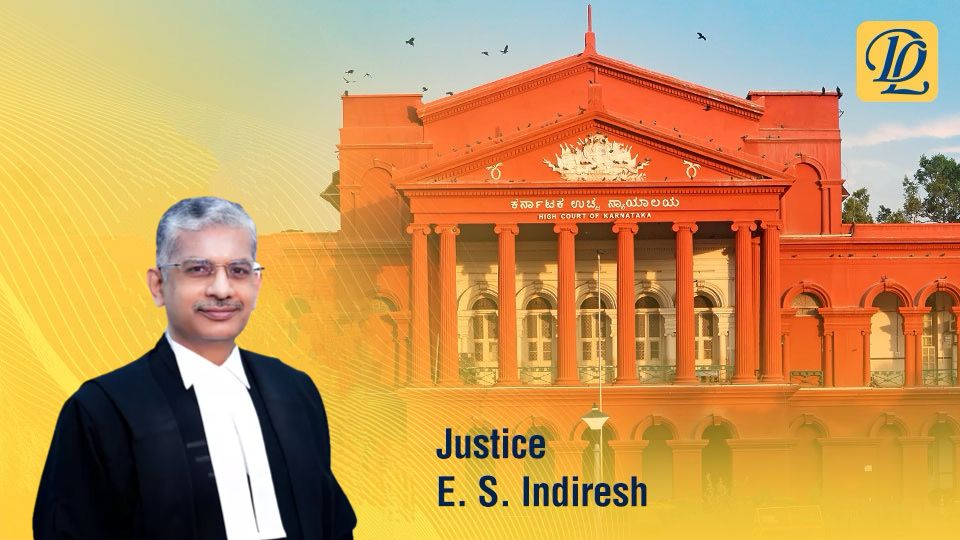
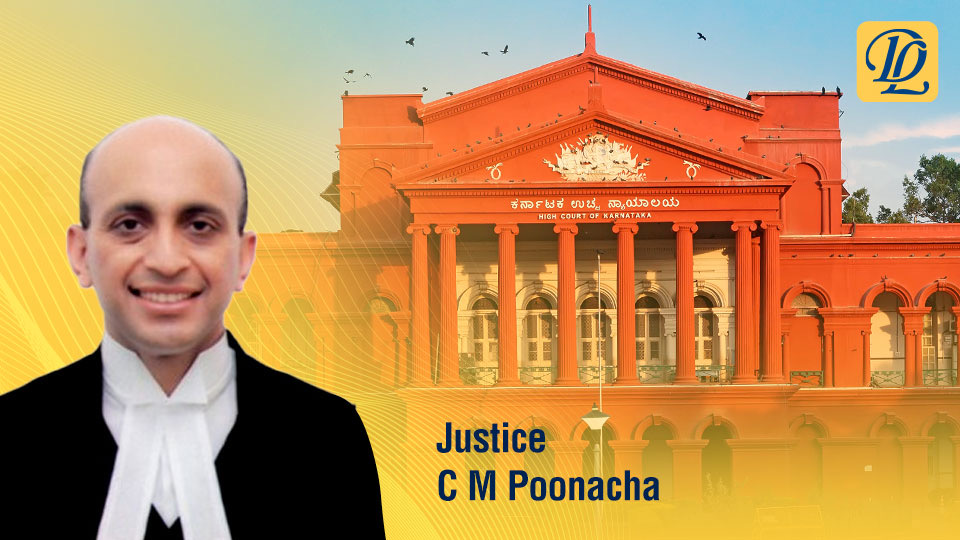
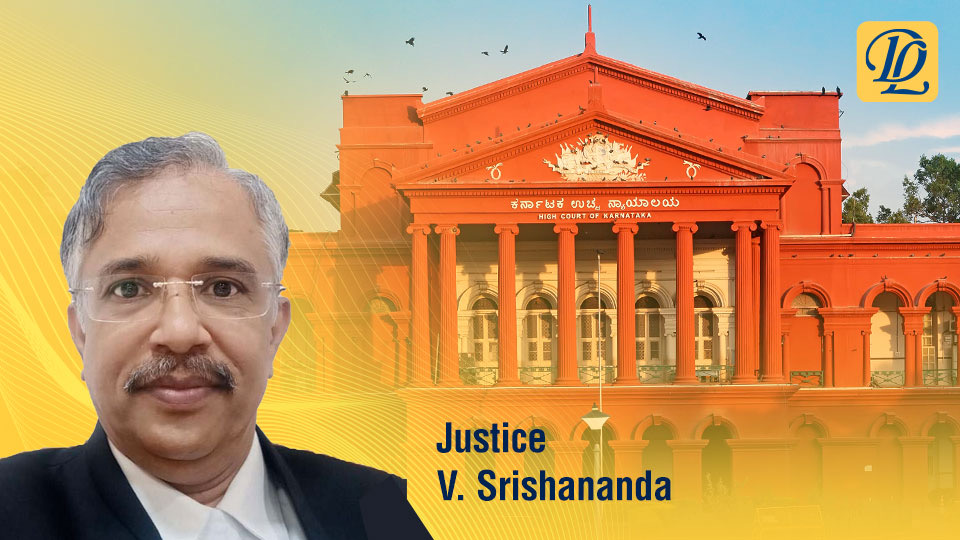
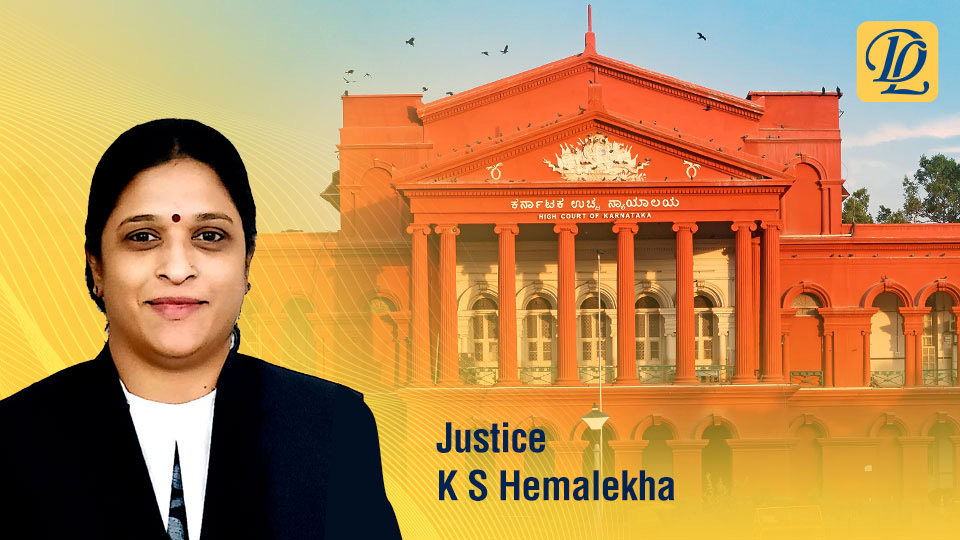

 Daksha Legal