Virtual Courts as ‘Global Disputes Redressal Forums’ – An emerging perspective.

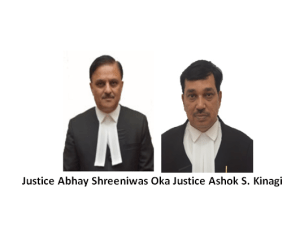
The recently concluded, longest Virtual Court via video conference by the Karnataka High Court (Chief Justice Abhay Shreeniwas Oka and Justice Ashok S Kinagi) in Securities Exchange Board of India vs Franklin Templeton Trustees Services Pvt Ltd & others (Writ Appeal 399/2020 and connected matters decided on 24 October 2020), is a clear indication of the emerging global and transnational disputes redressal process via Virtual Courts.

it is said ‘Sometimes it takes a disaster to bring humanity together‘. Radio was on the frontlines in both World Wars. It brought populace together. In one of the greatest speeches, Charlie Chaplin, in the movie “The Great Dictator” says.. “the aeroplane and the radio have brought us closer together. The very nature of these inventions cries out for the goodness in men, cries out for universal brotherhood, for the unity of us all.”  Flipside of this technological wonder was witnessed during the Rwandan genocide against the Tutsi. Radio Télévision Libre des Mille Collines (RTLM) broadcast from July 8, 1993 to July 31, 1994 played a significant role in inciting the April–July 1994 Genocide.

Today, we are witnessing another manmade disaster called Covid-19. However, the resultant lockdown and closure of courts have opened new avenue of communication in the form of Virtual Courts. The judiciary is now fully equipped for disputes resolution via video conference subject to minor & avoidable glitches. Disposal of cases at preliminary hearing and admission stage matches regular court scenario.

The matter in Securities Exchange Board of India vs Franklin Templeton Trustees Services Pvt Ltd & others was heard from August 12, 2020 in the afternoon session through video conferencing. The hearing concluded on 24th September 2020. The record of these writ petitions ran into more than 5,000 pages. The cases were heard even during the Court holidays on 29th August 2020 and 19th September 2020 . The hearing through video conferencing was conducted on 25 working days for total 61 hours without any major glitch. It enabled lawyers to appear from London, New Delhi, Chennai,  Mumbai  and  Bengaluru. The cause title shows several legal luminaries appearing for the parties. While Mr. Tushar Mehtha, Solicitor General of India logged in from Delhi. Mr. Harish Salve, Senior Advocate logged in from London, UK. Mr. Arvind Datar, Mr. Ravindra Shrivastava and Mr. Janak Dwarkadas, Senior Advocates and the instructing counsel logged in from Delhi. Mr. Uday Holla, Mr. K.G. Raghavan and Mr. Adithya Sondhi, Senior Advocates and Mr. M.B. Naragund, Additional Solicitor General of India logged in from Bangalore.

In the usual fairness, the Chief Justice bench has noted the compliments given by the Advocates for service rendered by the Registrar (Judicial) Shri. K.S. Bharath Kumar  and  his  team  as  well  as  Shri.   B.M.Satheesha,   Shri.C. Shashikanth and Mrs. T. Bhagya, Court Officers.

Large number of documents forwarded by the learned counsel through e-mail during the course of hearing were efficiently handled by the team and were immediately placed before the Court. The Court has expressed appreciation for service rendered by the aforesaid members of the staff, Shri. N.Suresh, Hardware Engineer and the team of Computer Committee.

The issue involved. The entire dispute revolves around winding up of six Mutual Fund Schemes of Franklin Templeton Trustee Services private Limited (the Trustees). The investors who challenged the winding up contended that the discretion conferred on a Mutual Fund under sub-clause (a) of clause (2) of Mutual Fund Regulation 39 was subject to the fulfillment of the conditions as provided in clause (15) of Regulation 18 and that consent of the unit-holders was required for winding up, in view of clause (15) of Regulations.

The Trustees contended that the decision to wind up the Schemes was pursuant to the express provisions of the Mutual Funds Regulations, as contended in the statement of objections filed by SEBI and that no approval from the unit- holders was required for taking a decision regarding winding up.

The Hon’ble Supreme Court, by its order dated 19 June 2020, transferred all the matters pertaining to the dispute, to Karnataka High Court with a request to the Hon’ble Chief Justice to take up matters himself in  a  Division Bench.

The Judgment: The Karnataka High Court has held that;

(1) Regulations 39 to 40 of the Mutual Funds Regulations are valid.

(2) When the Board of Directors of a Trustee company, decides to wind up a Scheme by taking recourse to sub-clause (a) of clause (2) of Regulation 39, the Trustee company is bound by its statutory obligation under sub-clause (c) of clause (15) of Regulation 18 of obtaining consent of the unit-holders  of the Scheme by a simple majority. 

(3) A notice as required by clause (3) of Regulation 39 can be issued and published only after making compliance with the requirement of obtaining consent of the Unit-holders.

(4) Considering the duties of the Trustees under the Mutual Funds Regulations, they perform a public  duty. Therefore, when it is found that the Trustees have violated the provisions of the SEBI Act or  Mutual Funds Regulations, a Writ Court, in exercise  of its jurisdiction under Article 226 of the Constitution of India, can always issue a writ of mandamus, requiring the Trustees to abide by the mandatory provisions of the SEBI Act or the Mutual Funds Regulations.

(5) No interference can be made with the decision of the Trustees dated 23rd  April 2020 of winding up of the said Schemes. However, the decision can be implemented only after obtaining the consent of unit-holders as required by sub-clause c) of clause 15 of Regulation 18. Issue No.(v) is answered accordingly;

(6) In exercise of the powers under Section 11B of the SEBI Act, SEBI has no jurisdiction to interfere with  the decision of winding up of a Scheme made by taking recourse to Regulation 39 (2)(a). 

Compiled by S. Basavaraj, Advocate, Daksha Legal

“A person taking advantage or benefit of a provision of law, shall not be permitted to raise a challenge to the very same provision under which the benefit was taken” – Authoritative Judgment on the point. Karnataka High Court. 23:10:2020

Jayamma vs The Regional Commissioner and others. Writ Petition 11768/2020 decided on 23 October 2020.

Judgment Link: http://judgmenthck.kar.nic.in/judgmentsdsp/bitstream/123456789/345337/1/WP11768-20-23-10-2020.pdf

Note: This is a case where the President of Jilla Panchayat in earlier round of Writ Petition opted  to  take benefit of Rule 3(2) of  the  new  Rules,  2020 under the Karnataka Gram Swaraj and Panchayat Raj Act, 1993.  The petitioner in the present writ petition raised a challenge to the very same provision under which she  took relief at the hands of  the  Court. The High Court hence relied on the rule of estoppel to reject the Writ Petition. The other question as to whether the 2020 Ordinance amending the provisions of Karnataka Gram Swaraj and Panchayat Raj Act, 1993 curtailing the term of office of the President from 5 years to 30 months is prospective or retrospective is kept open since the High Court rejected the Writ Petition on the preliminary ground of estoppel.

Relevant Paragraphs: 12. It is profitable  to  notice  series  of  declarations  made  by  the  Hon’ble  Apex  Court  on  “Rule  of  estoppel”.  In  the   case  of Nagubai Ammal Vs. B. Shama Rao,  reported  in  AIR  1956 SC 593, it was held “it is  clear  from  the  above  observations that the maxim that a person cannot ‘approbate  and reprobate’  is only one application of the doctrine of election, and that its operation must be confined to reliefs claimed in respect of the same transaction and  to the persons who  are parties thereto.”  In C.Beepathumma Vs. Velasari Shankaranarayana Kadambolithaya reported in  AIR  1965  SC  241,  the  classic  words of Maitland in Maitland’s Lectures on equity was appreciatingly noticed- “That he who accepts a benefit under  a deed or Will or other instrument must adopt the whole contents of that instrument, must conform to all  its  provisions and renounce all rights that are inconsistent with it.” Similarly, the same principle in White and Tudore’s Leading Cases in Equity, was noticed as follows;

“Election is the obligation imposed upon a party by courts of equity to choose between two inconsistent or alternative rights or claims in cases where there is clear intentions of the person from whom he derives one that he should not enjoy both…. That he who accepts benefit under a deed or Will must adopt the whole contents of the instrument.” All the above decisions were authoritatively quoted in National Insurance Co. Ltd. Vs. Mastan and Another (2006) 2 SCC 641. It was held that “the “doctrine of election” is a branch of “rule of estoppel”, in terms whereof a person may be precluded by his action or conduct or silence when it  is his duty to speak, from asserting a  right  which  he otherwise would have had. The doctrine of election postulates that when two remedies are available for the same relief, the aggrieved party has the option to select either of them but not both. Although there are certain exceptions to the same rule but the same has no application in the instant case.” Their Lordships were dealing with the right of a person to claim compensation under two separate enactments. It was held  that the person entitled to compensation may without prejudice to the provisions of one enactment, claim such compensation under either of those acts but not under both.

13. In the case of City Montessori School Vs. State of Uttar Pradesh and Others (2009) 14 SCC 253, once again the decision in Nagubai Ammal Vs. B.Shama Rao (supra) was quoted to the effect that, “  when on the same facts, a person  has right to claim one or two reliefs and with full knowledge he elects to claim one and obtains it, it is not open to him thereafter to go back on his election and claim the alternative relief.” While citing the decision in Union of India Vs. Krishan Lal Arneja (2004) 8 SCC 453, it was held that a party consenting       to     an     order     cannot      be     permitted      to    resile therefrom while retaining the benefit obtained therefrom.

14. In Shyam Telelink Limited Vs. Union of India (2010) 10 SCC 165, while quoting the maxim “qui approbat non- reprobat” (one who approbates cannot reprobate), it was held that the said maxim is firmly  embodied  in  English  common  law and  often applied by Courts in this country.   It is akin to    the doctrine of benefits and burdens which at its most basic  levels provides that a person taking advantage under an instrument which both grants  a  benefits  and  imposes  a  burden cannot take the former without complying  with  the latter. In the same decision, while noticing the decision in Verschures Creameries Ltd. Vs. Hull & Netherlands Steamship Co. Ltd, according to Halsbury’s Laws of England 4th Edn., Vol.16:

1508. Examples of  the common law principle of  election- After taking an advantage under an order (for example for the payment of costs) a party may be precluded from saying that it is invalid and asking to set it aside.” was quoted and thereafter held that this rule has to be applied to do  equity and must not be applied in such a manner as to violate the principles of right and good conscious.

15. In State of Punjab and others Vs. Dhanjit Singh Sandhu (2014) 15 SCC 144, it was held as follows: “the doctrine of election is based on the rule of estoppel,  the principle that one cannot approbate and reprobate  is inherent in it. The doctrine of estoppel  by  election  is  one  among the species of estoppel in pais (or equitable estoppel) which is a rule of equity. By this law, a person  may  be  precluded, by way of  his  actions,  or  conduct,  or  silence  when it is his duty to speak from asserting a right  which he  would  have otherwise had.  The  doctrine  of  “approbate  and  reprobate” is only a species of estoppel, it implies only to the conduct of the parties. As in the case of estoppel, it cannot operate against the provisions of statute. It  is  settled  proposition of law that once an order has been passed, it is complied with accepted by other party and he derived  the  benefit out of it, he cannot challenge it on any ground.”

17. In Ramesh Chandra Sankla and Others vs. Vikram Cement and Others, (2008) 14 SCC 58, it was held that “it is well settled that jurisdiction of the High Courts under Articles 226 and 227 is discretionary and equitable. The power of superintendence under Article 227 of the Constitution conferred on every High Court over all courts and tribunals throughout the territories in relation to which its exercises jurisdiction is very wide and discretionary in nature.  It can  be exercised ex debito justitiae i.e. to meet the ends of justice. It is equitable in nature. While exercising supervisory jurisdiction, a High Court not only acts as court of law but also as a court of equity. It is, therefore, within the power and also the duty of the Court to ensure that power of superintendence must “advance the ends of  justice  and uproot injustice…. Powers under Articles 226 and 227 are discretionary and equitable and are required to be  exercised in the larger interest of justice. While granting relief in favour of the applicant, the Court must take into account the balancing of interests and equities. It can mould relief considering the facts of the case. It can pass an appropriate order which justice may demand and equity may project. Court of equity must go much further both to give and refuse relief in furtherance of public interest. Granting or  withholding of relief may properly be dependent upon consideration of justice, equity and good conscience.”

Compiled by S.Basavaraj, Advocate, Daksha Legal

Karnataka Lokayukta Act, 1984. Public Servant being office bearer of a Society registered under the Karnataka Societies Registration Act, 1960. Lokayukta has no jurisdiction to investigate against such person qua Society, unless the Society is controlled by the State Government. Karnataka High Court. 26:3:2020

V.M. Narayana Swamy and another vs The State of Karnataka and another. Writ Petition 43810/2018 decided on 26 March 2020.

Judgment Link: http://judgmenthck.kar.nic.in/judgmentsdsp/bitstream/123456789/331592/1/WP43810-18-26-03-2020.pdf

Relevant Paragraphs 8. …following point would arise for our consideration: “Whether the Lokayukta/Upa Lokayukta under the Act has jurisdiction to investigate and hold an enquiry in respect of allegation made in the complaint against a person who is in the service or pay of a society registered under Karnataka Societies Registration Act, 1960 for mis- management, mis-appropriation failing to discharge his duty, mal- administration and the like?”

9. The jurisdiction of Lokayukta and Upalokayukta to investigate is circumscribed by the powers conferred under Section 7 of the Act. The jurisdiction so vested cannot extend beyond what is specifically provided thereunder. In other words, they have been conferred power to investigate a grievance or an allegation against a public servant as defined under the Act. They have not been conferred any power to investigate a grievance or an allegation against a private individual.

10. ….Where the Lokayukta or Upa Lokayukta proposes after making preliminary enquiry, as deemed fit, to conduct any investigation under the Act, is required to forward such copy of the complaint to the “public servant” against whom complaint is made to the and the competent authority concerned. In other words, the public servant is afforded an opportunity to offer his comments to such complaint. Thus, a harmonious reading of Section 7 and Section 9 would indicate that investigation can be taken up against a “public servant” only. The expression “public servant” is defined under Section 2(12) of the Act, which reads: (Section extracted). “The expression “Government servant” as indicated in Section 2(12)(d) is defined in Section 2(6) and it reads: (Section extracted).

11. A plain reading of Section 9 of the Act would clearly    indicate    that    investigation    against    a    ‘Public Servant’   under   the   Act   can   be   undertaken   by   the Lokayukta or Upa-Lokayukta after making such preliminary inquiry as deemed fit and such allegation is made against a public servant for having abused his position as ‘public servant’ to obtain any gain or favour to himself or to any other person or to cause undue hardship or harm to any other persons; was actuated in discharge of his function as a ‘public servant’ by personal interest or improper and correct motives; fails to act in accordance with the norms of integrity and conduct which ought to be followed by public servant; or his guilty of corruption, favoritism or nepotism or lack of integrity in his capacity. Thus, condition precedent for investigating under Section 7 or being proceeded under Section 9 to enquire into would be that such person against whom the proceedings under the Act is initiated should be a “Government servant”.

12. A person in the service of pay of such of the authorities as defined under Section 2(12) would also be amenable for being investigated by Lokayukta or Upa- Lokayukta. In the event of such person falling outside scope of section 2(12), it cannot be gainsaid by the Lokayukta or Upa-Lokayukta that such persons would  still be amenable to their jurisdiction, inasmuch as, it is only a “public servant” as defined under Section 2(12), who would be amenable for being investigated under Sections 7 and proceeded with under Section 9 of the Act. In the event of a person against whom the allegation is made, does not fall within the definition of Section 2(12), then necessarily such person cannot be roped in for investigation or proceeded under The Lokayukta Act.

13. It would be of benefit to note that under Section 2(12)(g)(iv) a society registered or deemed to have been registered under the Karnataka Societies Registration Act, 1960 would also be amenable to the jurisdiction of Karnataka Lokayukta, subject to such society being under the control of State Government and which is notified in this behalf in the official gazette. Thus, primary requirement for investigation being taken- up against a person falling under Section 2(12) is; (i) he/she should be “public servant” as defined under Section 2(12) of the Act; (ii) and, if such person is a society as indicated in Section 2(12)(g)(iv), then such society should be registered under the Karnataka Societies Registration Act 1960, under the control of State Government which is notified in the Official Gazette.

14. Petitioners herein are being investigated for their alleged acts or misdeeds said to have been committed by them as office bearers of the Association…

15.….Petitioners are not being investigated for their acts committed in the capacity of a “Government Servant” as defined under Section 2(6) of the Act or for their acts as a “public servant” as defined under Section 2(12). On the contrary, it is to be noticed at the cost of repetition that the entire allegation made by the complainant in his complaint …revolves around the acts alleged to have been committed by the petitioners as office bearers of the Association. Hence, we are of the considered view that petitioners do not fall under the definition of “public servant” as defined under Section 2(12) of the Act.

16.….there is no material on record to show that Association of which the petitioners were the office bearers of the society is controlled by the State Government and same has been notified in the official gazette issued in that behalf by the Government of Karnataka.

Compiled by S. Basavaraj, Advocate, Daksha Legal

Landmark Judgment on Criminal Law reforms. “Rape is not only a crime against women; it’s a crime against the entire civilized society. Physical scar will heal up but mental scar will remain forever”. Gang rapists to be imposed capital punishment- Karnataka High Court recommends.

Ramu and others vs State and others. Criminal Appeal 246/2014 & connected appeals, decided on 21 October 2020. Justice B. Veerappa and Justice K. Natarajan.

Judgment Link: http://judgmenthck.kar.nic.in/judgmentsdsp/bitstream/123456789/344930/1/CRLA246-14-21-10-2020.pdf

In one of the landmark judgments on Criminal law reforms, the Karnataka High Court expressed anguish over the beastly behaviour of the accused in committing gang rape on a student from Nepal. The High Court has called upon to the Parliament to take note of the extremely disgusting scenario where womanhood are treated as objects of lust and further made strongest recommendation to amend the Indian Penal Code to impose capital punishment on gang rapists.

The Hon’ble Court in its meticulously considered judgment has quoted excerpts from Vedas and other ancient scripts to note with utmost pain as to how women who were worshiped at one point of time are treated with utter impunity.

Relevant Paragraphs: ‘The rape is not only a crime against woman.. but it is a crime against the entire civilized society’.  Physical scar will heal up but mental scar will remain for ever.

25. The imposition of appropriate punishment is the    manner in which           the  ‘Court  responds  to the society’s cry for   justice  against the criminal’.                     Justice demands  that  the  Courts  should  impose punishment befitting  the  crime  so  that  the  Courts  reflect  public abhorrence. The Court must not only keep in view the rights of the criminal, but also the rights of the victim of the crime and the society at large while considering the imposition of appropriate punishment. 27. Under the Constitution of India, ‘Right to live with dignity’ is a fundamental right guaranteed and it is the fundamental duty of the State to protect it.  Sexual violence       by      the       accused         apart        from       being       a dehumanizing act, is an unlawful intrusion on the  right of privacy and sanctity of a woman.   It is a serious blow to her supreme honour and offends her self-esteem  and dignity as well.  It degrades and humiliates  the  victim and  where  the  victim  is  a  helpless  innocent woman, child      or     a     minor,       it     leaves      behind  a traumatic experience.   A rapist not only causes physical injuries, but leaves behind a scar on the most cherished position i.e., her        dignity,  honour,  reputation and chastity.   ‘Rape  is not only an   offence  against P.W.28 victim girl, but a crime against the entire society’.  It is a crime against basic human rights and also violates the most cherished fundamental right guaranteed under Article 21 of the Constitution of India. 28. Alarming increase in crimes depicts that the criminals are not afraid of the present criminal justice system. We feel that more stringent punishment has to be introduced by further amending the provisions of Section 376D stated supra imposing death penalty or life as stated supra and due publicity has to be given to the amended provisions in discharging and deterring others from committing such crimes. The media, which is rightly called the Fourth Estate of Democracy, can play a pivotal role in bringing about the awareness of the amended provisions of law and in sensitizing the general public on the traumatic impact of the invasion of a women’s body. 29. Manu-Smriti, which is basically a compilation of Vedic Laws, unequivocally states the reverence with which women were to be treated:Where women are worshipped, the Gods rejoice; Where they are not respected, all tasks become fruitless”. The Gods are kind to the homes where women are treated with honour. Where women are not honoured, there all actions (rituals) go in vain. Families where women are unhappy are doomed to be destroyed soon. Homes where women are not unhappy are destined always for greater prosperity.

30. In Vedas, all women have to be treated as mothers or elder sisters by male students and the admonition is: “The King’s wife, the Guru’s wife, the elder brothers’ wife, the mother-in-law and one’s own mother are considered as mothers”.

One is ordained to prostrate oneself before them every morning or whenever one meets them for the first time in  the  day.  This  is evident  from  the  reference  in the ‘Ramayana’.

32. Now the woman is typically stereotyped as sexual      object     of    pleasure       and     not     as     a    respectful motherly force. Hence, despite all material progress, western world is still inflicted with insecurity and lack of inner peace.

34. As is being rightly held by the Courts, including the Apex Court, a girl or a woman, in the tradition-bound non-permissive society of India, would be extremely reluctant even to admit  that  any  incident ,which is likely to reflect on her chastity, had ever occurred. She would be conscious of the danger of being ostracized by the society or being looked down by the society, including her own family members, relatives, friends, and neighbours. She would face the risk of losing the love and respect of her own husband and near relatives, and of her matrimonial home. If she is unmarried, she would apprehend that it would be difficult to secure a befitting life partners and a respectable matrimonial home. In view of these and similar factors, the victims and their relatives are not too keen to bring the culprit to the book.

46. Lord Denning while  appearing before the Royal  Commission on ‘Capital Punishment’ expressed the view as under:

“Punishment is the way in which society express its denunciation of wrongdoing and in order to maintain respect for law, it is essential that punishment inflicted for grave crimes should reflect revulsion felt by the great majority of the citizens. For them it is a mistake to consider the object of punishment as being deterrent or reformative or preventive and nothing else. The truth is that some crimes are so outrageous that society insists on adequate punishment because the wrong doer deserves it, irrespective of whether it is deterrent or not”.

51. It is the nature and gravity of the crime and not the criminal, which are germane for consideration of appropriate punishment in a criminal trial. The Court will be failing in its duty if appropriate punishment is not awarded for a crime which has been committed not only against the individual but also against the society to which the criminal and the victim belong.

52. In view of the pronouncements and declarations made by the Hon’ble Supreme Court, it is true that reformation as a theory of punishment had become the trend but that theory is applicable to such crimes, in which the damage is repairable or even if the damage cannot be repaired, salvation by other mode is possible. That theory is inapplicable in offences where damage is immense, irreparable and cannot be retractable and as such, severe punishment is the only mode.

58. In Vedic Society, great value was attached to the chastity of women. Therefore, any attempt to rob her off    of    chastity  was  considered       to    be     a    sin.  The Punishment  as     per     Manu      for    such  crime     included throwing the perpetrator out of the society.

  • Interestingly,          the      scriptures         provide       an

insight into not  only how the  perpetrator of  offence  of

rape was dealt with but also how the victim was dealt

with by the Society. It is surprising to note that when

victims of rape in modern India are admonished by the

Society, the Vedic Society was much more supportive  of

survivors of rape.

60. It is unfortunate, a horrific act that all the accused persons have committed heinous and inhumane crime of gang rape on the victim – P.W.28 for satisfaction of their lust and ruined her life for which she has to suffer throughout her life. “Rape is not only  a crime against woman-P.W.28 victim girl, but it is a crime against the entire civilized society”.

61. Punishment must also respond to the cry of the society for justice against the criminals. While considering the punishment to be given to an accused, the Court should be alive not only to the rights of the criminal for awarding just and fair punishment by administrating justice tempered with such mercy, as the criminal may justly deserve, but also to the rights of the victim of the crime to have assailant appropriately punished and the society’s reasonable expectations from the Court for the appropriate deterrent punishment conforming to the gravity of the offence and consistent with the public abhorrence for the heinous crime committed by the accused.

67.

‘Gang rape’ is more dangerous than ‘Murder’.

The demand for justice has to be made fully within

legal    frame   work.    In   view   of   the    provisions   of

Section  10 of  Indian  Penal  Code  the word  “Man”

denotes a male human being of any age; and the

word  “Woman”  denotes  a  female  human  being  of

any  age.  The provisions of Section 376DB of  Indian

Penal Code prescribes punishment for gang rape on

woman  under  twelve  years  of  age,  which  shall  be

imprisonment       for       life,        which        shall        mean

imprisonment  for  the  remainder  of  that person’s

natural life and with fine or with death.        Since the

unfortunate  incident  has  occurred  on  13.10.2012

and  the  provisions  of  Section   376(2)(g)   of Indian

Penal  Code  provides  rigorous  imprisonment  for  a

term  which  shall  not  be  less  than  10  years,  but

which may extend to life and shall also be liable to

fine.       The  provisions  of  Section  376D  of   Indian

Penal Code has been amended by the Criminal Law

(Amendment)  Act  2013  (13  of  2013)  which  has  come

into    force    with     effect     from    3.2.2013      imposing

punishment  of  rigorous  imprisonment  for  a  term

which  shall  not  be less than 20  years,  but   which

may extend to life, which shall mean imprisonment

for remainder of that person’s natural life and with

fine.     In view of the provisions of Section 10 and

Section 376DB of Indian Penal Code stated supra,

in our considered opinion, now it is appropriate for

the Legislature/Central Government in order to  curb

the    menace    of   ‘gang    rape’    against    woman,   the

provisions  of   Section   376D  of   Indian Penal  Code

requires  further  amendment  imposing   punishment

for  death  in  addition  to  the  existing  provision of

imprisonment for life and shall also liable to fine

on  par  with  the  provisions  of  Sections  376AB  and

376DB of Indian Penal Code keeping in view the

definition  of  ‘Woman’  under  Section  10  of Indian

Penal Code.

69.

  • Though Indian Penal Code was enacted by

Act 45 of 1860, and even after lapse of 74 years of

independence, still woman is  not  safe in the hands

of rapists/violators of law.      Last but not the least,

we want to send a strong message to the Society by

reminding    ourselves,    the     famous    Quote    of    the

Father        of       the        Nation,       Mahatma       Gandhi,

immediately  after  independence  that,  “The  day a

woman can walk freely on the roads at night, that

day      we      can      say      that      India      has      achieved

independence.” Therefore, we express our anguish towards safety of the vulnerable woman folk in the society that when an educated woman studying Law Course was unable to go out of the hostel with her friend at 9.30 p.m. as the accused ravished her by abducting and committing gang rape on her and we cannot say that we have achieved the Mahatma Gandhi’s dream of Indian Independence stated supra, otherwise, we are not proud to say that India achieved empowerment of woman even after seven decades of Independency of our Country.

70.

  • We, the Judges are the societal parents.

If our concern for the society of girls/ women can be

summed  up  in  one  sentence  that  “An  attack  on

anybody’s daughter is an attack on our daughter.”

While confirming the judgment We hereby recommend the Legislature/Central Government to further amend the provisions  of Section 376D of Indian Penal Code – Gang rape into capital punishment in addition to the existing provision for imprisonment of life and with fine on par with the provisions of Section 376AB and 376DB of Indian Penal Code keeping in view of definition of ‘Woman’ under Section 10 of Indian Penal Code in order to curb  the menace of ‘gang rape’ in the society at large.

Compiled by S.Basavaraj, Advocate, Daksha Legal.

No confidence motion. Right under the Act cannot fail due to non-framing of Rules. Enforcement of rights under plenary legislation cannot depend on subordinate legislation. Karnataka High Court. 27:8:2020

Ratnamma Baramappa Nagara and others vs State of Karnataka and others. Writ Petition 146835-853/2020 decided on 27 August 2020. Justice Sachin Shankar Magadum.

Judgment Link: http://judgmenthck.kar.nic.in/judgmentsdsp/bitstream/123456789/339068/1/WP146835-20-27-08-2020.pdf

Relevant paragraphs: 25. The question that would arise before this Court is, once the members of Zilla Panchayath resolve to initiate no-confidence motion against the fourth respondent-President, whether the no- confidence motion can be kept in abeyance on the premise that Rules are yet to be framed. To answer this question it would  be relevant to examine the proposition laid down by the Hon’ble Apex Court in Vipulbhai M. Chaudhary’s case (2005) 8 SCC 1. Wherein at Paragraph 16 while exhaustively dealing with no-confidence motion pertaining to the members of the Co-Operative Societies has held as follows:

“16. The principle of representative democracy is the election of representatives by the people otherwise eligible to cast their vote and the people thus elected, constituting the body for the management of an institution. Thus, in the case of co-operative societies, after the amendment in the Constitution, there has to be a Board of elected representatives, which may be called Board of Directors or Governing Body or a Managing Committee, etc. to which the members entrust the direction and control of the management of the affairs of the society. That representative body selects one among the elected representatives as its Chairman or any other office-bearer, as the case may be. Selection is the act of carefully choosing someone as the most suitable to be the leader or office-bearer. Thus, there is a lot of difference between election of delegates/representatives to constitute a body and selection of a person by the body from amongst the elected members to be the leader. It is to be borne in mind that the management and control of the society is entrusted to the representative body viz. the Board of Directors and that the Chairperson elected by the Board of Directions is the Chairperson of the society and not of the Board of Directors”.

26. The Hon’ble Apex Court having observed as above was also of the view that the Democracy demands accountability and transparency in the activities of the Chairperson especially in view of the important functions entrusted with the Chairperson in the running of Panchayat Raj Institutions. The Apex Court was of the view that such duties can be discharged by the Chairperson only if he/she enjoys the continuous confidence of the majority members in the panchayath. The Apex Court was also of the view that any statutory provision to demonstrate that the Chairperson has lost the confidence of the majority is conducive to public interest and adds strength to such bodies of the self-governance. The Apex Court at Para 25 has further observed thus:

“25. Silence in the Constitution and abeyance as well has been dealt extensively by Michael Foley in his celebrated work The Silence of Constitutions. To quote from the Preface: “ Abeyances refer to those constitutional gaps which remain vacuous for positive and constructive purposes. They are not, in any sense, truces between two or more defined positions, but rather a set of implicit agreements to collude in keeping fundamental questions of political authority in a state of irresolution. Abeyances are, in effect, compulsive hedges against the possibility of that which is unresolved being exploited and given meanings almost guaranteed to generate profound division and disillusionment. Abeyances are important, therefore, because of their capacity to deter the formation of conflicting positions in just those areas where the potential for conflict is most acute. So central are these abeyances, together with the social temperament required to sustain them, that when they become the subject of heightened interest and subsequent conflict, they are not merely accompanied by an intense constitutional crisis, they are themselves the essence of that crisis.”

In Part II, Chapter Four, the author has also dealt with the constitutional gaps and the arts of prerogative. To the extent relevant, it reads as follows (P.82):

“ Gaps in a constitution should not be seen as simply empty space. They amount to  a substantial plenum of strategic content and meaning vital to the preservation of a constitution. Such interstices  accommodate the abeyances within which the sleeping giants of potentially acute political conflict are communally maintained in slumber. Despite the absence of any documentary or material form, these abeyances are real, and are an integral part of any constitution. What remains unwritten and indeterminate can be just as much responsible for the operational character and restraining quality of a constitution as its more tangible and codified components.”

27.The Apex Court has further held that the co-operative society registered under the Central or the State Act is bound to function as a democratic Institution and conduct its affairs based on democratic principles. The Apex Court was of  the view that democratic functioning on democratic principles is to be reflected in the respective Acts or Rules or bye-laws both on the principle and procedure. If such Rules or procedures are not contemplated then it is for the Court to read the democratic principles and if there is no express provision under the Act or Rules, or Bye-laws for removal of an office bearer, such office-bearer is liable to be removed in the event of loss of confidence by following the same procedure by which he was elected to the office. In this background, the contention of the learned Senior counsel appearing for the fourth respondent that this Court cannot exercise jurisdiction under Article 226 of the Constitution of India needs to be out rightly rejected.

30. In the present writ petitions, the petitioners are seeking a writ of mandamus. The petitioners are duly elected members of Zilla Panchayath and having expressed no confidence motion, have submitted a requisition to Respondents 2 and 3 as well as to the fourth respondent. The petitioners have statutory right to seek ‘No-confidence motion. On examination of the averments and grounds raised in the writ petition and also having examined the judgments cited by the learned counsel appearing for the petitioners, it is clearly forthcoming that the petitioners have some legal right to seek ‘No- confidence motion’ against the respondent No.4. The Act clearly contemplates corresponding legal duty upon the respondents.

31.In the present writ petitions, the petitioners are seeking a writ of mandamus. The petitioners are duly elected members of Zilla Panchayath and having expressed no confidence motion, have submitted a requisition to Respondents 2 and 3 as well as to the fourth respondent. The petitioners have statutory right to seek ‘No-confidence motion. On examination of the averments and grounds raised in the writ petition and also having examined the judgments cited by the learned counsel appearing for the petitioners, it is clearly forthcoming that the petitioners have some legal right to seek ‘No- confidence motion’ against the respondent No.4. The Act clearly contemplates corresponding legal duty upon the There are no two opinions about the aphoristic judicial observation that Article 226 of the Constitution confers extraordinary jurisdiction on this Court and that is wide as well as expansive, no fetter can be placed on the exercise of the said extraordinary jurisdiction. The adjudicatory ambit of an issue, indeed, is kept to the discretion of Constitutional Courts. The primary purpose of a writ of mandamus is to protect and establish rights and to impose a corresponding imperative duty on State and its officials.

33…I do not find any legislative intent indicating that the authority exercising power under the amended provisions has to wait until and unless, rules are framed in that regard. The word “may” would in no way preclude the authority from exercising its power under the Statute.

34.… I am of the view that in absence of any such express provision, framing of rules cannot be a condition precedent for exercise of power under the Statute. The Principle Act clearly contemplates a procedure and there would be no impediment for the authority to follow the existing procedure.

Compiled by S.Basavaraj, Advocate, Daksha Legal.

Election Petition. Tribunal has no power to grant interim order staying election of the returned candidate. Karnataka High Court 16:10:2020

Jayavani vs P. Geetha and others. Writ Petition 52861/2019 decided on 16 October 2020. Justice Krishna S Dixit.

Judgment Link: http://judgmenthck.kar.nic.in/judgmentsdsp/bitstream/123456789/344729/1/WP52861-19-16-10-2020.pdf

Relevant Paragraphs: 5. By now, it is well established that democracy and republicanism are the basic features of  the  Constitution;  about half a century ago, this Court in Sri. S Nagangound vs Y. Basy Reddy,  1969  ILR  Mys.  734,  whilst  invalidating a Munsiff’s interim order made in an election petition restraining the returned candidate  from functioning  as a member of the village panchayat has observed as under: “Normally in election matters, the verdict of the electorate has to be respected and given effect to until it is set aside on any one of the grounds on which the law permits it to be set aside.” The reasons for this view are not far to seek; if a returned candidate in an election is restrained from functioning merely because his election is in challenge,  it would not augur well   for the people of the electoral constituency; they lose a representative whom they have elected, and to that extent, there would be none in the municipal body to voice their concern; this is not a happy thing to happen in local self governance; added to this, ordinarily, the trial of election petitions is a long drawn exercise and at times such exercise consumes the full electoral tenure in question, the legislative mandate to accomplish the same in a time bound manner, notwithstanding; that is the reason why the legislature in its wisdom and consciously has not empowered the Election Tribunal to grant interim relief such as staying of election result or such other order which may have that effect, during the pendency of election disputes; this aspect having not been adverted to by the learned Judge of the Court below, the impugned order is infected with a legal infirmity, apparent on its face.

6. Although, the election petitions are tried by the Civil Courts, they are only statutory tribunals which ordinarily, do not have inherent powers in the absence of statutory enablement; this Court in Malleshappa Vs. Pavanasiddappa, 1979 (2) KLJ 171, has observed that a Munsiff functioning under the then Karnataka Village Panchayats (Election of Chairman and Vice Chairman) Rules being a persona designata does not have inherent power; merely because Section 24 of the Act prescribes CPC procedure for trial of an election petition as is applicable to suits, it cannot be readily inferred that these tribunals too have inherent power like the Civil Courts; the conspicuous absence of power to grant interim relief in election disputes, is a matter of legislative policy; a contention to the contra, militates against the rudiments of Election Jurisprudence and therefore the impugned order is ex facie unsustainable.

7. The Apex Court in Jyothi Basu vs Debi Ghosal , AIR 1982 SC 983 at para 8, has observed as under:

“A right to elect, fundamental though it is to democracy, is, anomalously enough, neither a fundamental right nor a Common Law Right. It is pure and simple, a statutory right. So is the right to be elected. So is the right to dispute an election. Outside of statute, there is no right to elect, no right to be elected and no right to dispute an election. Statutory creations they are, and therefore, subject to statutory limitation. An Election petition is not an action at Common Law, nor in equity. It is a statutory proceeding to which neither the Common Law nor the principles of Equity apply but only those rules which the statute makes and applies. It is a special jurisdiction, and a special jurisdiction has always to be exercised in accordance with the statute creating it. Concepts familiar to Common Law and Equity must remain strangers to Election Law unless statutorily embodied. A Court has no right to resort to them on considerations of alleged policy because policy in such matters as those, relating to the trial of election disputes, is what the statute lays down. In the trial of election disputes, Court is put in a straight jacket. Thus the entire election process commencing from the issuance of the notification calling upon a constituency to elect a member or members right up to the final resolution of the dispute, if any, concerning the election is regulated by the Representation of the People Act, 1951, different stages of the process being dealt with by  different  provisions  of  the  Act. …”

The above observations equally apply to the municipal election disputes as well, since the Municipal  Bodies  now  have been granted constitutional status vide Articles 243-Q & 243-R introduced to the Constitution by the 74th Amendment, and that such bodies are grassroot units of democracy.

In the above circumstances, this Writ Petition succeeds;  a Writ of Certiorari issues quashing the impugned order; the learned Judge of the Court below is requested to accomplish the trial & disposal of the election case in E.P.No.1/2019,  within an outer limit of four months, and report compliance to the Registrar General of this Court.

Compiled by S. Basavaraj, Advocate, Daksha Legal.

Hindu Succession Act, 1956. Ancestral property partitioned and sold prior to 2005 amendment. Suit for partition by daughter is maintainable under the 1994 Karnataka amendment. Plaint cannot be rejected. Karnataka High Court. 14:9:2020

H.P. Chikkarama Reddy and another vs Kanthamma and others. Civil Revision Petition 431/2014 decided on 14 September 2020. Justice M.I. Arun.

Judgment Link: http://judgmenthck.kar.nic.in/judgmentsdsp/bitstream/123456789/341450/1/CRP431-14-14-09-2020.pdf

Relevant paragraphs: 10. Prakash and others vs Phulvati and others. reported in (2016) 2 SCC 36. Paragraphs 14, 17, 18, 22 and 23 of the said judgment referred to. Para 23 of Phulvati “Accordingly, we hold that the rights under the amendment are applicable to living daughters of living coparceners as on 9.9.2005 irrespective of when such daughters are born. Disposition or alienation including partitions which may have taken place before 20.12.2004 as per law applicable prior to the said date will remain unaffected. Any transaction of partition effected thereafter will be governed by the Explanation.”.

11. Judgment in Vineet Sharma vs Rakesh Sharma and others reported in 2020 SCC Online SC 641 referred to. Para 129 of Vineet Sharma “Resultantly, we answer the reference as under: (i) The provisions contained in substituted Section 6 of the Hindu Succession Act, 1956 confer status of coparcener on the daughter born before or after amendment in the same manner as son with same rights and liabilities. (ii) The rights can be claimed by the daughter born earlier with effect from 9.9.2005 with savings as provided in Section 6(1) as to the disposition or alienation, partition or testamentary disposition which had taken place before 20th day of December, 2004. (iii) Since the right in coparcenary is by birth, it is not necessary that father coparcener should be living as on 9.9.2005. (iv) The statutory fiction of partition created by proviso to Section 6 of the Hindu Succession Act, 1956 as originally enacted did not bring about the actual partition or disruption of coparcenary. The fiction was only for the purpose of ascertaining share of deceased coparcener when he was survived by a female heir, of Class-I as specified in the Schedule to the Act of 1956 or male relative of such female. The provisions of the substituted Section 6 are required to be given full effect. Notwithstanding that a preliminary decree has been passed the daughters are to be given share in coparcenary equal to that of a son in pending proceedings for final decree or in an appeal. (v) In view of the rigor of provisions of Explanation to Section 6(5) of the Act of 1956, a plea of oral partition cannot be accepted as the statutory recognized mode of partition effected by a deed of partition duly registered under the provisions of the Registration Act, 1908 or effected by a decree of a court. However, in exceptional cases where plea of oral partition is supported by public documents and partition is finally evinced in the same manner as if it had been affected by a decree of a court, it may be accepted. A plea of partition based on oral evidence alone cannot be accepted and to be rejected out rightly.

Placing reliance on the above two decisions of the Hon’ble Supreme Court, the petitioners state that as the partition deeds in question and the sale deed in favour of petitioner No.1 were executed prior to coming into force of the amended Section 6 of the Hindu Succession Act, 1956, respondent No.1 has no right, title or interest over the properties in question and consequently, the suit is barred by law and the plaint ought to have been rejected by the trial Court.

13. The State Amendment of Karnataka had introduced Sections 6-A, 6-B and 6-C to Hindu Succession Act with effect from 30.07.1994. Section 6-A read as under:

“6A. Equal rights to daughter in co-parcenary property. Notwithstanding anything contained in section 6 of this Act-

(a)in a joint Hindu family governed by Mitakshara law, the daughter of a co-parcener shall by birth become a co-parcener in her own right in the same manner as the son and have the same rights in the co-parcenary property as she would have had if she had been a son inclusive of the right to claim by survivorship and shall be subject to the same liabilities and disabilities in respect thereto as the son;

(b) at a partition in such a joint Hindu family the co-parcenary property shall be so divided as to allot to a daughter the same share as is allotable to a son:

Provided that the share which a predeceased son or a predeceased daughter would have got at the partition if he or she had been alive at the time of the partition, shall be allotted to the surviving child of such predeceased    son   or    of    such   predeceased daughter:

Provided further that the share allotable to the predeceased child of a predeceased son or of a predeceased daughter, if such  child had been alive at the time of the partition, shall be allotted to the child of such predeceased child of the predeceased son or  of such predeceased daughter, as the case may be;

(c) any property to which a female Hindu becomes entitled by virtue of the provisions of clause (a) shall be held by her with the incidents of co-parcenary ownership and shall be regarded, notwithstanding anything contained in this Act or any other law for the time being in force, as property capable of being disposed of by her by will or other testamentary disposition;

(d) nothing in clause (b) shall apply to a daughter married prior to or to a partition which had been effected before the commencement of Hindu Succession (Karnataka Amendment) Act, 1990.

The said amendment was in operation till the amendment to the Hindu Succession Act made by the Parliament, which came into effect on 09.09.2005.

14. Thus, for the purpose of State of Karnataka, the daughters had equal rights in coparcenary property even prior to the Parliament amending Section 6 which came into effect from 09.09.2005. Nevertheless, daughters married prior to the amendment were excluded from the coparcenary rights. The said restriction is removed by the amendment passed by the Parliament.

15. The decisions of the Hon’ble Supreme Court referred to by the petitioners considered those transactions in which the daughters had no right over the property prior to the amendment made by the Parliament came into force. By virtue of the said decisions, the daughters cannot prefer a suit for partition, in the event if they had no right over the property prior to the amendment coming into force and the property was alienated prior to amendment coming into force. The above decisions of the Hon’ble Supreme Court do not bar the daughters from instituting a suit for partition, if as per prevailing law, prior to amendment she had a right over the property. In the instant case, the partitions took place by virtue of two partition deeds dated 06.02.2003. The sale took place on 22.11.2004.….But, if she had a right over the properties due to Karnataka Amendment which introduced Section 6-A to Hindu Succession Act, which was in force till it was eclipsed by the Central Amendment, in that event, she can maintain a suit for partition.

Compiled by S. Basavaraj, Advocate, Daksha Legal

Karnataka Land Revenue Act. Land converted to industrial purpose and falling within Planning Area under the Karnataka Town and Country Planning Act. Powers under under KLR Act are ousted and the Deputy Commissioner has no power to deal with further change of land use. Karnataka High Court 30:7:2020

Kirloskar Electric Company Limited vs The State of Karnataka and another. Writ Petition 106705/2019. Decided on 30 July 2020.

Judgment Link: http://judgmenthck.kar.nic.in/judgmentsdsp/bitstream/123456789/341844/1/WP106705-19-08-09-2020.pdf

Relevant Paragraphs: 16.Having regard to the submission made by the learned counsel for the petitioner and the learned Additional Advocate General, the following questions arise for consideration. i Whether the 2nd respondent- Deputy Commissioner is a competent authority  to  initiate the proceedings to terminate the grant and to resume the land? ii. Whether provisions of Section 95 and 97 of the Karnataka Land Revenue Act are applicable?

Decisions in ILR 1974 KAR 1313; Abdul Basheer Sab v/s State  of  Mysore  and others, ILR 2002 KAR 4264; the Deputy Commissioner and another V/s V.B.T.Mallikarjun and others, ILR     1988       KAR      1398;       Special Deputy Commissioner V/s Narayanappa, ILR   2005    KAR    60;    J.M.Narayana and others V/s Corporation of the City of Bangalore and others, (2006)    12    SCC    33;    Siemens     Ltd. V/s      State     of    Maharashtra       and others.(2010) 13 SCC 427; Oryx Fisheries Private Limited V/s Union of India and others, (2015) 3 SCC 695; Joint Collector and another V/s  D.Narsing  Rao and others, (2018) 6 KLJ 792, Nekkanti Rama Lakshmi V/s State  of  Karnataka and others, (2018) 12 SCC 527; Chhedi Lal Yadav and others v/s Hari Kishore Yadav (D) through LRs and others , in   (1995)1SCC295   in   the   case   of   State of Karnataka and others V/ s Shankar Textiles Mills Ltd , ILR  1974 SCC online Kar 124 : ILR 1974 Kar  1313; Abdul Basheer Sab V/ s State of Mysore and others, considered.

25. There is no dispute  that  the  property in question is  included in  the Revised Comprehensive Development Plan/Master Plan 2021 and it is situated within the Hubballi Dharwad Municipal Corporation Area. Therefore section 4(4) of the Karnataka Municipal Corporations Act is applicable and the property tax is recovered from the Municipal Corporation.

26. Since the land is not an  agricultural and is put to industrial use, it is not required to  be converted from industrial purpose to  non agricultural purpose. Therefore section 95(2) of the Karnataka Land Revenue Act is not  applicable. When section 95(2) of the Act is not applicable, consequently section 97 is also not applicable.

35. It is clear that section 97  of  the  Act  can be invoked only if section  95(2)  is applicable. To apply section 95(2) of the Act, the property should be an agricultural land assessed to the land revenue. In this case admittedly the land was converted to industrial purpose.

40. In identical circumstances, the Co- ordinate Bench of this Court while  considering the provisions of Sections 14 and 24(1) of the Karnataka Town and  Country  Planning  Act, 1961, in the case of Special Deputy Commissioner Vs. Narayanappa, reported in ILR 1988 KAR 1398 at paras 9, 12  and 13  held as under: …12. use of land falling within the area of  ODPor CDP could be effected  or  undertaken only with the written permission of the Planning Authority. Further in view of the Section the jurisdiction of the Deputy Commissioner under Section95  of  the Land Revenue Act gets ousted and such permission could be obtained or secured only from the Planning Authority  under the Act.

42. In the present case admittedly,  the land in question is within the corporation limits. Under these circumstances in view of the overriding effect of Town and Country Planning Act, the provisions of Land Revenue  Act  and Land Revenue Rules ceases to operate. The Deputy Commissioner has no power  under Section 95 of the  Karnataka  Land  Revenue  Act to grant or refuse permission. In view of Section 76(m), the change in land use of land within the corporation area or within the area ODP or CDP would be effected or undertaken only with the permission of the planning authority. Further in view   of    the   section,   the   jurisdiction   of    the Deputy Commissioner under Section 95 of the Land Revenue Act gets ousted.

Compiled by S. Basavaraj, Advocate, Daksha Legal.

Constitution of India. Articles 341 & 342. Scheduled Castes/Tribes. While insertion of a new entry is prospective, adding synonymous & equivalent name to existing entry is retrospective. Karnataka High Court. 14:9:2020

On Facts. ‘Medar’ is synonym of ‘Meda’ and hence the entry Medar in 2012 is retrospective.

Parushuram vs The Deputy Commissioner and others. Writ Petition 65002/2011. Decided on 14 September 2020. Justice S.R.Krishna Kumar.

Judgment Link: http://judgmenthck.kar.nic.in/judgmentsdsp/bitstream/123456789/341880/1/WP65002-11-14-09-2020.pdf

Relevant paragraphs: 4. The following points arise for consideration in this petition:

i. Whether a clarificatory, elucidatory, declaratory    or explanatory amendment to an Act is prospective or retrospective?

ii What is the scope, ambit and amplitude of Articles 341 and 342 of the Constitution of India?

iii Whether a clarificatory, elucidatory, declaratory    or  explanatory amendment by a Law of the Parliament exercising powers under Articles 341(2) or 342(2) of the Constitution of India to the original constitution (Scheduled Tribes) Presidential Order of the year 1950  is prospective or retrospective?

iv. Whether  The Constitution (Scheduled  Tribes) Order (Amendment) Act, 2012  (Annexure L) to the Constitution (Scheduled Tribes) Order, 1950 whereby in  Entry No.37 of Part VI relating to State of Karnataka, the  word ‘Medara’ is inserted after the words ‘Meda’ in the very same Entry No.37 is prospective or retrospective?

8. In   Crawford’ s    Statutory   Construction, at Page 107 paragraph 74 reads as follows: “74. Declaratory Statutes:- Generally speaking, declaratory statutes can be divided into two clauses: (1) those declaratory of the common law and (2) those  declaring the meaning of an existing statute. Obviously, those declaratory of the common law should be construed according to the common law. Those of the second class are  to  be  construed as intended to lay down a rule  for future cases and to act retrospectively. They closely resemble interpretation clauses and their paramount purpose is to remove doubt as to the meaning of the existing law, or to correct a construction considered erroneous by the legislature.”

State Bank of India v. V. Ramakrishnan – ( 2018) 17 SCC 394 and State of Bihar v. Ramesh Prasad Verma -( 2017) 5 SCC 665, Union of India v. Martin Lottery Agencies Ltd – (2009) 12 SCC 209, T.N.  Electricity  Board v. Status Spg. Mills Ltd-(2008) 7 SCC 353, Zile Singh v. State of Haryana – (2004) 8 SCC 1 relied on.

11. In the light of the  aforesaid  well settled principles, I am of the considered opinion that a clarificatory, elucidatory, declaratory or explanatory amendment to an Act or a statutory provision will have retrospective effect and will operate retrospectively and such an amendment to an Act or a statutory provision would relate back to the date of the original enactment.

15. State of Maharashtra vs Milind and others – (2001) 1 SCC 4 relied on. In view of the law laid down  by  the Apex Court in Milind’s case supra, I am of the considered opinion that once a Presidential Notification is issued under Articles 341(1) of 342(1) of the Constitution of India, it can be varied only by a Law of the Parliament and the  said Notification can not be varied, modified, altered, amended or tinkered around by anything or anyone including a subsequent notification, either by the Central Government or State Government. As a corollary, in the absence of a law by the Parliament exercising powers under Articles 341(2) or 342(2), any central or state notification issued subsequent to a Presidential Notification being issued exercising powers  under Articles 341(1) or 341(2) would clearly be illegal, invalid, non-est, inoperative and void-ab- initio.

Jayanna vs Deputy Commissioner – 2013( 1) Kar. L.J. 177(FB) and Zile Singh -Vs- State of Haryana AIR 2004 SC 5842 relied on.

21.In view of the law laid down by the Hon’ble Full Bench in Jayanna’s case supra, I am of the considered opinion that any amendment to the Presidential Order of 1950 by a law of the Parliament exercising powers under Articles 341(2) or 342(2) whereby a particular name describing the scheduled caste/tribe which is synonymous and equivalent to the already existing entry is inserted/ included/added in the very same entry after the existing names in the said entry without creating or adding a new or separate entry or tribe and  without  increasing the total number of scheduled castes/tribes or  the total number of entries, the said amendment is merely a clarificatory, elucidatory, declaratory or explanatory amendment which is retrospective in nature and operates retrospectively and relates back to the date of the  original Presidential Notification of the year 1950.

23. The aforesaid Amendment Act, 2012 clearly indicates that the name, ‘Medara’ was inserted and included after the name, ‘Meda’ in the very same pre-existing Entry No. 37 of the Presidential Order, 1950 without either creating or adding a totally new entry or a new scheduled tribe. To put it differently, under the said Amendment Act, 2012 the name ‘Medara’ was merely included, added and inserted in the very same pre-existing Entry No. 37 consisting of a synonymous and equivalent name, ‘ Meda’, without creating or adding a new or  separate entry or tribe and without increasing the total number of scheduled castes/tribes or the total number of entries and consequently, the said Amendment Act, 2012 is merely a clarificatory, elucidatory, declaratory or explanatory amendment which is retrospective in nature and operates retrospectively and relates back to the date of the original Presidential Notification of the year 1950.

26. It is brought to my notice that despite the decision of the Full Bench of this Court in Jayanna’s case supra, the State government is not implementing or giving effect to Amendment Acts by the Parliament exercising powers under Articles 341(2) and 342(2) of the Constitution of India in respect of other scheduled castes and tribes despite the said amendments being merely clarificatory, elucidatory, declaratory or explanatory amendments which are retrospective in nature and operate retrospectively and relate back to the date of the original Presidential Notification of the year 1950. Under these circumstances, I deem it fit and proper to issue suitable directions to the State government  in this regard.

The Karnataka State Government is directed to implement and give effect to the decision of the Full Bench in the case of Jayanna vs Deputy Commissioner–2013(1) Kar.L.J 177(FB)  forthwith immediately in respect of all persons belonging to scheduled castes/ scheduled tribes by issuing/ passing such appropriate notifications, orders or directions;

Compiled by S. Basavaraj, Advocate, Daksha Legal.

Criminal Procedure Code. Incriminating material can be utilized against the accused only if the same is brought to his attention with opportunity to explain it. Section 313 casts a solemn duty on the trial judge. Karnataka High Court. 15:9:2020

Marilingappa vs The State through C.P.L. Shahapur. Criminal Appeal 200045/2014. Decided on 15 September 2020. Bench Justice Krishna S Dixit and Justice Krishna P Bhat. Judgment delivered by-Justice Krishna P Bhat

Judgement Link: http://judgmenthck.kar.nic.in/judgmentsdsp/bitstream/123456789/339849/1/CRLA200045-14-15-09-2020.pdf

Relevant Paragraphs: 16. It is well settled that incriminating material available in the deposition of prosecution witnesses can be utilized against the accused to his detriment only if the same is brought to the attention of the accused and an opportunity is given to him to explain the same. Any violation of the above, results in serious prejudice to the accused/appellant.

18. Observing the above mandate of the law in a criminal trial is not an empty formality. An onerous responsibility is cast on the Trial Judge to put each incriminating aspect of the case available in the evidence pointedly to the accused and record his reply to the same faithfully in a question and answer manner. The duty cast under Section 313 of Cr.P.C. is a solemn one. Any laxity in recording the statement under  Section 313 of Cr.P.C. will have serious consequences on the life and liberty of the person facing prosecution and more so when he is facing serious charges like the one under Section 302 of IPC.

19. This Court had an opportunity to elaborately explain the importance and mandatory nature of the duty of recording statement under Section 313 of Cr.P.C. and the manner in which the Trial Judge has to discharge the same. The case in point is the one reported    in    ILR    1991    KAR    1542    (State    vs. Dasharath). (paras 5 to 12 extracted).

20. The above interpretation of the mode of recording the statement and the role of the trial judge in the same has been approved by the Hon’ble Supreme Court of India in various decisions and also reiterated by this Court. In view of the above violation of the precious right of the accused to know the incriminating circumstances available on record and also denial of an opportunity to offer his explanation to the same which has serious implication on his life and liberty in this case, it is necessary to set aside the impugned judgment and remand the case to the learned Sessions Judge for formulating proper questions for putting the same while examining the accused under Section 313 of Cr.P.C. keeping in view the observations of this Court as extracted above in Dasharath’s case and thereafter hear and pronounce the judgment in accordance with law. This view of ours receives support from the decision of Hon’ble Supreme Court of India reported in (2015) 1 SCC 496 (Nar Singh vs. State oƒ Haryana – (Paragraph Nos.27, 28 & 29 extracted)

ORDER: Accordingly, the judgment and order of the learned Sessions Court at Yadgiri in S.C.No.35/2011 dated 06.01.2012 is set aside and the matter is remanded to it to proceed with the case from the stage of recording the statement of appellant keeping in view the observations of this Court in Dasharath’s case and decision  of  Hon’ble  Supreme  Court  of  India  in Nar Singh’s case and thereafter shall dispose of the case in accordance with law. Since the case is of the year 2011, learned Sessions Judge shall conclude the entire exercise within a period of three months from the date of receipt of certified copy of this judgment. The accused-appellant shall remain in judicial custody.

Compiled by S. Basavaraj, Advocate, Daksha Legal.