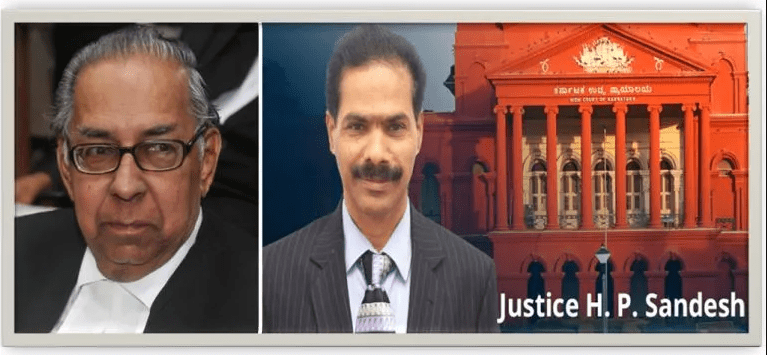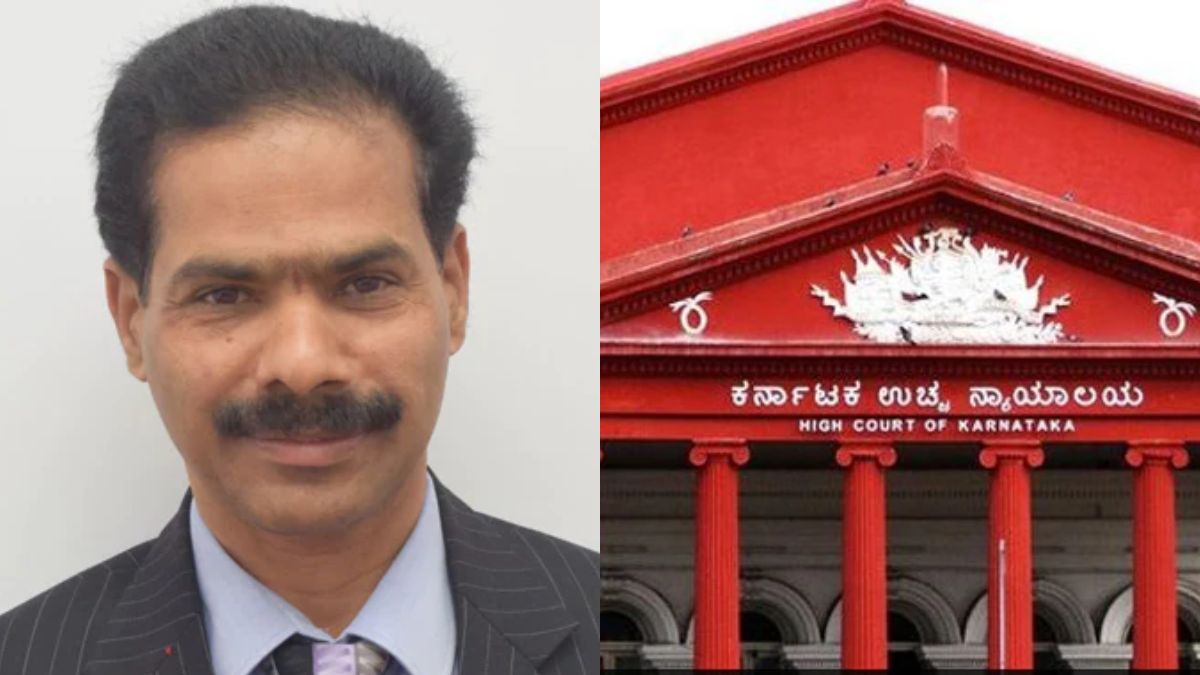
Brother Judge told me that someone from Delhi called him and enquired about me. He did not stop there. Justice Sandesh reveals.

Karnataka High Court judge alleges threat of transfer for ACB officer

Mahesh P S  vs State of Karnataka
Criminal Petition 4909 of 2022. Daily Order dated 11 July 2022
Justice H P Sandesh

The Special Counsel appearing for ACB placed the investigation materials collected till date as directed by this Court in a sealed cover and the same is taken on record.

2. The Registrar (Judicial) also placed on record the details of B-reports, which have been received from 18 districts of the State and the same are placed on record. The Registrar (Judicial) submits that report from the remaining districts is yet to be received.

3. Sri Prasanna Kumar, the learned Standing Counsel appearing for Central Bureau of Investigation (CBI) placed the report on record in compliance with the order dated 07.07.2022 and the same is taken on record. The report discloses that the raid conducted on the residential house of ADGP.

4. This Court would like to make it clear that the learned counsel Sri Ashok Haranahalli appears and submits that SLP is filed before the Apex Court by ACB and he is not the counsel for ACB before this Court and he also states that there cannot be any attack on the judiciary while dispensing the justice and it amounts to attack on the independence of judiciary and insist for revealing the threat. When this matter was heard on 29.06.2022, this Court found inaction on the part of the ACB in arraigning the real accused inspite of the material against the Deputy Commissioner and not shown enthusiastic investigation and hence observed the same during the proceedings and the matter was adjourned to 04.07.2022. In the meanwhile, on account of superannuation of the Hon’ble Chief Justice, a dinner was arranged by this Court to bid farewell on 01.07.2022. “A Hon’ble sitting Judge came and sat by the side of me and stated that he received a call from Delhi (not disclosed the name) and said that the person who called from Delhi, enquired about me and immediately I replied that I am not affiliated to any political party and the Hon’ble Judge did not stop the same there itself and further said that ADGP is from North India and he is powerful and also gave an instance of transfer of Senior Judge of this Court to some other State and told that for no mistake on his part, he was transferred and chances of one side feeding to them” and the same is nothing but an attack on the independence of judiciary and interference in dispensation of justice. Thus, this Court when found inaction on the part of ACB in not properly investigating the matter and a threat was made to summon the Service Record (SR) of the ADGP. On perusal of the SR, for the period of assessment 2009-2010, the Reviewing Authority, a remark was made that the Officer has to give adequate attention to police image while performing his duties or supervising the duties of subordinate officers/ranks. It is further observed in column No.9 that lesser strength are loose supervision, soft going on subordinates, inability to say ‘No’. For the year 2008-2009 i.e., from 01.04.2008 to 31.03.2009, the remark is that his ability to take tough stand shall improve. It is emerged in the service record that he was working as S.P. in Bellary and he was transferred and within six days again got it transferred to Bellary and the counsel for CBI submits that the Hon’ble Supreme Court is monitoring the mining case and CBI raid was conducted on the residence of the ADGP.

5. Apart from that, the Deputy Director of DPAR submits the records regarding the CBI raid in respect of residence of ADGP, wherein found material, requires an enquiry and requested the State Government to enquire into the matter and now the CBI report is also placed on record and the learned Standing Counsel for CBI submits that not received any enquiry report from the State Government. On perusal of material it is clear that CBI conducted the raid on the residential house of ADGP on 05.04.2013 and found material to enquire the matter and the same is not reached to the logical end. When all these materials are found and also the B-reports which have been submitted by ACB, in respect of 5 matters only ACB has given the details and other 99 B-reports are dumped to the Court without giving any details like crime, offences, status of B-report. Hence, this Court summoned the details from the respective Courts through the Registrar (Judicial). Having taken note of no details are given and the way in which the officer who is in helm of affairs not assisted the Court, found that the same is not done in the interest of public as observed by this Court in the order dated 07.07.2022 wherein this Court cited the judgment of the Apex Court wherein it is held that if the investigation is not proceeding legally, Court can take note of the public interest as the sole consideration and a Constitutional Court monitors an investigation only when circumstances compel it to do so, such (illustratively) a lack of enthusiasm by the Investigating Officer or agency (due to ‘pressures’ on it) in conducting a proper investigation, or a lack of enthusiasm by the concerned Government in assisting the investigating authority to arrive at the truth, or a lack of interest by the investigating authority or the concerned Government to take the investigation to its logical conclusion for whatever reason, or in extreme cases, to hinder the investigation.

6. In the case on hand also lack of enthusiasm and the investigation not taken place legally and not assisted the Court by ACB properly and the said circumstances forced to call all the details including SR as well as B-reports which have been submitted before the Trial Courts that is only in the interest of public and the Constitutional Court monitors the investigation only when the circumstances compel it to do so. The ACB, only after this Court found the material and on observation of the Court, arraigned the Deputy Commissioner as accused and arrested him and also conducted the raid on the house of Deputy Commissioner. The B-report also discloses that the accused are let-off by making the accused to refund the bribe money and not considered the digital material regarding demand and acceptance.

7. Having discussed above, it is appropriate to direct the Chief Secretary and DPAR that while posting the officers that too in a institution which is established for prevention of corruption to take note of the public interest and should not be posted any tainted officer to the helm of affairs of the institution which is established to prevent the corruption.

8. The Chief Secretary before posting an officer for the office which is established for prevention of corruption, shall consider the officer is having credibility/integrity and also take note of antecedents while posting to take the institution to the great height.

9. The Secretary to the DPAR also shall bring it to the notice of the Chief Secretary while posting an officer in helm of affairs of prevention of corruption in ACB, to furnish all the details regarding the service records as well as the integrity of the officer. The other day, a mention was made before the Court by the Deputy Secretary of DPAR that due to the pressure, the same cannot be done and should not yield to such pressure in the interest of the public.

10. The posting should not be considered either by external influence or internal influence and the same cannot be a criteria while posting the officers to the institution.

11. The officers who have to be posted to prevent the corruption, their family members or any other persons should not be facing any investigation either by ACB or Lokayukta or otherwise, the family members or relatives who are facing the investigation by ACB or Lokayukata, may take advantage of the same.

12. While posting the officers, not to post the officers who have faced the traps or enquiry conducted by the ACB or Lokayukta.

13. The Special Counsel appearing for ACB has filed a memo stating that Special Leave Petition (SLP (Crl.) Provisional Application No.13963-2022) is filed before the Apex Court challenging the order dated 07.07.2022 and the said petition is listed on 12.07.2022 and prays this Court to adjourn the matter and the said memo is taken on record and the Special Counsel appearing for ACB is directed to furnish a copy of the said memo along with its enclosures to the learned counsel appearing for the petitioner since copy is not served.

14. The learned counsel appearing for the petitioner opposes for the adjournment sought by the Special Counsel appearing for ACB on the ground that the matter has been moved before the Apex Court against the order dated 07.07.2022 and the same is not bearing on the bail petition. The matter is listed tomorrow before the Apex Court and hence it is appropriate to grant two days time keeping in view of the contention of the learned counsel for the petitioner that the personal liberty of a person who is in custody is also involved.

15. The registry is directed to communicate this order to the Chief Secretary as well as to the Secretary to the DPAR forthwith.

16. The Registrar (Judicial) is directed to keep the further investigation materials furnished before the Court by ACB in safe custody.

17. List the matter on 13.07.2022 at 2.30 p.m., to hear the bail petition.

‘Ok’, ‘Thanks’, ‘Yea’. Mind your (Court) language & manners.

S.Basavaraj, Senior Advocate and Chairman, Karnataka State Bar Council Law Academy

On Friday, (8 July 22) a learned Judge of the Karnataka High Court had to advise a junior advocate not to use ‘Yea’ in the Court while arguing.

I have seen many young lawyers using such Law college campus language. Few say ‘Ok’, ‘Thanks’ etc.

Few years ago, there was a joke doing the rounds that a HC Judge’s lawyer son after getting interim order from another HC Judge said “Thank you uncle”!.  This might not be true. But I have seen many young lawyers using “thanks my lord“.

The College campus language is difficult to give up. However, it has no place when you take up a serious profession like Advocacy.

Instead of ‘Ok’ or ‘Thanks’ please say ‘I am obliged’ or ‘I am grateful’ or simply ‘much obliged’.

Justice Ramachandraiah of Karnataka High Court in his reply speech to farewell given by the Advocates Association Bangalore lamented at the Lawyers saying; “my friend is making a false statement” or “my friend is misleading the court”. Such blatant accusations do not gel with noble profession he said. He advised to say “the statement of my learned friend is factually incorrect” or “my learned friend is making out of the record statement”.

Another mistake most of us commit is addressing a person without affixing Mr. or Mrs. My senior Mr. S.Vijay Shankar, Senior Advocate and former AG never ever addressed anyone without the prefix Mr. or Mrs. He would call even his steno as Mr. so & so. When you are arguing, please add prefix Mr. or Mrs, be it your counterpart or the litigant. This will only add elegance to your language.

Recently, I came across a gentleman obtaining reply from the High Court of Karnataka under the RTI Act as to whether it wasn’t permissible to sit cross-legged in court. In my 33 years of practice whenever I sit on the front row (immediately after the arguing Bar), I make sure I never cross legs. It is not that you are showing utmost humility or humbleness to the Judge. It is just that you are maintaining personal discipline. I want to ask the above gentleman whether he would sit cross-legged in front of a Minister or the Governor when he meets them for his personal work.

Another rude behaviour is to exchange words with the counterpart during the arguments. This trivializes court proceedings. Very often, we interject when the opposite counsel is arguing either to correct a mistake or to state factually correct fact. We even intervene when the Judges speak. This is, to an extent, part of arguments. But never ever exchange words with the opponent counsel across the Bar to make it a verbal war. As I said one can intervene, if it is absolutely necessary and with the permission of the court. But all such statements or clarifications must be addressed to the Court/Judge and not to the opposite counsel.

Whenever you submit photocopies of the judgments to the Court, please make sure your opponent counsel also gets copies. It is a good gesture involving very little expenditure. This will also prevent unnecessary adjournments.

Never take adjournment without informing the opposite lawyer. On many occasions I waited for my matter almost whole day only to realise that the opposite counsel had taken adjournment at the beginning of the court proceedings. This practice is still in vogue putting the advocates in practical difficulties.

Remember, self-discipline is the best way to build and enrich the institution. Good mannerisms will go a long way in shaping the advocacy & remain beacon of light in posterity.

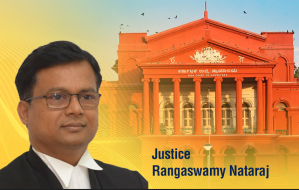
‘ಸಿವಿಲ್ ವ್ಯಾಜ್ಯಗಳಲ್ಲಿ ವಿಧಿಸುವ ದ0ಡವನ್ನು ವಕೀಲರ ಸ0ಘಗಳಿಗೆ ಪಾವತಿ ಮಾಡುವ0ತೆ ಆದೇಶಿಸುವುದು ಉತ್ತಮ’.- ನ್ಯಾಯಮೂರ್ತಿ ಆರ್. ನಟರಾಜ್.

ಇತ್ತೀಚೆಗೆ ಚಿಕ್ಕನಾಯಕನಹಳ್ಳಿ, ಕೊರಟಕಗೆರೆ ಹಾಗೂ ಮಧುಗಿರಿಯಲ್ಲಿ ಆಯೋಜಿಸಿದ್ದ ಕಾರ್ಯಕ್ರಮಗಳಲ್ಲಿ ಭಾಗವಹಿಸಿದ ಕರ್ನಾಟಕ ಉಚ್ಚನ್ಯಾಯಲಯದ ನ್ಯಾಯಮೂರ್ತಿ ಆರ್. ನಟರಾಜ್ ಮಾತನಾಡಿ, “ಸಿವಿಲ್ ವ್ಯಾಜ್ಯಗಳಲ್ಲಿ ನ್ಯಾಯಾಲಯವು ಹಲವಾರು ಕಾರಣಗಳಿಗೆ ದ0ಡ (Cost) ವಿಧಿಸುವಾಗ ಈ ಮೊತ್ತವನ್ನು ವಕೀಲರ ಸ0ಘಗಳಿಗೆ ಪಾವತಿ ಮಾಡುವ0ತೆ ಆದೇಶಿಸುವುದು ಉತ್ತಮ” ಎ0ದು ಅಭಿಪ್ರಾಯಪಟ್ಟರು.

ಇ0ದು ಹಲವಾರು ತಾಲೂಕು ಹಾಗೂ ಜಿಲ್ಲಾ ವಕೀಲರ ಸ0ಘಗಳು ಹೊಸ ಕಟ್ಟಡಗಳನ್ನು ಹೊ0ದಿವೆ. ಆದರೆ ಒ0ದು ಬಾರಿ ವಕೀಲರ ಸ0ಘಗಳಿಗೆ ಕಟ್ಟಡವನ್ನು ಹಸ್ತಾ0ತರಿಸದ ನ0ತರ ಈ ಕಟ್ಟಡಗಳನ್ನು ನಿರ್ವಹಣೆ ಮಾಡುವುದು ಕಷ್ಟಕರ. ವಕೀಲರ ಸ0ಘಗಳಿಗೆ ಬರುವ ಆದಾಯ ಬಹಳೆ ಕಡಿಮೆ. ವಕೀಲರು ನೀಡುವ ಶುಲ್ಕ ಬಿಟ್ಟರೆ ಬೇರೆ ಯಾವ ರೀತಿಯ ಆದಾಯವೂ ಇರುವುದಿಲ್ಲ. ಕೆಲವು ವಕೀಲರ ಸ0ಘಗಳ0ತೂ ಬಹಳ ದಾರುಣ ಸ್ತಿತಿಯಲ್ಲಿವೆ. ಸ0ಘಗಳನ್ನು ಸ್ವಚ್ಚಗೊಳಿಸುವುದರಿ0ದ ಹಿಡಿದು ಬೇರೆ ಎಲ್ಲ ಕೆಲಸಗಳನ್ನು ನಡೆಸಲು ಹಣದ ಕೊರತೆ ಇದೆ.

ತಾಲೂಕು ಮತ್ತು ಜಿಲ್ಲಾ ಮಟ್ಟದಲ್ಲಿ ನ್ಯಾಯಾಲಯಗಳು ಪ್ರತಿ ತಿ0ಗಳೂ ರೂ. 25,000 ರಿ0ದ ರೂ. 50,000/- ರ ವರೆಗೆ ದ0ಡ ವಿಧಿಸುತ್ತವೆ. ಈ ದ0ಡಗಳು ಸಿವಿಲ್ ವ್ಯಾಜ್ಯಗಳಲ್ಲಿ ವ್ಯಾಜ್ಯವು ಮುಂದೂಡಿದಾಗ, ವಿಳಂಬ ಮನ್ನಾ ಮಾಡುವಾಗ ವಿದಿಸಲ್ಪಡುತ್ತವೆ. ಈ ದ0ಡಗಳನ್ನು ಆಯಾ ವಕೀಲರ ಸ0ಘಗಳಿಗೆ ಪಾವತಿ ಮಾಡುವ0ತೆ ಆದೇಶಿಸದರೆ ವಕೀಲರ ಸ0ಘಗಳಿಗೆ ಅತ್ಯ0ತ ಉಪಯೋಗವಾಗುತ್ತದೆ.

ಈ ನಿಟ್ಟಿನಲ್ಲಿ ಮಾನ್ಯ ನ್ಯಾಯಾದೀಶರ ಅಭಿಪ್ರಾಯ ಸ್ವಾಗತಾರ್ಹ.

ಕನ್ನಡದಲ್ಲಿಯೇ ಕಾನೂನು ಕಲಿಕೆ. ಭವಿಷ್ಯದ ಚಿ0ತನೆ.

ಎಸ್. ಬಸವರಾಜ್, ಹಿರಿಯ ವಕೀಲ, ಬೆ0ಗಳೂರು.

ಇತ್ತೀಚೆಗೆ ಸಿವಿಲ್ ನ್ಯಾಯಾದೀಶರ ಪರೀಕ್ಷೆಗೋಸ್ಕರ ಪುಸ್ತಕವೊ0ದನ್ನು ಕರ್ನಾಟಕ ರಾಜ್ಯ ವಕೀಲರ ಪರಿಷತ್ ವತಿಯಿ0ದ ರಿಯಾಯಿತಿ ದರದಲ್ಲಿ ಕೊಡಿಸುವ ಪ್ರಯತ್ನದಲ್ಲಿದ್ದಾಗ, ಹೆಚ್ಚಿನ ಸ0ಖ್ಯೆಯ ಅಭ್ಯರ್ಥಿಗಳು “ಕನ್ನಡದಲ್ಲಿ ಪುಸ್ತಕ ಇದ್ದರೆ ತಿಳಿಸಿ“ ಅ0ತ ಕೋರಿದ್ದರು.

ಕನ್ನಡದಲ್ಲಿ ಕಾನೂನು ಕಲಿಯುತ್ತಿರುವ, ಕಲಿತಿರುವ ವಕೀಲರ ಸ0ಖ್ಯೆ ಇ0ದು ಬಹಳೆ ಇದೆ.

ಆದರೆ ಬರೀ ಕನ್ನಡದಲ್ಲಿಯೇ ಕಾನೂನು ಪದವಿ ಗಳಿಸಿದ ಈ ವಕೀಲರ ಮು0ದಿನ ಭವಿಷ್ಯವೇನು ಎ0ದು ಯೋಚಿಸೋಣ.

ಕರ್ನಾಟಕ ರಾಜ್ಯ ವಕೀಲರ ಪರಿಷತ್ ವತಿಯಿ0ದ ನಡೆಯುವ ಕಾರ್ಯಾಗಾರಗಳಲ್ಲಿ ಭಾಗವಹಿಸಿದಾಗಲೆಲ್ಲ ವಕೀಲರಿಗೆ ಆ0ಗ್ಲ ಭಾಷೆಯನ್ನು ವೃಧ್ದಿಸಿಕೊಳ್ಳಲು ಕೋರಿದ್ದೇನೆ. ಬರೀ ಕನ್ನಡದಲ್ಲಿಯೇ ಕಾನೂನು ಕಲಿತ ವಕೀಲರು ಜೀವನ ಪೂರ್ತಿ ಕೀಳರಿಮೆಯಿ0ದ ವೃತ್ತಿಜೀವನ ಮಾಡಬೇಕಾಕುತ್ತದೆ ಎ0ದು ಕೂಡ ಕಾಳಜಿ ವ್ಯಕ್ತಪಡಿಸಿದ್ದೇನೆ.

ಹಾಗ0ತ ಕನ್ನಡದಲ್ಲಿ ಕಾನೂನು ಕಲಿತ ವಕೀಲರ ಜ್ನಾನ, ಪ್ರಬುದ್ಡತೆ ಹಾಗೂ ಚಾಣಾಕ್ಷತೆಯನ್ನು ಪ್ರಶ್ನಿಸುತ್ತಿಲ್ಲ. ಆದರೆ ಆ0ಗ್ಲ ಭಾಷೆಯಲ್ಲಿ ವಾದ ಮಾಡುವ ವಕೀಲರ ಮು0ದೆ ಈ ವಕೀಲರು ಸ್ವಲ್ಪ ಕೀಳರಿಮೆಗೆ ಒಳಗಾಗುತ್ತಿರುವುದು ಸತ್ಯ.

ಕೆಲ ತಿ0ಗಳ ಹಿ0ದೆ ಉಚ್ಚನ್ಯಾಯಲಯದಲ್ಲಿ ಕನ್ನಡದಲ್ಲಿ ವಾದ ಮಾಡಲು ಶುರು ಮಾಡಿದ ವಕೀಲರಿಗೆ ಹಿರಿಯ ನ್ಯಾಯಾಮೂರ್ತಿಗಳು “Mr. Counsel, this is High Court. The official language of the High Court is English. So please argue in English” ಎ0ದು ಹೇಳಿದ್ದನ್ನು ಕೇಳಿದ್ದೇನೆ. ಹಿರಿಯ ನ್ಯಾಯಮೂರ್ತಿಗಳು ಹೇಳಿದ್ದು ಸತ್ಯ. ಉಚ್ಚನ್ಯಾಯಲಯದ ಅಧಿಕೃತ ಭಾಷೆ ಇ0ಗ್ಲೀಷ್.

ನಾನು ಹತ್ತನೆ ತರಗತಿವರೆಗೆ ಕನ್ನಡ ಮಾದ್ಯಮದಲ್ಲಿಯೇ ವಿಧ್ಯಾಬ್ಯಾಸ ಮಾಡಿದ್ದು. ಕಾಲೇಜ್ ವಿಧ್ಯಾಬ್ಯಾಸ ಆ0ಗ್ಲ ಮಾಧ್ಯಮದಲ್ಲಿ ಕಲಿತರೂ ಮಾತನಾಡುವ ಪ್ರಮೇಯವೇ ಇರಲಿಲ್ಲ. ಬೆ0ಗಳೂರಿಗೆ ಬ0ದಾಗ ಹೊರ ರಾಜ್ಯದ ವಿಧ್ಯಾರ್ಥಿಗಳ ಒಡನಾಟದಿ0ದ ಸ್ವಲ್ಪ ಆ0ಗ್ಲ ಭಾಷೆ ಕಲಿತು ಹೇಗೋ ವಕೀಲ ವೃತ್ತಿಗೆ ಸಾಕಾಗುವಷ್ಟು ಇ0ಗ್ಲೀಷ ಇದೆ.

ಗಮನಿಸಿ, ಕಕ್ಷಿದಾರರು ಜ್ನಾನವ0ತ, ಚಾಣಾಕ್ಶ ವಕೀಲರಿಗೆ ಬೆಲೆ ಕೊಡುವುದು ನಿಜ. ಆದರೆ ನ್ಯಾಯಾಲಯಕ್ಕೆ ಹಾಜರಾದಾಗ ಆ0ಗ್ಲ ಭಾಷೆಯಲ್ಲಿ ವಾದ ಮಾಡುವ ವಕೀಲರನ್ನು ನೋಡಿ ಪ್ರಭಾವಿತರಾಗುವುದ0ತೂ ಖ0ಡಿತ. ಕನ್ನಡದ ಪ್ರಭುತ್ತತೆ ಇ0ದು ಬರೀ ಪಾಟೀ ಸವಾಲಿಗೆ ಮಾತ್ರ ಸಹಾಯಕಾರಿಯಾಗಿದೆ.

ಸತ್ಯದರ್ಶನವೆ0ದರೆ ಕನ್ನಡದಲ್ಲಿ ಕಾನೂನು ವ್ಯಾಸ0ಗ ಮಾಡಿ ಇ0ಗ್ಲೀಷ ಕಲಿಯದ ವಕೀಲರು ಎ0ದೂ ಕೂಡ ಉಚ್ಚನ್ಯಾಯಲಯದಲ್ಲಿಯಾಗಲೀ ಸರ್ವೋಚ್ಚ ನ್ಯಾಯಾಲಯದಲ್ಲಿಯಾಗಲೀ ವೃತ್ತಿ ಮಾಡುವ ಸಾದ್ಯತೆ ಬಹಳ ಕಡಿಮೆ. ಇದರಿ0ದ ಕನ್ನಡ ಕಾನೂನು ವಕೀಲರು ಇಡೀ ಜೀವನ ಎರಡನೆ ಪ0ಕ್ತಿ ವಕೀಲರಾಗಿಯೇ ಇದ್ದುಬಿಡುವ ಭಯ ಇದೆ.

ರಿಯಲ್ ಎಸ್ಟೇಟ ಸ0ಸ್ಥೆಗಳಲ್ಲಿ ಕನ್ನಡಕ್ಕೆ ಬೆಲೆ ಇದೆ. ಆದರೆ ಇದು ಬರೀ ಕನ್ನಡದ ದಾಖಲೆಗಳನ್ನು ಪರಿಶೀಲಿಸುವ ಹಾಗೂ ಭಾಷಾ0ತರ ಮಾಡುವ ಮಟ್ಟಕ್ಕೆ ಮಾತ್ರ ಸಿಮೀತವಾಗಿದೆ. ಬಹುರಾಷ್ತ್ರೀಯ ಕಕ್ಷಿದಾರರ ಜೊತೆ ಮಾತುಕತೆಯಾಗುವ ಸಮಯದಲ್ಲಿ ಆ0ಗ್ಲಭಾಷೆ ಪ್ರಭುತ್ತತೆ ಉಳ್ಳ ವಕೀಲರಿಗೆ ಪ್ರಾಮುಖ್ಯತೆ ನೀಡಲಾಗುತ್ತದೆ.

ನೀವು ನ್ಯಾಯಾದೀಶರಾಗಿ ಕನ್ನಡದಲ್ಲಿ ತೀರ್ಪು ಬರೆಯಬಹುದು. ಆದರೆ ಇ0ಗ್ಲೀಷ ಭಾಷೆಯನ್ನು ಎ0ದೂ ಕೂಡ ತೀರ್ಪಿನಲ್ಲಿ ಬಳಸದಿದ್ದರೆ ಉಚ್ಚನ್ಯಾಯಲಯದ ನ್ಯಾಯಮೂರ್ತಿಯಾಗಿ ನೇಮಕವಾಗುವ ಅವಕಾಶದಿ0ದ ವ0ಚಿತರಾಗುವುದಿಲ್ಲವೆ? ಆ0ಗ್ಲ ಭಾಷೆಯಲ್ಲಿ ಕರ್ನಾಟಕದ ಹಾಗೂ ಹೊರ ರಾಜ್ಯದ ವಕೀಲರು ವಾದ ಮಾಡುವಾಗ ಆ ಭಾಷೆಯ ಮೇಲೆ ಹಿಡಿತ ಖ0ಡಿತ ಬೇಕಾಗುತ್ತದೆ.

ಆದ್ದರಿ0ದ ನನ್ನ ಮನವಿಯೆ0ದರೆ ಕನ್ನಡದಲ್ಲಿ ಕಾನೂನು ಕಲಿತರೂ ಆ0ಗ್ಲ ಭಾಷೆಯಲ್ಲಿ ಕಾನೂನು ಶಭ್ದಗಳನ್ನು ಬಳಸುವ, ಮಾತನಾಡುವ ಹಾಗೂ ವಾದಮಾಡುವ ಪ್ರಯತ್ನ ದಿನ ನಿತ್ಯ ಮಾಡಿ. ವೃತ್ತಿಗೋಸ್ಕರ ಇ0ಗ್ಲೀಷ ಕಲಿಯಲೇ ಬೇಕಾಗುತ್ತದೆ. ಇಲ್ಲವಾದಲ್ಲಿ ಕೀಳರಿಮೆ ಮೂಡುವ ಸಾದ್ಯತೆ ಇದೆ. ಇದನ್ನು ಸ್ವ0ತ ಅನುಭವದಿ0ದ ಹೇಳಿದ್ದೇನೆ.

ನಿಮಗೆ ಶುಭವಾಗಲಿ

Controversy in Karnataka High Court. Need for corrective measures.

B.V.Acharya, Senior Advocate and former Advocate General.

Of late, the High Court of Karnataka is in the news at National level for wrong reasons. First, a Judge of the High Court while hearing an application for bail in a corruption case on 29:6:2022 castigated the Anti Corruption Bureau (AAB) for its inaction to catch people in high position and in filing cases only against public servants at a lower level. Further he angrily commented that ACB has been constituted not to eradicate corruption but to protect corrupt people, ACB itself has become a den of corruption, deliberately Government is posting corrupt and dishonest officers to the ACB, ACB office has become collection centre etc.

Couple of days later when the same case came up for hearing on the 4th July 2022, the learned Judge in open Court remarked that he has received transfer threats for his previous remarks on functioning of ACB, that he will not be cowed down by such threats and that he will fight to protect the independence of the judiciary at the cost of his judgeship.

The Judge further added that someone has spoken to his brother Judge who mentioned to him an instance of another Judge being transferred, this is a threat of transfer aimed at him. He also states that he will not hesitate to name the Judge who gave the information. (However he did not name the Judge for reasons not known). These proceedings are recorded.

Next day Rahul Gandhi stated as follows in Twitter.
“High Court Judge has been threatened for exposing BJPs corrupt government in Karnataka. Institutions after institutions is being bulldozed by BJP…”

To my knowledge, the Judge has not referred to BJP Government in Karnataka. If Rahul Gandhi has misquoted the judge, it is for the latter to take action in the matter. (I am reminded of an instance where Rahul Gandhi attributed an insinuation against Prime Minister as a “chor” and on action by Supreme Court Rahul Gandhi tendered unconditional apology.)

Today, news papers have reported that the Advocates Association Bangalore (AAB) has decided to write a letter to the Chief Justice of India demanding an in house probe into the “threat” to the High Court Judge. This is a welcome step. However this probe shall be a comprehensive one including the conduct of the Judge complaining both on 29:6:2022 and on 4:7:2022 when the case was heard and various comments and observations were made by him in open court.

However I feel the association has taken a hasty decision to say that “Justice Sandesh by his bold judgeship…AAB stands by him in its efforts to correct the system”. The said correction should include the Judge also.

Following are some important aspects which require deep consideration by the Bar/Bench and the general public on the entire episode.

1. Assuming everything stated by the learned judge is correct, was he justified in making lengthy statement in open court on 4 July 2022 complaining about threat of transfer, meeting by brother judge, independence of judiciary etc without furnishing such information to the chief of the High Court or the Chief Justice of India which is the head of the judiciary in the country.?

2. Should not such complaint have been made in a confidential manner so as to enable CJI to take appropriate action such as in-house probe etc as enunciated by the Rules instead of straightaway making this complaint before the public in open court enabling political parties to take undue advantage?.

3. What is object of such utterances by the judge in open court and what he wanted to achieve.?

4. Did he want a certificate from the public about his honesty and integrity which none has questioned?

5. Was the Judge justified in making sweeping comments in open court that ACB office is den of corruption …etc.?

6. Has he not brought down the image of the high court as an institution by such public statement?

7. Was the Judge justified in passing adverse remarks on the law officer representing the ACB.? Can an Advocate be reprimanded for any wrong done by the client? Can law officer be accused of protecting the corrupt?

8. Here the question of dignity and independence of the Bar is involved. AAB without considering these aspects says that it stands by the Judge.

9. While considering bail application of one accused, can the court direct production of records relating to B reports submitted by ACB right from 2016 till today.? Are these documents relevant to decide the bail application?

That he is a person of honesty and integrity result in an insinuation that the other judges are not?
I appeal to the AAB to consider the above aspects before submitting any memorandum to the Chief Justice of India.

Karnataka High Court gives clean chit to Asst. Commr of Police allegedly involved in Rs. 60 lakhs bribery.

Prabhu Shankar vs State of Karnataka and others.
Criminal Petition 2389 of 2020 decided on 8 September 2021
Justice H.P. Sandesh

Judgment in PDF at the end.

Allegations against the accused/petitioner

2. A case is registered against this petitioner, based on the statement dated 07.05.2020 of one Adil Azeez, who is respondent No.3 herein. In the statement, he has stated that he is the distributor of ITC Company Cigarettes. Due to Covid-19 Pandemic, the Government had declared lockdown in the month of March and April, 2020. He was having 100 employees, who used to supply cigarettes in the cycle and grocery items to different shops and due to lockdown, the employees were facing difficulties. Hence, in April, 2020 he contacted one Sri Babu Rajendra Prasad explaining the difficulties faced by his employees. The said Babu Rajendra Prasad told him  to  introduce the petitioner herein. After some time, he called and informed him to go along with one Bhushan to the office of this petitioner and he had already spoken to him. Hence, himself  and said Bhushan went and met the petitioner and this petitioner introduced the other Inspector Ajay. When he was talking to  this petitioner, the said Bhushan went away from the room. He spoke to him for 15 minutes in the presence of said Ajay and he told him to contact the said Inspector and gave the number of the Inspector. It is his statement that, in between 22.04.2020  to 28.04.2020, he has sent whatsapp message to the said Inspector regarding unethical practice of six to seven distributors in selling the cigarette and their location and photos.

3. That on 20.04.2020, the said Babu Rajendra Prasad told him that he had discussed with this petitioner and will you make settlement and hence, he told him that he will enquire with the other distributors. Thereafter, he has discussed with the other distributors also. He told the other distributors that said Babu Rajendra Prasad would deal with this petitioner for  unlawful circulation of cigarettes. The said Babu Rajendra  Prasad demanded Rs.15 lakhs from each of the distributors but, on negotiation, it was agreed for Rs.14 lakhs which becomes to Rs.70 lakhs. The said Babu Rajendra Prasad told him to make payment of first installment before 30th April and second installment in the first week of May. Accordingly, he made the payment of Rs.32.5 lakhs and Rs.30 lakhs to said Babu Rajendra Prasad to make payment to this petitioner. The said Babu Rajendra Prasad told him that in two installments, Rs.62.5 lakhs was paid to this petitioner and an amount of Rs.5 lakhs was paid to the concerned jurisdictional police.

4. That on 07.05.2020, the said Babu Rajendra Prasad called him to come near to his house and at that time, this petitioner and Inspectors Ajay and Niranjan Kumar were also there. Thereafter, ITC company Manager Govindaraj also  arrived to his house. The said Babu Rajendra Prasad instructed him and Govindaraj to accompany the police officers to go to Deputy Commissioner of Police, Crime-II and accordingly, all of them went to Deputy Commissioner of Police, Crime-II office and he enquired them separately. They had shown red and black mixed rexin bag and he identified the money and the said amount was given to Bhushan earlier and he identifies and says that said bag was given to Bhushan. The Deputy Commissioner of Police, Crime-II told him that this petitioner handed over the money telling that he had collected Rs.25 lakhs. Hence, case  has been registered against this petitioner and also other accused.

6. In this petition, it is contended that a strange story was concocted, claiming that certain moneys had been paid by the said Adil Azeez to this petitioner and two other Inspectors of Police in the CCB. In this background, it is emerged that the Deputy Commissioner of Police, Crime-II, who is one of the heads of the second respondent, was issued with an order on 06.05.2020 by the Joint Commissioner of Police (Crime) to enquire into certain allegations said to have been carried  in some daily newspaper. The Deputy Commissioner of Police, Crime-II in the course of his enquiry, records the statement of the third respondent, who is an accused in the crime registered in K.R.Puram Police Station. On the basis of the statement, the second respondent writes a letter to the Police Inspector, Cottonpet Police Station dated 12.05.2020 annexing the statement of third respondent, with a request to take appropriate legal action. Based on the same, present Crime No.64/2020 for the offence punishable under Section 384 read with Section 34 of IPC has been registered.

7. It is contended that the police have registered the case in Crime No.167/2020 and the same was under investigation. Based on the statement of the third respondent, FIR has been registered. The accused, who was subjected to investigation, has given a statement as a counter blast to the investigation process and to get away from the arm of law by implicating the police officers, who are investigating the case. If this were to be permitted, then every accused would make allegations against the Investigating Officer and criminal process will have to be set into motion against all of them. The investigation having commenced on 30.04.2020 was in progress and there was no need for the third respondent or any other Superior Officer to interfere in the investigation. The  entire mode adopted is only to deviate from the original tract of investigation by taking away the investigation from the concerned officers, with the sole intention of maliciously implicating the petitioner.

8. The other contention of the petitioner is that case has been registered for the offence punishable under Section 384 of IPC and in order to constitute an office of extortion under Section 384 of IPC, the necessary ingredients would be to intentionally put any person in fear of any enquiry to that person or to any other and dishonestly induce the person so put in fear to deliver any property. In the absence of these fundamental  and necessary ingredients, the offence under Section 384 of IPC cannot be made out. In the present case, a plain reading of the statement do not indicate any ingredients of the offence under Section 384 of IPC. Hence, the very registration of the case for the offence punishable under Section 384 of IPC is bad in law.

17. Per contra, learned counsel appearing for the respondent No.3 vehemently contends that the Police have rightly registered the case against the  petitioner, who indulged in extracting the money from him. The respondent No.3 has  also filed the statement of objections and along with the statement of objections, certain documents are also enclosed

Discussion and findings.

23. Having considered the statement of respondent No.3, it is very clear that he had collected money from other distributors and paid the same to said Babu Rajendra Prasad, Bhushan and also to the local police station which is reflected in para No.4 of the statement. It is not his case that he paid the money to this petitioner and it is also important to note that, nowhere in his statement, he has stated that this petitioner had put him in fear to depart money, except stating that he went along with Bhushan and spoken to him and no any statement that this petitioner threatened him or put him in fear. The statement also does not disclose that money has been directly handed over to this petitioner. But, only he comes to know through the Deputy Commissioner that amount was recovered from the petitioner herein. It is also important to note that only name of this petitioner has been referred and there is no demand and acceptance by this petitioner and the demand is made by Babu Rajendra Prasad. No doubt, the respondent No.3 has placed some of the documents along with the statement of objections at Exs.R1 to R14 and contends that money has been handed over to the petitioner, none of the documents reflect that this petitioner had received the money. However, the document at Annexure-R3 discloses that an amount of Rs.25 lakhs and Rs.5 lakhs was produced at the instance of one Sri Anjan Kumar, Police Inspector, CCB on 30.05.2020 in the presence of panchas and the same is subjected to P.F.No.49/2020 and not from the petitioner herein.

24. Though in the document at Annexure-R5 it is mentioned that this petitioner has handed over the money to the tune of Rs.5 lakhs on 09.05.2020 in the office of the Deputy Commissioner of Police, Crime-II, the said document states otherwise that the amount has been seized in the presence of panch witness and not from the petitioner herein and only seizure mahazar was drawn in the presence of panchas and so also in the document at Annexure-R7, it is stated that an  amount of Rs.25 lakhs was produced by this petitioner and the same was seized in the presence of panch witness and none of the documents contains the signature of the petitioner herein. Further, there is no material on record to show that recovery has been made at the instance of this petitioner. However, it is the case of the learned State Public Prosecutor for the respondent Nos.1 and 2 that an amount of Rs.30 lakhs and Rs.32.5 lakhs was handed over on two different dates. But recoveries are made on different dates.

31. In the case on hand, I have already pointed out that the allegations made in the statement of respondent No.3 does not constitute the offence under Section 384 of IPC and not comes within the definition of Section 383 of IPC since, no such fear as enumerated under Section 383 of IPC is created in the mind of respondent No.3 and nowhere in his statement, he has stated that this petitioner has put him in fear and collected money but, only reference was made to his name that he met him. It is also not his case that he demanded and accepted the money or put him under any threat. Hence, the question of invoking offence under Section 384 of IPC for extortion does not arise. Hence, it is clear that criminal proceedings are manifest with malafides and the entire proceedings are maliciously instituted with an ulterior motives for wrecking vengeance on the accused with a view to spite him due to the personal and private grudge.

33. I have already pointed out that the respondent No.3 states that he came to know through the Deputy Commissioner of Police, Crime-II that money has been recovered by the petitioner and this petitioner is not a witness to the recovery of the said amount. Hence, it is clear that, as contended, a case has been registered at the instance of the Deputy Commissioner of Police, Crime-II, since a direction was given to the Inspector to take legal action, based on the statement of respondent No.3. As already pointed out, the statement of respondent No.3 does not disclose commission of any cognizable offence and none of the ingredients of offence under Section 384 of IPC. No doubt, the offence under Section 384 of IPC is a cognizable and non- bailable offence, but the statement does not disclose commission of cognizable offence. Hence, the judgment relied upon by the learned counsel appearing for the third respondent will not come to the aid of third respondent.

34. Having considered the material on record, registration of FIR is nothing but a malicious prosecution against this petitioner with an ulterior motive to wreck vengeance against the accused with a view to spite him due to private and personal grudge. It is nothing but an infight between the  officers of the department and due to vengeance, the criminal prosecution is instituted which is a serious matter.

37. Having considered the principles laid down in the judgments referred supra, it is very clear that the Court can exercise the powers under Section 482 of Cr.P.C. wherein the complaint does not disclose committing of any cognizable  offence and the same is filed with an ulterior motive for wrecking vengeance against the accused with a view to spite him due to private and personal grudge, the Court can exercise the powers under Section 482 of Cr.P.C. In the case on hand, not only one case has been registered against this petitioner, in all, six cases have been registered invoking other penal provisions at the instance of the Deputy Commissioner of Police, Crime-II. When criminal proceedings are manifest with malafides and has been initiated maliciously with an ulterior motives for wrecking vengeance with a view to spite him due to the personal and private grudge, it is the duty cast upon the Court to prevent the abuse of process which leads to miscarriage of justice. Hence, it is appropriate to invoke Section 482 of Cr.P.C. It is also  pertinent to note that law cannot be set in motion as a matter of course and the Court has to carefully scrutinize the material on record.

38.I have already pointed out that the none of the ingredients of the offence under Section 383 of IPC has been made out in the statement of respondent No.3 and therefore,  the question of proceeding against the petitioner for the offence under Section 384 of IPC is nothing but an abuse of process which leads to miscarriage of justice. Hence, it is appropriate to exercise the powers under Section 482 of Cr.P.C. to quash the proceedings.

39. In view of the discussions made above, I proceed to pass the following:

ORDER

The criminal petition is allowed. The impugned FIR registered against the petitioner herein in Crime No.64/2020 dated 12.05.2020 for the offence punishable under Section 384 read with Section 34 of IPC on the file of 31st Additional CMM Court, Nrupathunga Road, Bengaluru City is hereby quashed.

An Appeal to the Members of the Legal Fraternity

S.Basavaraj, Senior Advocate, Bengaluru

Because we are humans”,
President Erdoğan

Chief Justice of India NV Ramana said on Friday that “In India, political parties wrongly believe judiciary should endorse their actions, advance their political cause.”

Unfortunately this is so when it comes to common man. We expect the judiciary to reflect our school of thought. It’s ok to expect it on sound principles of law. However, what is disturbing is such expectation comes even when a politically/religiously charged matter is decided by the Courts on merits.

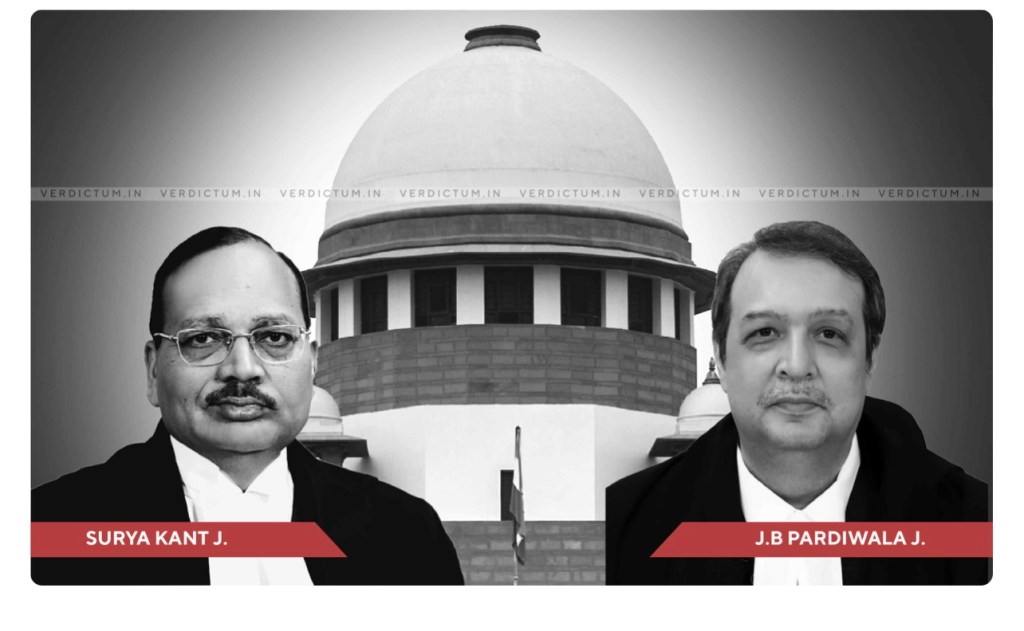
Take the example of the ongoing venom spewing in print and electronic media and on social network against Justice Suryakant and Justice JB Pardiwala. When the very same judges ‘postponed’ disqualification proceedings in Maharashtra and almost simultaneously allowed floor test which resulted in the formation of BJP’s backseat driven Govt, millions of people hailed them as saviours of democracy.

Now, when they express anguish over unsavoury comments, the same group of people go berserk even questioning the Judges’ political alliance.

This is simply not done. Rule of law will take its course. Judges work under extreme pressure and often want to ‘balance’ their approach in sensitive matters especially when their earlier judgments are perceived as tilted in a particular angle.

What is shocking is: even the members of the legal fraternity have joined the bandwagon in this venom spewing mission. The institution of judiciary and advocacy are two wheels of the same chariot. One cannot survive without the other. This is not to suggest that whatever the courts of law say or utter has to be accepted with folded hands. The attack on the institution by the people charged with political and religious feelings has to be mellowed down by the advocates instead of encouraging it.

This country is passing through one of the most difficult times. The. Judiciary is trying its best to decide the matters on the constitutional touchstone and to bring harmony among the religious and political groups. It is the duty of the learned Advocates to join the judicial institution in the endeavour.

Remember, all disputes, all claims and all religious and politically charged cases can be sorted out within the constitutional framework. Media and social network is not the forum to condemn the judicial institution.

Thanks
S.Basavaraj
Daksha Legal.

Eight eminent lawyers. 27 hours of arguments. 210 judgements cited. 600 pages of written arguments. Hijab issue – the second historic judgment after Ram Janmabhumi.

Thanks to the digitalisation of Court proceedings. We had the benefit of hearing the arguments of some of the greatest lawyers of our time in the Hijab case.

The brightest arguments were from the youngest lawyers. Mr. Devadatt Kamat made powerful yet impassionate submissions throughout the proceedings. His knowledge of law and professionalism stole the show. Professor Ravivarma Kumar was, as always, at his best. Mr. Sanjay Hegde reiterated the arguments of Mr. Kamat with little poetic tinge.

The onslaught from the respondent’s side came from the Advocate General with able assistance of his team. The Arguments of the Advocate General were outstanding. Mr. Sajan Poovayya’s arguments, to say the least, coup de grâce.

The contribution of other learned lawyers was noteworthy.

The Hon’ble Judges heard eight eminent lawyers for 27 hours. Went through 210 judgements cited at the Bar and 600 pages of written arguments filed by the learned advocates. Each day, they would carry seven bags full of files for reading.

Considering the sensational issue involved, this is the second historic judgement after Ram Janmabhumi judgement delivered by the Supreme Court.

ಹಿಜಾಬ್ ವಿವಾದ – ಕಾಣದ ಕೈಗಳು ಸಮಾಜದ ಶಾ0ತಿ ಹಾಳುಮಾಡುವ ಪ್ರಯತ್ನ ಮಾಡಿವೆ ಎಂಬ ವಾದಕ್ಕೆ ಅವಕಾಶವನ್ನು ನೀಡುತ್ತದೆ. ಕರ್ನಾಟಕ ಉಚ್ಚನ್ಯಾಯಲಯ.

“ಉಡುಪಿಯ ಪ್ರೀ-ಯೂನಿವರ್ಸಿಟಿ ಕಾಲೇಜಿನ ಪರವಾಗಿ ಪ್ರತಿವಾದಿಯ ಪರವಾಗಿ ಸಲ್ಲಿಸಿದ ಸಲ್ಲಿಕೆಗಳು ಮತ್ತು ದಾಖಲೆಯಲ್ಲಿ ಇರಿಸಲಾದ ವಿಷಯಗಳಿಂದ, 2004 ರಿಂದ ಡ್ರೆಸ್ ಕೋಡ್‌ನೊಂದಿಗೆ ಎಲ್ಲವೂ ಸರಿಯಾಗಿದೆ ಎಂದು ನಾವು ಗಮನಿಸಿದ್ದೇವೆ. (ಉಡುಪಿ ಎಂಟು ಮಠಗಳು ನೆಲೆಗೊಂಡಿರುವ ಸ್ಥಳವಾಗಿದೆ) ಆಚರಿಸುವ ಹಬ್ಬಗಳಲ್ಲಿ ಮುಸ್ಲಿಮರು ಸಹ ಭಾಗವಹಿಸುತ್ತಾರೆ ಎಂದು ನಾವು ಪ್ರಭಾವಿತರಾಗಿದ್ದೇವೆ. ಶೈಕ್ಷಣಿಕ ಅವಧಿಯ ಮಧ್ಯದಲ್ಲಿ ಅದು ಹೇಗೆ ಇದ್ದಕ್ಕಿದ್ದಂತೆ ಹಿಜಾಬ್‌ನ ಸಮಸ್ಯೆಯನ್ನು ಹುಟ್ಟುಹಾಕುತ್ತದೆ ಮತ್ತು ಅಧಿಕಾರದಿಂದ ಪ್ರಮಾಣದಿಂದ ಹೊರಹಾಕಲ್ಪಟ್ಟಿದೆ ಎಂದು ನಾವು ದಿಗ್ಭ್ರಮೆಗೊಂಡಿದ್ದೇವೆ. ಹಿಜಾಬ್ ವಿವಾದ ತೆರೆದಿರುವ ವಿಧಾನವು ಕೆಲವು ‘ಕಾಣದ ಕೈಗಳು’ ಸಾಮಾಜಿಕ ಅಶಾಂತಿ ಮತ್ತು ಅಸಂಗತತೆ ಕೆಲಸ ಮಾಡುತ್ತಿದೆ ಎಂಬ ವಾದಕ್ಕೆ ಅವಕಾಶವನ್ನು ನೀಡುತ್ತದೆ. ಹೆಚ್ಚಿನದನ್ನು ನಿರ್ದಿಷ್ಟಪಡಿಸುವ ಅಗತ್ಯವಿಲ್ಲ. ನಡೆಯುತ್ತಿರುವ ಪೊಲೀಸ್ ತನಿಖೆಯ ಮೇಲೆ ಪರಿಣಾಮ ಬೀರಬಾರದು ಎಂಬ ಉದ್ದೇಶದಿಂದ ನಾವು ಪ್ರತಿಕ್ರಿಯಿಸುವುದಿಲ್ಲ. ಮುಚ್ಚಿದ ಕವರ್‌ನಲ್ಲಿ ನಮಗೆ ಒದಗಿಸಲಾದ ಪೊಲೀಸ್ ಪೇಪರ್‌ಗಳ ಪ್ರತಿಗಳನ್ನು ನಾವು ಪರಿಶೀಲಿಸಿದ್ದೇವೆ ಮತ್ತು ಹಿಂತಿರುಗಿಸಿದ್ದೇವೆ. ಈ ವಿಷಯದ ಬಗ್ಗೆ ತ್ವರಿತ ಮತ್ತು ಪರಿಣಾಮಕಾರಿ ತನಿಖೆಯನ್ನು ಯಾವುದೇ ವಿಳಂಬವಿಲ್ಲದೆ ಅಪರಾಧಿಗಳನ್ನು ಕಾನೂನು ಕ್ರಮಕ್ಕೆ ತರಲಾಗುವುದನ್ನು ನಾವು ನಿರೀಕ್ಷಿಸುತ್ತೇವೆ. “

ರೇಶಮ್ ಮತ್ತು ಇನ್ನೊಬ್ಬ vs ಸ್ಟೇಟ್ ಆಫ್ ಕರ್ನಾಟಕ ಮತ್ತು ಇತರರು.
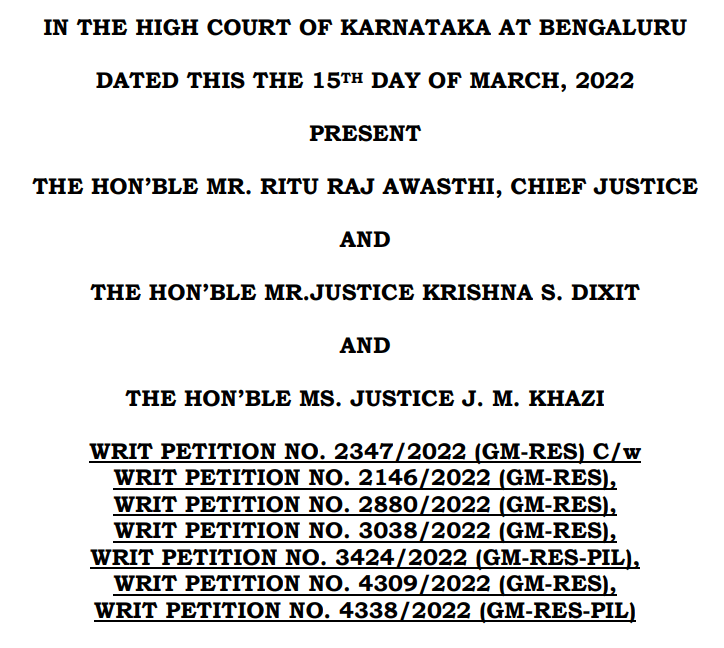
2022 ರ ರಿಟ್ ಅರ್ಜಿ 2347 ಅನ್ನು 15 ಮಾರ್ಚ್ 2022 ರಂದು ನಿರ್ಧರಿಸಲಾಗಿದೆ
ಮುಖ್ಯ ನ್ಯಾಯಮೂರ್ತಿ ರಿತು ರಾಜ್ ಅವಸ್ತಿ, ನ್ಯಾಯಮೂರ್ತಿ ಕೃಷ್ಣ ದೀಕ್ಷಿತ್ ಮತ್ತು ನ್ಯಾಯಮೂರ್ತಿ ಜೆ.ಎಂ.ಖಾಜಿ

ನ್ಯಾಯಮೂರ್ತಿ ಮೋಹನ ಶಾ0ತನಗೌಡರಿಗೆ ಮರಣೋತ್ತರ ಗೌರವ ಡಾಕ್ಟರೇಟ್.

Justice Mohan M Shantanagoudar

ಕರ್ನಾಟಕ ರಾಜ್ಯ ಕಾನೂನು ವಿಶ್ವವಿದ್ಯಾಲಯವು ನ್ಯಾಯಮೂರ್ತಿ ಮೋಹನ ಶಾ0ತನಗೌಡರಿಗೆ ಮರಣೋತ್ತರ ಗೌರವ ಡಾಕ್ಟರೇಟ್ ನೀಡಿ ಗೌರವಿಸಿದೆ.

ಈ ವಿಚಾರದಲ್ಲಿ ಕರ್ನಾಟಕ ರಾಜ್ಯ ವಕೀಲರ ಪರಿಷತ್ತಿನ ಮಾಜಿ ಅಧ್ಯಕ್ಶರಾದ ಶ್ರೀನಿವಾಸ ಬಾಬು ಇವರ ಪಾತ್ರ ಗಣನೀಯ ಎ0ಬುದನ್ನು ಇಲ್ಲಿ ನಾವು ಸ್ಮರಿಸಬಹುದಾಗಿದೆ.