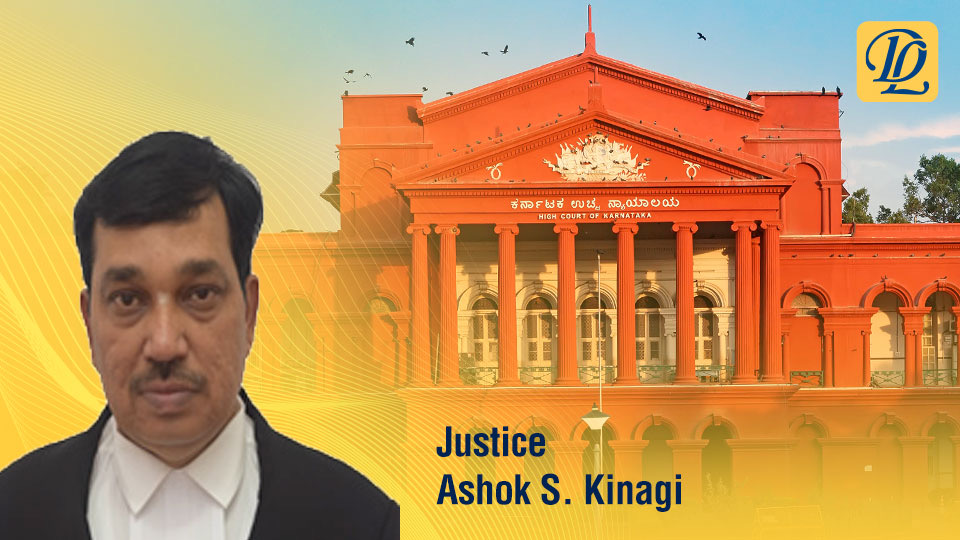
Hon’ble Mr. Justice Ashok S. Kinagi celebrates his 55th birthday today.
Hon’ble Mr. Justice Ashok S. Kinagi: Born on 01.01.1970. Enrolled as an Advocate in the year 1995. Practiced in High Court of Karnataka, Kalaburagi Bench from 2008 to till date.
Practiced in the field of Civil, Land Acquisition and Service Matters etc,.
Panel Advocate – Hyderabad Karnataka Education Society, Gulbarga, Khaja Banda Nawaj Education Society, Gulbarga, Alstom Project India Limited, Shahabad, ACC, Wadi, Karnataka State Financial Corporation, Karnataka State Industrial and Development Board, Ganesh Co-Operative Bank, Gulbarga, Punjab National Bank, Gulbarga, Hutti Goldmines, Hutti, Dist. Raichur, The Karnataka Power Transmission Corporation Limited.
Appointed as Additional Judge of the High Court of Karnataka and taken oath on 23.09.2019 and Permanent Judge on 01.03.2021.
Important judgments delivered by Hon’ble Mr. Justice Ashok S. Kinagi.
Resumption under the Karnataka SC/ST (PTCL) Act cannot be ordered when grantee obtained conversion of land for non-agricultural purposes before the alienation. Karnataka High Court.
Stay of suit under Section 10 CPC is permissible only if the whole subject-matter in both the proceedings is identical and not incidentally or collaterally in issue. Karnataka High Court.
Karnataka SC/ST (PTCL) Act. When earlier suo-motu proceedings were dropped by the Assistant Commissioner, fresh proceedings cannot be initiated by the grantee without challenging the said order. Karnataka High Court.
Karnataka Land Grabbing (Prohibition) Act. The Civil Court must record a clear finding about land grabbing in order to transfer the case to Special Court. Karnataka High Court.
Land restored under SC/ST (PTCL) Act to original grantees cannot be construed as Government land to invoke the provisions of the Karnataka Land Grabbing Prohibition Act. Karnataka High Court.
Constitution of India. Article 226. In a writ petition challenging the interim order passed by a Labour Court or Industrial Tribunal, refusal to interfere is a rule and interference is an exception. Karnataka High Court.
Intra-court appeal under the Karnataka High Court Act is not maintainable against an order passed by the Single Judge assailing an award passed by the Labour Court. Karnataka High Court.
Even an earlier registered sale deed does not confer right over property declared subsequently as Wakf property as long as the declaration is not set aside. Karnataka High Court.
Application for amendment of pleadings cannot be entertained after the commencement of trial, unless the party could not raise the issue before commencement of trial. Karnataka High Court.
Corporation cannot demand tax in respect of an industrial plot unless the industrial area is included within the Corporation limits. Karnataka High Court.
KMMC Rules. When the order of Competent Authority is approved by the Controlling Authority, who is also the Revision authority, Revision can only be filed before the State Government. Karnataka High Court.
Committees under Article 194(3) of the Constitution are not vested with adjudicatory jurisdiction which belongs to judicature under the constitutional scheme. Karnataka High Court.
Allotment of industrial plot cannot be cancelled on the ground of delay in implementing the project when the delay is attributable to reasons beyond the capacity of the allottee. Karnataka High Court.
Transfer of Property Act. Upon valid transfer of property, attornment of tenancy takes place and the tenant cannot question such derivative title. Karnataka High Court.
Suit for specific performance. When the defendant neither pleads nor leads evidence on hardship, Court shall decree the suit especially when the plaintiff proves readiness & willingness. Karnataka High Court.
Resumption under the Karnataka SC/ST (PTCL) Act cannot be ordered when grantee obtained conversion of land for non-agricultural purposes before the alienation. Karnataka High Court.
Stay of suit under Section 10 CPC is permissible only if the whole subject-matter in both the proceedings is identical and not incidentally or collaterally in issue. Karnataka High Court.
Prior notice under the Karnataka Panchayat Act is not necessary for institution of suit for perpetual injunction under Section 38 of Specific Relief Act. Karnataka High Court.
Hindu Succession Act, 1956. When propositus dies prior to 1956 leaving ancestral properties, the entire ancestral properties vest in surviving male coparceners excluding the daughters. Karnataka High Court.
Civil suit against Forest Officers who act under the color of duty to preserve forest land is not maintainable without sanction of the State Government under Section 114-A of the Karnataka Forest Act. Karnataka High Court.
Issue regarding valuation and Court fees cannot be tried as a preliminary issue in a suit and shall be tried along with other issues. Karnataka High Court.
Specific performance. Agreement executed within the prohibited period under the Karnataka Land Reforms Act cannot be specifically enforced. Karnataka High Court.
Violation of condition in land grant order will not result in automatic cancellation of the grant unless the Government initiates proceedings for resumption of the land. Karnataka High Court.
Court Fee. When agricultural land falls within the Corporation limit, the market value has to be taken into consideration even though the land continues to be shown as agricultural in the revenue records. Karnataka High Court.
“Dependency on daughter does not end with her marriage”. Parents can seek compensation for the death of their daughter in a motor vehicle accident. Karnataka High Court.
Power of attorney executed in favour of blood relatives as mentioned in the Karnataka Stamp Act need not be stamped as a document of conveyance. Karnataka High Court.
Sale of ancestral property. Recitals in the sale deed of legal necessity do not by themselves prove the legal necessity though they are admissible in evidence. Karnataka High Court.
Karnataka SC/ST (PTCL) Act. Land converted for non-agricultural purposes no longer remains ‘granted land’ and hence there is no requirement of prior permission to sell such land. Karnataka High Court.
Persons who purchased suit schedule property during the pendency of suit for specific performance can be added as additional defendant. Karnataka High Court.
Delay in completion of the project on the industrial site allotted by the KIADB. Allotment cannot be straightaway cancelled by the authority without giving opportunity to the allottee. Karnataka High Court.
In a suit for declaration, the plaintiff is expected to prove his title to a high degree of probability and not beyond reasonable doubt. Karnataka High Court.
Karnataka SC/ST (PTCL) Act. Prima facie, the amendment to the Act does not change the legal position that the application for restoration has to be filed within reasonable time. Karnataka High Court.
Intra-court appeal under the Karnataka High Court Act is not maintainable against an order passed by the Single Judge assailing an award passed by the Labour Court. Karnataka High Court.
Hon’ble Mrs. Justice K. S. Mudagal celebrates her 61st birthday today.
Hon’ble Justice Kottravva Somappa Mudagal: Born on December 22, 1963. Obtained B’Com, LL.B. from Karnataka University, Dharwad. Joined legal profession on 6th July, 1988 as an Advocate at Dharwad and Bangalore. Appointed as District Judge on 17.06.1998. Sworn in as an Additional Judge of the High Court of Karnataka on 14th November, 2016 and Permanent Judge on 03.11.2018.
Important Judgments delivered by Hon’ble Justice K.S. Mudagal.
Civil Procedure Code. Order 39 Rule 2A. Dismissal of the main suit does NOT absolve the defendants of their liability for breach of injunction order. Karnataka High Court.
Civil Procedure Code. Order 39 Rule 2A. Party knowingly violating injunction order cannot contend that the order is null and void or irregular and hence need not be obeyed. Karnataka High Court.
Rejection of Plaint. When plaint is sought to be rejected on a pure question of law, the application cannot be dismissed on the ground that the same shall be considered on a full-fledged trial. Karnataka High Court.
Daily waged employees working in the local bodies like Zilla Panchayats, on their regularization, are entitled for payment of gratuity from the date of their initial appointment. Karnataka High Court.
Delay and laches in filing Writ Petition. Where respondents/authorities are themselves guilty of delay and latches, they cannot raise such plea against petitioner. Karnataka High Court.
UAP Act. Informal body of individuals ‘concerned’ with the terrorist act, though not actually involved in terrorist act, is also covered under the definition of ‘terrorist gang’. Karnataka High Court.
Review Petition by non-party to the proceedings. Court can review compromise decree recorded in Regular Second Appeal if there was suppression of facts affecting the rights of third party. Karnataka High Court.
Civil suit questioning attachment of property under the Karnataka Co-operative Societies Rules is not maintainable without exhausting the remedy provided under Section 101 of the Karnataka Co-operative Societies Act. Karnataka High Court.
For the lands falling within Corporation limits, there is no need to obtain conversion from agricultural to non-agricultural purpose under Section 95 of the Karnataka Land Revenue Act. Karnataka High Court.
Native Christians of Coorg province. Pending suit for partition based on the Shasthric Hindu Law is not maintainable after the issuance of 2015 notification making Indian Succession Applicable to them. Karnataka High Court.
Prima facie case includes maintainability of the suit. When maintainability of the suit is doubtful or the suit is prima facie vexatious, it cannot be said that the applicant has prima facie case. Karnataka High Court.
Occupancy rights granted under the Karnataka Land Reforms Act in favour of one of the member of the family enure to the benefit of the members of the joint family. Karnataka High Court.
Industry showing payment of overtime wages as conveyance charges to evade the ESI contribution. Karnataka High Court imposes exemplary cost on the appellant industry.
Defense of ouster in a suit for possession. The adverse possession pleaded must be open, express or implied repudiation of the rights of the true owner and the hostility must be within the knowledge of true owner. Karnataka High Court.
Irrespective of a party not filing appeal against dismissal of the suit for partition and separate possession, Court can grant relief in appeal invoking Order XLI Rule 33 of C.P.C. Karnataka High Court.
Court cannot refer a case relating to non-compoundable offence to Lok Adalat and Lok Adalat has no jurisdiction to determine such case. Karnataka High Court.
Negotiable Instruments Act. Section 138 not only includes the cheques issued towards the discharge of any debt, but other liability also. Karnataka High Court.
When a document is admitted in evidence at the instance of a party, entire contents of the document shall be accepted. Party producing the document cannot contend that only portion of the document shall be accepted. Karnataka High Court.
Though Christian law does not recognize adoption, it does not prohibit adoption. Adopted children of Christian parents have right of inheritance. Karnataka High Court.
When minor’s property is sold without Court permission, the minor on attaining majority need not seek cancellation of the sale deed. He can simply repudiate the sale and validly transfer the property. Karnataka High Court.
Rejection of Plaint. When plaint is sought to be rejected on a pure question of law, the application cannot be dismissed on the ground that the same shall be considered on a full-fledged trial. Karnataka High Court.
ಕರ್ನಾಟಕ ಉಚ್ಚನ್ಯಾಯಲಯದಲ್ಲಿ ಕನ್ನಡದಲ್ಲಿಯೇ ಮೊದಲ ತೀರ್ಪು ನೀಡಿದ ಕೀರ್ತಿ ಮಾನ್ಯ ನ್ಯಾಯಮೂತಿ೯ ಅರಳಿ ನಾಗರಾಜ್ ರವರಿಗೆ ಸಲ್ಲುತ್ತದೆ. ಕನ್ನಡದಲ್ಲಿ ತೀರ್ಪು ನೀಡಿದ ನ್ಯಾಯಮೂತಿ೯ ಅರಳಿ ನಾಗರಾಜ್ “ಕೆಳ ನ್ಯಾಯಾಲಯಗಳಲ್ಲಿ ಕನ್ನಡ ಭಾಷೆಯಲ್ಲಿ ತೀರ್ಪು ಬರೆಯಲಾಗುತ್ತಿದೆ. ಹೈಕೋರ್ಟ್ನಲ್ಲೂ ಕನ್ನಡ ಭಾಷೆಗೆ ಆದ್ಯತೆ ನೀಡಬೇಕು. ಈ ನಿಟ್ಟಿನಲ್ಲಿ 2008ರಿಂದ ಸರಕಾರಕ್ಕೆ ಬೇಡಿಕೆ ಸಲ್ಲಿಸುತ್ತಲೇ ಬಂದಿದ್ದರೂ ಇದುವರೆಗೂ ಕಾರ್ಯರೂಪಕ್ಕೆ ಬಂದಿಲ್ಲ.“ ಎ0ದು ಹೇಳಿದ್ದರು.
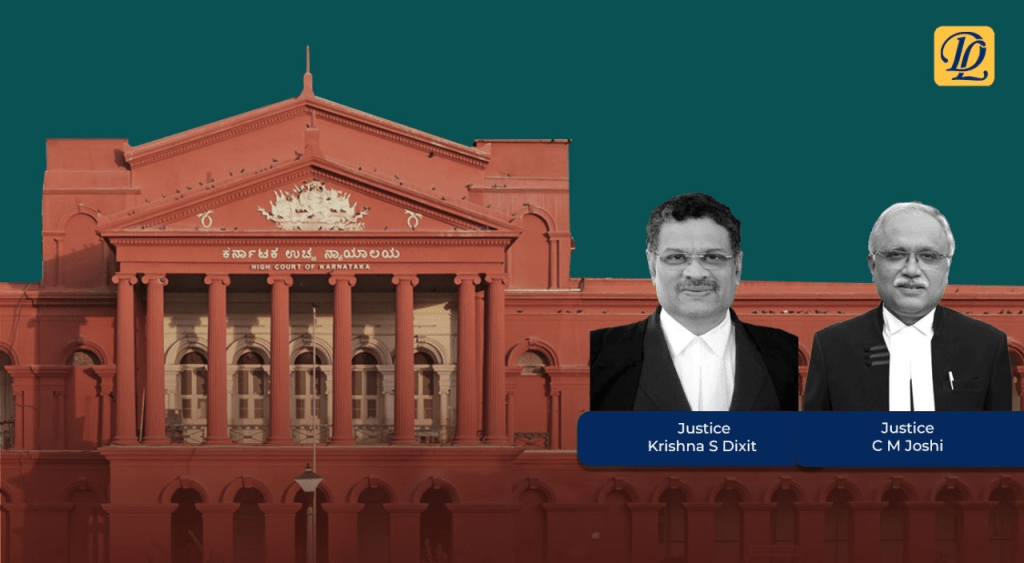
ಈಗ ಮಾನ್ಯ ನ್ಯಾಯಮೂತಿ೯ ಕೃಷ್ಣ ಎಸ್ ದೀಕ್ಷಿತ್ ಮತ್ತು ನ್ಯಾಯಮೂತಿ೯ ಸಿ. ಎ0. ಜೋಶಿಯವರು ಶ್ರೀ. ನ0ಜಾವುದೂತ ಸ್ವಾಮೀಜಿ ವಿರುದ್ದ ಶ್ರಿ. ಎಸ್. ಲಿ0ಗಣ್ಣ ಮತ್ತು ಇತರರು ಮೊಕದ್ದಮೆಯಲ್ಲಿ (ಒ.ಎಸ್.ಎ. ಸ0ಖ್ಯೆ. ೯/೨0೨೪) ದಿನಾ0ಕ ೧೨ನೇ ಡಿಸೆ0ಬರ್, ೨0೨೪ ರ0ದು ಕನ್ನಡದಲ್ಲಿ ತೀರ್ಪು ನೀಡಿದ್ದಾರೆ.
ಈ ಬಗ್ಗೆ ದಕ್ಷ ಲೀಗಲ್ ಜೊತೆ ತಮ್ಮ ಅನಿಸಿಕೆ ಹೇಳಿಕೊ0ಡ ನ್ಯಾಯಮೂತಿ೯ ಕೃಷ್ಣ ಎಸ್ ದೀಕ್ಷಿತ್ “ಪ್ರಾಮಾಣಿಕವಾಗಿ ಹೇಳುವುದಾದರೆ, ಕನ್ನಡ ತೀರ್ಪು ಬರೆದ ಶ್ರೇಯಸ್ಸು ಮಾನ್ಯ ನ್ಯಾಯಮೂತಿ೯ ಅರಳಿ ನಾಗರಾಜ್ ಅವರಿಗೆ ಸಲ್ಲಬೇಕು.. ಆ ಕಾರ್ಯಕ್ಕೆ ಕೈಹಾಕಿದ ಅವರು ನಿಜವಾದ ‘ತೇನ್ಸಿಂಗ್’.. .. ನನಗೆ ಅವರ ಮೇಲೆ ಅಪಾರ ಗೌರವವಿದೆ” ಎ0ದು ತಮ್ಮ ಅಭಿಮಾನ ವ್ಯಕ್ತಪಡಿಸಿದರು.
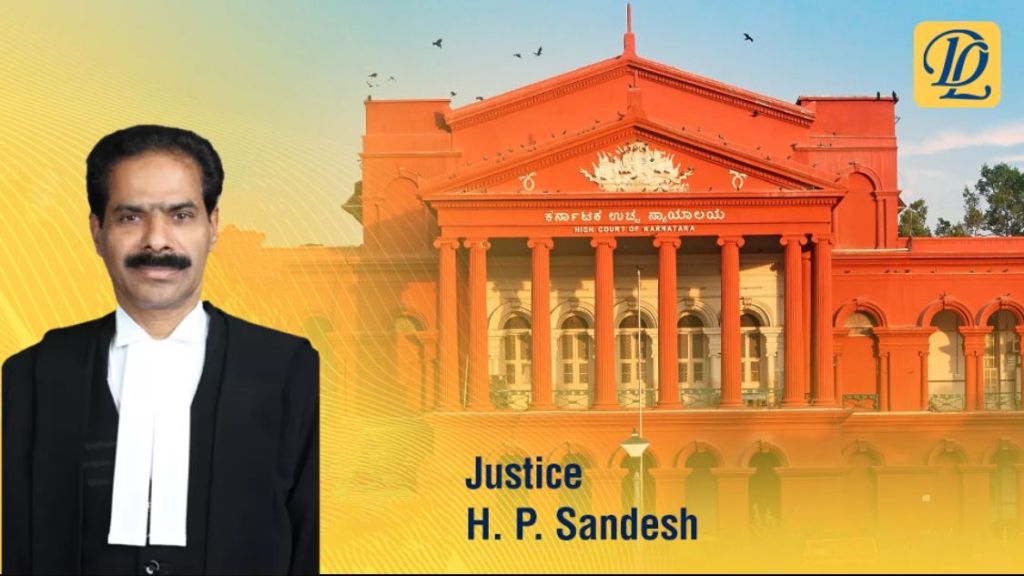
Hon’ble Mr. Justice H.P. Sandesh celebrates his 60h birthday today.
Hon’ble Mr. Justice Hethur Puttaswamygowda Sandesh: Born on December 2nd 1964, at Hethur in Sakaleshpur Taluk, Hassan District to Late Sri. Puttaswamy Gowda and Late Smt. Kaveramma as a second son. He had his Primary Education at Hethur and Sakaleshpur. Secondary Education at Pre-University Government College, Sakaleshpur.
Thereafter, obtained 5 years Law Degree from M. Krishna Law College, Mysuru University from 1987 to 1992 and started practice with Sri.K. Anantharamaiah, Senior Advocate on both Civil and Criminal Law at Hassan. Thereafter, shifted his practice to Bengaluru in 1994. He has practiced both on Civil and Criminal side in High Court and District Judiciary in Bengaluru.
Thereafter, directly selected as District & Sessions Judge in 2002 and worked as I Additional District & Sessions Judge, Mandya and Mangaluru, Principal Secretary to Hon’ble The Chief Justice, Registrar (Administration) in High Court of Karnataka, Principal District & Sessions Judge, Mysuru and Haveri, Registrar (Infrastructure), Registrar (Administration), Secretary to Hon’ble The Chief Justice, High Court of Karnataka, Chief Judge, Court of Small Causes, Registrar (Vigilance), High Court of Karnataka and elevated as Additional Judge, High Court of Karnataka on 03.11.2018 and permanent Judge on 26.02.2020.
Got married to Smt. Hemavathi and has two daughters by name Kum. Sahana Sandesh, who is an Engineering graduate and Kum. Sneha Sandesh, who is pursuing her MBBS., and now doing her internship in M.S.Ramaiah Medical College, Bengaluru.
Hobbies: Reading and playing Cricket.
Important judgments delivered by Hon’ble Justice H.P. Sandesh.
Criminal Procedure Code. Section 482. Mere pendency of civil suit on the issue is not a ground to quash criminal proceedings when serious allegations are made in chargesheet. Karnataka High Court.
Negotiable Instruments Act. Whether a cheque is issued in respect of a time barred debt is a matter for trial. Proceedings cannot be quashed on this ground. Karnataka High Court.
Criminal Procedure Code. Section 482. When prosecution prima facie establishes receipt of huge money by son relatable to crime of corruption by the father defence of private transaction cannot be accepted to quash proceedings. Karnataka High Court.
Negotiable Instruments Act. Section 138. Non mentioning of transaction date in the complaint is not fatal to the case when evidence is led to corroborate the transaction details. Karnataka High Court.
Negotiable Instruments Act. Imprisonment ordered in default of fine in different and independent transactions. Sentence will run consecutively and NOT concurrently. Karnataka High Court.
Cr.P.C. Section 482. Though a transaction is civil in nature, if the complaint specifically avers dishonest and fraudulent acts inducing complainant to part with money, the criminal proceedings can NOT be quashed. Karnataka High Court.
Rape. Alleged bad character of a woman does not justify sexual assault on her. Karnataka High Court condemns the police machinery which tried to protect the rapist police officer.
Motor Vehicles Act. Insurance Company is liable to pay compensation under personal accident claim benefit even when the borrower of the vehicle met with personal accident. Karnataka High Court.
Motor Vehicles Act. After 1994 amendment, in case of goods vehicle, owner or his authorised representative are covered and entitled for compensation even though policy was issued earlier to 1994. Karnataka High Court.
Motor Vehicles Act. Vehicle covered under valid insurance policy driven by person without a driving licence at the time of accident. Insurance company has to pay compensation and recover the same from the owner. Karnataka High Court.
Motor Vehicles Act. Comprehensive policy covers employee of owner of vehicle involved in accident. Insurance company is liable to pay compensation for death of such employee. Karnataka High Court.
Negotiable Instruments Act. Against the order of acquittal passed by the first appellate court, appeal to High Court under Section 378(4) Cr.P.C is maintainable. Karnataka High Court.
Forgery of document produced before the Court. If the document was already tampered before its production before the Court, bar under Section 195(1)(b)(ii) for prosecution will not apply. Karnataka High Court.
Complaint u/s 138 N.I. Act filed without application to condone delay. Limitation issue raised for the first time in appeal. Appellate Court can send matter back to trial court by permitting complainant to file necessary application. Karnataka High Court.
Review. An error, which is not self-evident and to be detected by the process of reasoning, can not be said to be an error apparent on the face of the record, justifying the Court to exercise the power of review. Karnataka High Court.
Suit for specific performance. When entire sale consideration is paid and possession of the property is also delivered to the agreement holder, the readiness and willingness issue becomes illusory. Karnataka High Court.
Defamation. Onus of proving two ingredients; truth of the imputation and the publication of the imputation for the public good, is on the accused. Karnataka High Court reiterates.
Food Adulteration Act, 1954. Court cannot frame charge for ‘adulteration’ when prosecution case is ‘misbranding’. Judgement based on such charge liable to be set aside. Karnataka High Court.
Make sure that men of integrity are posted to Anti Corruption Bureau which is established to prevent corruption. Karnataka High Court directs the Chief Secretary to Government.
”Financial dependency is not the Ark of The Covenant”. Even the married sons and daughters are also entitled to compensation under the MVC Act. Karnataka High Court.
Workmen’s Compensation Act. There is no bar to enhance compensation invoking Order XLI Rule 33 of the CPC even in the absence of an appeal by the claimants. Karnataka High Court.
Death of driver due to heart attack while taking rest in parked vehicle shall also be construed as death during the course of employment. Karnataka High Court.
Motor Vehicle Act. Karnataka High Court exercises power under Order 41 Rule 33 CPC to enhance compensation from 11 lakhs to 44 lakhs in the appeal filed by the Insurance Company.
MVC Act. Insurance Company cannot escape its liability by merely branding driving license as fake without actually proving the same. Karnataka High Court.
After collecting premium for one year, Insurance Company cannot disown its liability on the ground that the registration of the vehicle expired in the meanwhile. Karnataka High Court.
Workmen Compensation Act. When the employer has not maintained the register, the salary claim of the claimant has to be accepted. Karnataka High Court.
After issuing the policy, Insurance Company cannot avoid liability if the cheque towards premium is dishonoured unless the Insurer cancels the policy and intimates the insured. Karnataka High Court.
Failure to conclude criminal trial expeditiously cannot be a ground to grant bail when the involvement in serious offences is made out. Karnataka High Court.
Rejection of earlier bail petition does not bar the Court from considering further developments on different considerations in a successive bail petition subject to gravity of the offence. Karnataka High Court.
Order rejecting bail petition does not preclude another petition on a later occasion giving more materials, further developments and different considerations. Karnataka High Court reiterates.
Order 41 Rule 33 CPC can be invoked to enhance compensation even in an appeal filed by the insured as well as Insurance Company in the absence of appeal filed by the claimant. Karnataka High Court.
Bail. Merely because another accused who was granted bail was armed with similar weapon is not sufficient to determine whether bail can be granted on the basis of parity. Karnataka High Court.
NDPS. Possession could mean physical possession with animus; exercise of dominion and control as a result of concealment; or personal knowledge as to the existence of the contraband and the intention based on such knowledge. Karnataka High Court.
Petition for anticipatory bail is NOT maintainable once accused appears through his Advocate and gets exemption from appearance. He can seek only regular bail. Karnataka High Court.
Hindu Succession Act. Grant of occupancy rights in favour of a woman member of the joint family under the Karnataka Land Reforms Act cannot be considered as her absolute property under Section 14. Karnataka High Court.
Permissive possession cannot be claimed as adverse possession unless the possession is adequate in continuity, adequate in publicity and adverse to a competitor. Karnataka High Court.
Limitation for suit for comprehensive relief of declaration and possession is 12 years under Article 65 and not 3 years under Article 58 of the Limitation Act. Karnataka High Court.
Suit for specific performance. When suit is filed after non-alienation period is over, the suit cannot be said to be barred by time especially when entire sale consideration is paid under the agreement of sale. Karnataka High Court.
Disposition property in unnatural, improbable or unfair manner and exclusion of or absence of adequate provisions for the natural heirs without any reason is a ground to doubt the execution of a Will. Karnataka High Court.
Though sale in violation of non-alienation clause is voidable, if no action is taken against the purchaser or the sale for long time, by virtue of Section 27 of the Limitation Act, the purchaser gets his title perfected. Karnataka High Court.
Arbitration and Conciliation Act. Limitation under Section 34(3) commences only from the date a signed copy of the award is delivered to the party applying for setting it aside. Mere knowledge of the award is not enough. Karnataka High Court.
Suit for partition filed several years after the property was sold by the karta or the mother is hit by the doctrine of acquiescence and the same is liable to be dismissed. Karnataka High Court.
Suit seeking direction to conduct prayers/mass prayers in Church in a particular language invoking fundamental right under Article 25 does not involve Canon Law. Plaint cannot be rejected on this ground. Karnataka High Court.
Suit or proceeding in relation to the guardianship of the person or the custody of, or access to, any minor, can be filed only before the Family Court and the District Court has no jurisdiction. Karnataka High Court.
Suit for partition filed three years after the minor coparcener attaining majority merely pleading that alienation of ancestral properties by karta is not binding on him is barred by law of limitation. Karnataka High Court.
Counter claim need not be within the pecuniary jurisdiction of a Court. When counter claim exceeds pecuniary jurisdiction, the Court shall return the plaint under Order 7 Rule 10 CPC to be presented before the proper Court. Karnataka High Court.
When the rent and the leased area are within the prescribed limit under the Rent Act, the Court must reject the plaint for ejection filed under the Transfer of Property Act. Karnataka High Court.
If the premises used for commercial purpose is more than fourteen square meters, it is excluded from the applicability of the Karnataka Rent Act. This can’t be defeated on the ground that its rent is less than the amount stipulated. Karnataka High Court.
Indian Succession Act. Jurisdiction of the court to grant Succession Certificate is based on the ordinary residence of the deceased at the time of death with an intention to stay at that place for a considerable length. Karnataka High Court.
Mere pendency of second appeal against dismissal of suit for specific performance of sale agreement between landlord and tenant is not a ground to postpone the eviction proceedings. Karnataka High Court.
Suit by purchaser of property during pendency of civil suit, seeking declaration that the decree passed in the suit is not binding on him, is not maintainable and the plaint is liable to be rejected. Karnataka High Court.
Plaintiff not signing every page of the plaint is not a ground to reject the plaint when the verification column is duly signed by the plaintiff. Karnataka High Court.
Cheque Bounce cases. Moratorium contained in Section 14 of the Insolvency and Bankruptcy Code applies only to Corporate Debtors. Directors are liable under Chapter XVII of the Negotiable Instruments Act. Karnataka High Court.
Resjudicata is a mixed question of fact and law. Plaint cannot be rejected under Order 7, Rule 11(d) of C.P.C. without holding full fledged trial. Karnataka High Court.
Attachment under Order 38 Rule 5 of CPC. Even where the defendant is removing or disposing his assets, attachment before judgment will not be issued if the plaintiff is not able establish prima facie case. Karnataka High Court.
Appeal against grant/refusal to grant temporary injunction. Appellate Court can mould the relief taking note of the relief sought in the Trial Court as on the date of suit. Karnataka High Court.
Sale cannot be set aside under Order XXI Rule 90 CPC unless there is material irregularity which has resulted substantial injury to the judgment-debtor. Karnataka High Court.
Grant of temporary injunction in suit based on defamation. Issue regarding territorial jurisdiction goes to the root of the matter and the Court must consider this issue before considering other aspects. Karnataka High Court.
Judgment of the foreign Court is not executable in India if the same is not on merits. Even when the defendant is placed exparte, the judgment ought to be the one based on evidence led by the plaintiff. Karnataka High Court.
Karnataka Public Premises (Eviction of unauthorized occupants) Act is not a bar for the public authority to file for eviction against a dismissed employee seeking possession of the service quarters. Karnataka High Court.
Karnataka Rent Act, 1999. Second revision petition under Section 115 of CPC is maintainable as against the revisional order passed by the District Court under Section 46. Karnataka High Court.
An independent suit questioning the compromise decree is not maintainable. Parties must approach the very same Court if any fraud or misrepresentation is alleged while obtaining the compromise decree. Karnataka High Court.
Bar of Civil Court jurisdiction in a statute. Before considering the application for temporary injunction, the court must first consider the issue regarding jurisdiction. Karnataka High Court.
Judgment on admissions. It is not permissible for the Court to make roving enquiry for disposal of the application filed under Order XII Rule 6 of CPC. Karnataka High Court.
Karnataka Rent Act. Date of filing eviction petition governs the jurisdiction of the Court. Subsequent conduct of the parties will not oust the jurisdiction. Karnataka High Court.
When appeal against dismissal of suit for injunction is pending, the same does not give right to the defendant to seek injunction by way of fresh suit on same the cause of action pleaded by him. Karnataka High Court.
Successive anticipatory bail applications ought not to be entertained when the case diary and the status report clearly indicates that the accused is absconding and not cooperating with the investigation. Karnataka High Court.
Preventing bank from exercising its right under the SARFAESI Act in the guise of partition suit among family members with prayer for injunction is hit by Sections 35 and 36. Karnataka High Court.
Second suit for partition, instead of enforcing the earlier decree for partition within the period of limitation, is not maintainable. Plaint is liable to be rejected. Karnataka High Court.
Revocation of probate under the Indian Succession Act. Delay in applying for revocation cannot be considered when the service of notice and publication of citation was defective. Karnataka High Court.
Hindu Succession Act. Mother as class-I heir is entitled to a share in her deceased son’s property. Her death during the suit/appeal will not alter the situation since Section 15 gets attracted. Karnataka High Court.
Counter claim for possession based on dispossession/trespass. Trial Court is bound to raise the issue of limitation even in the absence of any pleadings with regard to limitation. Karnataka High Court.
Sale deed registered outside the State in respect of property situated within the State of Karnataka is a void document and does not confer any right. Karnataka High Court.
When one party seriously disputes biological relationship with another in a civil suit, the court shall allow the application for DNA test at the instance of the person claiming such a relation. Karnataka High Court.
Order XXI Rule 97 CPC. Only person with independent right has the right to record resistance and not a party who is tracing his right through judgment debtor. Karnataka High Court.
Public or ex-servicemen cannot claim right of way through Class A1 land exclusively belonging to military invoking Article 19 (1) (d) of the Constitution of India. Karnataka High Court.
Suit for partition without including all the joint family properties and without impleading all the co-sharers is not maintainable. Karnataka High Court.
A third party can institute separate suit challenging compromise award passed by the Lok-Adalat on the ground of fraud and undue influence. Karnataka High Court.
Indian Railways Act. Death or injury in the course of boarding or de-boarding train falls within the meaning of ‘’untoward incident’’. Victim is entitled to compensation. Karnataka High Court.
Specific Relief Act. A registered sale deed cannot be cancelled by another deed of cancellation even by the consent of the parties. The only mode is to re-transfer the property. Karnataka High Court.
Violation of Principles of Natural Justice itself is an independent ground for review of Judgment/order under Order 47 Rule 1 of the Civil Procedure Code. Karnataka High Court.
Compact Disk containing telephonically recorded conversation with Certificate under Section 65B of the Evidence Act is admissible as secondary evidence. Karnataka High Court.
Incidental finding on title in earlier suit for injunction will not act as resjudicata in a later suit unless the relief for injunction was founded or based on the finding on title. Karnataka High Court.
In a suit for injunction, valuation need not be split separately for Court fee and jurisdiction. It shall be valued only under Section 26(c) of the Karnataka Court Fees and Suits Valuation Act. Karnataka High Court.
Even in the absence of declaratory relief, Court can grant the relief of perpetual injunction with regard to the exercise of easementary right over the property. Karnataka High Court.
Order releasing the amount deposited under Section 148(3) N.I. Act does not amount to intermediate order since it is an interlocutory order. Revision before the High Court under Section 397 Cr.P.C. is not maintainable. Karnataka High Court.
Purchase of land and constructions put up subsequent to acquisition proceedings do not confer any right over the purchaser. Such person cannot maintain a suit for injunction against the acquiring body. Karnataka High Court.
When plaintiff’s suit for specific performance is barred by time, the defendant’s counter claim for possession can be granted by the Court. Karnataka High Court.
Purchaser of undivided share from a coparcener cannot insist on allotment of a particular developed portion in the partition when the construction was without the consent of the other coparceners. Karnataka High Court.
Hindu Women’s Rights Act. In the absence of an express prohibition in writing by the husband his widow had authority to make an adoption and such authority need not be proclaimed to anyone. Karnataka High Court.
Hindu Succession Act. Succession under Section 15 (2) is intended only to change the order of succession specified in sub-section (1) and not to completely eliminate other categories of heirs set out in sub-section (1). Karnataka High Court.
Arbitration agreement entered into after the 1996 Act came into force but making a reference to Indian Arbitration Act or the 1940 Act shall be governed only under the provisions of the 1996 Act. Karnataka High Court.
Indian Succession Act. Apart from the executor named in the Will, even other persons can seek for a probate under Section 276 depending on the circumstances. Karnataka High Court.
Statements in autobiography. Unless a full-fledged trial establishes defamatory nature of the statements, which are allegedly based on true facts, injunction cannot be granted restraining circulation of the book. Karnataka High Court.
Where title to property is not disputed, suit for possession and consequential injunction is maintainable without seeking declaration of title. Karnataka High Court.
Though a comprehensive suit for declaration is pending, fresh suit for injunction in respect of the same property is maintainable when additional parties are added and fresh cause of action is pleaded. Karnataka High Court.
In order to invoke Section 420 of IPC, there must be dishonest intention from the very beginning which is sine qua non to hold that accused is guilty for commission of the said offence. Karnataka High Court.
While considering the application for temporary injunction, trial court cannot go into merits of the case or validity of a compromise decree between the parties. Karnataka High Court.
Criminal Law. Circumstantial evidence. Proved circumstances must be consistent only with hypothesis of guilt of accused and totally inconsistent with his innocence. Karnataka High Court.
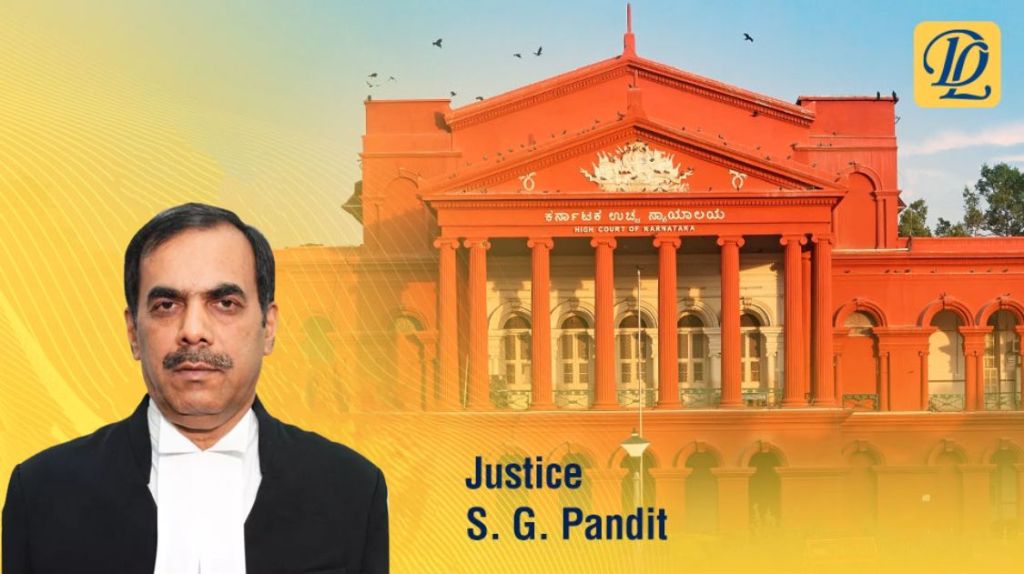
Hon’ble Mr. Justice S G Pandit celebrates his 59th birthday today.
Hon’ble Mr. Justice Shankar Ganapathi Pandit: Born on 16th November 1965. Appointed as Additional Judge of the High Court of Karnataka and took oath on 14.02.2018 and Permanent Judge on 07.01.2020.
Important Judgments delivered by Hon’ble Mr. Justice S G Pandit.
Divorce. When the allegations of cruelty are consistent and specific which are not refuted by making available for cross-examination and in the absence of any contrary evidence on record, the court shall dissolve the marriage. Karnataka High Court.
Property Tax. Assessing authority must furnish document or report on which it relies on to determine the tax liability to the assessee failing which assessment becomes illegal. Karnataka High Court.
Karnataka Co-operative Societies Act. Order of attachment of property before award or order passed by the Registrar under Section 103 is appealable to the Appellate Tribunal under Section 105. Karnataka High Court.
KIADB Act. Though no time limit is prescribed for publication of the final notification after the preliminary notification, if the final notification is not issued within two years, the acquisition will lapse. Karnataka High Court.
Motor Vehicles Act. Power of the Tribunal or the High Court to award just and fair compensation to the victim is not taken away because of prayer for a lesser amount. Karnataka High Court.
Education. ”On account of the pandemic, one cannot give up maintaining standards of education”. Karnataka High Court while rejecting plea of law students to dispense with exams.
Caste Certificate and Creamy Layer Certificate cannot be treated alike. Caste Certificate status is permanent whereas Creamy Layer Certificate status varies from time to time depending on income. Karnataka High Court.
When the statutory body fails to honor its commitment to allot industrial plot, it is bound to refund the entire amount paid by the prospective allottee. Karnataka High Court.
Writ Petition challenging provisional seizure order under Section 37A of the Foreign Exchange Maintenance Act cannot be entertained since it is subject to confirmation of the Competent Authority. Karnataka High Court.
Karnataka Civil Services Rules. No enquiry can be initiated against a retired person in respect of an event which had taken place more than four years prior to the enquiry. Karnataka High Court.
Karnataka SC/ST (PTCL) Act. Initiation of proceedings 7 years after the sale that too after receiving the entire sale consideration is hit by doctrine of unreasonable delay. Karnataka High Court.
Hindu Marriage Act. Mere inability of the wife to obey decree for restitution of conjugal rights is not a ground to dismiss her petition for divorce. Karnataka High Court.
Obtaining approval or sanction from the Government is not mandatory while issuing Preliminary Notification under Section 4(1) of the Land Acquisition Act for acquisition of lands in favour of the Karnataka Housing Board. Karnataka High Court.
When the State takes over private land of a person who has undisputed title over it, the owner cannot be asked to approach the civil court for compensation. Refusal to pay compensation violates constitutional mandate. Karnataka High Court.
Divorce. When the allegations of cruelty are consistent and specific which are not refuted by making available for cross-examination and in the absence of any contrary evidence on record, the court shall dissolve the marriage. Karnataka High Court.
Property Tax. Assessing authority must furnish document or report on which it relies on to determine the tax liability to the assessee failing which assessment becomes illegal. Karnataka High Court.
Karnataka Co-operative Societies Act. Order of attachment of property before award or order passed by the Registrar under Section 103 is appealable to the Appellate Tribunal under Section 105. Karnataka High Court.
Suit for specific performance. Third parties or strangers to the contract cannot be made parties to the suit, even if they claim to be joint family members and assert title over the property. Karnataka High Court.
When defendant raises a genuine dispute regarding title, thereby casting a cloud on the plaintiff’s title, the plaintiff cannot pursue a suit for mere injunction either preventive or mandatory. Karnataka High Court.
Service Law. Corruption cases warrant severe penalties. Tribunal cannot replace dismissal order with compulsory retirement solely based on sympathy. Karnataka High Court.
Insolvency and Bankruptcy Code. Even statutory dues owed to Government get extinguished if such claims are not part of the insolvency resolution plan. Karnataka High Court.
Legal representative of deceased defendant can file additional written statement setting up his own independent title to the plaint schedule property. Karnataka High Court.
Maintenance and Welfare of Parents and Senior Citizens Act does not apply to transactions which have taken place prior to coming into force of the Act. Karnataka High Court.
Commercial Courts Act. Loan or dispute with regard to loan not based on any mercantile document cannot be considered as ‘commercial dispute’ simply because the amount involved is above the specified value. Karnataka High Court.
Expiry of arbitration mandate. For the purpose of calculating the period of twelve months, time during which arbitration proceedings were stayed by the Court has to be excluded. Karnataka High Court.
Expiry of the arbitration. When parties file claim, defence, counter-claim, rejoinder and surrejoinder, the last of the pleadings shall be taken as the starting point to calculate twelve months. Karnataka High Court.
Review order by the Commissioner under Section 114A of the Karnataka Municipal Corporations Act. The Standing Committee cannot interfere with the order since it has no appeal power. Karnataka High Court.
Karnataka Municipal Corporations Act. Attachment of property in civil suit cannot be a ground not to sanction building plan for putting up construction on the property. Karnataka High Court.
Karnataka Land Reforms Act. Non-alienation clause operates from the date of final order passed by the Tribunal and not from the date of issuance of Form-10 to the tenant. Karnataka High Court.
Telegraphs Act. When a high-tension wire is erected over the land, definitely value of the land diminishes. While arriving at diminutive value, all factors such as crops grown, etc., is to be taken note of. Karnataka High Court.
Karnataka Municipal Corporations Act. Random scrutiny of the property tax returns can be undertaken by the Commissioner only after prior notice to the owner and inspection/measurement/survey of the property. Karnataka High Court.
KIADB cannot unilaterally cancel allotment of industrial plot for non-implementation of the project in time when the delay is attributable to reasons beyond the control of the allottee. Karnataka High Court.
Karnataka SC/ST (PTCL) Act. Initiation of proceedings 7 years after the sale that too after receiving the entire sale consideration is hit by doctrine of unreasonable delay. Karnataka High Court.
Karnataka Civil Services Rules. No enquiry can be initiated against a retired person in respect of an event which had taken place more than four years prior to the enquiry. Karnataka High Court.
Compensation for drawing high-tension lines. Since possession of land remains with owners and growing agricultural crops permitted, diminutive value cannot exceed 30% of the market value. Karnataka High Court.
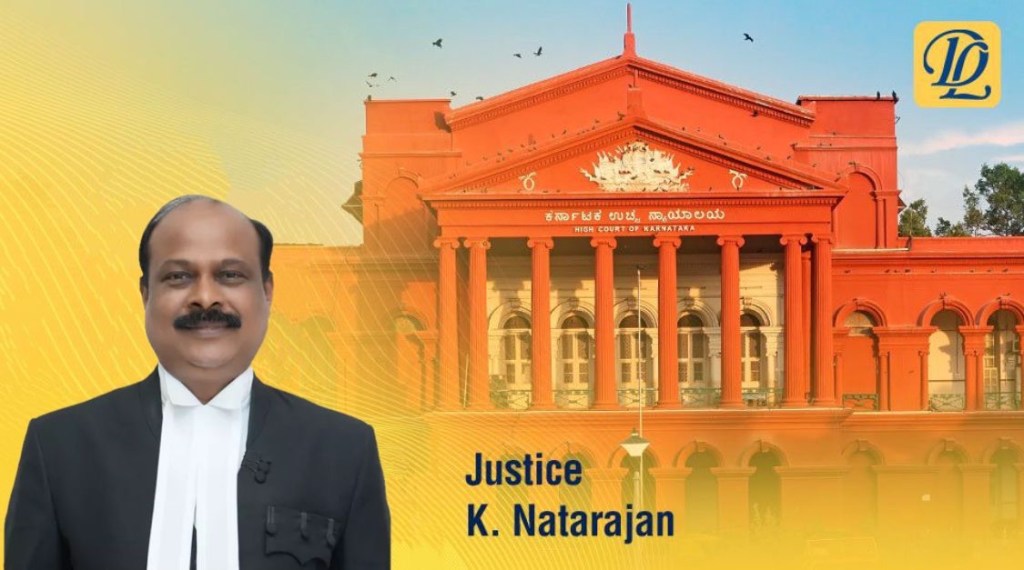
Hon’ble Mr. Justice K. Natarajan celebrates his 60th birthday today.
Hon’ble Mr. Justice Krishnan Natarajan:
Born on 05.11.1964 at Bengaluru City. Studied in Primary Education at Government Primary School, Shamanna Bungalow, Sultanpet, Bengaluru and Higher Primary Education at Government Boys’ Middle School, Mamulpet, Bengaluru; Secondary Education at Central High School, K.G. Road, Bengaluru; Pre-University Education at P.U. College, Magadi Road, Bengaluru; B.Com. Degree at Acharya PatashalaEvening College, Bengaluru; and, LL.B. Degree at V.V. Puram Law College, K.R. Road, Bengaluru.
Enrolled as an Advocate on 14.02.1992; Started practice under the guidance of Sri V. Jagadish Gowda, learned Advocate, Gandhinagar, in Magistrate Courts and Sessions Courts, Bengaluru.
Started independent practice from January 1995, both in the field of civil and criminal sides, at Bengaluru and other districts of the State of Karnataka. Appointed as a panel Advocate for New India Assurance Company, Bengaluru.
Selected as the District and Sessions Judge and took charge as the District and Sessions Judge on 27.05.2002. Worked as IV Additional Sessions Judge, Kalaburagi from 01.07.2002 till 2005; As an Additional City Civil and Sessions Judge, Bengaluru from 2005 to 2008; As Presiding Officer of Labour Court, Chikkamagaluru between 2008 and 2009; As Principal District and Sessions Judge at Bellary and Dharwad Districts between 2009 and 2013; As Registrar (Review and Statistics) and Registrar (Recruitment) at High Court of Karnataka, Bengaluru from 2013 to 2015; As Principal Secretary to Government of Karnataka, Law Department, Bengaluru between 2015 and 2016; As Principal Judge, Family Court, Bengaluru from 2016 to 2018; As Principal District and Sessions Judge, Shivamogga District from 31.05.2018 till elevation as the Judge of the High Court of Karnataka.
Appointed as an Additional Judge of the High Court of Karnataka on 03.11.2018 and as Permanent Judge on 26.02.2020.
Important Judgments delivered by Hon’ble Mr. Justice K Natarajan.
Advocate making defamatory statement in pleadings without obtaining signature of his clients cannot plead exception to Section 499 IPC. Karnataka High Court.
Criminal proceeding against Notary Public in respect of their official work without prior permission of the Central Government or the State Government is impermissible and is liable to be quashed. Karnataka High Court.
Failure to disburse dividend under the Companies Act, 1956 is a continuing offence. Recurring limitation extends until the payment is made. Karnataka High Court.
Unlike Company, if an offence is committed by Partnership Firm, it is an offence committed by its partners. There is no need to make Partnership Firm an accused in criminal case. Karnataka High Court.
Taking cognizance by the criminal Court cannot be set aside on the ground of defective or illegal investigation, unless illegality in investigation can be shown to have brought about miscarriage of justice. Karnataka High Court.
Magistrate cannot condone delay in filing private complaint, under Section 473 Cr.P.C. without issuing notice to accused/respondent. Karnataka High Court.
“Bhang is a traditional drink and the same is neither a narcotic drug nor a psychotropic substance unless it is prepared out of the substance of Ganja’. – Karnataka High Court.
Land Acquisition Act. In respect of the awards passed after 2013 Act, appeal is maintainable only under Section 74 of the 2013 Act and not under Section 54 of the 1894 Act. Karnataka High Court.
Appointment of eminent Senior Advocate under the SC/ST (Prevention of Atrocities) Rules, 1995 is a special measure to safeguard the interest of the victims. The same cannot be questioned on technical grounds. Karnataka High Court.
Matka gambling. Owner of the premises is also liable under the Karnataka Police Act though he was not present when the Police conducted the raid. Karnataka High Court.
Physically preventing public servant from discharging duties cannot be construed as part of fundamental right to assemble under Article 19(1)(b) of the Constitution. Karnataka High Court.
When a partner commits criminal breach of trust in his individual capacity, the partnership firm need not be made party in the criminal proceedings. Karnataka High Court.
Conviction under Section 138 of Negotiable Instruments Act, 1881 cannot be questioned under Section 482 Cr.P.Cwhen appeal remedy is available. Karnataka High Court.
Negotiable Instruments Act. Section 138. Once NBW is issued against accused, the complainant need NOT take any further steps till NBW is executed or returned. Complaint can NOT be dismissed for not taking steps. Karnataka High Court.
Criminal trial. In appropriate cases, the Court shall suo moto summon the document which is in possession of any of the parties under Section 91 of Cr.P.C. Karnataka High Court.
Proceedings under PMLA initiated and seized properties forwarded to the Adjudicating Authority situated outside the State. Karnataka High Court rejects the challenge for want of territorial jurisdiction.
POCSO Act. Though victim shall not be called frequently for cross examination, fair trial being a fundamental right, the court shall not deny sufficient opportunity to the accused. Karnataka High Court.
Matka and OC gambling fall under Section 78(3) of the Karnataka Police Act which are non cognizable offences. Without seeking permission of the Magistrate under Section 155(2) of Cr.P.C, the police have no authority to register FIR and file the charge.
Negotiable Instruments Act. When accused is convicted and in appeal deposits 20% of the cheque amount as per the Court direction, the complainant is entitled for release of the amount in his favour. Karnataka High Court.
Section 125 Cr.P.C. Step mother can claim maintenance from the income of the property of her husband when she is incapable of supporting herself. Karnataka High Court.
Investigation agencies must communicate final report prepared by them to the first informant as per Section 173(2)(ii) of Cr.P.C. Karnataka High Court directs DG and IGP of the State to issue necessary instructions.
Registering FIR for non-cognizable offences without taking permission from the Magistrate and filing charge sheet without obtaining sanction is not sustainable under the law. Karnataka High Court.
Police adding cognizable offence along with non-cognizable offence in FIR and later dropping cognizable offence from the chargesheet. The same will not cure mandatory requirement of Sanction under 155 (2) of Cr.P.C. Karnataka High Court.
Though CCB is not a Police Station, CCB Police Officers appointed or identified as Investigating Officers can file the final report / charge sheet under Section 173 (2) of Cr.P.C. Karnataka High Court.
Prevention of Corruption Act. Court cannot act as chartered accountant or hold mini-trial while considering the challenge to the prosecution under Section 13(1)(e). Karnataka High Court.
Suit for possession based on illegal dispossession shall be filed within six months from the date of dispossession. Subsequent amendment for possession in a pending suit for injunction will not cure the defect. Karnataka High Court.
Rejection of plaint under Order 7 Rule 11 cannot be resorted to at belated stage when the issues are framed and the suit is already posted for evidence. Karnataka High Court.
When agreement was entered in Gujarat and the work was executed in Kerala, Police/Magistrate at Bangalore do not have jurisdiction over the dispute simply because the complainant’s office is situated at Bangalore. Karnataka High Court.
Adverse Possession as Sword. Plea of adverse possession can be raised by the plaintiff by filing a suit for declaration to perfect his title. Karnataka High Court.
Negotiable Instruments Act. Maximum 20% that can be ordered by the Magistrate to deposit as interim compensation under Section 143-A may be also below 20%. Karnataka High Court.
Land granted by way of public auction on upset price to SC/ST persons cannot be considered as “granted land’’ within meaning of Karnataka SC/ST (PTCL) Act. Karnataka High Court.
Wife cannot initiate prosecution against husband’s girlfriend for allegedly abetting the husband to commit offence under Section 498A, IPC. Karnataka High Court.
’Entire complaint reads like autobiography with no offence made out’. Karnataka High Court quashes criminal proceedings initiated by wife against her in-laws and husband’s relatives u/s 498A, IPC.
Negotiable Instruments Act. When cause of action is same resulting in issuance of common notice, single complaint is maintainable for multiple cheques issued by the respondent/accused. Karnataka High Court.
Karnataka SC/ST (PTCL) Act. When violation of the Act is alleged and resumption is sought by way of an application, it is the duty of the Assistant Commissioner to consider the application. Karnataka High Court.
Matka/gambling. Police officer shall obtain search warrant/permission before going to search and seize. Obtaining subsequent permission does not cure the illegality. Karnataka High Court.
A person out of possession cannot seek the relief of injunction simpliciter without claiming the relief of possession though his title to the property is not disputed. Karnataka High Court.
Specific Relief Act. Section 41(h). Agreement holder cannot file a suit for bare injunction without suing for specific performance. Karnataka High Court.
Mere failure to sell the property as per the agreement of sale or refusal to return advance money does not constitute criminal offence. Karnataka High Court.
When accident is caused by tractor, insurance company is liable to pay compensation even though the trailer is not separately insured. Karnataka High Court.
NDPS Act. Special Court/Magistrate has power to release the vehicle in question for interim custody under Sections 451 and 457 of Cr.P.C. Karnataka High Court.
The Sessions Judge Koppal Hon’ble Shri. C. Chandrashekar convicted 101 persons in a decade old case of atrocity against members of the Scheduled Caste community at Marakumbi village. (Judgement enclsoed)
The Hon’ble Judge observed, “To show mercy in a case like this would be travesty of justice. Considering the fact that the injured victims, male and female, belong to Scheduled Caste and that accused have violated the modesty of women folk, assaulted the victims with sticks, stones and brick pieces causing injuries, I am of the opinion that the Accused deserve to be sentenced for more period than the prescribed minimum period of punishment.”
The Court sentenced 98 accused to life imprisonment under Section 3(2)(iv) of the Scheduled Caste and Scheduled Tribe (Prevention of Atrocities) Act. The remaining were sentenced to five years of rigorous imprisonment.
FIR was lodged in August 2014 alleging that the accused assaulted the persons belonging to SC community while purchasing cinema tickets. The accused entered the colony of Madigas community, abused and assaulted the community members and lit fire to their houses.
A total of 117 individuals were charged in the case, facing allegations under:
Section 3(1)(x) of the SC/ST Act: intentional insult or intimidation of SC/ST community members (more severe than IPC Sections 504 and 506).
Section 3(1)(xi) SC/ST Act: assault on SC/ST women with intent to outrage modesty (more severe than IPC Section 354).
Section 3(2)(iv) SC/ST Act: arson targeting SC/ST dwellings (more severe than IPC Section 436).
These sections of the SC/ST Act prescribe aggravated penalties for offenses against SC/ST individuals.”
These offenses carry enhanced penalties compared to IPC Sections 504, 506, 354, and 436.
The Court documented statements from primarily injured, child, and female witnesses, observing consistent testimony despite a three-year examination gap. Their accounts were substantiated by additional evidence. Notably:
35 of 38 witnesses supported the prosecution’s case.
Only three injured witnesses disagreed with the prosecution.
No allegations of witness tampering were made.
Witnesses recounted their traumatic experiences, showing consistency despite variations in detail.
The Sessions Judge Koppal Hon’ble Shri. C. Chandrashekar convicted 101 persons in a decade old case of atrocity against members of the Scheduled Caste community at Marakumbi village. (Judgement enclsoed)
The Hon’ble Judge observed, “To show mercy in a case like this would be travesty of justice. Considering the fact that the injured victims, male and female, belong to Scheduled Caste and that accused have violated the modesty of women folk, assaulted the victims with sticks, stones and brick pieces causing injuries, I am of the opinion that the Accused deserve to be sentenced for more period than the prescribed minimum period of punishment.”
The Court sentenced 98 accused to life imprisonment under Section 3(2)(iv) of the Scheduled Caste and Scheduled Tribe (Prevention of Atrocities) Act. The remaining were sentenced to five years of rigorous imprisonment.
FIR was lodged in August 2014 alleging that the accused assaulted the persons belonging to SC community while purchasing cinema tickets. The accused entered the colony of Madigas community, abused and assaulted the community members and lit fire to their houses.
A total of 117 individuals were charged in the case, facing allegations under:
Section 3(1)(x) of the SC/ST Act: intentional insult or intimidation of SC/ST community members (more severe than IPC Sections 504 and 506).
Section 3(1)(xi) SC/ST Act: assault on SC/ST women with intent to outrage modesty (more severe than IPC Section 354).
Section 3(2)(iv) SC/ST Act: arson targeting SC/ST dwellings (more severe than IPC Section 436).
These sections of the SC/ST Act prescribe aggravated penalties for offenses against SC/ST individuals.”
These offenses carry enhanced penalties compared to IPC Sections 504, 506, 354, and 436.
The Court documented statements from primarily injured, child, and female witnesses, observing consistent testimony despite a three-year examination gap. Their accounts were substantiated by additional evidence. Notably:
35 of 38 witnesses supported the prosecution’s case.
Only three injured witnesses disagreed with the prosecution.
No allegations of witness tampering were made.
Witnesses recounted their traumatic experiences, showing consistency despite variations in detail.
S. Basavaraj, Senior Advocate & Member, Karnataka State Bar Council. Bengaluru.
The recent order of the Karnataka High Court is sought to be sensationalised and criticised for the reasons which are completely unacceptable.
In the order, the division bench of Justice Krishna S Dixit and Justice Vijaykumar A Patil referred couples whose marriage in trouble for mediation through Shri Abhinava Gavisiddeshwara Swamiji of Shri Gavisiddeshwara Mutt, Koppal, Karnataka.
The order is criticised on social media platforms and blogs alleging that the order “blurs secular boundaries” and such religious endorsement is a peril in constitutional courts.
At the outset, those who are criticising lack knowledge about the historical significance of religious mutts and swamijis acting as non-judicial mediators in Karnataka.
With permission, I quote from the book “Iterations of Law: Legal Histories from India” by Aparna Balachandran, Rashmi Pant, and Bhavani Raman. The learned authors say;
“The increasing attraction of non-state legal institutions as courts of appeal for a quick and summary justice bears scrutiny. How have sectarian religious institutions, which formerly patrolled the boundaries of caste and gender, been adapted in the present to exert an influence far beyond the specific circle of adherents to offer the possibility of justice to a wide range of groups and causes? The matha court at Sirigere, Karnataka, is a far cry from its late nineteenth- and early twentieth-century predecessor, both in its performance of the law, and in its ambitious reach…
There is a pronounced visibility of the Lingayat mathas in contemporary Karnataka as the meaning and spread of their engagements change. Among the most important is the Taralabalu Jagadguru Brihan Matha at Sirigere, a small village in Chitradurga taluk, Karnataka. A visible sign of the changing relation between the matha and its adherents on the one hand and the matha and state on the other is the Saddharma Nyaya Peetha (Seat of Justice) of the current Jagadguru of the Sirigere matha, Shivamurthy Shivacharya Swamiji. Throughout the twentieth century, and at least since the 1940s—for which records are available—the Sirigere swamijis have adjudicated cases pertaining to caste transgressions of the matha’s adherents (and in some cases, other castes from the areas around the mula [or root] matha). They dealt not only with questions relating to inter-dining, sexuality, and marks and modes of respect, but also with more ‘secular’ issues of property disputes and family tangles. Since 2000, the court has taken a more formal shape to become an increasingly popular site for conciliation/adjudication on a wide range of problems and issues.
…. Principally, there were three kinds of cases with which the Lingayat mathas (Muruga matha of Chitradurga and Taralabalu matha at Sirigere) dealt: (a) disputes relating to infringements of caste honour, notably chappal beating, slander, and other forms of contempt by members of the same or two different castes; (b) those that referred to questions of sexuality, notably the sexuality of widows, and also cases of adultery, by both men and women; and finally, (c) cases related to the division of property..”
The learned authors give statistics of the disputes resolved by the mutt. The dispute resolution at Shri. Dharmasthala has been equally efficacious.
In his article “The Role of Religious Institutions for Conflict Management: Experience of National Conflict Management: Experience of National Council of Churches of Kenya” Mr. Aemro Tenaw, Lecturer at Debre Markos University, Ethiopia speaks about the role of religious institutions in conflict management. Under the heading RELIGION AS SOURCE OF CONFLICT AND PEACE BUILDING IN AFRICA, the learned author explains how “religion can both encourage conflict and build peace, reflecting growing evidence that religious forces can play a constructive role in helping to resolve conflicts. Brief case studies of religious peacemakers – from Mozambique, Nigeria– demonstrate attempts, characteristically partially successful, to reconcile previously warring communities, thereby helping to achieve greater social cohesion, and providing a crucial foundation for progress in enhancing human development Jeffrey (Haynes,2009). So, in one hand as cases described illustrate the creative contributions that religion can make to peace in places like Israel/Palestine, Iraq, Macedonia, Nigeria, and Sudan. As these cases illustrate, religious approaches to peacemaking do not provide a panacea, but can complement secular peacemaking productively (Smock. 2006). In addition, in many settings religious organizations and their leaders, due to the trust and moral authority they hold from broad-based constituencies, are uniquely positioned to facilitate post conflict reconstruction and reconciliation efforts (USID, 2009). For instance, in West Africa, in response to civil wars in Sierra Leone and Guinea, and ongoing violence in Liberia, interreligious councils—composed of representatives from Muslim, Protestant, and Catholic groups—provided leadership and resources to rebuild communities, and advocated for refugees. These networks attempt to maintain requisites for building peace across national and regional boundaries.”
In their paper “Experiences of Dispute Resolution in Non-Court Forums: Justice Sans Rule of Law” learned authors Shruti Vidyasagar and Shruthi Naik extensively discuss the role of non-court forums in dispute resolution. “Dispute resolution in India involves several actors and institutions – not only courts but also various other forums for alternative means of dispute resolution. While the judiciary is the sole authority responsible for redressing rights’ violations, the problems plaguing the judicial system contribute significantly to parties opting to settle disputes out of court” the learned authors argue. They also argue that “the perception of local and customary forums as providing quick, effective, and flexible means of dispute resolution is well-documented, and these traits are even considered desirable.”
The role of religious heads and Swamijis in dispute resolution is a historically proven and accepted factor. It is absolutely necessary to understand such historical factors in State like Karnataka before taking up the misadventure of attacking the court order.
The Indian media’s thirst for ratings has led to a disturbing trend of sensationalizing court cases, compromising the integrity of the judicial process. Similar is with legal blogs and websites. The consequences of bad reporting are easy to perceive. Sensationalized reporting can influence public perception, making it challenging for the judges to perform. By delivering their own verdicts, the media and the websites undermines the authority of the judiciary and the rule of law .
It’s time for the media and the websites to rethink its approach and prioritize responsible reporting over ratings. The public deserves accurate, unbiased information, not sensationalized storytelling.
Hon’ble Mr. Justice Vijaykumar A Patil celebrates his 49th birthday today.
Hon’ble Mr. Justice Vijaykumar Adagouda Patil :
Born on 14.10.1975. Native of Shedbal, Kagawad , Kagawad Tq, Belgaum District. Completed primary & secondary education at native place. Obtained B.A. degree from ShivanandaCollege, Kagawad. Graduated in Law from University Law College, Dharwad. Completed LL.M. from Post Graduate Department of Studies in Law, Karnataka University, Dharwad & secured 2nd rank. Enrolled as Advocate on 16.07.1999 and practiced at Bengaluru, joined the chambers of Hon’ble Shri Justice Ashok B. Hinchigeri. Practiced in various branches of Law. Worked as High Court Government Pleader & Addl. Government Advocate for a period of 11 years. During the practice, represented as Standing Council for KIADB, Karnataka Slum Development Board, Karnataka Rural Infrastructure Development Corporation & Mysore Urban Development Authority. Worked as Honorary Lecturer at Sheshadripuram Law College and KLE Society’s Law College, Bengaluru.
Sworn-in as Additional Judge of the High Court of Karnataka on 09.02.2023.
Important judgements delivered by Hon’ble Mr. Justice Vijaykumar A Patil.
When the State takes over private land of a person who has undisputed title over it, the owner cannot be asked to approach the civil court for compensation. Refusal to pay compensation violates constitutional mandate. Karnataka High Court.
Divorce. When the allegations of cruelty are consistent and specific which are not refuted by making available for cross-examination and in the absence of any contrary evidence on record, the court shall dissolve the marriage. Karnataka High Court.
Land grabbing. If the possession over land is traceable to a registered sale deed, the Special Court has no jurisdiction to entertain complaint. Karnataka High Court.
Interpretation of statutes. Where a discretion is conferred on a authority coupled with an obligation the word ‘may’ which denotes discretion should be construed to mean a command. Karnataka High Court.
“Political rallies have some elements of dissemination of knowledge & information to the public at large and they generate lot of political awareness in the voting masses”. Karnataka High Court on PM Modi’s Road Show.
Karnataka High Court upholds NEET of National Medical Commissioner and counselling process seat matrix stipulating quotas for admission in private Homeopathic Medical Colleges.
Wife wilfully abandoning husband cannot claim maintenance under Section 125 Cr.P.C. especially when husband has not refused or neglected to maintain her. Karnataka High Court.
Unlawful Activities (Prevention) Act. Special Court has jurisdiction to deal with the order of extension of remand as well as the applications seeking default bail. Karnataka High Court.
Karnataka SC/ST (PTCL) Act. Initiation of proceedings 7 years after the sale that too after receiving the entire sale consideration is hit by doctrine of unreasonable delay. Karnataka High Court.
Hindu Marriage Act. Mere inability of the wife to obey decree for restitution of conjugal rights is not a ground to dismiss her petition for divorce. Karnataka High Court.
Obtaining approval or sanction from the Government is not mandatory while issuing Preliminary Notification under Section 4(1) of the Land Acquisition Act for acquisition of lands in favour of the Karnataka Housing Board. Karnataka High Court.
When the State takes over private land of a person who has undisputed title over it, the owner cannot be asked to approach the civil court for compensation. Refusal to pay compensation violates constitutional mandate. Karnataka High Court.
Divorce. When the allegations of cruelty are consistent and specific which are not refuted by making available for cross-examination and in the absence of any contrary evidence on record, the court shall dissolve the marriage. Karnataka High Court.
Employees Compensation Act. Commissioner is bound to consider the aspect of penalty in accordance with statutory provision when there is delay in payment of even the partial liability. Karnataka High Court.
‘’Article 21 cannot be stretched too long to afford protection to persons who have least concern for the rule of law and pose threat to sovereignty and integrity of the nation.’’ Karnataka High Court while rejecting bail plea of terror accused.
Section 33 of the Evidence Act. Relevancy of certain evidence for proving, in subsequent proceeding, the truth of facts therein stated. Absolute reliance cannot be placed on the previous evidence given by such witness. Karnataka High Court.
In a proceeding under Section 163-A of the MV Act, the insurer cannot raise any defence of negligence on the part of the victim to counter a claim for compensation. Karnataka High Court.
Application for extension of time to file chargesheet takes priority over an application for default bail when both the applications are filed on the same day. Karnataka High Court.
Lokayukta being watch dog of public administration has locus standi to question the order of service Tribunal when there is inaction on the part of Government/Competent Authority. Karnataka High Court.
A religious Mutt has a fundamental right to own and manage its property. Unless there is determination of excess land holding by appropriate authority, property of Mutt cannot be appropriated. Karnataka High Court.
Compassionate appointment. Court has no power to expand the definition of ‘family’ to include daughter-in-law. Doctrine of reading down may be invoked and applied only when the statute is silent, ambiguous or admits more than one interpretation. Karnataka High Court.