Hon’ble Mr. Justice S.R. Krishna Kumar celebrates his 55th birthday today.
Hon’ble Mr. Justice S.R. Krishna Kumar: Born on 07.05.1970. Graduated LL.B. at University Law College, Bangalore. Enrolled as an Advocate on 29.08.1992.
From 1992 to till date – Practiced as an Advocate in the High Court of Karnataka as well as Civil Courts, Criminal Courts and Tribunals.
Practiced on all types of Civil Cases, Criminal Cases, Writ Petitions/Appeals, Arbitration Cases, Company Cases, Motor Vehicle Cases, Matrimonial Cases and Consumer Disputes.
Appointed as Additional Judge of the High Court of Karnataka and taken oath on 23.09.2019 and Permanent Judge on 01.03.2021.
Important Judgments delivered by Hon’ble Mr. Justice S R Krishna Kumar.
Right of Persons with Disabilities Act. Visually impaired person cannot be driven to common law remedy when the offence committed against him attracts the RPD Act. Karnataka High Court.
Stay of execution pending suit between decree holder and judgement debtor. Order 21 Rule 29 CPC will not apply to suits which are instituted subsequent to institution of the execution proceedings. Karnataka High Court.
Property of grandfather directly inherited by grandson, when his father had predeceased the grandfather, becomes the self-acquired property of the grandson. Karnataka High Court.
Trademarks of Company in liquidation are custodia legis of the Company Court. Only the Company Court can determine the ownership of the mark and declare any disposition as void. Karnataka High Court.
Order under section 148A(d) of the Income Tax Act, 1961 is invalid if the same is issued after three years of relevant assessment year and the amount escaped from tax is below Rs. 50 lakhs. Karnataka High Court.
Social impact assessment prior to issuance of preliminary notification under the 2013 land acquisition Act must be by mandatory publication of the notification in the official gazette. Else the acquisition proceedings becomes illegal. Karnataka High Court.
Land-owners whose lands were acquired for KIADB after 1 January 2014 are entitled to compensation under the Right to Fair Compensation and Resettlement Act, 2013. Karnataka High Court.
No income tax can be levied or deductible on compensation for acquiring lands under the Karnataka Industrial Areas Development Act in view of 2013 land acquisition Act. Karnataka High Court.
Determining CET rankings of 2021-22 batch students by taking only CET marks is illegal. Karnataka High Court orders fresh ranking for admission to Engineering and Technology courses for the academic year 2022-23 by taking both PUC and CET marks.
Provisional release of perishable goods under the Customs Act is permissible even during pendency of appeal and not confined to proceedings pending before the adjudicating officer. Karnataka High Court.
Production of additional evidence under Order 41 Rule 27, CPC cannot be as a matter of right. Party must explain why evidence could not be produced in trial court despite due diligence. Karnataka High Court.
Post-acquisition allottee has no locus standi to challenge de-notification of lands under acquisition relying on the doctrine of promissory estoppel. Karnataka High Court.
Interpretation of statutes. Proviso to a provision cannot control the main provision nor be interpreted in a manner which renders the main provision nugatory or otiose. Karnataka High Court.
“Right to nutritious food is a fundamental right of pregnant woman, lactating mothers and children’’. Karnataka High Court directs the State Govt to implement ICDS without further delay and to submit compliance report.
No party should suffer due to the act of court. Right accrued as on the date of writ petition cannot be taken away by amendment inserted during the pendency of the petition. Karnataka High Court.
Arbitration & Conciliation Act. Even when limitation period to challenge arbitral award under Section 34 expired during closure/vacation of Courts, provisions of Section 4 of the Limitation Act cannot be invoked by the applicant. Karnataka High Court.
Non-impleadment of particular Department in Writ Petition is not a ground for the State Government not to comply with Court order. Karnataka High Court suggests appointment of Nodal Coordinating Officer.
”Honour power purchase agreements and make prompt, regular and timely payments to power generators without any delay”. Karnataka High Court directs ESCOMs while holding writ petitions maintainable to enforce PPAs.
”Urban planning is a valuable force to achieve sustainable development.”. Karnataka High Court upholds land acquisition for Dr.K.Shivaram Karanth Layout.
”Purchase of land by Karnataka Housing body without mandatory prior approval of State Government is void”. Karnataka High Court cancels sale deed and restores land to the owner.
Child custody. Non-custodial parent is entitled to equal number of days as with the custodial parent during holidays, festivals, birthdays and other important family functions. Karnataka High Court issues guidelines.
Registration of sale deed in the State of Karnataka. Sub-registrars can NOT insist on production of ’11E’ sketch for registration. Govt website to be updated accordingly. Karnataka High Court.
Civil Procedure Code. Order 39 Rules 1 and 2. Trial court has to apply its mind while granting ex-parte injunction. Passing cryptic, bald, laconic, unreasoned and non-speaking order is impermissible. Karnataka High Court.
Arbitration and Conciliation Act. Waiver of ineligibility of arbitrator under Section 12. In the absence of an express agreement between parties claim cannot be barred by principles of waiver acquiescence and estoppel. Karnataka High Court.
Creating posts having trappings of the Ministers to overcome the upper ceiling limit under Article 164 1-A is ultra vires the constitutional mandate. Karnataka High Court.
Non-impleadment of particular Department in Writ Petition is not a ground for the State Government not to comply with Court order. Karnataka High Court suggests appointment of Nodal Coordinating Officer.
Karnataka High Court applies the test of ‘manifest arbitrariness’ to strike down the Rule which whittled down GST refund of input taxes paid in the course of zero-rated supply and export.
Rule 6 of Cenvat Credit Rules 2004 does not disallow common credit taken for manufacture of sugar even after 2015 amendment as bagasse is not a manufactured product. Karnataka High Court.
Post-acquisition allottee has no locus standi to challenge de-notification of lands under acquisition relying on the doctrine of promissory estoppel. Karnataka High Court.
Land-owners whose lands were acquired for KIADB after 1 January 2014 are entitled to compensation under the Right to Fair Compensation and Resettlement Act, 2013. Karnataka High Court.
Social impact assessment prior to issuance of preliminary notification under the 2013 land acquisition Act must be by mandatory publication of the notification in the official gazette. Else the acquisition proceedings becomes illegal. Karnataka High Court.
Trademarks of Company in liquidation are custodia legis of the Company Court. Only the Company Court can determine the ownership of the mark and declare any disposition as void. Karnataka High Court.
Karnataka Court Fees and Suits Valuation Act. Suit for cancellation of sale deed. No need to pay ad-valorem court fee on the market value if the property is agricultural land. Karnataka High Court.
Application under Order 21 Rule 29 CPC seeking stay of execution proceedings on the ground that the suit is instituted by the Judgment Debtor is maintainable only if the suit was instituted prior to filing of the execution petition. Karnataka High Court.
Expenditure incurred by assessee towards construction of houses for flood victims as per of the Government directions is liable for deduction under Section 37(1) of the Income Tax Act. Karnataka High Court.
When the portion left in the layout plan for Ring Road, National Highway or Peripheral Road is not utilised for the said purpose and is diverted for other purpose, the landowner is entitled for TDR compensation. Karnataka High Court.
Karnataka Education Act. Mere change in the composition of the Governing Council or its members from time to time would not tantamount to change in the Governing Council. Karnataka High Court.
When educational institution is run on a property designated for educational purposes under the Master Plan and the zoning regulations, there is no requirement for conversion of the property specifically for educational purposes. Karnataka High Court.
Planning Authority cannot refuse ‘No Objection Certificate’ for establishing petrol bunk on the ground that the land is not converted for non-agricultural purposes. Karnataka High Court.
Execution proceedings. Amendment of pleadings under Order VI Rule 17 CPC applies to objector/obstructor application under Order XXI Rule 97 CPC. Karnataka High Court.
Indian Succession Act. Jurisdiction of the trial Court in relation to grant of Succession Certificate is in relation to place where the deceased ordinarily resided at the time of his death or where his movable properties are situated. Karnataka High Court.
Commercial Court is bound to order refund of the entire court fee when the matter is settled out of Court before recording evidence on the merits of the claim. Karnataka High Court.
When there is no recital in sale agreement that possession of property is handed over to purchaser, Court cannot direct the party to pay stamp duty and penalty as per conveyance. Karnataka High Court.
Property of grandfather directly inherited by grandson, when his father had predeceased the grandfather, becomes the self-acquired property of the grandson. Karnataka High Court.
Karnataka Municipalities Act. Advance notice to Municipality is not required in a suit for permanent injunction if the very object of filing the suit is defeated by delay. Karnataka High Court.
Principle of ‘’Boundaries prevail over Measurements’’ would not apply when the measurement/extent given in the document is clear, definite, specific, unambiguous and certain. Karnataka High Court.
Contract Act. Section 65. Vendor cannot refuse to refund advance amount to the purchaser on the ground that the sale agreement itself was void or illegal. Karnataka High Court.
Suit for injunction without disclosing identity of the property as required under Order 7 Rule 3 of the Civil Procedure Code is not maintainable. Karnataka High Court.
Suit for ejection. Once the defendants admit landlord-tenant relationship vis-à-vis the plaintiff, they cannot question title of the plaintiff over the tenanted property. Karnataka High Court.
Co-operative banks can recover money either under the Karnataka Co-operative Societies Act, or under the SARFAESI Act. Their remedy cannot be restricted to SARFAESI Act. Karnataka High Court.
Karnataka Stamp Act. Stamp duty classification must be based on the express terms of the document and not on assumptions. A document cannot be classified as a ‘’sale agreement’’ unless it meets statutory requirements. Karnataka High Court.
A compromise decree operates as a contract between parties superimposed with judicial approval and can only be set aside if fraud, misrepresentation, or undue influence is proven. Further, a separate suit challenging a compromise decree is not maintainable under Order 23 Rule 3A CPC. The only remedy available is to approach the court that recorded the compromise decree. Karnataka High Court.
Non-payment of the entire sale consideration does not render a registered sale deed invalid, as title transfers upon execution and registration. The appropriate remedy in such cases is to seek recovery of the unpaid amount rather than cancellation of the sale deed. Karnataka High Court.
A registered sale deed cannot be declared null and void merely on allegations of fraud and coercion unless cogent evidence is presented. The burden of proof lies on the party asserting fraud. Karnataka High Court.
Development authority cannot refuse to implement resolutions dropping land acquisition if possession wasn’t taken. Section 48 of Land Acquisition Act and Section 21 of General Clauses Act allow withdrawal/rescission of acquisition if original owners retain possession. Karnataka High Court.
Hindu Law. Partition can take place only among persons having pre-existing right over property. Third party claiming right under an unregistered power of attorney cannot be allotted a share in a suit for partition. Karnataka High Court.
Salary of a legal heir appointed on compassionate grounds does not form part of the deceased’s estate and cannot be attached for recovering debts incurred by the deceased. Liability for such debts is limited to the property inherited, and coercive recovery from the legal heir’s independent earnings is impermissible under Rule 37(1) of the Karnataka Co-operative Societies Rules, 1960. Karnataka High Court.
A co-owner cannot enter into a sale agreement for the entire property without the consent of other co-owners. An agreement executed by a co-sharer without full ownership rights is not enforceable under Section 17 of the Specific Relief Act, 1963. Karnataka High Court.
Criminal Procedure Code. Police notices under Section 41(A) cannot be served through WhatsApp, as it does not ensure proper legal service. Karnataka High Court.
Hon’ble Mrs. Justice Lalitha Kanneganti celebrates her 54th birthday today.
Hon`ble Smt. Justice Lalitha Kanneganti hails from a reputed family of Cheruvu JammulapalemVillage, Bapatla Mandal, Guntur District. Born on 05.05.1971 to late Sri.K.A.Choudary and Smt. Amareswari. She completed her schooling from St. Theresa, Erragadda, Intermediate from Nagarjuna Junior College, S.R.Nagar, Graduation in Arts from Sarojini Naidu Vanita Mahavidyalaya, Nampally, Hyderabad, Law degree from Padala Rami Reddy Law College, Osmania University, Hyderabad. Her stint as a law student saw innumerable accolades for outstanding academic achievements. She enrolled as an Advocate on 28.12.1994 in the composite Bar Council of Andhra Pradesh. She practiced in all areas of law including Civil, Criminal, Constitutional, Taxation, Service, Non-Service, Motor Accident Claims and Matrimonial Cases. She was the Standing Counsel for Agriculture Market Committees, English and Foreign Languages University, Hyderabad, Tirumala Tirupati Devasthanams, Endowment Department, Sri Venkateswara Vedic University, Sri Venkateswara Institute of Medical Sciences (SVIMS) and Sanskrit University, Tirupati. She is married to Sri K. Vijay Prasad and blessed with a son Mr. Gautam and a daughter Ms.Maanasa. Elevated as a Judge of the High Court of Andhra Pradesh on 02.05.2020. On her request transferred to the High Court for the State of Telangana and assumed office on 15-Nov-2021. She was transferred as a Judge of Karnataka High Court and assumed office on 28.07.2023.
Important Judgements delivered by Hon’ble Mrs. Justice Lalitha Kanneganti.
Family Courts retain jurisdiction over property disputes if the property was acquired during the subsistence of the marriage. Such disputes are considered to arise directly from the marital relationship, notwithstanding the parties’ subsequent divorce. Karnataka High Court.
Temporary injunction. Appeal against exercise of discretion is an appeal on principle. The appellate Court cannot reassess the material and seek to reach a conclusion different from the one reached by the trial court, if the trial court’s order is reasonably supported by the evidence on record. Karnataka High Court.
Although limitation is typically a mixed question of fact and law, the court may consider rejecting a plaint if the pleadings unequivocally establish a limitation bar. Karnataka High Court.
Suit against a Co-operative society for defamation and damages touches upon the business of the Co-operative Society. Notice under Section 125 of the Karnataka Co-operative Societies Act is mandatory. Karnataka High Court.
When a vehicle is used for hire and reward contrary to the terms of the policy, liability of the insurance company cannot be extended to the owner of the vehicle. Karnataka High Court.
Hon’ble Mr. Justice Sachin Shankar Magadum celebrates his 53rd birthday today.
Hon’ble Mr. Justice Sachin Shankar Magadum: Born on 05.05.1972. Graduated LL.B. at R.L. Law College, Belagavi. Enrolled as an Advocate on 31.10.1998. Practiced at Chikodi from 1998 to 2001.
From 03/07/2001 to June 2008 practiced at High Court of Karnataka, Bengaluru, in the field of Civil, Criminal and Constitutional Matters. After establishment of Circuit Bench at Dharwad shifted practice to High Court of Karnataka, Bench at Dharwad. Appeared before the Karnataka Appellate Tribunal and other Tribunals, and also before Karnataka State Consumer Disputes Redressal Commission and stood as Standing Counsel for National Highways Authority of India and Karnataka Institute of Medical Sciences, Hubbali.
Appointed as Additional Judge of the High Court of Karnataka and taken oath on 23.09.2019 and Permanent Judge on 01.03.2021.
Important Judgements delivered by Hon’ble Mr. Justice Sachin Shankar Magadum.
Karnataka Police Act. Failure to provide reasonable opportunity to the person sought to be removed from the local limits of his jurisdiction renders the order illegal. Karnataka High Court.
Karnataka Urban Development Authorities Act. Failure to implement the scheme substantially within five years and shifting of the scheme to other land results in lapsing of the acquisition proceedings. Karnataka High Court.
Educational qualification cannot be insisted for transfer of authorization of licence on compassionate ground Karnataka Essential Commodities (Public Distribution System) Control Order. Karnataka High Court.
Landowner is entitled to additional interest on the compensation when dispossessed from the property before the initiation of the acquisition proceedings. Karnataka High Court.
Karnataka SC-ST (PTCL) Act, 1978. In an appeal under Section 5A of the Act by the grantee, Deputy Commissioner can NOT stay mutation entry in the name of subsequent purchaser. Remedy is only under the Karnataka Land Revenue Act. Karnataka High Court.
C.P.C. Execution. Person who claims under a Will and seeks declaration of title and possession can NOT maintain application under Order 21 Rule 97 as obstructer. He has to file separate suit for declaration and possession. Karnataka High Court.
Suit for possession based on title without seeking declaration of ownership is maintainable when the defendant does not assert the title to himself. Karnataka High Court.
Suit against public trust. Court cannot entertain application seeking appointment of receiver by deferring the application seeking leave to prosecute the suit under Section 92 of CPC. Karnataka High Court.
Acceptance of lesser share by father in ancestral properties in family partition will not prevent his son from claiming actual/correct share in the properties. Karnataka High Court.
Decree holder can decide in which of the several modes mentioned in Section 51 of the Civil Procedure Code, he will execute his decree. The judgment debtor cannot invoke the Section. Karnataka High Court.
Mere amendment to plaint adding properties describing them as joint family properties will not cause hardship since the nature of the properties need to be substantiated during the trial. Karnataka High Court.
Where property is sold under the Partition Act 1893, provisions of Order 21 Rules 84 & 85 CPC regarding mandatory deposit of entire balance sale price within 15 days do not apply. Court can extend time for such payment. Karnataka High Court.
When a cross objection is not maintainable independently, then there is no question of maintaining two separate order sheets as per Rule 155 of the Civil Rules of Practice. Karnataka High Court.
In a suit for partition, defendant can seek direction to plaintiff to include certain properties in the plaint schedule and seek partition of the same. Karnataka High Court.
Non-binding arbitration agreement with an option to litigate further if the parties do not resolve the disputes pursuant to such non-binding arbitration cannot be termed an arbitration agreement. Karnataka High Court.
Advocate representing a party has a right to be physically present in a Remote Point when the evidence of his client is being recorded. Karnataka High Court.
Question of violation of building bye-laws or plan etc are within the exclusive jurisdiction of the planning authorities. Civil Court cannot try these aspects in a civil suit. Karnataka High Court.
SARFAESI Act. Even person other than principal borrower, like tenant, can challenge the order passed under Section 14 only before the competent Tribunal. Writ petition is not maintainable. Karnataka High Court.
”Courts are under an obligation to follow religious text and old practices in religious disputes so long as they do not violateconstitutional rights of an individual”. Karnataka High Court while approving Bala Sanyasa.
”On account of expansion of public interest litigation, we are witnessing frivolous litigations and increasing instances of abuse of public interest litigation.” Karnataka High Court.
Privatisation of Airports. Policy decision of the executive are best left to it and a Court should not interfere with the policy decision unless the decision of the authority is mala fide, arbitrary, irrational or unreasonable. Karnataka High Court.
Karnataka SC-ST (PTCL) Act, 1978. If the grantee converts the granted land for non agricultural purposes, it is no more a ‘granted land under the Act’ and hence prior permission to sell is NOT necessary. Karnataka High Court.
Karnataka SC-ST (Prohibition of Transfer of Certain Lands) Act, 1978 is NOT applicable if the granted land is converted by the grantee to non-agricultural purposes under the Karnataka Land Revenue Act, 1964. Karnataka High Court.
Evidence Act and Karnataka Stamp Act. Even a photocopy-xerox copy of the original document can be impounded and deficit stamp duty can be collected by the Court if the same is produced after laying proper foundation. Karnataka High Court.
Land acquisition. Kharab lands falling under category ‘A’ of the Karnataka Land Revenue Rules belong to landowners and not to Government. Landowners are entitled to compensation. Karnataka High Court reiterates.
C.P.C. Order 39 Rules 1 and 2. Grant of temporary injunction restraining usage of confidential information of plaintiff by defendant. Principles summarised. Karnataka High Court.
Mareva Injunction. Court can grant mareva injunction where recovery of amounts outstanding is a long drawn process and transfer of assets by defendant defeats the claim of the plaintiff. Karnataka High Court.
Arbitration and Conciliation Act. Award rejecting claim if found to be illegal fresh award cannot be made by Court under Section 34. Only option is to set aside award and leave parties to resume Arbitration once again. Karnataka High Court.
Arbitration and Conciliation Act. Application under Section 9 is maintainable even after conclusion of arbitral proceedings and during Section 34 proceedings only in so far as the claim granted by the arbitrator. Karnataka High Court.
CPC. Attachment before judgment is a drastic power which should NOT be exercised mechanically to convert unsecured debt into a secured debt. Prima facie case and the chance of suit being decreed are relevant. Karnataka High Court.
Hindu Succession Act. Amended Section 6. Plea of prior partition. Mere partition decree will not sever joint family status. Until final decree is passed and allottees of shares are put in possession – there is no partition. Karnataka High Court.
Contempt of Courts Act. High Court has no power to take cognizance of contempt of Appellate Tribunal since the Tribunal is not court subordinate to High Court. Karnataka High Court.
Specific Relief Act. Bar under Section 22 against grant prayer not sought for does not curtail power of the appellate Order XLI Rule 33 CPC. Court can refund of sale consideration even in the absence of prayer. Karnataka High Court.
Income Tax Act. Section 147. Mere change of opinion on consideration of the same material is not a ground to reopen the assessment. Full Bench Karnataka High Court.
A member of the Bar is expected to act first as an Officer of the Court and thereafter as the mouthpiece of his client. Karnataka High Court censures lawyer for filing contemptuous petition.
CPC. Attachment before judgment is a drastic power which should NOT be exercised mechanically to convert unsecured debt into a secured debt. Prima facie case and the chance of suit being decreed are relevant. Karnataka High Court.
C.P.C. Order 39 Rules 1 and 2. Grant of temporary injunction restraining usage of confidential information of plaintiff by defendant. Principles summarised. Karnataka High Court.
Land acquisition for Urban Development Authorities. Prolonged delay in issuing final notification after preliminary notification amounts to abandonment of acquisition. Landowner can utilize the lands in accordance with law. Karnataka High Court.
Karnataka Scheduled Castes and Scheduled Tribes (Prohibition of Transfer of Certain Lands) Act 1978. ‘Granted land’ (original grant to SC-ST persons) includes house sites or non-agricultural land also. Karnataka High Court.
Karnataka SC-ST (Prohibition of Transfer of Certain Lands) Act, 1978 is NOT applicable if the granted land is converted by the grantee to non-agricultural purposes under the Karnataka Land Revenue Act, 1964. Karnataka High Court.
Karnataka SC-ST (PTCL) Act, 1978. If the grantee converts the granted land for non agricultural purposes, it is no more a ‘granted land under the Act’ and hence prior permission to sell is NOT necessary. Karnataka High Court.
Second wife whose marriage was valid before coming into operation of the Hindu Succession Act, 1956 is entitled to inherit the properties of her husband in terms of Section 10. Karnataka High Court.
Resjudicata applies even to wrong decisions. Judgment which has attained finality intra-parties cannot be re-opened simply because the legal position is altered in another subsequent judgment. Karnataka High Court.
An arbitral award cannot be really treated as an instrument under the Stamp Act. Executing Court cannot impound the decree or levy penalty. Karnataka High Court.
Married daughters constitute independent unit for the purpose of determining excess land under Section 63(4) of the Karnataka Land Reforms Act. Karnataka High Court.
Land Acquisition Act. If an application is filed to refer dispute to civil court, the authority concerned cannot refuse to make a reference under Section 30. Karnataka High Court.
When there is a doubt as to whether an unregistered document is partition deed or relinquishment deed, it can be adjudicated only during the trial. Trial Court cannot refuse to accept it in evidence by conducting a mini trial. Karnataka High Court.
A registered partition acts as complete disruption of the joint family status. Son born subsequent to the partition cannot seek reopening of the partition unless the partition was within his own family. Karnataka High Court.
Hindu Adoption and Maintenance Act. Parties governed by the Bombay School of law though residing in Karnataka can adopt a person who has attained the age of majority. Karnataka High Court.
Right of a daughter under Section 8 of Hindu Succession Act is not affected by alienation after death of father and before amendment to Section 6 of Hindu Succession Act. Karnataka High Court.
Suit for specific performance in respect of Inam land. Non-alienation clause in the grant order is not a relevant question while examining the controversy between the parties. Karnataka High Court.
Suit for specific performance. Even when possession was delivered prior to agreement of sale, the agreement shall be treated as the one coupled with possession and the stamp duty shall be paid accordingly. Karnataka High Court.
”We must import a little commonsense into notices of this kind.” Statutory notice akin to Section 80 CPC is not mandatory to make counter claim in a civil suit filed by the statutory body. Karnataka High Court.
Registered general power of attorney coupled with interest cannot be cancelled by registration of another document titled ‘’Cancellation of GPA’’. The remedy is only under the Specific Relief Act. Karnataka High Court.
Mere speculation about hidden artifacts or historical monuments is not a ground to acquire land without following the procedure under the Ancient Monuments and Archaeological Sites and Remains Act. Karnataka High Court.
Award passed by the Lok Adalath cannot be questioned by a separate suit though termed as suit for partition in view of the bar under the Legal Services Authority Act. Karnataka High Court.
Adopted son becomes a coparcener of in the family to which he is adopted. Karta has no right to bequeath ancestral property by Will after adopting the son. Karnataka High Court.
High Tension electricity lines over agricultural lands will not completely deprive landowners of utilizing their lands to carry out agricultural operations. Diminutive value of the land at 30% is just and reasonable. Karnataka High Court.
Madras School of Hindu Law. Mother or widow of a propositus cannot independently claim share in the coparceneary properties and are entitled only to notional share after his death. Karnataka High Court.
Third party applicant approaching execution court under Order 97 Rule XXI of CPC should possess an independent title which is superior to that of the decree holders. Karnataka High Court.
Execution proceedings in suit for partition. Person claiming under joint family member who suffered decree cannot maintain application Order 21 Rule 97 of CPC. Karnataka High Court.
Karnataka Land Reforms Act. Vesting in the State Government of land leased contrary to the Act. Tahsildar can exercise power under Section 58 only if the lease is created after coming into force of the Act. Karnataka High Court.
Karnataka Land Revenue Act. Deputy Commissioner cannot hold roving enquiry and nullify the registered documents in the guise of exercising suo motu revisional jurisdiction under Section 136(3). Karnataka High Court.
Daughters cannot maintain suit for partition in respect of joint family properties when the succession had opened prior to the commencement of the Hindu Succession Act, 1956. Karnataka High Court.
Karnataka Town and Country Planning Act. Planning Authority cannot reject modification of layout plan unless the modification contravenes any provisions of the Act. Karnataka High Court.
Municipal Corporation is bound to manage, control and protect Civic Amenity sites vested in it on execution of release deed by the layout owner. Karnataka High Court.
https://www.dakshalegal.com/judgements/actionView/OAKslY6sfNyUfJfnoNmxOytRX CGST Act. Appeal under Section 107. When the entire tax liability is disputed, there is no requirement of depositing admitted amount of tax, interest, fine, fee and penalty arising from the impugned order. Karnataka High Court.
Amended Section 6 of the Hindu Succession Act. If daughter is not alive when 2005 amendment to Hindu Succession Act was passed, her legal heirs can seek her share in the ancestral property. Karnataka High Court.
Land Acquisition. Pot Kharab is not a government land and it belongs to the ownership of the landowner under the Karnataka Land Revenue Rules. Compensation is payable even in respect of such land. Karnataka High Court.
Change of land use from residential to commercial can be granted under Section 14 of the Karnataka Town and Country Planning Act. Authorities are bound to consider the representation from the owner. Karnataka High Court.
Application for conversion of lands for non-agricultural purposes cannot be rejected on the ground that there is proposal to include the lands in the Master Plan. Karnataka High Court.
Court cannot straightaway dismiss a suit for non-joinder of necessary party to the suit. Proper course of action is to adjourn the suit and direct the plaintiff to add the necessary party. Karnataka High Court.
Children cannot seek partition of properties received by their father from the grandfather under Section 8 of the Hindu Succession Act during his lifetime. Karnataka High Court.
Civil Procedure Code. Disputed questions cannot be taken into consideration or decided while considering an application under Order 7 Rule 11. Karnataka High Court.
Scheme formed by Bank denying compassionate appointment to married daughter of a deceased employee cannot be termed as discriminatory or violative of Article 15 of the Constitution. Karnataka High Court.
Service Law. Husband undergoing vasectomy as a condition for availing maternity leave by wife applies even in cases where the husband undergoes tubectomy. Karnataka High Court.
A litigant cannot assert title based on entries in the revenue records and mere entry in the revenue records will not constitute an act of adverse possession. Karnataka High Court.
Though Civil Court has no jurisdiction to declare caste of a person, it has jurisdiction to direct correction of entry in school records as per the Caste Certificate. Karnataka High Court.
Governing Council of a University cannot make recommendation to the Disciplinary Authority/Registrar in the matter of imposition of penalty to the employees. Karnataka High Court.
Criminal Law. When a case relies heavily on a dying declaration, the court must meticulously examine its veracity, consistency, and the surrounding circumstances. If the dying declaration is inconsistent, appears doubtful, or is not adequately corroborated by other reliable evidence, and if the prosecution’s case is marred by significant inconsistencies and procedural lapses, the accused is entitled to acquittal. Karnataka High Court.
In a suit for partition of joint Hindu family property, the wife and children of a coparcener have an independent right to challenge a compromise decree that adversely affects their pre-existing rights in the ancestral property. Order VII Rule 11(d) of the CPC should not be used to reject a plaint in a partition suit at a preliminary stage when there are substantive rights of the parties that need to be adjudicated through a full trial. Karnataka High Court.
A subsequent purchaser of a property is bound by the arbitration clause in the original agreement, even if they were not a signatory, provided his vendor was a party to that agreement. Karnataka High Court.
When a person’s name has been lawfully entered in the Record of Rights on the basis of a registered sale deed, and is subsequently removed due to fraudulent misrepresentation, the revenue authorities are duty-bound to correct the records and reinstate the rightful entry. Karnataka High Court.
Once a valid title is acquired through a registered sale deed, revenue authorities are obligated to change the khata as per the deed. Revenue officials cannot question the validity of the sale deed or GPA since such matters are under the purview of a civil court. Karnataka High Court.
Karnataka Land Revenue Act. When a landowner’s name is removed from the RTC due to alleged non-payment of revenue, the Tahasildar has a legal obligation to consider the landowner’s representation for restoration of their name. Forfeiture of land should be proportional to the unpaid revenue. Karnataka High Court.
Karnataka Land Reforms Act. Landless persons are entitled for grant of surplus land vested in the Government under Sections 79A, section 79B or under any other provision of the Act. High Court can issue mandamus directing the Deputy Commissioner to consider the representation in accordance with the law. Karnataka High Court.
Karnataka Land Revenue Act. A landowner who owns ‘A’ kharab land is entitled to seek assessment of that land if he can substantiate that the land is cultivable. The revenue authorities cannot arbitrarily reject such requests but must consider them in accordance with the relevant legal provisions. Karnataka High Court.
Grant of Land. The distance between the land and the BBMP boundary will be calculated based on the date of the application submission, not the current date. The 18 km restriction from the BBMP boundary imposed by notification will not be applied retrospectively to applications submitted before the notification date. Karnataka High Court.
In disputes involving family partitions and boundary demarcation, the Court may direct the relevant authorities to conduct a fresh survey strictly in accordance with the terms of the registered Partition Deed to ensure fairness and accuracy and to avoid claims beyond what was allotted. Karnataka High Court.
Karnataka Land Revenue Act. Kumki land is intrinsically attached to the warg land. Re-purchase of warg land automatically restores kumki privileges to the owner. Kumki land alone cannot be granted under the regularisation of unauthorised occupancy scheme. Karnataka High Court.
Karnataka Land Revenue Act. Tahsildar has no authority to conduct an inquiry into the genuineness of a saguvali chit. The inherent powers under Section 25 cannot be used to circumvent the specific procedural framework established under the Rules. Karnataka High Court.
Once there is a registered document, the revenue authorities are bound to take cognizance of transfer of immovable property and act accordingly. An agreement holder cannot object to mutation proceedings. Karnataka High Court.
Appeal under Section 372 of Code of Criminal Procedure against acquittal. The appellate court should not disturb a trial court’s acquittal unless the trial court’s appreciation of evidence is capricious or its conclusions are without evidence. Karnataka High Court.
Karnataka Land Revenue Act. When there is a dispute over phodi and durasthi of land, and a civil suit is already pending to determine the rights and claims of the parties, the Deputy Commissioner lacks the authority to interfere in those matters. Karnataka High Court.
When an appellate authority sets aside an order nullifying sale deeds, the revenue authorities are duty-bound to restore the vendor’s name in RTC records. A validly executed sale deed entitles the purchaser to seek mutation, and unnecessary delays by revenue officials constitute inaction warranting judicial intervention through a writ of mandamus. Karnataka High Court.
Karnataka Land Revenue Act. A private land cannot be declared as an unrecorded habitation without verifying ownership and following due process. The landowner must be given a fair hearing before such classification, and merely showing settlements on a Google Map does not justify reclassification. Karnataka High Court.
A premature filing under Section 11(5) of the Arbitration and Conciliation Act, 1996 does not render the petition invalid if the statutory period of 30 days has elapsed before adjudication. The purpose of this provision is to afford reasonable time to the opposing party, and if that time has passed without compliance, the court is empowered to appoint an arbitrator. Karnataka High Court.
Revenue authorities are legally bound to reflect civil court injunction orders in the ‘other rights’ column of land records under Section 127(1)(b) of the Karnataka Land Revenue Act. The refusal to do so on the ground that State is not a party to the suit is untenable and contrary to judicial principles. Karnataka High Court.
Karnataka Land Revenue Act. There is no requirement of obtaining prior permission under the Karnataka SC/ST (PTCL) Act for conversion of lands granted to persons belong to SC/ST. Karnataka High Court.
When change of land use from the Outline Development Plan is granted under the Karnataka Town and Country Planning Act, the Deputy Commissioner cannot reject conversion of land under the Karnataka Land Revenue Act. Karnataka High Court.
Reclassification of kharab land from ‘A’ to ‘B’ must be based on an enquiry and prior notice to affected landowners. Any unilateral action by revenue authorities without affording a hearing violates the principles of natural justice and is legally unsustainable. Karnataka High Court.
Amendment of pleadings. When a defendant has acquired a right due to the limitation period, this right cannot be taken away through an amendment of the plaint. When the status of a party is disputed, steps must be taken at the earliest to amend the pleadings. Karnataka High Court.
Rejection of conversion of tenanted lands during the non-alienation period fixed under the Karnataka Land Reforms Act is valid since the purpose of non-alienation clause is retention of such lands for agricultural purposes. Karnataka High Court.
Karnataka Agricultural Produce Marketing (Regulation) Act. Purchase of food grains exclusively for personal use in the poultry farm, not for trade, does not require license under the Act.
A statutory authority cannot forfeit deposit or part of the deposit made by the intending buyer due to failure to pay the full amount within the stipulated time, unless explicitly authorized by statute. Karnataka High Court.
Appeals under the Karnataka Land Revenue Act seeking correction of entries cannot be kept pending for prolonged periods. Karnataka High Court directs speedy disposal of appeals.
Karnataka Land Revenue Act. When forfeited land is restored after payment of land revenue, it does not amount to fresh grant. It only reverts back to original position. Karnataka High Court.
Karnataka Land Revenue Act. Change of name in revenue documents pursuant to sale deed cannot be delayed/refused quoting technical problem in Bhoomi software. Karnataka High Court.
Karnataka Land Reforms Act. Proceedings under Sections 79A & 79B cannot be initiated when the land was already converted for non-agricultural purposes on the date of the purchase. Karnataka High Court.
Karnataka Land Revenue Act. Land cannot be notified as ‘sarkari pada’ for non-payment of land revenue without forfeiture order under Section 163 of the Act. Karnataka High Court.
Once resumption order under Karnataka SC/ST (PTCL) Act is set aside, purchaser has a right to get his name resumed/mutated in revenue records. Karnataka High Court imposes cost on the Tahsildar for unlawful refusal.
Karnataka Land Revenue Rules. Subsequent extension of corporation boundaries cannot be the basis to reject the application for regularisation of unauthorised occupation, where the application was filed prior to such extension. Karnataka High Court.
Prior permission under the Karnataka SC/ST (PTCL) Act is not required for conversion of land under the Karnataka Land Revenue Act. Karnataka High Court.
Karnataka Land Revenue Act. Mere possibility of a future land acquisition, based on a prospective notification, cannot be a ground to refuse conversion. Karnataka High Court.
Unless the voidable/fraudulent sale transactions affecting plaintiff’s title are questioned as not binding, suit for declaration of title and possession is not maintainable. Karnataka High Court.
State’s supervisory role over local bodies in the matter of appointments to senior positions does not affect local governance autonomy. Karnataka High Court.
Presumption in favour of the constitutionality of legislation extends even to the subordinate legislation unless there is a clear violation of the parent statute or the rule-making authority has acted beyond its powers. Karnataka High Court.
Suit for partition dismissed for default does not bar a subsequent suit for partition since the right to enforce a partition is a continuous right. Karnataka High Court.
Land Acquisition Act. A landowner can maintain second application under Section 28A of the Act seeking redetermination of market value of his land in the event of further enhancement by the appellate court in respect of other lands. Karnataka High Court.
Adopted son is also entitled to seek transfer of fair price shop and he cannot be excluded from the purview of son referred to in clause 13 of the Karnataka Essential Commodities (Public Distribution System) Control Order. Karnataka High Court.
Limitation Act. Suit for possession based on title can be non-suited only if defendant establishes adverse possession. When adverse possession is not proved, suit cannot be dismissed on the ground of limitation. Karnataka High Court.
Mere amendment to plaint adding properties describing them as joint family properties will not cause hardship since the nature of the properties need to be substantiated during the trial. Karnataka High Court.
Hon’ble Mr. Justice G. Basavaraja celebrates his 60th birthday today.
Hon’ble Mr. Justice Gurusiddaiah Basavaraja: Born on 03.05.1965. Native of Methikurika Hiriyur Taluk, Chitradurga District. Enrolled as Advocate and practiced at Chitradurga. Appointed as Munsiff on 18.10.1993. Appointed as District Judge on 27.06.2009. Served as Prl. District & Sessions Judge, Chamarajanagar, Member Secretary, Karnataka State Legal Services Authority and as Prl. Judge, Family Court, Bengaluru. Sworn-in as Additional Judge of the High Court of Karnataka on 16.08.2022 and Sworn-in as Additional Judge of the High Court of Karnataka on 16.04.2024.
Important Judgments delivered by Hon’ble Mr. Justice G. Basavaraja.
Violation of the Income Tax Act in monetary transaction cannot be a defence in proceedings under Section 138 of the Negotiable Instruments Act.
Property derived by a female Hindu post the amendment to Section 6 of the Hindu Succession Act would become her absolute property and a coparcenary or joint family cannot be created by or under her.
When the prosecution fails to prove major offence, the minor and related offence falls into insignificance and the accused will be entitled to acquittal. Karnataka High Court.
Digitalize the criminal investigation by videographing dying declaration and recording statements electronically with digital signatures. Karnataka High Court issues guidelines.
POCSO Act. Increasing cases of minor girls above the age of 16 years having love/sexual relationship resulting in criminal prosecutions. Karnataka High Court asks Law Commission of India to rethink on the age criteria.
”Award of death sentence must be preceded by psychological and physiological evaluation, examination of early and present family background, history of violence and criminal antecedent of the accused”. Karnataka High Court lays down guidelines.
Motor Vehicles Act. Non-registration of police case regarding the accident or failure of the Medical Officer to report medico-legal case to the Police is not a ground to deny claim of the victim. Karnataka High Court.
Hindu Marriage Act. Wife not honouring decree for restitution of conjugal rights and refusing to join her husband is sufficient ground for divorce. Karnataka High Court.
Expenditure incurred by assessee towards construction of houses for flood victims as per of the Government directions is liable for deduction under Section 37(1) of the Income Tax Act. Karnataka High Court.
“When the murder is in broad daylight, evidence of the eyewitnesses cannot be brushed aside.” Karnataka High Court reverses acquittal of four persons and convicts them for murder.
Karnataka Education Act. Mere change in the composition of the Governing Council or its members from time to time would not tantamount to change in the Governing Council. Karnataka High Court.
‘Persons in public employment are not slaves of the Government, nor of their higher ups in the echelon of administration’. Karnataka High Court quashes dismissal order against public servant honorably acquitted in the criminal case.
Hindu Law. Doctrine of blending of individual’s property into joint family can be inferred by the words and if there are no words, then from his conduct. Karnataka High Court.
When counsel for appellant is absent and counsel for the respondent is present, the only course open to the appellate Court is to dismiss the appeal for non-prosecution. The appeal cannot be decided on merits. Karnataka High Court.
Residual provision of Article 137 of the Limitation Act, 1963 cannot be applied to prefer Revision Petition against the order passed by the Karnataka Waqf Tribunal. Karnataka High Court.
Plaintiff furnishing fictitious/false address of defendant and then seeking substituted service is a serious issue. Courts must verify the facts before ordering substituted service. Karnataka High Court.
Service Law. Disciplinary authority cannot go on holding enquiry after enquiry against an employee till the desired report is given by the enquiry officer. Karnataka High Court.
When a case relies heavily on a dying declaration, the court must meticulously examine its veracity, consistency, and the surrounding circumstances. If the dying declaration is inconsistent, appears doubtful, or is not adequately corroborated by other reliable evidence, and if the prosecution’s case is marred by significant inconsistencies and procedural lapses, the accused is entitled to acquittal. Karnataka High Court.
In a suit for partition of joint Hindu family property, the wife and children of a coparcener have an independent right to challenge a compromise decree that adversely affects their pre-existing rights in the ancestral property. Order VII Rule 11(d) of the CPC should not be used to reject a plaint in a partition suit at a preliminary stage when there are substantive rights of the parties that need to be adjudicated through a full trial. Karnataka High Court.
Mere utterance of the words ‘go and die’ does not, by itself, fulfill the ingredients of abetment to suicide. Statements made during a quarrel or in the heat of the moment cannot be presumed to have been made with the requisite mens rea. Karnataka High Court.
When there are two agreements to sell with different price components, the court must examine the intent of the parties and the circumstances surrounding the agreements to determine the actual terms of the transaction. A mere change in price alone may not constitute novation unless the new contract completely substitutes, rescinds, or alters the original contract. Karnataka High Court.
Appeal under Section 372 of Code of Criminal Procedure against acquittal. The appellate court should not disturb a trial court’s acquittal unless the trial court’s appreciation of evidence is capricious or its conclusions are without evidence. Karnataka High Court.
Land acquisition. Compensation for acquired land must reflect its market potential and proximity to developed areas. Comparable sale transactions serve as reliable indicators of fair valuation, with reasonable deductions for development costs. Karnataka High Court.
Resjudicata applies only when a former suit has been decided on the same cause of action, involving identical parties and issues. An ex-parte decree without substantive findings does not bar a subsequent suit where ownership and possession claims are distinct from prior proceedings. Karnataka High Court.
The 45-day limitation period under Section 17(1) of the SARFAESI Act is mandatory and cannot be extended. The DRT lacks the power to condone delay, and courts cannot intervene to relax statutory time limits based on equitable considerations. Karnataka High Court.
Set Top Boxes qualify as ‘goods’ under the KVAT Act, and their transfer to subscribers for a fee constitutes a ‘sale’. The Karnataka GST Act, 2017, does not nullify past VAT liabilities, and retrospective taxation through government notification is legally valid. Karnataka High Court.
Parliament can levy service tax on restaurants and accommodations under Entry 97 of List I. Service tax and sales tax target different aspects of the same transaction, allowing states to impose sales tax on food sales while the Union taxes the service component. Karnataka High Court.
Income Tax Act. A bonafide belief based on legal opinion from tax experts and legal professionals can constitute a reasonable cause under Section 273B, thereby exempting the assessee from penalty under Section 271C for non-deduction of TDS. Karnataka High Court.
When the scheme formulated under the Karnataka Urban Development Authorities Act to form residential layout is lapsed, the Authority cannot refuse sanction of residential layout plan submitted by the landowners. Karnataka High Court.
Family Courts Act. Suit for declaration regarding marital status between two ladies claiming to be the legally wedded wife of a certain person falls within the jurisdiction of the family court and not the civil court. Karnataka High Court.
Dismissal of the complaint under Section 138 N.I.Act for default amounts to acquittal Section 256(1) of Cr.P.C. Appeal is maintainable under Section 378(4) Cr.P.C. Karnataka High Court.
Disposal of corner sites. ‘Power of the BDA to accept or reject auction bid without explanation is traceable to a Rule which is not under challenge.’ Karnataka High Court upholds rejection of the auction bid.
Hon’ble Mr. Justice M.I. Arun celebrates his 55th birthday today.
Hon’ble Mr. Justice Maralur Indrakumar Arun: Born on 24.04.1970, studied SSLC from MES High School, Jayanagar, Bengaluru; PUC from Mari Mallappa Junior College, Mysore; Graduated from the National Law School of India University, Bengaluru in the year 1993. Enrolled as an Advocate on 09.06.1993; practiced under Shri A.N. Jayaram, Former Advocate General of Karnataka and Shri B.N. Dayanand; started independent practice as an Advocate from the year 1996 and represented several Universities and various State Government Undertaking; was a Central Government Senior Panel Counsel and also Additional Government Advocate for a brief period. Elevated as an Additional Judge in High Court of Karnataka, Bengaluru on 07.01.2020 and assumed charge as a Permanent Judge on 25.09.2021.
Important Judgements delivered by Hon’ble Mr. Justice M.I. Arun.
When civil suit touching upon the constitution of the Managing Committee of the Trust is pending, petition under the Charitable and Religious Trusts Act, 1920 cannot be entertained. Karnataka High Court.
Land acquisition. Though KIAD Act doesn’t specify time within which final notification has to be issued, the same shall be done within a reasonable time. Karnataka High Court quashes final notification issued 14 years after the preliminary notification.
In a suit for ejection, Court fee is payable only on the rental amount and not on security deposit, premium or an advance or as a security deposit. Karnataka High Court.
Court in exercise of its power under Article 226 of the Constitution of India cannot sit as an Appellate Authority over the order passed by a statutory authority. Karnataka High Court.
Income Tax Act. Exemption from restriction on cash transaction can be claimed only for special exigencies the burden of proving is on the assessee. Karnataka High Court.
Hindu Succession Act, 1956. Ancestral property partitioned and sold prior to 2005 amendment. Suit for partition by daughter is maintainable under the 1994 Karnataka amendment. Plaint cannot be rejected.
Authoritative pronouncement of the Karnataka High Court on the tests of motive eye witness interested witness independent witness unlawful assembly in a criminal trial.
Criminal Procedure Code. Appeal against conviction is not continuation of the prosecution. Victim has no right to be impleaded in such appeal and be heard on suspension of sentence. Karnataka High Court.
‘The House Committees are an extension of the legislature itself and do informed work’. Karnataka High Court upholds constitution of Special House Committee to examine irregularities in Nursing Colleges in Karnataka.
Court cannot take cognizance of any offence under the Factories Act, 1948 unless a complaint is made within three months from the date on which the alleged commission of the offence came to the knowledge of Inspector. Karnataka High Court.
Existence of a competing co-operative society in the area is only a guiding factor and not a restriction to permit new co-operative society under the Karnataka Co-operative Societies Act. Karnataka High Court.
Administrator under Section 27A of the Societies Registration Act cannot be appointed on vague allegations of irregularities in conducting election. Karnataka High Court.
Karnataka State Commission for Scheduled Castes and Scheduled Tribes has no power to direct the Government to withhold grants being made to an educational institution. Karnataka High Court.
National Calamity Contingent Duty is a surcharge which can be levied independently of the excise duty. NCCD can be levied even in the absence of levy of excise duty. Karnataka High Court.
Wife cannot be held liable under the N.I Act for dishonour of the cheque issued by her husband though the loan transaction is joint. Karnataka High Court.
Suit cannot be dismissed simply because Specified Value as contemplated under the Commercial Courts Act is not mentioned in the plaint. Court can order valuation and return the plaint if the valuation is more than Rs. three lakhs. Karnataka High Court.
Confiscation of goods under Section 130 of the CGST Act must be preceded by an opportunity of being heard and not mere opportunity of filing objections to the action contemplated. Karnataka High Court.
Industrial Disputes Act, 1947. Pendency of disciplinary proceedings cannot be a ground to deny the status of a protected workman unless the workman is also involved in criminal cases. Karnataka High Court.
Cooperative society. Except meeting notice, supply of copy of the motion to the person against whom the no confidence motion is moved is not necessary. Karnataka High Court.
Karnataka Gram Swaraj and Panchayat Raj Act. Adhyaksha can only stay the execution of order or resolution of Taluk Panchayat if it is unjust and unlawful etc. He cannot sit as an appellate authority and decide the dispute. Karnataka High Court.
When civil suit touching upon the constitution of the Managing Committee of the Trust is pending, petition under the Charitable and Religious Trusts Act, 1920 cannot be entertained. Karnataka High Court.
Authoritative pronouncement of the Karnataka High Court on the tests of motive eye witness interested witness independent witness unlawful assembly in a criminal trial.
SARFAESI Act. Jurisdiction of Civil Court is NOT ousted to adjudicate dispute prior to mortgage in favour of bank. Suit challenging very validity of mortgage in favour of bank is maintainable. Karnataka High Court.
Karnataka Gram Swaraj and Panchayat Raj Act. Minor procedural flaws do not invalidate a no-confidence motion if the essential legal requirements are met. A distinction exists between illegality, which violates a fundamental principle of law, and irregularity, which involves a deviation from established procedures that can be remedied. Karnataka High Court.
Central Goods and Services Tax Act. When the initial action of search and seizure conducted by an improper officer is illegal, all further actions undertaken are also rendered illegal and unenforceable. Karnataka High Court.
Karnataka High Court directs the State Government to devise a mechanism to conduct phodi, durasti and hudbast in respect of granted lands and the lands alienated by any person.
Land acquisition. Grant of a house site under the rehabilitation package shall be determined by ownership rights over the land, rather than actual cultivation of the land at the time of acquisition. Karnataka High Court.
Auction purchaser cannot be asked to pay interest on the sale amount when the delay in execution of the sale deed is solely attributable to the vendor authority. Karnataka High Court.
Karnataka Land Grant Rules. Mortgage to a Co-operative Bank is not an alienation. Mortgagee is entitled to sell the property while enforcing the mortgage even within the prohibited period. Karnataka High Court.
Karnataka Gram Swaraj and Panchayat Raj Act. Power conferred on Adhyaksha to stay the execution of any order or resolution of Taluk Panchayat is not appellate in nature to decide the dispute itself. Karnataka High Court.
Land acquisition. Though KIAD Act doesn’t specify time within which final notification has to be issued, the same shall be done within a reasonable time. Karnataka High Court quashes final notification issued 14 years after the preliminary notification.
ಕರ್ನಾಟಕ ರಾಜ್ಯ ವಕೀಲರ ಪರಿಷತ್ ಏಪ್ರಿಲ್ 9 ರ0ದು ಆಯೋಜಿಸಿದ್ದ ಕಾರ್ಯಕ್ರಮದಲ್ಲಿ ಮಾತನಾಡಿದ ಕರ್ನಾಟಕ ಉಚ್ಚನ್ಯಾಯಾಲಯದ ನ್ಯಾಯಮೂರ್ತಿ ಪ್ರದೀಪ್ ಸಿ0ಗ್ ಯೆರೂರ್ ‘ಎಲ್ಲ ವಕೀಲರಿಗೂ ಇ0ಗ್ಲೀಷ್ ಭಾಷೆಯಲ್ಲಿ ವಾದ ಮ0ಡಿಸಲು ಸಾದ್ಯವಾಗುವುದಿಲ್ಲ. ಕಿರಿಯ ವಕೀಲರು ಇ0ಗ್ಲೀಷ್ ಭಾಷೆಯಲ್ಲಿ ವಾದ ಮ0ಡಿಸಲು ಕಷ್ಟ ಪಡುತ್ತಾರೆ. ನನ್ನ ನ್ಯಾಯಾಲಯದಲ್ಲಿ ಕನ್ನಡದಲ್ಲಿಯೇ ವಾದ ಮ0ಡಿಸಿ‘ ಎ0ದು ಹೇಳಿದರು.
ನ್ಯಾಯಮೂರ್ತಿಗಳ ಮಾತುಗಳನ್ನು ಎಲ್ಲರೂ ಒಪ್ಪಬೇಕಾಗಿದೆ. ವಕೀಲ ವೃತ್ತಿಯಲ್ಲಿ ಇಂಗ್ಲಿಷ್ ಭಾಷೆಯು ಬಹುಮಟ್ಟಿಗೆ ಪ್ರಾಮುಖ್ಯತೆಯನ್ನ ಪಡೆದಿದೆ. ನ್ಯಾಯಾಲಯದ ದಾಖಲೆಗಳು, ವಾದ-ವಿವಾದಗಳು ಹಾಗೂ ನ್ಯಾಯಾಧೀಶರ ತೀರ್ಪುಗಳು ಬಹುತೇಕ ಇಂಗ್ಲಿಷ್ನಲ್ಲಿ ನಡೆಯುತ್ತವೆ. ಇದರಿಂದಾಗಿ ಗ್ರಾಮೀಣ ಪ್ರದೇಶಗಳಿಂದ ಬಂದ ಅಥವಾ ಕನ್ನಡ ಮಾಧ್ಯಮದಲ್ಲಿ ವಿದ್ಯಾಭ್ಯಾಸ ಮಾಡಿದ ವಕೀಲರಿಗೆ ಕೆಲವೊಂದು ಪ್ರಮುಖ ಅಡಚಣೆಗಳು ಎದುರಾಗುತ್ತವೆ:
ಭಾಷಾ ಅರ್ಥಮಾಡಿಕೊಳ್ಳುವ ಸಮಸ್ಯೆ: ಕಾನೂನು ಶಾಸ್ತ್ರದಲ್ಲಿ ಬಳಸುವ ಇಂಗ್ಲಿಷ್ ಪದಗಳು ಹೆಚ್ಚು ತಾಂತ್ರಿಕವಾಗಿರುತ್ತವೆ. ಇವುಗಳನ್ನು ಸರಿಯಾಗಿ ಅರ್ಥಮಾಡಿಕೊಳ್ಳುವುದು ಹಲವಾರು ಕನ್ನಡ ಹಿನ್ನಲೆ ವಕೀಲರಿಗೆ ಸವಾಲಾಗಿ ಪರಿಣಮಿಸುತ್ತದೆ.
ಸ್ವಚ್ಛಂದವಾಗಿ ಅಭಿವ್ಯಕ್ತಿಯ ಕೊರತೆ: ನ್ಯಾಯಾಲಯದಲ್ಲಿ ತ್ವರಿತವಾಗಿ ಮತ್ತು ನಿಖರವಾಗಿ ವಾದ ಮಂಡನೆ ಮಾಡಬೇಕಾಗುತ್ತದೆ. ಇಂಗ್ಲಿಷ್ನಲ್ಲಿ ನೈಜವಾಗಿ ತಮ್ಮ ಯುಕ್ತಿಗಳನ್ನು ಪ್ರಸ್ತಾಪಿಸುವಲ್ಲಿ ಬಹುತೆಕ ವಕೀಲರಿಗೆ ಆತ್ಮವಿಶ್ವಾಸದ ಕೊರತೆ ಉಂಟಾಗುತ್ತದೆ.
ಅನುಭವ ಮತ್ತು ಅಭ್ಯಾಸದ ಕೊರತೆ: ಇಂಗ್ಲಿಷ್ ಭಾಷೆಯ ವಾದ ಮಂಡನೆಗೆ ಬೇಕಾದ ತರಬೇತಿ ಅಥವಾ ಸಾಂದರ್ಭಿಕ ಬಳಕೆಯ ಅನುಭವ ಬಹುತೇಕ ಲಭ್ಯವಿರುವುದಿಲ್ಲ. ಹೀಗಾಗಿ ವಕೀಲರು ತಮ್ಮ ಕೌಶಲ್ಯವನ್ನು ತೋರಿಸಲು ಹಿನ್ನಡೆಯಾಗುತ್ತದೆ.
ವೈಚಾರಿಕ ಅಭಿವ್ಯಕ್ತಿ ಮೇಲೆ ಪರಿಣಾಮ: ಭಾಷಾ ಅಡಚಣೆ ಅವರ ತರ್ಕಬದ್ಧ ಚಿಂತನೆ ಮತ್ತು ಪರಿಣಾಮಕಾರಿಯಾದ ವಾದ ಮಂಡನೆಗೆ ಅಡೆತಡೆಯಾಗುತ್ತದೆ, ಇದರಿಂದ ನ್ಯಾಯ ಪಡೆಯುವ ಪ್ರಕ್ರಿಯೆ ಕೊಂಚ ಅಸಮರ್ಪಕವಾಗಬಹುದು.
ನ್ಯಾಯದ ವ್ಯವಸ್ಥೆಯಲ್ಲಿ ಭಾಷೆಯು ಅಡೆತಡೆಯಾಗಬಾರದು. ಕನ್ನಡ ಹಿನ್ನಲೆಯಲ್ಲಿ ಬಂದ ವಕೀಲರಿಗೆ ಇಂಗ್ಲಿಷ್ ಭಾಷಾ ತರಬೇತಿ, ಕಾನೂನು ಪದಗಳ ಕನ್ನಡ ಸಂಜ್ಞಾವಳಿ ಮತ್ತು ಅನುವಾದದ ಸಹಾಯ ನೀಡುವುದರಿಂದ ಈ ಅಡಚಣೆಯನ್ನು ಸಮರ್ಥವಾಗಿ ಪರಿಹರಿಸಬಹುದು.
Hon’ble Mr. Justice C M Poonacha celebrates his 51st birthday today.
Hon’ble Mr. Justice C M Poonacha: Born on 06th April 1974. Completed Law from University Law College, Bangalore and enrolled as an Advocate in October 1997.
Joined the chambers of Sri. S.K.V. Chalapathy, Senior Advocate and later his father Sri C. M. Monnappa, Advocate. Co-founded a law firm ‘Lexplexus’ in August 2001. Handled various matters before the District Courts, High Court of Karnataka and Supreme Court of India as well as before various Forums and Tribunals as also numerous Arbitration matters.
Represented various Government Entities, Banks, Insurance Companies and other institutions apart from private clientele. Empanelled with the Karnataka State Legal Services Authority, High Court of Karnataka since 2015.
Appointed as Addl. Government Advocate, High Court of Karnataka in August 2020.
Appointed as Additional Judge, High Court of Karnataka and taken oath on 13.06.2022.
Important Judgements delivered by Hon’ble Mr. Justice C M Poonacha.
Alienation of the re-granted ‘Service Inam Land’ from the period 1:2:1963 to 7:8:1978 is valid and permission for sale is only a formality since the Deputy Commissioner is bound to give permission. Karnataka High Court reiterates. https://www.dakshalegal.com/judgements/actionView/BJgIIOisX5GEQJ1VIQOeB6Lrz
Sale deed executed in violation of an order of injunction passed by a competent Court is unlawful under Section 23 of the Contract Act and the purchaser cannot claim any right or equity under the sale transaction. Karnataka High Court. https://www.dakshalegal.com/judgements/actionView/Q2uw7IaSqdK2fROn3UZm2nTPK
If majority of members of a Co-operative Society resign thus bringing strength below the quorum, then all other members shall be deemed to have vacated their office and fresh election shall be held to all the posts. Karnataka High Court. https://www.dakshalegal.com/judgements/actionView/n5eZNsiFHG0kOOV4bacNcTlku
Guardians and Wards Act. The custody of a minor child should be with the natural parents unless they are found unfit. While the child’s preference is a factor, the paramount consideration is their long-term welfare, emotional stability, financial security, and sibling bonding. Prior custody agreements can be revised based on changing circumstances. Karnataka High Court. https://www.dakshalegal.com/judgements/actionView/959e36a536bc750d75504b04
Hindu Law. Purchaser of a coparcenary share does not acquire title to any defined share in the property and is not entitled to joint possession. He can work out his rights only by a suit for partition and his right to possession would date from the date when a specific allotment is made in his favour. Karnataka High Court. https://www.dakshalegal.com/judgements/actionView/bc546255edc056252d6e8c45
Pursuant to the amendment introducing Rule 3A to Order 23 of the Civil Procedure Code, appeals against orders recording a compromise, as well as suits challenging the validity of a compromise, are no longer maintainable. Karnataka High Court. https://www.dakshalegal.com/judgements/actionView/69f29147e8db3d724262509f
Arbitration and Conciliation Act. District Court in a suit filed under Section 34 of the Act has only power either to confirm the order passed by the Arbitrator or set aside the order and remand the matter to the Arbitrator. The award cannot be modified. Karnataka High Court. https://www.dakshalegal.com/judgements/actionView/39f691724a3fb9eb52c77063
Section 92 of the CPC is for the purpose of proper administration of a trust and deals with its internal management. Suit filed against the third parties does not come within the purview of Section 92. Karnataka High Court. https://www.dakshalegal.com/judgements/actionView/0c1ea0b9521738c93499b7a7
An officer in-charge of a superior post is empowered to perform all functions, including statutory powers, and not merely routine administrative tasks. ARCS in charge of DRCS post can exercise all powers under the Karnataka Co-operative Societies Act. Karnataka High Court. https://www.dakshalegal.com/judgements/actionView/d907159a8def31b1cbaf2efe
Karnataka Co-Operative Societies Act. Certificate of award issued by the Registrar or his authorized representative is equivalent to a decree of a Civil Court and may be executed before the Civil Court accordingly. Karnataka High Court. https://www.dakshalegal.com/judgements/actionView/59d8ba11c7b7f7d545f68438
Notwithstanding its classification as agricultural land in official records, the market value of land situated within the municipal limits of a city corporation shall be taken into account for the purpose of determining court fees. Karnataka High Court. https://www.dakshalegal.com/judgements/actionView/9a45e08f99a55727c6f24d69
Hon’ble Mr. Justice V Srishananda celebrates his 59th birthday today.
Hon’ble Mr. Justice Vedavyasachar Srishananda: Born on 29.03.1966. Appointed as Additional Judge of the High Court of Karnataka and taken oath on 04.05.2020 and Permanent Judge on 25.09.2021.
Important Judgments delivered by Hon’ble Mr. Justice Srishananda.
Provisions of Order 41 Rule 27, production of additional evidence in Appellate Court, cannot be used to plug loopholes in the case of a party especially when such evidence was available earlier. Karnataka High Court.
Copyright Act. When once positive action is taken by the copyright holder of infringement, action under Section 60 challenging groundless threat of legal proceedings would no longer survive. Karnataka High Court.
Suit challenging a compromise decree passed before the Lok Adalath on the ground of fraud is not maintainable since the only remedy is to question the same under Article 226 and 227 of the Constitution of India. Karnataka High Court.
Plea of prior partition in a suit for partition is available only if all the necessary parties were included in the earlier partition. Karnataka High Court.
Income Tax Act 1961. Company ceasing to exist on the day of passing assessment order as a result of its merger under the approved scheme of amalgamation. Assessment order against such non-existent company is invalid. Karnataka High Court.
‘Acid attack is not only a crime against victim, but a crime against the entire civilized society. It is high time to deal with the acid attackers with iron hand.’ Karnataka High Court upholds life sentence to acid attacker.
Criminal Procedure Code. Section 267. Accused can NOT be detained by the jail authorities only on the basis of ”body warrant” without there being any detention order or judicial order. Karnataka High Court.
Public nuisance. Executive Magistrate must afford sufficient opportunities to the parties and record evidence and arrive at a legal finding that the action complained has resulted in nuisance to the general public at large. Karnataka High Court.
Bulk allotment of lands in favour of house building co-operative societies by BDA is valid and the society can seek permanent injunction on the basis of such bulk allotment. Karnataka High Court.
Statutory body using public money to indulge in frivolous litigation. Karnataka High Court imposes cost of Rs. 5 lakhs on the Bangalore Development Authority.
POCSO Act. Special Judge has no power to reduce minimum sentence of seven years for the penetrative sexual assault punishable under Section 4. Karnataka High Court.
Acceptance of ‘B’ report by the Magistrate cannot be reversed by the District Judge in revision without issuing notice to the defacto complainant. Karnataka High Court.
Protection of Women from Domestic Violence Act. Husband cannot be forced to keep both first and second wives in the same house. Karnataka High Court modifies trial court order.
Wills. Attesting witness is not just a ritualistic signer of a document. He is a key player in putting the plan of action of the testator into reality after the death of testator. Karnataka High Court.
Being physically handicapped by itself is not a favourable factor in considering the bail application of the accused when the gravity of the offence is serious in nature. Karnataka High Court.
POCSO Act. Undertaking by the accused that he would marry the victim girl if released on bail cannot be countenanced either to grant bail or to quash the proceedings. Karnataka High Court.
Initiation of criminal proceedings under the Karnataka Protection of Interest of Deposits in Financial Establishment Act against director of a company without preliminary enquiry is illegal. Karnataka High Court.
Anticipatory bail. Though Court can’t hold a mini trial on merits, usage of deadly weapon and attack on vital part of the body are factors to be considered to reject the petition. Karnataka High Court.
Violation of privacy. There is no requirement for the Police to take permission of the Magistrate to register the case under Section 66E of the Information Technology Act. Karnataka High Court.
Second marriage by Muslim woman without divorcing the first husband is ‘Batil’ and void-ab-initio. Children born out of such marriage are illegitimate with no right of succession. Karnataka High Court.
Summons to produce document or other thing under Section 91 of Cr.P.C. The power is not limited to the enquiry or investigation but it would also extend for trial. Karnataka High Court.
Motor vehicle accident. Criminal prosecution against subsequent purchaser cannot be launched unless the erstwhile owner gets his name removed from the RTO register and enters the name of the subsequent purchaser. Karnataka High Court.
Provisions of Order 41 Rule 27, production of additional evidence in Appellate Court, cannot be used to plug loopholes in the case of a party especially when such evidence was available earlier. Karnataka High Court.
A charge sheet is deemed to be filed within the statutory period if it bears the judicial endorsement of receipt within the prescribed timeframe, even if it is later processed by the court registry. The right to default bail is extinguished once the charge sheet is filed within the mandatory period. Karnataka High Court.
Negotiable Instruments Act. Once the issuance of a cheque is admitted, the presumption under Section 139 applies, and the burden shifts to the accused to prove the absence of liability. A legal notice sent to the correct address, if returned unclaimed, is deemed served under Section 27 of the General Clauses Act. Karnataka High Court.
Accused in prosecutions under Section 138 of the Negotiable Instruments Act should not be treated similarly to those convicted under other penal statutes. If the accused pays the entire cheque amount and fine, courts have the discretion to reduce or set aside the imprisonment sentence. Karnataka High Court.
Karnataka Rent Act. Cout has no power to extend the statutory five-year period granted to the legal representatives of an original tenant to vacate rented premises. Karnataka High Court.
When a tenant denies ownership of landlord, such tenant must vacate the premises and then establish his right or the contra title over the suit property and then take back possession of the property. Karnataka High Court.
Criminal appeal. When appellant’s counsel is absent, the appeal cannot be dismissed for default. The court must reassess the judgment on merits or provide legal assistance to the appellant. Karnataka High Court.
Karnataka Rent Act. There is a presumption in favour of landlord regarding his bonafide requirement, which needs to be rebutted by the tenant by cogent evidence. Karnataka High Court.
In the absence of rival claims the Magistrate shall release seized properties ensuring that the material objects would be available for identification during the trial. Karnataka High Court.
“Do not allow expensive and sophisticated goods to be damaged/ruined”. Karnataka High Court lays down guidelines for release of seized materials by the Police.
Drawing up of high-tension electricity lines on private lands. Writ Court cannot go into the technical aspects especially when the experts have drawn the route to cause as little damage as possible. Karnataka High Court.
Police cannot file FIR based on report of a private organisation or correspondence between government officers without there being independent evidence showing cognizable offence. Karnataka High Court.
A person who purchases the property in a Court auction would be purchasing such property free from all encumbrances including the tenancy claims. Karnataka High Court.
Proceedings before the Lok–Adalat are not judicial proceedings. Lok-Adalat cannot entertain applications where Judicial orders are required to be passed. Karnataka High Court.
Born on 28th March 1975 at Belgaum to Late Sreedharan who was serving in Airforce and Late Chandramati who was homemaker. Passed S.S.L.C. from Divine Providence Convent School, Belgaum in the year 1990. Awarded with Student of Indian Classical Dance and practised Bharatanatyam, Kathak and folk Dance forms since the age of 6 years and completed 2 exams in the field of dance. Obtained Bachelors Degree in Commerce from Gogte College of Commerce, Belgaum in the year 1996 and Law Degree from Raja Lakhamgouda Law College, Belgaum in the year 1999. Enrolled as an advocate on 31st July 1999. Practiced as an advocate from 1999 to 2000 in the chambers of Sri Ashok M. Potdar, Advocate at Belgaum and continued practice from 2000 to 2008 in the chambers of Sri G. Balakrishna Shastry, Advocate at Bangalore practiced before Hon’ble High Court. In 2008 established independent office and practiced as an advocate in High Court of Karnataka, Dharwad Bench. Appeared before Civil Court, Magistrate Courts, Administrative Tribunal, Appellate Tribunal, Land Tribunals, State Commission and District court. Practiced in the areas of Civil, Service, Land Laws and other allied laws. Appointed as Central Govt. Standing Counsel in March 2018. Sworn in as Additional Judge of the High Court of Karnataka on 08.11.2021 and as Permanent Judge on 21.09.2023.
Important judgments delivered by Hon’ble Mrs. Justice K S Hemalekha.
Arbitration & Conciliation Act. Even when limitation period to challenge arbitral award under Section 34 expired during closure/vacation of Courts, provisions of Section 4 of the Limitation Act cannot be invoked by the applicant. Karnataka High Court.
Ineligible candidate cannot plead his innocence in the selection process. Permitting ineligibility to triumph would have the effect of perpetuation of illegality which cannot be allowed. Karnataka High Court.
Where information obtained under the RTI Act is not challenged as regards its veracity, the source of information is irrelevant and cannot be excluded from consideration. Karnataka High Court.
False allegation of impotency by wife would cause mental disharmony to husband and amounts to mental cruelty, which would enable the husband to seek divorce on the ground of cruelty. Karnataka High Court.
Court can allow amendment of pleadings even after commencement of trial if it is satisfied that inspite of due diligence the party “could not have raised” the issue before commencement of the trial. Karnataka High Court.
Judges cannot maintain angelic silence when the court orders are violated with impunity. Karnataka High Court convicts husband who failed to pay maintenance to wife despite repeated court orders.
Preventive detention. Detaining authority cannot plead ignorance of representation by detainee. Non-consideration of the representation renders the detention illegal. Karnataka High Court.
Willful disobedience of the Court order to survey land of the aged/poor farmer. Karnataka High Court imposes cost of Rs. 3 lakhs recoverable from the Tahsildars responsible for the inaction.
Muslim couple enter into agreement to adopt unborn child of Hindu couple to overcome Muslim Law barrier. Karnataka High Court expresses shock while nixing the agreement.
Association providing recreational activities such as Rummy Card Games, Chess, Carom, Billiards/Snooker and other Skilled games only to its members is not required to obtain license under the Karnataka Police Act. Karnataka High Court.
Property of grandfather directly inherited by grandson, when his father had predeceased the grandfather, becomes the self-acquired property of the grandson. Karnataka High Court.
“It is the duty of the Court to uphold and maintain the dignity of the Courts and Majesty of the law”. Karnataka High Court sends the contemnor to jail for selling property in gross violation of interim order.
Right to Information Act. Second appeal under Section 19(3) of the Act by the Public Information Officer is maintainable even in the event no first appeal is preferred under Section 19(1). Karnataka High Court reiterates.
Maintenance and Welfare of Parents and Senior Citizens Act. Transfer must have been made subject to the condition that the transferee shall provide the basic amenities and basic physical needs to the transferor. Karnataka High Court reiterates.
Establishment of circuit Benches ensures speedy and qualitative justice to the needy citizens to their door steps and creates an opportunity to young advocates to excel in profession. Karnataka High Court.
When Civil Court has already dismissed suit for specific performance of sale agreement, the Registrar cannot order registration of the agreement under the Registration Act. Karnataka High Court.
Unconditional allotment of property under a partition will not attract the provisions of the Maintenance and Welfare of Parents and Senior Citizens Act. Karnataka High Court.
Karnataka Court Fees and Suits Valuation Act. Agricultural land coming within municipal area shall be valued as urban land though it is not converted for non-agricultural purposes. Karnataka High Court.
Suit for declaration of the title based on fraud, coercion and misrepresentation shall be filed within three years from the date of registration known to the plaintiff or when the right to sue first accrues. Karnataka High Court.
Suit for partition based on amended Section 6 of the Hindu Succession Act. Plaint can be rejected in respect of a particular item of property which was already sold prior to coming into force of the amendment. Karnataka High Court.
Karnataka SC/ST and OBC (Reservation of Appointments) Rules. Only the Director of Civil Rights Enforcements can prosecute regarding fake caste certificate on the report submitted by the District Caste Verification Committee. Karnataka High Court.
Foreign Contribution (Regulation) Act. Mere possession of permanent registration does not permit recipient to get amounts credited to designated savings bank account. Karnataka High Court.
Pleas of title and adverse possession are mutually inconsistent and the latter does not begin to operate until the former is renounced. Karnataka High Court.
Mere entry in the revenue records would not confer any title without there being a registered document conveying the title to the property. Karnataka High Court.
Adoption. Except the genitive parents, adoptive parents and the adoptive son, others have no locus standi to question the validity of the adoption deed. Karnataka High Court.
Transfer of immovable property by way of sale can only be by a deed of conveyance duly stamped and registered as required by law. No right, title or interest in the immovable property can be transferred by way unregistered document. Karnataka High Court.
Transferee under an agreement of sale cannot resist suit for possession when there is a failure on his part to bring a suit for specific performance of contract within the period of limitation. Karnataka High Court.
Employees State Insurance Act. Authorities cannot straightway issue garnishee order under Section 45G without affording an opportunity to the employer. Karnataka High Court.
Industrial Disputes Act. Employees who voluntarily retire from service having accepted benefits under voluntary retirement package cannot raise industrial dispute. Karnataka High Court.
Labour Law. Minor punishment imposed by the management cannot be interfered with by the Labour Court unless there is want of good faith, victimization, unfair labour practice and violation of principles of natural justice. Karnataka High Court.
Payment of Gratuity Act. Service rendered by an employee as daily wager before his regularisation shall also be taken into account for the purpose of calculating the gratuity. Karnataka High Court.
Though scope of an appeal is not allowed to be broadened at the instance of the parties, a party who has not filed appeal can be permitted to raise objections to the findings of the lower Court in the Court of appeal. Karnataka High Court.
Limitation Act. A suit for possession is not barred by limitation under Article 65 unless the defendant proves adverse possession by demonstrating clear, hostile, continuous, and exclusive possession. Mere long-standing possession with permissive origin does not confer ownership rights. A counter-claim for adverse possession requires strict proof, and failure to establish hostile animus leads to its rejection. Karnataka High Court.
Where father dies prior to coming into force of Hindu Succession Act, 1956, daughter cannot claim any right in the property of her father. Only widow can claim such right under the Hindu Women’s Right to Property Act, 1937. Karnataka High Court.
Urban Land (Ceiling and Regulation) Act. Merely recording the State’s name in revenue records does not constitute taking over possession from landowners. Actual/legal transfer of possession must be established. Karnataka High Court.
Upon receipt of an application under Order 41 Rule 27 of the CPC for acceptance of additional evidence, the appellate court is duty-bound to consider it on merits. Failure to do so renders the judgment unsustainable. Karnataka High Court.
Adoption of a married person having children. Children born after the adoption cannot claim right in the original family of their father since the father and the children born after the adoption are transplanted to the adoptive family. Karnataka High Court.
Hindu Law. When a married person having children is taken in adoption, children born before the adoption are not transplanted to the adopted family and continue to be the grandchildren in the original family. Their right to partition in that branch is not affected. Karnataka High Court.
Hyderabad Certain Inams Abolition Act does not impose a non-alienation period on lands granted under the Act. Consequently, reliance on other tenancy abolition enactments to cancel land transfers is not permissible. Karnataka High Court.
After the commencement of the Hindu Succession Act, undivided interest of a Hindu in a joint family property can be disposed of by Will as per Section 30. Karnataka High Court examines the position prior to and after the Act.
Limitation Act. When plaintiff’s title is not in dispute and the plea of adverse possession fails, suit for possession based on title cannot be said to be barred by time under Section 65. Karnataka High Court.
Children born to second/void marriage are entitled to equal share in the self-acquired property of their father along with the children from the first marriage. Karnataka High Court.
Transfer of Property Act. In the case of an usufructuary mortgage there is no limitation to seek redemption. Right to seek redemption arises on the date when the mortgagor tenders mortgage money. Karnataka High Court.
Courts shall not adopt hyper-technical ground to dismiss suit for default. Past negligence is not a ground not to restore the suit. Karnataka High Court.
International workers of Indian origin and foreign origin cannot be brought under the purview of the Employees Provident Fund Scheme and the Employees Pension Scheme. Karnataka High Court.
Property of grandfather directly inherited by grandson, when his father had predeceased the grandfather, becomes the self-acquired property of the grandson. Karnataka High Court.
Hon’ble Mr. Chief Justice N V Anjaria celebrates his 60th birthday today.
Hon’ble Mr. Chief Justice N V Anjaria: Born on 23rd March, 1965 at Ahmedabad, Native Mandvi-Kachchh, From family of lawyers, Father was also in judiciary. Graduated from H.L.College of Commerce, Ahmedabad. LL.B from Sir L.A. Shah Law College in 1988. Obtained Masters Degree in Law in 1989 from University School of Law, Ahmedabad.
Started practice in the High Court of Gujarat from August 1988 by joining chamber of Shri S.N. Shelat, Senior Advocate. Conducted matters involving constitutional issue and all categories of civil cases, labour and service. Had been Standing Counsel / Panel Advocate for High Court and subordinate Courts, State Election Commission, Gujarat Information Commission, Gujarat Industrial Development Corporation, Municipalities, etc.
He has served as a Senior Panel Counsel for Central Bureau of Investigation (CBI), Senior Standing Counsel for BSNL, Union Public Service Commission (UPSC), University Grants Commission (UGC), All India Counsel for Technical Education (AICTE), National Counsel for Teacher Education (NCTE).
Was awarded Research Fellowship in 1992 by Late Shri Navinchandra Desai Foundation, Ahmedabad on ‘Freedom of Speech and Expression – With Reference to Media’. Rendered service as Hon. Associate Editor, Gujarat Law Herald, also as Trained Mediator in the High Court Mediation Centre. Articles, write-ups etc. on Constitutional and legal subjects published in books, Law Journals etc., privileged to contribute write-up ‘High Court of Gujarat: Advent and Ascent’ in the Souvenir published under the aegis of High Court of Gujarat on the occasion of its Golden Jubilee Celebrations in April 2010.
His Lordship was elevated as Additional Judge, High Court of Gujarat on 21st November 2011 and confirmed as permanent Judge on 06.09.2013.
His Lordship took oath as The Chief Justice of High Court of Karnataka on 25.02.2024.
Important Judgements delivered by Hon’ble Mr. Chief Justice N V Anjaria.
SARFAESI Act and Rules. When bidder fails to deposit balance amount within the statutory period, forfeiture of the earnest money deposit is a statutory consequence which cannot be avoided by approaching the writ court. Karnataka High Court.
Registering petition under Section 95 of the IBC before the NCLT is purely administrative/ministerial act which cannot be questioned through a writ petition. Karnataka High Court.
Minimum one kilometre distance from the notified National Parks and Wildlife Sanctuary has to be maintained in establishing, running and operating the quarry units. Karnataka High Court upholds ban on quarrying near Kappathagudda.
High Court in writ jurisdiction cannot enter into the arena of interpretation of contractual term, its enforcement and the questions regarding breach or otherwise thereof since they are questions to be subjected to evidence. Karnataka High Court.
Karnataka Gram Swaraj and Panchayat Raj Act. Minor procedural flaws do not invalidate a no-confidence motion if the essential legal requirements are met. A distinction exists between illegality, which violates a fundamental principle of law, and irregularity, which involves a deviation from established procedures that can be remedied. Karnataka High Court.
MMDR Act, 1957 and the Forest (Conservation) Act, 1980. Mining operations in forest land require a valid Forest Clearance which vests in the new lessee only for two years post-auction. Upon expiry, fresh clearance is mandatory, and failure to obtain it justifies cessation of mining operations by the authorities. Karnataka High Court.
When parties enter into a new agreement that replaces or novates a prior contract, the arbitration clause in the original agreement ceases to exist. Karnataka High Court.
”The right to health, including protection from preventable diseases, is part of the fundamental right to life under Article 21. The State and municipal authorities must take proactive measures to prevent outbreaks, and judicial intervention may be necessary if they fail to do so”. Karnataka High Court in suo motu PIL.
PTCL Act. A claim for restitution of granted lands must be pursued within a reasonable time. Although the PTCL Act does not prescribe a limitation period, claims made after an unreasonably long delay are barred by the doctrine of laches. Karnataka High Court.
Natural Justice. Penalty order must not travel beyond the bounds of the show cause notice. Any additional grounds or allegations included in the final order that were not part of the notice render the action unlawful. Karnataka High Court.
An appointee appointed with condition that he would hold the office at the pleasure of the government would remain on the post at such pleasure. Nominated member of a government body cannot claim vested right to continue. Karnataka High Court.
Karnataka Municipal Corporations Act. Time limit for reopening the assessment by the Commissioner, which is otherwise not provided or in respect of which the statute is silent, to be one year. Karnataka High Court.
Maintenance and Welfare of Parents and Senior Citizens Act. Appeal under Section 16 of the Act can be filed solely by senior citizens or parents, excluding all others, including children and transferee. Karnataka High Court.
Minimum Wages Act. Notification under Section 5(1) though a subordinate legislative piece, precedes the statutory process and must be informed by compliance of principles of natural justice by giving the party interested a hearing. Karnataka High Court.
Minimum Wages Act. Employers and Employers Association have interest in the matter of fixation of minimum wages. Notification under the Act cannot be challenged without making employers/association as parties to the writ petition. Karnataka High Court.
National Green Tribunal cannot impose environment compensation without following the principles of natural justice and without affording an opportunity to the persons/entity to defend. Karnataka High Court.
‘’The function of the court ends where the realm of legislature starts’’. Writ Court cannot issue mandamus mandating investigating officer in criminal case to sign on each page of the Court Diary. Karnataka High Court.



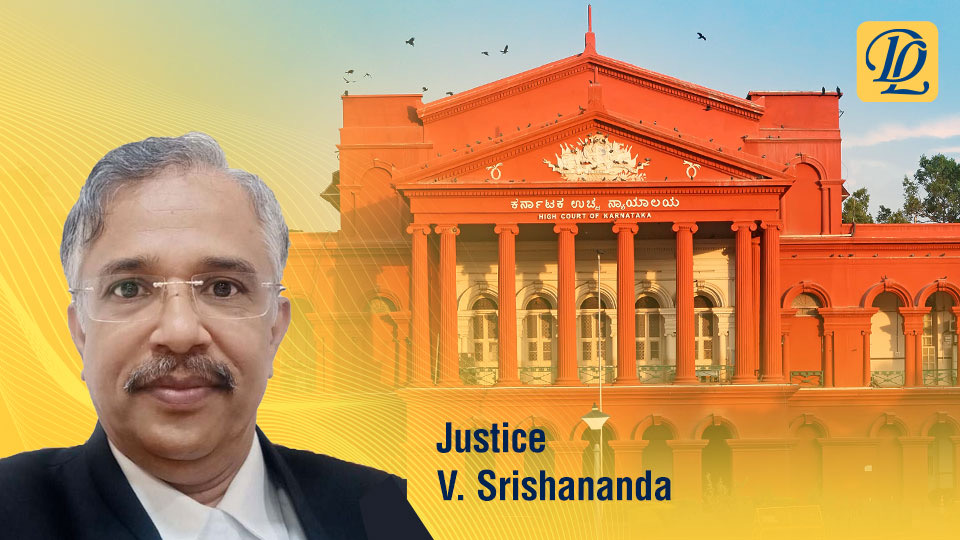
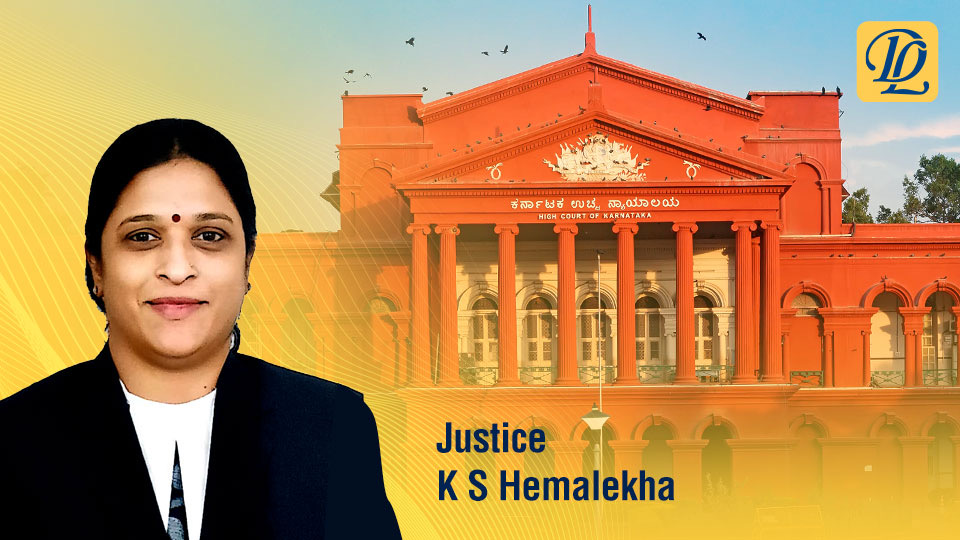
 Daksha Legal