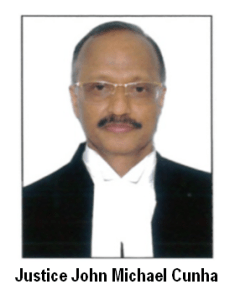
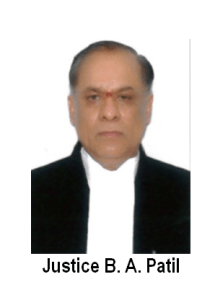
Suit for specific performance. Question of readiness and willingness becomes immaterial when the agreement itself is doubtful – Karnataka High Court.

S.R. Suresh and another vs Rudrappa Kabbur and another. Regular Second Appeal 649/2013 decided on 23 October 2020.

Judgment Link: http://judgmenthck.kar.nic.in/judgmentsdsp/bitstream/123456789/348682/1/RFA649-13-23-10-2020.pdf

Relevant paragraphs: 19, 20 & 21.…When the defendants have denied the very execution of the agreement, receipt of the sale advance amount and the signatures, it is the burden on the  plaintiffs to prove the same and in the absence of proof,  the suit filed by the plaintiffs has been rightly dismissed by the Trial Court. Our view is fortified by the dictum of the Hon’ble Apex Court in the case of  Thiruvengada Pillai  vs. Navaneethamal reported in AIR 2008 SC 1541. Judgment in N.T. Vijayakumar and others vs. The Allahabad Bank, Nehru Road Branch, Shimoga, reported in 1999(2)  Kar. L.J. 490, Shivakumar and others vs. Sharanabasappa and others reported in 2020 SCC Online SC 385, relied on.

22. The plaintiffs have failed to prove the very execution of the document by the defendants and receipt of advance amount of Rs.35.00 lakhs. In the absence of the same, the suit filed by the plaintiffs for the relief of specific performance is not maintainable. Though learned counsel for the appellants contended that the plaintiffs were always ready and willing to perform their part of the contract as  contemplated  under Section 16(c) of the Specific Relief Act, the same cannot be accepted. Admittedly, the very agreement itself is not proved. Therefore, the question of readiness and willingness would not arise. Appeal dismissed.

Compiled by S. Basavaraj, Advocate, Daksha Legal.

Property dispute vis-a-vis title deeds. Where boundaries in a document are vague and indefinite, the area should prevail, but where boundaries are specific and definite, the area must be taken as given approximately. Law on the point discussed- Karnataka High Court.

H. Naganna and others vs Marlinge Gowda by Lrs and others. Regular Second Appeal 2110/2010 decided on 6 November 2020.

Judgment Link: http://judgmenthck.kar.nic.in/judgmentsdsp/bitstream/123456789/348681/1/RSA2110-10-06-11-2020.pdf

Relevant pages (paragraphs are not numbered): 19. As early as in the year 1948, the Privy Council in  THE PALESTINE KUPAT AM BANK CO-OPERATIVE SOCIETY LTD.VS GOVERNMENT OF PALESTINE AND OTHERS reported in AIR 1948 PC 207 observed as follows: – In construing a grant of land, a description by fixed boundaries is to be preferred to a  conflicting description by area. The statement as to area is to be rejected as falsa demonstratio.”

Same view was taken referring to this decision by  the High Court of Madras in DHARMAKANNY NADAR SIVISESHAMUTHU AND OTHERS VS MAHALINGAM NADAR GOPALAKRISHNA NADAR AND OTHERS reported in AIR 1963 MADRAS 147 and it is reproduced as under: “Where the property sold is part of a definite survey number and in the sale deed the exact boundaries of the part sold are given and the area mentioned is only approximate, the description by boundaries should prevail in ascertaining the actual property sold under the document”.

This Court in NARASIMHA SHASTRY VS MANGESHA DEVARU reported in ILR 1988 KAR 554 has held as under: – “Where the sale deed mentioned the boundaries specifically and clearly to identify the property, the actual extent of the land not being clear, the recitals as to boundaries should prevail.”

It seems to me to be quite clear that what was sold was the whole of the property with definite boundaries and that the measurements were not accurately given, the mistake being in the measurement alone. Therefore, there was no reason for Judges to restrict the ownership to a smaller extent. It is well  established by several decisions  of Courts that where the boundaries in a document are vague and indefinite, the area should prevail, but  where the boundaries are specific and definite, the area must be taken as given only approximately.

This is, therefore, a clear case of precise and  accurate description in a document of the property sold by its boundaries. The measurement by area should,  therefore, be considered only approximate. I, therefore, come to the conclusion that the general principles  laid down by the decisions cited above that the description by boundaries should prevail where the boundaries are exact and where the area is approximate should be applied in this case, ….

I repeat that it is not a case where the boundaries in a document are vague and indefinite, so that the area should prevail. It follows therefore, that if the boundaries are specific and definite, the area must be taken as has given only approximate.

As already observed above, it is well established by several decisions of Courts that where the boundaries in a document are vague and indefinite, the area should  prevail, but where the boundaries are specific and definite, the area must be taken as given approximately. It is perhaps well to observe that if the description of a boundary is ambiguous, otherwise uncertain or in conflict with the occupation, Courts may settle the position of the disputed boundary.

Compiled by S. Basavaraj, Advocate, Daksha Legal.

Karnataka Lokayukta Act, 1984. After receipt of report from Lokayukta or Upalokayukta under Section 12(3), it is mandatory for the Government to record reasons to entrust matter to Lokayukta Upalokayutka or disciplinary authority. Doctrine of per incuriam discussed- Karnataka High Court.

K.S. Nanjegowda vs State by Karnataka Lokayuktha. Writ Petition 48384/2017 and connected case decided on 12 November 2020.

Judgment Link: https://karnatakajudiciary.kar.nic.in/noticeBoard/wp-48384-2017-cw-61697-2016.pdf

31….Section 12(4) of Act, 1984 mandates the competent authority to examine the investigation report submitted on behalf of the Lokayukta/Upalokayukta. On this point Dr.K.Lalitha vs The State of Karnataka and others 2019 (4) KLJ 344 assists the petitioners case. Similarly, Rule 14-A(2)(iii) of Rules, 1957 provides two
options to the Government that after due examination of the investigation report of the Upalokayukta under Section 12(3)
of Act 1984, Government has to make up its mind as to
whether matter is required to be entrusted to the
Lokayukta/Upalokayukta with reference to Rule 11 of Rules,
1957 or entrusting to disciplinary authority with reference to
Rule 12 of Rules, 1957. In such circumstances, it is
mandatory for the Government to record reasons as to why
the matter is being entrusted to the Lokayukta/Upalokayukta
or to disciplinary authority.
It is obligatory on the part of the Government when it is in receipt of investigation report under Section 12(3) of the Act 1984, to reveal the reasons as to why matter is entrusted to Lokayukta/Upalokayuta or disciplinary authority, when option is provided under statute.

Doctrine of per incuriam. Paragraphs 36-40

Ingredient with the judgment per incuriam as
quoted by Sir John Salmond in his ‘Treatise on
Jurisprudence’ has aptly stated the circumstances under
which a precedent can be treated as per incuriam. It is stated
that a precedent is not binding for which it was rendered in ignorance of a statute or a rule having the force of statute or delegated legislation.

Mr.Govindrajan in his book called ‘Invoking the
doctrine of per incuriam’, states that the Rule applies even
though the Court knew of the statutes in question but it did
not refer to and had not present to its mind the precise terms
of the statute. Similarly, a Court may know all the extension
of a statute and yet not appreciate its relevancy to the matter
on hand, such a mistake is again per incuriam so as to vitiate
the decision. Even the lower Court can impugn a precedent
on such grounds.

Compiled by S. Basavaraj, Advocate, Daksha Legal.

“Do not wait for judicial pronouncement in each and every matter even to consider representations of Citizens. Government officials owe a duty to consider pending grievances”. Karnataka High Court lays down guidelines.

Order in W.P.No.41189/2017 dated 19 March 2020
Pursuant to the order dated 05.03.2020, objections
have not been filed in the present petition.
Shri Manjunath Prasad, the Principal Secretary,
Revenue Department and Shri Vastradmutt, the Law
Secretary are present.
Law Secretary is hereby directed to take necessary
steps in issuing general circular to each and every
department, wherever representations of the persons are
pending consideration. The same shall be considered on
war-footing basis. In this regard, a special drive shall be
undertaken by each and every department. Since, this
Court has come across in number of cases including matter
relating to the year 2014 and 2015, wherein it is found that
there is inaction on the part of the concerned
department/officials either accepting concerned persons
representation or rejecting. In other words, duty is cast
on the concerned official to discharge his/her duties of the
post held by each of the official. If the grievance of the
persons is under statute, it is required to be considered
within reasonable period of three months. In other words,
Officials/Executives shall not expect judicial pronouncement
in each and every matter even for consideration of
representation/s. They owe duty in considering the
grievance of the persons which are pending before the
department/officials at the earliest, within a reasonable
period of three months. The Execution is one of the key
functions of a State. Its role is to implement the laws that
have been framed by the Legislature and the policies of a
Government with rise of welfare states the need for
organized State Functions has also risen and Execution is
one of the most crucial functions.
In this regard, Law
Secretary shall take necessary steps for issuing general
circular in consultation with DPAR. Circular must contain
‘How to follow up Court cases’ i.e., from the stage of a copy
of Writ Petition/Application etc., received from the High
Court and its disposal and filing of further appeal etc, and
other forums while maintaining register to undertake review
on monthly or once in three months, while fixing
responsibility to officers to avoid delay in taking steps like;


“How to follow up Court cases.
(a) A copy of writ petition received from the High
Court of Karnataka shall be enered in the Register
maintained for that purpose.
(b) Delay should be avoided in taking appropriate
steps.
(c) If any interim direction (stay) is received without
instructions appeal shall be filed against such
interim orders.
(d) Advancement petition shall be filed through Law
Officer in fit cases. If there is scope for filing Writ
Appeal/Revision/ Review the same shall be filed
through the O/o the Law Officer.
(e) When the High Court judgment is received the
same shall be entered in the register maintained
for that purpose.
(f) If the time limit is not specified in the judgment
the modification if any shall be completed within
two weeks.
(g) If there is scope for filing Writ Appeal against the
High Court decision the proposal together with
details of remarks, assessment records, appellate
orders to the competent officer/authority within 7
days of receipt of the appellate order.
(h) The time limit prescribed for filing Writ Appeal
before the High Court is to be adhered.
(i) A monthly report as to the implementation of
judgments and filing of writ appeal in fit cases shall
be submitted to the competent authority.
(j) The time limit prescribed for filing review before
Hon’ble High Court is within 30 days and for filing
SLP before Hon’ble Supreme Court is 90 days.
(k) If direction of the court is not complied within the
time limit prescribed by the Court a noncompliance statement as to the reasons for the delay in complying the direction along with an
affidavit to be filed by assessing authority.
(I) SLP shall be filed if aggrieved by the order of
High Court where a question of law is involved.

Other important follow up actions:
(m) Preparation of statement of facts and filing affidavit
is the most important action at the time of any
litigation follow up.
(n) At State level in the Web portal under Legal section
maintain a repository of important cases/ case
laws/ model statement of facts/ detailed affidavits.
(o) Once in a month a work shop at State level to
be arranged to discuss legal issues/ cases/ case
studies on a fixed day fixed time basis”

In the light of the above observation necessary guide
line may be issued, if the above exercise is undertaken
timely by the Government, Government can save time
and money.
The aforesaid action is required for the reasons that
in number of cases, where orders were passed in favour of
the litigant. If there is delay in implementation,
Government/Department have to shell down certain
amount along with interest. In other words, such money is
being paid from the State Exchequer for which tax payer’s
money shall not be utilized.
A copy of this order shall be handed over to the l
earned State Counsel so as to reach the same to the Law
Secretary/Principal Secretary, Revenue Department, to
take further action.
For compliance report, list on 02.07.2020. In the
meanwhile, respondents to file objections in the main
petition.
Personal appearance of the Principal Secretary,
Revenue Department and the Law Secretary are dispensed
until further orders.
List for further orders on 02.07.2020.
(P.B.BAJANTHRI)
JUDGE
AV/DS

Service Law. Seniority. Persons promoted in excess of backlog vacancies shall be continued against supernumerary posts in existing cadre till they get the date of eligibility for promotion in that cadre. Karnataka High Court.

M/s. Karnataka Power Transmission Corporation Limited vs B. Gurumurthy and others. Writ Appeal 448/2020 decided on 13 November 2020. Justice B.V. Nagarathna and Justice N.S. Sanjay Gowda.

Judgment Link: https://karnatakajudiciary.kar.nic.in/noticeBoard/wa448-2020.pdf

Judgments referred to: Indra Sawhney vs. Union of India [1992 Supp (3) SCC 217], R.K.Sabharwal vs. State of Punjab (1995) 2 SCC 745, Union of India vs. Virpal Singh Chauhan [(1995) 6 SCC 684, Ajit Singh Januja vs. State of Punjab [(1996) 2 SCC 715], Jagdish Lal vs. State of Haryana (1997) 6 SCC 538, Ajit Singh vs. State of Punjab (1999) 7 SCC 209, M.G.Badappanavar vs. State of Karnataka (2001) 2 SCC 666, M.Nagaraj vs. Union of India (2006) 8 SCC 212, B.K.Pavitra vs. Union of India (2017) 4 SCC 620, B.K.Pavitra vs. Union of India ILR 2019 SC 2723.

50. If on preparation of the Seniority List, it is
found that SCs and STs have been promoted against
reservation and backlog vacancies in excess or contrary to
the extent of reservation provided in the Reservation
Orders, the same would have to be adjusted and fitted
with reference to the roster points in accordance with the
Reservation Orders issued from time to time by assigning
appropriate dates of eligibility. If, on such exercise being
carried out, it is found that persons promoted against reservation or backlog vacancies are in excess or contrary
to the extent of reservations provided and they cannot be
adjusted and fitted against the roster points, then they
shall be continued against supernumerary posts in their
existing cadre till they get the date of eligibility for
promotion in that cadre.

51. For enabling such an exercise, there must be a
roster of the promotions made in order to determine
whether there is excess promotion to the SCs and STs and
to create supernumerary posts if the necessity arises.
The aforesaid exercise must be carried out as early as
possible so that there are no further difficulties to be faced
with regard to promotions to be made in future in the
respective cadres.

52. In M.Nagaraj, the constitution Bench
considered at length the concepts of ‘Catch-up rule’ and
consequential seniority and as to, whether, the obliteration
of the ‘Catch-up rule’ or insertion of the concept of
seniority would violate the basic structure of Constitution
enshrined in Articles 14, 15 and 16. Noting that the ‘Catchup rule’ was propounded in Virpal Singh, and that both the
concept of ‘Catch-up rule’ and consequential seniority are judicially evolved concepts to control the extent of
reservation, it was further observed that the Constitution
(Eighty-first Amendment) Act, 2000 gives in substance
legislative assent to the judgment in R.K. Sabharwal. That,
once roster point promotion is provided, each point in the
roster indicates a post, which, on falling vacant, has to be
filled by the particular category of candidate to be
appointed against it and any subsequent vacancy has to be
filled by that category alone, then the question of clubbing
the unfilled vacancies with current vacancies does not
arise. Therefore, the replacement theory as enunciated in
R.K. Sabharwal was reiterated in M.Nagaraj, both of which
are Constitution Bench judgments of the Hon’ble Supreme
Court.

55. Therefore, while finalising the Seniority List, if
it is found that persons promoted against reservation of
backlog vacancies are in excess or contrary to the
reservation provided and they cannot be adjusted and
fitted against the roster points, then they shall be
continued against supernumerary posts in their existing
cadre till they get the date of eligibility for promotion in
that cadre. Therefore, the Final Seniority List to be issued
must bear in mind the aforesaid aspects.

Compiled by S. Basavaraj, Advocate, Daksha Legal.

ಅ0ತರ್ಜಾಲ ಮುಖಾ0ತರ ವಕೀಲರ ದಾಖಲಾತಿ. ಕರ್ನಾಟಕ ರಾಜ್ಯ ವಕೀಲರ ಪರಿಷತ್ತಿನ ಮು0ಚೂಣಿ ಸಾದನೆ.

ಅ0ತರ್ಜಾಲ ಮುಖಾ0ತರ ವಕೀಲರ ದಾಖಲಾತಿ. ಕರ್ನಾಟಕ ರಾಜ್ಯ ವಕೀಲರ ಪರಿಷತ್ತಿನ ಮು0ಚೂಣಿ ಸಾದನೆ.

ಕೋವಿಡ್ ನಿ0ದ ಉ0ಟಾದ ಸಮಸ್ಯಯನ್ನು ಕರ್ನಾಟಕ ರಾಜ್ಯ ವಕೀಲರ ಪರಿಷತ್ತು ಅ0ತರ್ಜಾಲ ಮುಖಾ0ತರ ವಕೀಲರ ದಾಖಲಾತಿ ಮೂಲಕ ಯಶಸ್ವಿಯಾಗಿ ನಿಭಾಯಿಸಿದೆ.

ಇದುವರೆಗೂ ಐದಕ್ಕೂ ಹೆಚ್ಚು ಅ0ತರ್ಜಾಲ ದಾಖಲಾತಿ ಪ್ರಕ್ರಿಯೆ ನಡೆದಿದ್ದು, ಆರುನೂರಕ್ಕೂ ಹೆಚ್ಚು ವಕೀಲರನ್ನು ದಾಖಲಾತಿ ಮಾಡಲಾಗಿದೆ. ಮೊದಲನೆಯ ದಾಖಲಾತಿ ಸಮಾರ0ಭವನ್ನು ಕರ್ನಾಟಕ ಉಚ್ಚನ್ಯಾಯಾಲಯದ ಮುಖ್ಯ ನ್ಯಾಯಮೂರ್ತಿ ಅಭಯ್ ಶ್ರೀನಿವಾಸ್ ಓಕ ಉದ್ಘಾಟಿಸಿದ್ದರು.

ಕರ್ನಾಟಕ ರಾಜ್ಯ ವಕೀಲರ ಪರಿಷತ್ತು ದಾಖಲಾತಿ ಕಮಿಟಿಯ ಅಧ್ಯಕ್ಶರಾಗಿ ಶ್ರೀ. ದೇವರಾಜ್, ಹಾಗೂ ಸದಸ್ಯರಾಗಿ ಶ್ರಿ. ವಿಶಾಲ್ ರಘು ಹಾಗೂ ಶ್ರಿ. ವಿನಯ್ ಮಾ0ಗಳೇಕರ್ ಇವರುಗಳು ಇರುತ್ತಾರೆ.

ದೇಶದ ಹಲವಾರು ಕಾನೂನು ಕಾಲೇಜಿನಲ್ಲಿಹಾಗೂ ವಿಶ್ವ ವಿಧ್ಯಾಲಯಗಳಲ್ಲಿ ಅಭ್ಯಾಸ ಮಾಡಿದ ನೂರಾರು ವಿಧ್ಯಾರ್ಥಿಗಳು ಅ0ತರ್ಜಾಲ ಮುಖಾ0ತರ ವಕೀಲರ ದಾಖಲಾತಿ ಪ್ರಕ್ರಿಯೆಯಲ್ಲಿ ಭಾಗವಹಿಸಿದ್ದನ್ನು ಇಲ್ಲಿ ಗಮನಿಸಬಹುದಾಗಿದೆ.

“ಸಾದನೆಯ ಹಾದಿಯಲ್ಲಿ ಕರ್ನಾಟಕ ರಾಜ್ಯ ವಕೀಲರ ಪರಿಷತ್ತು.” – ನ್ಯಾಯಮೂರ್ತಿ ಡಾ. ಎನ್. ಕುಮಾರ್.

ಸಾದನೆಯ ಹಾದಿಯಲ್ಲಿ ಕರ್ನಾಟಕ ರಾಜ್ಯ ವಕೀಲರ ಪರಿಷತ್ತು. ನ್ಯಾಯಮೂರ್ತಿ ಡಾ. ಎನ್. ಕುಮಾರ್

ಕರ್ನಾಟಕ ರಾಜ್ಯ ವಕೀಲರ ಪರಿಷತ್ ಲಾ ಅಕೆಡೆಮಿಯು ಏರ್ಪಡಿಸಿದ್ದ Civil Procedure Code, 1908 ಅ0ತರ್ಜಾಲ ಉಪನ್ಯಾಸ ಕಾರ್ಯಕ್ರಮದಲ್ಲಿ ತಾರೀಖು 3 ನವೆ0ಬರ್ – 13 ನವೆ0ಬರ್ ವರೆಗೆ ಉಪನ್ಯಾಸ ನೀಡಿದ ಕರ್ನಾಟಕ ಉಚ್ಚ ನ್ಯಾಯಾಲಯದ ನಿವೃತ್ತ ನ್ಯಾಯಮೂರ್ತಿ ಡಾ. ಎನ್. ಕುಮಾರ್, ಕಾರ್ಯಕ್ರಮದ ಮುಕ್ತ್ಯಾಯ ಸಮಾರ0ಭದ0ದು ಅಭಿನ0ದನೆ ಸ್ವೀಕರಿಸಿ ಮಾತನಾಡಿ ಕರ್ನಾಟಕ ರಾಜ್ಯ ವಕೀಲರ ಪರಿಷತ್ತು ಕೈಗೊ0ಡಿರುವ ಕಾರ್ಯಗಳ ಬಗ್ಗೆ ಪ್ರಶ0ಶೆ ವ್ಯಕ್ತಪಡಿಸಿದರು.

‘ಇ0ದು ನ್ಯಾಯಾ0ಗ ಅಕೇಡೆಮಿ, ವಕೀಲರ ಅಕೇಡೆಮಿ ಹಾಗೂ ಕರ್ನಾಟಕ ರಾಜ್ಯ ವಕೀಲರ ಪರಿಷತ್ ಲಾ ಅಕೆಡೆಮಿ ಇವುಗಳು ಹಮ್ಮಿಕೊ0ಡಿರುವ ಕಾರ್ಯಕ್ರಮಗಳು ವಕೀಲರಿಗೆ ಅದರಲ್ಲೂ ಯುವ ವಕೀಲರಿಗೆ ಅತ್ಯ0ತ ಮಾರ್ಗದರ್ಶಕವಾಗಿವೆ. ಈ ನಿಟ್ಟಿನಲ್ಲಿ ಕರ್ನಾಟಕ ರಾಜ್ಯ ವಕೀಲರ ಪರಿಷತ್ ಇ0ದು ತೃಪ್ತಿಕರವಾಗಿ ಕೆಲಸಮಾಡುತ್ತಿದೆ‘ ಎ0ದರು.

Criminal Trial. “A conviction must rest on proof, so strong that Court must be convinced that what it concludes must necessarily has happened and is not reasonably explicable in any other way. When the prosecution has relied upon circumstantial evidence, it has to be proved as if there is no proof, than the offence having occurred other than the accused”. Karnataka High Court.

Prathap vs The State of Karnataka. Criminal Appeal 633/2014 decided on 7 October 2020.

Judgment Link: http://judgmenthck.kar.nic.in/judgmentsdsp/bitstream/123456789/347395/1/CRLA633-14-07-10-2020.pdf

Relevant paragraphs: 29.. Any documentary evidence by way of an electronic record under the Evidence Act can be proved only in accordance with the procedure prescribed under Section 65-B in the teeth of Section 59 and 65-A. A plain reading of Section 59 of Evidence Act would indicate all facts, except the contents of documents or electronic records can be proved by oral evidence. …An “electronic record” is defined under the Information and Technology Act, 2000.

30. The purport of the above provisions is to recognize the secondary evidence in electronic form generated by a computer. Section 65-B starts with a non-obstante clause and where any information contained in an electronic record which is printed on a paper, stored, recorded or copied in optical or magnetic media produced by a computer, would be deemed to be a document and admissible in any proceedings, subject to conditions specified under sub-section (2) are satisfied or in other words, they would be admissible in any proceedings without further proof or production of the original as evidence of any contents of the original or of any fact stated therein of which direct evidence would be admissible. The admissibility of such a document i.e., electronic record, which is known as computer output to be admissible in evidence has to satisfy the four conditions prescribed in clauses (a) to (d) of sub-section (2) of Section 65-B of the Evidence Act. It is only the electronic record which is duly produced in terms of Section 65-B of the Evidence Act, then resort can be had to Section 45-A.

32. In the instant case, we have already noticed that laptop in which the photographs Exs.P-3 to P-30 were found, was not produced. There is no compliance of Section 65-B of the Evidence Act and the person who is said to have downloaded the photographs from the  laptop and had taken the print outs of said photographs has not been examined.

36…Under Section 27 of the Evidence Act, only so much of the statement of accused is admissible in evidence as distinctly leading to discovery of the fact. In other words, when a fact has been discovered, consequent to information given by the accused, would be legal evidence and not the rest and it has to be excluded. Section 27 of the Act cannot be again made use of to “re- discover” the discovered fact.

Evidence discussed thoroughly. Appeal allowed. Accused acquitted.

Compiled by S. Basavaraj, Advocate, Daksha Legal.

Show cause notice with intention to blacklist should clearly spell out such intention: Supreme Court

Judgment Link: https://main.sci.gov.in/supremecourt/2019/18159/18159_2019_40_1501_24686_Judgement_16-Nov-2020.pdf

https://www.barandbench.com/news/litigation/supreme-court-show-cause-notice-blacklist-intention

CIVIL APPEAL NO. 3687 OF 2020 (Arising out of S.L.P. (C) No. 14228 of 2019) UMC TECHNOLOGIES PRIVATE LIMITED VERSUS FOOD CORPORATION OF INDIA AND ANR. decided on 16 November 2010

Paragraph 14: Specifically, in the context of blacklisting of a person or an entity by the state or a state corporation, the requirement of a valid, particularized and unambiguous show cause notice is particularly crucial due to the severe consequences of blacklisting and the stigmatization that accrues to the person/entity being blacklisted. Here, it may be gainful to describe the concept of blacklisting and the graveness of the consequences occasioned by it. Blacklisting has the effect of denying a person or an entity the privileged opportunity of entering into government contracts. This privilege arises because it is the State who is the counterparty in government contracts and as such, every eligible person is to be afforded an equal opportunity to participate in such contracts, without arbitrariness and discrimination. Not only does blacklisting takes away this privilege, it also tarnishes the blacklisted person’s reputation and brings the person’s character into question. Blacklisting also has long-lasting civil consequences for the future business prospects of the blacklisted person.

No fault liability under Section 163A of the Motor Vehicles Act, 1988. Rider of the vehicle, who is not the owner, can NOT claim compensation under the Section against owner of the vehicle. He can only claim to the extent of the contract i.e. personal accident cover. Karnataka High Court. 1:10:2020

The Divisional Manager, The New India Assurance Co Ltd vs Tushar and others. Miscellaneous First Appeal 22058/2011 decided on 1 October 2020.

Judgement Link: http://judgmenthck.kar.nic.in/judgmentsdsp/bitstream/123456789/348033/1/MFA21930-12-01-10-2020.pdf

Relevant paragraphs: Facts. The rider borrowed motorcycle from its owner and while riding the motorcycle, he lost control and dashed against road side stone and died. The legal representatives of the rider claimed compensation under Section 163A of the Act making owner of the motorcycle and insurer as parties. The Tribunal awarded Rs. 4,58,000/-. This award was challenged before the Hon’ble High Court.

13. Question for consideration: “Whether the rider of the vehicle involved in the accident who is not the owner would be entitled to a compensation in a claim under Section 163A of the Act, if so, to what extent?”

25.The issue in the case on hand is not with regard to plea of negligence. Hence, the entire line of judgments relied on by the learned counsel for the claimants are inapplicable to the facts of the case on hand. The issue concerning whether rider of the vehicle who is not the owner would be entitled to compensation is laid down by the Apex Court in Ningamma and Another (supra), wherein the Apex Court held as follows:………In the present case, the deceased was not the owner of the motorbike in question He borrowed the said motorbike from its real owner. The deceased cannot be held to be an employee of the owner of the motorbike although he was authorized to drive the said vehicle by its owner and, therefore, he would step into the shoes of the owner of the motorbike. We have already extracted Section 163-A of the MVA hereinbefore. A bare perusal  of the said provision would make it explicitly clear that persons like the deceased in the present case would step into the shoes of the owner of the vehicle.….if it is proved that the driver is the owner of the motor vehicle, in that case the owner could not himself be a recipient of compensation as the liability to pay the same is on him.……Accordingly, the legal representatives of the deceased who have stepped into the shoes of the owner of the motor vehicle could not have claimed compensation under Section 163-A of the MVA.…..However, at the same time, even as per  the contract of insurance, in case of personal accident the owner driver is entitled to a sum of Rs.1 lakh. Therefore, the deceased, as observed hereinabove, who would be in the shoes of the owner shall be entitled to a sum of Rs.1 lakh, even as per the contract of insurance.

28. In terms of the afore-extracted law laid down by the Apex Court, it becomes unmistakably clear that the rider of the vehicle, if he is not the owner, but has borrowed the vehicle from the owner steps into the shoes of the owner and would be entitled to compensation only to the extent of the contract between the owner and the insurer.

29. In the light of the compensation under P.A. covers to the owner being only Rs.1,00,000/-, the rider of the vehicle in MVC No.440/2008 cannot be entitled to a compensation which could be more than Rs.1,00,000/-, in terms of the law laid down by the Apex Court in the afore-stated cases, as he steps into the shoes of the owner and would be entitled a compensation only of Rs.1,00,000/- as against Rs.4,58,000/- determined by the Tribunal.

Compiled by S. Basavaraj, Advocate, Daksha Legal.