In a recent order pronounced by Justice H.P. Sandesh of the High Court of Karnataka, the learned Judge has recommended that the Additional Sessions Judge who has granted bail / anticipatory bail in the case should be sent to the Karnataka State Judicial Academy for training. This is a serious adverse comment or rebuke of the Judge concerned.
This direction has the effect of demoralising the Sessions Judges of the State who are dealing with applications under Section 438 and 439 of the Cr.P.C. and prompting them to dismiss most of the applications so that they will not suffer adverse comments from the High Court. Already there is a view (as recently expressed by the High Court of Calcutta) that the judges of the District Judiciary are stingy in the matter of grant of bail. It is not surprising that statistics show that 69% of inmates of the jails in India are under trials. Now with this above order, the position is worse for applicants for bail or anticipatory bail before session judges /Magistrate and in border line cases, applications are sure to be dismissed.
Judges are after all human beings and have therefore their own views, prejudices and opinions. Admittedly grant or refusal of bail is discretionary, of course to be exercised judicially. On same set of facts two Judges may render conflicting decisions, more so in the case of discretionary matters. It is a well known fact that there are judges who are considered pro conviction or pro acquittal, pro labour or pro management, pro landlord or pro tenant , pro establishment or pro citizen , conservative or progressive thinking and so on. The Judges dealing with bail applications are no exception. Some are liberal in the matter of grant of bail, some are very strict. In the recent case of Arnab Goswami, while the District Judiciary and High Court declined to grant bail, the Supreme Court quickly took a contrary view and granted bail, which some commented, was a hasty decision. In such matters personal view point and opinion of the judges do play an important role and one cannot expect all judges to act similarly, as computers do.
The learned judge has stated that the Sessions Judge should go to the Judicial Academy for training in “Applying Judicial thought process” and “endeavour to learn judicial discretion”. I do not think, exercise of Judicial discretion could be a subject of training. There are hundreds of cases, where Supreme Court has reversed the discretionary orders of the High Courts holding that the judicial discretion has been exercised capriciously and the decision is perverse. High Courts reverse several discretionary orders of grant or refusal of temporary injunctions in pending suits, which could be done only if the order under appeal is perverse, capricious or arbitrary.
Therefore the Court reversing a discretionary order directing the judge whose order is reversed to undergo training in Judicial academy may not be a good precedent. Such a direction may encourage Sessions Judges/Magistrate to reject bail applications even in deserving cases to be on the safer side.
In the case on hand, the High Court may or may not be right in reversing the order, as we do not know the full facts. However the Sessions Judge cannot be faulted, for observing that the case is not punishable with death or imprisonment for life. Section 437 Cr.P.C. itself has placed such cases in a different category.
The High Court Judgment at one place records that charge sheet has been filed in the case. It is also a relevant consideration. However in another part of this judgment, the High Court finds fault with the Sessions Judge for granting bail even before investigation is completed. The charge includes Section 498A IPC and demand of dowry. Misuse of these provisions have been the subject matter of adverse comments in many judgments of the Supreme Court and lower courts have been directed to exercise caution in such cases. In a decision rendered few days back a bench of Supreme Court (Comprising of Justices S. Abdul Nazeer and Krishna Murari ) while quashing a FIR against the in laws of the woman who had accused them and her husband of cruelty and harassment for dowry noticed “ increased tendency to employ provisions like section 498A IPC ….. as instruments to settle personal scores against husband and his relatives.” After refereeing to some earlier cases they said “ Decisions clearly demonstrate that this court has at numerous instances express concern over the misuse of section 498A IPC and the increased tendency of implicating relatives of the husbands in matrimonial disputes……….False implications by way of general omnibus allegations made in the course of matrimonial disputes, if left unchecked would result in misuse of the process of law. Therefore this court by way of its Judgements has warned the courts from proceeding against relatives and in laws of the husband (woman), when no prima facie case is made out against them”
As seen from the judgment of the High Court, main evidence relied on is a voice message said to have been sent by the victim before her death stating that if anything happens to her, the named accused (her husband and parents) will be responsible for the same. Such declarations are found in many death notes in cases of suicide and the Supreme Court and the High Courts have directed caution in relying on such declarations which have become common. In many cases, employees committing suicide have named many executives of the companies as responsible for suicide and such declarations have been found to be not true. In the present case, strangely the voice message said to have been sent is not to the parents or relatives but to their neighbors.The message is not of any past act of cruelty or harassment for dowry.
At best, it can be said that prosecution has made out a prima facie case. It is settled law that mere making out prima facie case is not sufficient to deny bail, particularly in cases where punishment is not death or imprisonment for life .In the case of Bhagiratsinh Judeja Vs State of Gujarath (AIR 1984 S.C.372 ) the Supreme Court has observed “ We fail to understand what the learned Judge of the High Court desires to convey when he says that once a prima facie case is established, it is necessary for the court to examine the nature and gravity of circumstances in which the offence was committed. If there is prima facie case,there is no question of considering other circumstances. But even where a prima facie case is established , the approach of the court in the matter of bail is not that the accused should be detained by a way of punishment but whether the presence of the accused would be readily available for trial or that he is likely to abuse the discretion granted in his favour by tampering with evidence”.
In the Case on hand, it is not even alleged or found by the High Court that accused is likely to abscond or evidence may be tampered with as important witnesses are complainant and his relatives. It is unnecessary to go into details, as my only purpose is to point out that on facts opinions always differ.
One can appreciate the sympathy and the concern shown by the learned Judge of the High Court towards the victim . However that should not result in detention of the accused at pretrial stage as a measure of punishment.
It appears, the main reasons which prompted the learned High Court Judge to deny the bail, is that dowry death case is a heinous offence and hence the order of the Sessions Judge granting bail is capricious and perverse and therefore unsustainable. It cannot be laid down as proposition of law, that in heinous offenses (including dowry death or murder) bail cannot be granted. It is hoped that soon in appropriate cases, the High Court it self will clarify this position, as other wise the present decision may act as a dangerous precedent. So far as the recommendation regarding training in Judicial Academy is concerned, I hope the Hon’ble Chief Justice will pass suitable order taking all aspects into consideration.
Mr. Sajan Poovayya, Senior Advocate who appeared for the President and Vice President of collage development and management committee today, completely annihilated the arguments of the petitioners. His fundamental submission was that his school is committed to impart Secular education and it cannot allow the students to wear whatever they want depending on their religion. If allowed, the same would destroy the cohabitation expected in educational institution. Mr. Sajan Poovayya arguments are here;
Mr. Poovayya quoted from the judgment rendered by the Hon’ble Supreme Court of India in SR Bommai v. Union of India, (1994) 3 SCC 1 which shed considerable light on the understanding of “secularism” in the constitutional sense.
It is also apposite to refer to Article 39(f) – “that children are given opportunities and facilities to develop in a healthy manner and in conditions of freedom and dignity …” placed in Part IV – Directive Principles of State Policy of the Constitution of India. The intersection of Directive Principles of State Policy and nation building has been referred to time and time again, including in Mohd. Ahmed Khan v. Shah Bano Begum, (1985) 2 SCC 556.
Article 39(f) was introduced by the Forty-Second Amendment, i.e., the very amendment which expressly introduced the word “Secular” into the Preamble.
In imparting secular education, the ideals that the State should seek to instil amongst children, are informed by inter alia the following provisions of the Constitution: a. Core constitutional principles which have been held to be not only a part of part III but also a part of the basic structure such as ‘secularism’; b. Children should turn out to be students not just capable of but also inclined to perform fundamental duties (Article 51A) such as: i. Uphold the unity and integrity of India (Article 51A(c)); ii. To promote spirit of harmony and the spirit of common brotherhood amongst all the people of India transcending religious, linguistic and regional or sectional diversities; to renounce practices derogatory to the dignity of women (Article 51A(e)); iii. To develop scientific temper, humanism and the spirit of inquiry and reform (Article 51A(h)); iv. To strive towards excellence in all spheres of individual and collective activity do that the nation constantly rises to higher levels of endeavour and achievement (Article 51A(j)). c. Likewise, the Karnataka Education Act, 1983 enlists inter alia the endeavour to cultivate a scientific and secular outlook through education.
Whilst homes and society provide religious and cultural upbringing, the constitutional endeavour of school is to promote common brotherhood by transcending inter alia religious diversities. This objective will fail if religious attire is permitted in schools imparting secular education.
Many disturbing posts and messages are circulated by a group called “Mangalore Muslims” making false, motivated and highly derogatory comments on Justice Krishna Dixit. See below;
The comments insinuate Justice Krishna Dixit participating in a function having RSS links. These comments are made by few fanatics without even knowing what is “Rashtra Katha Shibir”. I personally verified from the organisers and their website and the reality is far from what is projected by the fanatics.
“Rashtra Katha Shibir” has nothing to do with RSS. The founder of Shri Vedic Mission Trust Swami Dharmbandhu organizes Rashtrakatha Shivir every year in the month of December at Pransla in the district of Rajkot, Gujarat. Since 2002, he has facilitated this platform whereby the youth and specially the students from different corners of the country assemble. Shri Vedic Mission Trust has been organizing ten days youth camp at Pransala for the past 21 years under the Rashtra Katha Shivir series. This year 22 Rashtra Katha Shivir has organised by Swami Dharambandhu at Pransala was held from 28 Dec 2019 to 05 Jan 2020. More than 12000 students from 27 States and Union Territories participated in this Shibir. Besides, enlightening students on the pristine cultural values, Swami also conducts regular shivbirs for teachers training across the nation. There will be intensive training program in different departments from Morning 5am to 10pm. Shri Vedic Mission Trust has been organizing ten days youth camp at Pransala for the past 21 years under the Rashtra Katha Shivir series.
Former Prime Minister Dr. Manmohan Singh, Governor of Tamilnadu B. L Purohit, Meghalaya Governor Tathagata Roy will be Chief Guest of 22 Rashtra Katha Shibir. The camp aims to provide a platform for orientation and nurturing of youth in various disciplines such as National Integration, Social Harmony and Religious harmony and Martial Arts, to mention a few.
Justice M.N.Venkatachalaiah, Justice Santosh Hegde, Justice Dinesh Maheshwari, Mr. Shashi Tharoor and several such greats too have graced function. Justice Krishna Dixit attended one such function to give speech. See the video links below.
Those who are slinging mud at the judiciary are those who are willing to send their own women folk to the dark ages. The oblique agenda is to somehow get Justice Krishna Dixit recused from the case. Judiciary has witnessed such dirty tactics in the past. Over the decades such attempts have only made our judiciary one of the strongest institution in the world.
ಎರಡು ದಿನ ನಿರ0ತರ ವಾದದಲ್ಲಿ ಅತ್ಯ0ತ ಚಾಕಚಕ್ಯತೆ, ಕಾನೂ ಪರಿಣತಿ ಹಾಗೂ ವಕೀಲವೃತ್ತಿಯ ಮೇರು ಗುಣಗಳ ಮೂಲಕ ಕರ್ನಾಟಕದ ಅಡ್ವೋಕೇಟ್ ಜನರಲ್ ಶ್ರೀ. ಪ್ರಭುಲಿ0ಗ ನಾವದಗಿ ಇದುವರೆಗೂ ಹಿಜಾಬ್ ಪರ ಮ0ಡಿಸಿದ್ದ ವಾದಗಳನ್ನು ಬುಡಮೇಲು ಮಾಡಿದರು.
ಯಾವ ಆಚರಣೆ ಮಾಡದಿದ್ದರೆ ಒ0ದು ಧರ್ಮವೇ ಅವನತಿ ಹೊ0ದುತ್ತದೆಯೊ ಅ0ತಹ ಆಚರಣೆಗಳನ್ನು ಮಾತ್ರ “ಅಗತ್ಯ ಧಾರ್ಮಿಕ ಆಚರಣೆ“ ಎ0ದು ಕರೆಯಬಹುದು ಎ0ದು ತಮ್ಮ ವಾದವನ್ನು ಅತ್ಯ0ತ ಮಾರ್ಮಿಕವಾಗಿ ಪ್ರಭುಲಿ0ಗ ನಾವದಗಿ ಮ0ಡಿಸಿದರು.
ಹಿಜಾಬ್ ಹಾಕಲಿಕ್ಕೆ ಈ ದೇಶದಲ್ಲಿ ಯಾವ ಅಡಚಣೆಯೂ ಇಲ್ಲ. ಆದರೆ ಶಿಕ್ಷಣ ಸ0ಸ್ದೆಗಳಲ್ಲಿ ಸಮವಸ್ತ್ರ ಧರಿಸುವುದು ಈ ದೇಶದ ಸ0ವಿದಾನದ ಮೌಲ್ಯಗಳನ್ನು ಎತ್ತಿಹಿಡಿದ0ತೆ. ಆದ್ದರಿ0ದ ಶಿಕ್ಷಣ ಸ0ಸ್ದೆಗಳಲ್ಲಿ ಹಿಜಾಬ್ ಗೆ ಅವಕಾಶ ಇಲ್ಲ ಎ0ದು ನಾವದಗಿ ವಾದಿಸಿದರು. ಅವರ ವಾದಗಳು ಈ ರೀತಿ ಇವೆ.
ಹಿಜಾಬ್ ಖಡ್ಡಾಯವಾಗಿ ಧರಿಸುವುದು ಅಗತ್ಯ ಧಾರ್ಮಿಕ ಆಚರಣೆ ಎ0ಬುವುದನ್ನುಒಪ್ಪುವುದಾದರೆ ಹಿಜಾಬ್ ದರಿಸಲು ಮನಸ್ಸಿಲ್ಲದ ಹೆಣ್ಣುಮಕ್ಕಳ ಹಕ್ಕುಗಳಿಗೆ ಒಡೆತ ಕೊಟ್ಟ0ತೆ. ಸ0ವಿದಾನದಲ್ಲಿ 19(1)(ಅ) ಪರಿಚ್ಛೇದ ಮೂಲಭೂತ ಹಕ್ಕುಗಳ ಪ್ರಕಾರ ಹಿಜಾಬ್ ಧರಿಸುವುದನ್ನು ಒಪ್ಪಬಹುದಾದರೂ, ಕೆಲವೊ0ದು ಸ್ಥಳಗಳಲ್ಲಿ ಈ ದಿರಿಸನ್ನು ನಿಷೇದಿಸುವ ಅಧಿಕಾರವನ್ನು ಸರ್ಕಾರ ಸ0ವಿದಾನದ 19(1)(2) ಪರಿಚ್ಛೇದ ಪ್ರಕಾರ ಹೊ0ದಿದೆ.
ಸಂವಿಧಾನದ ಪರಿಚ್ಛೇದ 25 ಮತ್ತು 26 ರ ಅಡಿಯಲ್ಲಿ ಖಾತರಿಪಡಿಸಲಾದ ರಕ್ಷಣೆಯು ಸಿದ್ಧಾಂತ ಅಥವಾ ನಂಬಿಕೆಯ ವಿಷಯಗಳಿಗೆ ಸೀಮಿತವಾಗಿಲ್ಲ ಆದರೆ ಧರ್ಮದ ಅನುಸಾರವಾಗಿ ಮಾಡಿದ ಕಾರ್ಯಗಳಿಗೆ ವಿಸ್ತರಿಸುತ್ತದೆ. ಆದ್ದರಿಂದ ಆಚರಣೆಗಳು, ಸಮಾರಂಭಗಳು ಮತ್ತು ಪೂಜಾ ವಿಧಾನಗಳಿಗೆ ಖಾತರಿ ನೀಡುತ್ತದೆ. ಧರ್ಮದ ಅವಿಭಾಜ್ಯ ಅಂಗ. ಧರ್ಮದ ಅವಿಭಾಜ್ಯ ಅಥವಾ ಅಗತ್ಯ ಭಾಗ ಯಾವುದು ಎಂಬುದನ್ನು ಅದರ ಸಿದ್ಧಾಂತಗಳು, ಆಚರಣೆಗಳು, ತತ್ವಗಳು, ನೀಡಿದ ಧರ್ಮದ ಐತಿಹಾಸಿಕ ಹಿನ್ನೆಲೆ ಇತ್ಯಾದಿಗಳನ್ನು ಉಲ್ಲೇಖಿಸಿ ನಿರ್ಧರಿಸಬೇಕು. “ಧರ್ಮದ ಅತ್ಯಗತ್ಯ ಭಾಗ ಅಥವಾ ಆಚರಣೆಗಳು” ಎಂಬುದರ ಅರ್ಥವು ಈಗ ಸ್ಪಷ್ಟೀಕರಣದ ವಿಷಯವಾಗಿದೆ. ಧರ್ಮದ ಅಗತ್ಯ ಭಾಗವೆಂದರೆ ಧರ್ಮವನ್ನು ಸ್ಥಾಪಿಸಿದ ಪ್ರಮುಖ ನಂಬಿಕೆಗಳು. ಅಗತ್ಯ ಆಚರಣೆ ಎಂದರೆ ಧಾರ್ಮಿಕ ನಂಬಿಕೆಯನ್ನು ಅನುಸರಿಸಲು ಮೂಲಭೂತವಾದ ಆಚರಣೆಗಳು. ಅಗತ್ಯ ಭಾಗಗಳು ಅಥವಾ ಆಚರಣೆಗಳ ಮೂಲಾಧಾರದ ಮೇಲೆ ಧರ್ಮದ ಮೇಲ್ವಿಚಾರವನ್ನು ನಿರ್ಮಿಸಲಾಗಿದೆ, ಅದು ಇಲ್ಲದೆ ಧರ್ಮವು ಯಾವುದೇ ಧರ್ಮವಾಗುವುದಿಲ್ಲ. ಒಂದು ಧರ್ಮಕ್ಕೆ ಒಂದು ಭಾಗ ಅಥವಾ ಆಚರಣೆ ಅತ್ಯಗತ್ಯವೇ ಎಂಬುದನ್ನು ನಿರ್ಧರಿಸಲು ಪರೀಕ್ಷೆಯು ಆ ಭಾಗ ಅಥವಾ ಆಚರಣೆಯಿಲ್ಲದೆ ಧರ್ಮದ ಸ್ವರೂಪವು ಬದಲಾಗುತ್ತದೆಯೇ ಎಂದು ಕಂಡುಹಿಡಿಯುವುದು. ಆ ಭಾಗ ಅಥವಾ ಆಚರಣೆಯನ್ನು ತೆಗೆದುಹಾಕುವುದರಿಂದ ಆ ಧರ್ಮದ ಗುಣಲಕ್ಷಣ ಅಥವಾ ಅದರ ನಂಬಿಕೆಯಲ್ಲಿ ಮೂಲಭೂತ ಬದಲಾವಣೆಗೆ ಕಾರಣವಾದರೆ, ಅಂತಹ ಭಾಗವನ್ನು ಅತ್ಯಗತ್ಯ ಅಥವಾ ಅವಿಭಾಜ್ಯ ಅಂಗವೆಂದು ಪರಿಗಣಿಸಬಹುದು.
ಧರ್ಮದ ಅರ್ಥ – ಆರ್ಟಿಕಲ್ 25 ರಲ್ಲಿ ಬಳಸಲಾದ ಪದ ಮತ್ತು ಆರ್ಟಿಕಲ್ 25 ರ ಮೂಲಕ ನೀಡಲಾದ ರಕ್ಷಣೆಯ ಸ್ವರೂಪವು ಎಂ. ಇಸ್ಮಾಯಿಲ್ ಫಾರುಕಿ (ಡಾ) ವಿರುದ್ಧ ಯೂನಿಯನ್ ಆಫ್ ಇಂಡಿಯಾ ಯಲ್ಲಿನ ಸಂವಿಧಾನದ ಪೀಠದ ನಿರ್ಧಾರದ ಘೋಷಣೆಯಿಂದ ಇತ್ಯರ್ಥಗೊಳ್ಳುತ್ತದೆ. ಆರ್ಟಿಕಲ್ 25 ಕೇವಲ ಧರ್ಮದ ಅವಿಭಾಜ್ಯ ಅಂಗಗಳಾದ ಆಚರಣೆಗಳು ಮತ್ತು ಆಚರಣೆಗಳನ್ನು ಆಚರಿಸುವ ಸ್ವಾತಂತ್ರ್ಯವನ್ನು ರಕ್ಷಿಸುತ್ತದೆ. ಆದ್ದರಿಂದ, ಭಾರತದ ಸಂವಿಧಾನದ 25 ನೇ ವಿಧಿಯು ಈ ಪ್ರಕರಣದಲ್ಲಿ ಯಾವುದೇ ಅನ್ವಯವನ್ನು ಹೊಂದಿರುವುದಿಲ್ಲ.
ಧರ್ಮಕ್ಕೆ ಅನ್ಯವಾದ, ಅನಗತ್ಯವಾದ ಸಂಚಯವಾಗಿರುವ ಮೂಢ ನಂಬಿಕೆಗಳನ್ನು ಧರ್ಮದ ಅಗತ್ಯ ಭಾಗಗಳೆಂದು ಪರಿಗಣಿಸಲಾಗುವುದಿಲ್ಲ. ಧಾರ್ಮಿಕ ನಂಬಿಕೆ ಮತ್ತು/ಅಥವಾ ನಂಬಿಕೆಗೆ ಅತ್ಯಗತ್ಯವಾಗಿರುವ ವಿಷಯಗಳು ನ್ಯಾಯಾಲಯದ ಮುಂದೆ ಸಾಕ್ಷ್ಯಾಧಾರದ ಮೇಲೆ ನಿರ್ಣಯಿಸಲ್ಪಡುತ್ತವೆ, ಅಂತಹ ನಂಬಿಕೆಯ ಅಗತ್ಯತೆಯ ಬಗ್ಗೆ ಧರ್ಮವನ್ನು ಪ್ರತಿಪಾದಿಸುವ ಸಮುದಾಯವು ಏನು ಹೇಳುತ್ತದೆ. ಒಂದು ಪರೀಕ್ಷೆಯೆಂದರೆ ಧರ್ಮದಿಂದ ಅಗತ್ಯವಾದ ನಂಬಿಕೆ ಎಂದು ಹೇಳಲಾದ ನಿರ್ದಿಷ್ಟ ನಂಬಿಕೆಯನ್ನು ತೆಗೆದುಹಾಕಿದ ಸನ್ನಿವೇಶದಲ್ಲಿ ಧರ್ಮವು ಉಳಿಯುತ್ತದೆಯೇ? ಸಮಾನವಾಗಿ, ಧಾರ್ಮಿಕ ಸಮುದಾಯದ ವಿವಿಧ ಗುಂಪುಗಳು ನ್ಯಾಯಾಲಯದ ಮುಂದೆ ಪ್ರಸ್ತುತಪಡಿಸಲಾದ ಅಗತ್ಯತೆಯ ಅಂಶದ ಬಗ್ಗೆ ವಿಭಿನ್ನ ಧ್ವನಿಗಳೊಂದಿಗೆ ಮಾತನಾಡಿದರೆ, ಅಂತಹ ವಿಷಯವು ಅತ್ಯಗತ್ಯವೇ ಅಥವಾ ಅಲ್ಲವೇ ಎಂಬುದನ್ನು ನ್ಯಾಯಾಲಯವು ನಿರ್ಧರಿಸುತ್ತದೆ. ಧಾರ್ಮಿಕ ಚಟುವಟಿಕೆಗಳನ್ನು ಜಾತ್ಯತೀತ ಚಟುವಟಿಕೆಗಳೊಂದಿಗೆ ಬೆರೆಸಬಹುದು, ಈ ಸಂದರ್ಭದಲ್ಲಿ ಚಟುವಟಿಕೆಯ ಪರೀಕ್ಷೆಯ ಪ್ರಬಲ ಸ್ವರೂಪವನ್ನು ಅನ್ವಯಿಸಬೇಕು. ನ್ಯಾಯಾಲಯವು ಸಾಮಾನ್ಯ-ಪ್ರಜ್ಞೆಯ ದೃಷ್ಟಿಕೋನವನ್ನು ತೆಗೆದುಕೊಳ್ಳಬೇಕು ಮತ್ತು ಪ್ರಾಯೋಗಿಕ ಅಗತ್ಯತೆಯ ಪರಿಗಣನೆಯಿಂದ ಕಾರ್ಯಗತಗೊಳಿಸಬೇಕು.
ಈ ಹಿನ್ನೆಲಿಯಿ0ದ ನೋಡಿದಾಗ ಹಿಜಾಬ್ ಯಾವ ಕಾರಣಕ್ಕೂ ಇಸ್ಲಾ0 ಧರ್ಮದ ಧರ್ಮದ ಅವಿಭಾಜ್ಯ ಅಥವಾ ಅಗತ್ಯ ಭಾಗ ಎ0ದು ಹೇಳಲು ಸಾದ್ಯವಿಲ್ಲ.
In what can be construed as magnificent display of professionalism, Karnataka Advocate General Mr. Prabhuling Navadagi met each one the arguments of the petitioners. Addressing his arguments on 21 February, the AG annihilated the arguments of the petitioners. The following judgements were quoted extensively.
Durgah Committee, Ajmer and Another v. Syed Hussain Ali and Others AIR 1961 SC 1402. Para 33. We will first take the argument about the infringement of the fundamental right to freedom of religion. Articles 25 and 26 together safeguard the citizen’s right to freedom of religion. Under Article 25(1), subject to public order, morality and health and to the other provisions of Part 3, all persons are equally entitled to freedom of conscience and their right freely to profess, practise and propagate religion. This freedom guarantees to every citizen not only the right to entertain such religious beliefs as may appeal to his conscience but also affords him the right to exhibit his belief in his conduct by such outward acts as may appear to him proper in order to spread his ideas for the benefit of others. Article 26 provides that subject to public order, morality and health, every religious denomination or any section thereof shall have the right—
(a) to establish and maintain institutions for religious and charitable purposes;
(b) to manage its own affairs in matters of religion;
(c) to own and acquire movable and immovable property; and
(d) to administer such property in accordance with law.
The four clauses of this article constitute the fundamental freedom guaranteed to every religious denomination or any section thereof to manage its own affairs. It is entitled to establish institutions for religious purposes, it is entitled to manage its own affairs in the matters of religion, it is entitled to own and acquire movable and immovable property and to administer such property in accordance with law. What the expression “religious denomination” means has been considered by this Court in Commissioner, Hindu Religious Endowments, Madras v. Sri Lakshmindra Thirtha Swamiar of Sri ShirurMutt [(1954) SCR 1005] . Mukherjea, J., as he then was, who spoke for the Court, has quoted with approval the dictionary meaning of the word “denomination” which says that a “denomination” is a collection of individuals classed together under the same name, a religious sect or body having a common faith and organisation and designated by a distinctive name. The learned Judge has added that Article 26 contemplates not merely a religious denomination but also a section thereof. Dealing with the questions as to what are the matters of religion, the learned Judge observed that the word “religion” has not been defined in the Constitution, and it is a term which is hardly susceptible of any rigid definition. Religion, according to him, is a matter of faith with individuals or communities and it is not necessarily theistic. It undoubtedly has its basis in a system of pleas or doctrines which are regarded by those who profess that religion as conducive to their spiritual well-being, but it is not correct to say that religion is nothing else but a doctrine or belief. A religion may not only lay down a code of ethical rules for its followers to accept, it might prescribe rituals and observances, ceremonies and modes of worship which are regarded as integral parts of religion, and these forms and observances might extend even to matters of food and dress (pp. 1023, 1024). Dealing with the same topic, though in another context, in Venkataramna Devaru v. State of Mysore [(1958) SCR 895] Venkatarama Aiyar, J. spoke for the Court in the same vein and observed that it was settled that matters of religion in Article 26(b) include even practices which are regarded by the community as part of its religion, and in support of this statement the learned Judge referred to the observations of Mukherjea, J., which we have already cited. Whilst we are dealing with this point it may not be out of place incidentally to strike a note of caution and observe that in order that the practices in question should be treated as a part of religion they must be regarded by the said religion as its essential and integral part; otherwise even purely secular practices which are not an essential or an integral part of religion are apt to be clothed with a religious form and may make a claim for being treated as religious practices within the meaning of Article 26. Similarly, even practices though religious may have sprung from merely superstitious beliefs and may in that sense be extraneous and unessential accretions to religion itself. Unless such practices are found to constitute an essential and integral part of a religion their claim for the protection under Article 26 may have to be carefully scrutinised; in other words, the protection must be confined to such religious practices as are an essential and an integral part of it and no other.
Commissioner of Police and Others v. AcharayaJagadishwarananda Avadhuta and Another (2004) 12 SCC 770. Para 9. The protection guaranteed under Articles 25 and 26 of the Constitution is not confined to matters of doctrine or belief but extends to acts done in pursuance of religion and, therefore, contains a guarantee for rituals, observances, ceremonies and modes of worship which are essential or integral part of religion. What constitutes an integral or essential part of religion has to be determined with reference to its doctrines, practices, tenets, historical background, etc. of the given religion. (See generally the Constitution Bench decisions in Commr., H.R.E. v. Sri Lakshmindra Thirtha Swamiar of Sri Shirur Mutt [AIR 1954 SC 282 : 1954 SCR 1005] , Sardar Syedna Taher Saifuddin Saheb v. State of Bombay [AIR 1962 SC 853 : 1962 Supp (2) SCR 496] and Seshammal v. State of T.N. [(1972) 2 SCC 11 : AIR 1972 SC 1586] regarding those aspects that are to be looked into so as to determine whether a part or practice is essential or not.) What is meant by “an essential part or practices of a religion” is now the matter for elucidation. Essential part of a religion means the core beliefs upon which a religion is founded. Essential practice means those practices that are fundamental to follow a religious belief. It is upon the cornerstone of essential parts or practices that the superstructure of a religion is built, without which a religion will be no religion. Test to determine whether a part or practice is essential to a religion is to find out whether the nature of the religion will be changed without that part or practice. If the taking away of that part or practice could result in a fundamental change in the character of that religion or in its belief, then such part could be treated as an essential or integral part. There cannot be additions or subtractions to such part because it is the very essence of that religion and alterations will change its fundamental character. It is such permanent essential parts which are protected by the Constitution. Nobody can say that an essential part or practice of one’s religion has changed from a particular date or by an event. Such alterable parts or practices are definitely not the “core” of religion whereupon the belief is based and religion is founded upon. They could only be treated as mere embellishments to the non-essential (sic essential) part or practices.
Javed and Others v. State of Haryana and Others. (2003) 8 SCC 369. Para 44. The Muslim law permits marrying four women. The personal law nowhere mandates or dictates it as a duty to perform four marriages. No religious scripture or authority has been brought to our notice which provides that marrying less than four women or abstaining from procreating a child from each and every wife in case of permitted bigamy or polygamy would be irreligious or offensive to the dictates of the religion. In our view, the question of the impugned provision of the Haryana Act being violative of Article 25 does not arise. We may have a reference to a few decided cases.
45. The meaning of religion — the term as employed in Article 25 and the nature of protection conferred by Article 25 stands settled by the pronouncement of the Constitution Bench decision in M. Ismail Faruqui(Dr) v. Union of India [(1994) 6 SCC 360] . Article 25 merely protects the freedom to practise rituals and ceremonies etc. which are only the integral parts of the religion. Article 25 of the Constitution of India will, therefore, not have any application in the instant case.
A.S Narayana Deekshitulu v. State of Andhra Pradesh and Others (1996) 9 SCC 548. Para 86. A religion undoubtedly has its basis in a system of beliefs and doctrine which are regarded by those who profess religion to be conducive to their spiritual well-being. A religion is not merely an opinion, doctrine or belief. It has outward expression in acts as well. It is not every aspect of religion that has been safeguarded by Articles 25 and 26 nor has the Constitution provided that every religious activity cannot be interfered with. Religion, therefore, cannot be construed in the context of Articles 25 and 26 in its strict and etymological sense. Every religion must believe in a conscience and ethical and moral precepts. Therefore, whatever binds a man to his own conscience and whatever moral or ethical principles regulate the lives of men believing in that theistic, conscience or religious belief that alone can constitute religion as understood in the Constitution which fosters feeling of brotherhood, amity, fraternity and equality of all persons which find their foothold in secular aspect of the Constitution. Secular activities and aspects do not constitute religion which brings under its own cloak every human activity. There is nothing which a man can do, whether in the way of wearing clothes or food or drink, which is not considered a religious activity. Every mundane or human activity was not intended to be protected by the Constitution under the guise of religion. The approach to construe the protection of religion or matters of religion or religious practices guaranteed by Articles 25 and 26 must be viewed with pragmatism since by the very nature of things, it would be extremely difficult, if not impossible, to define the expression religion or matters of religion or religious belief or practice.
87. In pluralistic society like India, as stated earlier, there are numerous religious groups who practise diverse forms of worship or practise religions, rituals, rites etc.; even among Hindus, different denominantsand sects residing within the country or abroad profess different religious faiths, beliefs, practices. They seek to identify religion with what may in substance be mere facets of religion. It would, therefore, be difficult to devise a definition of religion which would be regarded as applicable to all religions or matters of religious practices. To one class of persons a mere dogma or precept or a doctrine may be predominant in the matter of religion; to others, rituals or ceremonies may be predominant facets of religion; and to yet another class of persons a code of conduct or a mode of life may constitute religion. Even to different persons professing the same religious faith some of the facets of religion may have varying significance. It may not be possible, therefore, to devise a precise definition of universal application as to what is religion and what are matters of religious belief or religious practice. That is far from saying that it is not possible to state with reasonable certainty the limits within which the Constitution conferred a right to profess religion. Therefore, the right to religion guaranteed under Article 25 or 26 is not an absolute or unfettered right to propagating religion which is subject to legislation by the State limiting or regulating any activity — economic, financial, political or secular which are associated with religious belief, faith, practice or custom. They are subject to reform on social welfare by appropriate legislation by the State. Though religious practices and performances of acts in pursuance of religious belief are as much a part of religion as faith or belief in a particular doctrine, that by itself is not conclusive or decisive. What are essential parts of religion or religious belief or matters of religion and religious practice is essentially a question of fact to be considered in the context in which the question has arisen and the evidence — factual or legislative or historic — presented in that context is required to be considered and a decision reached.
Indian Young Lawyers Assn. (Sabarimala Temple-5J.) v. State of Kerala, (2019) 11 SCC 1 Para. 176.6. It is only the essential part of religion, as distinguished from secular activities, that is the subject-matter of the fundamental right. Superstitious beliefs which are extraneous, unnecessary accretions to religion cannot be considered as essential parts of religion. Matters that are essential to religious faith and/or belief are to be judged on evidence before a court of law by what the community professing the religion itself has to say as to the essentiality of such belief. One test that has been evolved would be to remove the particular belief stated to be an essential belief from the religion—would the religion remain the same or would it be altered? Equally, if different groups of a religious community speak with different voices on the essentiality aspect presented before the Court, the Court is then to decide as to whether such matter is or is not essential. Religious activities may also be mixed up with secular activities, in which case the dominant nature of the activity test is to be applied. The Court should take a common-sense view and be actuated by considerations of practical necessity.
266. This case marked a nuance of the essential practices doctrine laid down in Shirt Mutt [Commr., Hindu Religious Endowments v. Sri LakshmindraThirtha Swamiar of Sri Shirur Mutt, 1954 SCR 1005 :AIR 1954 SC 282] , where a denomination was granted “complete autonomy” to determine which practices it considered to be essential. In ShirurMutt [Commr., Hindu Religious Endowments v. Sri Lakshmindra Thirtha Swamiar of Sri Shirur Mutt, 1954 SCR 1005 : AIR 1954 SC 282] , the autonomy to decide what is essential to religion was coupled with the definition of religion itself, which was to comprehend belief and practice. In Devaru [Shri Venkataramana Devaru v. State of Mysore, 1958 SCR 895 : AIR 1958 SC 255] , the Court laid down a crucial precedent in carving out its role in examining the essentiality of such practices. While the Court would take into consideration the views of a religious community in determining whether a practice qualified as essential, this would not be determinative.
267. Prior to Devaru [Shri VenkataramanaDevaru v. State of Mysore, 1958 SCR 895 : AIR 1958 SC 255] , this Court used the word “essential” to distinguish between religious and secular practices in order to circumscribe the extent of State intervention in religious matters. The shift in judicial approach took place when “essentially religious” (as distinct from the secular) became conflated with “essential to religion”. The Court’s enquiry into the essentiality of the practice in question represented a shift in the test, which now enjoined upon the Court the duty to decide which religious practices would be afforded constitutional protection, based on the determination of what constitutes an essential religious practice.
270. Before parting with the judgment, Gajendragadkar, J. issued an important “note of caution” : (Durgah Committee case [DurgahCommittee, Ajmer v. Hussain Ali, (1962) 1 SCR 383 : AIR 1961 SC 1402] , AIR p. 1415, para 33)
“33. In order that the practices in question should be treated as a part of religion they must be regarded by the said religion as its essential and integral part; otherwise even purely secular practices which are not an essential or an integral part of religion are apt to be clothed with a religious form and may make a claim for being treated as religious practices within the meaning of Article 26. Similarly, even practices though religious may have sprung from merely superstitious beliefs and may in that sense be extraneous and unessential accretions to religion itself. Unless such practices are found to constitute an essential and integral part of a religion their claim for the protection under Article 26 may have to be carefully scrutinised; in other words, the protection must be confined to such religious practices as are an essential and an integral part of it and no other.”
This statement pushed the essential religious practices doctrine in a new direction. The Court distinguished, for the first time, between “superstitious beliefs” and religious practice. Apart from engaging in a judicial enquiry to determine whether a practice claimed to be essential was in fact grounded in religious scriptures, beliefs, and tenets, the Court would “carefully scrutinise” that the practice claiming constitutional protection does not claim superstition as its base. This was considered a necessary safeguard to ensure that superstitious beliefs would not be afforded constitutional protection in the garb of an essential religious practice. The Court also emphasised that purely secular matters clothed with a religious form do not enjoy protection as an essential part of religion.
272. In a strong dissent, Sinha, C.J. concluded that the matter of excommunication was not purely of a religious nature. Clarifying that his analysis was confined to the civil rights of the members of the community, Sinha, C.J. opined : (Sardar SyednaTaher case [Syedna Taher Saifuddin Saheb v. State of Bombay, 1962 Supp (2) SCR 496 : AIR 1962 SC 853] , AIR pp. 860-61, para 11)
“11. … The impugned Act, thus, has given full effect to modern notions of individual freedom to choose one’s way of life and to do away with all those undue and outmoded interferences with liberty of conscience, faith and belief. It is also aimed at ensuring human dignity and removing all those restrictions which prevent a person from living his own life so long as he did not interfere with similar rights of others.”
Sinha, C.J. drew a distinction between “matters of religion” as protected under Article 26(b) and activities associated with religion, though not intimately connected with it : (AIR p. 864, para 18)
“18. … Now, Article 26(b) itself would seem to indicate that a religious denomination has to deal not only with matters of religion, but other matters connected with religion, like laying down rules and regulations for the conduct of its members and the penalties attached to infringement of those rules, managing property owned and possessed by the religious community, etc., etc. We have therefore, to draw a line of demarcation between practices consisting of rites and ceremonies connected with the particular kind of worship, which is the tenet of the religious community, and practices in other matters which may touch the religious institutions at several points, but which are not intimately
273.Durgah Committee [Durgah Committee, Ajmer v. Hussain Ali, (1962) 1 SCR 383 : AIR 1961 SC 1402] and Saifuddin [Syedna Taher Saifuddin Saheb v. State of Bombay, 1962 Supp (2) SCR 496 : AIR 1962 SC 853] established the role of this Court in scrutinising claims of practices essential to religion in order to deny constitutional protection to those practices that were not strictly based in religion. Ascertaining what was “essential” to a religious denomination “according to its own tenets” required a scrutiny of its religious texts. DurgahCommittee [Durgah Committee, Ajmer v. Hussain Ali, (1962) 1 SCR 383 : AIR 1961 SC 1402] laid down that the court would “carefully scrutinise” claims to deny constitutional protection to those claims which are religious but spring from superstitious beliefs and are not essential to religion. Saifuddin [Syedna Taher Saifuddin Saheb v. State of Bombay, 1962 Supp (2) SCR 496 : AIR 1962 SC 853] laid down that a practice grounded on an obnoxious social rule or practice may be within the ambit of social reform that the State may carry out. This view infuses the doctrine with a safeguard against claims by religious denominations that any practice with a religious undertone would fall within the protection afforded by Article 26(b) to them to “manage its own affairs in matters of religion”.
280. The question of the essential religious nature of the tandava dance was considered again in 2004, in Commr. of Police v. Acharya Jagadishwarananda Avadhuta [Commr. of Police v. Acharya Jagadishwarananda Avadhuta, (2004) 12 SCC 770] [Avadhuta (2)]. After Avadhuta(1) [Acharya Jagadishwaranand Avadhuta v. Commr. of Police, (1983) 4 SCC 522 : 1984 SCC (Cri) 1] , the religious book of the Anand Margis, Carya-Carya, was revised to prescribe the Anand tandava as an essential religious practice. Laying emphasis on the “essential” nature of the practice claimed, the majority, in a 2-1 split verdict, held that the practice must be of such a nature that its absence would result in a fundamental change in the character of that religion : [Avadhuta (2) case [Commr. of Police v. Acharya Jagadishwarananda Avadhuta, (2004) 12 SCC 770] , SCC pp. 782-83, para 9]
“9. … Essential part of a religion means the core beliefs upon which a religion is founded. Essential practice means those practices that are fundamental to follow a religious belief. It is upon the cornerstone of essential parts or practices that the superstructure of a religion is built, without which a religion will be no religion. Test to determine whether a part or practice is essential to a religion is to find out whether the nature of the religion will be changed without that part or practice. If the taking away of that part or practice could result in a fundamental change in the character of that religion or in its belief, then such part could be treated as an essential or integral part. There cannot be additions or subtractions to such part because it is the very essence of that religion and alterations will change its fundamental character. It is such permanent essential parts which are protected by the Constitution. … Such alterable parts or practices are definitely not the “core” of religion whereupon the belief is based and religion is founded upon. They could only be treated as mere embellishments to the non-essential (sic essential) part or practices.”
The essentiality test came to be linked to the “fundamental character” of the religion. If the abrogation of a practice does not change the fundamental nature of the religion, the practice itself is not essential. Rejecting the claim of the Anand Margis, the majority held that the Ananda Margi order was in existence (1955-66) even without the practice of the tandava dance. Hence, such a practice would not constitute the “core” of the religion. Further, religious groups could not be permitted to alter their religious doctrine to recognise certain religious practices, in order to afford them constitutional protection.
285 [Ed. : Para 285 corrected vide Official Corrigendum No. F.3/Ed.B.J./104/2018 dated 19-2-2019.] . In its jurisprudence on religious freedom, this Court has evolved a body of principles which define the freedom of religion under Article 25 and Article 26 to practices “essential” to the religion. The Constitution has been held to protect not only freedom of religious belief, but acts done in pursuance of those beliefs. While the views of a religious denomination are to be taken into consideration in determining whether a practice is essential, those views are not determinative of its essentiality. The Court has assumed a central role in determining what is or is not essential to religious belief. Intrinsic to the role which the Court has carved out, it has sought to distinguish between what is religious and what is a secular practice, even if it is associated with a religious activity. Going further, the Court has enquired into whether a practice is essential to religion. Essentiality of the practice would, as the Court has held, depends on whether the fundamental character of a religion would be altered, if it were not observed. Above all, there is an emphasis on constitutional legitimacy, which underscores the need to preserve the basic constitutional values associated with the dignity of the individual. The ephemeral distinction between religion and superstition becomes more coherent in terms of the need to preserve fundamental constitutional values associated with human liberty.
286. In determining the essentiality of a practice, it is crucial to consider whether the practice is prescribed to be of an obligatory nature within that religion. If a practice is optional, it has been held that it cannot be said to be “essential” to a religion. A practice claimed to be essential must be such that the nature of the religion would be altered in the absence of that practice. If there is a fundamental change in the character of the religion, only then can such a practice be claimed to be an “essential” part of that religion.
When one says I need to prepare for trial, it is always assumed that the person is preparing for cross-examination. I always thought that trial advocacy means only cross-examination. If you look at books on advocacy, you will find one small section on opening or closing arguments, on small section on examination in chief and the rest of the book will be on cross-examination. We recognize trial lawyers on the basis of their reputation in cross-examination. But is trial only about cross-examination?
A cross-examination is about only two things: Admissions or Contradictions. You either make the witness admit your case to the extent possible or contradict the opponent’s case. What is key here is to notice as to what is ‘the case’. There is no cross-examination without ‘the case’. So, what’s the case? Whatever the client says?
A client comes with a problem. A lawyer probes and asks the facts leading to the problem. Using that information, the lawyer has to frame the case. The lawyer decides what legal provisions would apply. For example, if a client complains saying that I had entered into an Agreement to buy property but the other side is refusing to sell now, then lawyer looks at the legal provisions viz. Transfer of Property Act or Indian Contract Act etc. He may ask for more information to examine potential defences and then frames the case. In software development context, this is like a client giving his requirements and the developer identifying and pitching a potential solution to the client.
In Principles of Judicial Evidence, James Fitzjames Stephen, the author of the Indian Evidence Act, 1872, explains beautifully that all rights and liabilities are dependant upon facts of the case. Judicial proceedings are initiated for ascertainment / adjudication of these rights and liabilities. In order to effectively do so, the law must make provision for two things: the substantive law that deals with the legal effects of rights and liabilities. Second being the procedure that must be used to apply the substantive law to particular cases.
He further elaborates that procedure will include two main branches: “First being the law of pleading which determines what in a particular case are the questions in dispute between the parties and second being the law of evidence which determines how the parties are to convince the court of the existence of that state of facts which according to the provisions of substantive law would establish the existence of right or liability which they allege to exist.”
Continue with the same example of the Agreement to Sell, the lawyer will frame the case on the contractual clauses of the Agreement to Sell and the provisions of the Indian Contract Act, 1872 and the Transfer of Property Act, 1882. This is the substantive aspect. The procedural aspect is about pleading your case – you will need to state all facts that are necessary to put the other side on notice about your case, what evidence can your produce to prove your case. After one pleads and leads evidence, comes the stage of cross-examination.
A trial involves two aspects: substantive and the procedural. The substantive aspect is about the intertwining of facts and the legal issues in a story. The procedural is about how to prove the story within the confines of the Evidence Act and the Civil Procedure Code. Cross-examination is a small portion of the procedural aspect of a trial. Cross-examination is essentially a tool to disprove whereas a trial is an exercise in proving which includes possible disproving of the opponent’s case.
A colleague once said, “the day I will know I am a complete lawyer is when I am able to predict the result of a trial at the time of drafting a legal notice or a reply notice.” This statement has made a deep impression on me. Legal notice is where one frames the case or the defence. There are umpteen examples of the case of the Plaintiff or the Defendant changing from the stage of notice till pleadings and thereafter at the stage of evidence. The contradictions would make the case unbelievable and consequently unprovable. Therefore, it is akin to pleading although it is a precursor to pleading.
There are also situations wherein in the reply notice or in the legal notice, a particular argument is put forth. On the basis of the reply or on a further study of documents, the argument is dropped. Sometimes, it proves to be an admission or contradiction or an omission which is beneficial to the opponent.
When we issue a notice or a reply notice, a trial lawyer takes into consideration the substantive aspects viz. the facts of the case and the documents. We read the reconcile the facts, fit into the legal requirements and frame the suit or the defence to a potential suit. This is called developing ‘the case’. We start nurturing this basic frame. We strengthen it with more documents, more information which helps us. Information which is against us is either ignored or explained. Attack points and weak points are noted and stored away.
Then comes the next stage of pleading. Pleading is about placing the basic facts necessary to point out the dispute between the parties, the substantive right to sue and the relief sought (in terms of the procedural law). Depending on how we frame the relief, we can either attract or avoid bars to relief such as jurisdiction, limitation, court fee or any other bar in law. If these objections are successfully raised, there would be no necessity of evidence at all.
There are enough judgments on evidence without pleading cannot be considered. Even if we were to elicit good answers, if it is not our pleaded case, the Court may disregard those admissions / contradictions as immaterial to the pleaded case. There is a requirement to anticipate the defence of the other side and cover it in the pleading. Therefore, our pleading becomes critical and it must be done after examination of all available evidence.
Documentary evidence and its probative value also prove useful without aid of cross-examination. Section 91 of the Evidence Act makes it clear that no oral evidence can be led as to terms of contract, grant or other disposition of property. If a document speaks as to certain facts, cross-examination on the contents of the document is pointless. In the digital world, communication is recorded contemporaneously by email, mobile or other means. Oral evidence is on very limited aspects. This also reduces the scope of cross-examination.
You do not even need to cross-examine and still win your case. To illustrate, there was an ex-employee who claimed damages from his former company for unlawful termination. The case of the Company was that he was required to sign a non-compete clause and an invention assignment agreement for the employment agreement to become operative. The case of the employee was that the offer letter was the only contract which contained the commercial terms which included 6 months severance for unlawful termination and that the offer letter did not refer to signing of these two documents. The ex-employee while producing the documents produced the photo copy of the non-complete agreement and the invention assignment agreement. This was objected to on the ground that there is no basis to assume the authenticity of the photocopies as they neither contained signatures of either party or was on the letterhead of the company. The witness unwittingly replied saying that these photocopies were enclosed along with the offer letter. After recording that statement, the documents were marked as part of examination in chief. Cross-examination on that aspect was proved unnecessary. On the strength of that statement, the Trial Court held that non-compete agreement and invention assignment agreement formed part of a composite contract and dismissed the suit.
Pleadings, examination in chief and evidence (oral and documentary) is the actual development of the software. Cross-examination is akin to testing of software for bugs. Sometimes you may never find a bug in your opponent’s case but the software itself may have weak structural foundation (pleadings or evidence). The modern trial lawyer’s focus must not be on cross-examination but have a holistic picture of the case. Even if you are an average cross-examiner, you can win more trials than the most seasoned cross-examiner if you are prepared on other aspects. Remember, trial is not about the cross-examination alone.
(Ajay J Nandalike is an advocate practicing in Bengaluru and New Delhi. Views are personal.)
In 2007 just before joining the profession, I was interning with a law firm and discussing with the Partner on career prospects. I told him I wanted to work in the area of arbitration. I will never forget his answer. He said, “ultimately arbitration is just procedural law just like CPC. If you focus on procedural and forget about the trial, how are you going to win matters. Better you focus on trial court where you will actually learn trial advocacy.”
Arbitration in 2007 was essentially a weekend activity carried out in five-star hotels at a leisurely pace. Hearings would be spaced out several months apart. It was not much different from trial courts in conduct of cases. Arbitrations would gone on for as many years as cases in trial courts.
If one reads the memoirs of Kailash Nath Katju, it would appear in that in the pre-Independence days lawyers would be engaged to travel to places where trial would be conducted. They would stay at the place for 3 or 4 months to complete the trial. They would be singularly dedicated to the matter. The trial would take place almost on a day-to-day basis. Constitutional advocacy and Appellate advocacy were very restricted. The prominent lawyers were the Trial lawyers who would travel to cities, towns and villages wherever they were engaged to conduct trials. This would appear to be the situation in the present-day USA as well.
After independence, Appellate lawyers gained more prominence with challenges to constitutional amendments and various laws. If one were to ask who were the prominent lawyers of those times, one would say Mr. H. Seervai, Mr. N. Palkhivala, Mr. Gupte etc. They were not trial lawyers but constitutional lawyers. Similarly, the next generation being Mr. KK Venugopal, Mr. Fali Nariman, Mr. Andhyarujina, Mr. Soli Sorabjee. They are also famous as constitutional lawyers. The next generation thereafter being Mr. Mukul Rohatgi, Mr. Harish Salve, Mr. Gopal Subramaniam are also famous as constitutional lawyers although the last two are now gaining prominence as arbitration experts. But we cannot forget that these persons practiced prominently in the Supreme Court.
Most High Courts do not have original jurisdiction and trials happen in District Courts. However, the more successful lawyers practice in the High Courts. Trial Advocacy as a practice has lost prominence and attraction amongst young lawyers. This has had an impact on practice in Trial Courts becoming second fiddle. The focus mostly being on High Court and Saturdays being reserved for Trial Courts. There is also a notion of adjournments and delays associated with Trial Courts. There are very few practitioners in capital cities who focus exclusively on the Trial Courts.
This has started changing since 2015 due to two significant changes in the law. The advent of the Commercial Courts Act, 2015 and the amendments to the Arbitration and Conciliation Act, 1996 (‘A&C Act’).
The Commercial Courts Act established specialized commercial courts bringing in the best practices from England and Singapore in the aspect of trial procedure, promising reduced interference from courts etc. New concepts like case management, admission and denial of documents, stricter timelines have been incorporated into trial practice. Further, there is a bar on revisions and limited appeals permissible against interlocutory matters. This coupled with the appointment of trained specialist judges to these Courts has resulted in a laser sharp focus on speedy disposal of commercial matters. This would mean lesser adjournments and regular trials being conducted. Hence, it would not be possible in the near future for counsel to divide their time between High Court and Commercial Court.
Similarly, the amendments to the Arbitration and Conciliation Act and various judgments of the Supreme Court have resulted in a situation wherein there is reduced interference by the Courts while challenging an arbitral award and lesser time being taken for appointment of arbitrators. Docket Explosion has resulted in a situation wherein people are preferring arbitration over litigation.
Complex and heavy disputes involving extensive documentation, potentially multiple witnesses, and complicated facts are being resolved by arbitration. Given the near zero possibility of interference by courts as against an arbitral award, the preparation for trial in arbitration becomes more important and the need for experienced trial advocacy. Although it is disheartening to note that the entire academic literature on arbitration is entirely focused on procedural aspects and not on the importance of trial advocacy in arbitration.
With every new judgment of the Supreme Court on Section 34 of the A & C Act, the chance of getting an arbitral award set aside is becoming more and more impossible. The trial will gain immense importance in arbitration matters because we do not get a second chance to (1) lead any additional evidence; (2) convince the court on any aspect of law; (3) correct any mistakes we may have committed in trial.
Before 2015, trials were a dying art form. In the coming years, we will see a revival of trial advocacy. Hopefully the next generation of lawyers will include lawyers known for their trial skills.
In Leyla Sahin v. Turkey, https://hudoc.echr.coe.int/fre#{%22itemid%22:[%22001-70956%22 the European Court of Human Rights upheld a ban on headscarf by the University of Istanbul does not of Sahin’s freedom of thought, conscience, and religion under Convention Article 9. The Court also stated that “the University of Istanbul’s regulations imposing restrictions on the wearing of Islamic headscarves and the measures taken to implement them were justified in principle and proportionate to the aims pursued and therefore, could be regarded as “necessary in a democratic society”.
Full Judgement:
CASE OF LEYLA ŞAHİN v. TURKEY
(Application no. 44774/98)
JUDGMENT
STRASBOURG
10 November 2005
In the case of Leyla Şahin v. Turkey,
The European Court of Human Rights, sitting as a Grand Chamber composed of:
Having deliberated in private on 18 May and 5 October 2005,
Delivers the following judgment, which was adopted on the last‑mentioned date:
PROCEDURE
The case originated in an application (no. 44774/98) against the Republic of Turkey lodged with the European Commission of Human Rights (“the Commission”) under former Article 25 of the Convention for the Protection of Human Rights and Fundamental Freedoms (“the Convention”) by a Turkish national, Ms Leyla Şahin (“the applicant”), on 21 July 1998.
The applicant was represented by Mr X. Magnée, of the Brussels Bar, and Mr K. Berzeg, of the Ankara Bar. The Turkish Government (“the Government”) were represented by Mr M. Özmen, co-Agent.
The applicant alleged that her rights and freedoms under Articles 8, 9, 10 and 14 of the Convention and Article 2 of Protocol No. 1 had been violated by regulations on wearing the Islamic headscarf in institutions of higher education.
The application was transmitted to the Court on 1 November 1998, when Protocol No. 11 to the Convention came into force (Article 5 § 2 of Protocol No. 11).
The application was allocated to the Fourth Section of the Court (Rule 52 § 1 of the Rules of Court).
By a decision of 2 July 2002, the application was declared admissible by a Chamber from that Section composed of Sir Nicolas Bratza, President, Mr M. Pellonpää, Mrs E. Palm, Mr R. Türmen, Mr M. Fischbach, Mr J. Casadevall, Mr S. Pavlovschi, judges, and Mr M. O’Boyle, Section Registrar.
A hearing on the merits (Rule 54 § 3) took place in public in the Human Rights Building, Strasbourg, on 19 November 2002.
In its judgment of 29 June 2004 (“the Chamber judgment”), the Chamber held unanimously that there had been no violation of Article 9 of the Convention on account of the ban on wearing the headscarf and that no separate question arose under Articles 8 and 10, Article 14 taken in conjunction with Article 9 of the Convention, and Article 2 of Protocol No. 1.
On 27 September 2004 the applicant requested that the case be referred to the Grand Chamber (Article 43 of the Convention).
On 10 November 2004 a panel of the Grand Chamber decided to accept her request (Rule 73).
The composition of the Grand Chamber was determined according to the provisions of Article 27 §§ 2 and 3 of the Convention and Rule 24.
The applicant and the Government each filed observations on the merits.
A hearing took place in public in the Human Rights Building, Strasbourg, on 18 May 2005 (Rule 59 § 3).
There appeared before the Court:
(a) for the Government MrM. Özmen,Co-Agent, MrE. İşcan,Counsel, MsA. Emüler, MsG. Akyüz, MsD. Kilislioğlu,Advisers;
(b) for the applicant MrX. Magnée, MrK. Berzeg,Counsel.
The Court heard addresses by Mr Berzeg, Mr Özmen and Mr Magnée.
THE FACTS
I. THE CIRCUMSTANCES OF THE CASE
The applicant was born in 1973 and has lived in Vienna since 1999, when she left Istanbul to pursue her medical studies at the Faculty of Medicine at Vienna University. She comes from a traditional family of practising Muslims and considers it her religious duty to wear the Islamic headscarf.
A. The circular of 23 February 1998
On 26 August 1997 the applicant, then in her fifth year at the Faculty of Medicine at Bursa University, enrolled at the Cerrahpaşa Faculty of Medicine at Istanbul University. She says she wore the Islamic headscarf during the four years she spent studying medicine at the University of Bursa and continued to do so until February 1998.
On 23 February 1998 the Vice-Chancellor of Istanbul University issued a circular, the relevant part of which provides:
“By virtue of the Constitution, the law and regulations, and in accordance with the case-law of the Supreme Administrative Court and the European Commission of Human Rights and the resolutions adopted by the university administrative boards, students whose ‘heads are covered’ (who wear the Islamic headscarf) and students (including overseas students) with beards must not be admitted to lectures, courses or tutorials. Consequently, the name and number of any student with a beard or wearing the Islamic headscarf must not be added to the lists of registered students. However, students who insist on attending tutorials and entering lecture theatres although their names and numbers are not on the lists must be advised of the position and, should they refuse to leave, their names and numbers must be taken and they must be informed that they are not entitled to attend lectures. If they refuse to leave the lecture theatre, the teacher shall record the incident in a report explaining why it was not possible to give the lecture and shall bring the incident to the attention of the university authorities as a matter of urgency so that disciplinary measures can be taken.”
On 12 March 1998, in accordance with the aforementioned circular, the applicant was denied access by invigilators to a written examination on oncology because she was wearing the Islamic headscarf. On 20 March 1998 the secretariat of the chair of orthopaedic traumatology refused to allow her to enrol because she was wearing a headscarf. On 16 April 1998 she was refused admission to a neurology lecture and on 10 June 1998 to a written examination on public health, again for the same reason.
B. The application for an order setting aside the circular of 23 February 1998
On 29 July 1998 the applicant lodged an application for an order setting aside the circular of 23 February 1998. In her written pleadings, she submitted that the circular and its implementation had infringed her rights guaranteed by Articles 8, 9 and 14 of the Convention and Article 2 of Protocol No. 1, in that there was no statutory basis for the circular and the Vice-Chancellor’s Office had no regulatory power in that sphere.
In a judgment of 19 March 1999, the Istanbul Administrative Court dismissed the application, holding that by virtue of section 13(b) of the Higher Education Act (Law no. 2547 – see paragraph 52 below) a university vice-chancellor, as the executive organ of the university, had power to regulate students’ dress for the purposes of maintaining order. That regulatory power had to be exercised in accordance with the relevant legislation and the judgments of the Constitutional Court and the Supreme Administrative Court. Referring to the settled case-law of those courts, the Administrative Court held that neither the regulations in issue, nor the measures taken against the applicant, could be considered illegal.
On 19 April 2001 the Supreme Administrative Court dismissed an appeal on points of law by the applicant.
C. The disciplinary measures taken against the applicant
In May 1998 disciplinary proceedings were brought against the applicant under paragraph 6 (a) of the Students Disciplinary Procedure Rules (see paragraph 50 below) as a result of her failure to comply with the rules on dress.
On 26 May 1998, in view of the fact that the applicant had shown by her actions that she intended to continue wearing the headscarf to lectures and/or tutorials, the dean of the faculty declared that her attitude and failure to comply with the rules on dress were not befitting of a student. He therefore decided to issue her with a warning.
On 15 February 1999 an unauthorised assembly gathered outside the deanery of the Cerrahpaşa Faculty of Medicine to protest against the rules on dress.
On 26 February 1999 the dean of the faculty began disciplinary proceedings against various students, including the applicant, for joining the assembly. On 13 April 1999, after hearing her representations, he suspended her from the university for a semester pursuant to Article 9 (j) of the Students Disciplinary Procedure Rules (see paragraph 50 below).
On 10 June 1999 the applicant lodged an application with the Istanbul Administrative Court for an order quashing the decision to suspend her. The application was dismissed on 30 November 1999 by the Istanbul Administrative Court on the ground that, in the light of the material in the case file and the settled case-law on the subject, the impugned measure could not be regarded as illegal.
Following the entry into force of Law no. 4584 on 28 June 2000 (which provided for students to be given an amnesty in respect of penalties imposed for disciplinary offences and for any resulting disability to be annulled), the applicant was granted an amnesty releasing her from all the penalties that had been imposed on her and the resultant disabilities.
On 28 September 2000 the Supreme Administrative Court held that Law no. 4584 made it unnecessary to examine the merits of the applicant’s appeal on points of law against the judgment of 30 November 1999.
In the meantime, on 16 September 1999, the applicant abandoned her studies in Turkey and enrolled at Vienna University, where she pursued her university education.
II. RELEVANT LAW AND PRACTICE
A. The Constitution
The relevant provisions of the Constitution provide:
Article 2
“The Republic of Turkey is a democratic, secular [laik] and social State based on the rule of law that is respectful of human rights in a spirit of social peace, national solidarity and justice, adheres to the nationalism of Atatürk and is underpinned by the fundamental principles set out in the Preamble.”
Article 4
“No amendment may be made or proposed to the provisions of Article 1 of the Constitution laying down that the State shall be a Republic, the provisions of Article 2 concerning the characteristics of the Republic or the provisions of Article 3.”
Article 10
“All individuals shall be equal before the law without any distinction based on language, race, colour, sex, political opinion, philosophical belief, religion, membership of a religious sect or other similar grounds.
Men and women shall have equal rights. The State shall take action to achieve such equality in practice.
No privileges shall be granted to any individual, family, group or class.
State bodies and administrative authorities shall act in compliance with the principle of equality before the law in all circumstances.”
Article 13
“Fundamental rights and freedoms may be restricted only by law and on the grounds set out in special provisions of the Constitution, provided always that the essence of such rights and freedoms must remain intact. Any such restriction shall not conflict with the letter or spirit of the Constitution or the requirements of a democratic, secular social order and shall comply with the principle of proportionality.”
Article 14
“The rights and freedoms set out in the Constitution may not be exercised with a view to undermining the territorial integrity of the State, the unity of the nation or the democratic and secular Republic founded on human rights.
No provision of this Constitution shall be interpreted in a manner that would grant the State or individuals the right to engage in activities intended to destroy the fundamental rights and freedoms embodied in the Constitution or to restrict them beyond what is permitted by the Constitution.
The penalties to which persons who engage in activities that contravene these provisions are liable shall be determined by law.”
Article 24
“Everyone shall have the right to freedom of conscience, belief and religious conviction.
Prayers, worship and religious services shall be conducted freely, provided that they do not violate the provisions of Article 14.
No one shall be compelled to participate in prayers, worship or religious services or to reveal his or her religious beliefs and convictions; no one shall be censured or prosecuted for his religious beliefs or convictions.
Education and instruction in religion and ethics shall be provided under the supervision and control of the State. Instruction in religious culture and in morals shall be a compulsory part of the curricula of primary and secondary schools. Other religious education and instruction shall be a matter for individual choice, with the decision in the case of minors being taken by their legal guardians.
No one shall exploit or abuse religion, religious feelings or things held sacred by religion in any manner whatsoever with a view to causing the social, economic, political or legal order of the State to be based on religious precepts, even if only in part, or for the purpose of securing political or personal interest or influence thereby.”
Article 42
“No one may be deprived of the right to instruction and education.
The scope of the right to education shall be defined and regulated by law.
Instruction and teaching shall be provided under the supervision and control of the State in accordance with the principles and reforms of Atatürk and contemporary scientific and educational methods. No educational or teaching institution may be set up that does not follow these rules.
Citizens are not absolved from the duty to remain loyal to the Constitution by freedom of instruction and teaching.
Primary education shall be compulsory for all citizens of both sexes and provided free of charge in State schools.
The rules governing the functioning of private primary and secondary schools shall be regulated by law in keeping with the standards set for State schools.
The State shall provide able pupils of limited financial means with the necessary aid in the form of scholarships or other assistance to enable them to pursue their studies. It shall take suitable measures to rehabilitate those in need of special training so as to render them useful to society.
Education, teaching, research, and study are the only activities that may be pursued in educational and teaching institutions. These activities shall not be impeded in any way…”
Article 153
“The decisions of the Constitutional Court shall be final. A decision to invalidate a provision shall not be made public without a written statement of reasons.
When striking down a law or legislative decree or a provision thereof, the Constitutional Court may not act as a quasi-legislature by drafting provisions that would be enforceable.
…
Judgments of the Constitutional Court shall be published immediately in the Official Gazette and shall be binding on the legislative, executive, and judicial organs, the administrative authorities, and natural and juristic persons.”
B. History and background
Religious dress and the principle of secularism
The Turkish Republic was founded on the principle that the State should be secular (laik). Before and after the proclamation of the Republic on 29 October 1923, the public and religious spheres were separated through a series of revolutionary reforms: the abolition of the caliphate on 3 March 1923; the repeal of the constitutional provision declaring Islam the religion of the State on 10 April 1928; and, lastly, on 5 February 1937, a constitutional amendment according constitutional status to the principle of secularism (see Article 2 of the Constitution of 1924 and Article 2 of the Constitutions of 1961 and 1982, as set out in paragraph 29 above).
The principle of secularism was inspired by developments in Ottoman society in the period between the nineteenth century and the proclamation of the Republic. The idea of creating a modern public society in which equality was guaranteed to all citizens without distinction on grounds of religion, denomination or sex had already been mooted in the Ottoman debates of the nineteenth century. Significant advances in women’s rights were made during this period (equality of treatment in education, the introduction of a ban on polygamy in 1914, the transfer of jurisdiction in matrimonial cases to the secular courts that had been established in the nineteenth century).
The defining feature of the Republican ideal was the presence of women in public life and their active participation in society. Consequently, the ideas that women should be freed from religious constraints and that society should be modernised had a common origin. Thus, on 17 February 1926 the Civil Code was adopted, which provided for equality of the sexes in the enjoyment of civic rights, in particular with regard to divorce and succession. Subsequently, through a constitutional amendment of 5 December 1934 (Article 10 of the 1924 Constitution), women obtained equal political rights to men.
The first legislation to regulate dress was the Headgear Act of 28 November 1925 (Law no. 671), which treated dress as a modernity issue. Similarly, a ban was imposed on wearing religious attire other than in places of worship or at religious ceremonies, irrespective of the religion or belief concerned, by the Dress (Regulations) Act of 3 December 1934 (Law no. 2596).
Under the Education Services (Merger) Act of 3 March 1924 (Law no. 430), religious schools were closed and all schools came under the control of the Ministry of Education. The Act is one of the laws with constitutional status that are protected by Article 174 of the Turkish Constitution.
In Turkey, wearing the Islamic headscarf to school and university is a recent phenomenon which only really began to emerge in the 1980s. There has been extensive discussion on the issue and it continues to be the subject of lively debate in Turkish society. Those in favour of the headscarf see wearing it as a duty and/or a form of expression linked to religious identity. However, the supporters of secularism, who draw a distinction between the başörtüsü (traditional Anatolian headscarf, worn loosely) and the türban (tight, knotted headscarf hiding the hair and the throat), see the Islamic headscarf as a symbol of a political Islam. As a result of the accession to power on 28 June 1996 of a coalition government comprising the Islamist Refah Partisi, and the centre-right Doğru Yol Partisi, the debate has taken on strong political overtones. The ambivalence displayed by the leaders of the Refah Partisi, including the then Prime Minister, over their attachment to democratic values, and their advocacy of a plurality of legal systems functioning according to different religious rules for each religious community was perceived in Turkish society as a genuine threat to republican values and civil peace (see Refah Partisi (the Welfare Party) and Others v. Turkey [GC], nos. 41340/98, 41342/98, 41343/98 and 41344/98, ECHR 2003-II).
The rules on dress in institutions of higher education and the case-law of the Constitutional Court
The first piece of legislation on dress in institutions of higher education was a set of regulations issued by the Cabinet on 22 July 1981 requiring staff working for public organisations and institutions and personnel and female students at State institutions to wear ordinary, sober, modern dress. The regulations also provided that female members of staff and students should not wear veils in educational institutions.
On 20 December 1982 the Higher Education Authority issued a circular on the wearing of headscarves in institutions of higher education. The Islamic headscarf was banned in lecture theatres. In a judgment of 13 December 1984, the Supreme Administrative Court held that the regulations were lawful, noting:
“Beyond being a mere innocent practice, wearing the headscarf is in the process of becoming the symbol of a vision that is contrary to the freedoms of women and the fundamental principles of the Republic.”
On 10 December 1988 transitional section 16 of the Higher Education Act (Law no. 2547) came into force. It provided:
“Modern dress or appearance shall be compulsory in the rooms and corridors of institutions of higher education, preparatory schools, laboratories, clinics and multidisciplinary clinics. A veil or headscarf covering the neck and hair may be worn out of religious conviction.”
In a judgment of 7 March 1989 published in the Official Gazette of 5 July 1989, the Constitutional Court held that the aforementioned provision was contrary to Articles 2 (secularism), 10 (equality before the law) and 24 (freedom of religion) of the Constitution. It also found that it could not be reconciled with the principle of sexual equality implicit, inter alia, in republican and revolutionary values (see Preamble and Article 174 of the Constitution).
In their judgment, the Constitutional Court judges explained, firstly, that secularism had acquired constitutional status by reason of the historical experience of the country and the particularities of Islam compared to other religions; secularism was an essential condition for democracy and acted as a guarantor of freedom of religion and of equality before the law. It also prevented the State from showing a preference for a particular religion or belief; consequently, a secular State could not invoke religious conviction when performing its legislative function. They stated, inter alia:
“Secularism is the civil organiser of political, social and cultural life, based on national sovereignty, democracy, freedom and science. Secularism is the principle which offers the individual the possibility to affirm his or her own personality through freedom of thought and which, by the distinction it makes between politics and religious beliefs, renders freedom of conscience and religion effective. In societies based on religion, which function with religious thought and religious rules, political organisation is religious in character. In a secular regime, religion is shielded from a political role. It is not a tool of the authorities and remains in its respectable place, to be determined by the conscience of each and everyone …”
Stressing its inviolable nature, the Constitutional Court observed that freedom of religion, conscience and worship, which could not be equated with a right to wear any particular religious attire, guaranteed first and foremost the liberty to decide whether or not to follow a religion. It explained that, once outside the private sphere of individual conscience, freedom to manifest one’s religion could be restricted on public-order grounds to defend the principle of secularism.
Everyone was free to choose how to dress, as the social and religious values and traditions of society also had to be respected. However, when a particular dress code was imposed on individuals by reference to a religion, the religion concerned was perceived and presented as a set of values that were incompatible with those of contemporary society. In addition, in Turkey, where the majority of the population were Muslims, presenting the wearing of the Islamic headscarf as a mandatory religious duty would result in discrimination between practising Muslims, non-practising Muslims and non-believers on grounds of dress with anyone who refused to wear the headscarf undoubtedly being regarded as opposed to religion or as non-religious.
The Constitutional Court also said that students had to be permitted to work and pursue their education together in a calm, tolerant and mutually supportive atmosphere without being deflected from that goal by signs of religious affiliation. It found that, irrespective of whether the Islamic headscarf was a precept of Islam, granting legal recognition to a religious symbol of that type in institutions of higher education was not compatible with the principle that State education must be neutral, as it would be liable to generate conflicts between students with differing religious convictions or beliefs.
On 25 October 1990 transitional section 17 of Law no. 2547 came into force. It provides:
“Choice of dress shall be free in institutions of higher education, provided that it does not contravene the laws in force.”
In a judgment of 9 April 1991, which was published in the Official Gazette of 31 July 1991, the Constitutional Court noted that, in the light of the principles it had established in its judgment of 7 March 1989, the aforementioned provision did not allow headscarves to be worn in institutions of higher education on religious grounds and so was consistent with the Constitution. It stated, inter alia:
“… the expression ‘laws in force’ refers first and foremost to the Constitution … In institutions of higher education, it is contrary to the principles of secularism and equality for the neck and hair to be covered with a veil or headscarf on grounds of religious conviction. In these circumstances, the freedom of dress which the impugned provision permits in institutions of higher education ‘does not concern dress of a religious nature or the act of covering one’s neck and hair with a veil and headscarf’ … The freedom afforded by this provision [transitional section 17] is conditional on its not being contrary to ‘the laws in force’. The judgment [of 7 March 1989] of the Constitutional Court establishes that covering one’s neck and hair with the headscarf is first and foremost contrary to the Constitution. Consequently, the condition set out in the aforementioned section requiring [choice of] dress not to contravene the laws in force removes from the scope of freedom of dress the act of ‘covering one’s neck and hair with the headscarf’ …”
Application of the regulations at Istanbul University
Istanbul University was founded in the fifteenth century and is one of the main centres of State higher education in Turkey. It has seventeen faculties (including two faculties of medicine – Cerrahpaşa and Çapa) and twelve schools of higher education. It is attended by approximately 50,000 students.
In 1994, following a petitioning campaign launched by female students enrolled on the midwifery course at the University School of Medicine, the Vice-Chancellor circulated a memorandum in which he explained the background to the Islamic headscarf issue and the legal basis for the relevant regulations, noting in particular:
“The ban prohibiting students enrolled on the midwifery course from wearing the headscarf during tutorials is not intended to infringe their freedom of conscience and religion, but to comply with the laws and regulations in force. When doing their work, midwives and nurses wear a uniform. That uniform is described in and identified by regulations issued by the Ministry of Health … Students who wish to join the profession are aware of this. Imagine a student of midwifery trying to put a baby in or remove it from an incubator, or assisting a doctor in an operating theatre or maternity unit while wearing a long-sleeved coat.”
The Vice-Chancellor was concerned that the campaign for permission to wear the Islamic headscarf on all university premises had reached the point where there was a risk of its undermining order and causing unrest at the university, the faculty, the Cerrahpaşa Hospital and the School of Medicine. He called on the students to comply with the rules on dress, reminding them, in particular, of the rights of the patients.
A resolution regarding the rules on dress for students and university staff was adopted on 1 June 1994 by the university executive and provides:
“The rules governing dress in universities are set out in the laws and regulations. The Constitutional Court has delivered a judgment which prevents religious attire being worn in universities.
This judgment applies to all students of our University and the academic staff, both administrative and otherwise, at all levels. In particular, nurses, midwives, doctors and vets are required to comply with the regulations on dress, as dictated by scientific considerations and the legislation, during health and applied science tutorials (on nursing, laboratory work, surgery and microbiology). Anyone not complying with the rules on dress will be refused access to tutorials.”
On 23 February 1998 a circular signed by the Vice-Chancellor of Istanbul University was distributed containing instructions on the admission of students with beards or wearing the Islamic headscarf (for the text of this circular, see paragraph 16 above).
Istanbul University adopted a resolution (no. 11 of 9 July 1998 ), worded as follows:
“1. Students at Istanbul University shall comply with the legal principles and rules on dress set out in the decisions of the Constitutional Court and higher judicial bodies.
Students shall not wear clothes that symbolise or manifest any religion, faith, race, or political or ideological persuasion in any institution or department of the university, or on any of its premises.
Students shall comply with the rules requiring specific clothes to be worn for occupational reasons in the institutions and departments at which they are enrolled.
Photographs supplied by students to their institution or department [must be taken] from the ‘front’ ‘with head and neck uncovered’. They must be no more than six months old and make the student readily identifiable.
Anyone displaying an attitude that is contrary to the aforementioned points or who, through his words, writings or deeds, encourages such an attitude shall be liable to action under the provisions of the Students Disciplinary Procedure Rules.”
Students Disciplinary Procedure Rules
The Students Disciplinary Procedure Rules, which were published in the Official Gazette of 13 January 1985, prescribe five forms of disciplinary penalty: a warning, a reprimand, temporary suspension of between a week and a month, temporary suspension of one or two semesters, and expulsion.
Merely wearing the Islamic headscarf on university premises does not constitute a disciplinary offence.
By virtue of paragraph 6 (a) of the Rules, a student whose “behaviour and attitude are not befitting of students” will be liable to a warning. A reprimand will be issued, inter alia, to students whose conduct is such as to lose them the respect and trust which students are required to command, or who disrupt lectures, seminars, tutorials in laboratories or workshops (paragraph 7 (a) and (e)). Students who directly or indirectly restrict the freedom of others to learn and teach or whose conduct is liable to disturb the calm, tranquillity and industriousness required in institutions of higher education or who engage in political activities in such institutions are liable to temporary suspension of between a week and a month (paragraph 8 (a) and (c)). Paragraph 9 (j) lays down that students who organise or take part in unauthorised meetings on university premises are liable to one or two semesters’ suspension.
The procedure for investigating disciplinary complaints is governed by paragraphs 13 to 34 of the Rules. Paragraphs 16 and 33 provide that the rights of defence of students must be respected and the disciplinary board must take into account the reasons that caused the student to transgress the rules. All disciplinary measures are subject to judicial review in the administrative courts.
The regulatory power of the university authorities
Since universities are public-law bodies by virtue of Article 130 of the Constitution, they enjoy a degree of autonomy, subject to State control, that is reflected in the fact that they are run by management organs, such as the vice-chancellor, with delegated statutory powers.
The relevant parts of section 13 of Law no. 2547 provide:
“…
(b) Vice-chancellors shall have the following powers, competence and responsibilities:
To chair meetings of university boards, implement their resolutions, examine proposals by the university boards and take such decisions as shall be necessary, and ensure that institutions forming part of the university function in a coordinated manner;
…
To supervise and monitor the university departments and university staff at all levels.
It is the vice-chancellor who shall have primary responsibility for taking safety measures and for supervising and monitoring the administrative and scientific aspects of the functioning of the university …”
The monitoring and supervisory power conferred on the vice-chancellor by section 13 of Law no. 2547 is subject to the requirement of lawfulness and to scrutiny by the administrative courts.
C. The binding force of the reasoning in judgments of the Constitutional Court
In its judgment of 27 May 1999 (E. 1998/58, K. 1999/19), which was published in the Official Gazette of 4 March 2000, the Constitutional Court stated, inter alia:
“The legislature and executive are bound by both the operative provisions of judgments and the reasoning taken as a whole. Judgments and the reasons stated in them lay down the standards by which legislative activity will be measured and establish guidelines for such activity.”
D. Comparative law
For more than twenty years the place of the Islamic headscarf in State education has been the subject of debate across Europe. In most European countries, the debate has focused mainly on primary and secondary schools. However, in Turkey, Azerbaijan and Albania it has concerned not just the question of individual liberty, but also the political meaning of the Islamic headscarf. These are the only member States to have introduced regulations on wearing the Islamic headscarf in universities.
In France, where secularism is regarded as one of the cornerstones of republican values, legislation was passed on 15 March 2004 regulating, in accordance with the principle of secularism, the wearing of signs or dress manifesting a religious affiliation in State primary and secondary schools. The legislation inserted a new Article L. 141-5-1 in the Education Code which provides: “In State primary and secondary schools, the wearing of signs or dress by which pupils overtly manifest a religious affiliation is prohibited. The school rules shall state that the institution of disciplinary proceedings shall be preceded by dialogue with the pupil.”
The Act applies to all State schools and educational institutions, including post-baccalaureate courses (preparatory classes for entrance to the grandes écoles and vocational training courses). It does not apply to State universities. In addition, as a circular of 18 May 2004 makes clear, it only concerns “… signs, such as the Islamic headscarf, however named, the kippa or a cross that is manifestly oversized, which make the wearer’s religious affiliation immediately identifiable”.
In Belgium there is no general ban on wearing religious signs at school. In the French Community a decree of 13 March 1994 stipulates that education shall be neutral within the Community. Pupils are in principle allowed to wear religious signs. However, they may do so only if human rights, the reputation of others, national security, public order, and public health and morals are protected and internal rules complied with. Further, teachers must not permit religious or philosophical proselytism under their authority or the organisation of political militancy by or on behalf of pupils. The decree stipulates that restrictions may be imposed by school rules. On 19 May 2004 the French Community issued a decree intended to institute equality of treatment. In the Flemish Community, there is no uniform policy among schools on whether to allow religious or philosophical signs to be worn. Some do, others do not. When pupils are permitted to wear such signs, restrictions may be imposed on grounds of hygiene or safety.
In other countries (Austria, Germany, the Netherlands, Spain, Sweden, Switzerland and the United Kingdom), in some cases following a protracted legal debate, the State education authorities permit Muslim pupils and students to wear the Islamic headscarf.
In Germany, where the debate focused on whether teachers should be allowed to wear the Islamic headscarf, the Constitutional Court stated on 24 September 2003 in a case between a teacher and the Land of Baden-Württemberg that the lack of any express statutory prohibition meant that teachers were entitled to wear the headscarf. Consequently, it imposed a duty on the Länder to lay down rules on dress if they wished to prohibit the wearing of the Islamic headscarf in State schools.
In Austria there is no special legislation governing the wearing of the headscarf, turban or kippa. In general, it is considered that a ban on wearing the headscarf will only be justified if it poses a health or safety hazard for pupils.
In the United Kingdom a tolerant attitude is shown to pupils who wear religious signs. Difficulties with respect to the Islamic headscarf are rare. The issue has also been debated in the context of the elimination of racial discrimination in schools in order to preserve their multicultural character (see, in particular, Mandla v. Dowell, The Law Reports 1983, pp. 548-70). The Commission for Racial Equality, whose opinions have recommendation status only, also considered the issue of the Islamic headscarf in 1988 in the Altrincham Grammar School case, which ended in a compromise between a private school and members of the family of two sisters who wished to be allowed to wear the Islamic headscarf at the school. The school agreed to allow them to wear the headscarf provided it was navy blue (the colour of the school uniform), kept fastened at the neck and not decorated.
In R. (On the application of Begum) v. Headteacher and Governors of Denbigh High School ([2004] EWHC 1389 (Admin)), the High Court had to decide a dispute between the school and a Muslim pupil wishing to wear the jilbab (a full-length gown). The school required pupils to wear a uniform, one of the possible options being the headscarf and the shalwar kameeze (long traditional garments from the Indian subcontinent). In June 2004 the High Court dismissed the pupil’s application, holding that there had been no violation of her freedom of religion. However, that judgment was reversed in March 2005 by the Court of Appeal, which accepted that there had been interference with the pupil’s freedom of religion, as a minority of Muslims in the United Kingdom considered that a religious duty to wear the jilbab from the age of puberty existed and the pupil was genuinely of that opinion. No justification for the interference had been provided by the school authorities, as the decision-making process was not compatible with freedom of religion.
In Spain there is no express statutory prohibition on pupils’ wearing religious head coverings in State schools. By virtue of two royal decrees of 26 January 1996, which are applicable in primary and secondary schools unless the competent authority – the autonomous community – has introduced specific measures, the school governors have power to issue school rules which may include provisions on dress. Generally speaking, State schools allow the headscarf to be worn.
In Finland and Sweden the veil can be worn at school. However, a distinction is made between the burka (the term used to describe the full veil covering the whole of the body and the face) and the niqab (a veil covering all the upper body with the exception of the eyes). In Sweden mandatory directives were issued in 2003 by the National Education Agency. These allow schools to prohibit the burka and niqab, provided they do so in a spirit of dialogue on the common values of equality of the sexes and respect for the democratic principle on which the education system is based.
In the Netherlands, where the question of the Islamic headscarf is considered from the standpoint of discrimination rather than of freedom of religion, it is generally tolerated. In 2003 a non-binding directive was issued. Schools may require pupils to wear a uniform provided that the rules are not discriminatory and are included in the school prospectus and that the punishment for transgressions is not disproportionate. A ban on the burka is regarded as justified by the need to be able to identify and communicate with pupils. In addition, the Equal Treatment Commission ruled in 1997 that a ban on wearing the veil during physical education classes for safety reasons was not discriminatory.
In a number of other countries (Russia, Romania, Hungary, Greece, the Czech Republic, Slovakia and Poland), the issue of the Islamic headscarf does not yet appear to have given rise to any detailed legal debate.
E. The relevant Council of Europe texts on higher education
Among the various texts adopted by the Council of Europe on higher education, should be cited, first of all, Parliamentary Assembly Recommendation 1353 (1998) on the access of minorities to higher education, which was adopted on 27 January 1998, and Committee of Ministers Recommendation No. R (98) 3 on access to higher education, which was adopted on 17 March 1998.
Another relevant instrument in this sphere is the joint Council of Europe/UNESCO Convention on the Recognition of Qualifications concerning Higher Education in the European Region, which was signed in Lisbon on 11 April 1997 and came into force on 1 February 1999.
The preamble to the Convention on the Recognition of Qualifications concerning Higher Education in the European Region states:
“Conscious of the fact that the right to education is a human right, and that higher education, which is instrumental in the pursuit and advancement of knowledge, constitutes an exceptionally rich cultural and scientific asset for both individuals and society …”
On 17 March 1998 the Committee of Ministers of the Council of Europe adopted Recommendation No. R (98) 3 on access to higher education. In the preamble to the recommendation it is stated:
“… higher education has a key role to play in the promotion of human rights and fundamental freedoms and the strengthening of pluralistic democracy and tolerance [and] … widening opportunities for members of all groups in society to participate in higher education can contribute to securing democracy and building confidence in situations of social tension …”
Likewise, Article 2 of Recommendation 1353 (1998) on the access of minorities to higher education, which was adopted by the Parliamentary Assembly of the Council of Europe on 27 January 1998, provides:
“Education is a fundamental human right and therefore access to all levels, including higher education, should be equally available to all permanent residents of the States signatories to the European Cultural Convention.”
THE LAW
I. ALLEGED VIOLATION OF ARTICLE 9 OF THE CONVENTION
The applicant submitted that the ban on wearing the Islamic headscarf in institutions of higher education constituted an unjustified interference with her right to freedom of religion, in particular, her right to manifest her religion.
She relied on Article 9 of the Convention, which provides:
“1. Everyone has the right to freedom of thought, conscience and religion; this right includes freedom to change his religion or belief and freedom, either alone or in community with others and in public or private, to manifest his religion or belief, in worship, teaching, practice and observance.
Freedom to manifest one’s religion or beliefs shall be subject only to such limitations as are prescribed by law and are necessary in a democratic society in the interests of public safety, for the protection of public order, health or morals, or for the protection of the rights and freedoms of others.”
A. The Chamber judgment
The Chamber found that the Istanbul University regulations restricting the right to wear the Islamic headscarf and the measures taken thereunder had interfered with the applicant’s right to manifest her religion. It went on to find that the interference was prescribed by law and pursued one of the legitimate aims set out in the second paragraph of Article 9 of the Convention. It was justified in principle and proportionate to the aims pursued and could therefore be regarded as having been “necessary in a democratic society” (see paragraphs 66-116 of the Chamber judgment).
B. The parties’ submissions to the Grand Chamber
In her request for a referral to the Grand Chamber dated 27 September 2004 and in her oral submissions at the hearing, the applicant contested the grounds on which the Chamber had concluded that there had been no violation of Article 9 of the Convention.
However, in the observations she submitted to the Grand Chamber on 27 January 2005 she said that she was not seeking legal recognition of a right for all women to wear the Islamic headscarf in all places, and stated in particular: “Implicit in the section judgment is the notion that the right to wear the headscarf will not always be protected by freedom of religion. [I] do not contest that approach.”
The Government asked the Grand Chamber to endorse the Chamber’s finding that there had been no violation of Article 9.
C. The Court’s assessment
The Court must consider whether the applicant’s right under Article 9 was interfered with and, if so, whether the interference was “prescribed by law”, pursued a legitimate aim and was “necessary in a democratic society” within the meaning of Article 9 § 2 of the Convention.
Whether there was interference
The applicant said that her choice of dress had to be treated as obedience to a religious rule which she regarded as “recognised practice”. She maintained that the restriction in issue, namely the rules on wearing the Islamic headscarf on university premises, was a clear interference with her right to freedom to manifest her religion.
The Government did not make any submissions to the Grand Chamber on this question.
As to whether there was interference, the Grand Chamber endorses the following findings of the Chamber (see paragraph 71 of the Chamber judgment):
“The applicant said that, by wearing the headscarf, she was obeying a religious precept and thereby manifesting her desire to comply strictly with the duties imposed by the Islamic faith. Accordingly, her decision to wear the headscarf may be regarded as motivated or inspired by a religion or belief and, without deciding whether such decisions are in every case taken to fulfil a religious duty, the Court proceeds on the assumption that the regulations in issue, which placed restrictions of place and manner on the right to wear the Islamic headscarf in universities, constituted an interference with the applicant’s right to manifest her religion.”
“Prescribed by law”
(a) The parties’ submissions to the Grand Chamber
The applicant said that there had been no “written law” to prohibit students from wearing the Islamic headscarf at university, either when she enrolled in 1993 or in the period thereafter. She explained that under the Students Disciplinary Procedure Rules it was not a disciplinary offence merely to wear the Islamic headscarf (see paragraphs 49 and 50 above). The first regulation to restrict her right to wear the headscarf had been the circular issued by the Vice-Chancellor on 23 February 1998, some four and a half years later.
In the applicant’s submission, it could not validly be argued that the legal basis for that regulation was the case-law of the Turkish courts, as the courts only had jurisdiction to apply the law, not to establish new legal rules. Although in its judgments of 7 March 1989 and 9 April 1991 (see paragraphs 39 and 41 above) the Constitutional Court had not acted ultra vires in proscribing the headscarf in individual cases, the legislature had not construed the first of that court’s judgments as requiring it to introduce legislation prohibiting the Islamic headscarf. There was no statutory provision in force to prohibit students from wearing the headscarf on the premises of institutions of higher education, while the reasons given by the Constitutional Court for its decision did not have the force of law.
The applicant said that while university authorities, including vice-chancellors’ offices and deaneries, were unquestionably at liberty to use the powers vested in them by law, the scope of those powers and the limits on them were also defined by law, as were the procedures by which they were to be exercised and the safeguards against abuse of authority. In the instant case, the Vice-Chancellor had not possessed the authority or power, either under the laws in force or the Students Disciplinary Procedure Rules, to refuse students “wearing the headscarf” access to university premises or examination rooms. In addition, the legislature had at no stage sought to issue a general ban on wearing religious signs in schools and universities and there had never been support for such a ban in Parliament, despite the fierce debate to which the Islamic headscarf had given rise. Moreover, the fact that the administrative authorities had not introduced any general regulations providing for the imposition of disciplinary penalties on students wearing the headscarf in institutions of higher education meant that no such ban existed.
The applicant considered that the interference with her right had not been foreseeable and was not based on a “law” within the meaning of the Convention.
The Government confined themselves to asking the Grand Chamber to endorse the Chamber’s finding on this point.
(b) The Court’s assessment
The Court reiterates its settled case-law that the expression “prescribed by law” requires firstly that the impugned measure should have a basis in domestic law. It also refers to the quality of the law in question, requiring that it be accessible to the persons concerned and formulated with sufficient precision to enable them – if need be, with appropriate advice – to foresee, to a degree that is reasonable in the circumstances, the consequences which a given action may entail and to regulate their conduct (see Gorzelik and Others v. Poland [GC], no. 44158/98, § 64, ECHR 2004‑I).
The Court observes that the applicant’s arguments relating to the alleged unforeseeability of Turkish law do not concern the circular of 23 February 1998 on which the ban on students wearing the veil during lectures, courses and tutorials was based. That circular was issued by the Vice-Chancellor of Istanbul University, who, as the person in charge in whom the main decision-making powers were vested, was responsible for overseeing and monitoring the administrative and scientific aspects of the functioning of the university. He issued the circular within the statutory framework set out in section 13 of Law no. 2547 (see paragraph 52 above) and in accordance with the regulatory provisions that had been adopted earlier.
According to the applicant, however, the circular was not compatible with transitional section 17 of Law no. 2547, as that section did not proscribe the Islamic headscarf and there were no legislative norms in existence capable of constituting a legal basis for a regulatory provision.
The Court must therefore consider whether transitional section 17 of Law no. 2547 was capable of constituting a legal basis for the circular. It reiterates in that connection that it is primarily for the national authorities, notably the courts, to interpret and apply domestic law (see Kruslin v. France, judgment of 24 April 1990, Series A no. 176-A, pp. 21-22, § 29) and notes that, in rejecting the argument that the circular was illegal, the administrative courts relied on the settled case-law of the Supreme Administrative Court and the Constitutional Court (see paragraph 19 above).
Further, as regards the words “in accordance with the law” and “prescribed by law” which appear in Articles 8 to 11 of the Convention, the Court observes that it has always understood the term “law” in its “substantive” sense, not its “formal” one; it has included both “written law”, encompassing enactments of lower ranking statutes (see De Wilde, Ooms and Versyp v. Belgium, judgment of 18 June 1971, Series A no. 12, pp. 45‑46, § 93) and regulatory measures taken by professional regulatory bodies under independent rule-making powers delegated to them by Parliament (see Barthold v. Germany, judgment of 25 March 1985, Series A no. 90, pp. 21-22, § 46), and unwritten law. “Law” must be understood to include both statutory law and judge-made “law” (see, among other authorities, The Sunday Times v. the United Kingdom (no. 1), judgment of 26 April 1979, Series A no. 30, p. 30, § 47; Kruslin, cited above, pp. 21-22, § 29 in fine; and Casado Coca v. Spain, judgment of 24 February 1994, Series A no. 285-A, p. 18, § 43). In sum, the “law” is the provision in force as the competent courts have interpreted it.
Accordingly, the question must be examined on the basis not only of the wording of transitional section 17 of Law no. 2547, but also of the relevant case-law.
In that connection, as the Constitutional Court noted in its judgment of 9 April 1991 (see paragraph 41 above), the wording of that section shows that freedom of dress in institutions of higher education is not absolute. Under the terms of that provision, students are free to dress as they wish “provided that [their choice] does not contravene the laws in force”.
The dispute therefore concerns the meaning of the words “laws in force” in the aforementioned provision.
The Court reiterates that the scope of the notion of foreseeability depends to a considerable degree on the content of the instrument in question, the field it is designed to cover, and the number and status of those to whom it is addressed. It must also be borne in mind that, however clearly drafted a legal provision may be, its application involves an inevitable element of judicial interpretation, since there will always be a need for clarification of doubtful points and for adaptation to particular circumstances. A margin of doubt in relation to borderline facts does not by itself make a legal provision unforeseeable in its application. Nor does the mere fact that such a provision is capable of more than one construction mean that it fails to meet the requirement of “foreseeability” for the purposes of the Convention. The role of adjudication vested in the courts is precisely to dissipate such interpretational doubts as remain, taking into account the changes in everyday practice (see Gorzelik and Others, cited above, § 65).
The Court notes in that connection that in its aforementioned judgment the Constitutional Court found that the words “laws in force” necessarily included the Constitution. The judgment also made it clear that allowing students’ “neck and hair to be covered with a veil or headscarf on grounds of religious conviction” in universities was contrary to the Constitution (see paragraph 41 above).
That decision of the Constitutional Court, which was both binding (see paragraphs 29 and 54 above) and accessible, as it had been published in the Official Gazette of 31 July 1991, supplemented the letter of transitional section 17 and followed the Constitutional Court’s previous case-law (see paragraph 39 above). In addition, the Supreme Administrative Court had by then consistently held for a number of years that wearing the Islamic headscarf at university was not compatible with the fundamental principles of the Republic, since the headscarf was in the process of becoming the symbol of a vision that was contrary to the freedoms of women and those fundamental principles (see paragraph 37 above).
As to the applicant’s argument that the legislature had at no stage imposed a ban on wearing the headscarf, the Court reiterates that it is not for it to express a view on the appropriateness of the methods chosen by the legislature of a respondent State to regulate a given field. Its task is confined to determining whether the methods adopted and the effects they entail are in conformity with the Convention (see Gorzelik and Others, cited above, § 67).
Furthermore, the fact that Istanbul University or other universities may not have applied a particular rule – in this instance transitional section 17 of Law no. 2547 read in the light of the relevant case-law – rigorously in all cases, preferring to take into account the context and the special features of individual courses, does not by itself make that rule unforeseeable. In the Turkish constitutional system, the university authorities may not under any circumstances place restrictions on fundamental rights without a basis in law (see Article 13 of the Constitution – paragraph 29 above). Their role is confined to establishing the internal rules of the educational institution concerned in accordance with the rule requiring conformity with statute and subject to the administrative courts’ powers of review.
Further, the Court accepts that it can prove difficult to frame laws with a high degree of precision on matters such as internal university rules, and tight regulation may be inappropriate (see, mutatis mutandis, Gorzelik and Others, cited above, § 67).
Likewise, it is beyond doubt that regulations on wearing the Islamic headscarf existed at Istanbul University since 1994 at the latest, well before the applicant enrolled there (see paragraphs 43 and 45 above).
In these circumstances, the Court finds that there was a legal basis for the interference in Turkish law, namely transitional section 17 of Law no. 2547 read in the light of the relevant case-law of the domestic courts. The law was also accessible and can be considered sufficiently precise in its terms to satisfy the requirement of foreseeability. It would have been clear to the applicant, from the moment she entered Istanbul University, that there were restrictions on wearing the Islamic headscarf on the university premises and, from 23 February 1998, that she was liable to be refused access to lectures and examinations if she continued to do so.
Legitimate aim
Having regard to the circumstances of the case and the terms of the domestic courts’ decisions, the Court is able to accept that the impugned interference primarily pursued the legitimate aims of protecting the rights and freedoms of others and of protecting public order, a point which is not in issue between the parties.
“Necessary in a democratic society”
(a) The parties’ submissions to the Grand Chamber
(i) The applicant
The applicant contested the Chamber’s findings. In her observations of 27 September 2004 and her oral submissions at the hearing, she argued that the notions of “democracy” and “republic” were not alike. While many totalitarian regimes claimed to be “republics”, only a true democracy could be based on the principles of pluralism and broadmindedness. The structure of the judicial and university systems in Turkey had been determined by the successive coups d’état by the military in 1960, 1971 and 1980. Referring to the Court’s case-law and the practice that had been adopted in a number of countries in Europe, the applicant further submitted that the Contracting States should not be given a wide margin of appreciation to regulate students’ dress. She explained that no European State prohibited students from wearing the Islamic headscarf at university and added that there had been no sign of tension in institutions of higher education that would have justified such a radical measure.
The applicant further explained in her aforementioned observations that students were discerning adults who enjoyed full legal capacity and were capable of deciding for themselves what was appropriate conduct. Consequently, the allegation that, by wearing the Islamic headscarf, she had shown a lack of respect for the convictions of others or sought to influence fellow students and to undermine their rights and freedoms was wholly unfounded. Nor had she created an external restriction on any freedom with the support or authority of the State. Her choice had been based on religious conviction, which was the most important fundamental right that pluralistic, liberal democracy had granted her. It was, to her mind, indisputable that people were free to subject themselves to restrictions if they considered it appropriate. It was also unjust to say that merely wearing the Islamic headscarf was contrary to the principle of equality between men and women, as all religions imposed such restrictions on dress which people were free to choose whether or not to comply with.
Conversely, in her observations of 27 January 2005, the applicant said that she was able to accept that wearing the Islamic headscarf would not always be protected by freedom of religion (see paragraph 73 above).
(ii) The Government
The Government agreed with the Chamber’s findings (see paragraph 71 above).
(b) The Court’s assessment
(i) General principles
The Court reiterates that, as enshrined in Article 9, freedom of thought, conscience and religion is one of the foundations of a “democratic society” within the meaning of the Convention. This freedom is, in its religious dimension, one of the most vital elements that go to make up the identity of believers and their conception of life, but it is also a precious asset for atheists, agnostics, sceptics and the unconcerned. The pluralism indissociable from a democratic society, which has been dearly won over the centuries, depends on it. That freedom entails, inter alia, freedom to hold or not to hold religious beliefs and to practise or not to practise a religion (see, among other authorities, Kokkinakis v. Greece, judgment of 25 May 1993, Series A no. 260-A, p. 17, § 31, and Buscarini and Others v. San Marino [GC], no. 24645/94, § 34, ECHR 1999-I).
While religious freedom is primarily a matter of individual conscience, it also implies, inter alia, freedom to manifest one’s religion, alone and in private, or in community with others, in public and within the circle of those whose faith one shares. Article 9 lists the various forms which manifestation of one’s religion or belief may take, namely worship, teaching, practice and observance (see, mutatis mutandis, Cha’are Shalom Ve Tsedek v. France [GC], no. 27417/95, § 73, ECHR 2000-VII).
Article 9 does not protect every act motivated or inspired by a religion or belief (see, among many other authorities, Kalaç v. Turkey, judgment of 1 July 1997, Reports of Judgments and Decisions 1997-IV, p. 1209, § 27; Arrowsmith v. the United Kingdom, no. 7050/75, Commission’s report of 12 October 1978, Decisions and Reports (DR) 19, p. 5; C. v. the United Kingdom, no. 10358/83, Commission decision of 15 December 1983, DR 37, p. 142; and Tepeli and Others v. Turkey (dec.), no. 31876/96, 11 September 2001).
In democratic societies, in which several religions coexist within one and the same population, it may be necessary to place restrictions on freedom to manifest one’s religion or belief in order to reconcile the interests of the various groups and ensure that everyone’s beliefs are respected (see Kokkinakis, cited above, p. 18, § 33). This follows both from paragraph 2 of Article 9 and the State’s positive obligation under Article 1 of the Convention to secure to everyone within its jurisdiction the rights and freedoms defined therein.
The Court has frequently emphasised the State’s role as the neutral and impartial organiser of the exercise of various religions, faiths and beliefs, and stated that this role is conducive to public order, religious harmony and tolerance in a democratic society. It also considers that the State’s duty of neutrality and impartiality is incompatible with any power on the State’s part to assess the legitimacy of religious beliefs or the ways in which those beliefs are expressed (see Manoussakis and Others v. Greece, judgment of 26 September 1996, Reports 1996-IV, p. 1365, § 47; Hasan and Chaush v. Bulgaria [GC], no. 30985/96, § 78, ECHR 2000‑XI; Refah Partisi (the Welfare Party) and Others v. Turkey [GC], nos. 41340/98, 41342/98, 41343/98 and 41344/98, § 91, ECHR 2003-II), and that it requires the State to ensure mutual tolerance between opposing groups (see United Communist Party of Turkey and Others v. Turkey, judgment of 30 January 1998, Reports 1998‑I, p. 27, § 57). Accordingly, the role of the authorities in such circumstances is not to remove the cause of tension by eliminating pluralism, but to ensure that the competing groups tolerate each other (see Serif v. Greece, no. 38178/97, § 53, ECHR 1999‑IX).
Pluralism, tolerance and broadmindedness are hallmarks of a “democratic society”. Although individual interests must on occasion be subordinated to those of a group, democracy does not simply mean that the views of a majority must always prevail: a balance must be achieved which ensures the fair and proper treatment of people from minorities and avoids any abuse of a dominant position (see, mutatis mutandis, Young, James and Webster v. the United Kingdom, judgment of 13 August 1981, Series A no. 44, p. 25, § 63, and Chassagnou and Others v. France [GC], nos. 25088/94, 28331/95 and 28443/95, § 112, ECHR 1999‑III). Pluralism and democracy must also be based on dialogue and a spirit of compromise necessarily entailing various concessions on the part of individuals or groups of individuals which are justified in order to maintain and promote the ideals and values of a democratic society (see, mutatis mutandis, the United Communist Party of Turkey and Others, cited above, pp. 21‑22, § 45, and Refah Partisi (the Welfare Party) and Others, cited above § 99). Where these “rights and freedoms” are themselves among those guaranteed by the Convention or its Protocols, it must be accepted that the need to protect them may lead States to restrict other rights or freedoms likewise set forth in the Convention. It is precisely this constant search for a balance between the fundamental rights of each individual which constitutes the foundation of a “democratic society” (see Chassagnou and Others, cited above, § 113).
Where questions concerning the relationship between State and religions are at stake, on which opinion in a democratic society may reasonably differ widely, the role of the national decision-making body must be given special importance (see, mutatis mutandis, Cha’are Shalom Ve Tsedek, cited above, § 84, and Wingrove v. the United Kingdom, judgment of 25 November 1996, Reports 1996-V, pp. 1957-58, § 58). This will notably be the case when it comes to regulating the wearing of religious symbols in educational institutions, especially (as the comparative-law materials illustrate – see paragraphs 55-65 above) in view of the diversity of the approaches taken by national authorities on the issue. It is not possible to discern throughout Europe a uniform conception of the significance of religion in society (see Otto-Preminger-Institut v. Austria, judgment of 20 September 1994, Series A no. 295‑A, p. 19, § 50), and the meaning or impact of the public expression of a religious belief will differ according to time and context (see, among other authorities, Dahlab v. Switzerland (dec.), no. 42393/98, ECHR 2001‑V). Rules in this sphere will consequently vary from one country to another according to national traditions and the requirements imposed by the need to protect the rights and freedoms of others and to maintain public order (see, mutatis mutandis, Wingrove, cited above, p. 1957, § 57). Accordingly, the choice of the extent and form such regulations should take must inevitably be left up to a point to the State concerned, as it will depend on the specific domestic context (see, mutatis mutandis, Gorzelik and Others, cited above, § 67, and Murphy v. Ireland, no. 44179/98, § 73, ECHR 2003-IX).
This margin of appreciation goes hand in hand with a European supervision embracing both the law and the decisions applying it. The Court’s task is to determine whether the measures taken at national level were justified in principle and proportionate (see Manoussakis and Others, cited above, p. 1364, § 44). In delimiting the extent of the margin of appreciation in the present case, the Court must have regard to what is at stake, namely the need to protect the rights and freedoms of others, to preserve public order and to secure civil peace and true religious pluralism, which is vital to the survival of a democratic society (see, mutatis mutandis, Kokkinakis, cited above, p. 17, § 31; Manoussakis and Others, cited above, p. 1364, § 44; and Casado Coca, cited above, p. 21, § 55).
The Court also notes that in the decisions in Karaduman v. Turkey (no. 16278/90, Commission decision of 3 May 1993, DR 74, p. 93) and Dahlab (cited above) the Convention institutions found that in a democratic society the State was entitled to place restrictions on the wearing of the Islamic headscarf if it was incompatible with the pursued aim of protecting the rights and freedoms of others, public order and public safety. In Karaduman, measures taken in universities to prevent certain fundamentalist religious movements from exerting pressure on students who did not practise their religion or who belonged to another religion were not considered to constitute interference for the purposes of Article 9 of the Convention. Consequently, it is established that institutions of higher education may regulate the manifestation of the rites and symbols of a religion by imposing restrictions as to the place and manner of such manifestation with the aim of ensuring peaceful coexistence between students of various faiths and thus protecting public order and the beliefs of others (see, among other authorities, Refah Partisi (the Welfare Party) and Others, cited above, § 95). In Dahlab, which concerned the teacher of a class of small children, the Court stressed among other matters the “powerful external symbol” which her wearing a headscarf represented and questioned whether it might have some kind of proselytising effect, seeing that it appeared to be imposed on women by a religious precept that was hard to reconcile with the principle of gender equality. It also noted that wearing the Islamic headscarf could not easily be reconciled with the message of tolerance, respect for others and, above all, equality and non-discrimination that all teachers in a democratic society should convey to their pupils.
(ii) Application of the foregoing principles to the present case
The interference in issue caused by the circular of 23 February 1998 imposing restrictions as to place and manner on the rights of students such as Ms Şahin to wear the Islamic headscarf on university premises was, according to the Turkish courts (see paragraphs 37, 39 and 41 above), based in particular on the two principles of secularism and equality.
In its judgment of 7 March 1989, the Constitutional Court stated that secularism, as the guarantor of democratic values, was the meeting point of liberty and equality. The principle prevented the State from manifesting a preference for a particular religion or belief; it thereby guided the State in its role of impartial arbiter, and necessarily entailed freedom of religion and conscience. It also served to protect the individual not only against arbitrary interference by the State but from external pressure from extremist movements. The Constitutional Court added that freedom to manifest one’s religion could be restricted in order to defend those values and principles (see paragraph 39 above).
As the Chamber rightly stated (see paragraph 106 of its judgment), the Court considers this notion of secularism to be consistent with the values underpinning the Convention. It finds that upholding that principle, which is undoubtedly one of the fundamental principles of the Turkish State which are in harmony with the rule of law and respect for human rights, may be considered necessary to protect the democratic system in Turkey. An attitude which fails to respect that principle will not necessarily be accepted as being covered by the freedom to manifest one’s religion and will not enjoy the protection of Article 9 of the Convention (see Refah Partisi (the Welfare Party) and Others, cited above, § 93).
After examining the parties’ submissions, the Grand Chamber sees no good reason to depart from the approach taken by the Chamber (see paragraphs 107-09 of the Chamber judgment) as follows:
“… The Court … notes the emphasis placed in the Turkish constitutional system on the protection of the rights of women … Gender equality – recognised by the European Court as one of the key principles underlying the Convention and a goal to be achieved by member States of the Council of Europe (see, among other authorities, Abdulaziz, Cabales and Balkandali v. the United Kingdom, judgment of 28 May 1985, Series A no. 94, pp. 37-38, § 78; Schuler-Zgraggen v. Switzerland, judgment of 24 June 1993, Series A no. 263, pp. 21-22, § 67; Burgharz v. Switzerland, judgment of 22 February 1994, Series A no. 280-B, p. 29, § 27; Van Raalte v. the Netherlands, judgment of 21 February 1997, Reports 1997-I, p. 186, § 39 in fine; and Petrovic v. Austria, judgment of 27 March 1998, Reports 1998-II, p. 587, § 37) – was also found by the Turkish Constitutional Court to be a principle implicit in the values underlying the Constitution …
… In addition, like the Constitutional Court …, the Court considers that, when examining the question of the Islamic headscarf in the Turkish context, it must be borne in mind the impact which wearing such a symbol, which is presented or perceived as a compulsory religious duty, may have on those who choose not to wear it. As has already been noted (see Karaduman, decision cited above, and Refah Partisi (the Welfare Party) and Others, cited above, § 95), the issues at stake include the protection of the ‘rights and freedoms of others’ and the ‘maintenance of public order’ in a country in which the majority of the population, while professing a strong attachment to the rights of women and a secular way of life, adhere to the Islamic faith. Imposing limitations on freedom in this sphere may, therefore, be regarded as meeting a pressing social need by seeking to achieve those two legitimate aims, especially since, as the Turkish courts stated …, this religious symbol has taken on political significance in Turkey in recent years.
… The Court does not lose sight of the fact that there are extremist political movements in Turkey which seek to impose on society as a whole their religious symbols and conception of a society founded on religious precepts … It has previously said that each Contracting State may, in accordance with the Convention provisions, take a stance against such political movements, based on its historical experience (see Refah Partisi (the Welfare Party) and Others, cited above, § 124). The regulations concerned have to be viewed in that context and constitute a measure intended to achieve the legitimate aims referred to above and thereby to preserve pluralism in the university.”
Having regard to the above background, it is the principle of secularism, as elucidated by the Constitutional Court (see paragraph 39 above), which is the paramount consideration underlying the ban on the wearing of religious symbols in universities. In such a context, where the values of pluralism, respect for the rights of others and, in particular, equality before the law of men and women are being taught and applied in practice, it is understandable that the relevant authorities should wish to preserve the secular nature of the institution concerned and so consider it contrary to such values to allow religious attire, including, as in the present case, the Islamic headscarf, to be worn.
The Court must now determine whether in the instant case there was a reasonable relationship of proportionality between the means employed and the legitimate objectives pursued by the interference.
Like the Chamber (see paragraph 111 of its judgment), the Grand Chamber notes at the outset that it is common ground that practising Muslim students in Turkish universities are free, within the limits imposed by the constraints of educational organisation, to manifest their religion in accordance with habitual forms of Muslim observance. In addition, the resolution adopted by Istanbul University on 9 July 1998 shows that various other forms of religious attire are also forbidden on the university premises (see paragraph 47 above).
It should also be noted that, when the issue of whether students should be allowed to wear the Islamic headscarf surfaced at Istanbul University in 1994 in relation to the medical courses, the Vice-Chancellor reminded them of the reasons for the rules on dress. Arguing that calls for permission to wear the Islamic headscarf in all parts of the university premises were misconceived and pointing to the public-order constraints applicable to medical courses, he asked the students to abide by the rules, which were consistent with both the legislation and the case-law of the higher courts (see paragraphs 43-44 above).
Furthermore, the process whereby the regulations that led to the decision of 9 July 1998 were implemented took several years and was accompanied by a wide debate within Turkish society and the teaching profession (see paragraph 35 above). The two highest courts, the Supreme Administrative Court and the Constitutional Court, have managed to establish settled case-law on this issue (see paragraphs 37, 39 and 41 above). It is quite clear that throughout that decision-making process the university authorities sought to adapt to the evolving situation in a way that would not bar access to the university to students wearing the veil, through continued dialogue with those concerned, while at the same time ensuring that order was maintained and in particular that the requirements imposed by the nature of the course in question were complied with.
In that connection, the Court does not accept the applicant’s submission that the fact that there were no disciplinary penalties for failing to comply with the dress code effectively meant that no rules existed (see paragraph 81 above). As to how compliance with the internal rules should have been secured, it is not for the Court to substitute its view for that of the university authorities. By reason of their direct and continuous contact with the education community, the university authorities are in principle better placed than an international court to evaluate local needs and conditions or the requirements of a particular course (see, mutatis mutandis, Valsamis v. Greece, judgment of 18 December 1996, Reports 1996‑VI, p. 2325, § 32). Besides, having found that the regulations pursued a legitimate aim, it is not open to the Court to apply the criterion of proportionality in a way that would make the notion of an institution’s “internal rules” devoid of purpose. Article 9 does not always guarantee the right to behave in a manner governed by a religious belief (see Pichon and Sajous v. France (dec.), no. 49853/99, ECHR 2001‑X) and does not confer on people who do so the right to disregard rules that have proved to be justified (see Valsamis, cited above, opinion of the Commission, p. 2337, § 51).
In the light of the foregoing and having regard to the Contracting States’ margin of appreciation in this sphere, the Court finds that the interference in issue was justified in principle and proportionate to the aim pursued.
Consequently, there has been no breach of Article 9 of the Convention.
II. ALLEGED VIOLATION OF ARTICLE 2 OF PROTOCOL No. 1
A. Whether a separate examination of this complaint is necessary
The parties’ submissions
The Court notes that, although the applicant relied on various provisions of the Convention (Articles 8, 10 and 14, and Article 2 of Protocol No. 1) before the Chamber, her principal argument was that there had been a violation of Article 9 of the Convention. In her request for a referral, the applicant asked the Grand Chamber to find a violation of Articles 8, 9, 10 and 14 of the Convention and of Article 2 of Protocol No. 1. She did not make any legal submissions with regard to Article 10.
In her written pleadings of 27 January 2005, however, the applicant appears to present her case concerning the regulations of 23 February 1998 in a different light to that in which it had been presented before the Chamber. In those pleadings, she “allege[d] as her main submission a violation of Article 2 of Protocol No. 1 and request[ed] the Grand Chamber to hold accordingly”. Among other things, she asked the Court to “find that the decision to refuse [her] access to the university when wearing the Islamic headscarf amount[ed] in the present case to a violation of her right to education, as guaranteed by Article 2 of Protocol No. 1, read in the light of Articles 8, 9 and 10 of the Convention”.
The Government submitted that there had been no violation of the first sentence of Article 2 of Protocol No. 1.
The Chamber judgment
The Chamber found that no separate question arose under Articles 8, 10 and 14 of the Convention or Article 2 of Protocol No. 1, the provisions that had been relied on by the applicant, as the relevant circumstances were the same as those it had examined in relation to Article 9, in respect of which it had found no violation.
The Court’s assessment
The Court observes that under its case-law that is now well-established, the “case” referred to the Grand Chamber necessarily embraces all aspects of the application previously examined by the Chamber in its judgment, there being no basis for a merely partial referral of the case to the Grand Chamber (see, as the most recent authorities, Cumpănă and Mazăre v. Romania [GC], no. 33348/96, § 66, ECHR 2004-XI, and K. and T. v. Finland [GC], no. 25702/94, §§ 140-41, ECHR 2001-VII). The “case” referred to the Grand Chamber is the application as it has been declared admissible.
The Court considers that, having regard to the special circumstances of the case, the fundamental importance of the right to education and the position of the parties, the complaint under the first sentence of Article 2 of Protocol No. 1 can be considered as separate from the complaint under Article 9 of the Convention, notwithstanding the fact that, as was the case with Article 9, the substance of the complaint is criticism of the regulations that were issued on 23 February 1998.
In conclusion, the Court will examine this complaint separately (see, mutatis mutandis, Göç v. Turkey [GC], no. 36590/97, § 46, ECHR 2002‑V).
B. Applicability
The applicant alleged a violation of the first sentence of Article 2 of Protocol No. 1, which provides:
“No person shall be denied the right to education.”
Scope of the first sentence of Article 2 of Protocol No. 1
(a) The parties’ submissions to the Grand Chamber
The applicant said that there was no doubt that the right to education, as guaranteed by the first sentence of Article 2 of Protocol No. 1, applied to higher education, since that provision applied to all institutions existing at a given time.
The Government did not comment on this issue.
(b) The Court’s assessment
The first sentence of Article 2 of Protocol No. 1 provides that no one shall be denied the right to education. Although the provision makes no mention of higher education, there is nothing to suggest that it does not apply to all levels of education, including higher education.
As to the content of the right to education and the scope of the obligation it imposes, the Court notes that in the Case “relating to certain aspects of laws on the use of languages in education in Belgium” (“the Belgian linguistic case” (merits), judgment of 23 July 1968, Series A no. 6, pp. 30-31, § 3), it stated: “The negative formulation indicates, as is confirmed by the ‘preparatory work’ …, that the Contracting Parties do not recognise such a right to education as would require them to establish at their own expense, or to subsidise, education of any particular type or at any particular level. However, it cannot be concluded from this that the State has no positive obligation to ensure respect for such a right as is protected by Article 2 of the Protocol. As a ‘right’ does exist, it is secured, by virtue of Article 1 of the Convention, to everyone within the jurisdiction of a Contracting State.”
The Court does not lose sight of the fact that the development of the right to education, whose content varies from one time or place to another according to economic and social circumstances, mainly depends on the needs and resources of the community. However, it is of crucial importance that the Convention is interpreted and applied in a manner which renders its rights practical and effective, not theoretical and illusory. Moreover, the Convention is a living instrument which must be interpreted in the light of present-day conditions (see Marckx v. Belgium, judgment of 13 June 1979, Series A no. 31, p. 19, § 41; Airey v. Ireland, judgment of 9 October 1979, Series A no. 32, pp. 14-15, § 26; and, as the most recent authority, Mamatkulov and Askarov v. Turkey [GC], nos. 46827/99 and 46951/99, § 121, ECHR 2005-I). While the first sentence of Article 2 essentially establishes access to primary and secondary education, there is no watertight division separating higher education from other forms of education. In a number of recently adopted instruments, the Council of Europe has stressed the key role and importance of higher education in the promotion of human rights and fundamental freedoms and the strengthening of democracy (see, inter alia, Recommendation No. R (98) 3 and Recommendation 1353 (1998) – cited in paragraphs 68 and 69 above). As the Convention on the Recognition of Qualifications concerning Higher Education in the European Region (see paragraph 67 above) states, higher education “is instrumental in the pursuit and advancement of knowledge” and “constitutes an exceptionally rich cultural and scientific asset for both individuals and society”.
Consequently, it would be hard to imagine that institutions of higher education existing at a given time do not come within the scope of the first sentence of Article 2 of Protocol No 1. Although that Article does not impose a duty on the Contracting States to set up institutions of higher education, any State doing so will be under an obligation to afford an effective right of access to them. In a democratic society, the right to education, which is indispensable to the furtherance of human rights, plays such a fundamental role that a restrictive interpretation of the first sentence of Article 2 of Protocol No. 1 would not be consistent with the aim or purpose of that provision (see, mutatis mutandis, the Belgian linguistic case, cited above, pp. 33-34, § 9, and Delcourt v. Belgium, judgment of 17 January 1970, Series A no. 11, pp. 13-15, § 25).
This approach is in line with the Commission’s report in the Belgian linguistic case (judgment cited above, p. 22), in which as far back as 1965 it stated that, although the scope of the right protected by Article 2 of Protocol No. 1 was not defined or specified in the Convention, it included, “for the purposes of examining the present case”, “entry to nursery, primary, secondary and higher education”.
The Commission subsequently observed in a series of decisions: “[T]he right to education envisaged in Article 2 is concerned primarily with elementary education and not necessarily advanced studies such as technology” (see X v. the United Kingdom, no. 5962/72, Commission decision of 13 March 1975, DR 2, p. 50, and Kramelius v. Sweden, no. 21062/92, Commission decision of 17 January 1996, unreported). In more recent cases, leaving the door open to the application of Article 2 of Protocol No. 1 to university education, it examined the legitimacy of certain restrictions on access to institutions of higher education (see, with regard to restrictions on access to higher education, X v. the United Kingdom, no. 8844/80, Commission decision of 9 December 1980, DR 23, p. 228; and with regard to suspension or expulsion from educational institutions, Yanasik v. Turkey, no. 14524/89, Commission decision of 6 January 1993, DR 74, p. 14, and Sulak v. Turkey, no. 24515/94, Commission decision of 17 January 1996, DR 84-A, p. 98).
For its part, after the Belgian linguistic case the Court declared a series of cases on higher education inadmissible, not because the first sentence of Article 2 of Protocol No. 1 was inapplicable, but on other grounds (complaint of a disabled person who did not satisfy a university’s entrance requirements, Lukach v. Russia (dec.), no. 48041/99, 16 November 1999; refusal of permission to an applicant in custody to prepare for and sit a final university examination for a legal diploma, Georgiou v. Greece (dec.), no. 45138/98, 13 January 2000; interruption of advanced studies by a valid conviction and sentence, Durmaz and Others v. Turkey (dec.), nos. 46506/99, 46569/99, 46570/99 and 46939/99, 4 September 2001).
In the light of all the foregoing considerations, it is clear that any institutions of higher education existing at a given time come within the scope of the first sentence of Article 2 of Protocol No. 1, since the right of access to such institutions is an inherent part of the right set out in that provision. This is not an extensive interpretation forcing new obligations on the Contracting States: it is based on the very terms of the first sentence of Article 2 of Protocol No. 1 read in its context and having regard to the object and purpose of the Convention, a law-making treaty (see, mutatis mutandis, Golder v. the United Kingdom, judgment of 21 February 1975, Series A no. 18, p. 18, § 36).
Consequently, the first sentence of Article 2 of Protocol No. 1 is applicable in the instant case. The manner in which it is applied will, however, obviously depend on the special features of the right to education.
C. Merits
The parties’ submissions to the Grand Chamber
(a) The applicant
The applicant submitted that the ban imposed by the public authorities on wearing the Islamic headscarf clearly constituted interference with her right to education, which had resulted in her being refused access to oncology examinations on 12 March 1998, prevented from enrolling with the university’s administrative department on 20 March 1998, and refused access to a lecture on neurology on 16 April 1998 and a written examination on public health on 10 June 1998.
She accepted that, by its nature, the right to education had to be regulated by the State. In her view, the criteria to be used in the regulations should be the same as those applicable to permitted interference under Articles 8 to 11 of the Convention. In that connection, she pointed to the lack of any provision in Turkish domestic law preventing the pursuit of higher education and said that the vice-chancellor’s offices had no authority or power under the laws in force to refuse students wearing the headscarf access to university.
The applicant said that despite wearing the headscarf she had been able to enrol at the university and pursue her studies there without incident for four and a half years. She therefore argued that at the time of her enrolment at the university and while pursuing her studies there had been no domestic source of law that would have enabled her to foresee that she would be denied access to the lecture theatres a number of years later.
While reiterating that the measures taken in her case were disproportionate to the aim pursued, the applicant accepted that it was in principle legitimate for institutions of higher education to seek to provide education in a calm and safe environment. However, as the lack of any disciplinary proceedings against her showed, her wearing the Islamic headscarf had not in any way prejudiced public order or infringed the rights and freedoms of the other students. Furthermore, in her submission, the relevant university authorities had had sufficient means at their disposal to guarantee the maintenance of public order, such as bringing disciplinary proceedings or lodging a criminal complaint if a student’s conduct contravened the criminal law.
The applicant argued that making the pursuit of her studies conditional on her abandoning the headscarf and refusing her access to educational institutions if she refused to comply with that condition had effectively and wrongfully violated the substance of her right to education and rendered it ineffective. This had been compounded by the fact that she was a young adult with a fully developed personality and social and moral values who was deprived of all possibility of pursuing her studies in Turkey in a manner consistent with her beliefs.
For all these reasons, the applicant submitted that the respondent State had overstepped the limits of its margin of appreciation, however wide it might be, and violated her right to education, read in the light of Articles 8, 9 and 10 of the Convention.
(b) The Government
Referring to the case-law of the Court, the Government observed that the Contracting States had a margin of appreciation to determine how to regulate education.
They added that the applicant had enrolled at the Cerrahpaşa Faculty of Medicine at Istanbul University after studying for five years at the Faculty of Medicine of Bursa University, where she had worn the headscarf. The Vice-Chancellor of Istanbul University had issued a circular prohibiting students from wearing the headscarf in the university. The ban was based on judgments of the Constitutional Court and the Supreme Administrative Court. As the application and the request for a referral to the Grand Chamber indicated, the applicant had not encountered any difficulty in enrolling at the Cerrahpaşa Faculty of Medicine, which proved that she had enjoyed equality of treatment in the right of access to educational institutions. As regards the interference caused by the implementation of the circular of 23 February 1998, the Government confined themselves to saying that it had been the subject of scrutiny by the courts.
The Government concluded by asking for the judgment of the Chamber to be upheld, arguing that the regulations in issue did not contravene the Court’s case-law, having regard to the margin of appreciation accorded to the Contracting States.
The Court’s assessment
(a) General principles
The right to education, as set out in the first sentence of Article 2 of Protocol No. 1, guarantees everyone within the jurisdiction of the Contracting States “a right of access to educational institutions existing at a given time”, but such access constitutes only a part of the right to education. For that right “to be effective, it is further necessary that, inter alia, the individual who is the beneficiary should have the possibility of drawing profit from the education received, that is to say, the right to obtain, in conformity with the rules in force in each State, and in one form or another, official recognition of the studies which he has completed” (see the Belgian linguistic case, cited above, pp. 30-32, §§ 3-5; see also Kjeldsen, Busk Madsen and Pedersen v. Denmark, judgment of 7 December 1976, Series A no. 23, pp. 25-26, § 52). Similarly, implicit in the phrase “No person shall …” is the principle of equality of treatment of all citizens in the exercise of their right to education.
The fundamental right of everyone to education is a right guaranteed equally to pupils in State and independent schools, without distinction (see Costello-Roberts v. the United Kingdom, judgment of 25 March 1993, Series A no. 247‑C, p. 58, § 27).
In spite of its importance, this right is not, however, absolute, but may be subject to limitations; these are permitted by implication since the right of access “by its very nature calls for regulation by the State” (see the Belgian linguistic case, cited above, p. 32, § 5; see also, mutatis mutandis, Golder, cited above, pp. 18-19, § 38, and Fayed v. the United Kingdom, judgment of 21 September 1994, Series A no. 294‑B, pp. 49-50, § 65). Admittedly, the regulation of educational institutions may vary in time and in place, inter alia, according to the needs and resources of the community and the distinctive features of different levels of education. Consequently, the Contracting States enjoy a certain margin of appreciation in this sphere, although the final decision as to the observance of the Convention’s requirements rests with the Court. In order to ensure that the restrictions that are imposed do not curtail the right in question to such an extent as to impair its very essence and deprive it of its effectiveness, the Court must satisfy itself that they are foreseeable for those concerned and pursue a legitimate aim. However, unlike the position with respect to Articles 8 to 11 of the Convention, it is not bound by an exhaustive list of “legitimate aims” under Article 2 of Protocol No. 1 (see, mutatis mutandis, Podkolzina v. Latvia, no. 46726/99, § 36, ECHR 2002‑II). Furthermore, a limitation will only be compatible with Article 2 of Protocol No. 1 if there is a reasonable relationship of proportionality between the means employed and the aim sought to be achieved.
Such restrictions must not conflict with other rights enshrined in the Convention and its Protocols either (see the Belgian linguistic case, cited above, p. 32, § 5; Campbell and Cosans v. the United Kingdom, judgment of 25 February 1982, Series A no. 48, p. 19, § 41; and Yanasik, decision cited above). The provisions of the Convention and its Protocols must be considered as a whole. Accordingly, the first sentence of Article 2 of Protocol No. 1 must, where appropriate, be read in the light in particular of Articles 8, 9 and 10 of the Convention (see Kjeldsen, Busk Madsen and Pedersen, cited above, p. 26, § 52 in fine).
The right to education does not in principle exclude recourse to disciplinary measures, including suspension or expulsion from an educational institution in order to ensure compliance with its internal rules. The imposition of disciplinary penalties is an integral part of the process whereby a school seeks to achieve the object for which it was established, including the development and moulding of the character and mental powers of its pupils (see, among other authorities, Campbell and Cosans, judgment cited above, p. 14, § 33; see also, with respect to the expulsion of a cadet from a military academy, Yanasik, decision cited above, and the expulsion of a student for fraud, Sulak, decision cited above).
(b) Application of these principles to the present case
By analogy with its reasoning on the question of the existence of interference under Article 9 of the Convention (see paragraph 78 above), the Court is able to accept that the regulations on the basis of which the applicant was refused access to various lectures and examinations for wearing the Islamic headscarf constituted a restriction on her right to education, notwithstanding the fact that she had had access to the university and been able to read the subject of her choice in accordance with the results she had achieved in the university entrance examination. However, an analysis of the case by reference to the right to education cannot in this instance be divorced from the conclusion reached by the Court with respect to Article 9 (see paragraph 122 above), as the considerations taken into account under that provision are clearly applicable to the complaint under Article 2 of Protocol No. 1, which complaint consists of criticism of the regulation concerned that takes much the same form as that made with respect to Article 9.
In that connection, the Court has already found that the restriction was foreseeable to those concerned and pursued the legitimate aims of protecting the rights and freedoms of others and maintaining public order (see paragraphs 98 and 99 above). The obvious purpose of the restriction was to preserve the secular character of educational institutions.
As regards the principle of proportionality, the Court found in paragraphs 118 to 121 above that there was a reasonable relationship of proportionality between the means used and the aim pursued. In so finding, it relied in particular on the following factors which are clearly relevant here. Firstly, the measures in question manifestly did not hinder the students in performing the duties imposed by the habitual forms of religious observance. Secondly, the decision-making process for applying the internal regulations satisfied, so far as was possible, the requirement to weigh up the various interests at stake. The university authorities judiciously sought a means whereby they could avoid having to turn away students wearing the headscarf and at the same time honour their obligation to protect the rights of others and the interests of the education system. Lastly, the process also appears to have been accompanied by safeguards – the rule requiring conformity with statute and judicial review – that were apt to protect the students’ interests (see paragraph 95 above).
It would, furthermore, be unrealistic to imagine that the applicant, a medical student, was unaware of Istanbul University’s internal regulations restricting the places where religious dress could be worn or had not been sufficiently informed about the reasons for their introduction. She could reasonably have foreseen that she ran the risk of being refused access to lectures and examinations if, as subsequently happened, she continued to wear the Islamic headscarf after 23 February 1998.
Consequently, the restriction in question did not impair the very essence of the applicant’s right to education. In addition, in the light of its findings with respect to the other Articles relied on by the applicant (see paragraphs 122 above and 166 below), the Court observes that the restriction did not conflict with other rights enshrined in the Convention or its Protocols either.
In conclusion, there has been no violation of the first sentence of Article 2 of Protocol No. 1.
III. ALLEGED VIOLATION OF ARTICLES 8, 10 AND 14 OF THE CONVENTION
As she had done before the Chamber, the applicant alleged a violation of Articles 8, 10 and 14 of the Convention, arguing that the impugned regulations had infringed her right to respect for her private life and her right to freedom of expression and was discriminatory.
The Court, however, does not find any violation of Articles 8 or 10 of the Convention, the arguments advanced by the applicant being a mere reformulation of her complaint under Article 9 of the Convention and Article 2 of Protocol No. 1, in respect of which the Court has concluded that there has been no violation.
As regards the complaint under Article 14, taken alone or in conjunction with Article 9 of the Convention or the first sentence of Article 2 of Protocol No. 1, the Court notes that the applicant did not provide detailed particulars in her pleadings before the Grand Chamber. Furthermore, as has already been noted (see paragraphs 99 and 158 above), the regulations on the Islamic headscarf were not directed against the applicant’s religious affiliation, but pursued, among other things, the legitimate aim of protecting order and the rights and freedoms of others and were manifestly intended to preserve the secular nature of educational institutions. Consequently, the reasons which led the Court to conclude that there has been no violation of Article 9 of the Convention or Article 2 of Protocol No. 1 incontestably also apply to the complaint under Article 14, taken alone or in conjunction with the aforementioned provisions.
Consequently, the Court holds that there has been no violation of Articles 8, 10 or 14 of the Convention.
FOR THESE REASONS, THE COURT
Holds, by sixteen votes to one, that there has been no violation of Article 9 of the Convention;
Holds, by sixteen votes to one, that there has been no violation of the first sentence of Article 2 of Protocol No. 1;
Holds, unanimously, that there has been no violation of Article 8 of the Convention;
Holds, unanimously, that there has been no violation of Article 10 of the Convention;
Holds, unanimously, that there has been no violation of Article 14 of the Convention.
Done in English and in French, and delivered at a public hearing in the Human Rights Building, Strasbourg, on 10 November 2005.
Luzius Wildhaber President Lawrence Early Deputy to the Registrar
In accordance with Article 45 § 2 of the Convention and Rule 74 § 2 of the Rules of Court, the following separate opinions are annexed to this judgment:
(a) joint concurring opinion of Mr Rozakis and Mrs Vajić;
(b) dissenting opinion of Mrs Tulkens.
L.W. T.L.E.
JOINT CONCURRING OPINION OF JUDGES ROZAKIS AND VAJIĆ
We agree with the majority that there has been no violation of Article 9 of the Convention in the present case. We have also voted for the finding that there was no violation of the first sentence of Article 2 of Protocol No. 1, mainly because the text of the judgment is drafted in such a way that it makes it difficult to divide these two findings. As stated in paragraph 157 of the judgment, the “analysis of the case by reference to the right to education cannot in this instance be divorced from the conclusion reached by the Court with respect to Article 9 …, as the considerations taken into account under that provision are clearly applicable to the complaint under Article 2 of Protocol No. 1, which complaint consists of criticism of the regulation concerned that takes much the same form as that made with respect to Article 9”.
In fact, however, we are of the opinion that the case would have been better dealt with only under Article 9, the way it was done in the Chamber judgment. As we see it, the main issue before the Court was the interference of the State with the applicant’s right to wear the headscarf at the university and, through that, to manifest in public her religious beliefs. Hence, the central question in the case was the protection of her religious freedom as enshrined in Article 9 of the Convention. Article 9 is, in the circumstances, the obvious lex specialis covering the facts of the case, and the applicant’s corollary complaint concerning the same facts under Article 2 of Protocol No. 1, although clearly admissible, does not raise a separate issue under the Convention.
DISSENTING OPINION OF JUDGE TULKENS
(Translation)
For a variety of mutually supporting reasons, I did not vote with the majority on the question of Article 9 of the Convention or of Article 2 of Protocol No. 1, which concerns the right to education. I do, however, fully agree with the Court’s ruling that the scope of the latter provision extends to higher and university education.
A. Freedom of religion
As regards the general principles reiterated in the judgment, there are points on which I strongly agree with the majority (see paragraphs 104-08 of the judgment). The right to freedom of religion guaranteed by Article 9 of the Convention is a “precious asset” not only for believers, but also for atheists, agnostics, sceptics and the unconcerned. It is true that Article 9 of the Convention does not protect every act motivated or inspired by a religion or belief and that in democratic societies, in which several religions coexist, it may be necessary to place restrictions on freedom to manifest one’s religion in order to reconcile the interests of the various groups and ensure that everyone’s beliefs are respected (see paragraph 106 of the judgment). Further, pluralism, tolerance and broadmindedness are hallmarks of a democratic society and this entails certain consequences. The first is that these ideals and values of a democratic society must also be based on dialogue and a spirit of compromise, which necessarily entails mutual concessions on the part of individuals. The second is that the role of the authorities in such circumstances is not to remove the cause of the tensions by eliminating pluralism, but, as the Court again reiterated only recently, to ensure that the competing groups tolerate each other (see Ouranio Toxo and Others v. Greece, no. 74989/01, § 40, ECHR 2005-X).
Once the majority had accepted that the ban on wearing the Islamic headscarf on university premises constituted interference with the applicant’s right under Article 9 of the Convention to manifest her religion, and that the ban was prescribed by law and pursued a legitimate aim – in this case the protection of the rights and freedom of others and of public order – the main issue became whether such interference was “necessary in a democratic society”. Owing to its nature, the Court’s review must be conducted in concreto, in principle by reference to three criteria: firstly, whether the interference, which must be capable of protecting the legitimate interest that has been put at risk, was appropriate; secondly, whether the measure that has been chosen is the measure that is the least restrictive of the right or freedom concerned; and, lastly, whether the measure was proportionate, a question which entails a balancing of the competing
interests[1].
Underlying the majority’s approach is the margin of appreciation which the national authorities are recognised as possessing and which reflects, inter alia, the notion that they are “better placed” to decide how best to discharge their Convention obligations in what is a sensitive area (see paragraph 109 of the judgment). The Court’s jurisdiction is, of course, subsidiary and its role is not to impose uniform solutions, especially “with regard to establishment of the delicate relations between the Churches and the State” (see Cha’are Shalom Ve Tsedek v. France [GC], no. 27417/95, § 84, ECHR 2000-VII), even if, in certain other judgments concerning conflicts between religious communities, the Court has not always shown the same judicial restraint (see Serif v. Greece, no. 38178/97, ECHR 1999-IX, and Metropolitan Church of Bessarabia and Others v. Moldova, no. 45701/99, ECHR 2001-XII). I therefore entirely agree with the view that the Court must seek to reconcile universality and diversity and that it is not its role to express an opinion on any religious model whatsoever.
I would perhaps have been able to follow the margin-of-appreciation approach had two factors not drastically reduced its relevance in the instant case. The first concerns the argument the majority use to justify the width of the margin, namely the diversity of practice between the States on the issue of regulating the wearing of religious symbols in educational institutions and, thus, the lack of a European consensus in this sphere. The comparative-law materials do not allow of such a conclusion, as in none of the member States has the ban on wearing religious symbols extended to university education, which is intended for young adults, who are less amenable to pressure. The second factor concerns the European supervision that must accompany the margin of appreciation and which, even though less extensive than in cases in which the national authorities have no margin of appreciation, goes hand in hand with it. However, other than in connection with Turkey’s specific historical background, European supervision seems quite simply to be absent from the judgment. However, the issue raised in the application, whose significance to the right to freedom of religion guaranteed by the Convention is evident, is not merely a “local” issue, but one of importance to all the member States. European supervision cannot, therefore, be escaped simply by invoking the margin of appreciation.
On what grounds was the interference with the applicant’s right to freedom of religion through the ban on wearing the headscarf based? In the present case, relying exclusively on the reasons cited by the national authorities and courts, the majority put forward, in general and abstract terms, two main arguments: secularism and equality. While I fully and totally subscribe to each of these principles, I disagree with the manner in which they were applied here and to the way they were interpreted in relation to the practice of wearing the headscarf. In a democratic society, I believe that it is necessary to seek to harmonise the principles of secularism, equality and liberty, not to weigh one against the other.
As regards, firstly, secularism, I would reiterate that I consider it an essential principle and one which, as the Constitutional Court stated in its judgment of 7 March 1989, is undoubtedly necessary for the protection of the democratic system in Turkey. Religious freedom is, however, also a founding principle of democratic societies. Accordingly, the fact that the Grand Chamber recognised the force of the principle of secularism did not release it from its obligation to establish that the ban on wearing the Islamic headscarf to which the applicant was subject was necessary to secure compliance with that principle and, therefore, met a “pressing social need”. Only indisputable facts and reasons whose legitimacy is beyond doubt – not mere worries or fears – are capable of satisfying that requirement and justifying interference with a right guaranteed by the Convention. Moreover, where there has been interference with a fundamental right, the Court’s case-law clearly establishes that mere affirmations do not suffice: they must be supported by concrete examples (see Smith and Grady v. the United Kingdom, nos. 33985/96 and 33986/96, § 89, ECHR 1999-VI). Such examples do not appear to have been forthcoming in the present case.
Under Article 9 of the Convention, the freedom with which this case is concerned is not freedom to have a religion (the internal conviction) but to manifest one’s religion (the expression of that conviction). If the Court has been very protective (perhaps overprotective) of religious sentiment (see Otto-Preminger-Institut v. Austria, judgment of 20 September 1994, Series A no. 295-A, and Wingrove v. the United Kingdom, judgment of 25 November 1996, Reports of Judgments and Decisions 1996-V), it has shown itself less willing to intervene in cases concerning religious practices (see Cha’are Shalom Ve Tsedek, cited above, and Dahlab v. Switzerland (dec.), no. 42393/98, ECHR 2001-V), which only appear to receive a subsidiary form of protection (see paragraph 105 of the judgment). This is, in fact, an aspect of freedom of religion with which the Court has rarely been confronted up to now and on which it has not yet had an opportunity to form an opinion with regard to external symbols of religious practice, such as particular items of clothing, whose symbolic importance may vary greatly according to the faith concerned[2].
Referring to Refah Partisi (the Welfare Party) and Others v. Turkey ([GC], nos. 41340/98, 41342/98, 41343/98 and 41344/98, ECHR 2003-II), the judgment states: “An attitude which fails to respect that principle [of secularism] will not necessarily be accepted as being covered by the freedom to manifest one’s religion” (see paragraph 114). The majority thus consider that wearing the headscarf contravenes the principle of secularism. In so doing, they take up position on an issue that has been the subject of much debate, namely the signification of wearing the headscarf and its relationship with the principle of secularism[3].
In the present case, a generalised assessment of that type gives rise to at least three difficulties. Firstly, the judgment does not address the applicant’s argument – which the Government did not dispute – that she had no intention of calling the principle of secularism, a principle with which she agreed, into question. Secondly, there is no evidence to show that the applicant, through her attitude, conduct or acts, contravened that principle. This is a test the Court has always applied in its case-law (see Kokkinakis v. Greece, judgment of 25 May 1993, Series A no. 260-A, and United Communist Party of Turkey and Others v. Turkey, judgment of 30 January 1998, Reports 1998-I). Lastly, the judgment makes no distinction between teachers and students, whereas in Dahlab (decision cited above), which concerned a teacher, the Court expressly noted the role-model aspect which the teacher’s wearing the headscarf had. While the principle of secularism requires education to be provided without any manifestation of religion and while it has to be compulsory for teachers and all public servants, as they have voluntarily taken up posts in a neutral environment, the position of pupils and students seems to me to be different.
Freedom to manifest a religion entails everyone being allowed to exercise that right, whether individually or collectively, in public or in private, subject to the dual condition that they do not infringe the rights and freedoms of others and do not prejudice public order (Article 9 § 2).
As regards the first condition, this could have not been satisfied if the headscarf the applicant wore as a religious symbol had been ostentatious or aggressive or was used to exert pressure, to provoke a reaction, to proselytise or to spread propaganda and undermined – or was liable to undermine – the convictions of others. However, the Government did not argue that this was the case and there was no evidence before the Court to suggest that Ms Şahin had any such intention. As to the second condition, it has been neither suggested nor demonstrated that there was any disruption in teaching or in everyday life at the university, or any disorderly conduct, as a result of the applicant’s wearing the headscarf. Indeed, no disciplinary proceedings were taken against her.
The majority maintain, however, that, “when examining the question of the Islamic headscarf in the Turkish context, it must be borne in mind the impact which wearing such a symbol, which is presented or perceived as a compulsory religious duty, may have on those who choose not to wear it” (see paragraph 115 of the judgment).
Unless the level of protection of the right to freedom of religion is reduced to take account of the context, the possible effect which wearing the headscarf, which is presented as a symbol, may have on those who do not wear it does not appear to me, in the light of the Court’s case-law, to satisfy the requirement of a pressing social need. Mutatis mutandis, in the sphere of freedom of expression (Article 10), the Court has never accepted that interference with the exercise of the right to freedom of expression can be justified by the fact that the ideas or views concerned are not shared by everyone and may even offend some people. Recently, in Gündüz v. Turkey (no. 35071/97, ECHR 2003-XI), the Court held that there had been a violation of freedom of expression where a Muslim religious leader had been convicted for violently criticising the secular regime in Turkey, calling for the introduction of the sharia and referring to children born of marriages celebrated solely before the secular authorities as “bastards”. Thus, manifesting one’s religion by peacefully wearing a headscarf may be prohibited whereas, in the same context, remarks which could be construed as incitement to religious hatred are covered by freedom of expression[4].
In fact, it is the threat posed by “extremist political movements” seeking to “impose on society as a whole their religious symbols and conception of a society founded on religious precepts” which, in the Court’s view, serves to justify the regulations in issue, which constitute “a measure intended to … preserve pluralism in the university” (see paragraph 115 in fine of the judgment). The Court had already made this clear in Refah Partisi (the Welfare Party) and Others (cited above, § 95), when it stated: “In a country like Turkey, where the great majority of the population belong to a particular religion, measures taken in universities to prevent certain fundamentalist religious movements from exerting pressure on students who do not practise that religion or on those who belong to another religion may be justified under Article 9 § 2 of the Convention.”
While everyone agrees on the need to prevent radical Islamism, a serious objection may nevertheless be made to such reasoning. Merely wearing the headscarf cannot be associated with fundamentalism and it is vital to distinguish between those who wear the headscarf and “extremists” who seek to impose the headscarf as they do other religious symbols. Not all women who wear the headscarf are fundamentalists and there is nothing to suggest that the applicant held fundamentalist views. She is a young adult woman and a university student, and might reasonably be expected to have a heightened capacity to resist pressure, it being noted in this connection that the judgment fails to provide any concrete example of the type of pressure concerned. The applicant’s personal interest in exercising the right to freedom of religion and to manifest her religion by an external symbol cannot be wholly absorbed by the public interest in fighting extremism[5].
Turning to equality, the majority focus on the protection of women’s rights and the principle of sexual equality (see paragraphs 115 and 116 of the judgment). Wearing the headscarf is considered on the contrary to be synonymous with the alienation of women. The ban on wearing the headscarf is therefore seen as promoting equality between men and women. However, what, in fact, is the connection between the ban and sexual equality? The judgment does not say. Indeed, what is the signification of wearing the headscarf? As the German Constitutional Court noted in its judgment of 24 September 2003[6], wearing the headscarf has no single meaning; it is a practice that is engaged in for a variety of reasons. It does not necessarily symbolise the submission of women to men and there are those who maintain that, in certain cases, it can even be a means of emancipating women. What is lacking in this debate is the opinion of women, both those who wear the headscarf and those who choose not to.
On this issue, the Grand Chamber refers in its judgment to Dahlab (cited above), taking up what to my mind is the most questionable part of the reasoning in that decision, namely that wearing the headscarf represents a “powerful external symbol”, which “appeared to be imposed on women by a religious precept that was hard to reconcile with the principle of gender equality” and that the practice could not easily be “reconciled with the message of tolerance, respect for others and, above all, equality and non-discrimination that all teachers in a democratic society should convey to their pupils” (see paragraph 111 in fine of the judgment).
It is not the Court’s role to make an appraisal of this type – in this instance a unilateral and negative one – of a religion or religious practice, just as it is not its role to determine in a general and abstract way the signification of wearing the headscarf or to impose its viewpoint on the applicant. The applicant, a young adult university student, said – and there is nothing to suggest that she was not telling the truth – that she wore the headscarf of her own free will. In this connection, I fail to see how the principle of sexual equality can justify prohibiting a woman from following a practice which, in the absence of proof to the contrary, she must be taken to have freely adopted. Equality and non-discrimination are subjective rights which must remain under the control of those who are entitled to benefit from them. “Paternalism” of this sort runs counter to the case-law of the Court, which has developed a real right to personal autonomy on the basis of Article 8 (see Keenan v. the United Kingdom, no. 27229/95, § 92, ECHR 2001-III; Pretty v. the United Kingdom, no. 2346/02, §§ 65-67, ECHR 2002-III; and Christine Goodwin v. the United Kingdom [GC], no. 28957/95, § 90, ECHR 2002-VI)[7]. Finally, if wearing the headscarf really was contrary to the principle of equality between men and women in any event, the State would have a positive obligation to prohibit it in all places, whether public or private[8].
Since, to my mind, the ban on wearing the Islamic headscarf on the university premises was not based on reasons that were relevant and sufficient, it cannot be considered to be interference that was “necessary in a democratic society” within the meaning of Article 9 § 2 of the Convention. In these circumstances, there has been a violation of the applicant’s right to freedom of religion, as guaranteed by the Convention.
B. The right to education
The majority having decided that the applicant’s complaint should also be examined under Article 2 of Protocol No. 1, I entirely agree with the view, which had already been expressed by the Commission in its report of 24 June 1965 in the Case “relating to certain aspects of the laws on the use of languages in education in Belgium”, that that provision is applicable to higher and university education. The judgment rightly points out that “there is no watertight division separating higher education from other forms of education” and joins the Council of Europe in reiterating “the key role and importance of higher education in the promotion of human rights and fundamental freedoms and the strengthening of democracy” (see paragraph 136 of the judgment). Moreover, since the right to education means a right for everyone to benefit from educational facilities, the Grand Chamber notes that a State which has set up higher education institutions “will be under an obligation to afford an effective right of access to [such facilities]”, without discrimination (see paragraph 137 of the judgment).
However, although the Grand Chamber stresses that in a democratic society the right to education is indispensable to the furtherance of human rights (see paragraph 137 of the judgment), it is surprising and regrettable for it then to proceed to deprive the applicant of that right for reasons which do not appear to me to be either relevant or sufficient. The applicant did not, on religious grounds, seek to be excused from certain activities or request changes to be made to the university course for which she had enrolled as a student (unlike the position in Kjeldsen, Busk Madsen and Pedersen v. Denmark, judgment of 7 December 1976, Series A no. 23). She simply wished to complete her studies in the conditions that had obtained when she first enrolled at the university and during the initial years of her university career, when she had been free to wear the headscarf without any problem. I consider that by refusing the applicant access to the lectures and examinations that were part of the course at the Faculty of Medicine, she was de facto deprived of the right of access to the university and, consequently, of her right to education.
The Grand Chamber adopted “by analogy” its reasoning on the existence of interference under Article 9 of the Convention and found that an analysis by reference to the right to education “cannot in this instance be divorced from the conclusions reached by the Court with respect to Article 9”, as the considerations taken into account under that provision “are clearly applicable to the complaint under Article 2 of Protocol No. 1” (see paragraph 157 of the judgment). In these circumstances, I consider that the Chamber was undoubtedly right in its judgment of 30 November 2004 to hold that no “separate question” arose under Article 2 of Protocol No. 1, as the relevant circumstances and arguments were the same as those it had considered in relation to Article 9, in respect of which it found no violation.
Whatever the position, I am not entirely satisfied that the reasoning with regard to religious freedom “is clearly applicable” to the right to education. Admittedly, this latter right is not absolute and may be subject to limitations by implication, provided they do not curtail the right in question to such an extent as to impair its very essence and deprive it of its effectiveness. Nor may such restrictions conflict with other rights enshrined in the Convention, whose provisions must be considered as a whole. Further, the margin of appreciation is narrower for negative obligations and the Court must, in any event, determine in the last resort whether the Convention requirements have been complied with. Lastly, a limitation will only be consistent with the right to education if there is a reasonable relationship of proportionality between the means employed and the aim pursued.
What was the position in the instant case? I will not pursue here the debate concerning the right to freedom of religion, but will confine myself to highlighting the additional elements that concerned the proportionality of the limitations that were imposed on the applicant’s right to education.
I would begin by noting that before refusing the applicant access to lectures and examinations, the authorities should have used other means either to encourage her (through mediation, for example) to remove her headscarf and pursue her studies, or to ensure that public order was maintained on the university premises if it was genuinely at risk[9]. The fact of the matter is that no attempt was made to try measures that would have had a less drastic effect on the applicant’s right to education in the instant case. My second point is that it is common ground that by making the applicant’s pursuit of her studies conditional on removing the headscarf and by refusing her access to the university if she failed to comply with this requirement, the authorities forced the applicant to leave the country and complete her studies at Vienna University. She was thus left with no alternative. However, in Cha’are Shalom Ve Tsedek (cited above, §§ 80 and 81) the existence of alternative solutions was one of the factors the Court took into account in holding that there had been no violation of the Convention. Lastly, the Grand Chamber does not weigh up the competing interests, namely, on the one hand, the damage sustained by the applicant – who was deprived of any possibility of completing her studies in Turkey because of her religious convictions and also maintained that it was unlikely that she would be able to return to her country to practise her profession owing to the difficulties that existed there in obtaining recognition for foreign diplomas – and, on the other, the benefit to be gained by Turkish society from prohibiting the applicant from wearing the headscarf on the university premises.
In these circumstances, it can reasonably be argued that the applicant’s exclusion from lectures and examinations and, consequently, from the university itself, rendered her right to education ineffective and, therefore, impaired the very essence of that right.
The question also arises whether such an infringement of the right to education does not, ultimately, amount to an implicit acceptance of discrimination against the applicant on grounds of religion. In its Resolution 1464 (2005) of 4 October 2005, the Parliamentary Assembly of the Council of Europe reminded the member States that it was important “to fully protect all women living in their country against violations of their rights based on or attributed to religion”.
More fundamentally, by accepting the applicant’s exclusion from the university in the name of secularism and equality, the majority have accepted her exclusion from precisely the type of liberated environment in which the true meaning of these values can take shape and develop. University affords practical access to knowledge that is free and independent of all authority. Experience of this kind is far more effective a means of raising awareness of the principles of secularism and equality than an obligation that is not assumed voluntarily, but imposed. A tolerance-based dialogue between religions and cultures is an education in itself, so it is ironic that young women should be deprived of that education on account of the headscarf. Advocating freedom and equality for women cannot mean depriving them of the chance to decide on their future. Bans and exclusions echo that very fundamentalism these measures are intended to combat. Here, as elsewhere, the risks are familiar: radicalisation of beliefs, silent exclusion, a return to religious schools. When rejected by the law of the land, young women are forced to take refuge in their own law. As we are all aware, intolerance breeds intolerance.
I end by noting that all these issues must also be considered in the light of the observations set out in the annual activity report published in June 2005 of the European Commission against Racism and Intolerance (ECRI), which expresses concern about the climate of hostility existing against persons who are or are believed to be Muslim and considers that the situation requires attention and action in the future[10]. Above all, the message that needs to be repeated over and over again is that the best means of preventing and combating fanaticism and extremism is to uphold human rights.
[1]. See S. Van Drooghenbroeck, La proportionnalité dans le droit de la Convention européenne des Droits de l’Homme. Prendre l’idée simple au sérieux, Brussels, Bruylant, 2001.
[2]. See E. Brems, “The approach of the European Court of Human Rights to religion”, in Th. Marauhn (ed.), Die Rechtsstellung des Menschen im Völkerrecht. Entwicklungen und Perspektiven, Tübingen, Mohr Siebeck, 2003, pp. 1 et seq.
[3]. See E. Bribosia and I. Rorive, “Le voile à l’école : une Europe divisée”, Revue trimestrielle des droits de l’homme, 2004, p. 958.
[4]. See S. Van Drooghenbroeck, “Strasbourg et le voile”, Journal du juriste, 2004, no. 34, p. 10.
[5]. See E. Bribosia and I. Rorive, “Le voile à l’école : une Europe divisée”, op. cit., p. 960.
[6]. Federal Constitutional Court of Germany, judgment of the Second Division of 24 September 2003, 2BvR 1436/042.
[7]. See S. Van Drooghenbroeck, “Strasbourg et le voile”, op. cit.
[8]. See E. Bribosia and I. Rorive, “Le voile à l’école : une Europe divisée”, op. cit., p. 962.
[9]. See O. De Schutter and J. Ringelheim, “La renonciation aux droits fondamentaux. La libre disposition du soi et le règne de l’échange”, CRIDHO Working paper series 1/2005.
[10]. European Commission against Racism and Intolerance, “Annual report on ECRI’s activities covering the period from 1 January to 31 December 2004”, doc. CRI (2005)36, Strasbourg, June 2005.
In his article “Rights of Women and Muslim Societies”, (7 Socio-Legal Rev. 44 (2011) Asghar Ali Engineer, a prolific writer and activist categorically says that the Quran does not prescribe the hijab. He observes; “Another example is that of the veil or purdah or burqa, frequently in the news today. The Qur’an does not prescribe the hijab A veil. for women. In fact, the word hijab does not oc-cur in Qur’an for veiling the face of an ordinary Muslim woman. It was only meant for the wives of the Prophet; the Bedouin Arabs would talk freely with the Prophet’s wives after dinner, not being acquainted with the pertinent cultural norms. The Prophet did not like it and hence it was revealed that men should leave after dinner; if they talk with the wives of the Prophet, they should talk from behind the curtain, hijab. Seen in proper context, it is therefore clear that a reference has only been made to a curtain and not to a face veil. For other women, the word hijab or burqa does not occur in the Qur’an at all. The verses which are often quoted in support of veiling women with the help of hadith have, in reality, nothing to do with that practice. One verse pertains to the public display of zeenah [Adornments.] and the other to eve-teasing in the mornings when Muslim women went out for re-lieving themselves, there being no toilets at home.”
In his article “Notes and Comments: Role of Some Indian Muslim Jurists in Development and Reform of Muslim Personal Law in India”, 34 JILI (1992) 563 Mr. Furqan Ahmad, Assistant Re-search Professor, Indian Law Institute quotes Maulana Mohammad Shibli Nomani, Islamic scholar from the Indian subcontinent during the British Raj as follows;
”Maulana was in favour of purdah but he was not as rigid as his contemporary Hanafi scholars. He suggested that the problems should be taken into account in the background of the in-junctions to purdah. According to him, the main objective of purdah is to save the society from corruption and if it is certain that unveiling would not adversely affect the society and the peaceful norms of the state will in no way be disturbed by the presence of male and fe-male at the same place, purdah is not imperative. He explains the concept of purdah as: One, to hide satar and the other to practice hijab (to cover one’s face). Maulana goes into the de-tails of satar by stating that looking at the whole body of a man is permissible for a man ex-cept the region from navel to knee and the same applies to one woman vis-avis another. A man is entitled to look at the whole body of his wife. He is also permitted to see the body of those women who come under prohibited relationship, but only face, head, breast, calves, and both arms. However, it is to be done without any sexual desire or intention. The back and belly are not allowed to be looked at. Only the face and palms of a strange woman can be looked at but without sexual overtones and if there is fear of sexual attraction, then such an exposure is prohibited unless expressly allowed in Sharia due to dire need. Judges and witnesses are allowed to look at the face for giving judgment and evidence respectively. The doctor is similarly allowed to look at the locations of disease. These professionals are allowed even if there is a danger of sexual attraction. Maulana, after quoting various sources of Islamic jurisprudence, summarised his verdict re-lating to purdah as follows: Thus the details show that ‘satar’ is mandatory. The other thing i.e. hijab (veil) which is gen-erally prevalent today in the dignified families is that a woman shows no part of her body to stranger. This was imperative for the consorts of Prophet but not compulsorily enforced for other Muslim women”
The earliest judgment as I can see is Spiers v Warrington Corporation [1954] 1 QB 61. A Muslim student wished to wear a Hijab a full Islamic dress, but this was not consistent with the school’s uniform policy. She complained that this interfered with her right to express her religion. The appeal court ultimately upheld School’s policy. Chief Justice Lord Goddard CJ upheld the School’s policy noting that the headmistress did not suspend this child at all. She was always perfectly willing to take her in; all that she wanted was that she should be properly dressed. Suspending is refusing to admit to the school; in this case the headmistress was perfectly willing to admit the girl but was insisting that she be properly dressed.
The judgment in is Spiers v Warrington Corporation was quoted with approval in Shabina Begum case, also known as Hijab case R. (SB) v. Governors of Denbigh High School, (2007) 1 AC 100). A young Muslim girl of Bangladeshi origin had commenced judicial review proceedings against the head teacher and governors of a high school that did not permit her to attend school in a Hijab. She claimed that the school’s decision violated her convention rights to manifest her religion in practice and observance, and her right to education. Views of Lord Bingham“It is therefore necessary to consider the proportionality of the school’s interference with the respondent’s right to manifest her religious belief by wearing the jilbab to the school. …The court there recognises the high importance of the rights protected by article 9; the need in some situations to restrict freedom to manifest religious belief; the value of religious harmony and tolerance between opposing or competing groups and of pluralism and broad-mindedness; the need for compromise and balance; the role of the state in deciding what is necessary to protect the rights and freedoms of others; the variation of practice and tradition among member states; and the permissibility in some contexts of restricting the wearing of religious dress.…..Different schools have different uniform policies, no doubt influenced by the composition of their pupil bodies and a range of other matters. Each school has to decide what uniform, if any, will best serve its wider educational purposes. The school did not reject the respondent’s request out of hand: it took advice, and was told that its existing policy con-formed with the requirements of mainstream Muslim opinion. On the agreed facts, the school was in my opinion fully justified in acting as it did. It had taken immense pains to devise a uniform policy which respected Muslim beliefs but did so in an inclusive, unthreatening and uncompetitive way. The rules laid down were as far from being mindless as uniform rules could ever be. The school had enjoyed a period of harmony and success to which the uniform policy was thought to contribute. On further enquiry it still appeared that the rules were acceptable to mainstream Muslim opinion. It was feared that ac-ceding to the respondent’s request would or might have significant adverse repercussions. It would in my opinion be irresponsible of any court, lacking the experience, background and detailed knowledge of the head teacher, staff and governors, to overrule their judgment on a matter as sensitive as this. The power of decision has been given to them for the compelling reason that they are best placed to exercise it, and I see no reason to disturb their decision.” Lord Nicholls partially dealt with Lord Bingham’s two fold reasons (1) the school’s refusal to allow Shabina Begum to wear a jilbab at school did not interfere with her article 9 right to manifest her religion and, even if it did, (2) the school’s decision was objectively justified. He agreed with the second reason. He observed “Freedom to manifest one’s religion or beliefs shall be subject only to such limitations as are prescribed by law and are necessary in a democratic society in the interests of public safety, for the protection of public order, health or morals, or for the protection of the rights and freedoms of others.”In my opinion a domestic court should accept the decision of Parliament to allow individual schools to make their own decisions about uniforms.” Thus speaking, Lord Nicholls agreed with Lord Bennett J that there was no infringement of Shabina’s rights under article 9.” Lord Scott categorically said that he was unable to accept that the respondent, Shabina Begum, was subjected to an unlawful exclusion from school or that her school’s refusal to allow her to attend school dressed in a jilbab denied her “the right to education”. Baroness Hales views were more pragmatic and realistic. He observed “Their (school) task is to educate the young from all the many and diverse families and communities in this country in accordance with the national curriculum. Their task is to help all of their pupils achieve their full potential. This includes growing up to play whatever part they choose in the society in which they are living. The school’s task is also to promote the ability of people of diverse races, religions and cultures to live together in harmony. Fostering a sense of community and cohesion within the school is an important part of that. A uniform dress code can play its role in smoothing over ethnic, religious and social divisions. But it does more than that. Like it or not, this is a society committed, in principle and in law, to equal freedom for men and women to choose how they will lead their lives within the law. Young girls from ethnic, cultural or religious minorities growing up here face particularly difficult choices: how far to adopt or to distance themselves from the dominant culture. A good school will enable and support them.”
In his article “Rights of Women and Muslim Societies”, (7 Socio-Legal Rev. 44 (2011) Asghar Ali Engineer, a prolific writer and activist categorically says that the Quran does not prescribe the hijab. He observes; “Another example is that of the veil or purdah or burqa, frequently in the news today. The Qur’an does not prescribe the hijab A veil. for women. In fact, the word hijab does not oc-cur in Qur’an for veiling the face of an ordinary Muslim woman. It was only meant for the wives of the Prophet; the Bedouin Arabs would talk freely with the Prophet’s wives after dinner, not being acquainted with the pertinent cultural norms. The Prophet did not like it and hence it was revealed that men should leave after dinner; if they talk with the wives of the Prophet, they should talk from behind the curtain, hijab. Seen in proper context, it is therefore clear that a reference has only been made to a curtain and not to a face veil. For other women, the word hijab or burqa does not occur in the Qur’an at all. The verses which are often quoted in support of veiling women with the help of hadith have, in reality, nothing to do with that practice. One verse pertains to the public display of zeenah [Adornments.] and the other to eve-teasing in the mornings when Muslim women went out for re-lieving themselves, there being no toilets at home.”
In his article “Notes and Comments: Role of Some Indian Muslim Jurists in Development and Reform of Muslim Personal Law in India”, 34 JILI (1992) 563 Mr. Furqan Ahmad, Assistant Re-search Professor, Indian Law Institute quotes Maulana Mohammad Shibli Nomani, Islamic scholar from the Indian subcontinent during the British Raj as follows;
”Maulana was in favour of purdah but he was not as rigid as his contemporary Hanafi scholars. He suggested that the problems should be taken into account in the background of the in-junctions to purdah. According to him, the main objective of purdah is to save the society from corruption and if it is certain that unveiling would not adversely affect the society and the peaceful norms of the state will in no way be disturbed by the presence of male and fe-male at the same place, purdah is not imperative. He explains the concept of purdah as: One, to hide satar and the other to practice hijab (to cover one’s face). Maulana goes into the de-tails of satar by stating that looking at the whole body of a man is permissible for a man ex-cept the region from navel to knee and the same applies to one woman vis-avis another. A man is entitled to look at the whole body of his wife. He is also permitted to see the body of those women who come under prohibited relationship, but only face, head, breast, calves, and both arms. However, it is to be done without any sexual desire or intention. The back and belly are not allowed to be looked at. Only the face and palms of a strange woman can be looked at but without sexual overtones and if there is fear of sexual attraction, then such an exposure is prohibited unless expressly allowed in Sharia due to dire need. Judges and witnesses are allowed to look at the face for giving judgment and evidence respectively. The doctor is similarly allowed to look at the locations of disease. These professionals are allowed even if there is a danger of sexual attraction. Maulana, after quoting various sources of Islamic jurisprudence, summarised his verdict re-lating to purdah as follows: Thus the details show that ‘satar’ is mandatory. The other thing i.e. hijab (veil) which is gen-erally prevalent today in the dignified families is that a woman shows no part of her body to stranger. This was imperative for the consorts of Prophet but not compulsorily enforced for other Muslim women”
In M. Ajmal Khan vs The Election Commission of India, 2006 SCC OnLine Mad 794, the Madras High Court (Chief Justice A.P. Shah and Justice K. Chandru) was dealing with the challenge to publication of voters list with photos of Muslim woman. The challenge based on the ground that the usage of photographs in the electoral rolls of eligible voters and in particular the photographs of Muslim Gosha Women will easily find its way into the hands of those persons whose identity is not known, which is opposed to religious beliefs, tenets of Koran and it will cause irreparable loss, damage, mental agony to the entire muslim community at large. The challenge was negatived by the Court. The following observations are relevant. ‘ “13. The Canadian writers Syed Mumtaz Ali and Rabia Mills in their essay Social Degradation of Women – a Crime and a Libel on Islam explain: “One must realize and appreciate the fact that the commandment in the Qur’an in Chapter 33, Verse 53, with respect to the Hijab, applies only to the “Mothers of the believers” (the wives of the Holy Prophet, p.b.u.h.) whereas the wording of the Qur’an in Chapter 33 Verse 55, applies to all Muslim women in general. No screen or Hijab (Purdah) is mentioned in this verse − it prescribes only a veil to cover the bosom and modesty in dress. Hence the unlaw-fulness of the practice of the Indian-style system of Purdah (full face veiling). Under this sys-tem, the Hijab is not only imposed upon all Muslim women, but it is also quite often forced upon them in an obligatory and mandatory fashion. Even the literal reading/translation of this Quranic verse does not support the assertion that the Hijab is recommended for all Muslim women. The Hijab/screen was a special feature of honour for the Prophet’s p.b.u.h. wives and it was introduced only about five or six years before his death.” In the English translation of Koran by Muhammad Asad in Note 37 states “We may safely assume that the meaning of illa ma zahara minha is much wider, and that the deliberate vagueness of this phrase is meant to allow for all the time-bound changes that are necessary for man’s moral and social growth.” In the Article “The Question of Hijab: Suppression or Liberation” published by The Institute of Islamic Information and Education (III & E) and reproduced in electronic form by Islamic Academy for Scientific Research the author states that the question of Hijab (Purdah) for Muslim women has been a controversy for centuries and will probably continue for many more. Some learned people do not consider the subject open to discussion and consider that covering the face is required, while a majority are of the opinion that it is not required. A middle line position is taken by some who claim that the instructions are vague and open to individual discretion depending on the situation. The wives of the Prophet(s) were required to cover their faces so that men would not think of them in sexual terms since they were the “Mothers of the Believers” but this requirement was not extended to other women.
In 1992 Justice Eusoff of Malaysian High Court delivered a judgment ruling that the freedom of religion guaranteed under Article 11(1) of the Malaysian Constitution was not absolute as Article 11(5) did not authorise any act contrary to any general law relating to public order, public health or morality. The prohibition against wearing attire that covered the face did not affect the appellant’s constitutional right to profess and practice her religion. This decision of the Malaysian High Court was confirmed by the Malaysian Supreme Court in 1994. It is, thus, seen from the reported material that there is almost unanimity amongst Muslim scholars that purdah is not essential but covering of head by scarf is obligatory.
Even assuming that the Purdah or Gosha is an essential ingredient of the Muslim religion, Article 25 itself makes it clear that this right is subject to public order, morality or health and also to the other provisions of Part III of the Constitution.
In view of the foregoing discussion, we have no hesitation in holding that the direction of the Commission is not violative of Article 25 of the Constitution. We also do not find any substance in the complaint of violation of right to privacy.”
In Leyla Sahin v. Turkey, https://hudoc.echr.coe.int/fre#{%22itemid%22:[%22001-70956%22 the European Court of Human Rights upheld a ban on headscarf by the University of Istanbul does not of Sahin’s freedom of thought, conscience, and religion under Convention Article 9. The Court also stated that “the University of Istanbul’s regulations imposing restrictions on the wearing of Islamic headscarves and the measures taken to implement them were justified in principle and proportionate to the aims pursued and therefore, could be regarded as “necessary in a democratic society”. Recently, the Kerala High Court in Fathima Thsneem and another vs The State of Kerala and others Writ Petition 1940 of 2018 decided on 4 December 20118 considered similar issue. Justice A. Muhamed Mustaque stressed the need for balance. ‘‘One has the liberty to follow his own notions and convictions in the matter of dress code. At the same time, when such a right is claimed against a private entity which is also having equal Fundamental Right to manage and administer an institution, the Court has to balance the competing Fundamental Rights and decide the issue’’, the court observed. Proceeding further;
Fundamental Rights are either in nature of the absolute right or relative right. Absolute rights are non-negotiable. Relative rights are always subject to the restriction imposed by the Constitution. The religious rights are relative rights (see Art 25 of the Constitution). In the absence of any restriction placed by the State, the Court need not examine the matter in the light of restriction under the Constitution. The Court will, therefore, have to examine the matter on a totally different angle on the conflict between Fundamental Rights available to both. The Court has to examine the prioritization of competing Fundamental Rights in a larger legal principle on which legal system function in the absence of any Constitutional guidance in this regard. The Constitution itself envisage a Society where rights are balanced to subserve the larger interest of the Society.
In every human relationship, there evolves an interest. In the competing rights, if not resolved through the legislation, it is a matter for judicial adjudication. The Court, therefore, has to balance those rights to uphold the interest of the dominant rather than the subservient interest. The dominant interest represents the larger interest and the subservient interest represents only individual interest. If the dominant interest is not allowed to prevail, subservient interest would march over the dominant interest resulting in chaos. The dominant interest, in this case, is the management of the institution. If the management is not given free hand to administer and manage the institution that would denude their fundamental right. The Constitutional right is not intended to protect one right by annihilating the rights of others. The Constitution, in fact, intends to assimilate those plural interests within its scheme without any conflict or in priority. However, when there is a priority of interest, individual interest must yield to the larger interest. That is the essence of liberty. 9…It is for the institution to decide whether the petitioners can be permitted to attend the classes with the headscarf and full sleeve shirt. It is purely within the domain of the institution to decide on the same. The Court cannot even direct the institution to consider such a request. Therefore, the writ petition must fail. Accordingly, the writ petition is dismissed. If the petitioners approach the institution for Transfer Certificate, the school authority shall issue Transfer Certificate without making any remarks. No doubt, if the petitioners are willing to abide by the school dress code, they shall be permitted to continue in the same school. “
Conclusion. The legal position is well settled. An educational institution is aimed at imparting education within the constitutional parameters. The preamble itself considers India as the Secular democratic republic. The fundamental aim of a student is to achieve the noble ideals of the Constitution drafted by great souls. Educational institution is not a place to display one’s religious beliefs. The recent controversy over Hijab and the arguments for and against it is purely political aimed at disturbing the harmony among the students’ fraternity in particular and the citizenry in general. Such attempts must be eschewed to achieve the true meaning of education.
S. Basavaraj, Senior Advocate, Bengaluru. raj@rajdakshalegal
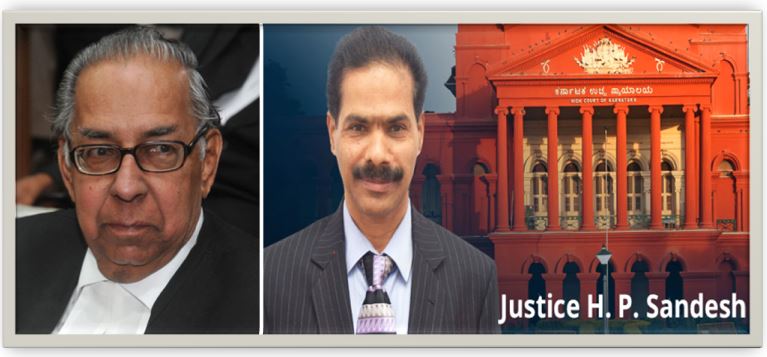




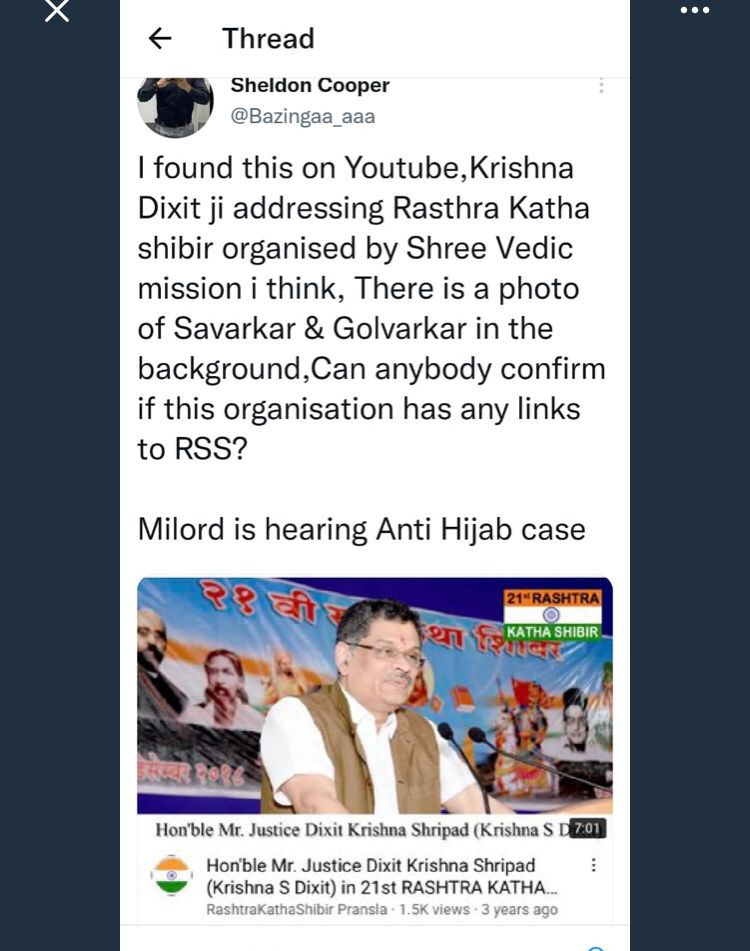

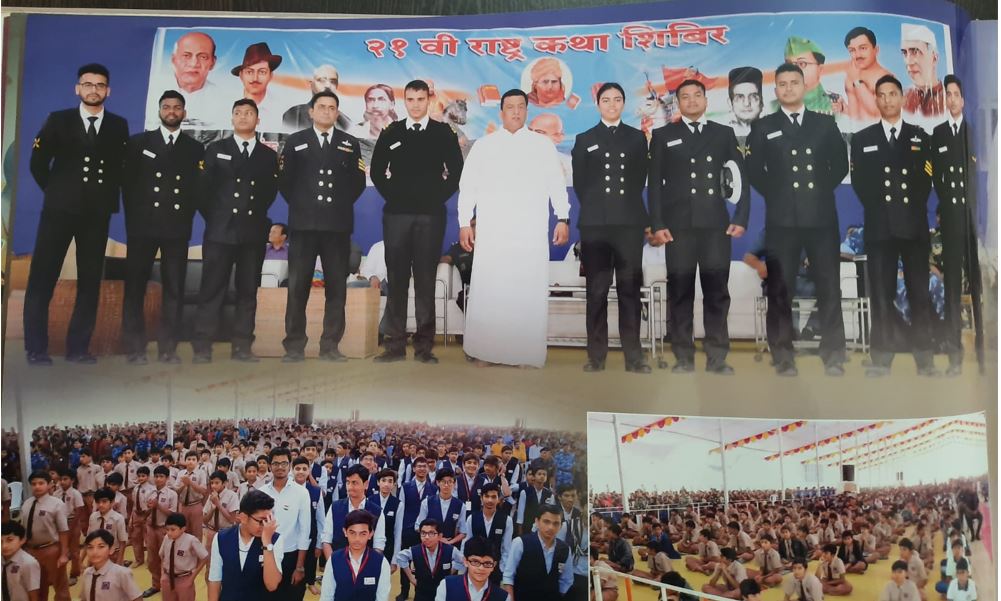






 Daksha Legal