Chief Justice Prasanna B. Varale celebrates his 61st birthday today.
Hon’ble Mr. Justice Prasanna B. Varale was born on 23rd June, 1962 at Nipani, Belagavi District, Karnataka. Graduated in Arts and Law from Dr. Babasaheb Ambedkar Marathwada University.
He enrolled as an Advocate on 12 August, 1985. He joined the chambers of Advocate Sri.S.N.Loya and practiced on Civil & Criminal Side. He served as lecturer in Law at Ambedkar Law College, Aurangabad from 1990 to 1992.
Justice Prasanna B. Varale also worked as Assistant Government Pleader and Additional Public Prosecutor, High Court Bench at Aurangabad AND Additional Standing Counsel for Union of India.
Justice Prasanna B. Varale was elevated as Judge at Bombay High Court on 18 July 2008
Justice Prasanna B. Varale took oath as the Chief Justice of High Court of Karnataka on 15 October 2022.
Important Judgments delivered by Chief Justice Prasanna B Varale in Karnataka High Court.
Justice Pradeep Singh Yerur celebrates his 53rd birthday today.
Justice Pradeep Singh Yerur was born on 21.06.1970. He enrolled as an Advocate on 30.05.1997.
He practiced in the field of Constitutional law, Labour Laws, Company Laws, Intellectual Property, Penal Laws, Banking Laws, Negotiable Instrument Laws, Property Laws, Consumer Protection Laws, Service law, House Rent Laws, Family Laws, Land Acquisition, Economic Offence Laws, Education Law before High Court of Karnataka, Punjab and Haryana High Court and Supreme Court of India.
He was appointed as Additional Judge of the High Court of Karnataka and taken oath on 11.11.2019 and Permanent Judge on 08.09.2021.
Important judgments delivered by Justice Pradeep Singh Yerur.
N.I. Act. Cheque issued to managing partner of partnership firm. Complaint filed in the name of partnership firm not maintainable. Karnataka High Court. https://dakshalegal.com/judgements/actionView/C16w9m6iE6J0BBcUuy87Ae9xP Indian Penal Code. Section 304A. There must be a direct nexus between death of a person and rash and negligent act of accused. Death due to electrocution. Criminal negligence against Section officer of the electric company not proved. Karnataka High Court. https://dakshalegal.com/judgements/actionView/4MpYauDJITGNmYOKgh0ysQjpt Writ Jurisdiction. Petition under Article 226 would NOT lie for issuance of a writ of Habeas Corpus for tracing missing persons. Only in cases of illegal detention or custody, such writ can be issued. Karnataka High Court. (DB) https://dakshalegal.com/judgements/actionView/7dnnGY4fs8ZGPrEmHoN6rqfDn Judicial review. A rule cannot be challenged on grounds of individual hardship. Courts cannot question wisdom behind policy decisions. Karnataka High Court upholds Rule increasing age limit of doctors for posts of General Duty Medical Officers. (DB) https://dakshalegal.com/judgements/actionView/4lVGYOIbyypQHUyCzS3aiaDsB Judicial review. Look Out Circular issued by Bank against debtor in larger public interest and economic interest of the nation cannot be the subject matter of judicial scrutiny. National interest is paramount. Karnataka High Court. (DB) https://dakshalegal.com/judgements/actionView/X4iEbMksseVqQJv1vtIhS9h8B ‘Perjury has become a way of life in the Law Courts.’ – Karnataka High Court while dismissing appeal arising out of a false claim under the Motor Vehicles Act with exemplary costs. (DB) https://dakshalegal.com/judgements/actionView/UnGJ3FlFGrdyoYtX1QPfquR3O Electricity Supply. Purchaser of industry is liable to pay arrears towards electricity supply to earlier owner. However, there shall be apportionment of purchaser’s liability when only a part of industry is purchased. Karnataka High Court. (DB) https://dakshalegal.com/judgements/actionView/GSXi9BnEuEx6AfoHOcfAekwHs Bank loans. One Time Settlement. Once the OTS payment is made by the principal borrower, the surety is also discharged. Law on One Time Settlement discussed. Karnataka High Court. (DB) https://dakshalegal.com/judgements/actionView/eWkUtPXgjJN3aZLmaJnwQkOmC
Justice Sreenivas Harish Kumar celebrates his 60th birthday today.
Justice Sreenivas Harish Kumar enrolled as an advocate on 11.02.1987 and practiced independently at Chikkaballapur, City Civil Court and High Court of Karnataka, Bangalore on Civil side.
He was directly appointed as District and Sessions Judge on 27th May, 2002 and served as Additional Districts and Sessions Judge at Tumkuru; and City Civil Court, Bangalore and Principal District and Sessions Judge at Bidar, Chitradurga, Bangalore Rural Districts.
He also served as Director Karnataka Judicial Academy, Bengaluru.
Justice Sreenivas Harish Kumar was appointed as an Additional Judge of the High Court of Karnataka on 14.11.2016 and Permanent Judge on 03.11.2018.
Important judgments delivered by Justice Sreenivas Harish Kumar.
”Article 25 of the Constitution cannot be understood as affording protection to those who indulge in conversion under the camouflage of propagation of his or her religion”. Karnataka High Court while quashing criminal proceedings against police officers. https://dakshalegal.com/judgements/actionView/SctbBAUvVYw1CSMxMVcZ2b8dU Arbitration and Conciliation Act. Section 8. Non-signatory defendants cannot be exposed to arbitral proceedings especially when the cause of action against all the defendants is same and cannot be bifurcated. Karnataka High Court. https://dakshalegal.com/judgements/actionView/rx83qVA7XsStuXAv3JFBekPah Hindu Succession Act. Section 14. Life interest created to wife under Will beyond her share in a notional partition is not a pre-existing right. Bequeath is only life interest. Wife will not get absolute right. Karnataka High Court. (DB) https://dakshalegal.com/judgements/actionView/s3By08wWSkDhYnWeNIZ9jzX0K Limitation Act. Article 65-b. Recovery of possession when mortgagee sells the property mortgaged. The Article does NOT apply when the property is sold under a statute. Karnataka High Court. (DB) https://dakshalegal.com/judgements/actionView/a0si6Vak9Zptt4JfkzJ6gWFKB Transfer of Property Act. Section 43. Feeding the grant by estoppel does NOT apply if the transferee knows that the transferor did not possess the title at the time of transfer. Karnataka High Court. https://dakshalegal.com/judgements/actionView/8dPDjhgy7Fbr11zfO0LdC7J46 Prosecution for dishonour of cheque issued towards time barred debt is permissible when cheque was issued under a subsequent written agreement between the parties. Karnataka High Court. https://dakshalegal.com/judgements/actionView/fjHyJBCNCuyfvj24ZFWHCJxn8 Inclusion of properties already partitioned in a suit for partition amounts to vexatious and scandalous litigation. Court can order deleting the properties from the plaint under Order 6 Rule 16 of CPC. Karnataka High Court. https://dakshalegal.com/judgements/actionView/oarJCd8AcDey37g4CGwf297ze Partition Act. Party who applies for sale of the property under Section 2 cannot opt for purchase of the share of the other parties under Section 3. Karnataka High Court. https://dakshalegal.com/judgements/actionView/AyJ2wImDu5VSceufc4MgIGEqY
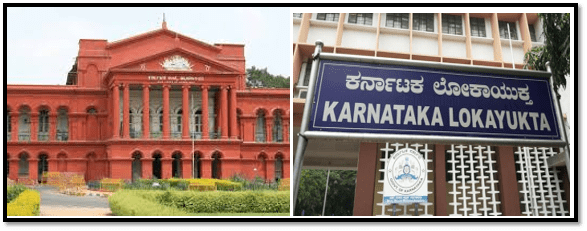
Samaj Parivarthan Samudaya has filed a Writ Petition (PIL) seeking directions to the Government of Karnataka to appoint second Upa-Lokayutka. The division bench of the Karnataka High Court consisting the Chief Justice and Justice Ashok S Kinagi has ordered notice to the Government. Writ Petition 3139/2023, Samaj Parivarthan Sumudaya vs State of Karnataka.
Mr. A R Goutham, Advocate, Daksha Legal made submissions before the bench.
Hitherto two Upa-Lokayuktas were appointed to the institution of Lokayukta. After Justice Ananda retired, the second Upa-Lokayukta post is vacant. At present, there is only one Upa-Lokayukta i.e. Justice K N Phanindra who has taken up huge responsibility travelling all over the State of Karnataka.
The recent judgment of the Karnataka High Court in Clarence Pais and others vs The State of Karnataka and another, upholds the validity of Karnataka Conferment of Ownership on Mulageni or Volamulageni Tenants Act, 2011. (Mulageni Act).
Similar to other land tenancy laws, the Mulageni Act confers full ownership on the tenants and the sub-tenants on payment of normative compensation.
This brief article deals with the history of Mulageni tenancy.
Mulageni tenancy is mainly prevalent in Dakshina Kannada district. Mula connotes ‘root’. Muladar is the landlord or owner of the land. Geni in Kannada means is the rental amount payable to Muladar either in cash or kind. Normally the tenant would pay geni in the form of produce every year.
A unique feature of Mulageni tenancy is that a Mulageni is permanent lease or a lease in perpetuity. The Mulagenidar can also transfer the land to another Mulagenidar for a consideration. The transfer can be without the permission of the Muladar. However, the new Mulagenidar has to pay the rental to the Muladar.
The right of eviction is conferred on the Muladar only if the Mulagenidar fails to pay the rent. One more feature is that the rental amount is nominal since the land was developed by the Mulagenidar.
After Tippu Sultan was killed in the Mysore War of 1799 the entire areas which were ruled by Tippu came under the administration of East India Company. The British Company demanded huge revenue from the landowners in the form of Shamil in addition to Kist amount. Later, these two collections were merged and ‘Sarasari Geni’ was fixed. However Mulageni tenancy as such was not abolished by the British. It was continued even after the independence.
The revolutionary reforms in the agricultural tenancy occurred in 1973 with the Karnataka Land Reforms (Amendment) Act of 1973. This legislative reforms helped many Mulagenidars to buy cheaply their full ownership and abandon the Muladars system.
Thus the revolutionary Land Reforms Act of 1973 did not abolish the Mulageni system although there was much dilution in the number of those households coming under the Mulageni system. The Mulagenidars were considered permanent tenants and the ownership of the land to Muladars was in perpetuity.
Karnataka Conferment of Ownership on Mulageni or Volamulageni Tenants Act, 2011.
The preamble to the Act states that the Act is to provide for conferment of ownership on mulagenidars or volamulagenidars. The Act takes note of the the huge investments made by the Mulagenidars by putting up structures, and improvements to the property either residential or commercial and the practical difficulty of the tenants to enjoy the holding to its full extent. The Act considers it in the public interest to provide for conferment of ownership on mulgenidars and volamulgenidars.
Section 3 of the Act deals with conferment of ownership right on Mulagenidar and Volamulagenidar and says that every mulagenidar or volamulagenidar who, on the date of commencement of the Act, is in possession and enjoyment of the holding shall be entitled to be conferred with ownership of the holding, on his fulfilling the conditions specified in the succeeding sections and on conferring such ownership right on him. The Section saves mortgages or charges created in respect of such holding.
Section 4 deals with conditions for eligibility of conferment of ownership. Mulgenidar or volamulagenidar shall be eligible for conferment of ownership right on him under the Act if he pays to the mulgar or intermediary an amount as may be determined by the Competent Authority by taking into consideration such guidelines as may be prescribed. Section 7 empowers the Competent Authority to determine the amount payable to the mulgar. The amount payable is 500 times of the lease rental as is evidenced in the records. However, where the Mulageni lease is conditional requiring the permission of the Mulgar for alienation of the property the amount payable shall be calculated at 1000 times of the lease rent.
Section 8 provides for issuance of Certificate of ownership. Section 9 provides for appeal and Section 10 bar jurisdiction of the Civil Courts to settle, decide or deal with any question which falls under the Act.
Challenge to the Mulageni Act. The constitutional validity of the Mulageni Act was questioned on the following grounds. (1) State legislature lacks competence to enact the Act. (2) Want of proper Presidential Assent to the Act under Article 254(2) of the Constitution. (3) Presidential Assent to the impugned Act does not extend to the protective Proviso to Article 31C. (4) The Act is discriminatory. (5) The Act is manifestly arbitrary & massively unjust. (6) The Act lacks public purpose and therefore is violative of Articles 26 & 300A of the Constitution. (7) The compensation payable to the muldars is illusory so as to render the impugned Act void under Article 300A of the Constitution.
The Karnataka High Court considers each one of these questions meticulously. One of the interesting arguments advanced on behalf of the petitioners is that the constitutional amendment to Article 31C vide 42nd Amendment Act 1976 which extended protection to the statutes made to give effect to any of the Directive Principles in Part IV having been struck down in Minerva Mills case the original position therein is restored and that does not extend protection to the impugned Act under Article 31C.
Let me simply this argument. Relevant portion of Article 31C in its original form read as follows. (please see the highlighted portion)
31C. Saving of laws giving effect to certain directive principles.— Notwithstanding anything contained in article 13, no law giving effect to the policy of the State towards securing the principles specified in clause (b) or clause (c) of article 39 shall be deemed to be void on the ground that it is inconsistent with, or takes away or abridges any of the rights conferred by article 14, article 19 or article 31.
Provided that where such law is made by the Legislature of a State, the provisions of this article shall not apply thereto unless such law, having been reserved for the consideration of the President, has received his assent.
The constitutional validity of Article 31C in its original form was upheld by the Supreme Court in Kesavananda Bharti case. However the Parliament amended Article 31C. The relevant portion reads as follows. (please see the highlighted portion) .
31C. Saving of laws giving effect to certain directive principles.— Notwithstanding anything contained in article 13, no law giving effect to the policy of the State towards securing all or any of the principles laid down in Part IV shall be deemed to be void on the ground that it is inconsistent with, or takes away or abridges any of the rights conferred by article 14 or article 19
Provided that where such law is made by the Legislature of a State, the provisions of this article shall not apply thereto unless such law, having been reserved for the consideration of the President, has received his assent.
Thus, the Parliament expanded the scope of Article 31C to include all or any of the principles laid down in Part IV instead of clause (b) or clause (c) of article 39.
This amendment was struck down by the Supreme Court in Minerva Mills case primarily on the ground that primacy of Part IV could not be given over Part III.
The argument of the petitioners was that with the Supreme Court striking down the amendment to Article 31C, the original position i.e. reference to clause (b) or clause (c) of article 39 got restored. Since the Mulageni Act is not enacted to give effect to Articles 39 (b) or (C), the same is unconstitutional.
The High Court deals with this question in paragraph IX as follows.
Firstly the impugned Act is made to give effect to the Directive Principles in Articles 39(b) & (c) which figured in the original text of Article 31C and continue till date; if that be so, one need not see what happened to 42nd Amendment of 1976 in Minerva Mills; Secondly, whether such a protection extends to the laws made to give effect to all other Directive Principles contained in Part IV is being examined by a Bench of Nine Judges in Property Owners Association vs State of Maharashtra; Thirdly, as already discussed above, no Assent of the President is secured to the impugned Act in terms ofnproviso to Article 31C. Fourthly, Sanjeev Coke having adverted to Minerva Mills extends protection to the statutes that are made to give effect to any of the Directive Principles in Part IV of the Constitution, of course subject to Assent under the Proviso to Article 31C.
Whether Minerva Mills case has the effect of restricting the scope of Article 31C only to Articles 39 (b) and (c) or it extends to all the provisions of Part IV is pending adjudication before the Supreme Court. But the fact remains that provisions similar Mulageni Act have already been upheld.
The hitherto continued confusion, lack of ownership and the related eternal problems have been finally put to rest by the Judgement of the Karnataka High Court.
This assures dignity and the human right to property to many Mulagenidars for sure.
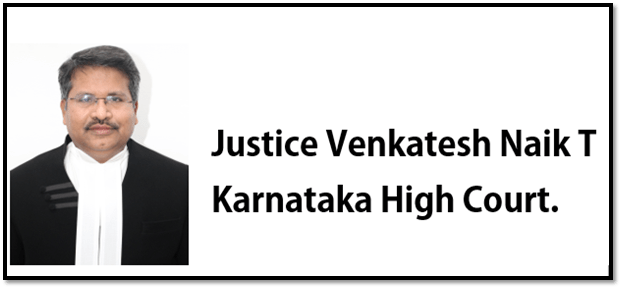
Justice Venkatesh Naik celebrates his 48th birthday today. Justice Venkatesh Naik Thavaryanaik was born on 01.06.1975. Native of Chitradurga. He completed B.A.L., L.L.B., from SJM Law College, Chitradurga and secured 3rd Rank. He obtained L.L.M. from Kuvempu University, Shivamogga.
Justice Venkatesh Naik enrolled as Advocate and practiced at Chitradurga. He was appointed as District Judge on 02.01.2012. He served as Registrar (Administration) at High Court of Karnataka. He worked at Prl. Secretary to Government, Law Department. He worked as Prl. District & Sessions Judge, Udupi & Bengaluru Rural District.
Justice Venkatesh Naik was sworn-in as Additional Judge of the High Court of Karnataka on 24.01.2023.
Important Judgements delivered by Justice Venkatesh Naik T “Speedy trial in NIA cases guarantees the fundamental right under Article 21”. Karnataka High Court directs establishment of three more Special to ensure speedy trial and disposal of the NIA cases. (DB) https://dakshalegal.com/judgements/actionView/OmixS2OMoTfqrljhC59QMaM87 Karnataka High Court directs amendment of Section 377 IPC to include Necrophilia on the lines of laws prevalent in UK, Canada, NZ etc. Guidelines issued to install CCTVs in mortuaries and to maintain Mortuary hygiene. (DB) https://dakshalegal.com/judgments/actionRead/G2tTPI5bHvYyZTiETOTGZQLha
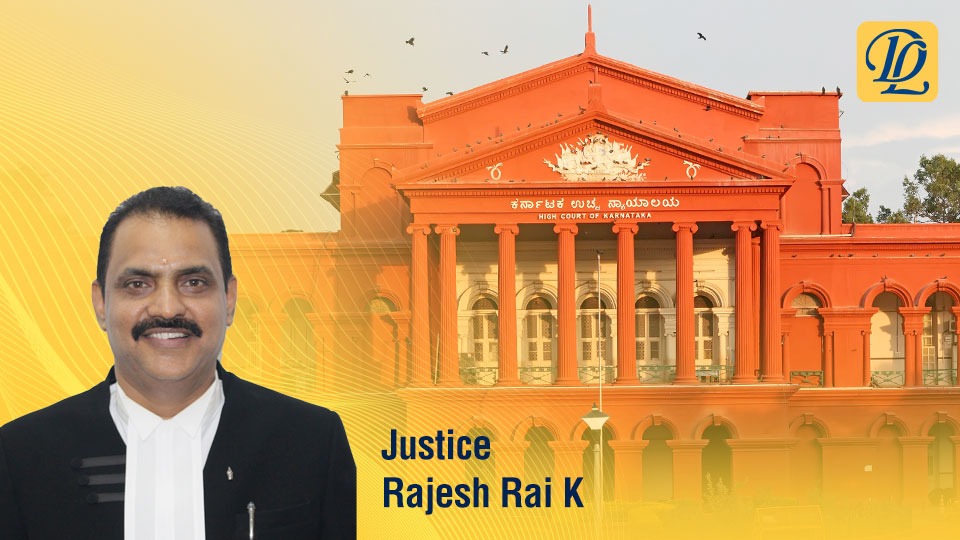
Justice Rajesh Rai celebrates his 49th birthday today.
Justice Rajesh Rai Kallangala was born on 01.06.1974. He completed primary education at Kepu & secondary education & PUC at Vitla. He completed Degree from St. Philomina’s College. Completed LL.B., from Vivekananda Law College, Puttur.
Justice Rajesh Rai enrolled as Advocate in 1999 and practiced in the office of Sri G. Balakrishna Shastri and Sri Younus Ali Khan. Later, he joined the office of Hon’ble shri Justice John Michael D’Cunha.
He worked as Government Pleader for 2 years. Served as Central Government Senior Panel Counsel for 6 years. Functioned as Special Public Prosecutor for Enforcement Directorate, and Narcotics Control Bureau. Served as Panel Advocate for BDA. Practiced mainly on criminal side. Justice Rajesh Rai was sworn-in as Additional Judge of the High Court of Karnataka on 09.02.2023.
Justice H.T. Narendra Prasad celebrates his 57th birthday today.
Justice Harekoppa Thimmana Gowda Narendra Prasad was born on 1 June 1966. He studied B.Sc., from D.V.S.College, Shivamoga in the year 1990 and LL.B., from Vidyavardhaka Law College, Mysuru in the year 1993.
He enrolled as an Advocate in the year 1993. He started practice in the Chambers of Prof.Ravivarma Kumar, former Advocate General of Karnataka.
He initially for a period of two years practiced in Trial Courts, Bengaluru. He practiced in the field of Constitutional Law, Service Law, administrative Law, Public Law, Property Law, Arbitration and Conciliation mattes, Environmental Law, Revenue Matters, Company matters, Banking Laws, Civil and Criminal matters before the High Court of Karnataka, Karnataka State Administrative Tribunal and Central Administrative Tribunal.
He was appointed as High Court Government Pleader in the year 2006 till 2013 and as Additional Government Advocate from 2013 till the date of elevation, i.e., 2018.
H.T. Narendra Prasad was appointed as an Additional Judge, High Court of Karnataka on 02.06.2018 and as Permanent Judge on 26.02.2020.
Justice Rajendra Badamikar celebrates his 61st birthday today. Justice Rajendra Badamikar was born on 01.06.1962 in Hubballi to late Sri. Muralidhar Balavant Rao Badamikar and to late Smt. Vijaya Muralidhar Badamikar of Rabkavi in Bagalkot district.
Justice Badamikar studied primary and secondary education in M.V.Pattan Higher Secondary School, Rabkavi in Bagalkot district. Then, PUC was done in R.L.S. Science College at Belagavi. Completed B.Sc. Degree in Karnataka Science College, Dharwad in 1983 and 1 year studied in M.Sc. (zoology) in Karnataka University, Dharwad. Later on in 1984, joined LL.B (Special) Degree in JSS Sakri Law College, Hubballi and obtained degree in 1987 and also obtained III Rank in II-year LL.B from the Karnataka University, Dharwad.
He enrolled as an Advocate in Karnataka State Bar Council, Bengaluru on 15.07.1987 and joined the Chambers of Sri. Shreekanth T. Patil, Advocate, Dharwad. Practiced both civil and criminal side in Dharwad and Hubballi.
He was appointed as Civil Judge on 18.10.1993 and worked in Chikkodi at Belagavi District; Chittapur at Kalaburagi District and in Belagavi from 29.11.1993 to 03.09.2002. Promoted as Senior Civil Judge on 04.09.2002 and worked as Civil Judge (Sr.Dn.) in Hanagal, Haveri District till May 2006. Then, posted as Deputy Secretary to Karnataka State Legal Services Authority and Member Secretary to the High Court Legal Services Authority and served there till July 2009. Then attended competitive examination conducted by the High Court of Karnataka and promoted as District Judge and served as XII-Additional City Civil and Sessions Judge, Bengaluru, from July 2009 to May 2010. Then, transferred to Belagavi and served there as IV-Additional District and Sessions Judge (Lokayuktha Court), Belagavi District, upto May 2013. Later, he was transferred to Mysuru and served there as V-Additional District and Sessions Judge; III-Additional District and Sessions Judge; and Additional Prl. Family Judge and Prl. Family Judge, Mysuru from May 2013 to February 2015. Then, transferred to Kolar District and served as Prl. District and Sessions Judge, Kolar, from 28.02.2015 till 30.11.2016.
Later he was transferred to Tumakuru as Prl. District and Sessions Judge, Tumakuru District and served there from 05.12.2016 till 13.09.2019. Then, posted as Registrar (Judicial) in High Court of Karnataka, Bengaluru and served there from 16.09.2019 to 09.10.2019. Thereafter, posted as Registrar General and served in the said post from 09.10.2019 till elevation as Judge, High Court of Karnataka, Bengaluru, on 25.03.2021 and Permanent Judge on 30.09.2022.
Some of the important Judgements delivered by Justice Badamikar
Karnataka High Court Act, 1961. Regular First Appeals filed before the 2007 amendment, whose value is less than Rs.15 lakhs, have to be heard by the Division Bench. Amendment applies only to appeals filed after 28 August 2007. (DB) https://dakshalegal.com/judgements/actionView/PXoK3UOnorXI9fFmo3hRJY72F
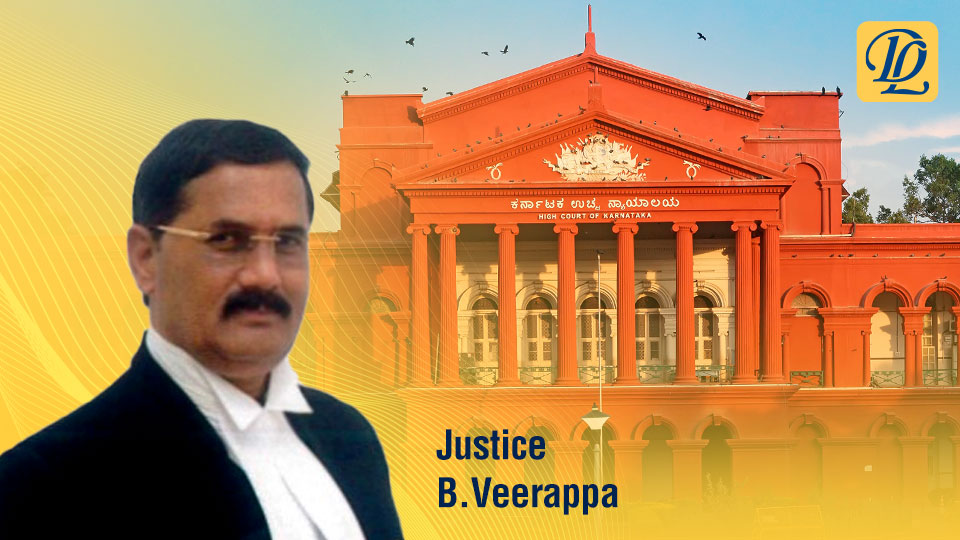
Justice Veerappa retires today. (Born on 1 June 1961)
It is with great admiration and respect that we reflect upon the remarkable career of this honest, bold, and hardworking individual. Throughout his tenure on the bench, Justice Veerappa has consistently exemplified the virtues of integrity, courage, and diligence, leaving an indelible mark on the judicial system.
First and foremost, Justice Veerappa has been a paragon of honesty. His unwavering commitment to upholding the principles of truth, fairness, and justice has been a guiding light for all who have appeared before them. His ethical conduct and transparent approach to each case have earned him the trust and confidence of the legal community and the public at large.
He has exhibited boldness in his decisions, fearlessly tackling complex legal issues and making tough choices that were in the best interest of justice. With an unyielding dedication to the law and a deep understanding of its nuances, he has demonstrated the courage to stand up for what is right, even in the face of adversity.
Justice Veerappa has also been an epitome of hard work throughout his career. His tireless efforts in meticulously examining the factual and legal position, researching legal precedents, and hearing arguments have ensured that every case received the utmost attention and consideration. His commitment to thoroughness and a fair trial has set a high standard for his colleagues and inspired many aspiring legal professionals.
Beyond his individual qualities, Justice Veerappa has played a pivotal role in promoting the values of honesty, boldness, and hard work within the legal community. His mentorship and guidance have positively influenced countless junior lawyers, encouraging them to uphold the highest ethical standards and strive for excellence in their practice.
As we bid farewell to Justice Veerappa on this momentous occasion, we express our profound gratitude for his invaluable contributions to the judiciary. His legacy of honesty, boldness, and hard work will undoubtedly endure, serving as a testament to his exceptional career and inspiring future generations of legal professionals.
Hon’ble Mr. Justice B.Veerappa: Born on 1st June, 1961. Studied in Primary Education at Government Primary School, Nagadenahalli, Srinivasapura: Secondary Education at Government Higher Primary School, High School and Pre-University Education at Government High School, Composite Junior College, Srinivasapura, Kolar; Degree at Government College, Kolar and LL.B., at Renukacharya Law College, Bengaluru.
He started practice in the High Court of Karnataka in the year 1988 in the office of Prof. M.S.Gopal, Senior Advocate at Bengaluru Appointment as Government pleader on 01.07.1995 and worked upto 15.09.2000 and as Additional Government Advocate on 25.05.2005 and continued as such till 1.1.2015 by conducting various cases. worked as Government Advocate for more than 15 years in all successive Governments.
Ministry of Education & Social Welfare, Government of India has awarded “Three Stars” Merit Certificate for Completion of the National Physical Efficiency Tests (Seniors) COnducted in the year 1979 in the state of Karnataka on 16.06.1979.
He has passed National cadet Corps (N.C.C.) ‘B’ Certificate on 11.5.1985 (CPL) and National Cadet Corps (N.C.C.) ‘C’ Certificate during Feb 1983 (SGT) under the authority of the Ministry of Defence, Government of India.
He has represented the Bengaluru University in Wrestling in the year 1984-85. Won first place in Kabaddi in Inter College Competition during the year 1984-85
Appointed as an Additional Judge of the High Court of Karnataka on 02-01-2015 and Permanent Judge on 30.12.2016.
Some of the Important Judgements delivered by Justice Veerappa.
“Speedy trial in NIA cases guarantees the fundamental right under Article 21”. Karnataka High Court directs establishment of three more Special to ensure speedy trial and disposal of the NIA cases. (DB) https://dakshalegal.com/judgements/actionView/OmixS2OMoTfqrljhC59QMaM87 Maintenance and Welfare of Parents and Senior Citizens Act. Transfer must have been made subject to the condition that the transferee shall provide the basic amenities and basic physical needs to the transferor. Karnataka High Court reiterates. (DB) https://dakshalegal.com/judgements/actionView/aUu8uX7bmkOYVriDpbGom08vE