“Know Your Judge”. Justice Hanchate Sanjeevkumar. Karnataka High Court.

Justice Hanchate Sanjeevkumar celebrates his 52nd birthday today.

Justice Hanchate Sanjeevkumar was born on 13 May 1971. He completed his SSLC in the year 1987 in the Government School, Ilkal, Bagalkot District. He completed his PUC in S.V.M. College, Ilkal, Bagalkot and JSS College Dharwad. He secured his Bachelor of Science in the year 1993 from JSS College, Karnataka University, Dharwad. He graduated in law from KPES Law College, Karnataka University, Dharward and enrolled as Advocate on 25 June 1996.

After completion of law graduation, Justice Hanchate Sanjeevkumar joined the chambers of late Shri. M.C. Shanthana Goudar, Senior Advocate, Dharwad (father of Hon’ble Shri.Justice Mohan M. Shanthana Goudar, Judge, Supreme Court of India) as an apprentice. Later he joined the chambers of Shri. Arun L Neelopanth, Advocate, as Junior. Under their guidance he practiced both on civil, criminal and revenue sides. Under the guidance of late Shri. C.K.P. Panicker, Advocate, Dharwad, he practiced in labour law matters. Later he joined the chambers of Shri. G.H.Chabbi, Senior Advocate, Begalkote.

Later from the month of June 1998 onwards he shifted law practice to Bengaluru by joining chamber of Hon’ble Shri. Justice N.K.Patil, who later became Judge, High Court of Karnataka. He practiced before the Karnataka Appellate Tribunal, Karnataka Administrative Tribunal and Labour Courts. He practiced on writ, civil, criminal, service, labour, tax, both on trial side and appellate side. He also practiced before the Chief Metropolitan Magistrate Court, Bengaluru.

Justice Hanchate Sanjeevkumar was appointed as Additional District & Sessions Judge on 25th February 2008. He worked as;

  1. Additional District & Sessions Judge, Mangaluru
  2. Principal District & Sessions Judge, Yadgiri
  3. Addl.District & Sessions Judge, Chitradurga
  4. Principal District & Sessions Judge, Yadgiri
  5. Addl.District & Sessions Judge, Chitradurga
  6. Principal District & Sessions Judge, Bidar
  7. Presiding Officer, Industrial Tribunal, Bengaluru
  8. Presiding Officer, Karnataka State Transport Appellate Tribunal, Bengaluru
  9. Member Secretary, Karnataka State Legal Services Authority, Bengaluru and
  10. Principal District & Sessions Judge, Tumakuru

Justice Hanchate Sanjeevkumar was appointed as Additional Judge of the High Court of Karnataka and taken oath on 04.05.2020 and Permanent Judge on 25.09.2021.

Some of the latest and important judgments delivered by Justice Hanchate Sanjeevkumar.

Wife getting lumpsum maintenance under Section 125 Cr.P.C as full settlement is NOT precluded from claiming maintenance under Section 18 of the Hindu Adoption and Maintenance Act. Karnataka High Court.
https://dakshalegal.com/judgements/actionView/RaYCcEDUSxpEpWc4aMwkW67ux

MVC Act. The principle of “pay and recover” applies even when owner of vehicle had contested claim petition before the Tribunal or filed appeal against the award. Karnataka High Court.
https://dakshalegal.com/judgements/actionView/hoGxVRFry6D1BrjNqnkhXV9zj
Holder of Light Motor Vehicle driving license driving Transport Vehicle does not amount to fundamental breach of the insurance policy so as to avoid the liability of the insurance company. Karnataka High Court.
https://dakshalegal.com/judgements/actionView/mKHMtAKld1T3Wmn0HjJdSyXGr

Hindu Adoptions and Maintenance Act, 1956. Adoption of a person above the age of 15 years is permissible only if there is custom or usage applicable to the parties which permits such adoption. Karnataka High Court.
https://dakshalegal.com/judgements/actionView/r4Ye8rqTTu35PBYhxX4Uql6Z2

Education. ‘Punishment imposed on student for malpractice shall be commensurate with the gravity of the misconduct’. Karnataka High Court invokes doctrine of proportionality to reduce punishment imposed on a student. (DB)
https://dakshalegal.com/judgements/actionView/3pSVsEwPGeDhKv88hWBjBikPL
Karnataka Lokayukta Act, 1984. Employees of statutory bodies and government companies are not ‘government servants’ though they are ‘public servants’. Government cannot entrust inquiry against them to Lokayukta under CCA Rules. Karnataka High Court. (DB)
https://dakshalegal.com/judgements/actionView/hl3ot1zrDUBTQ5CXkEabzw2qe
‘No child is born in this world without a father and mother. A child has no role to play in his-her birth’. Karnataka High Court orders compassionate appointment to children born out of void or voidable marriage. (DB)
https://dakshalegal.com/judgements/actionView/IVr40pamyJwESPrk7VMyFlspl

Preventive detention. Consideration of representation even after confirmation of preventive detention order is part of Article 21 of the Constitution. Karnataka High Court. (DB)
https://dakshalegal.com/judgements/actionView/80TuUvdM6kereLL9jwIII96kP

Caste Certificate. Only aggrieved person, such as employer or person deprived of caste certificate or post in Govt or public service or seat educational institution on account of fraudulent caste certificate can question. (DB)
https://dakshalegal.com/judgements/actionView/xRTt28xiVl9AyF0WKYfvgfWGl
Insolvency and Bankruptcy Code, 2016. Demand for customs duty which is not part of resolution plan approved by the adjudicating authority stands extinguished permanently. Karnataka High Court.
https://dakshalegal.com/judgements/actionView/DTvT9sdADdPBfBUjxfmwbHt8E

Customs Act, 1962. Notification enhancing custom duty would NOT become enforceable if it is simply issued and sent for publication. It is enforceable only when such a notification is published and also offered for sale. Karnataka High Court. (DB)
https://dakshalegal.com/judgements/actionView/hNYAc0ZUb74nQgoEg0Gi9GKUB

Motor Vehicles Act. Under ‘Act Policy or Statutory Policy’ occupants of the vehicle cannot be considered as third parties. Insurance company is liable for the occupants only if the policy is comprehensive. Karnataka High Court.
https://dakshalegal.com/judgements/actionView/A88nFKNsQksn341XifDQsT9N1

Place of inquiry and trial in case of continuing matrimonial offence.
https://dakshalegal.com/judgements/actionView/79vCQbzEX3rgnVeUbrlBcRVN2

Motor Vehicle Act. Vehicle insured but without valid fitness certificate. Insurer is not liable. However ‘pay and recover’ is applicable. Karnataka High Court.
https://dakshalegal.com/judgements/actionView/Lt9wWhe5IH8vh1TDLEe8Ogy6V

Motor Vehicle Act Insurance policy commences from the time of making payment and not from issuance of policy
https://dakshalegal.com/judgements/actionView/89gfIoXBRwkVoaz4JFaBRSS4p

“Know Your Judge”. Justice S. R. Krishna Kumar. Karnataka High Court.

Justice S.R. Krishna Kumar celebrates his 53rd birthday today. Justice Krishnakumar was born on 07.05.1970. Graduated LL.B. at University Law College, Bangalore. Enrolled as an Advocate on 29.08.1992.

From 1992 he practiced as an Advocate in the High Court of Karnataka as well as Civil Courts, Criminal Courts and Tribunals.

Practiced on all types of Civil Cases, Criminal Cases, Writ Petitions/Appeals, Arbitration Cases, Company Cases, Motor Vehicle Cases, Matrimonial Cases and Consumer Disputes.

Appointed as Additional Judge of the High Court of Karnataka and taken oath on 23.09.2019 and Permanent Judge on 01.03.2021.

Justice Krishna Kumar’s father Shri. S. V. Raghavachar was one of the most respected lawyers in Karnataka. His hardwork and command over Civil Law was unprecedented.

Right of Persons with Disabilities Act. Visually impaired person cannot be driven to common law remedy when the offence committed against him attracts the RPD Act. Karnataka High Court.

https://dakshalegal.com/judgements/actionView/eeDvucNtihZWh8VrKjoY1DM9k

Stay of execution pending suit between decree holder and judgement debtor. Order 21 Rule 29 CPC will not apply to suits which are instituted subsequent to institution of the execution proceedings. Karnataka High Court.
https://dakshalegal.com/judgements/actionView/EXIWlWqAAKJokwlE9Bhr5lBqg

Property of grandfather directly inherited by grandson, when his father had predeceased the grandfather, becomes the self-acquired property of the grandson. Karnataka High Court. (DB)
https://dakshalegal.com/judgements/actionView/Yn3aGBzO2cTIfUr28Ell4GkmE

Trademarks of Company in liquidation are custodia legis of the Company Court. Only the Company Court can determine the
ownership of the mark and declare any disposition as void. Karnataka High Court.
https://dakshalegal.com/judgements/actionView/p8WI3syHgsuBpFsqyFC1G6tEI

Order under section 148A(d) of the Income Tax Act, 1961 is invalid if the same is issued after three years of relevant assessment year and the amount escaped from tax is below Rs. 50 lakhs. Karnataka High Court.
https://dakshalegal.com/judgements/actionView/cO0QpNeE9byZt5F8t5krb5UMO
Social impact assessment prior to issuance of preliminary notification under the 2013 land acquisition Act must be by mandatory publication of the notification in the official gazette. Else the acquisition proceedings becomes illegal. Karnataka High Court.
https://dakshalegal.com/judgements/actionView/f6IOwhPKW9tKHd5AIywVCmAEj
Land-owners whose lands were acquired for KIADB after 1 January 2014 are entitled to compensation under the Right to Fair Compensation and Resettlement Act, 2013. Karnataka High Court.
https://dakshalegal.com/judgements/actionView/UTv5BowxRs9w5OSH6sBpDSzSj

No income tax can be levied or deductible on compensation for acquiring lands under the Karnataka Industrial Areas Development Act in view of 2013 land acquisition Act. Karnataka High Court.
https://dakshalegal.com/judgements/actionView/L3EFVolIbR4Tnz2RcQknNpsJP
Determining CET rankings of 2021-22 batch students by taking only CET marks is illegal. Karnataka High Court orders fresh ranking for admission to Engineering and Technology courses for the academic year 2022-23 by taking both PUC and CET marks.
https://dakshalegal.com/judgements/actionView/wqu9tOn0gxlYPG5VOuYOGtAaA

Provisional release of perishable goods under the Customs Act is permissible even during pendency of appeal and not confined to proceedings pending before the adjudicating officer. Karnataka High Court.
https://dakshalegal.com/judgements/actionView/EVqM3RT2gyDv7WkxmrF2nOIff
Production of additional evidence under Order 41 Rule 27, CPC cannot be as a matter of right. Party must explain why evidence could not be produced in trial court despite due diligence. Karnataka High Court.
https://dakshalegal.com/judgements/actionView/v31k58NbPd1OsBFhKu1XYaiy0

Post-acquisition allottee has no locus standi to challenge de-notification of lands under acquisition relying on the doctrine of promissory estoppel. Karnataka High Court.
https://dakshalegal.com/judgements/actionView/szjAwK3zozzdZxy49eUSZX0Sw

Interpretation of statutes. Proviso to a provision cannot control the main provision nor be interpreted in a manner which renders the main provision nugatory or otiose. Karnataka High Court. (DB)
https://dakshalegal.com/judgements/actionView/Bsyp0937ogbd2ktLRx1H646QU

“Right to nutritious food is a fundamental right of pregnant woman, lactating mothers and children’’. Karnataka High Court directs the State Govt to implement ICDS without further delay and to submit compliance report. (DB)
https://dakshalegal.com/judgements/actionView/J3p0whIuu3WVheIOqu5yQxJJ0

No party should suffer due to the act of court. Right accrued as on the date of writ petition cannot be taken away by amendment inserted during the pendency of the petition. Karnataka High Court. (DB)
https://dakshalegal.com/judgements/actionView/pYn114W1jYuEh8Fcu7AAIP6VW

Arbitration & Conciliation Act. Even when limitation period to challenge arbitral award under Section 34 expired during closure/vacation of Courts, provisions of Section 4 of the Limitation Act cannot be invoked by the applicant. Karnataka High Court. (DB)
https://dakshalegal.com/judgements/actionView/3te4iLh23TBvRhUBvByspiN8c

Non-impleadment of particular Department in Writ Petition is not a ground for the State Government not to comply with Court order. Karnataka High Court suggests appointment of Nodal Coordinating Officer. (DB)
https://dakshalegal.com/judgements/actionView/tQV6VTCNMhR2PEtNZd70zFeYi

”Honour power purchase agreements and make prompt, regular and timely payments to power generators without any delay”. Karnataka High Court directs ESCOMs while holding writ petitions maintainable to enforce PPAs.
https://dakshalegal.com/judgements/actionView/0M5RGBkCRo6DY6VyIK6FVq3Pn
”Urban planning is a valuable force to achieve sustainable development.”. Karnataka High Court upholds land acquisition for Dr.K.Shivaram Karanth Layout.
https://dakshalegal.com/judgements/actionView/DWBXNpKIMAFfY4lbnKH7j2Tae

”Purchase of land by Karnataka Housing body without mandatory prior approval of State Government is void”. Karnataka High Court cancels sale deed and restores land to the owner.
https://dakshalegal.com/judgements/actionView/SSK7pzV4jwned4sfTBwfU2g8M
Child custody. Non-custodial parent is entitled to equal number of days as with the custodial parent during holidays, festivals, birthdays and other important family functions. Karnataka High Court issues guidelines.
https://dakshalegal.com/judgements/actionView/ShhgwqxyLXTGGmLU3LG8o7hgF
Registration of sale deed in the State of Karnataka. Sub-registrars can NOT insist on production of ’11E’ sketch for registration. Govt website to be updated accordingly. Karnataka High Court.
https://dakshalegal.com/judgements/actionView/uSDfEmha0CH4FZbtMYJJ33UEi
Civil Procedure Code. Order 39 Rules 1 and 2. Trial court has to apply its mind while granting ex-parte injunction. Passing cryptic, bald, laconic, unreasoned and non-speaking order is impermissible. Karnataka High Court.
https://dakshalegal.com/judgements/actionView/UU9YvPRevHdQ3Qw6rJZ9YsKUJ
Arbitration and Conciliation Act. Waiver of ineligibility of arbitrator under Section 12. In the absence of an express agreement between parties claim cannot be barred by principles of waiver acquiescence and estoppel. Karnataka High Court.
https://dakshalegal.com/judgements/actionView/8AoM2W9Cr2m3o1UUtvjTFAzPg

Creating posts having trappings of the Ministers to overcome the upper ceiling limit under Article 164 1-A is ultra vires the constitutional mandate. Karnataka High Court. (DB)
https://dakshalegal.com/judgements/actionView/ce8s5Hnon0iS6H2o6KsjoeHsT
PTCL Act. Inordinate delay in challenging sale. Such proceedings are not maintainable. (DB)
https://dakshalegal.com/judgements/actionView/Ng5Bvn7xS4vpPd3m4OZjKAZBR
PTCL Act. Proceedings withdrawn or dismissed on merits can not be re-opened by fresh proceedings. (DB)
https://dakshalegal.com/judgements/actionView/K1R8Aqw2vmoc9B946y4ZBr7iI
SC ST Insertion of new entry prospective. Adding synonymous is retrospective
https://dakshalegal.com/judgements/actionView/aPPwOFmlKIBUcZbHYH8ukltQi
Quo-Warranto. Person elected on a fake caste certificate is liable to be ousted from the office.
https://dakshalegal.com/judgements/actionView/0lXLUTFSr6JYDBLAO58v7j8dM

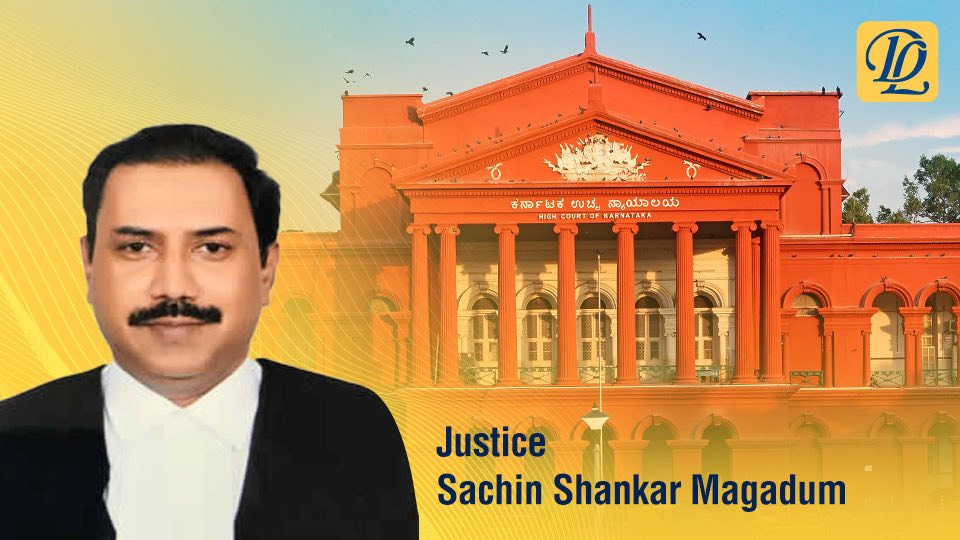
“Know Your Judge”. Justice Sachin Shankar Magadum. Karnataka High Court.

Justice Sachin Shankar Magadum celebrates his 51st birthday today.

Justice Sachin Shankar Magadum was born on 05.05.1972 to Shri Shankar Baburao Magadum and Smt. Pushpa Shankar at Chikodi, Belgaum District. His great grandfather Shri Ishwar Magadum was the first Chief Engineer of Bombay/Karnataka State during whose regime supply of Cauvery water to Bengaluru City was started. His father Shri Shankar Magadum having a strong background in the field of Education is the founder of Gnyan Sadhana Education Society, Chikodi.

Justice Sachin S Magadum completed Matriculation in G.S.E.S. English Medium School, Chikodi and Pre-University education and Degree from Basavaprabhu Kore College, Chikodi and Graduated LL.B. at R.L. Law College, Belagavi.

Justice Sachin S Magadum enrolled as an Advocate on 31.10.1998 and practised at Chikodi from 1998 to 2001. He started his career by joining the chambers of Shri O P Burji at Chikodi.

From 03/07/2001 to June 2008 he practised at the High Court of Karnataka, Bengaluru, in the field of Civil, Criminal and Constitutional Matters. He appeared before the Karnataka Appellate Tribunal, Karnataka State Consumer Disputes Redressal Commission, and other tribunals. While practising in Bangalore, he initially joined the chambers of Shri Vigneswar Shastry and later practised independently. After the establishment of the Circuit Bench at Dharwad he shifted practice to the High Court of Karnataka, Bench at Dharwad and stood as Standing Counsel for the National Highways Authority of India and Karnataka Institute of Medical Sciences, Hubbali.

Justice Sachin S Magadum then got appointed as Additional Judge of the High Court of Karnataka on 23.09.2019 and became Permanent Judge on 01.03.2021.

Justice Sachin S Magadum is a great sportsperson. He has excellent skill in cricket, lawn tennis and table tennis.

Some of the important judgments delivered by Justice Sachin S Magadum.

Karnataka Police Act. Failure to provide reasonable opportunity to the person sought to be removed from the local limits of his jurisdiction renders the order illegal. Karnataka High Court.

https://dakshalegal.com/judgements/actionView/WfrOF59GJQYQgVKtXnjvQx6f1

Karnataka Urban Development Authorities Act. Failure to implement the scheme substantially within five years and shifting of the scheme to other land results in lapsing of the acquisition proceedings. Karnataka High Court.
https://dakshalegal.com/judgements/actionView/Hb5AwXnGI91P2CM0SLMFoJEcp

Educational qualification cannot be insisted for transfer of authorization of licence on compassionate ground Karnataka Essential Commodities (Public Distribution System) Control Order. Karnataka High Court.
https://dakshalegal.com/judgements/actionView/ZpFclsXiu5nwoYud3lPNvGBW

Landowner is entitled to additional interest on the compensation when dispossessed from the property before the initiation of the acquisition proceedings. Karnataka High Court.
https://dakshalegal.com/judgements/actionView/boNDIz5Fkelkepz8XjO1teZ20

Karnataka SC-ST (PTCL) Act, 1978. In an appeal under Section 5A of the Act by the grantee, Deputy Commissioner can NOT stay mutation entry in the name of subsequent purchaser. Remedy is only under the Karnataka Land Revenue Act. Karnataka High Court.

https://dakshalegal.com/judgements/actionView/ZORKi3wBXAlfBwhOHhkxZFCYT

C.P.C. Execution. Person who claims under a Will and seeks declaration of title and possession can NOT maintain application under Order 21 Rule 97 as obstructer. He has to file separate suit for declaration and possession. Karnataka High Court.

https://dakshalegal.com/judgements/actionView/W1BX2nBw58m4Lc4Co8Sc2dNoq
Suit for possession based on title without seeking declaration of ownership is maintainable when the defendant does not assert the title to himself. Karnataka High Court.
https://dakshalegal.com/judgements/actionView/bwOUYiHYqq2Zc4wlmsFQFhc8s

Suit against public trust. Court cannot entertain application seeking appointment of receiver by deferring the application seeking leave to prosecute the suit under Section 92 of CPC. Karnataka High Court.
https://dakshalegal.com/judgements/actionView/99kJJbmjcpeU6HZvF6QdO95nl

Acceptance of lesser share by father in ancestral properties in family partition will not prevent his son from claiming actual/correct share in the properties. Karnataka High Court.
https://dakshalegal.com/judgements/actionView/lH8UX2ApuNy7StVQeKgv4g366

Decree holder can decide in which of the several modes mentioned in Section 51 of the Civil Procedure Code, he will execute his decree. The judgment debtor cannot invoke the Section. Karnataka High Court.
https://dakshalegal.com/judgements/actionView/GgSR0z6iSSTq78PsYqzvYWWvS
Mere amendment to plaint adding properties describing them as joint family properties will not cause hardship since the nature of the properties need to be substantiated during the trial. Karnataka High Court.
https://dakshalegal.com/judgements/actionView/ON3MWU8ICHwXx6Qzg5x6VzKNb

Where property is sold under the Partition Act 1893, provisions of Order 21 Rules 84 & 85 CPC regarding mandatory deposit of entire balance sale price within 15 days do not apply. Court can extend time for such payment. Karnataka High Court.

https://dakshalegal.com/judgements/actionView/ftBEuUrvqx3sHe2V7cFsYvxKY

When a cross objection is not maintainable independently, then there is no question of maintaining two separate order sheets as per Rule 155 of the Civil Rules of Practice. Karnataka High Court.

https://dakshalegal.com/judgements/actionView/dcje4BfRHhnQXqCEbr8pKokg6

In a suit for partition, defendant can seek direction to plaintiff to include certain properties in the plaint schedule and seek partition of the same. Karnataka High Court.

https://dakshalegal.com/judgements/actionView/ILh8GtkO4hA7IEoFpjKnVRvuI

Non-binding arbitration agreement with an option to litigate further if the parties do not resolve the disputes pursuant to such non-binding arbitration cannot be termed an arbitration agreement. Karnataka High Court.

https://dakshalegal.com/judgements/actionView/00Rg07Jw5jZ5AnDf2lG2sCy7l

Advocate representing a party has a right to be physically present in a Remote Point when the evidence of his client is being recorded. Karnataka High Court.
https://dakshalegal.com/judgements/actionView/Jy4rDr9s2lZSwMbMYr8q4dFrE

Court exercising revisional power under Section 115 Civil Procedure Code can admit additional evidence/document. Karnataka High Court.
https://dakshalegal.com/judgements/actionView/d5F5onkN7FiWSetM3ATFQU4Uc

Question of violation of building bye-laws or plan etc are within the exclusive jurisdiction of the planning authorities. Civil Court cannot try these aspects in a civil suit. Karnataka High Court.
https://dakshalegal.com/judgements/actionView/up5BlwOF1ERz3PCnYpPDBRUbG

SARFAESI Act. Even person other than principal borrower, like tenant, can challenge the order passed under Section 14 only before the competent Tribunal. Writ petition is not maintainable. Karnataka High Court. (DB)
https://dakshalegal.com/judgements/actionView/wvlbkDcWQyw7x6uZyCECmWLXs

Courts are under an obligation to follow religious text and old practices in religious disputes so long as they do not violate constitutional rights of an individual. Karnataka High Court while approving Bala Sanyasa. (DB)
https://dakshalegal.com/judgements/actionView/YcnhMaQFG6CVLFKHCK8Zab4Kh
On account of expansion of public interest litigation, we are witnessing frivolous litigations and increasing instances of abuse of public interest litigation. Karnataka High Court.
https://dakshalegal.com/judgements/actionView/BNG5fqTj2q7KB2rBeyvwzTqYS

Guns are part of martial race Kodavas. Exemption of Kodavas under the Arms Act is a reasonable classification. Karnataka High Court. (DB)
https://dakshalegal.com/judgements/actionView/Di8lHzPxDofJYu0sZOVUXXLuo

Privatisation of Airports. Policy decision of the executive are best left to it and a Court should not interfere with the policy decision unless the decision of the authority is mala fide, arbitrary, irrational or unreasonable. Karnataka High Court. (DB)
https://dakshalegal.com/judgements/actionView/zEbsCgl9aoHhnNfo9RNKj6dQC

‘Planting trees on a barren Government land is not a crime. Afforestation is an essential tool to deal with global warming’. Karnataka High Court
https://dakshalegal.com/judgements/actionView/Lq1wZ1Mm7zcjgcwj0KBwljt5B

Karnataka SC-ST (PTCL) Act, 1978. If the grantee converts the granted land for non agricultural purposes, it is no more a ‘granted land under the Act’ and hence prior permission to sell is NOT necessary. Karnataka High Court. (DB)
https://dakshalegal.com/judgements/actionView/6RtC2rw9UbeawCXsJfwnGZFcu

Karnataka SC-ST (Prohibition of Transfer of Certain Lands) Act, 1978 is NOT applicable if the granted land is converted by the grantee to non-agricultural purposes under the Karnataka Land Revenue Act, 1964. Karnataka High Court. (DB)
https://dakshalegal.com/judgements/actionView/NMiN2CZSZ8JdZCAd2i2uxenk9

Karnataka Scheduled Castes and Scheduled Tribes (Prohibition of Transfer of Certain Lands) Act 1978. ‘Granted land’ (original grant to SC-ST persons) includes house sites or non-agricultural land also. Karnataka High Court. (DB)
https://dakshalegal.com/judgements/actionView/3BcHZkmwX69KaHWO4KiWoYnQq

Land acquisition for Urban Development Authorities. Prolonged delay in issuing final notification after preliminary notification amounts to abandonment of acquisition. Landowner can utilize the lands in accordance with law. Karnataka High Court.
https://dakshalegal.com/judgements/actionView/Rur2eEXZMG7yKzmsosROngM24

Civil Procedure Code. Order 23 Rule 1(3)(a). Withdrawal suit. Scope explained. The object of the Rule is NOT to provide fresh opportunity to plaintiff who failed to make out a case. Karnataka High Court.
https://dakshalegal.com/judgements/actionView/RuXXIrOvUnceHjnS8v7AXXevf

Evidence Act and Karnataka Stamp Act. Even a photocopy-xerox copy of the original document can be impounded and deficit stamp duty can be collected by the Court if the same is produced after laying proper foundation. Karnataka High Court.
https://dakshalegal.com/judgements/actionView/6lstfgUodgBAVzDmHaQsFsrxN

Land acquisition. Kharab lands falling under category ‘A’ of the Karnataka Land Revenue Rules belong to landowners and not to Government. Landowners are entitled to compensation. Karnataka High Court reiterates.
https://dakshalegal.com/judgements/actionView/cA82Orf6qOpoXE6tmoYtZiv8w
C.P.C. Order 39 Rules 1 and 2. Grant of temporary injunction restraining usage of confidential information of plaintiff by defendant. Principles summarised. Karnataka High Court. (DB)
https://dakshalegal.com/judgements/actionView/T1TxfItq0N90hp2Ro0DGRwmke

Mareva Injunction. Court can grant mareva injunction where recovery of amounts outstanding is a long drawn process and transfer of assets by defendant defeats the claim of the plaintiff. Karnataka High Court. (DB)
https://dakshalegal.com/judgements/actionView/kNN4tUaMUDx1bDzYZy8rYFrmC

Arbitration and Conciliation Act. Award rejecting claim if found to be illegal fresh award cannot be made by Court under Section 34. Only option is to set aside award and leave parties to resume Arbitration once again. Karnataka High Court. (DB)
https://dakshalegal.com/judgements/actionView/qUFbIxtepWCxHWeCMg61OZwwx

Arbitration and Conciliation Act. Application under Section 9 is maintainable even after conclusion of arbitral proceedings and during Section 34 proceedings only in so far as the claim granted by the arbitrator. Karnataka High Court. (DB)
https://dakshalegal.com/judgements/actionView/OAEKztRfhK7ZhoijVje4Lduvh

CPC. Attachment before judgment is a drastic power which should NOT be exercised mechanically to convert unsecured debt into a secured debt. Prima facie case and the chance of suit being decreed are relevant. Karnataka High Court. (DB)
https://dakshalegal.com/judgements/actionView/VVRqjCkCocseG0gLmnDiGaC5w

Hindu Succession Act. Amended Section 6. Plea of prior partition. Mere partition decree will not sever joint family status. Until final decree is passed and allottees of shares are put in possession – there is no partition. Karnataka High Court.
DB
https://dakshalegal.com/judgements/actionView/cVSv4aF0KiIjrAxeB849GREtT
Contempt of Courts Act. High Court has no power to take cognizance of contempt of Appellate Tribunal since the Tribunal is not court subordinate to High Court. Karnataka High Court. (DB)
https://dakshalegal.com/judgements/actionView/4IrxfFssRPHNrHC094siXPldn

Specific Relief Act. Bar under Section 22 against grant prayer not sought for does not curtail power of the appellate Order XLI Rule 33 CPC. Court can refund of sale consideration even in the absence of prayer. Karnataka High Court.
DB
https://dakshalegal.com/judgements/actionView/KOcjJTBvmF5QZZ8EhyMj545yC

Income Tax Act. Section 147. Mere change of opinion on consideration of the same material is not a ground to reopen the assessment. Full Bench Karnataka High Court. (DB)
https://dakshalegal.com/judgements/actionView/7sTlzX2KidKjHLINVfe3QDMBR

A member of the Bar is expected to act first as an Officer of the Court and thereafter as the mouthpiece of his client. Karnataka High Court censures lawyer for filing contemptuous petition. (DB)
https://dakshalegal.com/judgements/actionView/fzAXguziZ8tux8PINupTNoBcQ

Karnataka High Court follows 1948 Privy Council judgment on boundary dispute. The judgment has become Locus Classicus even after seven decades HC (DB)
https://dakshalegal.com/judgements/actionView/MFsneyllF43iQKNdYSHvkQUMA

No confidence motion. Right to move not dependant on Rules.
https://dakshalegal.com/judgements/actionView/hu24Zoy3iv2dSrB6uRDY6Ct2X

Criminal Trial. Circumstantial evidence. Principles explained.
https://dakshalegal.com/judgements/actionView/gtC8Y2v1fKt4rkvOmpRnQnu7f
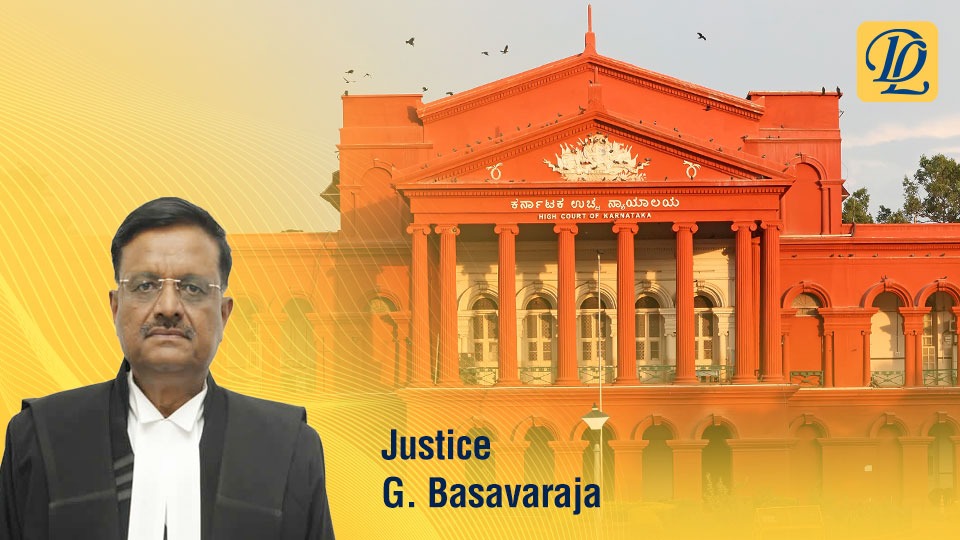
“Know Your Judge”. Justice Gurusiddaiah Basavaraja. Karnataka High Court.

Justice Gurusiddaiah Basavaraja celebrates his 58th birthday today.
He was born on 03.05.1965 at Chitradurga. 

He did his early education in Government Higher Primary School, Metikurike Village.   He studied SSLC from Government High School, Gannayakanahalli, Hiriyur Taluk, Chitradurga District; PUC from Government Pre-University Junior College, Hiriyur Taluk, Chitradurga District, Graduated from Vanivilasa First Grade College, Hiriyur Taluk, Chitradurga District. 

He obtained LLB degree from Saraswathi Law College, Chitradurga. Obtained Masters in Law from Kuvempu University, Shivamogga.

Justice G. Basavaraja enrolled as an Advocate on 05:10:1988; practiced Civil, Criminal, Revenue, MVC, and LAC cases under Senior Counsel Shri C. Abdul Raheem, Sessions Advocate at Chitradurga.  He joined Judicial Service on 18.10.1993 and worked as: 

(1) JMFC at Mysuru from 1993 -1998; 
(2) Civil judge and JMFC at Yellapura from 1998 2001; 
(3) Civil Judge and JMFC at Chennagiri from 2001-2002. 
(4) Promoted as Senior Civil Judge and CJM at Bagalkot from 05.10.2002 to 27.05.2004; 
(5) 16th Addl. Chief Metropolitan Magistrate at Bengaluru from 28.05.2004 to 23.05.2007; 
(6) Principal Senior Civil Judge & CJM at Ranebennur from 2007 to June 2009; 
(7) Promoted as Addl. District & Sessions Judge, Belagavi from 02.07.2009 to 31.05.2013; 
(8) Special District & Sessions Judge, CBI Court and Parappan Agrahara, Bengaluru and also Concurrent Charge of Land Acquisition Cases and Special Magistrate of Bomb Blast Danduplaya and SC-ST Atrocities Cases at Bengaluru from 1-6-2013 to May 2017; 
(9) VIII Addl. District & Sessions Judge, Hunusur, Mysore District Judge Hunusur, Mysore District from 31.05.2017 to 09.06.2017; 
(10) I Addl. District & Sessions Judge, Mysore from 11.06.2017 to 10.02.2018 
(11) Principal District & Sessions Judge Chamarajanagar from 12.02.2018 to 06.11.2019 
(12) Member Secretary, Karnataka State Legal Services Authority at Benglaluru from 11.11.2019 to 11.05.2020
(13) Principal Judge, Family Court, Bengaluru from 11.05.2020 till 15.08.2022.

Department of Kannada and Culture has honoured Justice Basavaraja in the year 2008 for disposal of several cases in Mega Lok Adalath. 

As a Chairman of District Legal Services Authority he disposed many cases under Victim Compensation Scheme. He conducted several legal literacy programs in various places.  

Justice G. Basavaraja was elevated as an Additional Judge in High Court of Karnataka, Bengaluru on 16.08.2022. 

Some of the important Judgments delivered by Justice Gurusiddaiah Basavaraja:

Violation of the Income Tax Act in monetary transaction cannot be a defence in proceedings under Section 138 of the Negotiable Instruments Act. 
https://dakshalegal.com/judgements/actionView/clU7K2ymkWsjGEFL1m4JIGy6z

Property derived by a female Hindu post the amendment to Section 6 of the Hindu Succession Act would become her absolute property and a coparcenary or joint family cannot be created by or under her. (DB)
https://dakshalegal.com/judgements/actionView/AHTV2tPS9suZ86WoR7nXVrtF0

Service Law. Premature transfer cannot be ordered simply because of the complaints against the public servant.
https://dakshalegal.com/judgements/actionView/cm3plwrf2A0cXpcuxRJQQqbIy

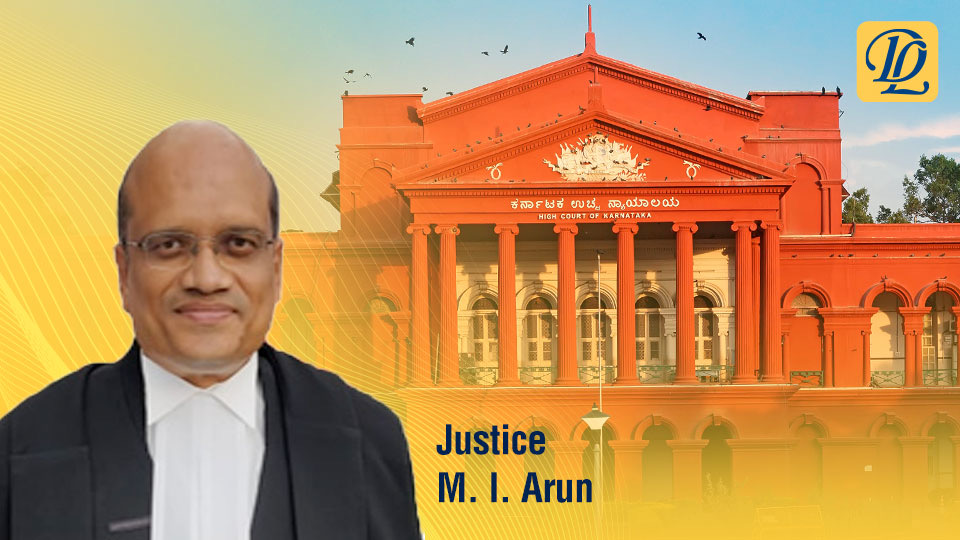
“Know Your Judge”. Justice Maralur Indrakumar Arun, Karnataka High Court.

Justice M I Arun celebrates his 53rd birthday today.

Justice M.I. Arun was born on 24.04.1970 at Mysore. His father Shri. M. J. Indrakumar served as Registrar, Karnataka Lokayukta till his retirement in the year 1999.

Justice M.I.Arun did his early education in Dharwad, Arasikere, Bhardravathi, Bangalore and Mysroe. He studied SSLC from MES High School, Jayanagar, Bengaluru; PUC from Mari Mallappa Junior College, Mysore; Graduated from the National Law School of India University, Bengaluru in the year 1993.

Justice M.I. Arun enrolled as an Advocate on 09.06.1993; practiced under Shri A.N. Jayaram, Former Advocate General of Karnataka and Shri B.N. Dayanand. He started independent practice as an Advocate from the year 1996 and represented several Universities and various State Government Undertakings. He was a Central Government Senior Panel Counsel and also Additional Government Advocate for a brief period.

Justice M.I. Arun was elevated as an Additional Judge in High Court of Karnataka, Bengaluru on 07.01.2020 and assumed charge as a Permanent Judge on 25.09.2021.

Some of the important judgments delivered by Justice M.I. Arun

1. Industrial Disputes Act, 1947. Pendency of disciplinary proceedings cannot be a ground to deny the status of a protected workman unless the workman is also involved in criminal cases. https://dakshalegal.com/judgements/actionView/UwrlgHg4qePUUhxDQJYPzIlDR

2. Confiscation of goods under Section 130 of the CGST Act must be preceded by an opportunity of being heard and not mere opportunity of filing objections to the action contemplated. https://dakshalegal.com/judgements/actionView/SU2MQ5DjlSWfnLGkqH1LBb36g

3. Suit cannot be dismissed simply because Specified Value as contemplated under the Commercial Courts Act is not mentioned in the plaint. Court can order valuation and return the plaint if the valuation is more than Rs. three lakhs.  https://dakshalegal.com/judgements/actionView/oSCA1wLEvaz5Wv5tmTpKvSP7v

4. Wife cannot be held liable under the N.I Act for dishonour of the cheque issued by her husband though the loan transaction is joint.  https://dakshalegal.com/judgements/actionView/NXZQdnu9usb20xbkfvcWDDBrP

5. National Calamity Contingent Duty is a surcharge which can be levied independently of the excise duty. NCCD can be levied even in the absence of levy of excise duty.  https://dakshalegal.com/judgements/actionView/aeJfaSq1x3KpxzUwGyTCLfRnX

6. Existence of a competing co-operative society in the area is only a guiding factor and not a restriction to permit new co-operative society under the Karnataka Co-operative Societies Act. https://dakshalegal.com/judgements/actionView/Y43XaBvVfRiisuhcLhrmcKyBy

7. Administrator under Section 27A of the Societies Registration Act cannot be appointed on vague allegations of irregularities in conducting election. https://dakshalegal.com/judgements/actionView/9zaOmZw9ankAXXtA0x90LYmcE

8. Evidence of hostile witness — Entire evidence of a hostile witness cannot be rejected ipso facto — Unreliable testimony may be rejected, reliable testimony may be accepted — 2020 SCC OnLine Kar 3309 : ILR 2020 Kar 2586 : (2020) 210 AIC 638 : (2020) 5 Kant LJ 360 (DB) : (2020) 3 AIR Kant R 244 : (2020) 5 KCCR 588

9. Hindu Succession (Karnataka Amendment) Act, 1990 (Karnataka Act No. 23 of 1994 w.e.f. 30.07.1994) — Section 6-a — Equal rights to daughter in co-parccnarv property — Partition took place by virtue of two partition deeds dated 06.02.2003 — Sale took place on 22.11.2004 — By virtue of Section 6(5) of the Hindu Succession (Amendment) Act, 2005, maintainability of suit filed by a daughter seeking rights in the co-parcenary property. Discussed. 2020 SCC OnLine Kar 3385 : ILR 2021 Kar 613

Held: (a) In the instant case, the partitions took place by virtue of two partition deeds dated 06.02.2003. The sale took place on 22.11.2004. If respondent No. 1 had no right over the properties in question by virtue of Karnataka Amendment which came into effect on 30.07.1994, then, on the ground that partition and sale took place prior to 09.09.2005, she would not get any right over the properties. But, if she had a right over the properties due to Karnataka Amendment which introduced Section 6-A to Hindu Succession Act, which was in force till it was eclipsed by the Central Amendment, in that event, she can maintain a suit for partition.

(b) The decisions of the Hon’ble Supreme Court referred to by the petitioners considered those transactions in which the daughters had no right over the property prior to the amendment made by the Parliament came into force. By virtue of the said decisions, the daughters cannot prefer a suit for partition, in the event if they had no right over the property prior to the amendment coming into force and the property was alienated prior to amendment coming into force. The above decisions of the Hon’ble Supreme Court do not bar the daughters from instituting a suit for partition, if as per prevailing law, prior to amendment she had a right over the property.

10. Industrial Disputes Act, 1947 — Earned leave — Earned leave is not a consequential benefit — If a workman does not work, he is not entitled to Earned Leave — Earned leave is not a consequential benefit and workman has to render active service and thereby earn privilege leave to his credit — Earned leave cannot have been earned as a matter of right, but by actual working Earned leave unless the relevant regulations expressly specifies otherwise cannot be considered as part of consequential benefits.–Earned leave is a privilege, a workman would be entitled to only by actual working and it cannot be earned as a matter of right even if he did not work. Even if he were to be in employment, he becomes entitled to it only if he works and earns it, otherwise not. It is similar to night shift or traveling allowance which accrue only if the person decides to work. If he does not work, in that event, he is not entitled to it. VIjaya Bank v. H.C. Jayaprakash, 2020 SCC OnLine Kar 642 : ILR 2020 Kar 1783 : (2020) 2 KCCR 1087 : 2020 LLR 414 : (2020) 2 CLR 135 : (2020) 3 Kant LJ 636 : (2020) 3 AIR Kant R 743

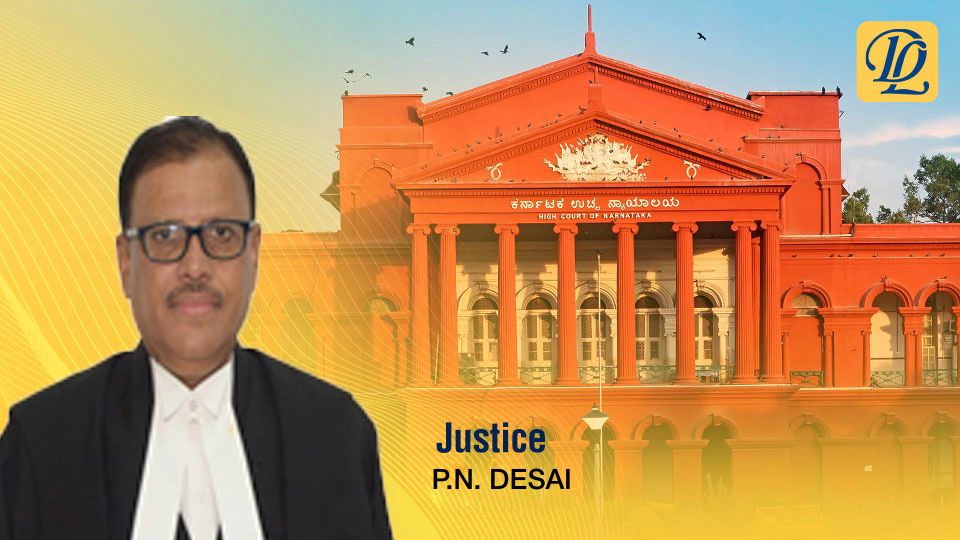
“Know Your Judge”. Justice Padmaraj Nemachandra Desai, Karnataka High Court.

Justice Padmaraj Nemachandra Desai retires on 21 May 2023 during the summer vacation. He is being given hearty farewell today.

Justice P.N. Desai was born on 21:5:1961 at Navalgund, Dharwad District. He did Bachelor of Science (B.sc) Degree from P.C. Jabin Science College, Hubli and LL.B. (Spl) from University College of Law, Dharwad.

Justice P.N. Desai enrolled as an Advocate in the year 1984 and joined the Chambers of his father – Late Sri. N.J.Desai, Advocate. He practiced both on Civil and Criminal Side at Navalgund and Dharwad District Courts.

He Joined Judiciary on 25:7:1992 as a Munsiff & JMFC (Presently Civil Judge) and stood first in the merit list of the batch. He worked as Munsiff and JMFC at Turuvekere Taluk, Tumkur District and Sedam Taluk, Kalaburagi District.

He was promoted as Senior Civil Judge in the year 2002. He worked as an Assistant Draftsmen & Ex-officio Deputy Secretary to Government of Karnataka, Department of Parliamentary Affairs and Legislation, Vidhana Soudha, Bengaluru.

He served as Principal Senior Civil Judge and Chief Judicial Magistrate (CJM) at Hassan and Registrar, City Civil Court, Bengaluru.
In the year 2009, through a limited Departmental competitive examination conducted by the High Court of Karnataka, he was promoted as District Judge and worked as Additional City Civil and Sessions Judge, Bengaluru, Presiding Officer of Additional Industrial Tribunal, Bengaluru, Judge, Family Court, Mangaluru and Additional District & Sessions Judge, Mangaluru.

He worked as an Assistant Director, Deputy Director and a Senior faculty member at Karnataka Judicial Academy, Bengaluru. He is a trained mediator from Bengaluru Mediation Centre, Bengaluru.
He served in the High Court of Karnataka as Secretary to Hon’ble The Chief Justice, Additional Registrar General at High Court of Karnataka Dharwad Bench, Registrar (Judicial) and Registrar (Vigilance), High Court of Karnataka, Bengaluru.

Justice P.N. Desai worked as Principal District and Sessions Judge, Chikkamagaluru District and Principal Judge, Family Court, Bengaluru.

Justice P.N. Desai was appointed as an Additional Judge, High Court of Karnataka, Bengaluru on 04:05:2020 and as permanent Judge on 25:09:2021.

Justice P N Desai retires on 21 May 2023 after serving the institution of judiciary for more than 30 years. Many junior and senior lawyers have expressed heartfelt appreciation for his service and his lawyer friendly nature throughout.

“When he was posted in Turuvekere, he had to get the judgments from his senior’s office via fax. He would wait in the nearby telephone booth till late night. He would deliver the judgements taking note of the correct legal position. He recollected with ease the names of the lawyers who appeared before him 30 years ago.” recollects Mr. M N Mdusudan, Member, Karnataka State Bar Council.

“Justice P N Desai’s dedication to the law has been an inspiration to me and so many others, and his warmth and kindness have made the courtroom a better place for all who enter it” says junior advocate Mr. A. R. Goutham.

“Justice P N Desai’s fairness, intelligence, and compassion have made a lasting impact on the legal profession, and his legacy will be felt for years to come. I have learned so much from his lordship and I am grateful for the wisdom and compassion” – Advocate Yashas.

“As you move on to the next chapter of your life, please know that you will be deeply missed. You have touched the lives of so many people, and I know that your contributions to the legal community will never be forgotten.” Mr. S.P. Shankar, Senior Advocate

Some of the latest/important judgments delivered by Justice P N Desai.

1. Company need not be arrayed as an accused for initiating criminal proceedings under the Factories Act 1948. https://dakshalegal.com/judgements/actionView/d0Zo5Wk8hS6I8H2nHnINyMPsO

2. Payment of interim compensation applies only in respect of offences committed after Section 143(A) of N.I.Act came into force in the statutory book. https://dakshalegal.com/judgements/actionView/7e7dwYqBTENTpmAt4bFbc66IA

3. Cheque bounce case. Complainant is not expected to appear on every date of hearing and the Court cannot dismiss the complaint for default on that ground. https://dakshalegal.com/judgements/actionView/KGqfPftJkB8oyevEyMmAlhDr4

4. NDPS Act. Owner of logistic company cannot be prosecuted if he was not aware of transportation of contraband in his vehicle. https://dakshalegal.com/judgements/actionView/UZ9NoJpaTHwvIIKfgnnQTyWBw

Women Judges in Higher Judiciary. Misery untold.

S. Basavaraj, Senior Advocate, Bengaluru.

Recently the Chief Justice of India asked a pertinent question “Why there are less women in Higher Judiciary?”

I wrote this on 8 March 2016. Unfortunately there is little improvement since then.

Another Women’s’ Day is here.

From the legal perspective, it is highly disappointing.

The woman lawyers are completely ignored in the matter of elevation as High Court judges or other Constitutional offices. We’ve never heard of a single woman Advocate General in the country (correct me if I am wrong).

Even the on-going selection of High Court Judges in the Karnataka High Court does not have a single women candidate.

Many woman lawyers, whose consent was obtained, felt it embarrassing to meet the collegium judges to pursue their appointment.

A woman lawyer, whose name was recommended, told me how embarrassing it was to meet the Judges in their chambers or at home to know about the status or to pursue the elevation. She was asked to meet the collegium judges of the Supreme Court and she simply did not want to do this.

Flip side of the coin is, even the Hon’ble Judges are stuck in a catch 22 situation. If a particular judge takes extra-interest to suggest, recommend or push through the name of a woman lawyer, it would be looked with suspicion.

The resultant position is, the women lawyers are deprived of the high constitutional positions.

Moreover, out of more than 100 Senior Advocates in the Karnataka High Court, there few woman Senior Advocates.

The procedure provides for inviting the lawyers to be designated as the senior advocates. It is surprising to know that not a single woman lawyer has ever been invited by the High Court to be designated in last several years.

Many women lawyers say they have to run to the chambers of judges to get recognised. No self-respecting women would do it.

However, unfortunately this is not done in any High Courts.

The woman judges should take up their cause. They should recognise the young talented woman lawyers and promote them for high Constitutional offices.

S. Basavaraj, Senior Advocate, Bengaluru