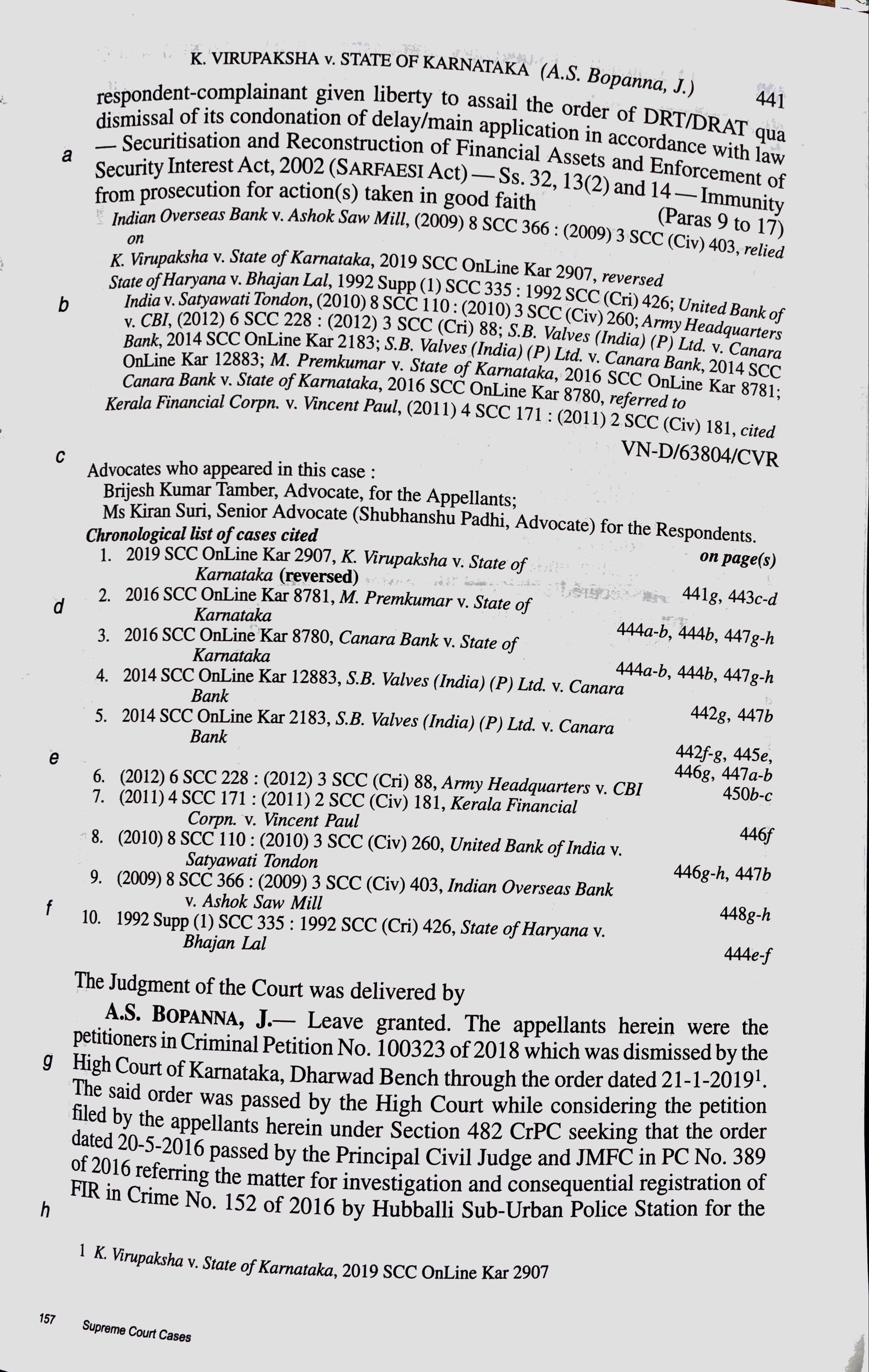
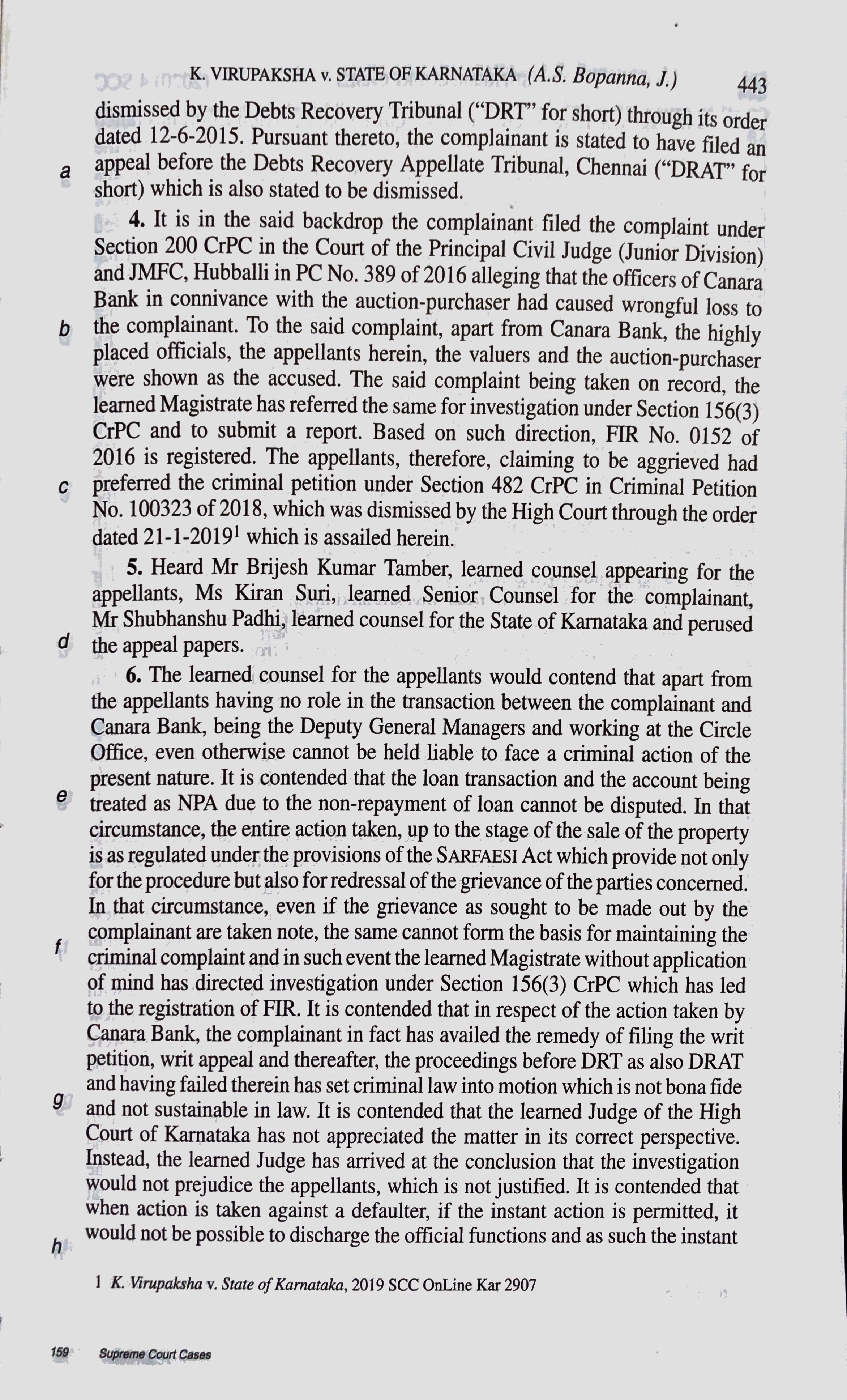
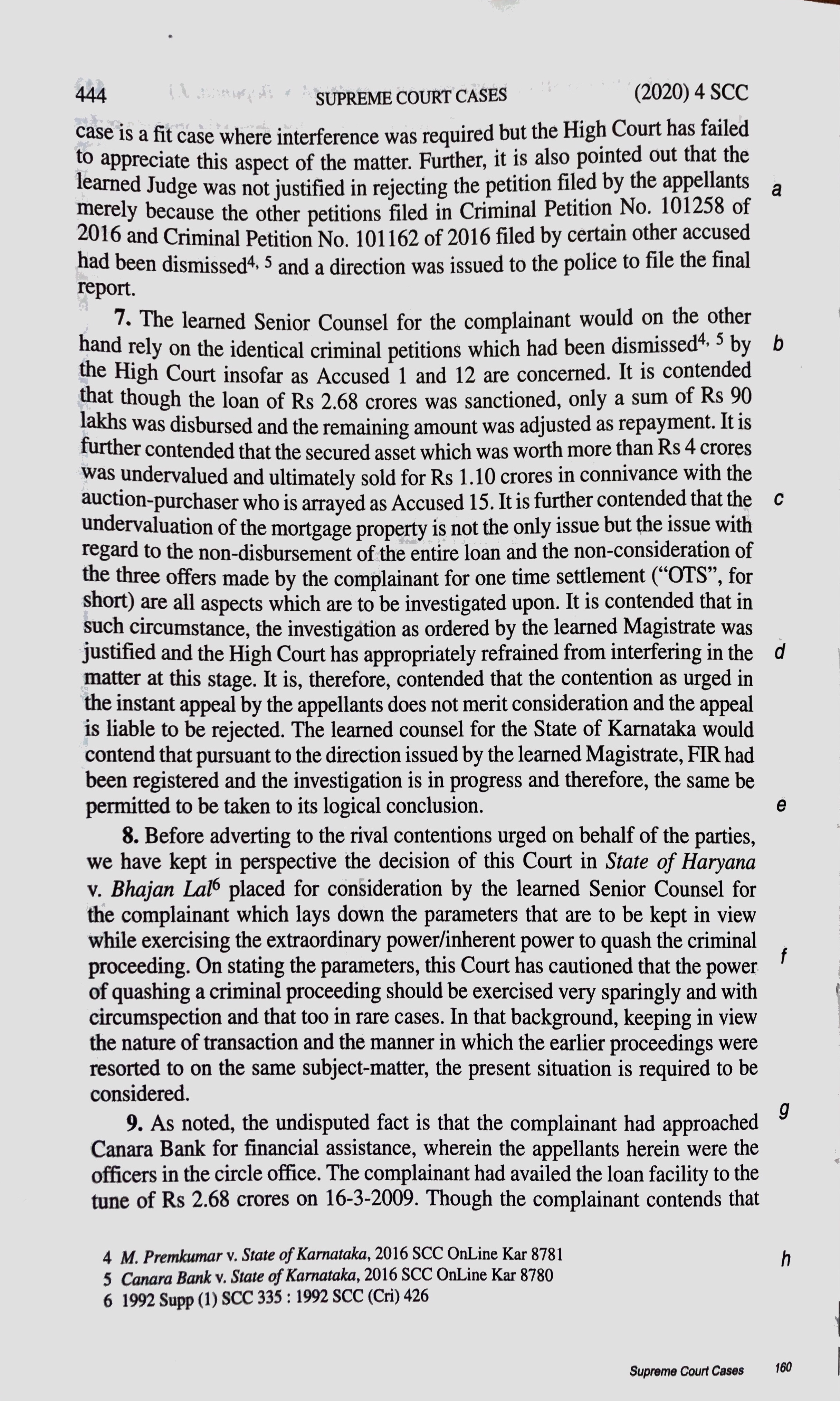
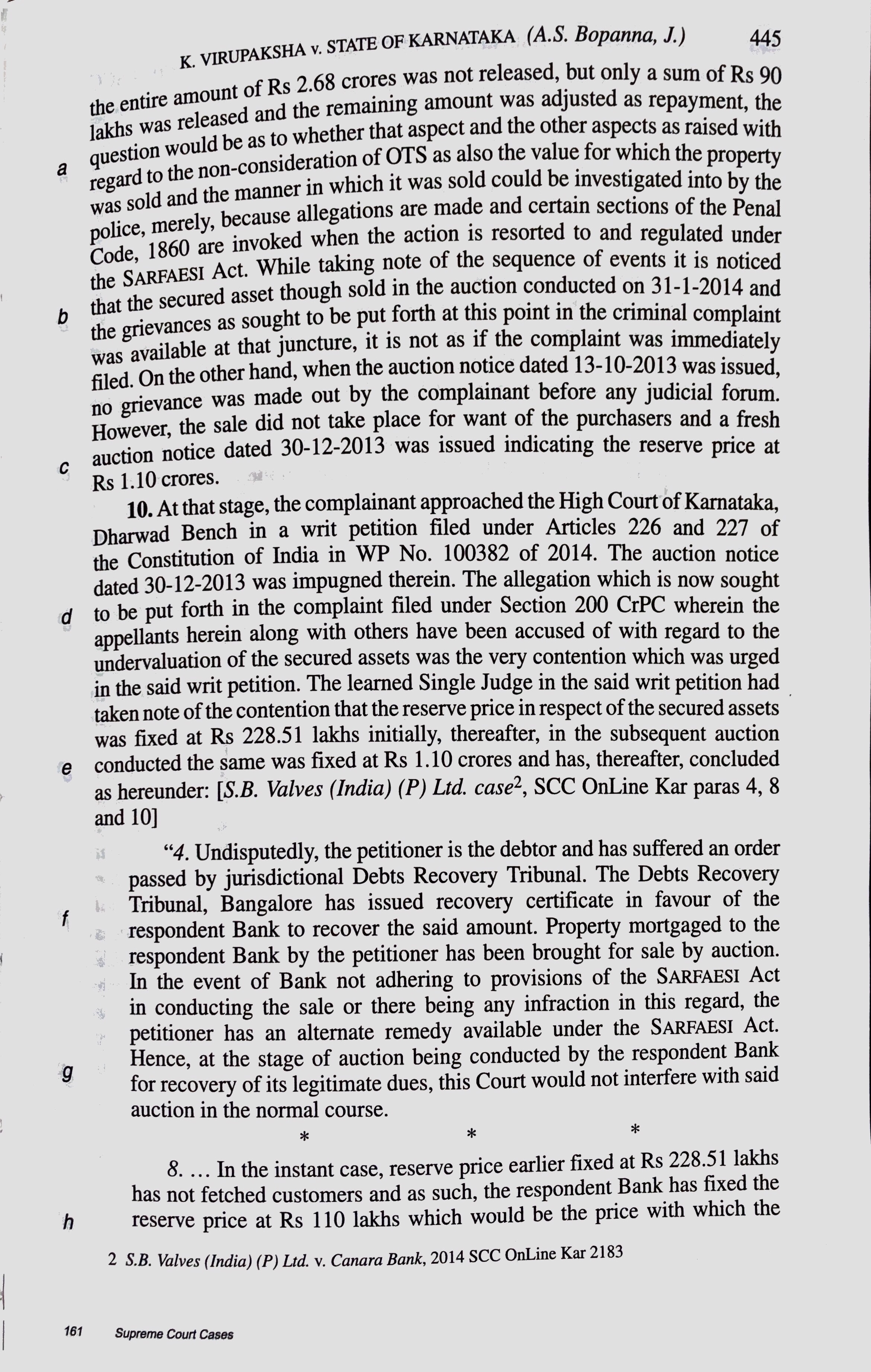
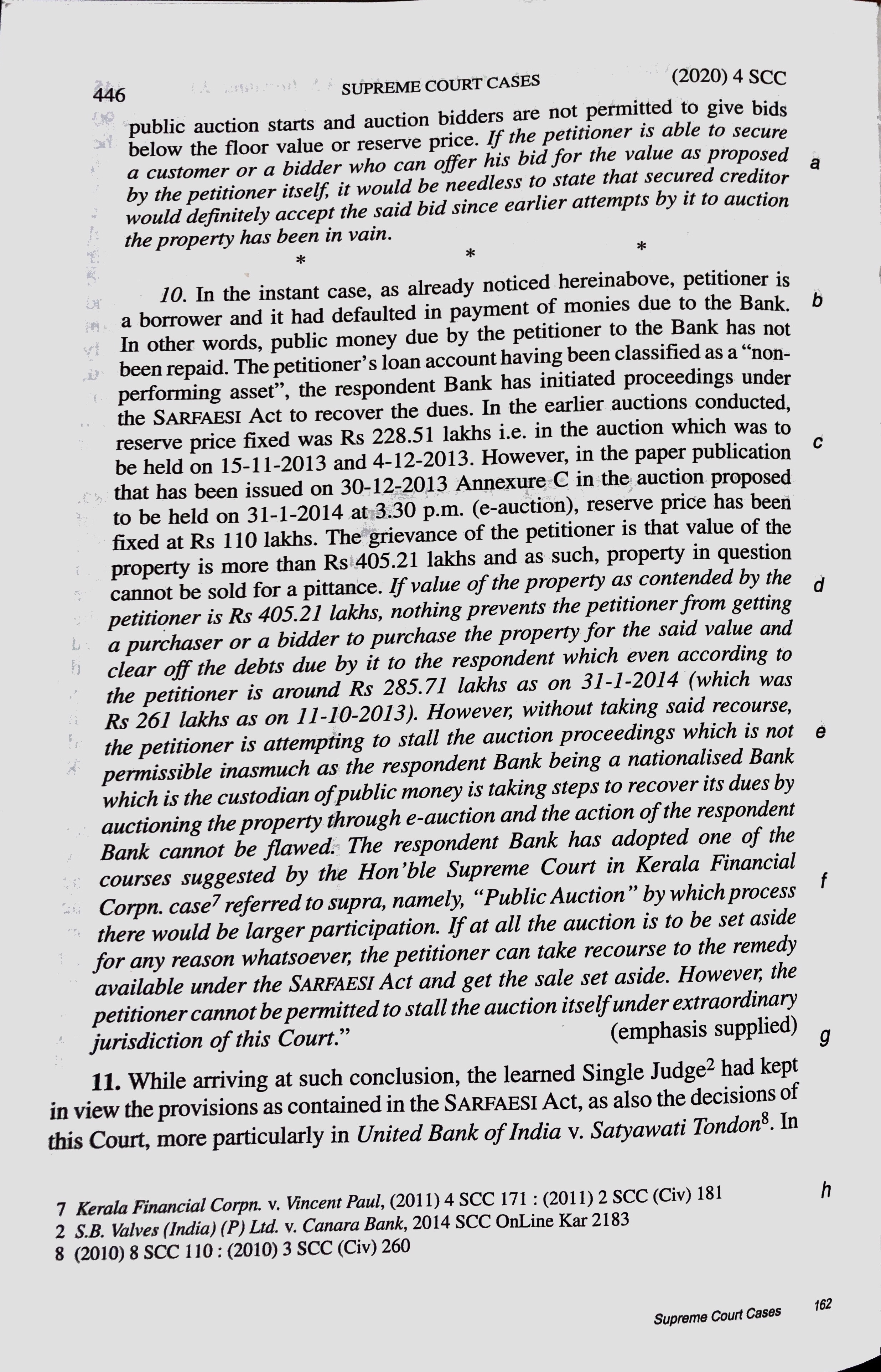
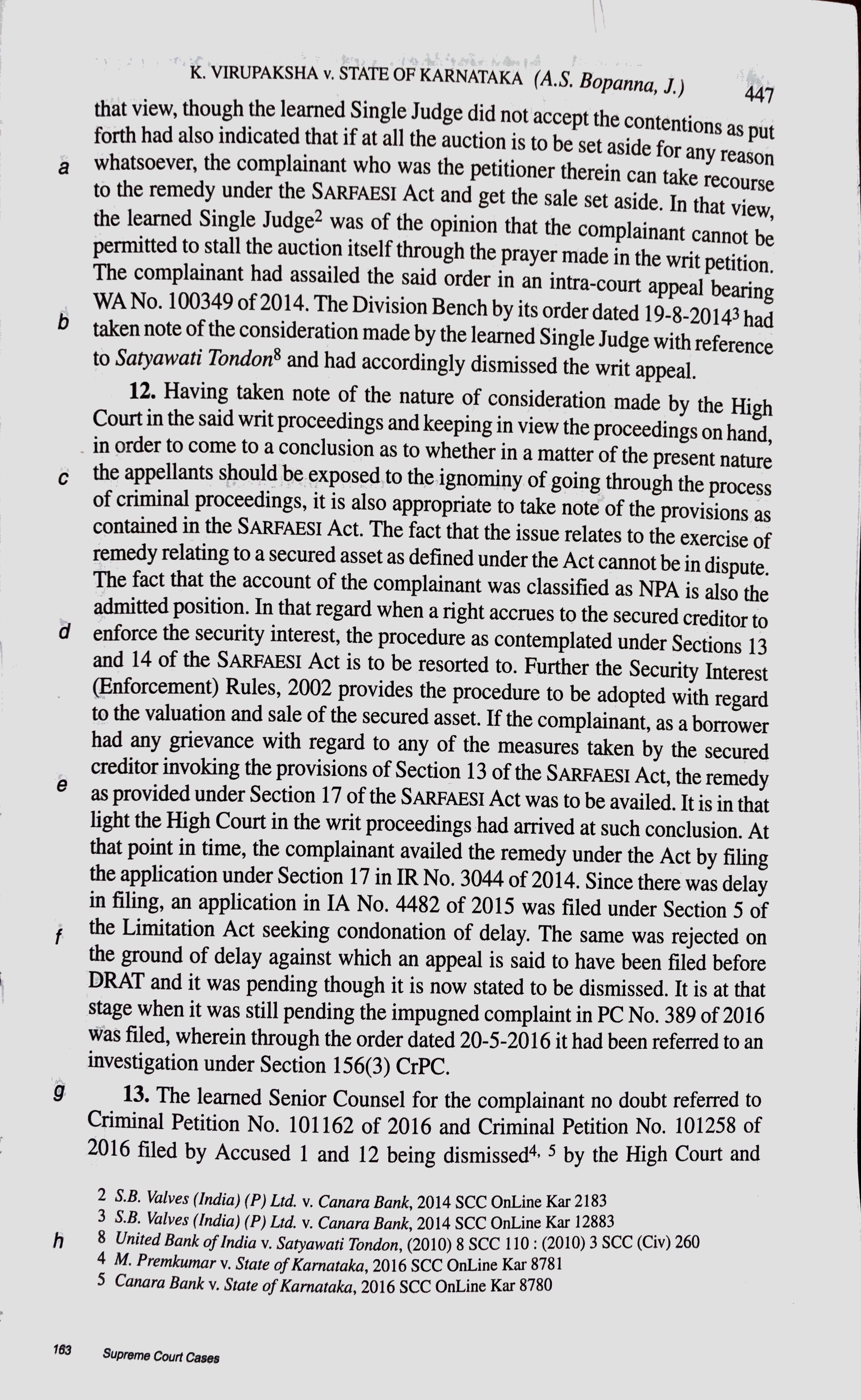
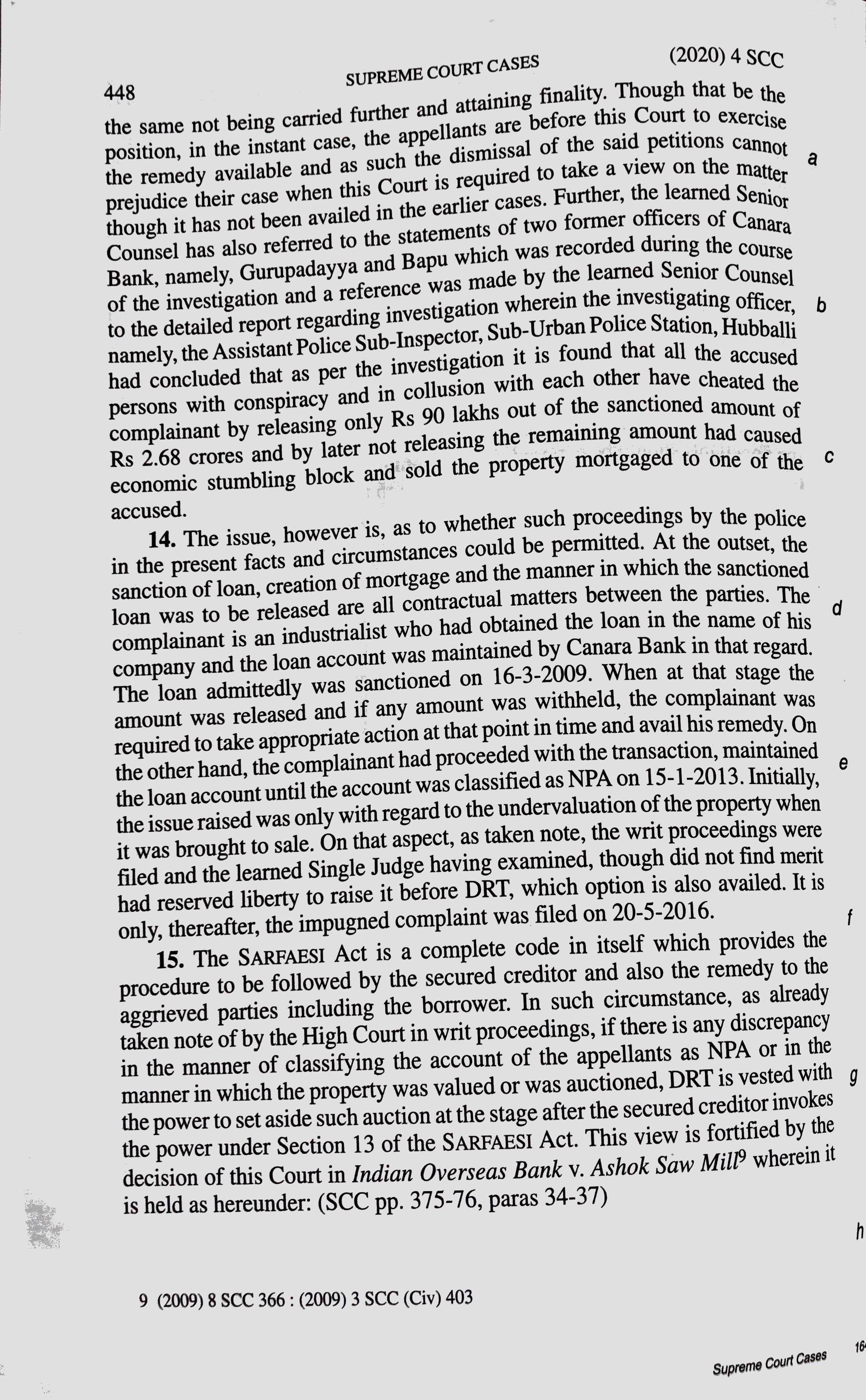
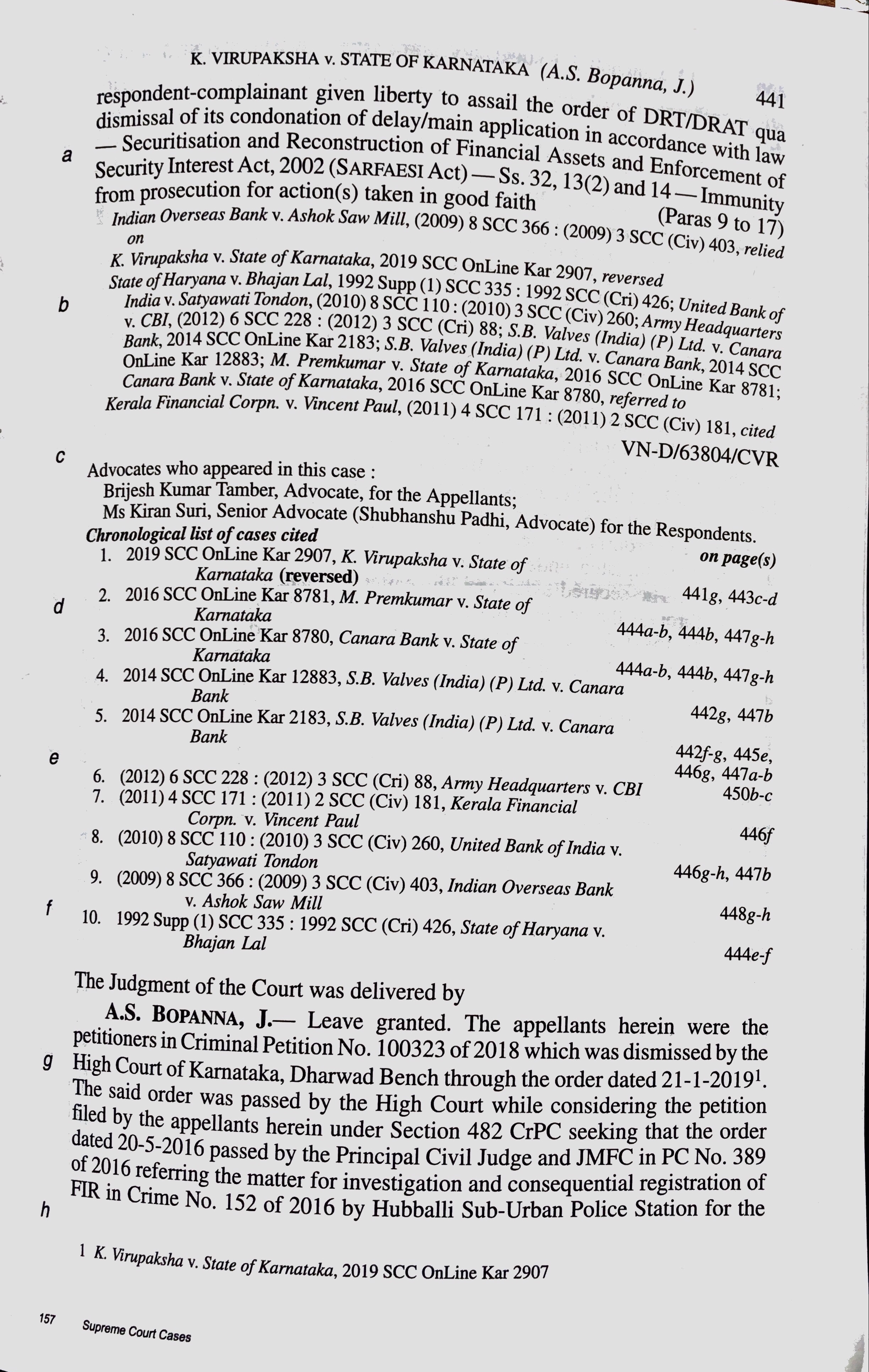
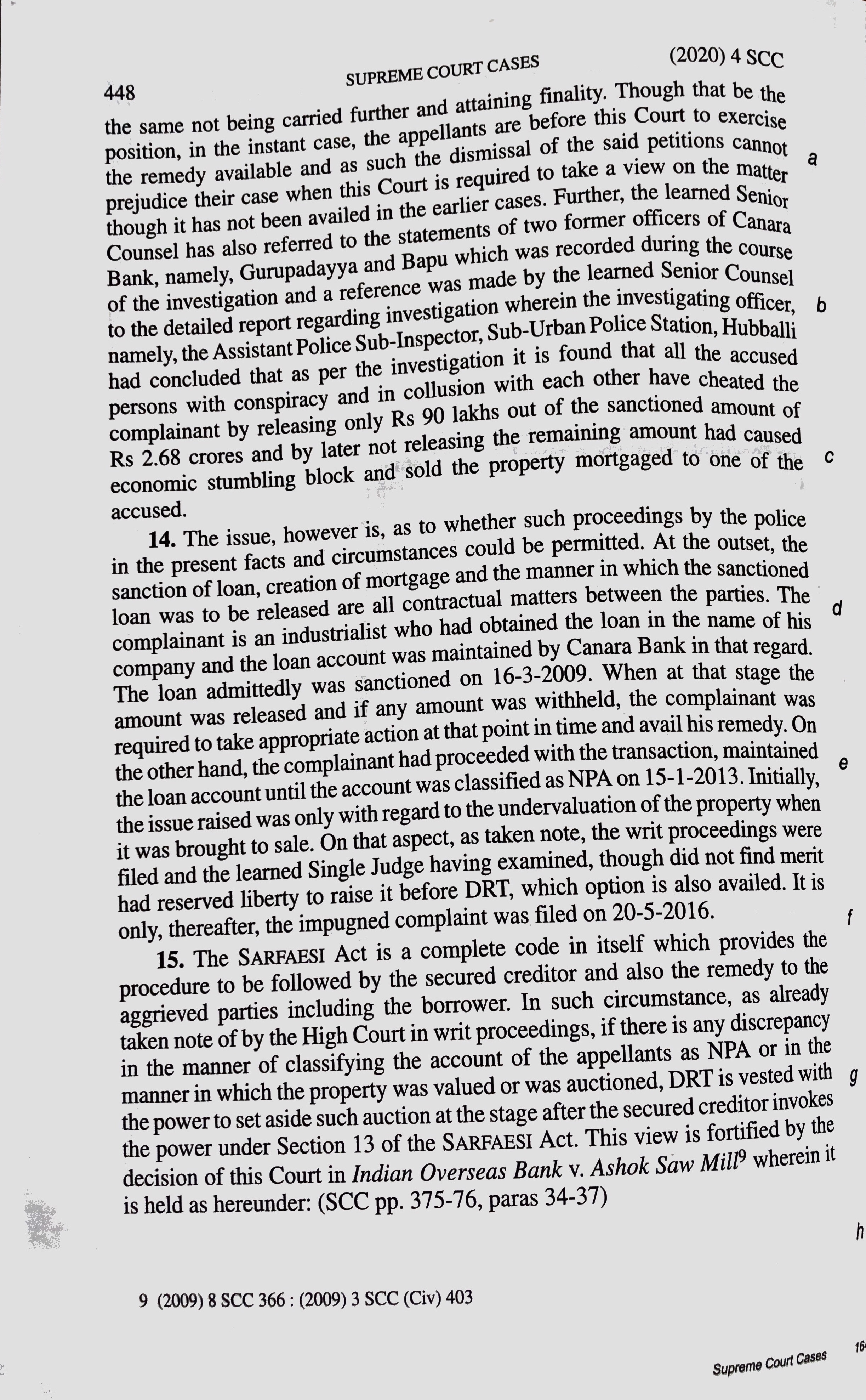
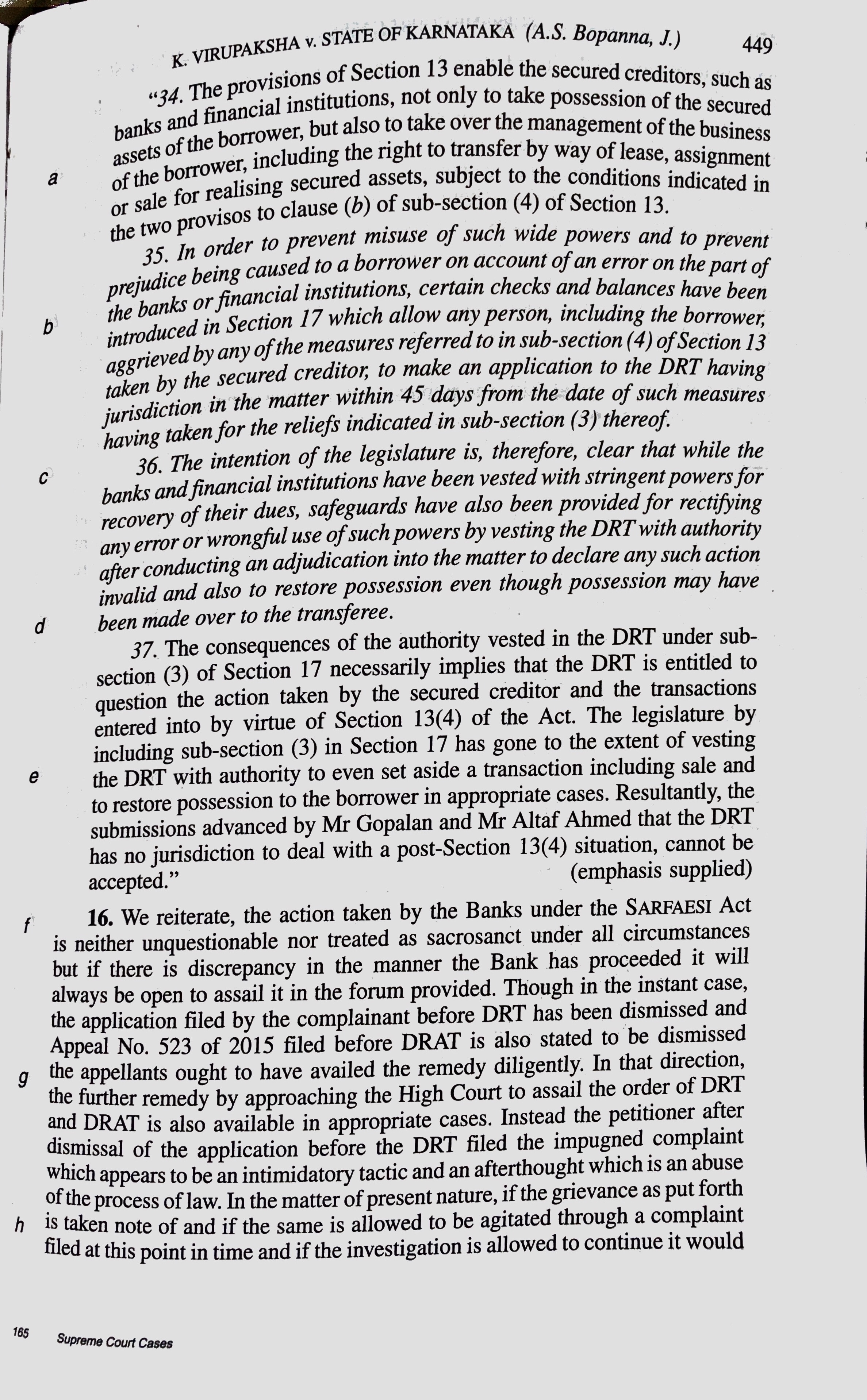
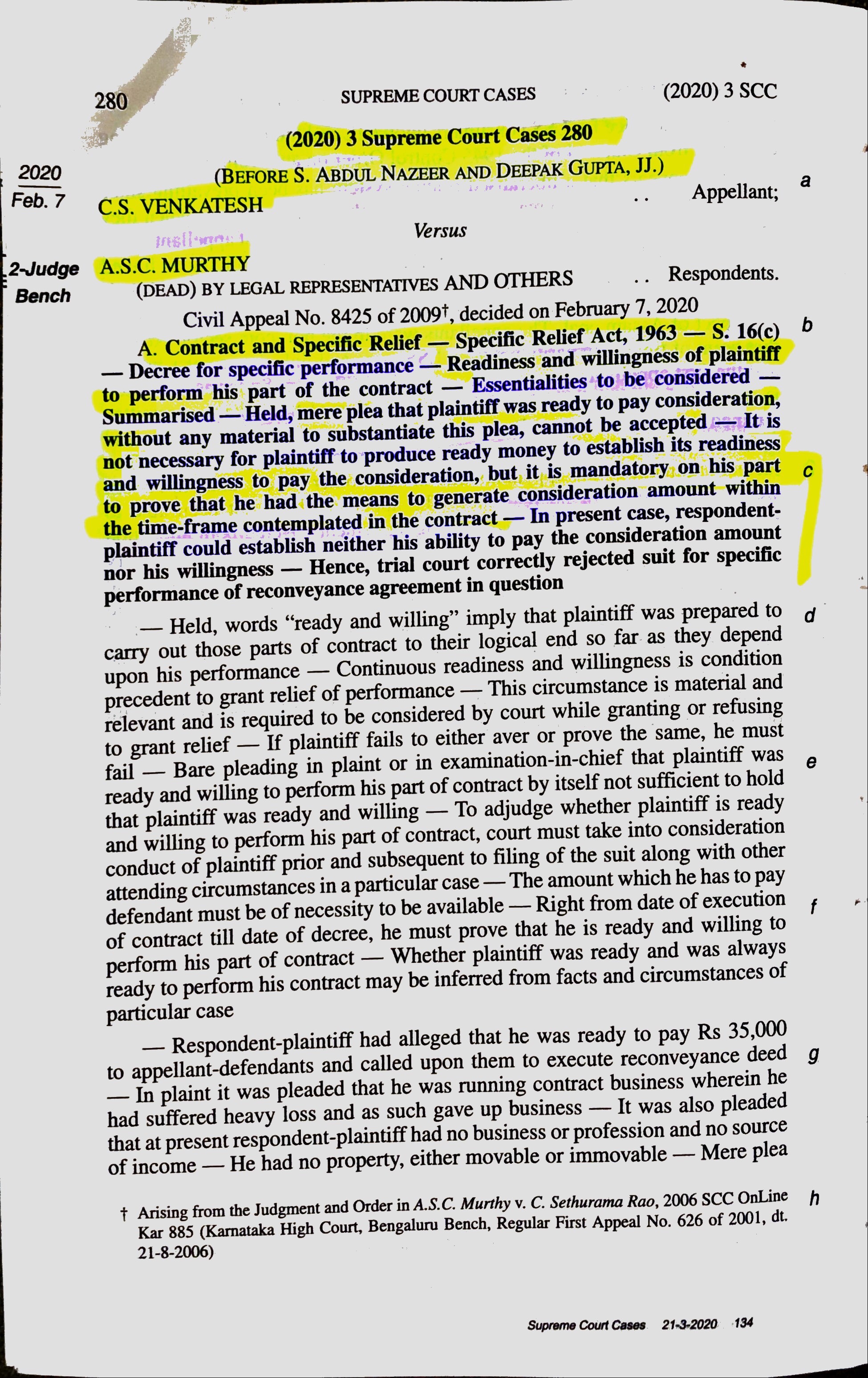
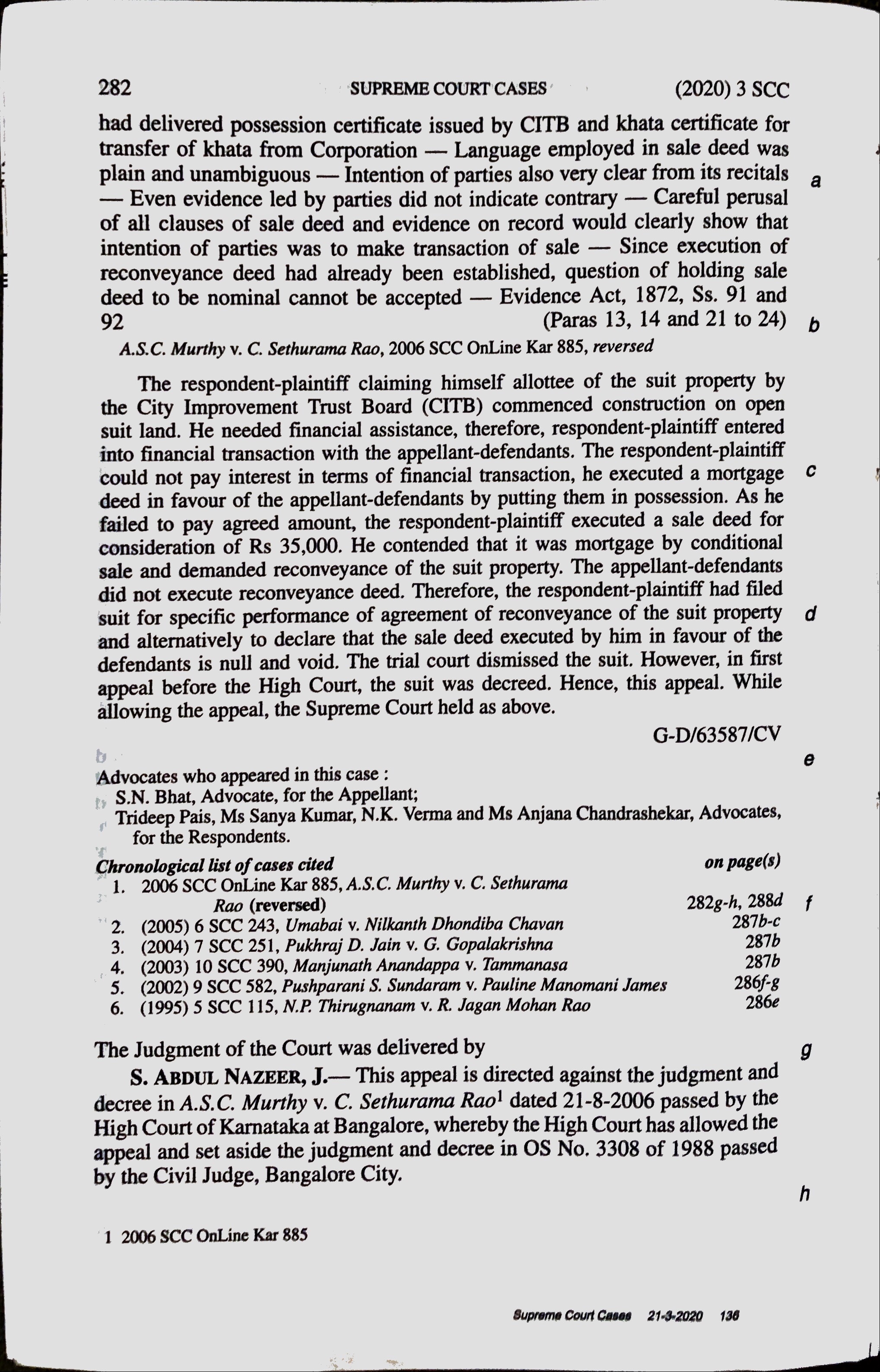
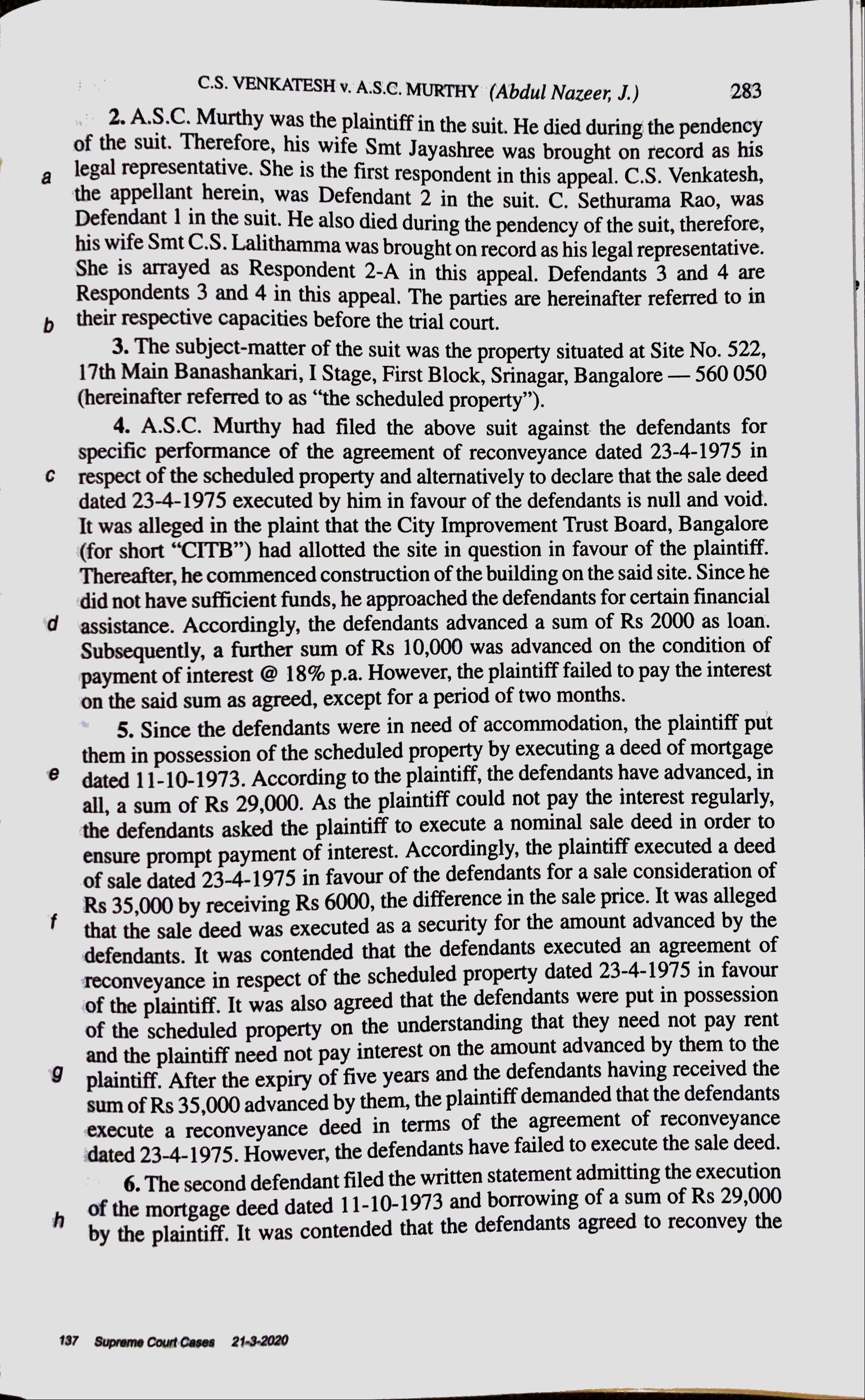
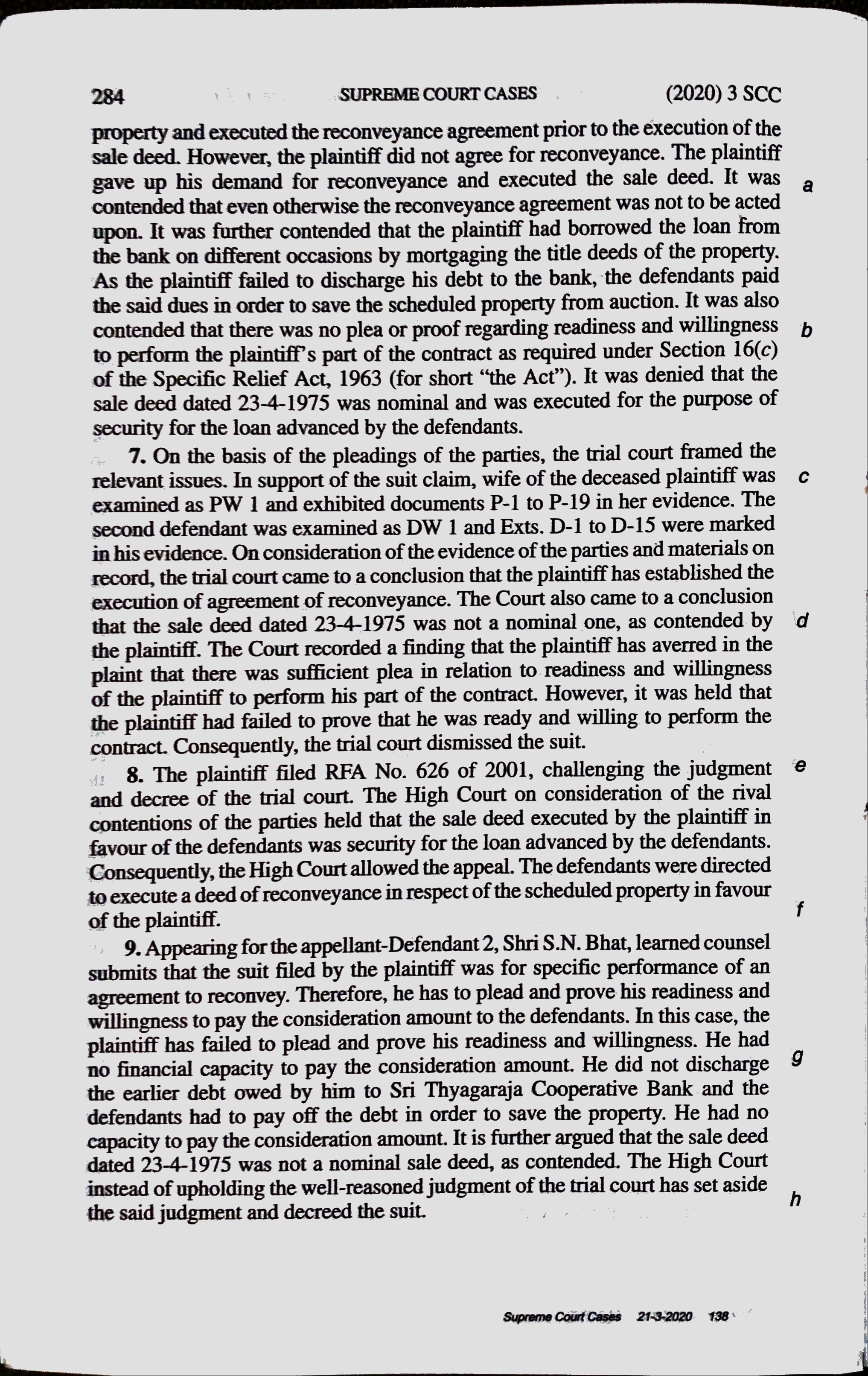
“Temporary Injunction”. Few judgments of Supreme Court of India

-S.Basavaraj, Advocate, Daksha Legal.

“Temporary Injunction” – Few important judgments of the Supreme Court of India.

  1. Rathnavathi v. Kavita Ganashamdas, (2015) 5 SCC 223
  2. Ram Prakash Agarwal v. Gopi Krishan, (2013) 11 SCC 296
  3. Lakshmi v. E. Jayaram, (2013) 9 SCC 311
  4. Best Sellers Retail (India) (P) Ltd. v. Aditya Birla Nuvo Ltd., (2012) 6 SCC 792
  5. Esha Ekta Appartments CHS Ltd. v. Municipal Corpn. of Mumbai, (2012) 4 SCC 689
  6. Ranjit Kaur v. Major Harmohinder Singh, (2011) 15 SCC 95 : (2014) 2 SCC
  7. Supreme Court Bar Assn. v. B.D. Kaushik, (2011) 13 SCC 774
  8. Skyline Education Institute (India) (P) Ltd. v. S.L. Vaswani, (2010) 2 SCC 142
  9. Home Care Retail Marts (P) Ltd. v. New Era Fabrics Ltd., (2009) 17 SCC 429
  10. Zenit Mataplast (P) Ltd. v. State of Maharashtra, (2009) 10 SCC 388
  11. Mandali Ranganna v. T. Ramachandra, (2008) 11 SCC 1
  12. D. Dwarakanath Reddy v. Chaitanya Bharathi Educational Society, (2007) 6 SCC 130
  13. M. Gurudas v. Rasaranjan, (2006) 8 SCC 367
  14. Seema Arshad Zaheer v. Municipal Corpn. of Greater Mumbai, (2006) 5 SCC 282
  15. Rajasthan Housing Board v. Krishna Kumari, (2005) 13 SCC 151
  16. Fargo Freight Ltd. v. Commodities Exchange Corpn., (2004) 7 SCC 203
  17. State of Haryana v. State of Punjab, (2004) 12 SCC 673
  18. Vareed Jacob v. Sosamma Geevarghese, (2004) 6 SCC 378,
  19. Hardesh Ores (P) Ltd. v. Timblo Minerals (P) Ltd., (2004) 4 SCC 64
  20. Haridas Exports v. All India Float Glass Manufacturers’ Assn., (2002) 6 SCC 600
  21. Mahendra & Mahendra Paper Mills Ltd. v. Mahindra & Mahindra Ltd., (2002) 2 SCC 147
  22. Anand Prasad Agarwalla v. Tarkeshwar Prasad, (2001) 5 SCC 568
  23. Uniply Industries Ltd. v. Unicorn Plywood (P) Ltd., (2001) 5 SCC 95
  24. A. Venkatasubbiah Naidu v. S. Chellappan, (2000) 7 SCC 695
  25. S.M. Dyechem Ltd. v. Cadbury (India) Ltd., (2000) 5 SCC 573
  26. Colgate Palmolive (India) Ltd. v. Hindustan Lever Ltd., (1999) 7 SCC 1
  27. Sree Jain Swetambar Terapanthi Vid (S) v. Phundan Singh, (1999) 2 SCC 377
  28. Whirlpool Corpn. v. Registrar of Trade Marks, (1998) 8 SCC 1
  29. N.R. Dongre v. Whirlpool Corpn., (1996) 5 SCC 714
  30. Gujarat Bottling Co. Ltd. v. Coca Cola Co., (1995) 5 SCC 545
  31. Mahadeo Savlaram Shelke v. Pune Municipal Corpn.(1995) 3 SCC 33
  32. Shiv Kumar Chadha v. Municipal Corpn. of Delhi, (1993) 3 SCC 161
  33. Dalpat Kumar v. Prahlad Singh, (1992) 1 SCC 719
  34. Cotton Corpn. of India Ltd. v. United Industrial Bank Ltd., (1983) 4 SCC 625

Commercial Surrogacy – Rise and fall of a venture triggering emotional chord”

S. Basavaraj, Advocate, Daksha Legal, Member, Karnataka State Bar Council, Bengaluru. ra@dakshalegal.com +919845065416

With the passage of Surrogacy (Regulation) Bill, 2019 (Bill No. 156-C of 2019) in Lok Sabha on August 5, 2019, commercial surrogacy in India will soon be prohibited, allowing only altruistic surrogacy. Once the Bill becomes enactment, only close relatives will be permitted to act as surrogates to infertile couples for “ethical altruistic” reasons. Unlike commercial surrogacy in altruistic surrogacy, the surrogate receives no financial reward for her pregnancy or the relinquishment of the child although usually all expenses related to the pregnancy and birth are paid by the intended parents such as medical expenses, maternity clothing, and other related expenses.

The word “surrogate”, originates from Latin word “subrogare”, which means “appointed to act in the place of”. The intended parent(s) is the individual or couple who intends to rear the child after its birth.

India has emerged as a surrogacy hub for couples from other countries and there have been reports concerning unethical practices, exploitation of surrogate mothers, abandonment of children born out of surrogacy, and rackets involving intermediaries importing human embryos and gametes. The 228th report of the Law Commission of India recommended prohibiting commercial surrogacy and allowing altruistic surrogacy by enacting suitable legislation.

India is also a major provider of surrogacy for both domestic and international ‘intended parents’. The factors that fuel commercial surrogacy are the availability of medical infrastructure and potential surrogates, combined with international demand. Surrogate mothers received medical, nutritional and overall health care through surrogacy agreements.

The economic scale of surrogacy in India is unknown, but study backed by the United Nations in July 2012 estimated the business at more than Rs. 2800 crores a year, with over 3,000 fertility clinics across India so far.

Perhaps the only decision from the Supreme Court of India on commercial surrogacy is Baby Manji Yamada v. Union of India, (2008) 13 SCC 518. Even at this point of time, there was no legislation governing surrogacy in India and neither any treaty nor convention at the international level in this regard had been signed.

Baby Manji Yamada was given birth to by a surrogate mother. The biological parents Dr. Yuki Yamada and Dr. Ikufumi Yamada came to India in 2007 and had chosen a surrogate mother in Anand, Gujarat and a surrogacy agreement was entered into between the biological father and biological mother on one side and the surrogate mother on the other side. Later, matrimonial discords arose between the biological parents. The child was moved to a Hospital. The genetic father Dr. Ikufumi Yamada had to return to Japan due to expiration of his visa. Municipality at Anand had issued a birth certificate indicating the name of the genetic father.

At this juncture, a writ petition was filed by an NGO M/s SATYA before the Rajasthan High Court seeking a writ of habeas corpus. The division bench of Rajasthan High Court issued certain directions relating to production and custody of the child and these directions were challenged by the grandmother of the child before the Supreme Court.

The Supreme Court almost recognised commercial surrogacy in the following words

“8. Surrogacy is a well-known method of reproduction whereby a woman agrees to become pregnant for the purpose of gestating and giving birth to a child she will not raise but hand over to a contracted party. She may be the child’s genetic mother (the more traditional form for surrogacy) or she may be, as a gestational carrier, carry the pregnancy to delivery after having been implanted with an embryo. In some cases surrogacy is the only available option for parents who wish to have a child that is biologically related to them.

16. Surrogates may be relatives, friends, or previous strangers. Many surrogate arrangements are made through agencies that help match up intended parents with women who want to be surrogates for a fee. The agencies often help manage the complex medical and legal aspects involved. Surrogacy arrangements can also be made independently. In compensated surrogacies the amount a surrogate receives varies widely from almost nothing above expenses to over $30,000. Careful screening is needed to assure their health as the gestational carrier incurs potential obstetrical risks.”

However, the Supreme Court did not go into the controversy except saying that if any person had any grievance, the same could be ventilated before the Commission constituted under the Commissions for Protection of Child Rights Act, 2005.  It may be noted that the Commissions under the Act have powers to inquire into complaints and even to take suo motu notice of matters relating to: (i) deprivation and violation of child rights, (ii) non-implementation of laws providing for protection and development of children, and (iii) non-compliance with policy decisions, guidelines or instructions aimed at mitigating hardships to and ensuring welfare of the children and to provide relief to such children, or take up the issues arising out of such matters with the appropriate authorities.

However the problem did not end there. Baby Manji Yamada could not leave or stay in India since she held neither Indian nor Japanese nationality. The issue was resolved when the Indian government granted the baby a travel certificate. Later the Japanese government issued visa to her on humanitarian grounds.

The Gujarat High Court had an occasion to deal with the issue in K. Jan Balaz v. Anand Municipality Air 2010 Guj 21. Twins were born with the commercial surrogacy arrangements between a German married couple and an Indian surrogate. On the birth certificate, intended father name was shown as father and surrogate mother name was shown as mother. The Intended parents were unable to secure German passport or visa for the children, so they attempted for the Indian passport. Dealing with the conflict of nationality and parenthood of the children born through commercial surrogacy arrangements between the foreign couples and Indian surrogate, the Gujarat high Court rendered judgement, which has far reaching consequences, that since surrogate mother was an Indian citizen, the children could be considered as Indian citizens and would be entitled to Indian Passport. This decision of the High Court was challenged in Union of India v. Jan Balaz, Civil Appeal 8714/2010 and the appeal is still pending before the Supreme Court.

As I can see from the Supreme Court website, the Supreme Court stayed the judgment of the Gujarat High Court on 25 November 2009. However, on 25 October 2010 Union of India stated that procedure for temporary adoption is under process and Central Adoption Resource Authority which is an autonomous agency under the Ministry of Women and Child Development, Government of India is processing the adoption procedure. Though normally a surrogate child is not subjected to adoption but keeping in view the facts of the case, Supreme Court observed that CARA might consider the case of adoption in the instant case sympathetically. The order dated 4 September 2014 shows that the issue was resolved. However larger issues are pending adjudication.

In 2015 a Public Interest Litigation was filed in Supreme Court questioning India continuing to permit commercial surrogacy while many others have already banned it. The Supreme Court asked the government to clarify its stand on commercial surrogacy.

Surrogacy (Regulation) Bill, 2019. Salient features.

The Bill permits surrogacy when it is: (i) for intending couples who suffer from proven infertility; (ii) altruistic; (iii) not for commercial purposes; (iv) not for producing children for sale, prostitution or other forms of exploitation; and (v) for any condition or disease specified through regulations.

The Bill prescribes the eligibility criteria for intending couple which is a ‘certificate of essentiality’ and a ‘certificate of eligibility’ issued by the appropriate authority.

A certificate of essentiality will be issued upon fulfilment of the following conditions: (i) a certificate of proven infertility of one or both members of the intending couple from a District Medical Board; (ii) an order of parentage and custody of the surrogate child passed by a Magistrate’s court; and (iii) insurance coverage for a period of 16 months covering postpartum delivery complications for the surrogate.

The certificate of eligibility to the intending couple is issued upon fulfilment of the following conditions: (i) the couple being Indian citizens and married for at least five years; (ii) between 23 to 50 years old (wife) and 26 to 55 years old (husband); (iii) they do not have any surviving child (biological, adopted or surrogate); this would not include a child who is mentally or physically challenged or suffers from life threatening disorder or fatal illness; and (iv) other conditions that may be specified by regulations.

Eligibility criteria for surrogate mother: To obtain a certificate of eligibility from the appropriate authority, the surrogate mother has to be: (i) a close relative of the intending couple; (ii) a married woman having a child of her own; (iii) 25 to 35 years old; (iv) a surrogate only once in her lifetime; and (v) possess a certificate of medical and psychological fitness for surrogacy.  Further, the surrogate mother cannot provide her own gametes for surrogacy.

The Bill provides for appointment of appropriate authority whose functions include; (i) granting, suspending or cancelling registration of surrogacy clinics; (ii) enforcing standards for surrogacy clinics; (iii) investigating and taking action against breach of the provisions of the Bill; (iv) recommending modifications to the rules and regulations.

The Bill prohibits surrogacy clinics from undertaking surrogacy related procedures unless they are registered by the appropriate authority.  Clinics must apply for registration within a period of 60 days from the date of appointment of the appropriate authority.

The Bill also creates National and State Surrogacy Boards whose functions include, (i) advising the central government on policy matters relating to surrogacy; (ii) laying down the code of conduct of surrogacy clinics; and (iii) supervising the functioning of SSBs.

A child born out of a surrogacy procedure will be deemed to be the biological child of the intending couple.  An abortion of the surrogate child requires the written consent of the surrogate mother and the authorisation of the appropriate authority.  This authorisation must be compliant with the Medical Termination of Pregnancy Act, 1971.  Further, the surrogate mother will have an option to withdraw from surrogacy before the embryo is implanted in her womb.

The Bill makes the following as offences (i) undertaking or advertising commercial surrogacy; (ii) exploiting the surrogate mother; (iii) abandoning, exploiting or disowning a surrogate child; and (iv) selling or importing human embryo or gametes for surrogacy.  The penalty for such offences is imprisonment up to 10 years and a fine up to 10 lakh rupees.  The Bill specifies a range of offences and penalties for other contraventions of the provisions of the Bill.

The enactment on coming into force bans ‘baby for sale’ business. However, Ms. Alice George and Ms. Aviral Chauhan,  Advocates from  Cyril  Amarchand Mangaldas in their Article published on April 1, 2019 titled “Surrogacy Bill and ART Bill: Boon or Bane?” argues that  “…while no one advocates forced pregnancy, in the case of women who make an informed choice and consent to be surrogates in lieu of monetary compensation, would not a complete ban on commercial surrogacy deprive a person of a form of livelihood?”. The authors rely on the judgment of the Supreme Court in Devika Biswas v. Union of India (2016) 10 SCC 726 where the Supreme Court recognised the right to reproduction as an important component of the ‘right to life’ under Article 21. Thus, argue the authors, restricting Assisted Reproductive Technique and surrogacy only to heterosexual relationships within a certain age group and denying reproductive choices to LGBT, single persons and older couples, would be a violation of Article 21. These restrictions also agitate against the concept of right to equality under Article 14, the authors argue. The authors also rely on the observations in B.K. Parthasarthi v. Government of A.P. 2000 (1) ALD 199  that  ‘the right to make a decision about reproduction is essentially a very personal decision and the intrusion of the State into such a decision-making process has to be scrutinised. The authors argue that requiring couples or persons to procure such certificates is a gross violation of their right to privacy.’

The scenario worldwide appears to be one against commercial surrogacy. The following charts from Wikipedia show the picture as of now.

Conclusion: Studies have shown several surrogate mothers suffering from emotional distress over the relinquishment and a strong instinctual urge to bond with the child. On the other hand, there is a concern that lack of maternal attachment to the baby during the surrogacy process may be challenging for the health of both the mother and the baby. Both the scenarios are frightening. In my view, every human activity which elicits or triggers a strong emotional response including surrogacy shall not be allowed to be commercialised.

S.Basavaraj

Advocate, Daksha Legal,

Member, Karnataka State Bar Council

Bengaluru.

raj@dakshalegal.com

+919845065416

Introduce Yourself (Example Post)

This is an example post, originally published as part of Blogging University. Enroll in one of our ten programs, and start your blog right.

You’re going to publish a post today. Don’t worry about how your blog looks. Don’t worry if you haven’t given it a name yet, or you’re feeling overwhelmed. Just click the “New Post” button, and tell us why you’re here.

Why do this?

  • Because it gives new readers context. What are you about? Why should they read your blog?
  • Because it will help you focus you own ideas about your blog and what you’d like to do with it.

The post can be short or long, a personal intro to your life or a bloggy mission statement, a manifesto for the future or a simple outline of your the types of things you hope to publish.

To help you get started, here are a few questions:

  • Why are you blogging publicly, rather than keeping a personal journal?
  • What topics do you think you’ll write about?
  • Who would you love to connect with via your blog?
  • If you blog successfully throughout the next year, what would you hope to have accomplished?

You’re not locked into any of this; one of the wonderful things about blogs is how they constantly evolve as we learn, grow, and interact with one another — but it’s good to know where and why you started, and articulating your goals may just give you a few other post ideas.

Can’t think how to get started? Just write the first thing that pops into your head. Anne Lamott, author of a book on writing we love, says that you need to give yourself permission to write a “crappy first draft”. Anne makes a great point — just start writing, and worry about editing it later.

When you’re ready to publish, give your post three to five tags that describe your blog’s focus — writing, photography, fiction, parenting, food, cars, movies, sports, whatever. These tags will help others who care about your topics find you in the Reader. Make sure one of the tags is “zerotohero,” so other new bloggers can find you, too.