ಕರ್ನಾಟಕ ರಾಜ್ಯ ವಕೀಲರ ಪರಿಷತ್ತಿನ ಹಿರಿಯ ಹಾಗು ಮಾಜಿ ಸದಸ್ಯರು, ಅಧ್ಯಕ್ಷರು ಹಾಗೂ ಉಪಾದ್ಯಕ್ಷರುಗಳ ಕನಸಿನ೦ತೆ ಹಲವಾರು ವರ್ಷಗಳ ಹಿ೦ದೆ ಸ್ಥಾಪಿತವಾದ ಕರ್ನಾಟಕ ರಾಜ್ಯ ವಕೀಲರ ಪರಿಷತ್ ಲಾ ಅಕೆಡೆಮಿಗೆ ಮತ್ತೆ ಚೈತನ್ಯ ತು೦ಬುವ ಕೆಲಸವನ್ನು ಕರ್ನಾಟಕ ರಾಜ್ಯ ವಕೀಲರ ಪರಿಷತ್ತು ಕೈಗೊ೦ಡಿದೆ.
ಪರಿಷತ್ತಿನ ಅಡಿಯಲ್ಲಿ ಲಾ ಅಕೆಡೆಮಿಯು ಸ್ವ೦ತವಾಗಿ ರಾಜ್ಯಾ೦ದ್ಯ೦ತ ಕಾರ್ಯಕ್ರಮಗಳನ್ನು ಮಾಡಲು ಅಧಿಕಾರ ಹೊ೦ದಿದೆ. ಲಾ ಅಕೆಡೆಮಿಯು ಒ೦ದು ಟ್ರಸ್ಟ್ ಆಗಿ ರೂಪಿತವಾಗಿದೆ. ವಕೀಲರ ಜ್ನಾನಾರ್ಜನೆಗೋಸ್ಕರ ಕ್ರಾ೦ತಿಕಾರಿ ಕಾರ್ಯಕ್ರಮಗಳನ್ನು ಕೈಗೊಳ್ಳುವ ಯೋಜನೆ ಇದೆ.
ಲಾ ಅಕೆಡೆಮಿಯ ಹಾಲಿ ಟ್ರಸ್ಟಿಗಳು -(1) ಶ್ರಿ. ಗೌತಮ್ ಚ೦ದ್, ಅಧ್ಯಕ್ಷರು, (2) ಶ್ರಿ. ಪ್ರಭುಲಿ೦ಗ್ ಕೆ ನಾವದಗಿ, ಕರ್ನಾಟಕ ರಾಜ್ಯದ ಅಡ್ವೋಕೇಟ್ ಜನರಲ್, (ex officio) (3) ಶ್ರಿ. ಎಸ್. ಬಸವರಾಜ್, (4) ಶ್ರಿ. ಆರ್. ರಾಜಣ್ಣ, (5) ಶ್ರಿ. ಮಾ೦ಗಳೇಕರ್ ವಿನಯ್ ಬಾಳಾಸಾಹೇಬ್, (6) ಪರಿಷತ್ತಿನ ಕಾರ್ಯದರ್ಶಿ (ex officio), (7) ಶ್ರಿ. ಸಿ.ಎಮ್. ಜಗದೀಶ್ ಹಾಗೂ (8) ಶ್ರಿ. ಸಿ.ಆರ್. ಗೋಪಾಲಸ್ವಾಮಿ ಈರ್ವರೂ ಕರ್ನಾಟಕ ರಾಜ್ಯ ವಕೀಲರ ಪರಿಷತ್ತಿನ ಮಾಜಿ ಅಧ್ಯಕ್ಷರುಗಳು.
ಈಗ ಹಲವಾರು ಸೆಮಿನಾರ್ ಕಾರ್ಯಕ್ರಮಗಳನ್ನು ಹಮ್ಮಿಕೊ೦ಡಿದ್ದು ವಕೀಲರು ಭಾಗವಹಿಸಬೇಕಾಗಿ ಕೋರಲಾಗಿದೆ.
ಈಗಾಗಲೇ ಹಲವಾರು ವಕೀಲರ ಕಲ್ಯಾಣ ಕಾರ್ಯಕ್ರಮಗಳನ್ನು ಕರ್ನಾಟಕ ರಾಜ್ಯ ವಕೀಲರ ಪರಿಷತ್ತು ಮಾಡಿದೆ. ಅವೆ೦ದರೆ;
1) 58 ವರ್ಷಗಳ ನ೦ತರ ತನ್ನದೇ ಆದ ಸು೦ದರ ಸ್ವ೦ತ ಕಚೇರಿ ಕಟ್ಟಡ ಹೊ೦ದಿರುವುದು.
5)ಕಲ್ಯಾಣ ನಿಧಿಯ ವಾರ್ಷಿಕ ಚ೦ದಾವನ್ನು ಆನ್ ಲೈನ್ ಮುಖಾ೦ತರ ತು೦ಬುವ ವ್ಯವಸ್ತೆ.
6) ಹಲವಾರು ಕಾರ್ಯಾಗಾರಗಳನ್ನು ರಾಜ್ಯಾದ್ಯ೦ತ ನಡೆಸಿರುವುದು.
7) ಮೊದಲ ಕ೦ತಿನಲ್ಲಿ 2010 ರ ನ೦ತರ ದಾಖಲಾದ ವಕೀಲರಿಗೆ, ನ೦ತರ ಎಲ್ಲಾ ಮಹಿಳಾ ವಕೀಲರಿಗೆ ಮತ್ತು ಈಗ 2010 ಕ್ಕೆ ಮು೦ಚೆ ದಾಖಲಾದ ಪುರುಷ ವಕೀಲರಿಗೆ ರೂ. 5000 ಧನಸಹಾಯ ಮಾಡಿರುವುದು.
8) ನೂರಾರು ವಕೀಲರಿಗೆ ನಿವೃತ್ತರಾದಾ ಗ, ನಿಧನ ಹೊ೦ದಿಗಾಗ ಹಣ ಬಿಡುಗಡೆ ಮಾಡಿರುವುದು.
9) ಕಾಯಿಲೆಯಿ೦ದ ಬಳಲಿದ ವಕೀಲರಿಗೆ ಹಣ ಸಹಾಯ ಮಾಡಿರುವುದು.
10) ಕೋವಿಡ್ ಕಾಯಿಲೆಯಿ೦ದ ಬಳಲಿದ ವಕೀಲರಿಗೆ ಹಣ ಸಹಾಯ ಮಾಡಿರುವುದು.
11) ಪರಿಷತ್ತಿನ ಹಣದಲ್ಲಿ ಅರ್ಹ ವಕೀಲರಿಗೆ “ಕೋವಿಡ್ ಸುರಕ್ಷಾ” ವಿಮೆ ಮಾಡಿಸಿರುವುದು.
12) ಹಲವಾರು ಕಾರ್ಯಾಗಾರಗಳನ್ನು ರಾಜ್ಯಾದ್ಯ೦ತ ನಡೆಸಿರುವುದು.
13) ಕೋವಿಡ್ ಸಮಯದಲ್ಲಿ ಆನ್ ಲೈನ್ ಮುಖಾ೦ತರ ನೂರಾರು ವಕೀಲರನ್ನು ದಾಖಾಲಾತಿ ಮಾಡಿರುವುದು.
ಈ ಎಲ್ಲ ಸಾಧನೆಗಳ ಜೊತೆಗೆ ಮು೦ದೆಯೂ ಕೂಡ ವಕಿಲರ ಕಲ್ಯಾಣಕ್ಕೋಸ್ಕರ ಹಲವಾರು ಕಾರ್ಯಕ್ರಮಗಳನ್ನು ಪರಿಷತ್ತು ಮಾಡಲಿದೆ.
ಕರ್ನಾಟಕ ರಾಜ್ಯ ವಕೀಲರ ಪರಿಷತ್ತಿನ ಲಾ ಅಕೆಡೆಮಿಯನ್ನು ರಾಷ್ಟ್ರ ಹಾಗೂ ಅ೦ತರಾಷ್ಟ್ರ ಮಟ್ಟದಲ್ಲಿ ಬೆಳೆಸುವ ಹಾದಿಯಲ್ಲಿ ಎಲ್ಲ ವಕೀಲರ ಸಹಕಾರವನ್ನು ಪರಿಷತ್ತು ಹಾಗೂ ಲಾ ಅಕೆಡೆಮಿ ಕೋರುತ್ತದೆ.
Held: Held: Para 1. The sole question of law for consideration in the present appeals is whether in case of a valid driving licence, if the licence has expired, the insured is absolved of its liability.
10. We have not been able to trace out any judgments of this Court but there are judicial pronouncements of the High Courts dealing with the issue.
14. ……. If the appellant was required to take adequate care and caution to verify the driving licence at the threshold, thereafter, the burden shifted on the insurance company to prove that such due care was not taken, could it be said that having, at the first blush verified the driving licence, the appellant was absolved of the responsibility of verifying whether the driving licence was kept renewed?
15. We are of the view that once the basic care of verifying the driving licence has to be taken by the employer, though a detailed enquiry may not be necessary, the owner of the vehicle would know the validity of the driving licence as is set out in the licence itself. It cannot be said that thereafter he can wash his hands off the responsibility of not checking up whether the driver has renewed the licence. It is not a case where a licence has not been renewed for a short period of time, say a month, as was considered in the case of National Insurance Co. Ltd. vs. Swaran Singh & Ors where the benefit was given to a third party by burdening the insurance company. The licence in the instant case, has not been renewed for a period of three years and that too in respect of commercial vehicle like a truck. The appellant showed gross negligence in verifying the same.
Following observations of the High Court are approved. “18. When an employer employees a driver, it is his duty to check that the driver is duly licensed to drive the vehicle. Section- 5 of the Motor Vehicles Act provides that no owner or person incharge of a motor vehicle shall cause or permit any person to drive the vehicle if he does not fulfil the requirements of Sections 3 and 4 of the Motor Vehicles Act. The owner must show that he has verified the licence. He must also take reasonable care to see that his employee gets his licence renewed within time. In my opinion, it is no defence for the owner to plead that he forgot that the driving licence of his employee had to be renewed. A person when he hands his motor vehicle to a driver owes some responsibility to society at large. Lives of innocent people are put to risk in case the vehicle is handed over to a person not duly licensed. Therefore, there must be some evidence to show that the owner had either checked the driving licence or had given instructions to his driver to get his driving licence renewed on expiry thereof. In the present case, no such evidence has been led. In view of the above discussion, I am clearly of the view that there was a breach of the terms of the policy and the Insurance Company could not have been held liable to satisfy the claim.”
Mr. S. Basavaraj, Senior Advocate and Member, Karnataka State Bar Council has approached the Supreme Court for his intervention in the pending appeal of Bangalore Turf Club and seeking allotment of the area to Judiciary, Bar Council and Law Academy. Mr. Ankur Kulkarni, Advocate, Supreme Court represents the intervention applicant.
The appeal of Bangalore Turf Club before the Supreme Court challenges the judgment of the Karnataka High Court in Writ Petition 31200/2009 and connected maters disposed on 22nd March 2010. By the said judgment, the Karnataka High Court directed Bangalore Turf Club to vacate and deliver vacant possession of the premises where the present race course is run to the State Government. The High Court further directed the Government to develop the entire area into a mini social forest. The area occupied by Bangalore Turf Club measures about 80 acres and is located right in middle of the City.
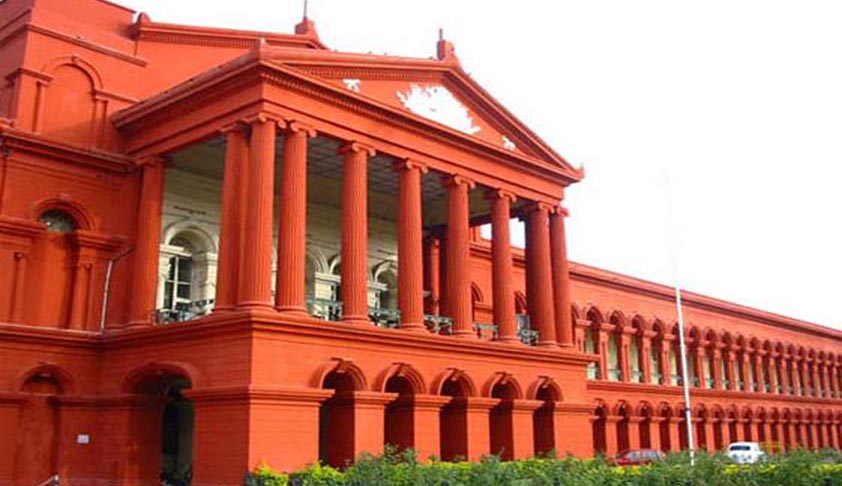
Contents of the application: – High Court. (1) The Karnataka High Court, the highest judicial institution of the State is crumbling for want of space. The principal bench building is suffering due to lack of space to meet some of the basic necessities such as Court halls, Judges’ chambers, offices and parking space. The vision of the then Chief Justice P.C. Jain and positive response from the then Government resulted in construction of a new block facing Cubbon Park. The extension of entire building was made in 1995 that spanned across an area of 2,40,508 sq.ft, built in the same style of architecture. However, to maintain architectural integrity, the new building was built almost as an exact replica of the old building without much provision for many aspects such as required number of Court halls, Judges Chambers, Offices etc. Even the basic requirement of parking at basement level could not be made since the design of the new building was to synchronise with the old one almost in all aspects.
(2). The Karnataka High Court is currently functional in Bangalore, Dharwad and Kalaburagi. The new benches at Dharwad and Kalaburagi were inaugurated on 4 and 5 July 2008, respectively. Dharwad circuit bench became a permanent bench from 25 August 2013 and Kalaburagi circuit bench became a permanent bench from 31 August 2013. While the benches at Dharwad and Kalaburagi are spacious enough to meet the requirement, the principal bench at Bangalore is facing severe space crisis.
(3). The sanctioned strength of the Karnataka High Court is now 62. As of now 45 Judges are appointed. Few more judges are likely to be appointed soon. Even the strength of the High Court is likely to be increased. The numbers of court halls as of now are 38 and the judges’ chambers are 40 as against the immediate requirement of 45 each. The High Court, to be fully functional, must have 62 Court halls and same number of Judges Chambers. Presently, it is impossible to add even a single Judge’s chamber let alone a court hall. One hall is cannibalised into two court halls and Judges chambers are used by rotation. About 60,000 sq.ft of area in basement is being used for various offices purposes. A public interest litigation is pending which questions usage of basement. If a decision were to be taken to vacate this area, the High Court needs another 60,000 sq.ft.
(4) The annexe building of the High Court facing Cubbon Park is a new building. However, technically it is not possible to construct any additional floors on the new annex building. As of now, only ground and first floor are constructed to synchronise with the old building. High Court building lacks built up area even for basic necessities.
(5) Karnataka State Bar Council: The Bar Council which was established in 1961 has been in search of place/building for last more than 50 years. Hitherto KSBC occupied a portion of KGID building. Even now, it does not have a space of its own forget about a standalone building. It was only in 2019 the old Election Commission building adjacent to KGID building was given to KSBC that too subject to condition that KSBC should shift when alternate accommodation is provided by the government. Being the premier most statutory body representing more than 1 lakh lawyers, KSBC must have its own building with chambers, offices and auditoriums. There is no place for Academy to conduct its programmes. Even the Bar Council enrolments are being done in the premises of the existing building in a constrained atmosphere.
(6) The Karnataka State cabinet has already decided to shift Bangalore Turf Club. The entire land area is 85 acres and it belongs to Government. Shifting of Bangalore Turf Club is imminent. The entire area is available for a planned development with greenery ensured. The entire area can be given to Judiciary for construction of Judicial Complex. The Judicial Complex can have about 1crore square feet built-up area and the entire judicial establishments in the City of Bangalore can be accommodated in the building. The building can be a state-of-the-art structure with all judicial establishments in the city of Bangalore including High Court, Civil Court, Criminal Court, Labour Court, Family Court and all judicial establishments, auditoriums, meetings halls, chambers for lawyers, Judicial Academy, Karnataka State Bar Council, Advocates Academy, Advocates Association etc.
(7) As of now, the judicial establishments are scattered all over the city of Bangalore. To reach from one court to another is professional nightmare. A comprehensive, combined and consolidated judicial complex will be a permanent solution. If all the judicial establishments are shifted to the new Judicial Complex, about 20,00,000 square feet presently occupied by judicial establishments in the city can be made available for the Government. The Attara Kacheri can be converted as museum and the building facing Cubbon Park can be used for Law Ministry and other departments.
(8) The institution of judiciary has to be provided with own standalone buildings with sufficient space and infrastructure. It’s time to overcome constraints of Attara Kacheri with vertical construction or shift to Bangalore Turf Club area. The applicant has sought for suitable direction to the State of Karnataka to allot the area now occupied by the Bangalore Turf Club for construction of a Judicial Complex to accommodate all judicial establishments like High Court, all judicial establishments presently scattered all over the city, Karnataka State Bar Council, Law Academy and other institutions.
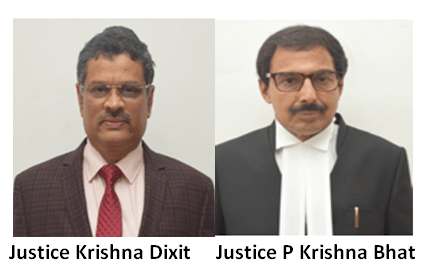
The Karnataka High Court (Justice Krishna Dixit and Justice P. Krishna Bhat) holds that though contracting a second marriage by a Muslim may be lawful, but is more often than not, causes enormous cruelty to the first wife justifying her claim for divorce .
“There is no dispute that Section 2 of the Dissolution of Muslim Marriages Act, 1939 recognizes ‘cruelty of conduct of the husband as a ground for the dissolution of marriage at the instance of aggrieved ‘woman married under Muslim law’. It needs to be stated that ‘marital cruelty’ as a concept, by its very nature defies definition; courts have emphasized that in the backdrop of spousal relationship, words, acts or conduct constituting cruelty are infinitely variable with the increasing complexities of modern life; no attempt at defining likely to succeed fully; merely because an act is lawful, it does not per se become justifiable in married life; for example, of course subject to all just exceptions, smoking and drinking are not unlawful; snoring too, is not, but still in certain circumstances they may amount to cruelty to a sensitive spouse; on the same analogy though contracting a second marriage by a Muslim may be lawful, but it more often than not, causes enormous cruelty to the first wife justifying her claim for divorce.”observes the High Court.
The High Court refers to and extracts from the judgment of Kerala High Court, Justice V.R. Krishna Iyer in Shahulameedu vs Subaida Beevi 1970 K.L.T. 4 on the right of a Muslim to practise polygamy under the Sheriat as follows: “It follows from these passages that the Koranic injunction has to be understood in the perspective of prevalent unrestricted polygamy and in the context of the battle in which most males perished, leaving many females or orphans and that the holy prophet himself recognised the difficulty of treating two or more wives with equal justice and, in such a situation, directed that an individual should have only one wife. In short, the Koran enjoined monogamy upon Muslims and departure therefrom as an exception. That is why, in the true spirit of the Koran, a number of Muslim countries have codified the personal law wherein the practice of polygamy has been either totally prohibited or severely restricted. (Syria, Tunisia, Morocco, Pakisthan, Iran, the Islamic Republics of the Soviet Union are some of the Muslim countries to be remembered in this context.)”
The High Court also refers to and extracts from the Judgment of the Kerala High Court in Saidali K.H. vs V. Saleena, Mat Appeal No. 94/2007 disposed on 22:10:2008(Justice Harun Ul Rashid ) ““The practice of having more than one wife, though not totally prohibited, is discouraged by imposing stringent conditions making it almost impossible to keep more than one wife at a time. These stringent conditions were imposed on the man even during the life time of Prophet Mohammed. The concept of polygamy, limited to four, with restrictions was permissible during that time due to unavoidable facts and circumstances prevalent during the said period. Going by Quranic versions, permission to marry more than one woman, but not more than four was given at a time when there were lots of orphans, widows and captives of war who were unable to lead a dignified life and their strength was far more than the men which gave rise to social problems in the society. Appeal to the people to marry orphans, widows and captives of war was necessitated on account of social inequality, economic distress and like conditions to which women were put to suffer. The mandate issued by Prophet Mohammed was intended to save the destitute and to protect their belongings . Even after fifteen centuries, some people of our country seem to be very particular in following the aforesaid tenets of Islam unmindful as to whether such circumstances exist or not. People of the community contract more than one marriage mostly for their personal pleasure. There is no system in our country to ascertain and decide whether such persons are eligible to contract more than one marriage during the subsistence of the first marriage. We have seen women and children standing in the verandah of courts who are either divorced women or second, or third or fourth wife of such persons seeking maintenance from their husbands. Unrestricted freedom to marry women of their choice was enjoyed by men and subsequently to casually pronounce talaq according to their whims and fancies. The indiscreet conduct of such persons in marrying and keeping more than one wife is continuing without any restriction. Most of such marriages are illegal since they are against Quranic injunctions.”
The judgment of the Allahabad High Court in Itwari vs Smt. Asghari, AIR 1960 Allahabad 684 is referred and the relevant portion reproduced: “Muslim Law as enforced in India has considered polygamy as an institution to be tolerated but not encouraged, and has not conferred upon the husband any fundamental right to compel the first wife to share his consortium with another woman in all circumstances. A Muslim husband has the legal right to take a second wife even while the first marriage subsists, but if he does so, and then seeks the assistance of the Civil Court to compel the first wife to live with him against her wishes on pain of severe penalties including attachment of property, she is entitled to raise the question whether the court, as a court of equity, ought to compel her to submit to co-habitation with such a husband. In that case the circumstances in which his second, marriage took place are relevant and material in deciding whether his conduct in taking a second wife was in itself an act of cruelty to the first.“
The High Court also refers to 150 year old Privy Council judgement in Moonshee Bazloor Ruheem vs Shamsunnisa Begum (11 MIA 551) that “Indian law does not recognise various types of such as ‘Muslim’cruelty, ‘Christian’cruelty ‘Jewish’ cruelty, and so on, and the test of cruelty is based on the universal and humanitarian standards, that is to say, conduct of the husband which would cause such bodily or mental pain as to endanger the wife’s safety or health. The onus is on the husband who takes a second wife to explain his action and prove that his taking a second wife involved no insult or cruelty to the first, and in the absence of cogent explanation the Court will presume under modern conditions that the action of the husband in taking a second wife involved cruelty to the first, and it would be inequitable for the Court to compel her against her wishes to live with such a husband.”
The High Court upheld the Judgment of the family court Vijayapura which decreed the first wife’s suit for dissolution marriage.
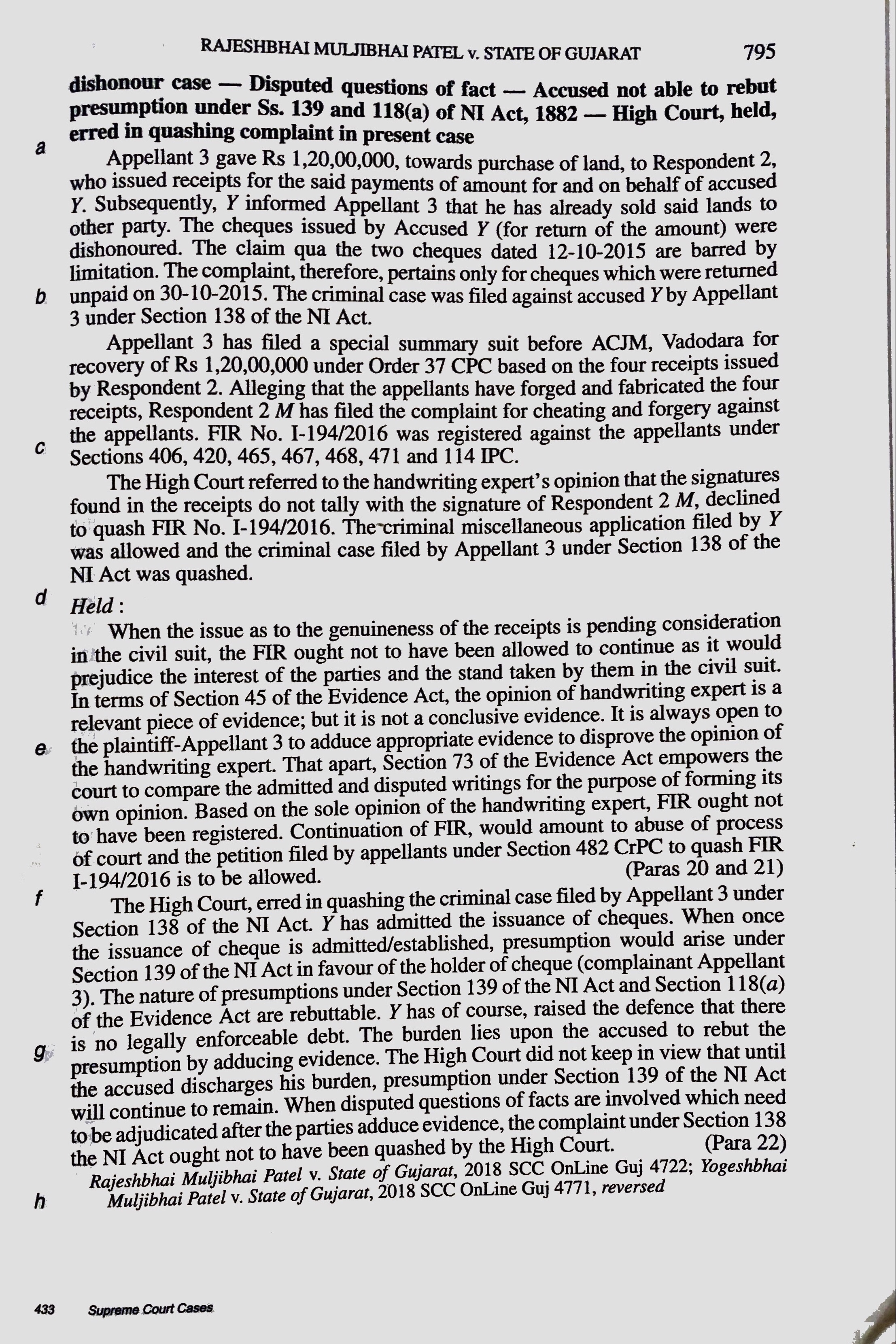
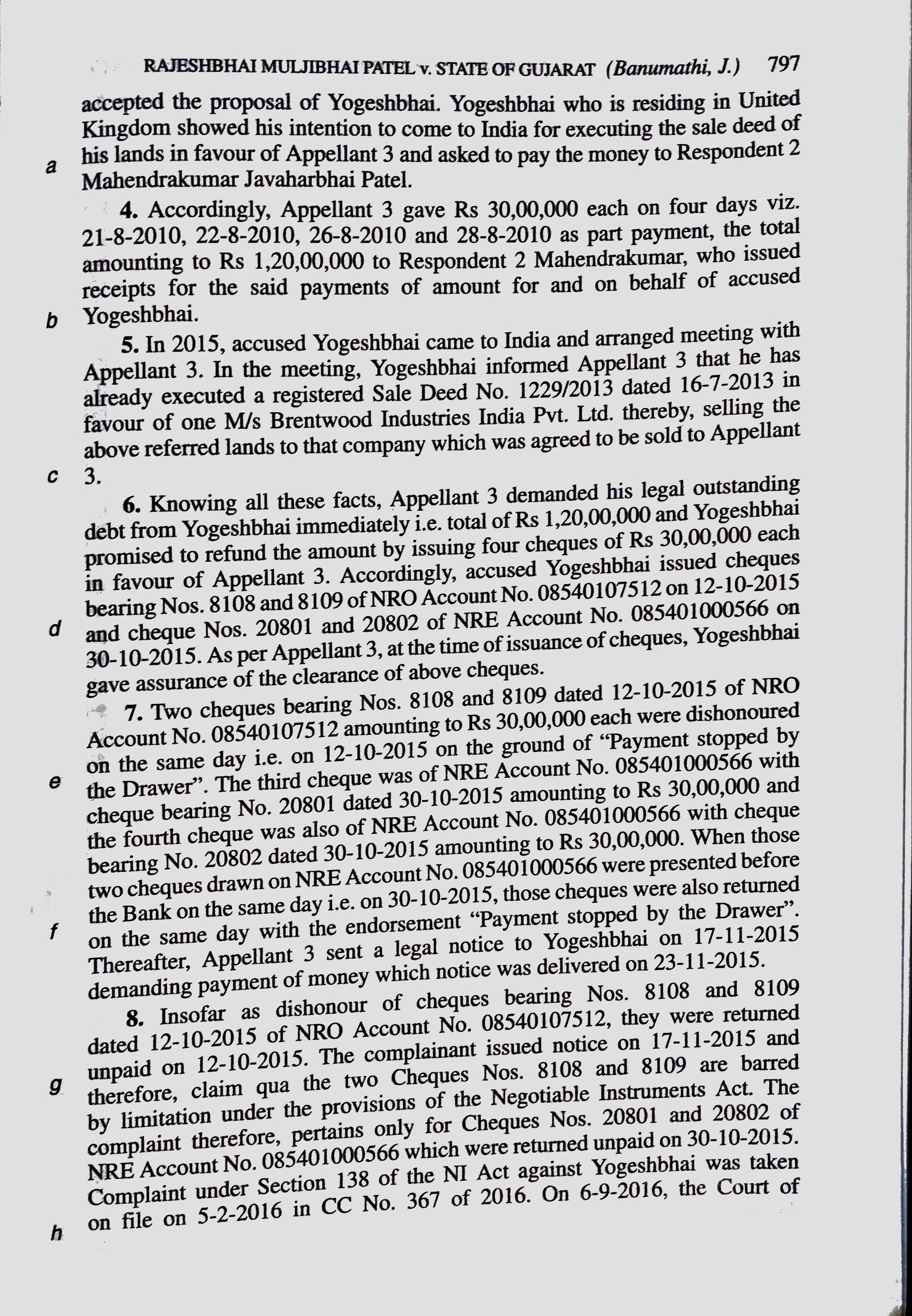
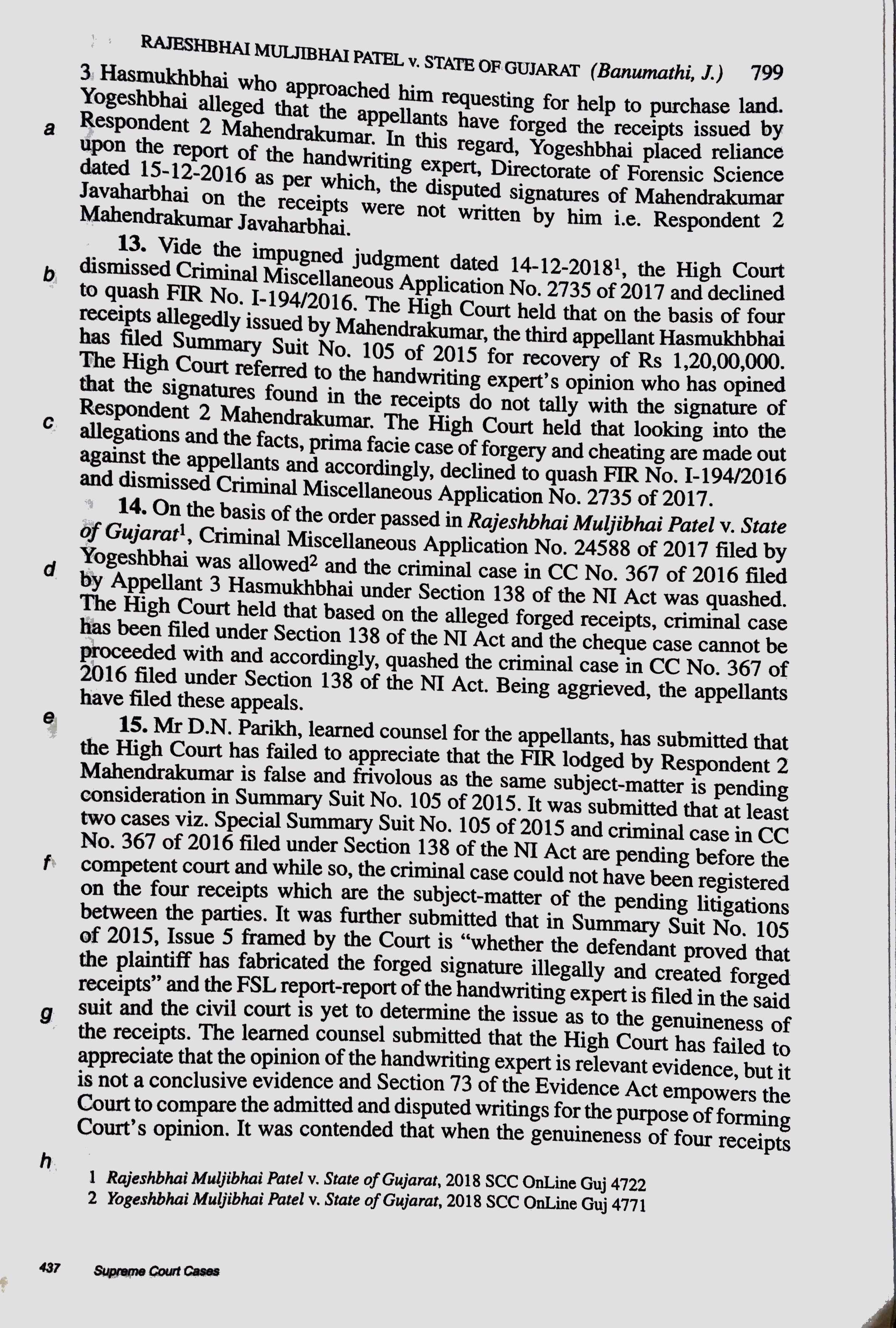
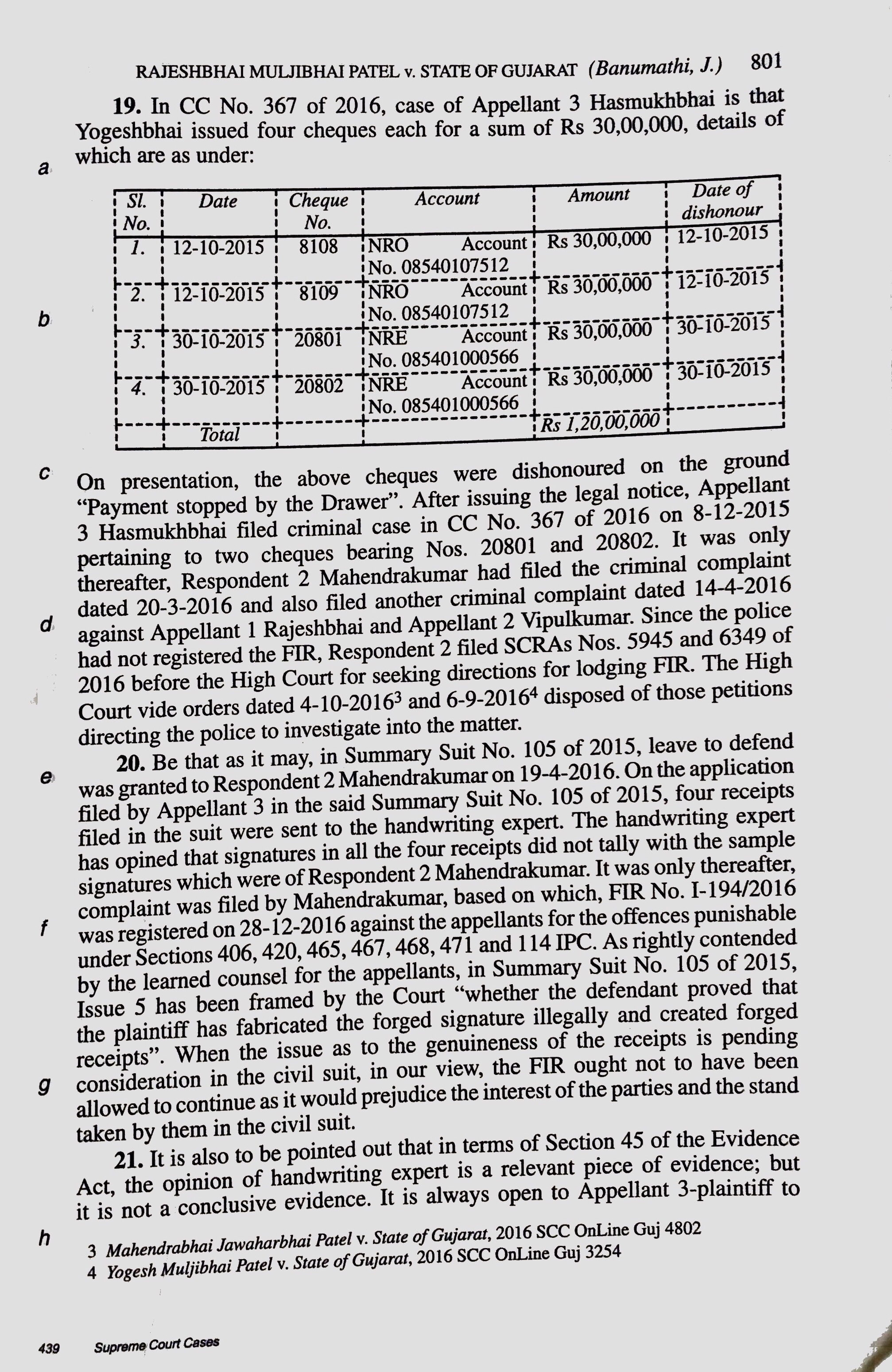
Indian Penal Code. Cheating and Forgery. When the issue regarding genuineness of the document is pending consideration before the civil court, Criminal proceedings cannot continue on the same issue. It would prejudice the interest of the parties understand or taken by them in the civil suit. Criminal proceedings quashed.
Rajeshbhai Muljibhai Patel and others vs State of Gujarat and others. (2020) 3 SCC 794
Insolvency and Bankruptcy Code, 2016. Once an insolvency professional is appointed to manage company, erstwhile directors cannot litigate on behalf of the company. also see Party violating the interim order. Court may refuse to hear him on merits of the case. Karnataka High Court 4:9:2020.
Held: Para 16. In the case of INNOVENTIVE INDUSTRIES LIMITED Vs. ICICI BANK AND ANOTHER (2018) 1 SCC 407, relied upon by Shri Jagadeesh, the Hon’ble Supreme Court has held that once the insolvency professional is appointed, the erstwhile Directors who are no longer in Management could not have maintained the appeal before the Supreme Court of India by holding thus:
“11. Having heard the learned counsel for both the parties, we find substance in the plea taken by Shri Salve that the present appeal at the behest of the erstwhile Directors of the appellant is not maintainable. Dr. Singhvi stated that this is a technical point and he could move an application to amend the cause title stating that the erstwhile Directors do not represent the Company, but are filing the appeal as persons aggrieved by the impugned order as their management right of the Company has been taken away and as they are otherwise affected as shareholders of the Company. According to us, once an insolvency professional is appointed to manage the Company, the erstwhile Directors who are no longer in management, obviously cannot maintain an appeal on behalf of the Company. In the present case, the Company is the sole appellant. This being the case, the present appeal is obviously not maintainable. However, we are not inclined to dismiss the appeal on this score alone. Having heard both the learned counsel at some length, and because this is the very first application that has been moved under the Code, we thought it necessary to deliver a detailed judgment so that all Courts and Tribunals may take notice of a paradigm shift in the law. Entrenched managements are no longer allowed to continue in management if they cannot pay their debts.”
20. In PRESTIGE LIGHTS LTD., VS . STATE BANK OF INDIA (2007) 8 SCC 449, it is held that an order passed by competent court -interim or final – has to be obeyed without any reservation. If such order is disobeyed, court may refuse the party violating such order to hear him on merits. In that case, the order of the Court was not complied with by the petitioner therein. In this case, petitioner has given repeated assurances but not fulfilled them.
21. Therefore, in the facts and circumstances of this case, keeping in view the conduct of the petitioner and the law laid down in INNOVENTIVE INDUSTRIES LIMITED, in the opinion of this Court, petitioner is not entitled for the discretionary relief under Article 226 of the Constitution of India.
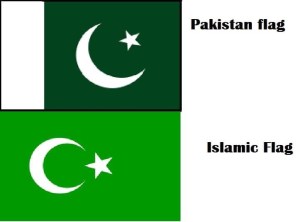
Recently I saw a video where a Police Officer was seen removing a flag on car bonnet and replacing it with national flag. The flag “resembles” Islamic flag.
There was large scale presence of flags during Rahul Gandhi campaign in Kerala and the brouhaha followed thereafter also requires to be explained.
Please note, Islamic flag is a flag either representing Islamic denomination or religious order, civil society, or other entity associated with Islam. Islamic flags have a distinct history due to the Islamic prescription. Since the time of the Islamic prophet Muhammad, flags with certain colors were associated with Islam according to the traditions.
Since then, historical Caliphates, modern nation states, certain denominations as well as religious movements have adopted flags to symbolize their Islamic identity.
Pakistan has adopted Islamic flag with little variation to symbolise it’s Islamic identify. The national flag of Pakistan was adopted in its present form during a meeting of the Constituent Assembly on August 11, 1947, just three days before the country’s independence, when it became the official flag of the Dominion of Pakistan. It was afterwards retained by the current-day Islamic Republic of Pakistan. The flag is a green field with a white crescent moon and five-rayed star at its centre, and a vertical white stripe at the hoist
Therefore waving Islamic flag shall not be considered/confused as one’s affiliation to Pakistan.
Bar Council of India takes note of the Supreme Court Judgment in Mahipal Singh Rana v. State of U.P., (2016) 8 SCC 335 which held that Section 24A of the Advocates Act, 1961 which debars a convicted person from being enrolled applies to an advocate on the rolls of the Bar Council for a period of two years, if convicted for contempt.
Last week in my Article “Can a lawyer convicted and sentenced for Contempt of Court continue to practice? Supreme Court says No”, I have examined the legal position that stands as on today. I have also opined that the Supreme Court judgment requires to be re-considered .
I have concluded “In my humble opinion, the judgments of the Supreme Court in Pravin C. Shah v. K.A. Mohd. Ali, (2001) 8 SCC 650 and Mahipal Singh Rana v. State of U.P., (2016) 8 SCC 335 especially Pravin C Shah command absolute surrender of Advocates’ fraternity to Courts and strike at the very psyche of the Advocates. They need to be reviewed at the earliest, ofcourse with suitable modifications to safeguard the institution of judiciary from motivated, scurrilous and agenda ridden tirades.”
The Bar Council of India has now referred the matter to Bar Council of Delhi which has original jurisdiction over lawyers enrolled on its roll. The Bar Council has specifically taken note of the sentence and conviction imposed on Mr. Prashant Bhushan for contempt of court.
The issue as to whether the judgment applies to Prashant Bhushan’s case in which the Supreme Court invoked Article 129 of the Constitution of India also needs to be examined.
S.Basavaraj, Advocate & Member, Karnataka State Bar Council. raj@rajdakshalegal
At the outset, let’s understand the gist of two Supreme Court judgments on this issue. (1) Mahipal Singh Rana v. State of U.P., (2016) 8 SCC 335. Held:Section 24A of the Advocates Act, 1961 which debars a convicted person from being enrolled applies to an advocate on the rolls of the Bar Council for a period of two years, if convicted for contempt and (2) Pravin C. Shah v. K.A. Mohd. Ali, (2001) 8 SCC 650. Held : Merely undergoing the penalty imposed on a contemnor is not sufficient to complete the process of purging himself of the criminal contempt. Purging oneself of contempt can be only by regretting or apologising in the case of a completed action of criminal contempt. Unless a person purges himself of contempt or is permitted by the Court conviction results in debarring an advocate from appearing in court even in absence of suspension or termination of the licence to practice.
Dealing with the later judgment first, Section 24A of the Advocates Act, 1961 reads thus;
24-A. Disqualification for enrolment.—(1) No person shall be admitted as an advocate on a State roll—
(a) if he is convicted of an offence involving moral turpitude;
(b) if he is convicted of an offence under the provisions of the Untouchability (Offences) Act, 1955
(c) if he is dismissed or removed from employment or office under the State on any charge involving moral turpitude.
Explanation.—In this clause, the expression “State” shall have the meaning assigned to it under Article 12 of the Constitution:
Provided that the disqualification for enrolment as aforesaid shall cease to have effect after a period of two years has elapsed since his release or dismissal or, as the case may be, removal.
(2) Nothing contained in sub-section (1) shall apply to a person who having been found guilty is dealt with under the provisions of the Probation of Offenders Act, 1958 (20 of 1958).
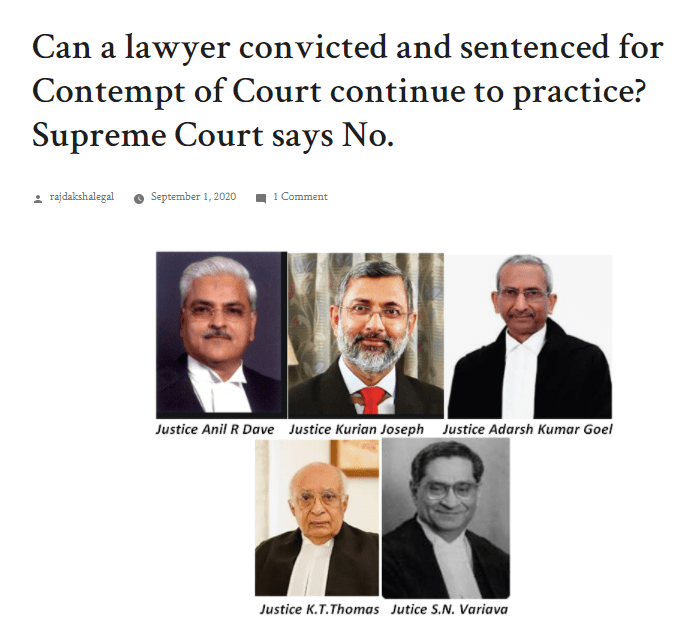
The question as to whether Section 24A applies to a practicing lawyer came up for consideration before a three judge bench of the Supreme Court in in Mahipal Singh Rana v. State of U.P., (2016) 8 SCC 335(Justice Anil R Dave, Justice Kurian Joseph and Justice Adarsh Kumar Goel). Question 4.2(ii) framed by the Supreme Court reads thus “Whether on conviction for criminal contempt, the appellant can be allowed to practise?.”
The relevant discussions are extracted below. “32. In Pravin C. Shah v. K.A. Mohd. Ali, (2001) 8 SCC 650 this Court held that an advocate found guilty of contempt cannot be allowed to act or plead in any court till he purges himself of contempt. This direction was issued having regard to Rule 11 of the Rules framed by the High Court of Kerala under Section 34(1) of the Advocates Act and also referring to the observations in para 80 of the judgment of this Court in Supreme Court Bar Assn. v. Union of India, (1998) 4 SCC 409. It was explained that debarring a person from appearing in court was within the purview of the jurisdiction of the Court and was different from suspending or terminating the licence which could be done by the Bar Council and on failure of the Bar Council, in exercise of appellate jurisdiction of this Court.“
The Court answers question 4.2(ii) above in paragraph as follows. 49. In these circumstances, Section 24-A which debars a convicted person from being enrolled applies to an advocate on the rolls of the Bar Council for a period of two years, if convicted for contempt.
The Supreme Court in Vinay Chandra Mishra, In re, (1995) 2 SCC 584 suspended the contemnor lawyer from practising as an advocate for a period of three years. However, this judgement was overruled on this point in Supreme Court Bar Assn. v. Union of India, (1998) 4 SCC 409 by holding that it is not permissible for the Supreme Court to “take over” the role of the statutory bodies or other organs of the State and “perform” their functions and therefore not permissible for the Supreme Court to punish an advocate for “professional misconduct” in exercise of the appellate jurisdiction by converting itself as the statutory body exercising “original jurisdiction”.
However, the Supreme Court in Mahipal Singh Rana v. State of U.P., (2016) 8 SCC 335 refers to paragraph 80 of Supreme Court Bar Assn. v. Union of India, (1998) 4 SCC 409 which is extracted below;
80. In a given case it may be possible, for this Court or the High Court, to prevent the contemner advocate to appear before it till he purges himself of the contempt but that is much different from suspending or revoking his licence or debarring him to practise as an advocate. In a case of contemptuous, contumacious, unbecoming or blameworthy conduct of an Advocate-on-Record, this Court possesses jurisdiction, under the Supreme Court Rules itself, to withdraw his privilege to practice as an Advocate-on-Record because that privilege is conferred by this Court and the power to grant the privilege includes the power to revoke or suspend it. The withdrawal of that privilege, however, does not amount to suspending or revoking his licence to practice as an advocate in other courts or tribunals.
Mahipal Singh Rana v. State of U.P., (2016) 8 SCC 33535 also refers to R.K. Anand v. Delhi High Court, (2009) 8 SCC 106 to the effect “even if there was no rule framed under Section 34 of the Advocates Act disallowing an advocate who is convicted of criminal contempt, is not only a measure to maintain dignity and orderly function of courts, it may become necessary for the protection of the court and for preservation of the purity of court proceedings. Thus, the court not only has a right but also an obligation to protect itself and save the purity of its proceedings from being polluted, by barring the advocate concerned from appearing before the courts for an appropriate period of time. This Court noticed the observations about the decline of ethical and professional standards of the Bar, and the need to arrest such trend in the interests of administration of justice. It was observed that in the absence of unqualified trust and confidence of people in the Bar, the judicial system could not work satisfactorily. Further observations are that the performance of the Bar Councils in maintaining professional standards and enforcing discipline did not match its achievements in other areas. This Court expressed hope and expected that the Bar Council will take appropriate action for the restoration of high professional standards among the lawyers, working of their position in the judicial system and the society.” (emphasis supplied)
We must notice that barring an advocate from appearing before the court, the contempt of which is committed as held in Pravin C. Shah is different from statutory debarment under Section 24A of the Advocates Act, 1961 as interpreted by the Supreme Court in Mahipal Singh Rana. In the first case, the discretion is left to the court to permit the lawyer to appear. In the second case, the statute itself operates as a bar for a lawyer to practice.
This is clear from paragraph 50 of the judgment in Mahipal Singh Rana whih says that in addition to the said disqualification, in view the judgment in R.K. Anand, unless a person purges himself of contempt or is permitted by the court, conviction results in debarring an advocate from appearing in court even in the absence of suspension or termination of the licence to practise.
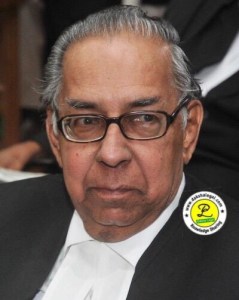
Purging the contempt: Pravin C. Shah v. K.A. Mohd. Ali, (2001) 8 SCC 650 (Justice K.T.Thomas Jutice S.N. Variava) holds that merely undergoing the penalty imposed on a contemnor is not sufficient to complete the process of purging himself of the criminal contempt. Purging oneself of contempt can be only by regretting or apologising in the case of a completed action of criminal contempt. Unless a person purges himself of contempt or is permitted by the Court conviction results in debarring an advocate from appearing in court even in absence of suspension or termination of the licence to practice. How to purge the contempt is elaborately discussed in Pravin C. Shah . After stressing the need for an unconditional apology for his conduct, the Supreme Court says that a mere statement made by a contemnor before court that he apologises is hardly enough to amount to purging himself of the contempt. The court must be satisfied of the genuineness of the apology. If the court is so satisfied and on its basis accepts the apology as genuine the court has to make an order holding that the contemnor has purged himself of the contempt. (para 31)
Such drastic measure is needed, according to Supreme Court because …the very sight of an advocate, who was found guilty of contempt of court on the previous hour, standing in the court and arguing a case or cross-examining a witness on the same day, unaffected by the contemptuous behaviour he hurled at the court, would erode the dignity of the court and even corrode the majesty of it besides impairing the confidence of the public in the efficacy of the institution of the courts. (para 17Pravin C. Shah v. K.A. Mohd. Ali,)
The genus of Pravin C Shah is found in Harish Uppal (Ex-Capt.) v. Union of India, (2003) 2 SCC 45where the Supreme Court says “Let the Bar take note that unless self-restraint is exercised, courts may now have to consider framing specific rules debarring advocates, guilty of contempt and/or unprofessional or unbecoming conduct, from appearing before the courts.”
In my humble opinion, the judgments of the Supreme Court in Pravin C. Shah v. K.A. Mohd. Ali, (2001) 8 SCC 650 and Mahipal Singh Rana v. State of U.P., (2016) 8 SCC 335 especially Pravin C Shah command absolute surrender of Advocates’ fraternity to Courts and strike at the very psyche of the Advocates. They need to be reviewed at the earliest, ofcourse with suitable modifications to safeguard the institution of judiciary from motivated, scurrilous and agenda ridden tirades.
S.Basavaraj, Advocate and Member, Karnataka State Bar Council. raj@dakshalegal.com 9845065416
B.V.Acharya, Senior Advocate and former Advocate General for Karnataka
Recent controversy relating to conviction of Sri Prashanth Bhushan, Advocate (herein after referred to as the contemnor) for contempt of court has given opportunity to some interested persons to create erroneous impression in the minds of the public and more importantly among law students and Junior Lawyers about the judiciary in the country and in particular the Supreme Court of India. People are led to believe that this judgment of the Supreme Court is a frontal attack on freespeech exercised against judiciary and in particular the Supreme Court or an assault on an independent Bar attempting to prevent it from fearlessly speaking out against wrong doing in the judiciary. It is alleged that, by this judgment, the Supreme Court wants to send a message that the judiciary will not tolerate any criticism, however justified it may be, and that it wants to threaten and warn members of the bar by misusing its power to punish for contempt. Nothing is farther than truth as it will be discussed later.
In their attempt to find fault with the Supreme Court, actions of the contemnor are glorified and he is portrayed as a crusader fighting against corruption and a fearless champion of right causes. Students of law and junior lawyers are led to believe that a lawyer who frequently criticizes judiciary and judges will receive great admiration as a fearless lawyer and gain immense popularity. Several articles and write ups supporting Prashanth Bhushan and critical of judgment of the Supreme Court are thus misleading the law students and junior lawyers, virtually leading them on the wrong and dangerous path which will undoubtedly mar their future career. This article is essentially to prevent the same.
So far as the assertion that the judgment is to threaten the members of the Bar impairing their freedom of speech so that they may not level any criticism against judiciary or the judges is concerned, it may be remembered that the Bar in India is independent and strongenough not to be swayed away by such threats. Experience has shown that the lawyers have never lagged behind nor shirked their responsibility to criticize judges whenever the same was justified and necessary. Such criticisms are frequent occurrences and there have been no instance of any action for contempt. Those supporting the contemnor and criticizing the judgment are not bringing it to the notice of the public that the contemnor is a repeat offender so far as contempt of court is concerned and there are numerous instances in the past when the Supreme Court has passed adverse comments against him. They have also been instances where action was not taken since he withdraw the allegations/tendered apology.
In an article by Sri Namit Sexena, Advocate on Record published in Bar & Bench dated: 4thAugust, 2020 there is a long list of instances where different judges of the Supreme Court including Chief Justice R.M.Lodha, Chief Justice Dipak Misra, Chief Justice Khehar, Chief Justice T.S.Thakur, Justice Dr. DY Chandrachud, Justice Madan Lokur, Justice Kurian Joseph, Justice A.K.Sikri, Justice R.Bhanumathi, Justice Arun Misra, Justice S.K.Kaul, Justice Gavai have passed adverse comments on the Contemnor for his conduct. (For the purpose of substantiating the above statements, the entire article is reproduced hereunder)
Allegations of corruption among judges. In 2009, Bhushan gave an interview to Tehelka magazine and allegedly made serious imputations against former Chief Justice of India SH Kapadia by stating that the judge had heard a matter involving Sterlite despite holding shares in it. In the same interview, Bhushan had claimed that half of India’s last 16 CJIs were corrupt. A contempt petition was preferred by Senior Advocate Harish Salve, who was the amicus curiae in the Sterlite case. The petition was held to be maintainable and is pending before the Court for final adjudication.
Coal Scam. In 2013, the Supreme Court through Justice RM Lodha, had warned Bhushan on his comments on the ongoing Coal Allocation Scam. Taking strong exception to the statements made by Bhushan to the magazine, the bench said,
“We got very disturbed when it was brought to our notice and listed the case for today.”
The Court said that judges hear and decide cases fearlessly and without favour, and that fingers should not be raised questioning their conduct.
“Judges never lag behind in passing order when justice demands. If we cannot act fearlessly, without ill-will and without favour, then who will?”.
The Bench, also comprising Justices Madan B Lokur and Kurian Joseph, however, refused to proceed against Bhushan any further after he apologized for his remarks.
CPIL. In January 2016, a Bench of Chief Justice TS Thakur and Justices AK Sikri and R Banumathi grilled Bhushan on the credentials of his organisation, Centre for Public Interest Litigation (CPIL), which had challenged the allocation of 4G spectrum to Reliance Industries Ltd’s Jio. The Bench questioned Bhushan on whether his list of PILs can be allowed to take the “system for a ride”. The Bench told Bhushan.
“Prashant Bhushan, you have an image of a crusader. But can you become the centre for public interest litigation? Can the system be taken for a ride in such a manner? We cannot allow this. We must be satisfied that you have a committee which scrutinizes the complaints and allows only genuine ones to be converted into public interest litigations.”
The Bench added, “We must have the confidence that when CPIL files a petition, it is not prompted by someone who has a vested interest even though the cause may appear genuine…Why should CPIL be a front for settling corporate rivalry or personal vendetta? CPIL should not become proxy litigant. It should not become an instrument in the hands of commercial players.”
Bhushan said CPIL was now operating from his office though its founder members were Fali S Nariman, Shanti Bhushan, Rajinder Sachar and Anil Divan, and that it has authorized advocate Kamini Jaiswal to file PILs on behalf of the NGO.
To this, the Court said, “If these five eminent persons file an affidavit saying they have examined the contents of the PIL filed by CPIL, then the courts will not waste its time examining the maintainability of the public interest litigation.”
After this incident was reported, Fali Nariman wrote to the Registrar General of the Supreme Court, categorically stating that he had not scrutinized or even seen any PILs filed by CPIL. Nariman thereafter proceeded to resign from CPIL.
Sahara-Birla cases. In 2017, Bhushan, through NGO Common Cause, had accused Prime Minister Narendra Modi of accepting suspicious cash payments in the Sahara-Birla Diaries Case. The Supreme Court dismissed the plea while holding that the material on the basis of which investigation is sought was itself irrelevant to constitute evidence and not admissible in evidence.
In the same case, Bhushan had earlier sought the recusal of Justice JS Khehar. However, he was reprimanded in strong words.
“You are talking about the highest court of the country. Do you think we can succumb to any pressure?” Why should you say all this? it’s very unfair. You appeared twice, thrice before us but you didn’t say anything. Today you are saying things.….If you had any problem you should have pointed out. It is very, very unfair. You are talking about the highest court. You are doubting a Constitutional functionary.”
Chit Fund schemes. Once again, in April 2017, the Court took strong exception to Bhushan questioning its approach regarding PILs and asked him if he wanted a “super agency over and above”. These observations were made during the hearing of a PIL by NGO Humanity Salt Lake, which had sought investigation into banned chit fund schemes. A Bench led by then CJI Khehar said,
“Who are you to ask? If there is something, the parties concerned will approach us or hire you as a counsel. You are a private person who has no authority to ask questions. Whenever there is something substantial, we will pass directions. You point out if a serious fraud has been committed.”
Medical College bribery case. 2017 did not end well with Bhushan, with the Supreme Court imposing a fine of Rs 25 lakhs on Citizens for Judicial Accountability and Reforms (CJAR), which had demanded a probe by a Special Investigation Team (SIT) into the alleged medical college bribery scandal. In the proceedings earlier, Bhushan had walked out of the courtroom alleging that he was not allowed to argue. Reportedly, the Supreme Court, speaking through Chief Justice Dipak Misra, orally observed that “Prashant Bhushan is not worthy of contempt“. The petition was later held to be “…wholly frivolous, a contemptuous, unwarranted, aim[ed] at scandalizing the highest judicial system of the country”.
Judge Loya case. In 2018, while disposing petitions seeking an investigation into death of Judge BH Loya, the Supreme Court slammed the role of Bhushan and CPIL holding that “attempts were made to misrepresent and mislead the court by manufacturing evidence to cast a doubt on the circumstances leading to the death of judge Loya”.
Deploring the role played by Bhushan in the case, Justice DY Chandrachud, who authored the judgment said,
“Prashant Bhushan adopted a dual mantle and went to the length of personally collecting evidence to bolster the case. The petition is a veiled attempt to launch a frontal attack on the independence of the judiciary and to dilute the credibility of judicial institutions.”
The Supreme Court, while strongly condemning Bhushan’s oral request for recusal of Justices Khanwilkar and Chandrachud without any formal application and on the sole reason that they hail from Bombay, concluded,
“The conduct of the petitioners and the intervenors scandalises the process of the court and prima facie constitutes criminal contempt. However, on a dispassionate view of the matter, we have chosen not to initiate proceedings by way of criminal contempt…We rest in the hope that the Bar of the nation is resilient to withstand such attempts on the judiciary. The judiciary must continue to perform its duty even if it is not to be palatable to some. The strength of the judicial process lies not in the fear of a coercive law of contempt. The credibility of the judicial process is based on its moral authority. It is with that firm belief that we have not invoked the jurisdiction in contempt.”
Later, while deciding an application filed by Senior Advocate Indira Jaising for expungement of these remarks, the Court held,
“The application proceeds on the basis that the observations which were made in regard to the conduct of the petitioners and intervenors attach to the applicant personally. In paragraphs 76 and 78, this Court has adverted to “the conduct of the petitioners and the intervenors” (emphasis supplied).
If the applicant identifies with the intervenor, that is a matter of perception for counsel…”
CBI Director case. In early 2019, a contempt petition was filed by Attorney General KK Venugopal and the Centre against Bhushan for his alleged criticism of the Court on the appointment of M Nageshwara Rao as interim CBI Director. AG Venugopal later withdrew the contempt proceedings, stating that Bhushan has realised his mistake and that he did not want Bhushan to be punished. Bhushan, however, refused to apologise and the Court has kept the matter alive for the larger issue.
Resignation from CPIL and Common Cause. In April 2019, citing that Prashant Bhushan had appeared for CPIL, Common Cause and Swaraj Abhiyan while being a member of the said organisations, retired Major SK Punia filed a complaint before the Bar Council of Delhi (BCD). Bhushan thereafter resigned from the Governing Councils of these NGOs.
Haren Pandya case. Soon thereafter, the Supreme Court pronounced its judgment in a plea filed by CPIL through Bhushan seeking further investigation or reinvestigation into the murder of former Gujarat Home Minister Haren Pandya. The Bench led by Justice Arun Mishra in its 234 page judgment held that the PIL was filed with an “oblique motive” at the instance of the accused persons. It held,
“In all fairness, such petition ought not to have been filed by CPIL at the instance of accused, it is clearly misused of forum of PIL. Only an application could have been preferred by the accused persons or by the petitioner or any other interested person in the criminal appeals. Even otherwise, we have not found on merits any material or ground worthy to direct further investigation or reinvestigation in the case.”
The Court went on to impose costs of Rs. 50,000 on CPIL, and laid down that a lawyer cannot represent an organization if he is part of its Executive Committee.
COVID-19. Recently, the Supreme Court, speaking through CJI SA Bobde, refused to entertain a petitionfiled by Bhushan in connection with the decongestion of jails during the Coronavirus outbreak. It asked Bhushan
“Why don’t you understand our point of view on some occasion at least?”
Another bench led by Justices SK Kaul and BR Gavai reacted strongly to Bhushan’s tweets and observed: “Every time there is an order in which you do not get any relief, you insult the institution…you cast aspersions on the judges …you don’t have any respect for constitutional bodies. You don’t have any faith in the judiciary”.
Justice Gavai added,
“If you don’t have faith in this institution, why should we hear you at all?”
An Advocate on Record of the Supreme Court has immense responsibility under the Supreme Court Rules, 2013 and various judgments of the Court. Under the Rules, if the Supreme Court is of the opinion that an AoR has been guilty of misconduct or of conduct unbecoming of an AoR, the Court may make an order removing his name from the register of Advocates on Record either permanently or for such period as the Court may think fit.
Bhushan is currently facing multiple contempt proceedings by the Court itself. He is an accused in an FIR registered in Gujarat u/s 295A/505(1)(b), 34 and 120B IPC and is currently protected by the Supreme Court.
I leave it to reader’s wisdom to decide on correctness of the judiciary’s tryst with Bhushan in the last decade. Till then, fingers crossed!
The present case should not be seen in isolation but has to be considered in the light of the past conduct which unmistakably points to the malicious intention to malign judges whenevertheir judgments are not in favour of the contemnor. Very rarely courts have initiated action for contempt and it is unfair to say that judges are intolerant of any criticism. Mostly, even wholly unjustified criticism is ignored. But where an Advocate continuously makes scandalous allegations and in spite of several warnings and reprimand continuous to denigrate the Supreme Court and the judges, will not the court be justified in taking action? That is what has happened here. The court would have failed in the duty if no action was taken when such persistent and deliberate attempts are made to malign and denigrate the Supreme Court resulting in people to losingfaith in the highest court of the country.
Now coming to the facts of the case, as I pointed out, there are two tweets. Suffice to deal with only one that too very briefly. In the second tweet the contemnor says democracy is destroyed by the Supreme Court in the last six years and four Chief Justice of India are also responsible for this. In justification of the comment, Sri Navroj Seervai, Senior Advocatehas referred to only two instances, one regarding complaint of sexual harassment against Former Chief Justice of India Justice Gogai and the other is the conduct of Former Chief Justice of India Justice Dipak Misra as complained of by four judges in the press conference mostly relating to allotment of work amongst judges. One fails to understand what these allegations have to do with destruction of democracy by the entire Supreme Court. Allegation in the tweet is not against individual judge but on the entire Supreme Court as an institution. It is a scandalous allegation against every judge of the Supreme Court during the last 6 years and that includes four judges who held press conference. Apart from the question of contempt, can it even be considered as a responsible statement of an advocate practicing before Supreme Court and who claims to have lots of love and affection for the Supreme Court?
My appeal to the law students and junior lawyers is to not consider the conduct of contemnor as a model worthy of emulation so far as criticism of the Judiciary and Judges is concerned. They should not be guided by the fact that the contemnor has quoted Mahathma Gandhi in the contempt action initiated by the British against the latter. Those circumstances were entirely different. There is no comparison between the two cases.
B.V.Acharya (Senior Advocate and Former Advocate General, Karnataka)









 Daksha Legal