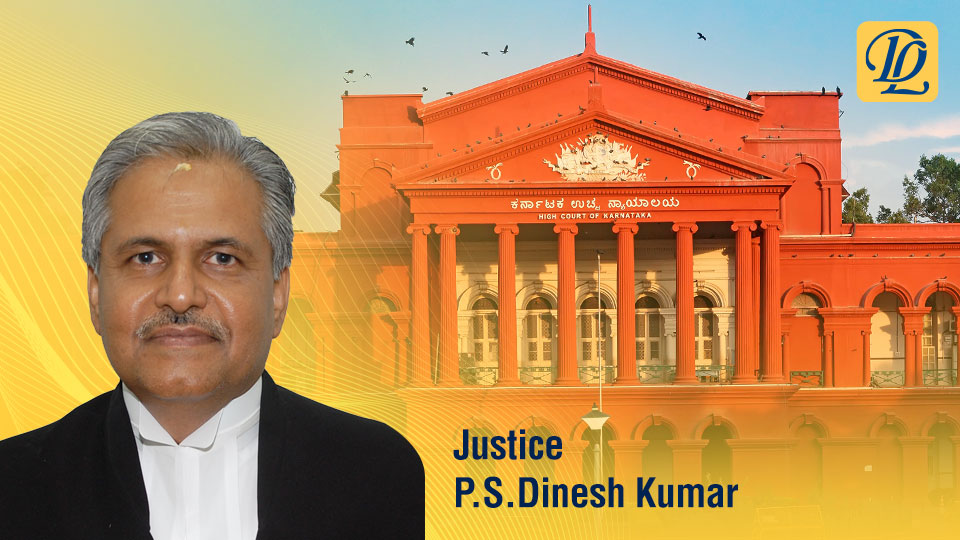
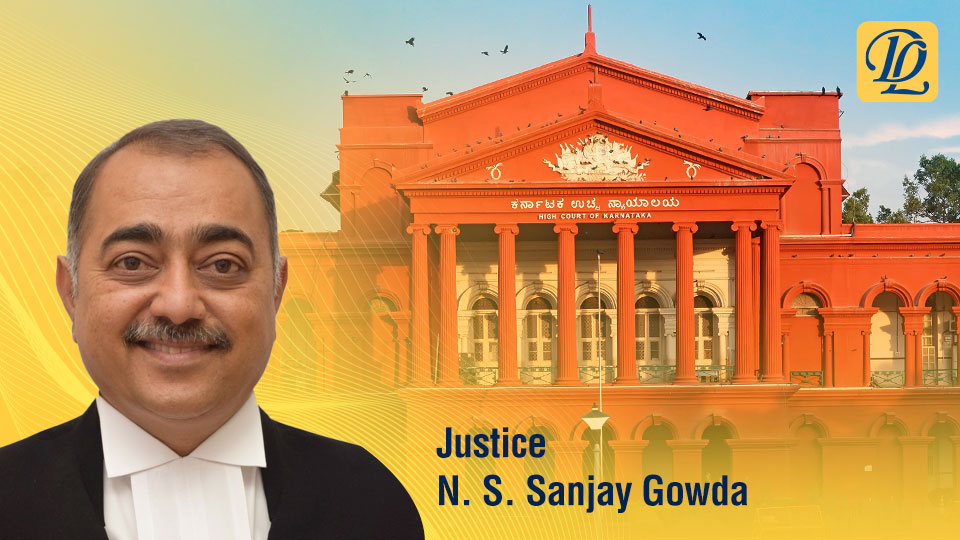
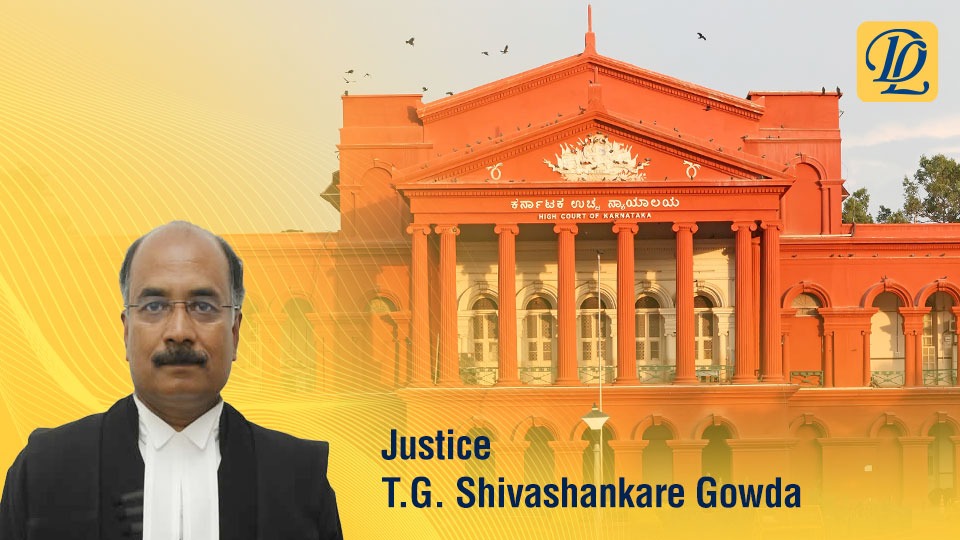
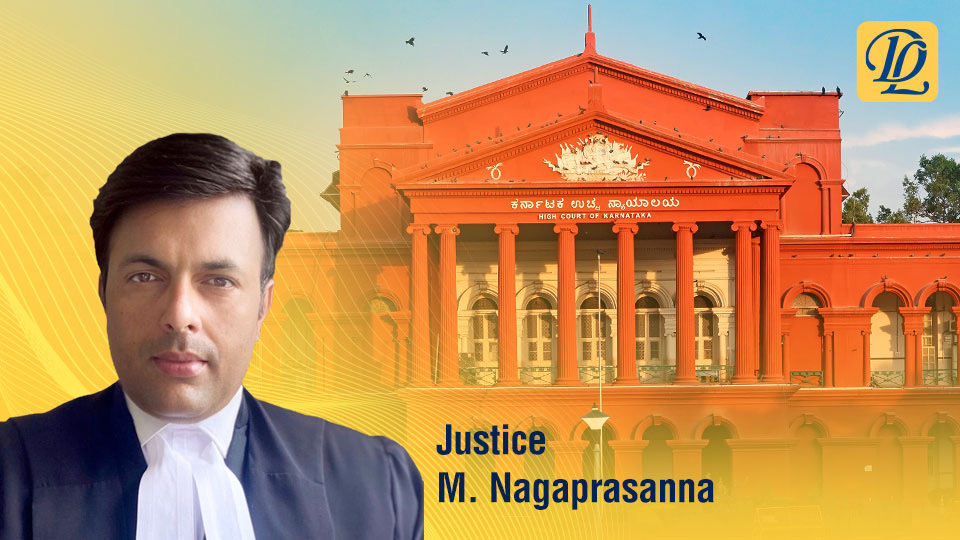
“Know Your Judge”. Justice C. M. Joshi. Karnataka High Court.

Justice Chandarashekar Mrutyunjaya Joshi celebrates his 60th birthday today. Justice C.M.Joshi was born on 24.01.1964. He is native of Hubballi. He enrolled as Advocate and practiced at Hubballi. He was appointed as Munsiff on 08.02.1995. He was appointed as District Judge on 06.07.2009.

Justice Joshi served as Deputy Secretary, Karnataka State Legal Services Authority, Central Project Co-ordinator (Computers), Registrar (Computers) at High Court of Karnataka and as Prl. District & Sessions Judge, Udupi, Belagavi & Prl. City Civil & Sessions Judge, Bengaluru. He was sworn-in as Additional Judge of the High Court of Karnataka on 16.08.2022.
Important judgments delivered by Hon’ble Mr. Justice C M Joshi.
Criminal law. Call records regarding conversation between accused and deceased are inadmissible in evidence unless the Certificate required under Section 65B of the Evidence Act is produced. Karnataka High Court. (DB)
https://www.dakshalegal.com/judgements/actionView/sRsc59ZvrxNYUfN0wMgVfjdmw
Motor Vehicle Act. When a claim petition is filed under Section 163A and the evidence on record shows the income is above Rs.40,000/- p.a, the claim petition is liable to be rejected, unless it is converted to one under Section 166. Karnataka High Court.
https://www.dakshalegal.com/judgements/actionView/M3DQf8Bqn8yuh7DRlj9iiwWfQ
Disciplinary proceedings against daily wage employee can be initiated under the Karnataka Daily Wage Employees Welfare Act, 2012 only if his name is notified by the State Government as daily wage employee. Karnataka High Court. (DB)
https://www.dakshalegal.com/judgements/actionView/188NQJk9eEuJbsxbjZ1mXccjN
An order of acquittal adds up to the presumption of innocence in favour of the accused and hence the Appellate Court has to be relatively slow in reversing the order. Karnataka High Court.
https://www.dakshalegal.com/judgements/actionView/JKErAZPwa2A80zeZY6IJ8YYtf
Property allotted to a female in family partition between herself and her father is her absolute property and does not revert to heirs of her father under Section 15 (2) of the Hindu Succession Act. Karnataka High Court.
https://www.dakshalegal.com/judgements/actionView/0GSAvqWzFvg7BQeuJtMe8MXPE
Service benefits do not form bequeathable estate of Government Servant. Family pension does not form part of the estate of the deceased and as such it cannot be disposed off during lifetime by testamentary disposition. Karnataka High Court.
https://www.dakshalegal.com/judgements/actionView/nkq4qgzHH8eQerJub77MJieWi
Grant of Succession Certificate will not determine rights of parties since it merely identifies the hands in which death benefits be given and it does not entitle such person to appropriate such benefits to himself. Karnataka High Court.
https://www.dakshalegal.com/judgements/actionView/FpGy47XzWhxSr6A2u19MQ6ok6
Adopted son becomes a coparcener in the adoptor’s family and cannot claim right in his genitive family properties. Karnataka High Court.
https://www.dakshalegal.com/judgements/actionView/VsbGFAze5zHsxbp8uhudbl7bR
In case of ‘Act Only Policy’ which does not cover pillion rider with extra premium, liability cannot be fastened on the insurance company. Even the principle of ‘pay and recover‘ does not apply in such cases. Karnataka High Court.
https://www.dakshalegal.com/judgements/actionView/gPDsYnJA9UmTVCcx6qtpnVtVo
When ‘package/comprehensive’ policy is issued, it covers all including the occupant, driver, pillion rider and the owner. Premium paid is irrelevant. Karnataka High Court.
https://www.dakshalegal.com/judgements/actionView/lPPuQpPRt0cLfNpjy7NqzLbQP

Advocates Association takes strong exception to Senior Judge’s comments on Junior Judges.

The office bearers of the Advocates Association Bangalore today appeared before a senior Judge of the Karnataka High Court and apart from expressing concern over listing of the matters, took strong exception to the regular comments being made by the Judge against two junior Judges who handled the roster matters.

While requesting the senior Judge to accept physical memos from the advocates, President of the Advocates Association Mr. Vivek Reddy, Secretary Mr. T.G. Ravi and Treasurer Mr. Harish M T took exception to the manner in which comments were made by the judge against junior judges who “liberally granted interim orders.” The office bearers requested the Judge to consider the requests by the junior advocates for posting sympathetically.

(As told by Mr. Vivek Reddy, President, Advocates Association, Bangalore to Mr. S. Basavaraj, Member, Karnataka State Bar Council)

Commenting on brother Judges -Striking at the foundation of Judicial institution.

S. Basavaraj, Senior Advocate and Member, Karnataka State Bar Council

Today, while waiting for my matter in a Court Hall, I heard the learned Judge making open and repeated comments (atleast four times) “ಕಣ್ಣು ಮುಚ್ಕ0ಡು ಸ್ಟೇ ಕೊಟ್ಟ್ರೆ ಹಿ0ಗೇ ಹಾಗೋದು” (this is what happens if stay orders are granted blindfolded). Obviously the Judge was referring to the liberal interim orders granted by Judges who dealt with matters before the roaster was changed.

Every Judge has his own notions about civil or criminal jurisprudence. Some judges may feel the oppressed class of tenants or workmen need extra protection; some judges may feel slapping of FIRs by the Police at the drop of the hat has to be prevented. When the roaster is changed, the new Judge may vacate the interim orders or even dismiss the cases which do not warrant interference by the Court.

While doing so, commenting on the judicial approach of the earlier Judge/Judges or casting aspersions on the brother Judges is, in my humble opinion, not proper. Judges have taken oath under the Constitution of India and they discharge their duties within the legal/constitutional framework. Judges do not/cannot have personal interest in the matter. They just do their job and move on.

Even while considering an appeal arising out of lower court proceedings, it must be noted that what is before the higher courts or the larger bench is the judgement under challenge and not the judge who delivered the judgement. A judgment under challenge can be supported by the respondent. However if a comment/observation is made on the Judge who delivered the judgement, there is no one to defend the judge.

The Supreme Court in Rama Dayal Markarah vs State of Madhya Pradesh (1978) 2 SCC 630 observed that “..ordinarily, the judgment itself will be the subject matter of criticism and not the judge”. The Madras High Court in Abdul Sathar vs The Principal Secretary to Government (2013 SCC OnLine Mad 1932) observed that “The judgement should speak and not the judge”.

A judge who is imbibed with traditional values might find it difficult to interfere with few matters involving crime, corruption, domestic violence etc. But he is at complete liberty to decide the matters according to his convictions. Commenting upon the manner in which similar matters have been dealt with by brother Judges is not correct.

To conclude, the practice of commenting on the brother Judges who adorned the bench on the same roaster runs counter to the judicial institution and the values it stands for.

Important Judgments on ”Partition under the Hindu Law”.

1. Whether plaint can be amended at the instance of defendant in a partition suit to include property. Karnataka and Madras High Courts take different views.
https://www.dakshalegal.com/judgements/actionView/natSxzJ7W8zO9pW6GdP85I0P3
2. Hindu Succession Act, 1956. Ancestral property partitioned and sold prior to 2005 amendment. Suit for partition by daughter is maintainable under the 1994 Karnataka amendment. Plaint cannot be rejected.
https://www.dakshalegal.com/judgements/actionView/lbmbNrvwKN8j3BijpRs3AfViX
3. Hindu Succession Act. Section 14. Life interest created to wife under Will beyond her share in a notional partition is not a pre-existing right. Bequeath is only life interest. Wife will not get absolute right. Karnataka High Court.
https://www.dakshalegal.com/judgements/actionView/s3By08wWSkDhYnWeNIZ9jzX0K
4. Suit for declaration. If the plaintiff is not entitled for whole of the property Court can pass a decree for partition of his share without driving him to file another suit for partition. Karnataka High Court.
https://www.dakshalegal.com/judgements/actionView/Xn4iOKjiGbmuSr3FZx6BSO1dl
5. Hindu Succession Act. Amended Section 6. Plea of prior partition. Mere partition decree will not sever joint family status. Until final decree is passed and allottees of shares are put in possession – there is no partition. Karnataka High Court.
https://www.dakshalegal.com/judgements/actionView/cVSv4aF0KiIjrAxeB849GREtT
6. Property purchased in the name of minor is his absolute property unless there is evidence to show it was also joint family property- (see the Note). Karnataka High Court.
https://www.dakshalegal.com/judgements/actionView/Gh5utSCuXgY73R7Wyjo3a6p4I
7. Doctrine of ouster. Applicability in case of co-owner and in a suit for partition. Explained. Supreme Court.
https://www.dakshalegal.com/judgements/actionView/y50Dd4jkOKiJh3Y1vAvwcpymo
8. Separated son has NO right in ancestral property left by kartha. He can claim share as Class-I heir after death of Kartha in notional partition. Karnataka High Court.
https://www.dakshalegal.com/judgements/actionView/O48Ush1dCXcJfD5NS6zxFN2du
9. Suit for partition. Limitation Act, Section 110. The period of limitation does NOT start where there is no specific demand for partition of share in the property and no refusal or denial by defendant. Karnataka High Court.
https://www.dakshalegal.com/judgements/actionView/fw5LGY5WlFLFnzdrAUmpy05ks
10. Suit for partition. Appellate court can grant relief even to non-appealing parties/plaintiffs since a defendant can ask the Court to transpose him as a plaintiff and a plaintiff can ask for being transposed as a defendant. Supreme Court.
https://www.dakshalegal.com/judgements/actionView/rOCQqam2SJpmWl1XtkyaqNAEL
11. Plaint in a suit for partition based on amended Section 6 of the Hindu Succession Act is liable to be rejected if there is clear admission in the plaint about registered partition of ancestral properties prior to the amendment. Karnataka High Court.
https://www.dakshalegal.com/judgements/actionView/AqiH79AYRqh6uAL1goeyPue3D
12. Family settlement arrived as oral partition and later put into writing for the purpose of information is not required to be compulsorily registered, and stamp duty need not be paid in respect of the same. Delhi High Court.
https://www.dakshalegal.com/judgements/actionView/hqQBLOlJzpn933P4nud8TU0fD
13. In a suit for partition, defendant can seek direction to plaintiff to include certain properties in the plaint schedule and seek partition of the same. Karnataka High Court.
https://www.dakshalegal.com/judgements/actionView/ILh8GtkO4hA7IEoFpjKnVRvuI
14. Where property is sold under the Partition Act 1893, provisions of Order 21 Rules 84 & 85 CPC regarding mandatory deposit of entire balance sale price within 15 days do not apply. Court can extend time for such payment. Karnataka High Court.
https://www.dakshalegal.com/judgements/actionView/ftBEuUrvqx3sHe2V7cFsYvxKY
15. Plaint in a suit for a primary relief of partition and separate possession cannot be rejected on the ground of limitation though the secondary prayer is barred by time especially when both the prayers are interconnected. Karnataka High Court.
https://www.dakshalegal.com/judgements/actionView/LRuLLzFwNONqG4BNWN5GpNeNF
16. Acceptance of lesser share by father in ancestral properties in family partition will not prevent his son from claiming actual/correct share in the properties. Karnataka High Court.
https://www.dakshalegal.com/judgements/actionView/lH8UX2ApuNy7StVQeKgv4g366
17. Suit for partition. Défense of prior partition becomes weak when revenue entries do not stand separately and exclusively in the name of the family members. Karnataka High Court.
https://www.dakshalegal.com/judgements/actionView/Vau54IxDF81BKpQE2MXKSVuBq
18. A co-owner cannot seek temporary injunction against another co-owner on the ground of adverse possession unless there is a partition of the property by metes and bounds. Karnataka High Court.
https://www.dakshalegal.com/judgements/actionView/xDbapeyzt9Dx35Aq4Ywhvqcup
19. Suit for partition. Plea of exclusive possession by the purchaser of coparcenery property is NOT a conclusive factor to determine court fee payable by the plaintiff. Karnataka High Court.
https://www.dakshalegal.com/judgements/actionView/Zr3dnpFd2lwm8d0XTm0P94ccv
20. In a suit for partition filed by woman against her father/brother based on amended Section 6 Hindu Succession Act, joint family properties given to her husband as dowry can also be included. Karnataka High Court.
https://www.dakshalegal.com/judgements/actionView/yac9TIe4JwB5vLqBYkQQGcIny
21. Suit for partition. A person who is not a party to alienation of coparcenery property need NOT seek cancellation of sale deed or a declaration that he is not bound by the alienation. Karnataka High Court.
https://www.dakshalegal.com/judgements/actionView/0jpPcSN2LoiHu6PkaVTZpyWwl
22. Suit for partition by woman coparcener is not maintainable if the ancestral property was sold before coming into force of the amended Section 6 of the Hindu Succession Act. Karnataka High Court.
https://www.dakshalegal.com/judgements/actionView/P2MxaZz15WlWu4IzMoyjPRtLJ
23. Suit for partition by daughters based on the amended Section 6 of the Hindu Succession Act. Properties sold prior to 20 December 2004 are not available for partition. Karnataka High Court.
https://www.dakshalegal.com/judgements/actionView/0R1Rtm7hRxWDaySPGxTf9Bh2e
24. Property allotted to a female in family partition between herself and her father is her absolute property and does not revert to heirs of her father under Section 15 (2) of the Hindu Succession Act. Karnataka High Court.
https://www.dakshalegal.com/judgements/actionView/0GSAvqWzFvg7BQeuJtMe8MXPE
25. Cause of action in a partition suit is a recurring action. Dismissal of earlier suit for non-prosecution will not be a bar for filing a second suit for partition. Karnataka High Court.
https://www.dakshalegal.com/judgements/actionView/JovsgCgK3bGQnz5i0jOqFo4xM
26. Hindu Succession Act. Partition of properties inherited under Section 8 will not change the nature of the properties to coparcenary. Karnataka High Court.
https://www.dakshalegal.com/judgements/actionView/7WkHgBZXZWIZPMLmRL8htCCb5
27. Partition Act. Party who applies for sale of the property under Section 2 cannot opt for purchase of the share of the other parties under Section 3. Karnataka High Court.
https://www.dakshalegal.com/judgements/actionView/AyJ2wImDu5VSceufc4MgIGEqY
28. Inclusion of properties already partitioned in a suit for partition amounts to vexatious and scandalous litigation. Court can order deleting the properties from the plaint under Order 6 Rule 16 of CPC. Karnataka High Court.
https://www.dakshalegal.com/judgements/actionView/oarJCd8AcDey37g4CGwf297ze
29. Suit for partition filed several years after the property was sold by the karta or the mother is hit by the doctrine of acquiescence and the same is liable to be dismissed. Karnataka High Court.
https://www.dakshalegal.com/judgements/actionView/XGUr2e0ZtuvnX4nzP7z8jKFFG
30. Law of Limitation. Suit challenging the earlier partition, filed several decades after the partition deed, is liable to be dismissed by rejecting the plaint under Order 7 Rule 11. Supreme Court.
https://www.dakshalegal.com/judgements/actionView/8naEvmw7Le6F3oYCLecNEptOf
31. Unconditional allotment of property under a partition will not attract the provisions of the Maintenance and Welfare of Parents and Senior Citizens Act. Karnataka High Court.
https://www.dakshalegal.com/judgements/actionView/IcElYDIkll3PY6rsAHzIlWsI8
32. Ancestral property fallen to the share of father in a family partition among his father and brothers cannot be claimed by his son since the property so allocated to his share becomes his exclusive property. Karnataka High Court.
https://www.dakshalegal.com/judgements/actionView/HbotLMcNTO8Wp0nICcnKwmELb
33. Suit for partition filed three years after the minor coparcener attaining majority merely pleading that alienation of ancestral properties by karta is not binding on him is barred by law of limitation. Karnataka High Court.
https://www.dakshalegal.com/judgements/actionView/l8o5RTOBOhfBXLpztTaknOuwM
34. Suit for partition. Once a Plaintiff contends that he has separated from the joint family, properties bought subsequent to the said separation cannot be included in the suit for partition filed subsequently. Karnataka High Court.
https://www.dakshalegal.com/judgements/actionView/PlRAY4tSkUxJgSCmDcrmBR3zi
35. Non-alienating member of joint family can maintain a suit for partition and separate possession in the event of alienation by other members and there is no need to challenge the sale deed. Karnataka High Court.
https://www.dakshalegal.com/judgements/actionView/Rn7scoU25OuEaCN69czGsSUir
36. Suit for partition. Appointment of court commissioner during the proceedings to find out the existence of building etc would be unnecessary since such an exercise can be undertaken at the time of final decree proceedings. Karnataka High Court.
https://www.dakshalegal.com/judgements/actionView/Gv6nzDwCjONuIEab4W705csLn
37. Unregistered relinquishment deed can be relied on for the collateral purpose of proving earlier partition and division of joint family status as recited in the deed. Karnataka High Court.
https://www.dakshalegal.com/judgements/actionView/knY7JAseZj4F0bjklQM9h5doq
38. Suit for partition. Inclusion of properties in the plaint schedule cannot be questioned by purchaser of property since he has no say in the suit to dictate how the suit has to be proceeded with. Karnataka High Court.
https://www.dakshalegal.com/judgements/actionView/jKhJe9KORA1aSGS0sPSiYEc7E
39. Suit for partition based on amended Section 6 of the Hindu Succession Act. Plaint can be rejected in respect of a particular item of property which was already sold prior to coming into force of the amendment. Karnataka High Court.
https://www.dakshalegal.com/judgements/actionView/4bxoXdtBsWCPhQ5AEo3IPDnM1
40. Preventing bank from exercising its right under the SARFAESI Act in the guise of partition suit among family members with prayer for injunction is hit by Sections 35 and 36. Karnataka High Court.
https://www.dakshalegal.com/judgements/actionView/qnQEJz65yYylguhyuVQzPN4JE
41. Second suit for partition, instead of enforcing the earlier decree for partition within the period of limitation, is not maintainable. Plaint is liable to be rejected. Karnataka High Court.
https://www.dakshalegal.com/judgements/actionView/Dhc1sRdwlSF9rEkwZLQetsBCv
42. In case of notional partition, shares of the heirs must be ascertained on the basis that they had separated from one another and had received a share in the partition which had taken place during the life-time of the deceased. Supreme Court explains.
https://www.dakshalegal.com/judgements/actionView/8BPKx50SQqubSZb8nQKMN8ohF
43. Court can grant relief of partition and separate possession of a portion even though prayer is for relief of declaration of title to the entire property. Karnataka High Court.
https://www.dakshalegal.com/judgements/actionView/s93RJ6TgD67HtKh2NJbpr274h
44. When there is a doubt as to whether an unregistered document is partition deed or relinquishment deed, it can be adjudicated only during the trial. Trial Court cannot refuse to accept it in evidence by conducting a mini trial. Karnataka High Court.
https://www.dakshalegal.com/judgements/actionView/hL2lFEsRmdTNXpHxndLZDJySO
45. A registered partition acts as complete disruption of the joint family status. Son born subsequent to the partition cannot seek reopening of the partition unless the partition was within his own family. Karnataka High Court.
https://www.dakshalegal.com/judgements/actionView/QKLSyVmASOGJcRlSDxp2rIiBp
46. Native Christians of Coorg province. Pending suit for partition based on the Shasthric Hindu Law is not maintainable after the issuance of 2015 notification making Indian Succession Applicable to them. Karnataka High Court.
https://www.dakshalegal.com/judgements/actionView/LRb4Ivbd1DV1vGyiqf1w9FLEF
47. Question of limitation in a suit for partition arises only if defendants prove ouster of plaintiff from the joint family properties. Karnataka High Court.
https://www.dakshalegal.com/judgements/actionView/eKWE0e5fGBDeR6MKN58wlVCmv
48. Suit for partition. Mere purchase of property in the name of co-sharer does not prove self acquisition when there is joint family nucleus and when independent income is not proved. Karnataka High Court.
https://www.dakshalegal.com/judgements/actionView/Tw9oVZkpfhVfGIURUrkenLnkv
49. Suit for partition. When one co-sharer is in possession of the properties, all other co-sharers are presumed to be in possession on the basis of joint title. Karnataka High Court.
https://www.dakshalegal.com/judgements/actionView/n2oo8U8EiWNNe1AIDzGXYYxlz
50. When decree for declaration of title cannot be granted, the court can grant a decree for partition of the properties. Karnataka High Court.
https://www.dakshalegal.com/judgements/actionView/hi9B0gvtzsEqkDMCQpa3e2qpM
51. Hindu Succession Act. Failure on the part of daughters to claim share in house property in a family partition does not amount to abandonment of claim under the unamended Section 23. Karnataka High Court.
https://www.dakshalegal.com/judgements/actionView/shiM2xZRtU9qKOzSvxZjs1vCT
52. Award passed by the Lok Adalath cannot be questioned by a separate suit though termed as suit for partition in view of the bar under the Legal Services Authority Act. Karnataka High Court.
https://www.dakshalegal.com/judgements/actionView/rZGdWNwkc6KxmE0m2T0kLer8X
53. Amendment to Section 6 of the Hindu Succession Act applies even to final decree proceedings arising out of the suit for partition filed prior to the amendment. Authoritative judgement of the Karnataka High Court.
https://www.dakshalegal.com/judgements/actionView/ALutGUzqWrRBUowoFsU7tvnhG
54. Partition. Though filing of partition suit brings about severance of status of jointness, legislative amendment or subsequent event will have to be taken into consideration and given effect to in passing the final decree. Supreme Court.
https://www.dakshalegal.com/judgements/actionView/TrQ22I70GMchDL1VqR6v5Rgsa
55. Execution proceedings in suit for partition. Person claiming under joint family member who suffered decree cannot maintain application Order 21 Rule 97 of CPC. Karnataka High Court.
https://www.dakshalegal.com/judgements/actionView/07jntkBSQJI6V41hiJtrB27va
56. In a suit for partition of joint family property, a decree by consent amongst only some of the parties cannot be passed. Supreme Court.
https://www.dakshalegal.com/judgements/actionView/9bl8TMlD1yjFuFkJgdabtmatR

ಒಮ್ಮೆ ಭೂಮಿ ಪರಿವರ್ತನೆ ಆದ ನ0ತರ ಪರಿವರ್ತನ ಆದೇಶವನ್ನು ಪರಿಶೀಲಿಸಲು, ಹಿಂತೆಗೆದುಕೊಳ್ಳಲು ಅಥವಾ ರದ್ದುಗೊಳಿಸಲು ಜಿಲ್ಲಾದಿಕಾರಿಗೆ ಕರ್ನಾಟಕ ಭೂ ಕಂದಾಯ ಕಾಯಿದೆ ಅಡಿಯಲ್ಲಿ ಅವಕಾಶವಿಲ್ಲ. ಕರ್ನಾಟಕ ಉಚ್ಚ ನ್ಯಾಯಾಲಯ.

ಆಂಗ್ಲ ಭಾಷೆಯಲ್ಲಿರುವ ನ್ಯಾಯಾಲಯದ ತೀರ್ಪಿನ ವಿವರ ಹಾಗೂ ತೀರ್ಪನ್ನು ನೋಡಲು ಈ ಲಿಂಕ್ ಬಳಸಿ.

https://www.dakshalegal.com/judgements/actionView/17IvwbW4KMEHEXXypTxDY53Ce

“Even the men deserve equal opportunity.” Karnataka High Court declares 100% reservation to women in Indian military nursing services as unconstitutional

Sanjay M Peerapur and others Vs The Union of India and others.

Writ Petition 62966 of 2011 decided on 5 January 2024.

Justice Anant Ramanath Hegde.

2. Be that as it may, the Constitution of India which embodies egalitarian principles at its core recognises both men and women as equal. At the same time, the framers of the Constitution being conscious of historical oppression and exploitation suffered by women devised constitutional measures to achieve the constitutional goal of equality by enabling the State to make special provisions for women, under Article 15(3) of the Constitution of India.

3. Yes, we agree that the State is enabled to make special provisions treating women as a ‘separate class’. Yet Article 15 (3) cannot override constitutional guarantee under Article 16(2), in the matter of employment under the State. Assuming that Article 15(3) controls Article 16(2), the State cannot provide a hundred percent reservation for women in employment under the State, is the contention of the petitioners. Thus, the challenge to the vires of Section 6 of the Indian Military Nursing Services Ordinance, 1943 (for short ‘Ordinance, 1943’) in so far as providing hundred percent reservation for women in the cadre of ‘nursing officers’.

4. Section 6 of the Ordinance 1943 reads as under.

6. Eligibility for appointment -(1) Any citizen of India, if a woman and above the age of 21, shall be eligible for appointment as an officer in the Indian Military Nursing Services, and, if she satisfies the prescribed conditions, may be appointed thereto in the manner laid down in section 5.

9. The questions that need to be answered are;

(a) Whether Section 6 of the Indian Military, Nursing Services Ordinance, 1943, reserving the post of ‘nursing officers’ en bloc for women, violates the rights guaranteed under Articles 14,16,19 and 21 of the Constitution of India

(b) Whether the impugned provision is protected under Articles 15(3) and 33 of the Constitution of India. 

15. The scope of Articles 15 (3) and 16 (2) was also considered in Indra Sawhney supra. At this juncture, it is relevant to quote para No.514 in Indra Sawhney.

“514. It is necessary to add here a word about reservations for women. Clause (2) of Article 16 bars reservation in services on the ground of sex. Article 15(3) cannot save the situation since all reservations in the services under the State can only be made under Article 16. Hence reservations for them on that ground would be fully justified, if they are kept in the quota of the respective class, as for other categories of persons, as explained above. If that is done, there is no need to keep a special quota for women as such, and whatever the percentage limit on the reservations under Article 16, need not be exceeded.”

16. On a reading of the above-mentioned paragraph, it is evident that in a matter relating to public employment, Article 16(2) governs the field, and Article 15(3) cannot override Article 16(2).

17. In addition, in Indra Sawhney, the Apex Court has held that reservation in public employment cannot exceed more than 50%. Though, said judgment is delivered interpreting Article 16(4) of the Constitution of India, the principle emanating from the said judgment in so far percentage of reservation has to be applied in the matters relating to employment under the State.

18. At this juncture, it is also relevant to state that there may be circumstances where the very nature or place of work, or the persons for whom the work is done require only women to be employed. For example, while recruiting employees in girls’ or ladies’ hostel, or any institution exclusively meant for women, then exclusive reservations in favour of women may find justification.

19. In the case on hand, no such justification is claimed. It is not the defence that the nursing officers appointed under Ordinance 1943, are required to discharge the duty in a hospital exclusively meant for omen or that the nature of work is such that it can be done by only women and not by men.

20. To the pointed question by the Court, whether the nursing officers recruited under Ordinance 1943 are made to work in hospitals where male nursing officers are not allowed, the learned Counsel on instructions submitted that women nursing officers employed under the Ordinance, 1943 are employed in the same or similar hospitals or where male nursing officers recruited under different recruitment provision are also working.

21. Validity of Section 6 of Ordinance, 1943 is also defended on the premise that there is one more law that exclusively provides reservation for men while recruiting nursing officers working under the armed forces, where women are not allowed to apply for the post. It is urged that because of the exclusive reservation provided for men, in practice gender equality is ensured. This contention is untenable. While recruiting under the Ordinance, 1943 where the employment is reserved exclusively for women, and in recruitment under any other Act which provides exclusive reservation for men, there is no guarantee that the recruitment will take place simultaneously. Not going for recruitment under one Ordinance or law, when the recruitment takes place under another Ordinance or law, and if a particular sex is a disqualification to apply for the post, then it results in denial of an equal opportunity in employment guaranteed under Article 16 of the Constitution. Thus, the contention that the violation complained in view of exclusive reservation for women in Ordinance, 1943 is compensated by exclusive reservations provided for men in another law, in practice, will not ensure equality under Article 14 as there is no mandate that the recruitments should take place simultaneously for both men and women.

29. Women are justifiably considered to be a separate class under the Constitution. However, it does not mean that there can be hundred percent reservations in employment for women to the exclusion of all others when the classification is solely based on the sex without having any rational nexus to the object sought to be achieved. The law providing for exclusive reservations without any intelligible differentia having nexus to the object sought to be achieved violates the Constitutional guarantee under Article 14 and Article 16 (2) of the Constitution of India and is not saved by Article 15(3) of the Constitution.

30. In a recent judgement in ABHAY KUMAR KISPOTTA and others vs STATE OF CHHATTISGARH and others in Writ Petition No.7183/2021, the Division Bench of the Chhattisgarh High Court relying on Indra Sawhney’s case has held that hundred percent reservation for women in employment under the State is unconstitutional.

31. The next question that requires consideration is; whether the impugned Section 6 of Ordinance, 1943 is saved by Article 33 of the Constitution of India.

32. On a reading of Article 33, the following will emerge:

(a) The power is conferred only on the Parliament to make law, and to determine to what extent the rights conferred under Part III can be restricted; (b) The power to make law under Article 33 of the Constitution of India is confined to the subjects specified in the said Article.

(c) The law under Article 33 can be made only to ensure the proper discharge of the duties and maintenance of the discipline among the persons named in said Article. 

34. As already noticed Article 33 empowers the Parliament to make special provisions affecting rights conferred under Part–III. The power is given only to the Parliament and none other. Thus the question is,

“Whether the Ordinance, 1943 is promulgated by the Parliament”? The answer is “No”. 

Admittedly, the Ordinance, 1943 was promulgated by the then British Crown, and later, it was adapted under the adaptation laws, Orders 1950. The adaptation of laws, Orders 1950 is by the President in exercise of the power conferred under Clause-2 of Article 372 of the Constitution of India. 

The law adapted under Article 372(2) of the Constitution of India, cannot be equated with the law enacted by the Parliament under Article 33 of the Constitution of India. This question was settled as early as 1962 in DALBIR SINGH AND OTHERS vs STATE OF PUNJAB (AIR 1962 SC 1106). 

36. It is necessary to refer to the judgments cited by the learned counsel for the respondents. In Hansraj Moolji, the Apex Court dealt with the effect of the Ordinance passed before the independence. The said judgment has no application to the present petition as the petitioners admit that the Ordinance was adapted in 1950 as provided under Article 372 (2) of the Constitution of India.

37. Much emphasis is laid on the judgment of the Apex Court in Jasbir Kaur vs. Union of India to contend that the Ordinance, 1943 is already declared as constitutional. In the said case, the validity of the Regulations made in exercise of the powers conferred under Section 10 of the Ordinance, prescribing different kinds of uniforms to the employees was called into question. The said judgment cannot be said to be a judgment upholding the constitutional validity of impugned Section 6 of Ordinance, 1943. The Apex Court in the said judgment has only held that there is no scope for the application of Article 14 in a matter relating to uniforms prescribed for the employees of the Indian Military Nursing Service.

44. For the reasons already recorded, this Court is of the view that exclusive reservation conferred on women while recruiting “nursing officers” under Ordinance, 1943 does violate the rights guaranteed under Articles 14, 16(2), and 21 of the Constitution of India as the classification does not qualify the twin test referred to above.

45. Though it is urged by respondents that the Ordinance, 1943 has been in force for over eight decades and several recruitments have taken place under the said Ordinance, 1943 and holding the said Ordinance as unconstitutional at this point in time leads to several complications in the matters concerning cadre, promotion, and hierarchy of officers, such a contention cannot have any place when the vires of a provision is questioned. The length of time for which the provision remained unchallenged and the rights and liabilities created under such provision is no defence to uphold the validity of a provision if it is otherwise ultra vires. Hence, the petition succeeds.

46. When the law is declared ultra vires, it is void from its inception. However, the Court cannot turn a blind eye to the fact that appointments have been made under the said provisions since 1943 and even during the pendency of this writ petition. The consequences that follow after declaring the expression “if a woman” in Section 6 of the Ordinance, 1943 as unconstitutional needs to be clarified to ensure complete justice to those who are not parties to the proceeding.

47. In a situation like the one on hand, a Court that declares a law as ultra-vires, in exercise of its plenary power under Article 226 of the Constitution, can save the rights accrued to the persons under the law which is now declared ultra-vires. Both justice and equity warrant the Court to exercise its plenary jurisdiction, to pass such order.

48. For the reasons recorded supra, this Judgment cannot be construed to hold a view that all appointments made under Ordinance, 1943 as void. Such an interpretation will have far-reaching, undesirable consequences and unsettle many things that have settled long back.

49. Since there is no challenge to the appointments made earlier and to the appointments which have taken place during the pendency of the petition, this Court is of the view that notwithstanding that provision is held to be ultra-vires, all appointments made hitherto under Ordinance, 1943 and consequences flowing from such appointments are required to be saved and hence saved.

ORDER

(i) The writ petition is allowed-in-part.
(ii) The expression “if woman” found in Section 6 of the Indian Military Nursing Services Ordinance, 1943 is struck down as unconstitutional.
(iii) Since, appointments have already taken place under the impugned notification dated 13.02.2010 at Annexure- B, during the pendency of the writ petition, the prayer to quash Annexure – B, the notification for recruiting ‘nursing officers’ is rejected.
(iv) In case petitioners No.1 and 2 apply for any posts under the Ordinance, 1943 in the future, while computing their age prescribed for applying to the  post, the time spent in prosecuting the petition shall be excluded

ನಗರಸಭೆ ಹಾಗೂ ಪುರಸಭೆ ವ್ಯಾಪ್ತಿಯೊಳಗೆ ಬರುವ ಕೃಷಿ ಭೂಮಿಗೆ ಕರ್ನಾಟಕ ಭೂ ಕಂದಾಯ ಕಾಯಿದೆ ಅಡಿಯಲ್ಲಿ ಪರಿವರ್ತನೆ ಅಗತ್ಯವಿಲ್ಲ. ಕರ್ನಾಟಕ ಉಚ್ಚ ನ್ಯಾಯಾಲಯ.

ಆಂಗ್ಲ ಭಾಷೆಯಲ್ಲಿರುವ ನ್ಯಾಯಾಲಯದ ತೀರ್ಪಿನ ವಿವರ ಹಾಗೂ ತೀರ್ಪನ್ನು ನೋಡಲು ಈ ಲಿಂಕ್ ಬಳಸಿ.

https://www.dakshalegal.com/judgements/actionView/4nyM869EmokYIoLse5vYxo9AC

“Know Your Judge”. Justice Umesh M Adiga. Karnataka High Court.

Hon’ble Mr. Justice Umesh M Adiga celebrates his 60th birthday today.

Hon’ble Mr. Justice Umesh Manjunath Bhat Adiga: Born on 09.01.1964. Native of Gadag. Enrolled as Advocate and practiced at Gadag. Appointed as Munsiff on 08.02.1995. Appointed as District Judge on 06.07.2009. Served as Registrar (Vigilance) High Court of Karnataka, Prl. District & Sessions Judge, Chikkamagaluru, Dharwad and as Presiding Officer, Industrial Tribunal, Bengaluru. Sworn-in as Additional Judge of the High Court of Karnataka on 16.08.2022.

Important Judgments delivered by Hon’ble Mr. Justice Umesh M Adiga.

Service Law. Person ineligible for the post cannot question the appointment of another person to the post since Public Interest Litigation is impermissible in Service matters. Karnataka High Court. (DB)
https://www.dakshalegal.com/judgements/actionView/dkllsV6yLApcTI0vMBk36ueJD

When proceedings are initiated under the Karnataka SC/ST (PTCL) Act, the authorities are bound to examine whether the grant comes within the purview of the Act. Karnataka High Court. (DB)

https://www.dakshalegal.com/judgements/actionView/knyP6X0qU1GSKaKOj5QXLenQO

Employees’ Provident Funds and Miscellaneous Provisions Act. Competent authority has discretion to reduce the percentage of damages under Section 14B and the same is justiciable. Karnataka High Court. (DB)
https://www.dakshalegal.com/judgements/actionView/Bo2POtFSS5h25GuN9rYugrfTp
Mere payment of premium amount before occurrence of accident will not cover liability if the insurance policy is issued with effect from the time after the accident. Karnataka High Court. (DB)

https://www.dakshalegal.com/judgements/actionView/WdjePhtI9Mcj3G1HCapAgHfzq
Mere existence of Arbitration Clause does not bar jurisdiction of the Civil Court unless the party exercises his right under Section 8 of the A & C Act. Karnataka High Court.
https://www.dakshalegal.com/judgements/actionView/wmCmITKVQysZ76UZBIPrkNxfJ
Where driver of vehicle had no valid and effective driving licence, the insurance company shall pay the compensation to the claimant and recover the same from owner of the vehicle. Karnataka High Court reiterates. (DB)
https://www.dakshalegal.com/judgements/actionView/KTohNi0scrGMCG88PW03QRIMX
MVC Act. Amputation of leg need not always result in 100% disability for the purpose of awarding compensation when the claimant can do the work which is not strenuous in nature. Karnataka High Court.
https://www.dakshalegal.com/judgements/actionView/udkOeV7yKIdTeFHtQuBxtwqzQ
Borrower of motor vehicle steps into the shoes of the owner of the vehicle and hence the borrower of the vehicle or his legal heirs are not entitled for compensation. Karnataka High Court.
https://www.dakshalegal.com/judgements/actionView/4uLoS35AvEzCdQGRQuO1p74ja

“Know Your Judge”. Justice B M Shyam Prasad. Karnataka High Court.

Hon’ble Justice B.M. Shyamprasad celebrates his 53rd birthday today.

Hon’ble Mr. Justice Bhotanhosur Mallikarjuna Shyam Prasad was born on 8th January 1971. He was appointed as Additional Judge of the High Court of Karnataka and took oath on 14:2:2018 and Permanent Judge on 7:1:2020.
Important Judgements delivered by Hon’ble Mr. Justice B.M. Shyam Prasad.
Property inherited by a female from her parents reverts back to heirs of her father on she dying intestate and without issues. Suit for declaration by husband claiming such property ought to be rejected under Order 7 rule 11. Karnataka High Court.

https://www.dakshalegal.com/judgements/actionView/NWLKO48RRXZ6i2vVzSBW34wIs

Once parties acknowledge existence of arbitration clause, Court can appoint arbitrator even if stamp duty is insufficiently paid. Karnataka High Court.
https://www.dakshalegal.com/judgements/actionView/u2ntQqAc5HYTyzYrqEjahBZVD
When the prosecution fails to prove major offence, the minor and related offence falls into insignificance and the accused will be entitled to acquittal. Karnataka High Court. (DB)
https://www.dakshalegal.com/judgements/actionView/6kOPhZhSX9PhLmdSbdJoyg0VF
Arbitration and Conciliation Act. When arbitrator withdraws from the office, substitute arbitrator can be appointed only under Section 11 read with Section 15 and under Section 29A(4) thereof. Karnataka High Court.
https://www.dakshalegal.com/judgements/actionView/kr56zwOoMI67AGDKvEURnTZPo
Appeal court should not allow amendment unless there is an error in the decree of the trial court and when the amendment relieves the party who lost the case from the consequences of a decision rendered on merits. Karnataka High Court.
https://www.dakshalegal.com/judgements/actionView/C2RKlsSnuzv8PR0K2MiDB7jnv

Karnataka Court Fees and Suits Valuation Act, 1958. Suit for cancellation of sale deed in respect of agricultural land. Valuation is based on the land revenue and not on the amount shown in the sale deed. Karnataka High Court.
https://www.dakshalegal.com/judgements/actionView/XHwSeoIldKEHJ5yZMh1SbjsQr
When the prosecution fails to prove major offence, the minor and related offence falls into insignificance and the accused will be entitled to acquittal. Karnataka High Court.(DB)
https://www.dakshalegal.com/judgements/actionView/6kOPhZhSX9PhLmdSbdJoyg0VF
Karnataka Land Revenue Act. Questions of facts that impact title cannot be decided in proceedings under Chapter XI. Karnataka High Court.
https://www.dakshalegal.com/judgements/actionView/PQZXALCma7nn1QdRZlH6HMjTR

“School-going children have become so engrossed in social media. Imposing restrictions on them might benefit the nation.” – Karnataka High Court.

The Karnataka High Court has expressed its deep concerns about the widespread use of social media among youngsters, particularly schoolchildren. The Karnataka High Court suggested that it might be in the nation’s best interest to restrict access to social media platforms for this demographic. The idea is to potentially set a threshold age of either 21 or 18, aligning with the age when individuals gain the right to vote.

The observations came from the division bench of the High Court, comprised of Justices G Narendar and Vijayakumar A Patil, during the hearing of a writ appeal filed by X Corp, formerly known as Twitter Inc.

The Hon’ble Court observed that in recent times, school-going children have become so engrossed in social media that imposing restrictions on them might benefit the nation.

“Ban social media. I will tell you a lot of good will come. Today’s school going children are so addicted to it. I think there should be an age limit such as in excise rules,” Justice Narendar said.

The court further observed that “children may be 17 or 18. But do they have the maturity to judge what is or is not in the interest of the nation? Not only on social media, even on the Internet things should be removed, it corrupts the mind. The government should consider bringing in an age limit for the use of social media”.

Borrowed from https://economictimes.indiatimes.com/news/how-to/why-court-wants-to-put-an-age-limit-on-using-social-media-in-india/articleshow/103801209.cms?from=mdr