Thamma Venkata Subbamma vs Thamma Rattamma . Civil Appeal No. 258 of 1974, decided on May 6, 1987. (1987) 3 SCC 294.
See paragraphs 8 to 18
Full Judgment in PDF format.
Thamma Venkata Subbamma vs Thamma Rattamma . Civil Appeal No. 258 of 1974, decided on May 6, 1987. (1987) 3 SCC 294.
See paragraphs 8 to 18
Full Judgment in PDF format.
The answer is yes. However this comes with a condition which is found in the Rule framed by the Bar Council of India. The same reads thus
SECTION II – DUTY TO THE CLIENT
13. An Advocate should not accept a brief or appear in a case in which he has reason to believe that he will be a witness and if being engaged in a case, it becomes apparent that he is a witness on a material question of fact, he should not continue to appear as an Advocate if he can retire without jeopardising his client’s interests.
At appellate stage this issue will not arise. However, in most of the relatives cases involving matrimonial disputes, partition, domestic violence etc, emotions fly high. If an unsavory comment is made against parents or close relatives it creates emotional turmoil and the possibility of the lawyers getting enraged is common. Hence, it is advisable to engage a friend lawyer in such circumstances.
S. Basavaraj, Member, Karnataka State Bar Council
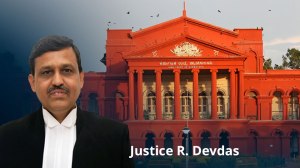
Geetha vs The Returning Officer. Writ Petition 15005/2020 decided on 17 December 2020.
Judgment Link: http://judgmenthck.kar.nic.in/judgmentsdsp/bitstream/123456789/357013/1/WP15005-20-17-12-2020.pdf
Full Judgment:
The grievance of the petitioner is that her nomination for the election to the Guddekoppa Gram Panchayat, Thirthahalli Taluk, has been rejected by the Returning Officer by order dated 13.12.2020 at Annexure-A. This writ petition is filed seeking a direction or to issue a writ of certiorari to quash the impugned order dated 13.12.2020 at Annexures-A.
2. When this Court called upon the learned counsel for the petitioner to make his submission regarding the maintainability of the writ petition in view of the statutory bar imposed under Section 15 of the Karnataka Grama Swaraj and Panchayat Raj Act, 1993 which provides that no election to fill a seat in the gram panchayat shall be called in question except by an election petition filed before the designated court within whose territorial jurisdiction the panchayat area concerned or the major portion of the panchayat area concerned is constituted by any candidate at said election, learned counsel submits that statutory bar under section 15 does not come in the way of this Court in exercising its extraordinary jurisdiction under Article 226 of the Constitution of India. Learned counsel placed reliance on a decision of the Division Bench in the case of Ramakrishnappa vs./Presiding Officer reported in ILR 1991 KAR 4421.
3. This Court has gone into the decision cited by the learned counsel for the petitioner. The decision rendered by the Division Bench on 06.11.1991 was in the backdrop of there being on express constitutional provision pertaining to the election of Panchayats, Municipalities, Municipal Corporations etc. The judgment was rendered having regard to Article 329 of the Constitution which dealt with the elections to the Parliament and State Legislature. There being no constitutional provisions, the Division Bench proceeded to hold that Article 329 could not be invoked with respect to the election to a Co-operative society.
4. The Constitution of India has undergone substantial change in the year 1993. Provisions covering the elections of Panchayat, Municipalities, Municipal Corporations and Co-operative Societies have been incorporated under separate chapters. Chapter IX which pertains to the panchayats was added into constitution w.e.f., 24.04.1993. Article 243-O clearly bars interference of Court in electoral matters pertaining to the panchayats. Article 243-O (b) provides that no election to any panchayat shall be called in question except by an Election Petition presented to such authority and in any such manner as is provided for by or under any law made by the Legislature of the State.
5. Consequently, the writ petition is not maintainable. If the petitioner is aggrieved by rejection of the nomination, she can proceed to file a Election Petition duly constituted before the designated court as provided under Section 15 of the Act.
Accordingly, the writ petition stands dismissed.
Compiled by S.Basavaraj, Advocate, Daksha Legal.

Electronic Research Private Ltd vs Canara Bank and others. Regular First Appeal 253/2000 decided on 22 December 2020.
Judgment Link: http://judgmenthck.kar.nic.in/judgmentsdsp/bitstream/123456789/357268/1/RFA253-00-22-12-2020.pdf
Held: Para 74. Section 238 of the Indian Contract Act, contemplates that if any misrepresentation is made or fraud committed by agents, acting in the course of their business for their principal, have the same effect of agreements made by the agents as if such misrepresentations or fraud had been made or committed by the principals but misrepresentation made or frauds committed by agents. The misrepresentation and frauds alleged to have been committed by the employees during the course of their action while working on behalf of the company, a principal, it is within their authority while acting upon and therefore such acts binds the principal employer. Master is liable for the fraud committed by the employees whether it was for the benefit of Master or not as held by the Hon’ble Apex Court in State Bank of India vs Smt. Shyama Devi reported in AIR 1978 SC 1263.
76. Plaintiff has to own the responsibility for the fraud committed by its employees. Indisputedly, no amount was credited to the Government revenue towards the customs duty liable to be paid on the imported goods which were cleared on the basis of fake TR-6 challans. The customs duty paid on demand made by the department, at any stretch of imagination cannot be held to be double payment. No person can siphon off the Government money and enrich themselves causing loss to the revenue. Indisputably, no credit is made to the account of the Government revenue. The primary liability is with the plaintiff – company to discharge the same
GOVINDARAJU @ KUTTI vs THE STATE OF KARNATAKA. CRIMINAL APPEAL No.1459/2019. Decided on 23 DECEMBER, 2020.
Judgment Link: http://judgmenthck.kar.nic.in/judgmentsdsp/bitstream/123456789/357186/1/CRLA1459-19-23-12-2020.pdf
Para 22. We have come across several cases, wherein the trial Courts during trial when the accused counsel was absent, closes the cross-examination of the defence as nil and proceed to pass the judgment of conviction and order of sentence against the accused. It is against the fundamental rights guaranteed to the accused persons under Articles 21, 22 and 39A of the Constitution of India as well as the provisions of Sections 303 and 304 of the Code of Criminal Procedure. In case the counsel for the defence was not present on the particular day, when the matter was posted for cross-examination or not at all appeared for ever to cross-examine the prosecution witnesses, it is the duty cast on the Court to ensure that opportunity should be given to the accused to engage the services of counsel or it is the duty of the Court to ensure to provide free legal assistance to the accused by appointing advocate from the Legal Services Authority, in order to provide fair trial.
23. In some of the criminal cases, the accused might be in judicial custody or might be suffering from poverty or similar circumstances and not able to engage counsel on his behalf. In those circumstances, the Court should act as Societal parents and ensure fair trial is provided before passing the judgment of conviction and order of sentence against the accused persons. Because of the mistake committed by the learned counsel for the accused, the accused should not be denied opportunity to cross- examine the prosecution witnesses. Providing a legal assistance is a constitutional mandate under Articles 21, 22(1) and 39A of the Constitution of India and further, Section 304 of the Code of Criminal Procedure provides for legal assistance to an accused on State expenditure.
24. In view of the above, in the present case, the trial Court is not justified in convicting accused without providing an opportunity to the accused to cross-examine the prosecution witnesses, which is nothing but denial of fair trial.
25. Our view is fortified by the dictum of the Hon’ble Supreme Court in the case of Ashok Debbarma v. State of Tripura reported in (2014)4 SCC 747, wherein the Hon’ble Supreme Court held at paragraphs 35 to 38 as under:
“35. Can the counsel’s ineffectiveness in conducting a criminal trial for the defence, if established, be a mitigating circumstance favouring the accused, especially to escape from the award of death sentence. The counsel for the appellant, without causing any aspersion to the defence counsel appeared for the accused, but to only save the accused from the gallows, pointed out that the records would indicate that the accused was not meted out with effective legal assistance. The learned counsel submitted that the defence counsel failed to cross-examine PW 1 and few other witnesses. Further, it was pointed out that the counsel also should not have cross-examined PW 17, since he was not put to chief-examination. The learned counsel submitted that the appellant, a tribal, coming from very poor circumstances, could not have engaged a competent defence lawyer to conduct a case on his behalf. Placing reliance on the judgment of the US Supreme Court in Strickland v. Washington [80 L Ed 2d 674 : 466 US 668 (1984)] , the learned counsel pointed out that, under Article 21 of our Constitution, it is a legal right of the accused to have a fair trial, which the accused was deprived of.
36. Right to get proper and competent assistance is the facet of fair trial. This Court in M.H. Hoskot v. State of Maharashtra [(1978) 3 SCC 544 : 1978 SCC (Cri) 468] , State of Haryana v. Darshana Devi [(1979) 2 SCC 236], Hussainara Khatoon (4) v. State of Bihar [(1980) 1 SCC 98 : 1980 SCC (Cri) 40] and Ranjan Dwivedi v. Union of India [(1983) 3 SCC 307 : 1983 SCC (Cri) 581], pointed out that if the accused is unable to engage a counsel, owing to poverty or similar circumstances, trial would be vitiated unless the State offers free legal aid for his defence to engage a counsel, to whose engagement, the accused does not object. It is a constitutional guarantee conferred on the accused persons under Article 22(1) of the Constitution. Section 304 CrPC provides for legal assistance to the accused on State expenditure.
38. Right to get proper legal assistance plays a crucial role in adversarial system, since access to counsel’s skill and knowledge is necessary to accord the accused an ample opportunity to meet the case of the prosecution. In Strickland case [Strickland v. Washington, 80 L Ed 2d 674 : 466 US 668 (1984)] , the US Court held that a convicted defendant alleging ineffective assistance of counsel must show not only that counsel was not functioning as the counsel guaranteed by the Sixth Amendment so as to provide reasonable effective assistance, but also that counsel’s errors were so serious as to deprive the defendant of a fair trial. The Court held that the defiant convict should also show that because of a reasonable probability, but for counsel’s unprofessional errors, the results would have been different.
26. For the reasons stated above and in the light of the principles enunciated in the dictums of the Hon’ble Supreme Court stated supra, we answer the point raised in the present criminal appeal in the affirmative holding that the appellant – accused has made out a case to remand the matter to the trial Court for providing an opportunity to him to cross-examine the prosecution witnesses, in order to fulfill the constitutional mandate as provided under Articles 21, 22(1) and Article 39A of the Constitution of India as well as the provisions of Sections 303 and 304 of the Code of Criminal Procedure.
Appeal allowed. Matter remanded to trial court.
Compiled by S. Basavaraj, Advocate, Daksha Legal.

KUNAL BAHL and another vs STATE OF KARNATAKA. CRIMINAL PETITION NO.4676 OF 2020. Decided on 7TH DAY OF JANUARY, 2021.
Judgment Link: http://judgmenthck.kar.nic.in/judgmentsdsp/bitstream/123456789/357138/1/CRLP4676-20-07-01-2021.pdf
HELD: 16.1 At the time of taking Cognisance and issuance of process, the Court taking Cognisance is required to pass a sufficiently detailed order to support the conclusion to take cognisance and issue process, in terms of the discussion above. The judicious application of mind to the law and facts of the matter, should be apparent on the ex-facie reading of the order of Cognisance.
16.2 When the accused is having an office, branch office, corporate office, sales office or the like within the Jurisdiction of the Magistrate where the offence has been committed and or continues to be committed, there would be no requirement for any enquiry under Section 202 of Cr.P.C. It would, however, be required for the Magistrate to in the order of issuance of summons/process record as to why the enquiry under Section 202 of Cr.P.C is not being held.
16.3 In the event of accused being an individual, if the said accused has a temporary residence within the Jurisdiction of the Magistrate, again merely because he does not have a permanent residence, there is no enquiry which is required to be conducted under Section 202 of Cr.P.C. It would, however, be required for the Magistrate to in the order of issuance of summons/process record as to why the enquiry under Section 202 of Cr.P.C is not being held.
16.4 When the accused has no presence within the Jurisdiction of the Magistrate where the offence has been committed, then it would be mandatory for an enquiry under Section 202 of the Cr.P.C to be held.
16.5 In the event of accused being aggrieved by the issuance of Summons, the said accused immediately on receipt of the Summons and/or on appearance before the Magistrate is required to make out his grievance before the Magistrate Court and/or by petition under Section 482 Cr.P.C. If there is any delay, in such challenge and/or if challenge has not made within reasonable time, the accused would not be entitled to raise the grievance that the procedure under Section 202 of Cr.P.C. has not been followed on account of delay and latches.
16.6 Only a Court in which the accused has a presence, like registered office, branch office, corporate office or the like could exercise Jurisdiction as regards an offence relating to an e-commerce transaction.
16.7 This of course would not apply to a Cyber Crime, which comes under global jurisdiction according to the IT Act, 2000. This means that any cyber-crime complaint can be registered with any of the cyber cells in India, irrespective of where the crime was originally committed.
16.8 An intermediary as defined under Section 2(w) of the Information Technology Act or its directors/officers would not be liable for any action or inaction on part of a vendor/seller making use of the facilities provided by the intermediary in terms of a website or a market place.
16.9 An intermediary would not be responsible and/or liable for sale of any item not complying with the requirements under the Drugs and Cosmetics Act, 1949 on its platform since the essential ingredients of Section 18 (1)(c) of the Act not having been fulfilled. Neither Snapdeal nor its Directors can be prosecuted for the offence under Section 27(b)(ii) of the Act.
Compiled by S. Basavaraj, Advocate, Daksha Legal.
Dr. Prashant Babaji vs The State of Karnataka and others. Writ Petition 10807/2018 decided on 30 December 2020.
Judgment Link: http://judgmenthck.kar.nic.in/judgmentsdsp/bitstream/123456789/357135/1/WP10807-18-30-12-2020.pdf
Relevant paragraphs: 14. It is trite law that this Court under Article 226 of the Constitution of India would be loathe to interfere with the marks awarded by a selection committee to the candidates who appear before them, save in exceptional circumstances of demonstrable arbitrariness or malafides. The case at hand is not where arbitrariness is writ large by way of any demonstration or malafides have been pleaded. The prayer sought in terms of the grounds urged is that the award of marks to the third respondent is on the higher side, both on journals and the interview. I cannot telescope my imagination to the minds of the selection committee to hold the marks awarded being excessive or insufficient. It is for the experts to award marks for publications. This Court while exercising judicial review would not sit in the armchair of experts and assess or award marks for such publications.
16. Cases referred to: Dalpat Abasaheb Solunke v. B.S. Mahajan reported in (1990) 1 SCC 305, Basavaiah (Dr.) v. Dr. H.L. Ramesh reported in (2010) 8 SCC 372, Neelima Misra v. Harinder Kaur Paintal [(1990) 2 SCC 746, Dalpat Abasaheb Solunke v. Dr. B.S. Mahajan [(1990) 1 SCC 305, Chancellor v. Dr.Bijayananda Kar [(1994) 1 SCC 169, J&K State Board of Education v. Feyaz Ahmed Malik [(2000) 3 SCC 59], DentalCouncilof India v. SubhartiK.K.B.Charitable Trust [(2001) 5 SCC 486], Medical Council of India v. Sarang [(2001) 8 SCC 427], B.C.Mylarappa v. Dr.R. Venkatasubbaiah [(2008) 14 SCC 306, Rajbir Singh Dalal (Dr.) v. Chaudhari Devi Lal University [(2008) 9 SCC 284, All India Council for Technical Education v. Surinder Kumar Dhawan [(2009) 11 SCC 726].
17. In the light of the law laid down by the Apex Court in the aforesaid cases, the plea of the petitioner that there is arbitrariness in awarding marks under the “fixed parameters” and in the interview would not hold water. As observed hereinabove, under the “fixed parameters” both the petitioner and the third respondent have been given equal marks. How much marks is to be given under those parameters is beyond the pane of judicial review. The other ground with regard to marks awarded in the interview being on the higher side to the third respondent also cannot be gone into as no malafides are pleaded and proved by the petitioner.
Compiled by S. Basavaraj, Advocate, Daksha Legal.
Khadir Sab vs State of Karnataka. Criminal Petition 6173/2020 decided on 16 December 2020. Judgment Link: http://judgmenthck.kar.nic.in/judgmentsdsp/bitstream/123456789/354801/1/CRLP6173-20-16-12-2020.pdf
Relevant paragraphs: 9.6 In the present facts and circumstances, the allegation against the petitioner is that he was in possession of prohibited arm with an intention to sell the same. The said offence does come under Section 3 of the Arms Act, 1959 but comes within the purview of Section 7 of the Arms Act.
9.7. In terms of Section 39 of Arms Act, sanction is required only in respect of an offence under Section 3 of the Act that is only regarding possession of the Arm. No such sanction is required as contemplated in respect of an offence under Section 7 of the Act where prohibited arm is in possession and/or the same is proposed to be sold.
Compiled by S. Basavaraj, Advocate, Daksha Legal.
Sri. Sai Keshava Enterprises and others vs The State of Karnataka and others. Writ Petition 8851/2020 and connected matters decided on 7 January 2021.
Judgment Link: http://judgmenthck.kar.nic.in/judgmentsdsp/bitstream/123456789/357096/1/WP8851-20-07-01-2021.pdf
Relevant paragraphs: 1. The main issue involved in these writ petitions is: “Whether the State Legislature has legislative competence to enact sub Rule (7) of Rule 42 of the Karnataka Minor Mineral Concession Rules, 1994, authorizing collection of entry fee from a person who transports certain category of minor minerals from other States with valid transit permit to the State of Karnataka?”
25. A careful perusal of the impugned sub-rule in the present petitions shows that it deals with only transportation of processed building stone materials from other States with a valid permit. It provides for levy of amount of Rs.70/- per metric ton from the person who transports processed building stone material as mentioned in the impugned sub-rule from other States to State of Karnataka with a valid permit.
32……the State Legislature is empowered to make a plenary legislation by invoking Entry-66 of List-II. However, the subject of regulating mining operations outside the State is not included in entry-66, List-II. Entry-66 is about prescribing fees in respect of any of the matters in list-II. Entry-23 in List-II is about regulation of mines and mineral development subject to the provisions of List-I with respect to regulation and development under the control of the Union. The field is occupied by the said Act of 1957 enacted by the Union Government which does not provide for levy of fees as provided in the impugned sub-rule. Moreover, the State Government has not enacted any law in terms of entry-66 of the said list. Assuming that such a power to levy fee is vested in the State Legislature by virtue of Entry-66 of List-II, a rule making power can be exercised provided that a law is enacted by the State Legislature authorizing such a levy by making rules. No such law has been enacted.
33. As the State Government has no legislative competence to make rules for levy of transportation fee or charge on minerals lawfully excavated in other States, it is not necessary for us to go into the question of quid pro quo regarding existence of co-relation between the fees collected and the services being rendered.
Compiled by S. Basavaraj Advocate Daksha Legal.

Keerthi Kumar vs State of Karnataka and another. Writ Petition 6278/2018 decided on 8 December 2020.
Judgment Link: http://judgmenthck.kar.nic.in/judgmentsdsp/bitstream/123456789/352928/1/WP6278-18-08-12-2020.pdf
Relevant paragraphs: 15.15. …, once the land has been gifted under Bhoodan and Vidyadan scheme, there is no right which is created in the donor or the legal representatives of donor to seek for return of the lands gifted for any reason whatsoever. Once the land is gifted to the Government, it is the responsibility of the Government to put the land to the use for which it was granted by way of a gift. At the most, the donor or the legal representatives of the donor can seek for a direction to direct the Governmental authorities to put the land to use for which it was so gifted, they cannot seek for return of the land granted by way of a gift since the gift is complete on the gift deed being executed, there cannot be return of the land.
15.17. The Resumption of the land being not capable of being done on account of Karnataka Bhoodan Yagna (Repeal) Act, 1962, it cannot be now contended by the petitioner that the land is required to be resumed.
Compiled by S. Basavaraj, Advocate, Daksha Legal.
Have a WordPress.com account? Log in now.

