ಕಳೆದ ಹಲವಾರು ವರ್ಷಗಳಲ್ಲಿ ಯಾವುದೇ ಸ್ವತ್ವವಿಲ್ಲದೆ ತಮ್ಮ ವ್ಯಾಜ್ಯಗಳನ್ನು ಕಳೆದುಕೊ0ಡ ಕಕ್ಷಿದಾರರು ವಕೀಲರ ವಿರುದ್ದ ಕ್ಷುಲ್ಲಕ ದೂರು ಕೊಡುವುದನ್ನು ವಕೀಲರ ಪರಿಷತ್ತು ಗಮನಿಸಿದೆ. ಆದರೆ ತಮ್ಮ ಕಕ್ಷಿದಾರರ ಪರವಾಗಿ ಕಷ್ಟಪಟ್ಟು ಹೋರಾಡಿದ ವಕೀಲರೊಬ್ಬರ ಮೇಲೆ ಎದುರುದಾರರೊಬ್ಬರು ದೂರು ನೀಡಿ ವಿನಾಕಾರಣ ಎರಡು ವರ್ಷಗಳ ಕಾಲ ಕಿರುಕುಳ ನೀಡಿದ್ದಕ್ಕಾಗಿ ಅರ್ಜಿದಾರರಿಗೆ ಪರಿಷತ್ತು ರೂ. 50,000 ದ0ಡ ವಿಧಿಸಿದೆ.
ಆದಿತ್ಯ ವಿವಿದೊದ್ದೇಶ ಸಹಕಾರಿ ಸ0ಘವು ತಾನು ಸಾಲ ಕೊಟ್ಟವರ ಪರವಾಗಿ ವಕಾಲತ್ತು ವಹಿಸಿ ಪ್ರಭಲವಾಗಿ ವ್ಯಾಜ್ಯ ನಡೆಸಿ ಭಾರಿ ನಷ್ಟವು0ಟು ಮಾಡಿದಾರೆ0ದು ವಕೀಲರೊಬ್ಬರ ಮೇಲೆ ದೂರು ನೀಡಿತ್ತು.
ವಕೀಲರೊಬ್ಬರು ತಮ್ಮ ಕೆಲಸವನ್ನು ಕಷ್ಟಪಟ್ಟು ಮಾಡಿದ ಬಗ್ಗೆ ದೂರು ನೀಡಿ ತೊ0ದರೆಕೊಟ್ಟ ಬಗ್ಗೆ ಪರಿಶತ್ ಗ0ಬೀರವಾಗಿ ಪರಿಗಣಿಸಿತ್ತು.
ಈ ಸ0ಬ0ದ ಕಳೆದ ಎರಡು ವರ್ಷಗಳಿ0ದ ವಿಚಾರಣೆ ನಡೆದು ಅರ್ಜಿಯನ್ನು ಕೂಲ0ಕುಷವಾಗಿ ಪರಿಶೀಲಿಸಿದ ಶಿಸ್ತು ಸಮಿತಿಯು ಇ0ತಹ ದೂರುಗಳಿ0ದ ವಕೀಲರ ಮನಸ್ತೈರ್ಯವು ಕುಗ್ಗುತ್ತದೆ ಈ ಅರ್ಜಿಯನ್ನು ವಜಾಗೊಳಿಸಬೇಕಾಗುತ್ತದೆ ಎ0ದು ಅಭಿಪ್ರಾಯಪಟ್ಟಿತು. ಮತ್ತು ವಕೀಲರನ್ನು ವಿನಾಕಾರಣ ಕಿರುಕುಳಕ್ಕೆ ಒಳಪಡಿಸಿದ್ದಕ್ಕಾಗಿ 50,000 ದ0ಡವನ್ನು ಸಹ ವಿಧಿಸಿದೆ.
The judgment of the Madras High Court in Rajakannu Vs. State of Tamil Nadu and Ors is the inspiration behind the movie “Jai Bheem”. Many may not know about the learned judges who delivered this judgment. Justice P.S. Mishra and Justice Shivaraj V Patil adopted inquisitorial system in Habeus Corpus Petition 711 of 1993 and delivered brief yet powerful judgement on 1 January 1994. Justice Prabha Shankar Mishra was appointed as a Judge of Patna High Court in 1982; was transferred to Madras High Court in 1990; was thereafter appointed as Chief Justice of Andhra Pradesh High Court in 1995 and of Calcutta High Court in 1997. A few weeks before retirement, Justice P.S. Mishra submitted his Resignation on July 5, 1998. After tendering his Resignation from the post of Chief Justice of Cal HC, Justice Mishra told BBC, 3 Judges appointed to SC were all his Junior. He criticized the way Judges were appointed to India’s Highest Court. Justice M.M. Punchhi was the CJI then. It is understood, repeated complaints were made to him. Journeying through 4 High Courts, Justice Mishra finally donned the robe of a Senior Counsel at SC and lived an honest, hard-working life. Justice Shivaraj V Patil was elevated as Judge, High Court of Karnataka at Bangalore on 29.3.1990. In April, 1994, was transferred to High Court at Madras and continued as Judge, till 27.12.1998. Was acting Chief Justice of High Court of Madras from 28.12.98 till 19.01.1999. Assumed office as Chief Justice of High Court of Rajasthan on 22.1.1999. Elevated as Judge of the Supreme Court of India and assumed office on 15.3.2000. Retired on 11.1.2005. Both the judges known for their hardwork and unquestionable integrity dealt with the custodial death of Rajakannu. The judgment (enclosed) narrates the sad state of affairs as to how a daily-wage agricultural labourer was done to death by the Police. R. Parvathy her husband Rajakannu were daily-wage agricultural labourers having four children. On 20 March 1993, Rajakannu left the house at about 6 A.M. in search of work. At about 12 noon on the said date, Anthonisami, Sub Inspector of Police, Kammapuram Police Station, Vridhachalam Taluk in South Arcot District, and others, came along with five policemen to village. One of the companion constables was Veeraswami. They took Parvathy, her two sons and her brother-in-law in the van in which they had come to the police Station located at a distance of about 20k.m. from their village. She was left in one place and the other three were taken to the other room and without any provocation the police started beating her with a cane all over her body. After finishing beating her, police went and beat her two sons and her brother-in-law. Around 11.00 p.m. the sub inspector left the place and she was given some food by the writer of the police station. She slept in the station itself in the night. Her husband, who came to know about her and her sons and brother-in-law came to the police station around 12 noon on 21.3.1993. The police detained Rajakannu and let Parvathy her sons and her brother-in-law go. On 22.3.1993 Parvathy returned to the Police station with some food for her husband. To her horror she saw Rajakannu tied to the window bar and was being beaten up on both sides. He was so beaten that he fainted. He could not eat anything and he fell down. When she questioned she was beaten up. After the beating they received at the hands of the police their condition had deteriorated, a homeopathic doctor, who lived near the police station was called and he put some injection and also applied ointment on the wounds of Rajakannu. As soon as the doctor left the place, once again they started beating Rajakannu and dragged him by holding his hair inside the station and dumped him in one corner. Parvathy was forced to leave the station. Even before she could reach her village she was told that her husband had escaped from custody and he was missing. Parvathy went in search of her husband to the police station and made desperate enquiries from any and every person concerned with her husband’s detention at the police station. Finally when her efforts failed, she also desperately sent telegrams to the Chief Minister of the State and the Chief Justice of High Court of Madras. The High Court of Madras admitted the petition on 21.4.1993 to hearing. The court ordered the case to be called on 28.4.1993. The police contended that Rajakannu was missing. Case in Cr. No. 114/93 was registered on the file of Kammapuram Police Station as man missing and the same was being investigated by him. As to the allegations of assault, Deputy Superintendent of Police, Vridhachalam, referred the matter to the Revenue Divisional Officer, Vridhachalam R.Krishnamoorthy for enquiry. The Sub-Inspector contended that 20.3.1993 one Kadirvel Padayachi, son of Ponnusamy Padayachi of Gopalapuram Village filed some complaint with him for an offence of theft. The complainant had alleged that some persons trespassed into his house on the night of 19.3.1993 and committed theft of jewellery of about 43 sovereigns valued at Rs.1,30,000/-. This was registered in Crime No. 107/93 for an offence under Ss.457 and 380, Indian Penal Code. In course of the investigation the enquiry revealed that some persons belonging to the Kurava community residing in another village had come to the complainant’s village on the night of the occurrence. Accordingly he went to Rajakannu’s village to make enquiry. However, he denied the allegation that he assaulted Rajakannu or Parvathy and her sons and the brother-in- law. The Madras High Court ordered enquiry and B.Perumalswamy, IPS and Inspector General of Police, CB, CID, Madras, took up the investigation. He recorded or got recorded the statements of the witnesses for the prosecution under Section 161 Crl.P.C. and collected or got collected such other materials which he thought were relevant for the prosecution. Enquiry revealed death of Rajakannu. The identification of the dead body and the cause of death, the time of death and other circumstances together with the report submitted before the Court disclosed offences punishable on various counts including under Section 302, I.P.C. and 302 read with Section 34, Sections 218 and 220, Indian Penal Code. The Hon’ble Judges observed “This case is only one such example where indifference after the complaint was lodged, of the men in power and senior police officers and casual approach of the courts in the proceedings before them like the instant petition for a writ in the nature of habeas corpus, cause severe blow to the truth that it is almost lost. If such people who are involved with the affairs of the police as well as the Courts rise to the occasion and act promptly, real danger to the system and the polity can be avoided. This will also show that while there are some bad men involved in the affairs of the State and hold responsible positions including the position of the Officer in-charge of a police station who are primarily concerned with the maintenance of law and order and required to investigate the cases on information, there are men who can be trusted and they can deliver the goods.” Ultimately the court passed the following order: (i) We accordingly order that the Government shall award a compensation in a sum of Rs.1,10,000/- (Rupees one lakh and ten thousand only) to the petitioner and pay in cash to her a sum of Rs.10,000/- (Rupees ten thousand only) and invest the remaining Rs.1,00,000/- (Rupees one lakh) on her behalf in some safe scheme without any risk to deliver to her a monthly income of not less than Rs.1,000/-. Besides the monetary compensation, the State shall forthwith recognize the tenancy of the petitioner and accordingly issue necessary orders of assignment. (ii) The Government shall invest a sum of Rs.25,000/- (Rupees twenty five thousand), in addition to the above, in the name of the minor daughter of the petitioner, viz., Chinnaponnu, which money the petitioner shall not be entitled to withdraw and no interest on that deposit shall be paid either to the petitioner or to anyone else. The said money of Rs.25,000/- together with the accrued interest shall be delivered to the petitioner’s minor daughter Chinnaponnu only when she would attain majority and when she is married. (iii) A separate monetary compensation in a sum of Rs.50,000/- (Rupees fifty thousand) shall be paid by the Government to Achi, the other victim woman, who has suffered assault badly at the hands of the fourth respondent and his men; Rs.25,000/- (Rupees twenty five thousand) to Kullan, stepson of Achi and Rs.10,000/- (Rupees ten thousand only) each to Ravi, Mariappan, Rathinam, Govindarajan and Kolanchi, who in the course of the investigation have been found to have suffered at the hands of the fourth respondent and his men. We are informed that Ravi, son of the petitioner R.Parvathi, is a minor and Kolanchi, son of Achi, is also a minor. It is obvious that any compensation paid to them will be received on their behalf by their guardians only. It will be proper, in our opinion, in such a situation to order that Rs.10,000/- awarded to Ravi and Rs.10,000/-to Kolanchi by way of compensation shall be invested by the State in their favour in such a way that on attaining majority they receive the amount of compensation with interest thereon. (iv) The investments for the purposes as above must be done within a week of the receipt of a copy of this order. (v) All proceedings in connection with the assignment of the land to the petitioner R.Parvathi as directed above, should be completed within three (3) months from the date of receipt of a copy of this order. (vi) It will be open to the Government of the State to realise and recover the amount of compensation from the fourth respondent herein or any of the accused persons in the case in the event of trial in court in accordance with law. The Hon’ble Judges of the Madras High Court not only upheld the rule of law, but also exhibited empathy beyond the call of duty. Over the years, reforms in criminal investigations are brought because of similar judicial decisions. The judgment in Rajakannu vs State of Tamil Nadu and Ors however stands a classic example of Court’s prompt intervention to secure justice to the victims of police brutality.
M.S.Srinivasa vs Union of India and another Writ Petition 16518 of 2021 decided on 10 November 2021 Judgment Link: http://judgmenthck.kar.nic.in/judgmentsdsp/bitstream/123456789/419607/1/WP16518-21-10-11-2021.pdf Petitioner is an advocate by occupation; he had appeared for the appellant in appeal vide A.No. 279/2019 CUS(B-Air); the Commissioner of Customs (Appeals) vide order dated 16.03.2021 at Annexure-D dismissed the appeal; in the course of order, the Commissioner has made certain observations at para 8 therein which read are as under: “8. The objective of imposing a penalty of Rs.15000/- is only to impress upon the appellant that they ought to be more careful in future and do justice to their role and duties rather than take shelter behind technicalities and advocates who think they can defend the indefensible by giving their own skewed understanding of the law and misguiding appellants.”
Having heard the learned counsel for the parties and having perused the petition papers, this Court is inclined to grant reprieve to the petitioner as under and for the following reasons: (a) The legal profession is of vital importance not only to the administration of justice but also for the rule of law & good governance; lawyers are to the civil society what soldiers are to the frontiers of a nation; lawyers profession is the only profession constitutionally recognized; Marcus Tullius Cicero centuries ago called this profession as the ‘noble profession’; lawyers lend voice to the voiceless; they stand unfazed during social tumult; our Freedom Struggle was led by lawyers; our Constitution is the child of great legal brains; of course, others too have contributed a lot, cannot be denied; the great principles of governance and constitutional doctrines like the doctrine of Basic Structure are the contribution of tall lawyers; it is they who draw the chariot of law & justice; words fall short to extol the greatness of this profession. (b) It is relevant to quote what the great sages of law have said about advocacy & advocates: ‘Their vocation is to fight for truth. The light of truth is their weapon; goodwill is their shield. Occasionally however they fight for a mistaken cause. By tradition they seek to eradicate this crime against the intellect as well as certain other less serious offences. Sometimes they succeed’. A lawyer has a duty to the court, a duty to his client and a duty to the profession as well; he has his privileges too; the observations of Calcutta High Court in EMPEROR vs. RAJANIKANTA BOSE & OTHERS, ILR (1922) 49 Cal.732 are worth reproducing:
‘The practice of the law is not a business open to all who wish to engage in it. It is a personal right or privilege …. It is in the nature of a franchise from the State. That you are a member of the legal profession is your privilege; that you can represent your client is your privilege; that you can in that capacity claim audience in Court is your privilege. Yours is an exalted profession in which your privilege is your duty and your duty is your privilege. They both coincide”
(c) The hallmarks of legal profession, to borrow the words of jurist Dr. Upendra Baxi are: ‘Courage, Craft & Contention’; advocacy is a distinguished profession affording full scope for the talents of the brightest intellect; a lawyer should be free to put forward creative & genericideas concerning the case, unhindered & fearlessly; in the free trade of ideas, some “intellectual collisions” do unavoidably occur; they are like sparks of light and therefore are welcome; that facilitates the march of law whereby freedom of citizens broadens from ‘precedent to precedent’; however this is not to sanction indiscipline & lawlessness in the adjudicatory process; the horizons of due process of law widen by novelty & innovation of ideas; it is not impertinent to quote what the American Law Professor Grant Gilmore (1910-1982) had said: “In Heaven there will be no law and the lion will lie down with the lamb. In Hell there will be nothing but law, and due process will be meticulously observed”.
(d) At times ‘Law shows its face in mask’, said Jeremy Bentham (1748-1832) more than a century ago; novel & innovative arguments come handy in removing the mask and seeing the true face of law & justice; merely because the arguments of a lawyer are laced with novelty & innovation, at times that may not be to the liking of adjudicating authority, the judgments cannot be couched in unhappy words; petitioner is more than justified in submitting that the Courts & adjudicatory authorities should not be too sensitive; they should give a greater leverage to thecounsel on feet in conducting their cases; this is as of necessity.
(e) In some occasions that are marked by their rarity, one may transcend the traditional contours of professional conduct; but this happens even with adjudicators as well; the ultimate object is to do justice to the cause; it hardly needs to be stated that the judgments & orders should not be written with a pen dipped in acid; after all ‘acidity’ affects health; the acidic words rob away the living beauty of the scripts; viewed from this angle, the highlighted portion of the observations in the subject order need to be expunged; it is in the best interest of both the stakeholders, namely, Bar & the Bench; such expunction would only add to the beauty of the order in question which is meticulously texted with appreciable articulation.
In the above circumstances, this writ petition succeeds and the objectionable expression in the order in question as mentioned supra by highlighting, is expunged; rest all in the subject order remains intact.
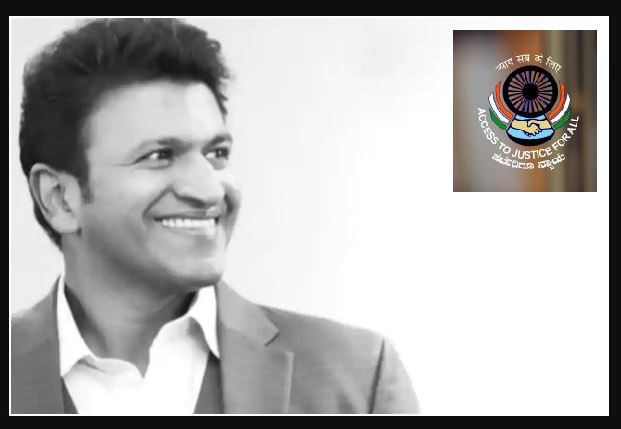
ಕನ್ನಡದ ಪ್ರತಿಭಾವ0ತ ನಟ ಪುನೀತ್ ರಾಜ್ ಕುಮಾರ್ ತಮ್ಮ ಜೀವಿತ ಕಾಲದಲ್ಲಿ ಸಾವಿರಾರು ಜನರ ಸೇವೆಯನ್ನು ಕೊ0ಚವೂ ಪ್ರಚಾರವಿಲ್ಲದೆ ಮಾಡಿದ್ದು ಎಲ್ಲರಿಗೂ ತಿಳಿದ ವಿಷಯ.
ಕರ್ನಾಟಕ ರಾಜ್ಯ ಕಾನೂನು ಸೇವೆಗಳ ಪ್ರಾದಿಕಾರ ತ್ವರಿತ ನ್ಯಾಯದಾನಕ್ಕೆ ಪಣತೊಟ್ಟು ಹಲವಾರು ಕಾರ್ಯಕ್ರಮಗಳನ್ನು ರಾಜ್ಯಾದ್ಯ0ತ ಹಮ್ಮಿಕೊ0ಡಿದೆ. ರಾಜ್ಯದ ಪ್ರತಿ ಮೂಲೆ ಮೂಲೆಗೂ ನ್ಯಾಯ ವಿಲೇವಾರಿಯ ಜೊತೆಗೆ, ನಿರ್ಗತಿಕ ಮಕ್ಕಳ ವಿದ್ಯಾಬ್ಯಾಸಕ್ಕೂ ಕ್ರಮ ಕೈಗೊ0ಡಿದೆ. ಸಿಗ್ನಲ್ ಬಳಿ ಮಾರಾಟಮಾಡುವ ಜನರ ಮಕ್ಕಳಿಗೋಸ್ಕರ ಹಳೆಯ ಬಸ್ ಗಳನ್ನು ಪಾಠಶಾಲೆಗಳನ್ನಾಗಿ ಮಾಡಿ ಈ ಮಕ್ಕಳಿಗೆ ಶಿಕ್ಷಣ ನೀಡುವ ಮಹತ್ತರ ಕಾರ್ಯಕ್ಕೆ ಚಾಲನೆ ನೀಡಲಾಗಿದೆ.
ಕರ್ನಾಟಕ ರಾಜ್ಯ ಕಾನೂನು ಸೇವೆಗಳ ಪ್ರಾದಿಕಾರದ ಹಿ0ದಿನ ಅಧ್ಯಕ್ಷ ನ್ಯಾಯಮೂರ್ತಿ ಅರವಿ0ದ್ ಕುಮಾರ್ ಕೆಳ ತಿ0ಗಳ ಹಿ0ದೆ ಪುನೀತ್ ರಾಜ್ ಕುಮಾರ್ ರವರನ್ನು ವಿಮಾನ ನಿಲ್ದಾಣದಲ್ಲಿ ಬೇಟಿಯಾದ ಸನ್ನಿವೇಶದಲ್ಲಿ ಪ್ರಾದಿಕಾರದ ಕಾರ್ಯಕ್ರಮಗಳ ಬಗ್ಗೆ ಜನಸಾಮನ್ಯರಿಗೆ ತಿಳಿಸಲು ನೀವು ತಯಾರಿದ್ದೀರಾ ಎ0ದಾಗ ಒ0ದು ಕ್ಷಣವೂ ಯೋಚಿಸದೆ ಯಾವುದೆ ಪ್ರತಿಪಲಾಕ್ಷೇ ಇಲ್ಲದೆ ಪ್ರಾದಿಕಾರದ ರಾಯಭಾರಿಯಾಗುದಾಗಿ ಪುನೀತ್ ಹೇಳಿದ್ದರು.
ಈ ವಿಶಯವನ್ನು ನ್ಯಾಯಮೂರ್ತಿ ಅರವಿ0ದ್ ಕುಮಾರ್ ಕರ್ನಾಟಕ ರಾಜ್ಯ ಕಾನೂನು ಸೇವೆಗಳ ಪ್ರಾದಿಕಾರದ ಸಭೆಯಲ್ಲಿ ಕೂಡ ಹೇಳಿದ್ದರು. ಮು0ದಿನ ದಿನಗಳಲ್ಲಿ ಈ ಬಗ್ಗೆ ವಿಡಿಯೊ ಚಿತ್ರೀಕರಣ ಕೂಡ ಮಾಡಿಸುವುದಾಗಿ ಹೇಳಿದ್ದರು.
ಆದರೆ ತಮ್ಮ ನೂರಾರು ಸಮಾಜಸೇವೆಗಳ ಜೊತೆ ಕರ್ನಾಟಕ ರಾಜ್ಯ ಕಾನೂನು ಸೇವೆಗಳ ಪ್ರಾದಿಕಾರದ ರಾಯಭಾರಿಯಾಗಿ ಜನಸಾಮಾನ್ಯರಿಗೆ ಮನೆಬಾಗಿಲಿಗೆ ನ್ಯಾಯ ಒದಗಿಸುವ ಮಹತ್ತರ ಕಾರ್ಯವನ್ನು ಕೈಗೊಳ್ಳುವ ಮೊದಲೇ ನಿಧನರಾಗಿದ್ದು ನಮ್ಮೆಲ್ಲರಿಗೂ ಒದಗಿದ ದೌರ್ಬಾಗ್ಯ.
ಪುನೀತ್ ರಾಜ್ ಕುಮಾರ್ ಹಾಕಿಕೊಟ್ಟ ಸಮಾಜಸೇವೆಯ ಕೆಲಸಗಳನ್ನು ಎಲ್ಲರೂ ಅದರಲ್ಲೂ ಯುವ ವಕೀಲರು ಮು0ದುವರೆಸುವುದು ಪುನೀತ್ ಅವರ ಆತ್ಮಕ್ಕೆ ಶಾ0ತಿ ತರುವ ನಿಜವಾದ ಮಾರ್ಗ.
ಎಸ್. ಬಸವರಾಜ್, ಸದಸ್ಯ, ಕರ್ನಾಟಕ ರಾಜ್ಯ ವಕೀಲರ ಪರಿಷತ್ 9845065416
Yesterday, in Legal Authority function, a distinguished speaker of Karnataka High Court suddenly suffered throat allergy and it took a minute or two to recover.
While we are taking care of hygiene everywhere, we have completely ignored mic 🎤 which is a dangerous instrument.
A person while speaking through mic, invariably spews relatively small amount of saliva on the surface of the mic. Unless the mic is cleaned immediately after his speech, the next speaker certainly comes in contact with the residue left on the mic. This is extremely dangerous especially during Corona pandemic.
When the basic structure case was argued before Nigerian High Court, I observed how the mic was cleaned immediately after the arguments of a lawyer was over.
Apart from using sanitizer, use & throw masks can be used to cover the mic.
ರಾಜ್ಯ ಕಾನೂನು ಸೇವೆಗಳ ಪ್ರಾಧಿಕಾರ ಕಲಬುರಗಿಯಲ್ಲಿ ಆಯೋಜಿಸಿದ್ದ ಕಾನೂನು ಸೇವೆಗಳ ಕಾರ್ಯಕ್ರಮಗಳ ಉದ್ಘಾಟನೆಯಲ್ಲಿ ಮಾತನಾಡಿದ ನ್ಯಾಯಮೂರ್ತಿ ಬಿ. ವೀರಪ್ಪ ಸ0ವಿದಾನದ ದ್ಯೇಯೋದ್ದೇಶಗಳ ಅಡಿಯಲ್ಲಿ ಹೇಳಿದ0ತೆ ಸರ್ವರಿಗೂ ಸಮಪಾಲು. ಸರ್ವರಿಗೂ ಸಮಬಾಳು ತರುವುದು ರಾಜ್ಯ ಕಾನೂನು ಸೇವೆಗಳ ಪ್ರಾಧಿಕಾರದ ಉದ್ದೇಶವಾಗಿದೆ ಎ0ದು ಹೇಳಿದರು.
ರಾಜ್ಯ ಕಾನೂನು ಸೇವೆಗಳ ಪ್ರಾಧಿಕಾರದ ಇದುವರೆಗಿನ ಸಾದನೆಗಳ ಬಗ್ಗೆ ಅ0ಕಿ ಅ0ಶಗಳನ್ನು ಕೂಡ ನ್ಯಾಯಮೂರ್ತಿ ಬಿ. ವೀರಪ್ಪ ನೀಡಿದರು.
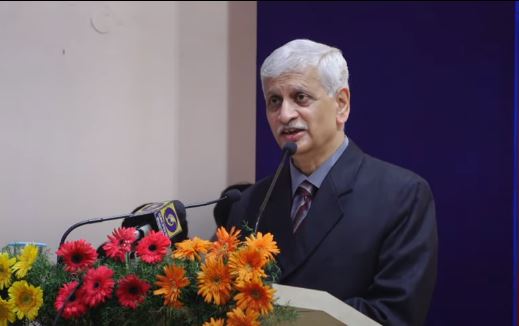
Participating in the “Actualization of Rights and Entitlements in Achieving SDGs-2030”, as chief guest, Justice Uday Umesh Lalit, Judge Supreme Court of India and Executive Chairman, National Legal Services Authority stressed the need for lawyers with experence taking up probono legal work. The relevant portion of the speech is below.
Is it that 99% of our general population doesn’t want legal aid or they don’t aspire to be given the benefit of legal aid? There could be two reasons. (1) Most of them are not even aware that that it is their constitutional right to be provided, to be afforded free legal aid or (2) Second part is more dangerous but perhaps they don’t have confidence in the setup or in the machinery of legal aid.
We need to do a lot of self introspection. Perhaps our qualitative assistance must be over greater order. Just as I gave you the example of a child who is entitled to have quality education, similarly every beneficiary is entitled to have good quality legal aid. Legal aid to the poor does not mean poor legal aid. It has to be of a better quality, better standard and better level. That’s why the programs like this, SOP to have training manual for panel advocates and so on and so forth are steps in that direction.
Merely training the panel lawyers merely spending money on that, will that be sufficient?. Will that be the complete answer to the problem? The answer to the problem lies in the fact that some of the leading advocates at the bar, senior advocates must take up legal aid as a matter of choice as a matter of practice and keep on appearing in matters pro bono so that the man who comes through the door of the legal aid service clinic is assured that it’s not going to be an affair which will be botched up but it’s quality legal aid which will be extended to him. Once we develop that atmosphere, then this outreach program will have tremendous amount of response. Outreach program yes at one level that we must actually make ourselves known. We must teach them that yes you have a right. But merely teaching them will not be the final and complete solution unless and until when it comes to court based legal assistance. Because we as say national legal Services Authority or Karnataka state legal Services Authority, we can only provide an apparatus.
The final legal aid when it comes to court based litigation has to be done through the lawyers in question. Therefore large and larger number of lawyers must get associated; good quality lawyers must get associated. People must come forward to do pro bono work. The moment we do that, that will actually bring in the atmosphere inculcate the habit and will correspondingly generate an atmosphere of confidence in the minds of general public that yes legal aid is the Raja Marga to the Courts of law rather than being some kind of a back entrance to the courts of law.
2.This is a classic case where the political parties and the Police authorities have tried to misuse their power to bury the truth in respect of an unnatural death of one Yogishgouda goudar.
These writ petitions are filed by the accused persons stated supra under Articles 226 and 227 of the Constitution of India r/w Section 482 of the Code of Criminal Procedure, praying for a writ in the nature of certiorari to quash the Government Order dated 6.9.2019 made in HD 48 PCB 2016 as per Annexure-A, according sanction to the Central Bureau of Investigation (‘CBI’ for short), under Section – 6 of Delhi Special Police Establishment Act, 1946, to conduct further investigation with respect to Crime No.135/2016, registered with the Dharwad Sub-Urban Police Station, Dharwad for the offence punishable under Section 302 of IPC and writ in the nature of certiorari to quash the FIR dated 24.6.2019
In view of the aforesaid rival contentions urged by the learned counsel for the parties, the points that would arise for our consideration in these writ petitions are:
i) Whether the petitioners – Accused Nos.1,5,15,16 and 21, in these writ petitions have made out a case to quash the impugned Government Order bearing No.HD 48 PCB 2016, Bengaluru, dated 6.9.2019, by which sanction has been accorded to the Central Bureau of Investigation, under Section (6) of Delhi Special Police Establishment Act, 1946 for further investigation of Crime No.135/2016 under Section 302 of IPC
ii) Whether the Investigating Officer of the 2nd respondent/CBI is empowered to proceed with the investigation, in view of the interim order passed by the Hon’ble Supreme Court dated 20.2.2020 in SLP (Criminal) No.1348/2020 (from 20.2.2000 to 11.8.2021) staying the operation of the order passed by the learned Single Judge of this Court dated 21.11.2019 made in W.P. No.51012/2019, in the peculiar facts and circumstances of the present case ?
Considering the entire material on record and taking into consideration the opinion expressed by the learned Advocate General of Government of Karnataka and considering the provisions of Sections 156 and 173(8) of Criminal Procedure Code, Government was satisfied that the further investigation of Crime No.135/2016 of IPC of Dharwad Sub-Urban Police Station, Dharwad was needed to be handed over to CBI, in order to meet the ends of justice. Accordingly, by the impugned Government Order dated 6.9.2019, sanction has been accorded to the CBI, under Section 6 of Delhi Special Police Establishment Act, 1946 for further investigation of Crime No.135/2016 of Dharwad Sub-Urban Police Station, Dharwad. The same was issued by order and in the name of the Governor of Karnataka after applying its mind and taking into consideration the peculiar facts and circumstances of the present case. Accordingly, the FIR came to be registered on 24.9.2019 as per Annexure-B. In these writ petitions, the petitioners have sought for writ in the nature of certiorari for quashing the Government Order dated 6.9.2019 and the FIR dated 24.9.2019.
94.It is high time for the judiciary to protect the fundamental rights of the citizens of this country to ensure justice must not only be done but must be seen to be done and majesty of rule of law is to be upheld and it is to be ensured that guilty are punished in accordance with law notwithstanding their status and authority which they might have enjoyed. This Court being the protector of the civil liberties of the citizens, has not only power and jurisdiction but also an obligation to protect the fundamental rights guaranteed by part III in general and Article 21 of the Constitution in particular, zealously and vigilantly.
Keeping in mind the aforesaid principles, it is relevant to consider at this stage whether the State Government is justified in entrusting the matter to the CBI in pursuance of the impugned Government Order dated 6.9.2019, in view of the representation made by the kith and kin of the deceased. A careful perusal of the records which culminated into passing of the impugned Government Order dated 6.9.2019 clearly indicates that the State Government was aware of the fact that the complainant had earlier approached this Court requesting to hand over the case to the CBI and this Court has dismissed the said writ petition. After considering the entire material on record, the State Government was of the opinion that the matter has to be entrusted to the CBI for further investigation, which is an independent authority and there is no bar for the State Government to exercise its sovereign power to entrust the matter to the CBI
The material on record depicts that the Public Prosecutor, who was in-charge of the crime was changed during trial. The material also revealed that during the course of further investigation by CBI, it has come to light that some of the Police officials including previous Investigating Officer are also found to be involved in the case, were found to have taken gratification to scuttle the investigation and they have been arrayed as Accused Nos.19 and 20.
Admittedly, in the present case the State Government by the impugned Government Order has granted its consent and accordingly, the Central Government also ordered for the extension of the provisions of the DSPE Act by issuing a notification. Therefore, the order passed by the State Government entrusting the matter to CBI for further investigation, is in accordance with law.
In the present case, the allegations made in the first information report, prima facie constitute cognizable offence and make out a case against the accused persons. After investigation, the Investigating Officer of the 2nd respondent/CBI filed supplementary charge sheets and the competent Court took cognizance of the supplementary charge sheets and the matter is committed to the court of Sessions. The accused persons have not made out an express legal bar engrafted in any of the provisions of the Code to the institution and continuance of the proceedings in Crime No.135/2016. The accused persons have also not made out that a criminal proceeding is manifestly attended with mala fide and/or the proceeding is maliciously instituted with an ulterior motive for wreaking vengeance on the accused and with a view to spite him due to private and personal grudge.. It is not in dispute that separation of powers is a part of the basic structure of the Constitution, the “ordinary” executive power of the State Government under Section 6 and ‘extraordinary judicial power’ of the constitutional courts are mutually exclusive and are not interdependent and there is no particular form to give consent under Section 6 of Delhi Special Police Establishment Act
The parameters for exercise of both the distinct powers of Government and Courts are naturally different and it is always possible and permissible, that even after the constitutional court declines to exercise its extraordinary judicial power holding that the case does not involve circumstances which are rare or exceptional, the State Government can exercise its ordinary executive powers under section 6 of the Delhi Special Police Establishment Act, 1946 in granting consent and the Central Government can, thereafter exercise its power by accepting the investigation entrusted to it by the State Government.
It is well settled that the accused/petitioners ares not entitled to say what agency investigates him. The investigation by CBI is permissible even after filing of charge sheet by the local police
In the light of the law laid down by the Hon’ble Supreme Court in the aforesaid judgments, the contention of learned counsel for the petitioners that the impugned Government Order issued by the State Government for re-investigation, cannot be accepted and infact the impugned Government Order has been issued for ‘further investigation’ only.
It is relevant to quote the words from the case of JENNISON -vs- BAKER reported in 1972(1) All.ER.997, wherein it is held that:
“the law should not be seen to sit by limply, while those who defy it go free, and those who seek its protection lose hope”
It is well settled that the trial should not be victim centric, forgetting the valuable rights available to the accused, but, when the relevant material becomes available in accordance with law before the trial Court, the accused cannot be heard to say that the same cannot be looked into for a fair trial. The administering criminal justice is a two-end process, where guarding the ensured rights of the accused under the Constitution is as imperative as ensuring justice to the victim. Therefore, it becomes clear that a fair trial envisages production of all relevant material before the trial Court for discovering the truth of the matter. It is not as if the petitioners/accused persons would be put to any prejudice if two supplementary charge sheets and the additional documents are examined by the Sessions Court in the present case and the witnesses relevant to such documents are permitted to be examined.
It is well settled that, if a prima facie case is made out, disclosing the ingredients of the offences as alleged against the accused, the Court cannot quash the criminal proceedings as admittedly in the present case, when the trial is half way charge sheets are filed by impleading the new accused persons, cognizance of the offences already taken by the competent Court and now the matter is being posted for further trial.
The tone for this judgment may be set by quoting what Richard Brinsley Sheridan, an acclaimed Irish dramatist of 18th century, on being asked by his tailor for at least the interest of his bill had retorted:
“It is not my interest to pay the principal, nor my principle to pay the interest”.
Petitioner Assessee inter alia engaged in the business of manufacture of computer software & providing IT enabled services, is knocking at the doors of Writ Court for assailing the order dated 29.03.2019, a copy whereof is at Annexure-A whereby the second respondent-DCIT having negatived its application dated 22.03.2019 filed u/s 244A(1A) of the Income Tax Act, 1961 (hereafter ‘1961 Act’) has denied additional 3% interest on the allegedly delayed refund of amount relatable to Assessment Year 2008-09.
I. Some legal principles & morals which are to animate levy of tax and refund of un-taxable:
(i) A great Indian poet Kalidasa (500 CE) in his epic poem “Raghuvamsham” (1-18) states: “The King Dilip collects from his subjects only 1/6th of their income as tax for the welfare of State, indeed like the sun taking earthly water drops, only to indemnify her with multiples of rain-drops…” Chanakya in his acclaimed work “Arthashastr” advises the Rulers: “Collect taxes from the citizens as honeybees collect nectar from the flowers, gently and without inflicting pain…”;
(ii) A renowned jurist of yester-decades late Mr. Nani Palkhivala, in the concluding paragraph of Preface to the Eighth Edition of “The Law and Practice of Income Tax” said “Every Government has a right to levy taxes. But no Government has the right, in the process of extracting tax, to cause misery and harassment to the taxpayer and the gnawing feeling that he is made the victim of palpable injustice.”; the function of the Assessing Officer is to administer the statute with solicitude for the Public Exchequer with an inbuilt idea of fairness to tax payers; this view finds expression in the decision of the Apex Court in ACIT vs. Rajesh Jhaveri Stock Brokers P. Ltd. (2007) 291 ITR 500 (SC).
(iii) Walton J. had observed in Vestey v. Inland Revenue Commissioners [1979] Ch 177 (197 – 198) “I conceive it to be in the national interest, in the interest not only of all individual tax payers – which includes most of the nation – but also in the interests of the Revenue authorities themselves, that the tax system should be fair… One should be taxed by law, and not be untaxed by concession … A tax system which enshrines obvious injustices is brought into disrepute with all tax-payers accordingly, whereas one in which injustices, when discovered, are put right (and with retrospective effect when necessary) will command respect and support…”.
(iv) A Welfare State like ours is constitutionally expected to be fair & reasonable in dealing with the subjects and it must avoid any harassment to the assessee public, without causing any loss to the Exchequer (see Nokia Corporation v. Director of Income-tax [2007] 292 ITR 22 (Delhi HC); the State as constitutionally ordained, needs to conduct itself as a virtuous litigant and should meet honest claims; this view finds resonance in the decision of the Apex Court in State of U.P. v. Manohar [2005] 2 SCC 126; the maxim actus curiae neminem gravabit, i.e., an act of court shall prejudice none, is equally applicable to the quasi- judicial functions of Tax Authorities, as well.
(v) Article 265 of the Constitution of India mandates that no tax shall be levied or collected except by authority of law; if a tax has been paid in excess of the tax specified, the same has to be refunded; in Tata Chemicals 363 ITR 658 (SC), the Apex Court reasoned out why State should pay interest for holding tax payers’ money; a “tax refund” is a refund of taxes when the tax liability is less than the tax paid; when the said amount is refunded, it should carry interest as a matter of course, since it is a kind of recompense for the ‘unauthorized use or retention’ of money; refund due & payable to an assessee is a debt owed; Parliament has enacted this principle in Section 244A of the 1961 Act; in Aluminium Corporation of India Ltd. v UOI 1978 (2) ELT 452 (SC) the Apex Court observed that a good government involves not only diligent collection of taxes, but also ready refunds of excess levies.
VII. Payment of interest on delayed refunds u/s. 244A(1A):
(i) This provision has been brought on the statute book vide Finance Act, 2016 w.e.f. 01.06.2016; entitlement of an assessee to the interest on delayed refund as envisaged under this provision to some extent brings a sort of parity in the converse situation where he is liable to pay interest for delayed payment of taxes in terms of section 234B; it may be pertinent to note that it was inserted and brought into effect from the same time as section 153 was substituted by Finance Act, 2016; similarly, section 153(5) was substituted by Finance Act, 2016 prescribing the time limit to give effect to the orders passed under the sections mentioned therein, wholly or partly, otherwise than by making a fresh assessment or reassessment; prior to such amendment, no time limit was prescribed for passing of OGE; it may be noted that the requirement of paying interest u/s 244A(1A) has been brought in for the cases covered u/s 153(5).
(ii) The legislative intention in enacting section 244A(1A) can be discerned from the Memorandum explaining the provisions of the Finance Bill, 2016
(iii) Interest u/s 244A(1A) would not accrue in cases of fresh assessment or reassessment; use of words ‘wholly or partly’ therein would again indicate that the bar of interest accrual is confined only to that part of the assessment that are occasioned by remittance/remand and would not extend to other concluded issues that give rise to refund u/s 153(5); employment of identical language in section 153(5) and section 244(1A) too supports this analogy; it is clear that section 244A(1A) would apply to cases covered u/s 153(5); thus where, in respect of certain issues, order giving effect to be passed u/s 153(5), otherwise than by making a fresh assessment or reassessment is passed beyond the prescribed time-limit, interest u/s 244A(1A) has to be granted in respect of refund arising on such issues that are concluded and that the pendency of consideration on remitted issues does not interdict the statutory accrual of interest; an argument to the contrary cannot be countenanced without straining the text & context of the provision.
(iii) The vehement contention of the Revenue essentially structured on the text of section 4 of the 1961 Act that any order giving effect to the order of the ITAT will result in re- determination of the assessee’s total income and therefore will constitute a fresh assessment, if accepted, would inexorably lead to the result that the Revenue can invariably retain the refund determined, without the liability to pay the additional interest in terms of Sec.244A(1A) for the delayed period; that would also lead to an absurd conclusion that every OGE has to be considered as a fresh assessment or reassessment and therefore would be outside the purview of Sec.153(5) and consequently any delay in granting actual refund would also be outside the ambit of Sec.244A(1A); this would defeat the very object for which this provision has been brought on the statute book.
i) A Writ of Certiorari issues quashing the impugned order; petitioner-Assessee is permitted to submit the fresh claim for additional interest at the rate of 3% per annum for the period envisaged in section 153(5) r/w section 244A(1A), within eight weeks.
ii) A Writ of Mandamus issues to the respondents to compute the interest amount till date and pay it to the petitioner- Assessee within eight weeks next following.
iii) If delay is brooked in complying the above direction, the Revenue shall pay to the petitioner – Assessee an extra interest, at the rate of 1.5 % per month and this amount, after payment, may be recovered personally from the erring officials of the Department.
During Dussera vacation, I was reading Justice D.S.Tewatia’s autobiography “A Journey Less Travelled”. Justice Tewatia writes about an interesting event which would have affected the career of Justice V.S. Malimath as Chief Justice of Karnataka High Court.
Before going to the issue, let me say few words about these two judges in brief.
Justice Dr. Justice V.S. Malimath is certainly one of the finest judges this country has seen. He was born on 12 June 1929. He secured First Rank in LL.B. and a post graduate diploma in Public International Law from University of London in 1952. He commenced practice in the High Court of Bombay in 1952 and shifted to Bangalore on 1 November 1956. Appointed Advocate General in 1968. Appointed Judge of the High Court of Karnataka on 5 March 1970 and Chief Justice on 6 February 1984. Transferred to Kerala as Chief Justice on 24 October 1985. After retirement was Chairman of the Central Administrative Tribunal, and then Member of the National Human Rights Commission. Headed the Committee on Reform of Criminal Justice System in India. Was the U.N. Representative to monitor human rights enforcement in Nigeria and Sri Lanka. And was an International Observer to oversee the Referendum in Sri Lanka. Perhaps one of the biggest contributions from Justice V.S. Malimath is his recommendations on reforms in the criminal justice system.
Justice D.S.Tewatia was born on 1 June 1930. After Collegiate Education in India, he was called to the Bar from Lincoln’s Inn. Enrolled as an Advocate in the High Court of Punjab on 25 November 1955. Appointed as Advocate General of Haryana. Appointed as Additional Judge of Punjab and Haryana High Court on 6 February 1970 and Permanent Judge from 20 April 1971. During emergency, he was transferred to the High Court of Karnataka from 28 June 1976. Transferred back to Chandigarh on 19 July 1977. Was Chief Justice of Punjab and Haryana High Court from 15 October 1987 to 29 October 1987. Was appointed as Chief Justice of the Calcutta High Court on 3 November 1987 and he demitted office on 2 May 1988.
Justice G.K. Govinda Bhat was Chief Justice of Karnataka High Court from 7 June 1973 to 14 December 1977. Justice D.M. Chandrashekar was Chief Justice of Karnataka from 22 March 1978 to 25 September 1982. Justice Bhimaiah was Chief Justice of Karnataka High Court from 28 October 1982 to 10 April 1983. After Justice Bhimiah, in normal course, Justice V.S. Malimath was in line for Chief Justice. But since Justice Tewatia was transferred to Karnataka High Court, he became the senior-most judge after the Chief Justice.
Justice Tewatia wanted to go back to Punjab and Haryana. At this juncture, Justice Tewatia writes in his autobiography how he was pressurised to stay back so that he could be the Chief Justice of Karnataka High Court for next 9 to 10 years. Justice Tewatia writes; “Chief Justice Govind Bhat did not like the idea of my going back to Punjab and Haryana High Court. He told me that it was also the consensus view of the Bar members. He told my wife that he would sit Dharna at our house, if we thought of leaving Karnataka High Court. He asked me as to what was the problem? That you are so senior that you will remain Chief Justice of Karnataka High Court for almost 9/10 years and yet you are leaving this Court.‘ Chief Justice Bhat nursed this regret as is apparent from his letter dated 20:12:1982 wherein he writes: ‘Mr. Justice Bhimayya is the present Chief Justice of Karnataka and he is retiring in May 1983. (I was to succeed him, if I had decided to stay on as Judge of Karnataka High Court). It is talked that some one from outside the State will succeed him as CJ. I wish you had continued in Bangalore. That is what several Advocates express even now.”
However, Justice Tewatia stuck to his decision and opted for transfer to Punjab and Haryana High Court.
When this letter was written, Justice G.K. Govind Bhat had already retired on 14 December 1977 and Justice Tewatia was Judge in Punjab and Haryana High Court.
Justice V.S. Malmath thus became the Chief Justice of Karnataka High Court after Justice Bhimaiah and continued to be so till he was transferred to Kerala High Court on 24 October 1985.
Justice Tewatia continues “Justice Venkataramaiah, who was 4 steps junior and Justice Venkatachalaiah who was almost 8 steps junior to me both, retired as Chief Justices of India”
Needless to say, this applies to Justice V.S. Malimath also. He would certainly have been the greatest asset to Supreme Court. I am told Justice V.S.Malimath declined the much delayed offer for his elevation to Supreme Court.
This writeup has absolutely no insinuation of deciphering the intentions behind the events which unfolded then or suggesting to correct any historical injustice.





 Daksha Legal