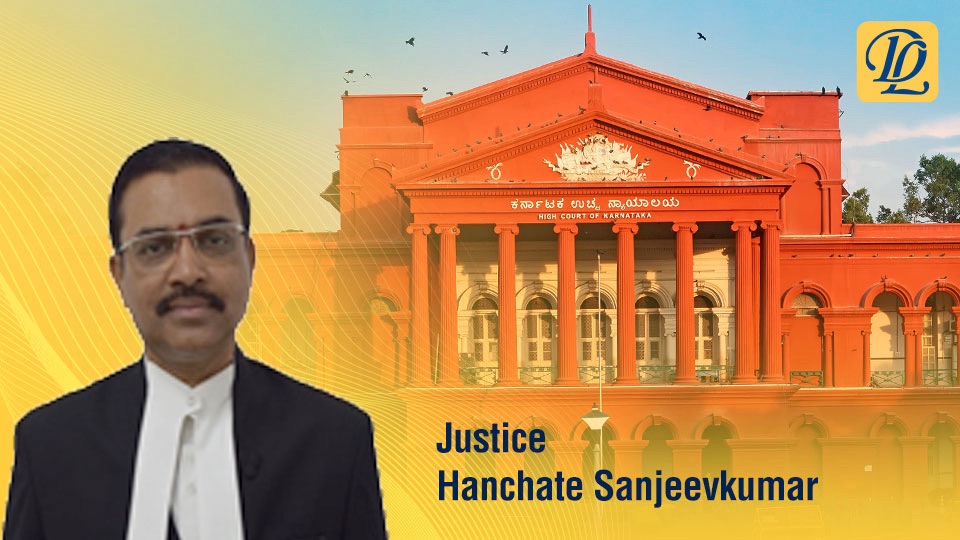
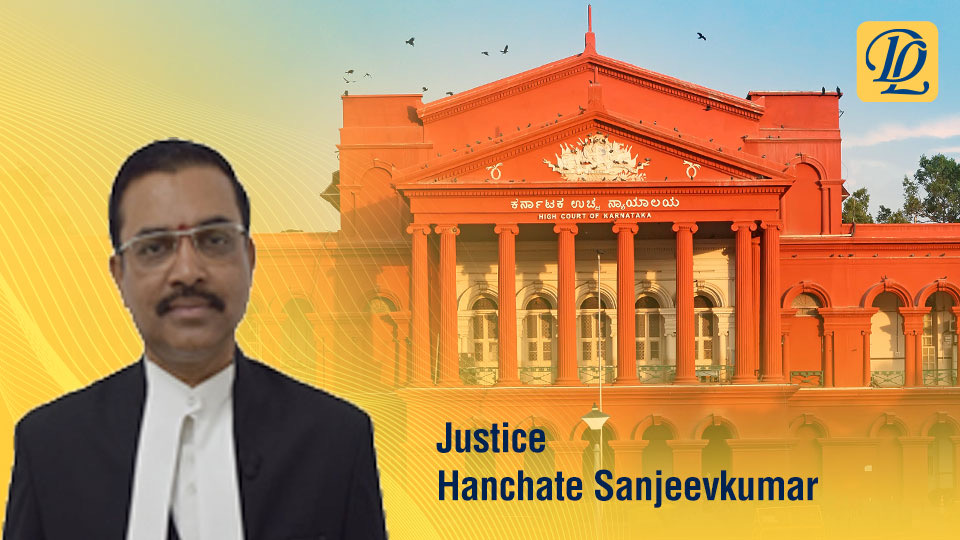
Hon’ble Mr. Justice Hanchate Sanjeevkumar celebrates his 53rd birthday today.
Hon’ble Mr. Justice Hanchate Sanjeevkumar: Born on 13.05.1971. Appointed as Additional Judge of the High Court of Karnataka and taken oath on 04.05.2020 and Permanent Judge on 25.09.2021.
Important Judgments delivered by Hon’ble Mr. Justice Hanchate SanjeevKumar.
Wife getting lumpsum maintenance under Section 125 Cr.P.C as full settlement is NOT precluded from claiming maintenance under Section 18 of the Hindu Adoption and Maintenance Act. Karnataka High Court.
MVC Act. The principle of “pay and recover” applies even when owner of vehicle had contested claim petition before the Tribunal or filed appeal against the award. Karnataka High Court.
Holder of Light Motor Vehicle driving license driving Transport Vehicle does not amount to fundamental breach of the insurance policy so as to avoid the liability of the insurance company. Karnataka High Court.
Hindu Adoptions and Maintenance Act, 1956. Adoption of a person above the age of 15 years is permissible only if there is custom or usage applicable to the parties which permits such adoption. Karnataka High Court.
Education. ‘Punishment imposed on student for malpractice shall be commensurate with the gravity of the misconduct’. Karnataka High Court invokes doctrine of proportionality to reduce punishment imposed on a student.
Karnataka Lokayukta Act, 1984. Employees of statutory bodies and government companies are not ‘government servants’ though they are ‘public servants’. Government cannot entrust inquiry against them to Lokayuktaunder CCA Rules. Karnataka High Court.
‘No child is born in this world without a father and mother. A child has no role to play in his-her birth’. Karnataka High Court orders compassionate appointment to children born out of void or voidable marriage.
Preventive detention. Consideration of representation even after confirmation of preventive detention order is part of Article 21 of the Constitution. Karnataka High Court.
Caste Certificate. Only aggrieved person, such as employer or person deprived of caste certificate or post in Govt or public service or seat educational institution on account of fraudulent caste certificate can question.
Insolvency and Bankruptcy Code, 2016. Demand for customs duty which is not part of resolution plan approved by the adjudicating authority stands extinguished permanently. Karnataka High Court.
Customs Act, 1962. Notification enhancing custom duty would NOT become enforceable if it is simply issued and sent for publication. It is enforceable only when such a notification is published and also offered for sale. Karnataka High Court.
Motor Vehicles Act. Under ‘Act Policy or Statutory Policy’ occupants of the vehicle cannot be considered as third parties. Insurance company is liable for the occupants only if the policy is comprehensive. Karnataka High Court.
Motor Vehicle Act. Vehicle insured but without valid fitness certificate. Insurer is not liable. However ‘pay and recover’ is applicable. Karnataka High Court.
Motor Vehicles Act. Transport Corporation is not entitled for compensation under the head, loss of revenue/idling charges when a bus meets with accident and spare bus is assigned on the scheduled route. Karnataka High Court.
Scribe of a Will can also be considered as attesting witness apart from the status as scribe thus fulfilling the requirement of Section 63 of the Indian Succession Act. Karnataka High Court.
Court cannot take into consideration artificial deductions by husband showing lesser take-home salary to avoid maintenance payable to wife and children. Karnataka High Court.
Hindu Law. ‘’Husband and Wife are one person. Physically divided yet united by Soul’’. Wife cannot seek partition of coparcenary or self-acquired properties during the lifetime of her husband. Karnataka High Court.
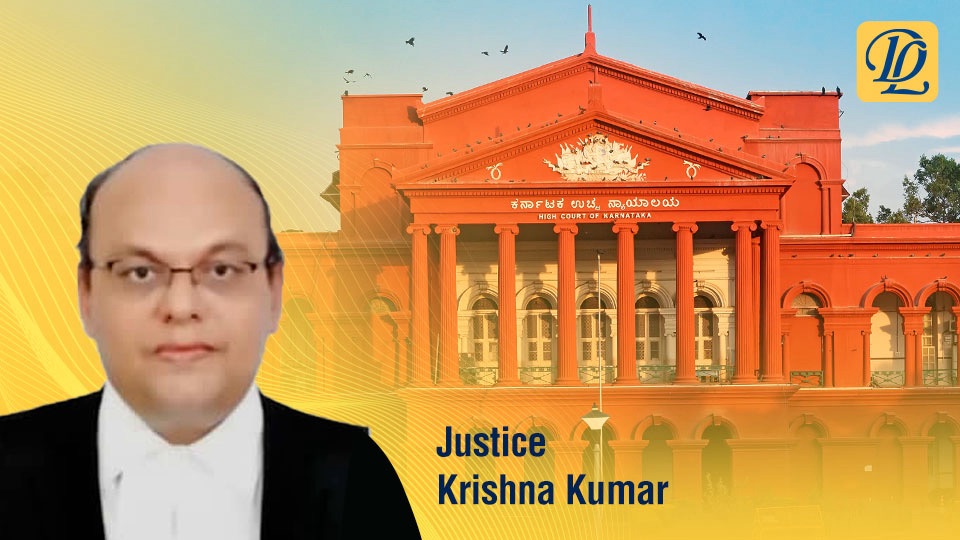
Hon’ble Mr. Justice S.R. Krishna Kumar celebrates his 54th birthday today.
Hon’ble Mr. Justice S.R. Krishna Kumar:
Born on 07.05.1970. Graduated LL.B. at University Law College, Bangalore. Enrolled as an Advocate on 29.08.1992.
From 1992 to till date – Practiced as an Advocate in the High Court of Karnataka as well as Civil Courts, Criminal Courts and Tribunals.
Practiced on all types of Civil Cases, Criminal Cases, Writ Petitions/Appeals, Arbitration Cases, Company Cases, Motor Vehicle Cases, Matrimonial Cases and Consumer Disputes.
Appointed as Additional Judge of the High Court of Karnataka and taken oath on 23.09.2019 and Permanent Judge on 01.03.2021.
Important Judgments delivered by Hon’ble Mr. Justice S R Krishna Kumar.
Right of Persons with Disabilities Act. Visually impaired person cannot be driven to common law remedy when the offence committed against him attracts the RPD Act. Karnataka High Court.
Stay of execution pending suit between decree holder and judgement debtor. Order 21 Rule 29 CPC will not apply to suits which are instituted subsequent to institution of the execution proceedings. Karnataka High Court.
Property of grandfather directly inherited by grandson, when his father had predeceased the grandfather, becomes the self-acquired property of the grandson. Karnataka High Court.
Trademarks of Company in liquidation are custodia legis of the Company Court. Only the Company Court can determine the ownership of the mark and declare any disposition as void. Karnataka High Court.
Order under section 148A(d) of the Income Tax Act, 1961 is invalid if the same is issued after three years of relevant assessment year and the amount escaped from tax is below Rs. 50 lakhs. Karnataka High Court.
Social impact assessment prior to issuance of preliminary notification under the 2013 land acquisition Act must be by mandatory publication of the notification in the official gazette. Else the acquisition proceedings becomes illegal. Karnataka High Court.
Land-owners whose lands were acquired for KIADB after 1 January 2014 are entitled to compensation under the Right to Fair Compensation and Resettlement Act, 2013. Karnataka High Court.
No income tax can be levied or deductible on compensation for acquiring lands under the Karnataka Industrial Areas Development Act in view of 2013 land acquisition Act. Karnataka High Court.
Determining CET rankings of 2021-22 batch students by taking only CET marks is illegal. Karnataka High Court orders fresh ranking for admission to Engineering and Technology courses for the academic year 2022-23 by taking both PUC and CET marks.
Provisional release of perishable goods under the Customs Act is permissible even during pendency of appeal and not confined to proceedings pending before the adjudicating officer. Karnataka High Court.
Production of additional evidence under Order 41 Rule 27, CPC cannot be as a matter of right. Party must explain why evidence could not be produced in trial court despite due diligence. Karnataka High Court.
Post-acquisition allottee has no locus standi to challenge de-notification of lands under acquisition relying on the doctrine of promissory estoppel. Karnataka High Court.
Interpretation of statutes. Proviso to a provision cannot control the main provision nor be interpreted in a manner which renders the main provision nugatory or otiose. Karnataka High Court.
“Right to nutritious food is a fundamental right of pregnant woman, lactating mothers and children’’. Karnataka High Court directs the State Govt to implement ICDS without further delay and to submit compliance report.
No party should suffer due to the act of court. Right accrued as on the date of writ petition cannot be taken away by amendment inserted during the pendency of the petition. Karnataka High Court.
Arbitration & Conciliation Act. Even when limitation period to challenge arbitral award under Section 34 expired during closure/vacation of Courts, provisions of Section 4 of the Limitation Act cannot be invoked by the applicant. Karnataka High Court.
Non-impleadment of particular Department in Writ Petition is not a ground for the State Government not to comply with Court order. Karnataka High Court suggests appointment of Nodal Coordinating Officer.
”Honour power purchase agreements and make prompt, regular and timely payments to power generators without any delay”. Karnataka High Court directs ESCOMs while holding writ petitions maintainable to enforce PPAs.
”Urban planning is a valuable force to achieve sustainable development.”. Karnataka High Court upholds land acquisition for Dr.K.Shivaram Karanth Layout.
”Purchase of land by Karnataka Housing body without mandatory prior approval of State Government is void”. Karnataka High Court cancels sale deed and restores land to the owner.
Child custody. Non-custodial parent is entitled to equal number of days as with the custodial parent during holidays, festivals, birthdays and other important family functions. Karnataka High Court issues guidelines.
Registration of sale deed in the State of Karnataka. Sub-registrars can NOT insist on production of ’11E’ sketch for registration. Govt website to be updated accordingly. Karnataka High Court.
Civil Procedure Code. Order 39 Rules 1 and 2. Trial court has to apply its mind while granting ex-parte injunction. Passing cryptic, bald, laconic, unreasoned and non-speaking order is impermissible. Karnataka High Court.
Arbitration and Conciliation Act. Waiver of ineligibility of arbitrator under Section 12. In the absence of an express agreement between parties claim cannot be barred by principles of waiver acquiescence and estoppel. Karnataka High Court.
Creating posts having trappings of the Ministers to overcome the upper ceiling limit under Article 164 1-A is ultra vires the constitutional mandate. Karnataka High Court.
Non-impleadment of particular Department in Writ Petition is not a ground for the State Government not to comply with Court order. Karnataka High Court suggests appointment of Nodal Coordinating Officer.
Karnataka High Court applies the test of ‘manifest arbitrariness’ to strike down the Rule which whittled down GST refund of input taxes paid in the course of zero-rated supply and export.
Rule 6 of Cenvat Credit Rules 2004 does not disallow common credit taken for manufacture of sugar even after 2015 amendment as bagasse is not a manufactured product. Karnataka High Court.
Post-acquisition allottee has no locus standi to challenge de-notification of lands under acquisition relying on the doctrine of promissory estoppel. Karnataka High Court.
Land-owners whose lands were acquired for KIADB after 1 January 2014 are entitled to compensation under the Right to Fair Compensation and Resettlement Act, 2013. Karnataka High Court.
Social impact assessment prior to issuance of preliminary notification under the 2013 land acquisition Act must be by mandatory publication of the notification in the official gazette. Else the acquisition proceedings becomes illegal. Karnataka High Court.
Trademarks of Company in liquidation are custodia legis of the Company Court. Only the Company Court can determine the ownership of the mark and declare any disposition as void. Karnataka High Court.
Karnataka Court Fees and Suits Valuation Act. Suit for cancellation of sale deed. No need to pay ad-valorem court fee on the market value if the property is agricultural land. Karnataka High Court.
Application under Order 21 Rule 29 CPC seeking stay of execution proceedings on the ground that the suit is instituted by the Judgment Debtor is maintainable only if the suit was instituted prior to filing of the execution petition. Karnataka High Court.
Expenditure incurred by assessee towards construction of houses for flood victims as per of the Government directions is liable for deduction under Section 37(1) of the Income Tax Act. Karnataka High Court.
When the portion left in the layout plan for Ring Road, National Highway or Peripheral Road is not utilised for the said purpose and is diverted for other purpose, the landowner is entitled for TDR compensation. Karnataka High Court.
Karnataka Education Act. Mere change in the composition of the Governing Council or its members from time to time would not tantamount to change in the Governing Council. Karnataka High Court.
When educational institution is run on a property designated for educational purposes under the Master Plan and the zoning regulations, there is no requirement for conversion of the property specifically for educational purposes. Karnataka High Court.
Planning Authority cannot refuse ‘No Objection Certificate’ for establishing petrol bunk on the ground that the land is not converted for non-agricultural purposes. Karnataka High Court.
Execution proceedings. Amendment of pleadings under Order VI Rule 17 CPC applies to objector/obstructor application under Order XXI Rule 97 CPC. Karnataka High Court.
Indian Succession Act. Jurisdiction of the trial Court in relation to grant of Succession Certificate is in relation to place where the deceased ordinarily resided at the time of his death or where his movable properties are situated. Karnataka High Court.
Commercial Court is bound to order refund of the entire court fee when the matter is settled out of Court before recording evidence on the merits of the claim. Karnataka High Court.
When there is no recital in sale agreement that possession of property is handed over to purchaser, Court cannot direct the party to pay stamp duty and penalty as per conveyance. Karnataka High Court.
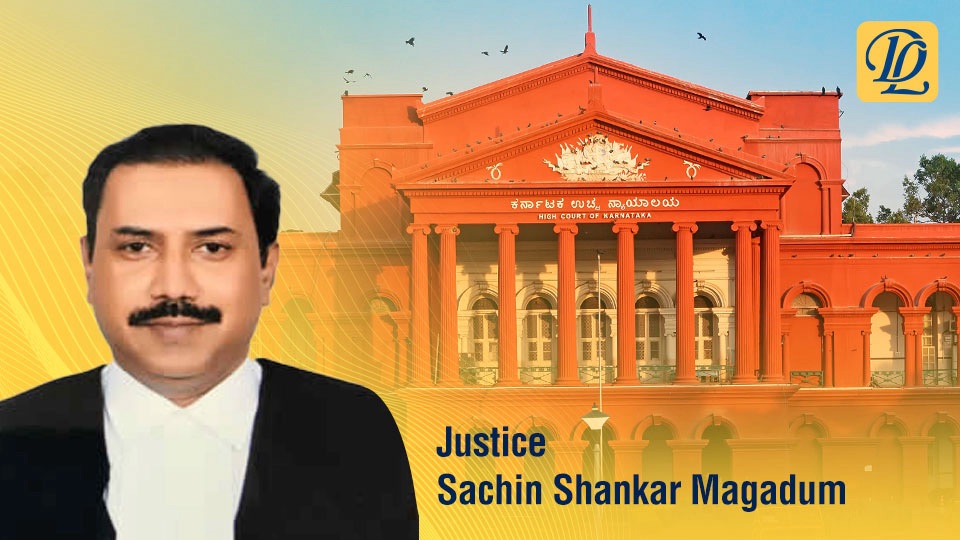
Hon’ble Mr. Justice Sachin Shankar Magadum celebrates his 52nd birthday today.
Hon’ble Mr. Justice Sachin Shankar Magadum:
Born on 05.05.1972. Graduated LL.B. at R.L. Law College, Belagavi. Enrolled as an Advocate on 31.10.1998. Practiced at Chikodi from 1998 to 2001.
From 03/07/2001 to June 2008 practiced at High Court of Karnataka, Bengaluru, in the field of Civil, Criminal and Constitutional Matters. After establishment of Circuit Bench at Dharwad shifted practice to High Court of Karnataka, Bench at Dharwad. Appeared before the Karnataka Appellate Tribunal and other Tribunals, and also before Karnataka State Consumer Disputes Redressal Commission and stood as Standing Counsel for National Highways Authority of India and Karnataka Institute of Medical Sciences, Hubbali.
Appointed as Additional Judge of the High Court of Karnataka and taken oath on 23.09.2019 and Permanent Judge on 01.03.2021.
Important Judgements delivered by Hon’ble Mr. Justice Sachin Shankar Magadum.
Karnataka Police Act. Failure to provide reasonable opportunity to the person sought to be removed from the local limits of his jurisdiction renders the order illegal. Karnataka High Court.
Karnataka Urban Development Authorities Act. Failure to implement the scheme substantially within five years and shifting of the scheme to other land results in lapsing of the acquisition proceedings. Karnataka High Court.
Educational qualification cannot be insisted for transfer of authorization of licence on compassionate ground Karnataka Essential Commodities (Public Distribution System) Control Order. Karnataka High Court.
Landowner is entitled to additional interest on the compensation when dispossessed from the property before the initiation of the acquisition proceedings. Karnataka High Court.
Karnataka SC-ST (PTCL) Act, 1978. In an appeal under Section 5A of the Act by the grantee, Deputy Commissioner can NOT stay mutation entry in the name of subsequent purchaser. Remedy is only under the Karnataka Land Revenue Act. Karnataka High Court.
C.P.C. Execution. Person who claims under a Will and seeks declaration of title and possession can NOT maintain application under Order 21 Rule 97 as obstructer. He has to file separate suit for declaration and possession. Karnataka High Court.
Suit for possession based on title without seeking declaration of ownership is maintainable when the defendant does not assert the title to himself. Karnataka High Court.
Suit against public trust. Court cannot entertain application seeking appointment of receiver by deferring the application seeking leave to prosecute the suit under Section 92 of CPC. Karnataka High Court.
Acceptance of lesser share by father in ancestral properties in family partition will not prevent his son from claiming actual/correct share in the properties. Karnataka High Court.
Decree holder can decide in which of the several modes mentioned in Section 51 of the Civil Procedure Code, he will execute his decree. The judgment debtor cannot invoke the Section. Karnataka High Court.
Mere amendment to plaint adding properties describing them as joint family properties will not cause hardship since the nature of the properties need to be substantiated during the trial. Karnataka High Court.
Where property is sold under the Partition Act 1893, provisions of Order 21 Rules 84 & 85 CPC regarding mandatory deposit of entire balance sale price within 15 days do not apply. Court can extend time for such payment. Karnataka High Court.
When a cross objection is not maintainable independently, then there is no question of maintaining two separate order sheets as per Rule 155 of the Civil Rules of Practice. Karnataka High Court.
In a suit for partition, defendant can seek direction to plaintiff to include certain properties in the plaint schedule and seek partition of the same. Karnataka High Court.
Non-binding arbitration agreement with an option to litigate further if the parties do not resolve the disputes pursuant to such non-binding arbitration cannot be termed an arbitration agreement. Karnataka High Court.
Advocate representing a party has a right to be physically present in a Remote Point when the evidence of his client is being recorded. Karnataka High Court.
Question of violation of building bye-laws or plan etc are within the exclusive jurisdiction of the planning authorities. Civil Court cannot try these aspects in a civil suit. Karnataka High Court.
SARFAESI Act. Even person other than principal borrower, like tenant, can challenge the order passed under Section 14 only before the competent Tribunal. Writ petition is not maintainable. Karnataka High Court.
”Courts are under an obligation to follow religious text and old practices in religious disputes so long as they do not violateconstitutional rights of an individual”. Karnataka High Court while approving Bala Sanyasa.
”On account of expansion of public interest litigation, we are witnessing frivolous litigations and increasing instances of abuse of public interest litigation.” Karnataka High Court.
Privatisation of Airports. Policy decision of the executive are best left to it and a Court should not interfere with the policy decision unless the decision of the authority is mala fide, arbitrary, irrational or unreasonable. Karnataka High Court.
Karnataka SC-ST (PTCL) Act, 1978. If the grantee converts the granted land for non agricultural purposes, it is no more a ‘granted land under the Act’ and hence prior permission to sell is NOT necessary. Karnataka High Court.
Karnataka SC-ST (Prohibition of Transfer of Certain Lands) Act, 1978 is NOT applicable if the granted land is converted by the grantee to non-agricultural purposes under the Karnataka Land Revenue Act, 1964. Karnataka High Court.
Evidence Act and Karnataka Stamp Act. Even a photocopy-xerox copy of the original document can be impounded and deficit stamp duty can be collected by the Court if the same is produced after laying proper foundation. Karnataka High Court.
Land acquisition. Kharab lands falling under category ‘A’ of the Karnataka Land Revenue Rules belong to landowners and not to Government. Landowners are entitled to compensation. Karnataka High Court reiterates.
C.P.C. Order 39 Rules 1 and 2. Grant of temporary injunction restraining usage of confidential information of plaintiff by defendant. Principles summarised. Karnataka High Court.
Mareva Injunction. Court can grant mareva injunction where recovery of amounts outstanding is a long drawnprocess and transfer of assets by defendant defeats the claim of the plaintiff. Karnataka High Court.
Arbitration and Conciliation Act. Award rejecting claim if found to be illegal fresh award cannot be made by Court under Section 34. Only option is to set aside award and leave parties to resume Arbitration once again. Karnataka High Court.
Arbitration and Conciliation Act. Application under Section 9 is maintainable even after conclusion of arbitral proceedings and during Section 34 proceedings only in so far as the claim granted by the arbitrator. Karnataka High Court.
CPC. Attachment before judgment is a drastic power which should NOT be exercised mechanically to convert unsecured debt into a secured debt. Prima facie case and the chance of suit being decreed are relevant. Karnataka High Court.
Hindu Succession Act. Amended Section 6. Plea of prior partition. Mere partition decree will not sever joint family status. Until final decree is passed and allottees of shares are put in possession – there is no partition. Karnataka High Court.
Contempt of Courts Act. High Court has no power to take cognizance of contempt of Appellate Tribunal since the Tribunal is not court subordinate to High Court. Karnataka High Court.
Specific Relief Act. Bar under Section 22 against grant prayer not sought for does not curtail power of the appellate Order XLI Rule 33 CPC. Court can refund of sale consideration even in the absence of prayer. Karnataka High Court.
Income Tax Act. Section 147. Mere change of opinion on consideration of the same material is not a ground to reopen the assessment. Full Bench Karnataka High Court.
A member of the Bar is expected to act first as an Officer of the Court and thereafter as the mouthpiece of his client. Karnataka High Court censures lawyer for filing contemptuous petition.
CPC. Attachment before judgment is a drastic power which should NOT be exercised mechanically to convert unsecured debt into a secured debt. Prima facie case and the chance of suit being decreed are relevant. Karnataka High Court.
C.P.C. Order 39 Rules 1 and 2. Grant of temporary injunction restraining usage of confidential information of plaintiff by defendant. Principles summarised. Karnataka High Court.
Land acquisition for Urban Development Authorities. Prolonged delay in issuing final notification after preliminary notification amounts to abandonment of acquisition. Landowner can utilize the lands in accordance with law. Karnataka High Court.
Karnataka Scheduled Castes and Scheduled Tribes (Prohibition of Transfer of Certain Lands) Act 1978. ‘Granted land’ (original grant to SC-ST persons) includes house sites or non-agricultural land also. Karnataka High Court.
Karnataka SC-ST (Prohibition of Transfer of Certain Lands) Act, 1978 is NOT applicable if the granted land is converted by the grantee to non-agricultural purposes under the Karnataka Land Revenue Act, 1964. Karnataka High Court.
Karnataka SC-ST (PTCL) Act, 1978. If the grantee converts the granted land for non agricultural purposes, it is no more a ‘granted land under the Act’ and hence prior permission to sell is NOT necessary. Karnataka High Court.
Second wife whose marriage was valid before coming into operation of the Hindu Succession Act, 1956 is entitled to inherit the properties of her husband in terms of Section 10. Karnataka High Court.
Resjudicata applies even to wrong decisions. Judgment which has attained finality intra-parties cannot be re-opened simply because the legal position is altered in another subsequent judgment. Karnataka High Court.
An arbitral award cannot be really treated as an instrument under the Stamp Act. Executing Court cannot impound the decree or levy penalty. Karnataka High Court.
Married daughters constitute independent unit for the purpose of determining excess land under Section 63(4) of the Karnataka Land Reforms Act. Karnataka High Court.
Land Acquisition Act. If an application is filed to refer dispute to civil court, the authority concerned cannot refuse to make a reference under Section 30. Karnataka High Court.
When there is a doubt as to whether an unregistered document is partition deed or relinquishment deed, it can be adjudicated only during the trial. Trial Court cannot refuse to accept it in evidence by conducting a mini trial. Karnataka High Court.
A registered partition acts as complete disruption of the joint family status. Son born subsequent to the partition cannot seek reopening of the partition unless the partition was within his own family. Karnataka High Court.
Hindu Adoption and Maintenance Act. Parties governed by the Bombay School of law though residing in Karnataka can adopt a person who has attained the age of majority. Karnataka High Court.
Right of a daughter under Section 8 of Hindu Succession Act is not affected by alienation after death of father and before amendment to Section 6 of Hindu Succession Act. Karnataka High Court.
Suit for specific performance in respect of Inam land. Non-alienation clause in the grant order is not a relevant question while examining the controversy between the parties. Karnataka High Court.
Suit for specific performance. Even when possession was delivered prior to agreement of sale, the agreement shall be treated as the one coupled with possession and the stamp duty shall be paid accordingly. Karnataka High Court.
”We must import a little commonsense into notices of this kind.” Statutory notice akin to Section 80 CPC is not mandatory to make counter claim in a civil suit filed by the statutory body. Karnataka High Court.
Registered general power of attorney coupled with interest cannot be cancelled by registration of another document titled ‘’Cancellation of GPA’’. The remedy is only under the Specific Relief Act. Karnataka High Court.
Mere speculation about hidden artifacts or historical monuments is not a ground to acquire land without following the procedure under the Ancient Monuments and Archaeological Sites and Remains Act. Karnataka High Court.
Award passed by the Lok Adalath cannot be questioned by a separate suit though termed as suit for partition in view of the bar under the Legal Services Authority Act. Karnataka High Court.
Adopted son becomes a coparcener of in the family to which he is adopted. Karta has no right to bequeath ancestral property by Will after adopting the son. Karnataka High Court.
High Tension electricity lines over agricultural lands will not completely deprive landowners of utilizing their lands to carry out agricultural operations. Diminutive value of the land at 30% is just and reasonable. Karnataka High Court.
Madras School of Hindu Law. Mother or widow of a propositus cannot independently claim share in the coparceneary properties and are entitled only to notional share after his death. Karnataka High Court.
Third party applicant approaching execution court under Order 97 Rule XXI of CPC should possess an independent title which is superior to that of the decree holders. Karnataka High Court.
Execution proceedings in suit for partition. Person claiming under joint family member who suffered decree cannot maintain application Order 21 Rule 97 of CPC. Karnataka High Court.
Karnataka Land Reforms Act. Vesting in the State Government of land leased contrary to the Act. Tahsildar can exercise power under Section 58 only if the lease is created after coming into force of the Act. Karnataka High Court.
Karnataka Land Revenue Act. Deputy Commissioner cannot hold roving enquiry and nullify the registered documents in the guise of exercising suo motu revisional jurisdiction under Section 136(3). Karnataka High Court.
Daughters cannot maintain suit for partition in respect of joint family properties when the succession had opened prior to the commencement of the Hindu Succession Act, 1956. Karnataka High Court.
Karnataka Town and Country Planning Act. Planning Authority cannot reject modification of layout plan unless the modification contravenes any provisions of the Act. Karnataka High Court.
Municipal Corporation is bound to manage, control and protect Civic Amenity sites vested in it on execution of release deed by the layout owner. Karnataka High Court.
CGST Act. Appeal under Section 107. When the entire tax liability is disputed, there is no requirement of depositing admitted amount of tax, interest, fine, fee and penalty arising from the impugned order. Karnataka High Court.
Amended Section 6 of the Hindu Succession Act. If daughter is not alive when 2005 amendment to Hindu Succession Act was passed, her legal heirs can seek her share in the ancestral property. Karnataka High Court.
Land Acquisition. Pot Kharab is not a government land and it belongs to the ownership of the landowner under the Karnataka Land Revenue Rules. Compensation is payable even in respect of such land. Karnataka High Court.
Change of land use from residential to commercial can be granted under Section 14 of the Karnataka Town and Country Planning Act. Authorities are bound to consider the representation from the owner. Karnataka High Court.
Application for conversion of lands for non-agricultural purposes cannot be rejected on the ground that there is proposal to include the lands in the Master Plan. Karnataka High Court.
Court cannot straightaway dismiss a suit for non-joinder of necessary party to the suit. Proper course of action is to adjourn the suit and direct the plaintiff to add the necessary party. Karnataka High Court.
Children cannot seek partition of properties received by their father from the grandfather under Section 8 of the Hindu Succession Act during his lifetime. Karnataka High Court.
Civil Procedure Code. Disputed questions cannot be taken into consideration or decided while considering an application under Order 7 Rule 11. Karnataka High Court.
Scheme formed by Bank denying compassionate appointment to married daughter of a deceased employee cannot be termed as discriminatory or violative of Article 15 of the Constitution. Karnataka High Court.
Service Law. Husband undergoing vasectomy as a condition for availing maternity leave by wife applies even in cases where the husband undergoes tubectomy. Karnataka High Court.
A litigant cannot assert title based on entries in the revenue records and mere entry in the revenue records will not constitute an act of adverse possession. Karnataka High Court.
Though Civil Court has no jurisdiction to declare caste of a person, it has jurisdiction to direct correction of entry in school records as per the Caste Certificate. Karnataka High Court.
Governing Council of a University cannot make recommendation to the Disciplinary Authority/Registrar in the matter of imposition of penalty to the employees. Karnataka High Court.
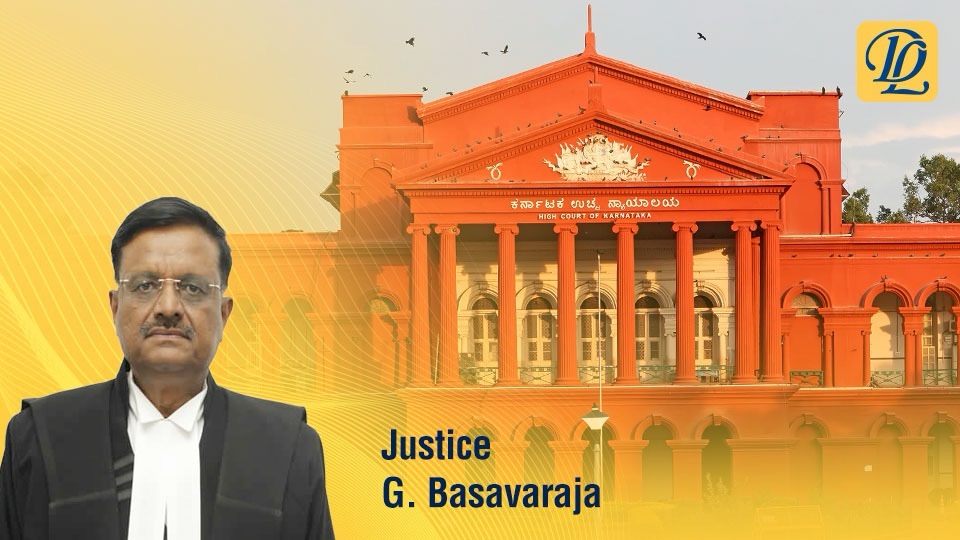
Hon’ble Mr. Justice G Basavaraja celebrates his 59th birthday today.
Hon’ble Mr. Justice Gurusiddaiah Basavaraja:
Born on 03.05.1965. Native of Methikurika Hiriyur Taluk, Chitradurga District. Enrolled as Advocate and practiced at Chitradurga. Appointed as Munsiff on 18.10.1993. Appointed as District Judge on 27.06.2009. Served as Prl. District & Sessions Judge, Chamarajanagar, Member Secretary, Karnataka State Legal Services Authority and as Prl. Judge, Family Court, Bengaluru. Sworn-in as Additional Judge of the High Court of Karnataka on 16.08.2022 and Sworn-in as Additional Judge of the High Court of Karnataka on 16.04.2024.
Important Judgments delivered by Hon’ble Mr. Justice G. Basavaraja.
Violation of the Income Tax Act in monetary transaction cannot be a defence in proceedings under Section 138 of the Negotiable Instruments Act.
Property derived by a female Hindu post the amendment to Section 6 of the Hindu Succession Act would become her absolute property and a coparcenary or joint family cannot be created by or under her.
When the prosecution fails to prove major offence, the minor and related offence falls into insignificance and the accused will be entitled to acquittal. Karnataka High Court.
Digitalize the criminal investigation by videographing dying declaration and recording statements electronically with digital signatures. Karnataka High Court issues guidelines.
POCSO Act. Increasing cases of minor girls above the age of 16 years having love/sexual relationship resulting in criminal prosecutions. Karnataka High Court asks Law Commission of India to rethink on the age criteria.
”Award of death sentence must be preceded by psychological and physiological evaluation, examination of early and present family background, history of violence and criminal antecedent of the accused”. Karnataka High Court lays down guidelines.
Motor Vehicles Act. Non-registration of police case regarding the accident or failure of the Medical Officer to report medico-legal case to the Police is not a ground to deny claim of the victim. Karnataka High Court.
Hindu Marriage Act. Wife not honouring decree for restitution of conjugal rights and refusing to join her husband is sufficient ground for divorce. Karnataka High Court.
Expenditure incurred by assessee towards construction of houses for flood victims as per of the Government directions is liable for deduction under Section 37(1) of the Income Tax Act. Karnataka High Court.
“When the murder is in broad daylight, evidence of the eyewitnesses cannot be brushed aside.” Karnataka High Court reverses acquittal of four persons and convicts them for murder.
Karnataka Education Act. Mere change in the composition of the Governing Council or its members from time to time would not tantamount to change in the Governing Council. Karnataka High Court.
‘Persons in public employment are not slaves of the Government, nor of their higher ups in the echelon of administration’. Karnataka High Court quashes dismissal order against public servant honorably acquitted in the criminal case.
Hindu Law. Doctrine of blending of individual’s property into joint family can be inferred by the words and if there are no words, then from his conduct. Karnataka High Court.
When counsel for appellant is absent and counsel for the respondent is present, the only course open to the appellate Court is to dismiss the appeal for non-prosecution. The appeal cannot be decided on merits. Karnataka High Court.
Residual provision of Article 137 of the Limitation Act, 1963 cannot be applied to prefer Revision Petition against the order passed by the Karnataka Waqf Tribunal. Karnataka High Court.
Plaintiff furnishing fictitious/false address of defendant and then seeking substituted service is a serious issue. Courts must verify the facts before ordering substituted service. Karnataka High Court.
Service Law. Disciplinary authority cannot go on holding enquiry after enquiry against an employee till the desired report is given by the enquiry officer. Karnataka High Court.
Hon’ble Mr. Justice M. I. Arun celebrates his 54th birthday today.
Hon’ble Mr. Justice Maralur Indrakumar Arun was born on 24.04.1970, studied SSLC from MES High School, Jayanagar, Bengaluru; PUC from Mari Mallappa Junior College, Mysore; Graduated from the National Law School of India University, Bengaluru in the year 1993.
He enrolled as an Advocate on 09.06.1993; practiced under Shri A.N. Jayaram, former Advocate General of Karnataka and Shri B.N. Dayanand, Advocate. He started independent practice as an Advocate from the year 1996 and represented several Universities and various State Government Undertaking; was a Central Government Senior Panel Counsel and also Additional Government Advocate for a brief period.
Municipal Corporation cannot demand arrears of property tax as a condition for transfer of khata since property tax can be demanded only after entry of name of the owner in the Tax Payment Register. Karnataka High Court.
Karnataka Land Reforms Act. Adopted son who claims ownership by succession cannot claim tenancy under the deceased adopted father/mother. Karnataka High Court.
Hindu Law. ‘’Husband and Wife are one person. Physically divided yet united by Soul’’. Wife cannot seek partition of coparcenary or self-acquired properties during the lifetime of her husband. Karnataka High Court.
Family settlement/arrangement need not be among the joint family members having a right of succession but can include an outsider provided such a settlement/arrangement is fair and bona fide. Karnataka High Court.



 Daksha Legal