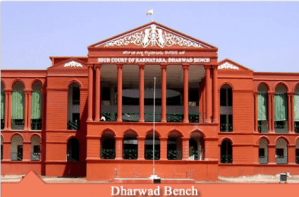
Kashibai vs Hanamavva and others. Writ Petition 148540/2020 decided on 26 November 2020.
Judgement Link: http://judgmenthck.kar.nic.in/judgmentsdsp/bitstream/123456789/351330/1/WP148540-20-26-11-2020.pdf
Relevant paragraphs: 6. The petitioner has filed a suit for partition and separate possession. In the said suit the petitioner has clearly admitted that deceased Nimbavva is the wife of deceased Krishnegowda. Now, by virtue of proposed amendment, the petitioner wants to withdraw the admission made by her in the
plaint. A categorical admission made in the pleading cannot be permitted to be withdrawn by the parties. In this circumstance, I would like to place reliance on the judgment of the Hon’ble Apex Court in the case of NAGINDAS RAMDAS VS. DALPATRAM ICHHARAM ALIAS BRIJRAM & OTHERS (1974) 1 SCC 242 where it is held as under:
“27. From a conspectus of the cases cited at the bar, the principle that emerges is, that if at the time of the passing of the decree, there was some material before the Court, on the basis of which, the Court could be prima facie satisfied, about the existence of a statutory ground for eviction, it will be presumed that the Court was so satisfied and the decree for eviction though apparently passed on the basis of a compromise, would be valid. Such material may take the shape either of evidence recorded or produced in the case, or, it may partly or wholly be in the shape of an express or implied admission made in the compromise agreement, itself. Admissions, if true and clear, are by far the best proof of the facts admitted. Admissions in pleadings or judicial admissions, admissible under Section 58 of the Evidence Act, made by the parties or their agents at or before the hearing of the case, stand on a higher footing than evidentiary admissions. The former class of admissions are fully binding on the party that makes them and constitute a waiver of proof. They by themselves can be made the foundation of the rights of the parties. On the other hand, evidentiary admissions which are receivable at the trial as evidence, are by themselves, not conclusive. They can be shown to be wrong.”
In view of the law laid down in the above said decision, I am of the considered view that the petitioner cannot be permitted to withdraw the admission made in the pleading. Petition dismissed.
Compiled by S. Basavaraj and Kriti Taggarse, Daksha Legal.

