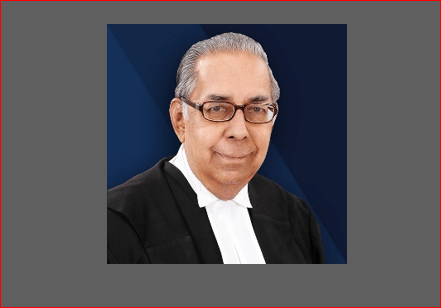
B.V. Acharya, Senior Advocate.
Section 223 of the Bharathiya Nagarika Suraksha Sanhitha 2023 ( for short “ Sanhitha” ) corresponds to Section 200 of the Criminal Procedure Code 1973 ( for short “ Code” ). The said provision deals with the procedure to be followed when a private complaint is filed before a Magistrate. While Section 200 of the Code contains only one section without any subsections, Section 223 of the Sanhitha consists of two clauses ( 1) & (2).
The present subsection (1) of Section 223 of the Sanhitha is almost verbatim identical to S.200 of the Code with addition of a proviso which reads as follows:
“Provided that no cognizance of an offence shall be taken by Magistrate without giving the accused an opportunity of being heard ”.
The scheme of the Code as can be seen from S.200 to 204 does not contemplate presence of the accused and hence the accused has no role to play at all till the stage of S.204 which provides that if the Magistrate is of the opinion that there is sufficient ground to proceed, then only he issues process for the attendance of the accused. (This could be either summons or warrant ). It is only thereafter the accused appears before the court and takes part in further proceedings as provided in the Code. It is settled law that an accused person has no right to insist on his presence and have any say in the matter, even if he voluntarily appears and seeks to participate in proceedings before reaching the stage of S.204 when process is issued.
Same is the position even under the scheme of Sanhitha embodied in S.223 to 227 (Corresponding to S.200 to 204 of the Code). Under the Sanhitha also as can be seen from S.227 for the first time provision for issue of process to the accused is contemplated after the Magistrate forms the opinion that there is sufficient ground to proceed.
Thus, both the Code as well as the Sanhitha do not contemplate or permit presence of the accused till he is summoned by the Magistrate. (This is under S.204 of the Code and S.227 of the Sanhitha).
However, the provisions of the Sanhitha, make important departure from the above settled position by inserting the proviso quoted above, which mandates that the Magistrate cannot take cognizance of an offence “without giving the accused an opportunity of being heard”.
Necessarily the accused has to be present at that stage because it is impossible for the Magistrate to afford such opportunity without his presence. Thus the procedure under the Sanhitha imposes an obligation on the Magistrate to do something impossible i.e., to say before taking cognizance he has to give opportunity to the accused who is not before the court at that stage.There is no provision enabling the Magistrate to summon the accused prior to S.227 stage.
Even if it is assumed that the provision for affording opportunity of hearing empowers the Magistrate to summon him for that purpose, it means that the Magistrate even before forming an opinion contemplated by S.227 has to issue summons to the accused.
The net result is according to the procedure in the Sanhitha when the Magistrate takes cognizance of the complaint, he has to secure the presence of the accused by summoning or otherwise even before taking cognizance for affording the accused an opportunity of being heard. This procedure on the face of it looks ridiculous and absurd. How can the accused be given an opportunity even before the complainant and his witnesses are examined on oath, which can be done only after taking cognizance?
According to the procedure contemplated in the Sanhitha, the accused will be present at the time of examination of the complainant and his witnesses, as this follows taking cognizance. Can the accused at that stage have an opportunity to cross examine them?
If as explained above, upon filing of complaint, immediately the Magistrate is required to issue summons to all the accused to secure their presence, same will result in chaos. It is opposed to all cannons of justice to provide for presence of the accused, even before the Magistrate has taken cognizance of the offence and the statement of the complainant and his witnesses are recorded.
Hence aforesaid provision providing for giving the accused an opportunity of being heard even before taking cognizance is most unreasonable and totally unworkable. This provision appears to have been inserted even without elementary consideration of its futility and disastrous consequences.
While the statement of object and reasons of the Sanhita says that focus is on simplifying legal procedure and providing speedy justice to the common man, above provision definitely and without doubt ensures exactly the opposite. Instead of providing speedy justice, it enables protracting the proceedings. The procedure of summoning the accused even before taking cognizance will amount to total harassment of the accused, satisfying the unscrupulous complainant’s sadistic pleasure.
 Daksha Legal