S. Basavaraj, Senior Advocate and Member, Karnataka State Bar Council
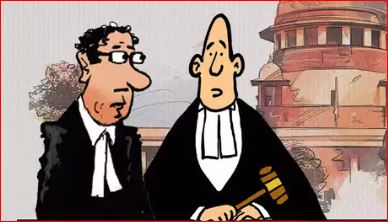
Today, while waiting for my matter in a Court Hall, I heard the learned Judge making open and repeated comments (atleast four times) “ಕಣ್ಣು ಮುಚ್ಕ0ಡು ಸ್ಟೇ ಕೊಟ್ಟ್ರೆ ಹಿ0ಗೇ ಹಾಗೋದು” (this is what happens if stay orders are granted blindfolded). Obviously the Judge was referring to the liberal interim orders granted by Judges who dealt with matters before the roaster was changed.
Every Judge has his own notions about civil or criminal jurisprudence. Some judges may feel the oppressed class of tenants or workmen need extra protection; some judges may feel slapping of FIRs by the Police at the drop of the hat has to be prevented. When the roaster is changed, the new Judge may vacate the interim orders or even dismiss the cases which do not warrant interference by the Court.
While doing so, commenting on the judicial approach of the earlier Judge/Judges or casting aspersions on the brother Judges is, in my humble opinion, not proper. Judges have taken oath under the Constitution of India and they discharge their duties within the legal/constitutional framework. Judges do not/cannot have personal interest in the matter. They just do their job and move on.
Even while considering an appeal arising out of lower court proceedings, it must be noted that what is before the higher courts or the larger bench is the judgement under challenge and not the judge who delivered the judgement. A judgment under challenge can be supported by the respondent. However if a comment/observation is made on the Judge who delivered the judgement, there is no one to defend the judge.
The Supreme Court in Rama Dayal Markarah vs State of Madhya Pradesh (1978) 2 SCC 630 observed that “..ordinarily, the judgment itself will be the subject matter of criticism and not the judge”. The Madras High Court in Abdul Sathar vs The Principal Secretary to Government (2013 SCC OnLine Mad 1932) observed that “The judgement should speak and not the judge”.
A judge who is imbibed with traditional values might find it difficult to interfere with few matters involving crime, corruption, domestic violence etc. But he is at complete liberty to decide the matters according to his convictions. Commenting upon the manner in which similar matters have been dealt with by brother Judges is not correct.
To conclude, the practice of commenting on the brother Judges who adorned the bench on the same roaster runs counter to the judicial institution and the values it stands for.
 Daksha Legal