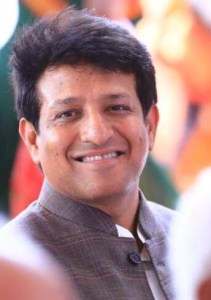
In what can be construed as magnificent display of professionalism, Karnataka Advocate General Mr. Prabhuling Navadagi met each one the arguments of the petitioners. Addressing his arguments on 21 February, the AG annihilated the arguments of the petitioners. The following judgements were quoted extensively.
Durgah Committee, Ajmer and Another v. Syed Hussain Ali and Others AIR 1961 SC 1402. Para 33. We will first take the argument about the infringement of the fundamental right to freedom of religion. Articles 25 and 26 together safeguard the citizen’s right to freedom of religion. Under Article 25(1), subject to public order, morality and health and to the other provisions of Part 3, all persons are equally entitled to freedom of conscience and their right freely to profess, practise and propagate religion. This freedom guarantees to every citizen not only the right to entertain such religious beliefs as may appeal to his conscience but also affords him the right to exhibit his belief in his conduct by such outward acts as may appear to him proper in order to spread his ideas for the benefit of others. Article 26 provides that subject to public order, morality and health, every religious denomination or any section thereof shall have the right—
(a) to establish and maintain institutions for religious and charitable purposes;
(b) to manage its own affairs in matters of religion;
(c) to own and acquire movable and immovable property; and
(d) to administer such property in accordance with law.
The four clauses of this article constitute the fundamental freedom guaranteed to every religious denomination or any section thereof to manage its own affairs. It is entitled to establish institutions for religious purposes, it is entitled to manage its own affairs in the matters of religion, it is entitled to own and acquire movable and immovable property and to administer such property in accordance with law. What the expression “religious denomination” means has been considered by this Court in Commissioner, Hindu Religious Endowments, Madras v. Sri Lakshmindra Thirtha Swamiar of Sri ShirurMutt [(1954) SCR 1005] . Mukherjea, J., as he then was, who spoke for the Court, has quoted with approval the dictionary meaning of the word “denomination” which says that a “denomination” is a collection of individuals classed together under the same name, a religious sect or body having a common faith and organisation and designated by a distinctive name. The learned Judge has added that Article 26 contemplates not merely a religious denomination but also a section thereof. Dealing with the questions as to what are the matters of religion, the learned Judge observed that the word “religion” has not been defined in the Constitution, and it is a term which is hardly susceptible of any rigid definition. Religion, according to him, is a matter of faith with individuals or communities and it is not necessarily theistic. It undoubtedly has its basis in a system of pleas or doctrines which are regarded by those who profess that religion as conducive to their spiritual well-being, but it is not correct to say that religion is nothing else but a doctrine or belief. A religion may not only lay down a code of ethical rules for its followers to accept, it might prescribe rituals and observances, ceremonies and modes of worship which are regarded as integral parts of religion, and these forms and observances might extend even to matters of food and dress (pp. 1023, 1024). Dealing with the same topic, though in another context, in Venkataramna Devaru v. State of Mysore [(1958) SCR 895] Venkatarama Aiyar, J. spoke for the Court in the same vein and observed that it was settled that matters of religion in Article 26(b) include even practices which are regarded by the community as part of its religion, and in support of this statement the learned Judge referred to the observations of Mukherjea, J., which we have already cited. Whilst we are dealing with this point it may not be out of place incidentally to strike a note of caution and observe that in order that the practices in question should be treated as a part of religion they must be regarded by the said religion as its essential and integral part; otherwise even purely secular practices which are not an essential or an integral part of religion are apt to be clothed with a religious form and may make a claim for being treated as religious practices within the meaning of Article 26. Similarly, even practices though religious may have sprung from merely superstitious beliefs and may in that sense be extraneous and unessential accretions to religion itself. Unless such practices are found to constitute an essential and integral part of a religion their claim for the protection under Article 26 may have to be carefully scrutinised; in other words, the protection must be confined to such religious practices as are an essential and an integral part of it and no other.
Commissioner of Police and Others v. AcharayaJagadishwarananda Avadhuta and Another (2004) 12 SCC 770. Para 9. The protection guaranteed under Articles 25 and 26 of the Constitution is not confined to matters of doctrine or belief but extends to acts done in pursuance of religion and, therefore, contains a guarantee for rituals, observances, ceremonies and modes of worship which are essential or integral part of religion. What constitutes an integral or essential part of religion has to be determined with reference to its doctrines, practices, tenets, historical background, etc. of the given religion. (See generally the Constitution Bench decisions in Commr., H.R.E. v. Sri Lakshmindra Thirtha Swamiar of Sri Shirur Mutt [AIR 1954 SC 282 : 1954 SCR 1005] , Sardar Syedna Taher Saifuddin Saheb v. State of Bombay [AIR 1962 SC 853 : 1962 Supp (2) SCR 496] and Seshammal v. State of T.N. [(1972) 2 SCC 11 : AIR 1972 SC 1586] regarding those aspects that are to be looked into so as to determine whether a part or practice is essential or not.) What is meant by “an essential part or practices of a religion” is now the matter for elucidation. Essential part of a religion means the core beliefs upon which a religion is founded. Essential practice means those practices that are fundamental to follow a religious belief. It is upon the cornerstone of essential parts or practices that the superstructure of a religion is built, without which a religion will be no religion. Test to determine whether a part or practice is essential to a religion is to find out whether the nature of the religion will be changed without that part or practice. If the taking away of that part or practice could result in a fundamental change in the character of that religion or in its belief, then such part could be treated as an essential or integral part. There cannot be additions or subtractions to such part because it is the very essence of that religion and alterations will change its fundamental character. It is such permanent essential parts which are protected by the Constitution. Nobody can say that an essential part or practice of one’s religion has changed from a particular date or by an event. Such alterable parts or practices are definitely not the “core” of religion whereupon the belief is based and religion is founded upon. They could only be treated as mere embellishments to the non-essential (sic essential) part or practices.
Javed and Others v. State of Haryana and Others. (2003) 8 SCC 369. Para 44. The Muslim law permits marrying four women. The personal law nowhere mandates or dictates it as a duty to perform four marriages. No religious scripture or authority has been brought to our notice which provides that marrying less than four women or abstaining from procreating a child from each and every wife in case of permitted bigamy or polygamy would be irreligious or offensive to the dictates of the religion. In our view, the question of the impugned provision of the Haryana Act being violative of Article 25 does not arise. We may have a reference to a few decided cases.
45. The meaning of religion — the term as employed in Article 25 and the nature of protection conferred by Article 25 stands settled by the pronouncement of the Constitution Bench decision in M. Ismail Faruqui(Dr) v. Union of India [(1994) 6 SCC 360] . Article 25 merely protects the freedom to practise rituals and ceremonies etc. which are only the integral parts of the religion. Article 25 of the Constitution of India will, therefore, not have any application in the instant case.
A.S Narayana Deekshitulu v. State of Andhra Pradesh and Others (1996) 9 SCC 548. Para 86. A religion undoubtedly has its basis in a system of beliefs and doctrine which are regarded by those who profess religion to be conducive to their spiritual well-being. A religion is not merely an opinion, doctrine or belief. It has outward expression in acts as well. It is not every aspect of religion that has been safeguarded by Articles 25 and 26 nor has the Constitution provided that every religious activity cannot be interfered with. Religion, therefore, cannot be construed in the context of Articles 25 and 26 in its strict and etymological sense. Every religion must believe in a conscience and ethical and moral precepts. Therefore, whatever binds a man to his own conscience and whatever moral or ethical principles regulate the lives of men believing in that theistic, conscience or religious belief that alone can constitute religion as understood in the Constitution which fosters feeling of brotherhood, amity, fraternity and equality of all persons which find their foothold in secular aspect of the Constitution. Secular activities and aspects do not constitute religion which brings under its own cloak every human activity. There is nothing which a man can do, whether in the way of wearing clothes or food or drink, which is not considered a religious activity. Every mundane or human activity was not intended to be protected by the Constitution under the guise of religion. The approach to construe the protection of religion or matters of religion or religious practices guaranteed by Articles 25 and 26 must be viewed with pragmatism since by the very nature of things, it would be extremely difficult, if not impossible, to define the expression religion or matters of religion or religious belief or practice.
87. In pluralistic society like India, as stated earlier, there are numerous religious groups who practise diverse forms of worship or practise religions, rituals, rites etc.; even among Hindus, different denominantsand sects residing within the country or abroad profess different religious faiths, beliefs, practices. They seek to identify religion with what may in substance be mere facets of religion. It would, therefore, be difficult to devise a definition of religion which would be regarded as applicable to all religions or matters of religious practices. To one class of persons a mere dogma or precept or a doctrine may be predominant in the matter of religion; to others, rituals or ceremonies may be predominant facets of religion; and to yet another class of persons a code of conduct or a mode of life may constitute religion. Even to different persons professing the same religious faith some of the facets of religion may have varying significance. It may not be possible, therefore, to devise a precise definition of universal application as to what is religion and what are matters of religious belief or religious practice. That is far from saying that it is not possible to state with reasonable certainty the limits within which the Constitution conferred a right to profess religion. Therefore, the right to religion guaranteed under Article 25 or 26 is not an absolute or unfettered right to propagating religion which is subject to legislation by the State limiting or regulating any activity — economic, financial, political or secular which are associated with religious belief, faith, practice or custom. They are subject to reform on social welfare by appropriate legislation by the State. Though religious practices and performances of acts in pursuance of religious belief are as much a part of religion as faith or belief in a particular doctrine, that by itself is not conclusive or decisive. What are essential parts of religion or religious belief or matters of religion and religious practice is essentially a question of fact to be considered in the context in which the question has arisen and the evidence — factual or legislative or historic — presented in that context is required to be considered and a decision reached.
Indian Young Lawyers Assn. (Sabarimala Temple-5J.) v. State of Kerala, (2019) 11 SCC 1 Para. 176.6. It is only the essential part of religion, as distinguished from secular activities, that is the subject-matter of the fundamental right. Superstitious beliefs which are extraneous, unnecessary accretions to religion cannot be considered as essential parts of religion. Matters that are essential to religious faith and/or belief are to be judged on evidence before a court of law by what the community professing the religion itself has to say as to the essentiality of such belief. One test that has been evolved would be to remove the particular belief stated to be an essential belief from the religion—would the religion remain the same or would it be altered? Equally, if different groups of a religious community speak with different voices on the essentiality aspect presented before the Court, the Court is then to decide as to whether such matter is or is not essential. Religious activities may also be mixed up with secular activities, in which case the dominant nature of the activity test is to be applied. The Court should take a common-sense view and be actuated by considerations of practical necessity.
266. This case marked a nuance of the essential practices doctrine laid down in Shirt Mutt [Commr., Hindu Religious Endowments v. Sri LakshmindraThirtha Swamiar of Sri Shirur Mutt, 1954 SCR 1005 :AIR 1954 SC 282] , where a denomination was granted “complete autonomy” to determine which practices it considered to be essential. In ShirurMutt [Commr., Hindu Religious Endowments v. Sri Lakshmindra Thirtha Swamiar of Sri Shirur Mutt, 1954 SCR 1005 : AIR 1954 SC 282] , the autonomy to decide what is essential to religion was coupled with the definition of religion itself, which was to comprehend belief and practice. In Devaru [Shri Venkataramana Devaru v. State of Mysore, 1958 SCR 895 : AIR 1958 SC 255] , the Court laid down a crucial precedent in carving out its role in examining the essentiality of such practices. While the Court would take into consideration the views of a religious community in determining whether a practice qualified as essential, this would not be determinative.
267. Prior to Devaru [Shri VenkataramanaDevaru v. State of Mysore, 1958 SCR 895 : AIR 1958 SC 255] , this Court used the word “essential” to distinguish between religious and secular practices in order to circumscribe the extent of State intervention in religious matters. The shift in judicial approach took place when “essentially religious” (as distinct from the secular) became conflated with “essential to religion”. The Court’s enquiry into the essentiality of the practice in question represented a shift in the test, which now enjoined upon the Court the duty to decide which religious practices would be afforded constitutional protection, based on the determination of what constitutes an essential religious practice.
270. Before parting with the judgment, Gajendragadkar, J. issued an important “note of caution” : (Durgah Committee case [DurgahCommittee, Ajmer v. Hussain Ali, (1962) 1 SCR 383 : AIR 1961 SC 1402] , AIR p. 1415, para 33)
“33. In order that the practices in question should be treated as a part of religion they must be regarded by the said religion as its essential and integral part; otherwise even purely secular practices which are not an essential or an integral part of religion are apt to be clothed with a religious form and may make a claim for being treated as religious practices within the meaning of Article 26. Similarly, even practices though religious may have sprung from merely superstitious beliefs and may in that sense be extraneous and unessential accretions to religion itself. Unless such practices are found to constitute an essential and integral part of a religion their claim for the protection under Article 26 may have to be carefully scrutinised; in other words, the protection must be confined to such religious practices as are an essential and an integral part of it and no other.”
This statement pushed the essential religious practices doctrine in a new direction. The Court distinguished, for the first time, between “superstitious beliefs” and religious practice. Apart from engaging in a judicial enquiry to determine whether a practice claimed to be essential was in fact grounded in religious scriptures, beliefs, and tenets, the Court would “carefully scrutinise” that the practice claiming constitutional protection does not claim superstition as its base. This was considered a necessary safeguard to ensure that superstitious beliefs would not be afforded constitutional protection in the garb of an essential religious practice. The Court also emphasised that purely secular matters clothed with a religious form do not enjoy protection as an essential part of religion.
272. In a strong dissent, Sinha, C.J. concluded that the matter of excommunication was not purely of a religious nature. Clarifying that his analysis was confined to the civil rights of the members of the community, Sinha, C.J. opined : (Sardar SyednaTaher case [Syedna Taher Saifuddin Saheb v. State of Bombay, 1962 Supp (2) SCR 496 : AIR 1962 SC 853] , AIR pp. 860-61, para 11)
“11. … The impugned Act, thus, has given full effect to modern notions of individual freedom to choose one’s way of life and to do away with all those undue and outmoded interferences with liberty of conscience, faith and belief. It is also aimed at ensuring human dignity and removing all those restrictions which prevent a person from living his own life so long as he did not interfere with similar rights of others.”
Sinha, C.J. drew a distinction between “matters of religion” as protected under Article 26(b) and activities associated with religion, though not intimately connected with it : (AIR p. 864, para 18)
“18. … Now, Article 26(b) itself would seem to indicate that a religious denomination has to deal not only with matters of religion, but other matters connected with religion, like laying down rules and regulations for the conduct of its members and the penalties attached to infringement of those rules, managing property owned and possessed by the religious community, etc., etc. We have therefore, to draw a line of demarcation between practices consisting of rites and ceremonies connected with the particular kind of worship, which is the tenet of the religious community, and practices in other matters which may touch the religious institutions at several points, but which are not intimately
273.Durgah Committee [Durgah Committee, Ajmer v. Hussain Ali, (1962) 1 SCR 383 : AIR 1961 SC 1402] and Saifuddin [Syedna Taher Saifuddin Saheb v. State of Bombay, 1962 Supp (2) SCR 496 : AIR 1962 SC 853] established the role of this Court in scrutinising claims of practices essential to religion in order to deny constitutional protection to those practices that were not strictly based in religion. Ascertaining what was “essential” to a religious denomination “according to its own tenets” required a scrutiny of its religious texts. DurgahCommittee [Durgah Committee, Ajmer v. Hussain Ali, (1962) 1 SCR 383 : AIR 1961 SC 1402] laid down that the court would “carefully scrutinise” claims to deny constitutional protection to those claims which are religious but spring from superstitious beliefs and are not essential to religion. Saifuddin [Syedna Taher Saifuddin Saheb v. State of Bombay, 1962 Supp (2) SCR 496 : AIR 1962 SC 853] laid down that a practice grounded on an obnoxious social rule or practice may be within the ambit of social reform that the State may carry out. This view infuses the doctrine with a safeguard against claims by religious denominations that any practice with a religious undertone would fall within the protection afforded by Article 26(b) to them to “manage its own affairs in matters of religion”.
280. The question of the essential religious nature of the tandava dance was considered again in 2004, in Commr. of Police v. Acharya Jagadishwarananda Avadhuta [Commr. of Police v. Acharya Jagadishwarananda Avadhuta, (2004) 12 SCC 770] [Avadhuta (2)]. After Avadhuta(1) [Acharya Jagadishwaranand Avadhuta v. Commr. of Police, (1983) 4 SCC 522 : 1984 SCC (Cri) 1] , the religious book of the Anand Margis, Carya-Carya, was revised to prescribe the Anand tandava as an essential religious practice. Laying emphasis on the “essential” nature of the practice claimed, the majority, in a 2-1 split verdict, held that the practice must be of such a nature that its absence would result in a fundamental change in the character of that religion : [Avadhuta (2) case [Commr. of Police v. Acharya Jagadishwarananda Avadhuta, (2004) 12 SCC 770] , SCC pp. 782-83, para 9]
“9. … Essential part of a religion means the core beliefs upon which a religion is founded. Essential practice means those practices that are fundamental to follow a religious belief. It is upon the cornerstone of essential parts or practices that the superstructure of a religion is built, without which a religion will be no religion. Test to determine whether a part or practice is essential to a religion is to find out whether the nature of the religion will be changed without that part or practice. If the taking away of that part or practice could result in a fundamental change in the character of that religion or in its belief, then such part could be treated as an essential or integral part. There cannot be additions or subtractions to such part because it is the very essence of that religion and alterations will change its fundamental character. It is such permanent essential parts which are protected by the Constitution. … Such alterable parts or practices are definitely not the “core” of religion whereupon the belief is based and religion is founded upon. They could only be treated as mere embellishments to the non-essential (sic essential) part or practices.”
The essentiality test came to be linked to the “fundamental character” of the religion. If the abrogation of a practice does not change the fundamental nature of the religion, the practice itself is not essential. Rejecting the claim of the Anand Margis, the majority held that the Ananda Margi order was in existence (1955-66) even without the practice of the tandava dance. Hence, such a practice would not constitute the “core” of the religion. Further, religious groups could not be permitted to alter their religious doctrine to recognise certain religious practices, in order to afford them constitutional protection.
285 [Ed. : Para 285 corrected vide Official Corrigendum No. F.3/Ed.B.J./104/2018 dated 19-2-2019.] . In its jurisprudence on religious freedom, this Court has evolved a body of principles which define the freedom of religion under Article 25 and Article 26 to practices “essential” to the religion. The Constitution has been held to protect not only freedom of religious belief, but acts done in pursuance of those beliefs. While the views of a religious denomination are to be taken into consideration in determining whether a practice is essential, those views are not determinative of its essentiality. The Court has assumed a central role in determining what is or is not essential to religious belief. Intrinsic to the role which the Court has carved out, it has sought to distinguish between what is religious and what is a secular practice, even if it is associated with a religious activity. Going further, the Court has enquired into whether a practice is essential to religion. Essentiality of the practice would, as the Court has held, depends on whether the fundamental character of a religion would be altered, if it were not observed. Above all, there is an emphasis on constitutional legitimacy, which underscores the need to preserve the basic constitutional values associated with the dignity of the individual. The ephemeral distinction between religion and superstition becomes more coherent in terms of the need to preserve fundamental constitutional values associated with human liberty.
286. In determining the essentiality of a practice, it is crucial to consider whether the practice is prescribed to be of an obligatory nature within that religion. If a practice is optional, it has been held that it cannot be said to be “essential” to a religion. A practice claimed to be essential must be such that the nature of the religion would be altered in the absence of that practice. If there is a fundamental change in the character of the religion, only then can such a practice be claimed to be an “essential” part of that religion.
 Daksha Legal