S.Basavaraj, Advocate and Member, Karnataka State Bar Council, Bengaluru
The Supreme Court of India in its Postscript to the judgement dated 8 July 2021 in Facebook case, Ajit Mohan & ors vs Legislative Assembly, National Capital Territory of Delhi & ors, Writ Petition 1088 of 2020, lamented on huge pendency of cases before the Supreme Court. “”We have for long discussed case management but seldom is it followed in its true letter and spirit. This may possibly be because of the large volumes of cases but then this is all the more reason for better management. The Supreme Court of India as on 01.05.2021 had 67,898 pending matters. The time spent on routine matters leaves little time to settle legal principles pending before larger Benches that may have an impact down the line on the judicial system” the Court observes.
I had an occasion to appear before a constitution bench of the Supreme Court in Pramati Educational & Cultural Trust vs Union of India, pertaining to RTE and hear the arguments from gavel to gavel. The arguments, though highly educative, enlightening and inspiring to young lawyers, were also laborious.
Many senior lawyers read judgments after judgments in support of even a well settled preposition thus consuming precious judicial time. There is repetition of submissions since many senior lawyers argue for one party, though on different points.
The arguments in path-breaking cases like Ayodhya, Tripple Talaq and Right to Privacy certainly require enormous time since new principles both statutory and constitutional are analysed and new ratio is laid down. However, even in mundane cases, the practice is to argue for hours together unmindful of the litigants waiting for their basic human rights like pension, compensation etc.
In this regard, the recent hearing before the Appellate Court, Kenya is noteworthy. The arguments before the 7 Judges of the Appellate Court in Building Bridges Initiative case was recently concluded. The judgment is likely to be delivered on 20 August 2021. Several legal luminaries like Mr. Oginga who argued the presidential petition of former Prime Minister Raila Odinga, Prof Kuthure Kindiki, Mr. Isaac Aluochier, Mr. AG Kihara and Mr. James Aggrey Bob Orengo made brilliant submissions on basic structure doctrine.
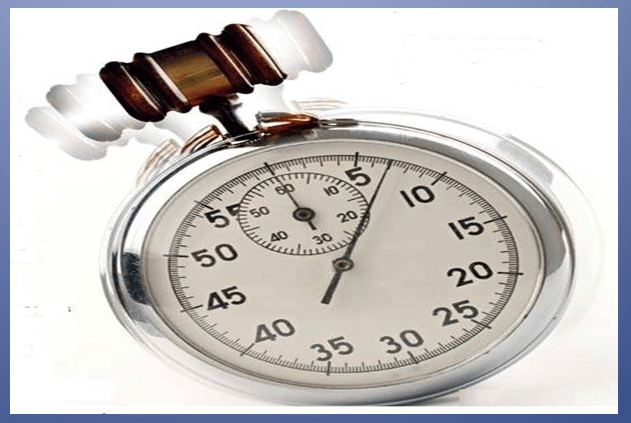
However, the best part of the hearing was the highest discipline exhibited in judicial time management. Clear time slot of say, 20 minutes to 2 hours was allotted to lawyers and group submissions which was strictly adhered to.
“I am halfway through watching the Kenyan hearings. It’s incredible. Each side gets eight hours. Four appellants, so two hours each. A big timer is in front of the arguing counsel, showing how much time he or she has. When the time runs out, that’s it, you’re out. They have finished the whole basic structure hearing over four days, and the quality of arguments and questions is extremely high.” says Mr. Goutham Bhatia, Supreme Court advocate and Scholar.
The links to Kenya Appellate Court hearings are given below. It is high time we learn a big lesson from Kenya in Judicial time management.
Remember, a wise lawyer can say in two minutes which can be stretched to hours and days by a Laid-back lawyer!
Links to Kenya Appellate Court arguments.:
 Daksha Legal