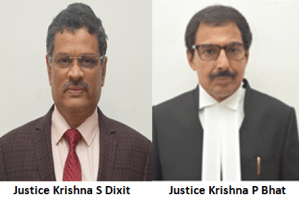
Beerappa vs The State through Town P.S. Yadgiri. Criminal Appeal 200036/2015 decided on 4 September 2020. Justice Krishna S Dixit and Justice Krishna P Bhat. (author, Justice Krishna P Bhat).
Judgment Link: http://judgmenthck.kar.nic.in/judgmentsdsp/bitstream/123456789/338981/1/CRLA200036-15-04-09-2020.pdf
“What is a dying declaration? It is vain on our part to attempt to define the term, for, it ought to remain undefined and the exercise of characterizing it as such and investing it with probative sanctity, to some extent, must essentially remain an exercise particular to each case. It has, paradoxically, an undying quality about it. It is not a declaration when made; but it has all the solemnity attached to a declaration once the maker dies subject to what is stated in Section 32 (l) of Evidence Act; and the construction put on it in Laxman’s case (supra) and various other authorities. Why is this solemnity attached when the maker is not available to be cross- examined? Does it not seem illogical? Probably, yes. Experience acquired over centuries due to eternal conflict between human nature – his proclivities, and the law has apparently made the law makers to hew this principle to bring about a balance, as it were. Sagacious and revered Oliver Wendell Holmes Jr. put it pithily when he said “The life of the law has not been logic; it has been experience.” Literature tells us, Sohrab, the son, had apparently retorted to Rustom, the father, “Man who are thou who dost deny my words? Truth sits upon the lips of dying men, and falsehood, while lived, was far from mine.” (Mathew Arnold – Sohrab and Rustum). We said – it has an undying quality about it, for, it is made at a time when the undying hope of life inhering in the chest of every human, starts ebbing away and when the stark portents of death waiting at the door steps gives a unique serenity to the mind compelling the maker to state nothing but the truth.” Justice Krishna P Bhat speaking for the bench.
Relevant paragraphs: 16. There is no statutory requirement that the dying declaration need to be in any particular format and further that it should carry certification by a medical officer that the deponent was in a fit state of mind to give statement. A Constitutional Bench of Hon’ble Supreme Court of India in (2002) 6 SCC 710 (Laxman Vs. State of Maharashtra) has observed as follows:
“3. The juristic theory regarding acceptability of a dying declaration is that such declaration is made in extremity, when the party is at the point of death and when every hope of this world is gone, when every motive to falsehood is silenced, and the man is induced by the most powerful consideration to speak only the truth. Notwithstanding the same, great caution must be exercised in considering the weight to be given to this species of evidence on account of the existence of many circumstances which may affect their truth. The situation in which a man is on death bed is so solemn and serene, is the reason in law to accept the veracity of his statement. It is for this reason the requirements of oath and cross-examination are dispensed with. Since the accused has no power of cross- examination, the courts insist that the dying declaration should be of such a nature as to inspire full confidence of the court in its truthfulness and correctness. The court, however has to always be on guard to see that the statement of the deceased was not as a result of either tutoring or prompting or a product of imagination. The court also must further decide that the deceased was in a fit state of mind and had the opportunity to observe and identify the assailant. Normally, therefore, the court in order to satisfy whether the deceased was in a fit mental condition to make the dying declaration look up to the medical opinion. But where the eyewitnesses state that the deceased was in a fit and conscious state to make the declaration, the medical opinion will not prevail, nor can it be said that since there is no certification of the doctor as to the fitness of the mind of the declarant, the dying declaration is not acceptable. A dying declaration can be oral or in writing and in any adequate method of communication whether by words or by signs or otherwise will suffice provided the indication is positive and definite. In most cases, however, such statements are made orally before death ensues and is reduced to writing by someone like a magistrate or a doctor or a police officer. When it is recorded, no oath is necessary nor is the presence of a magistrate is absolutely necessary, although to assure authenticity it is usual to call a magistrate, if available for recording the statement of a man about to die. There is no requirement of law that a dying declaration must necessarily be made to a magistrate and when such statement is recorded by a magistrate there is no specified statutory form for such recording. Consequently, what evidential value or weight has to be attached to such statement necessarily depends on the facts and circumstances of each particular case. What is essentially required is that the person who records a dying declaration must be satisfied that the deceased was in a fit state of mind. Where it is proved by the testimony of the magistrate that the declarant was fit to make the statement even without examination by the doctor the declaration can be acted upon provided the court ultimately holds the same to be voluntary and truthful. A certification by the doctor is essentially a rule of caution and therefore the voluntary and truthful nature of the declaration can be established otherwise.
17. Similarly the Hon’ble Supreme Court of India in (2019) 6 SCC 145 (Poonam Bai Vs. State of Chhattisgarh) has observed as follows:
“10. There cannot be any dispute that a dying declaration can be the sole basis for convicting the accused. However, such a dying declaration should be trustworthy, voluntary, blemishless and reliable. In case the person recording the dying declaration is satisfied that the declarant is in a fit medical condition to make the statement and if there are no suspicious circumstances, the dying declaration may not be invalid solely on the ground that it was not certified by the doctor. Insistence for certification by the doctor is only a rule of prudence, to be applied based on the facts and circumstances of the case. The real test is as to whether the dying declaration is truthful and voluntary. It is often said that man will not meet his maker with a lie in his mouth. However, since the declarant who makes a dying declaration cannot be subjected to cross-examination, in order for the dying declaration to be the sole basis for conviction, it should be of such a nature that it inspires the full confidence of the court. In the matter on hand, since Exh. P2, the dying declaration is the only circumstance relied upon by the prosecution, in order to satisfy our conscience, we have considered the material on record keeping in mind the well established principles regarding the acceptability of dying declarations.”
18. Further, in a case reported in (2009) 13 SCC 614 (Kamalavva and Another Vs. State of Karnataka) the Hon’ble Supreme Court of India has observed as follows:
“23. The Constitution Bench in Laxman case also referred to an earlier decision of this Court in Koli Chunilal Savji v . State of Gujarat, wherein it was held that the ultimate test with regard to the admissibility of a dying declaration is whether the dying declaration can be held to be a truthful one and voluntarily given. In the said decision it was also held that before recording the declaration, the officer concerned must find that the declarant was in a fit condition to make the statement. The aforesaid ratio of Koli Chunilal Savji case was affirmed by the Constitution Bench in Laxman case.In Vikas V. State of Maharashtra this Court elaborately discussed the previous relevant decision governing the legality of dying declaration and observed in para 45 as follows : (SCC pp.529-30)
“45. The Court, referring to earlier case law, summed up principles governing dying declaration as under: (Paniben case, SCC pp. 480-81, para 18)
i. There is neither rule of law nor of prudence that dying declaration cannot be acted upon without corroboration.
ii. If the court is satisfied that the dying declaration is true and voluntary it can base conviction on it, without corroboration.
iii. This Court has to scrutinise the dying declaration carefully and must ensure that the declaration is not the result of tutoring, prompting or imagination. The deceased had opportunity to observe and identify the assailants and was in a fit state to make the declaration.
iv. Where dying declaration is suspicious it should not be acted upon without corroborative evidence.
v. Where the deceased was unconscious and could never make any dying declaration the evidence with regard to it is to be rejected.
vi. A dying declaration which suffers from infirmity cannot form the basis of conviction.
vii. Merely because a dying declaration does not contain the details as to the occurrence, it is not to be rejected.
viii. Equally, merely because it is a brief statement, it is not to be discarded. On the contrary, the shortness of the statement itself guarantees truth.
ix Normally the court in order to satisfy whether the deceased was in a fit mental condition to make the dying declaration looks up to the medical opinion. But where the eyewitness has said that the deceased was in a fit and conscious state to make this dying declaration, the medical opinion cannot prevail.
x. Where the prosecution version differs from the version as given in the dying declaration, the said declaration cannot be acted upon.”
After referring to the decision of this Court in Khushal Rao v. State of Bombay, this Court in Vikas reiterated the legal position that where a dying declaration is recorded by a competent Magistrate, it would stand on a much higher footing inasmuch as a competent Magistrate has no axe to grind against the person named in the dying declaration of the victim and in absence of circumstances showing anything to the contrary, he should not be disbelieved by the court.
In Nallapati Sivaiah Vs. SDO, in para 22 it was stated thus: (SCC p.474)
“22. It is equally well settled and needs no restatement at our hands that dying declaration can form the sole basis for conviction. But at the same time due care and caution must be exercised in considering weight to be given to dying declaration in as much as there could be any number of circumstances which may affect the truth. This Court in more than one decision cautioned that the courts have always to be on guard to see that the dying declaration was not the result of either tutoring or prompting or a product of imagination. It is the duty of the courts to find that the deceased was in a fit state of mind to make the dying declaration. In order to satisfy itself that the deceased was in a fit mental condition to make the dying declaration, the courts have to look for the medical opinion.”
32. The technical objection raised by the counsel for the appellant regarding the unavailability of doctor’s certification and endorsement as to mental fitness of the deceased is liable to be rejected inasmuch as the same has been held by this Court in numerous decisions as a mere rule of prudence and not the ultimate test as to whether or not the said dying declaration was truthful or voluntary.”
20. What is a dying declaration? It is vain on our part to attempt to define the term, for, it ought to remain undefined and the exercise of characterizing it as such and investing it with probative sanctity, to some extent, must essentially remain an exercise particular to each case. It has, paradoxically, an undying quality about it. It is not a declaration when made; but it has all the solemnity attached to a declaration once the maker dies subject to what is stated in Section 32 (l) of Evidence Act; and the construction put on it in Laxman’s case (supra) and various other authorities. Why is this solemnity attached when the maker is not available to be cross- examined? Does it not seem illogical? Probably, yes. Experience acquired over centuries due to eternal conflict between human nature – his proclivities, and the law has apparently made the law makers to hew this principle to bring about a balance, as it were. Sagacious and revered Oliver Wendell Holmes Jr. put it pithily when he said “The life of the law has not been logic; it has been experience.” Literature tells us, Sohrab, the son, had apparently retorted to Rustom, the father, “Man who are thou who dost deny my words? Truth sits upon the lips of dying men, and falsehood, while lived, was far from mine.” (Mathew Arnold – Sohrab and Rustum). We said – it has an undying quality about it, for, it is made at a time when the undying hope of life inhering in the chest of every human, starts ebbing away and when the stark portents of death waiting at the door steps gives a unique serenity to the mind compelling the maker to state nothing but the truth.
Conviction of the appellant for the offence punishable under Section 302 IPC upheld.
Compiled by S.Basavaraj, Advocate, Daksha Legal
 Daksha Legal