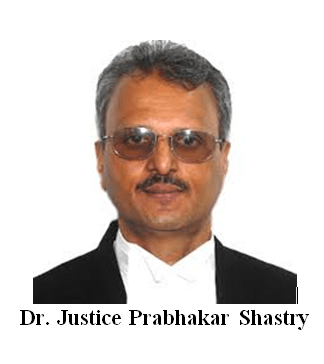
Criminal Revision Petition 152/2014 decided on 1 October 2020. Dr. Justice Prabhakar Shastry. Between Sushma Rani vs H.N. Nagaraja Rao. Judgment link: http://judgmenthck.kar.nic.in/judgmentsdsp/bitstream/123456789/342116/1/CRLRP152-14-01-10-2020.pdf
Paragraph 11. Section 499 of the Indian Penal Code, 1860, defines as to what is ‘defamation’. A reading of the said Section goes to show that, in order that, an act to become a ‘defamation’, there must be (i) an imputation concerning any person; (ii) such an imputation may be by words, either spoken or written or even by signs or by visible representations; (iii) such an imputation must be intending to harm the other person or knowing or having reason to believe that it would harm the reputation of other person. Thus, such an imputation must be made or published and its effect. must harm the reputation of the other person against whom such imputations are made. In order to be defamatory, a publication must tend to lower the complainant in the opinion of men whose standard of opinion, the Court can properly recognise or tend to induce them to entertain an ill-opinion of him. However, the complainant need not show a tendency of imputation to prejudice him in the eye of every one in the community or all of his associates, but it is sufficient to establish that the publication tends to lower him in the estimation of a substantial, respectable group, even though they are of a totally different community or of the complainant’s associates.
15. Learned Amicus Curiae for the respondent/complainant in Criminal Revision Petition relied on few judgments. In the case of Smt. Madhuri Mukund Chitnis Vs. Mukund Martand Chitnis and another reported in 1990 CRL.L.J. 2084, the Bombay High Court was pleased to observe that, the imputations made in a proceeding which is filed in a Court is clearly a publication. It further observed that even a publication to an authority over the person against whom the imputations are made must be held to be sufficient publication which falls within the purview of the said Section 499 of IPC.
In the case of Thangavelu Chettiar Vs. Ponnammal reported in AIR 1966 Mad 363, the Madras High Court was pleased to observe that, there can be no doubt that the defamation contained in the plaint was published by the plaint being filed in the Court.
It is clear that apart from filing the statements, in the form of statement of objections, in the matrimonial case, she has also revealed the contents of the same to the relatives and a friend of the complainant, which clearly establishes that there was publication as required under Section 499 of IPC of the alleged defamatory statement by the accused.
The contents of the statements of the accused, suffice it to say, would per se reveal that the said statements are defamatory in nature unless they are shown to be falling within any one of the Exceptions to Section 499 of IPC.
The accused has not even attempted to show that they were the imputation of truth or that they were made in good faith. Therefore it can be safely held that the complainant has proved beyond reasonable doubt that the accused has committed an offence of defamation punishable under Section 499 of IPC, which is punishable under Section 500 of IPC.
Section 499. Defamation – Whoever, by words either spoken or intended to be read, or by signs or by visible representations, makes or publishes any imputation concerning any person intending to harm, or knowing or having reason to believe that such imputation will harm, the reputation of such person, is said, except in the cases hereinafter expected, to defame that person.
Explanation 1.- It may amount to defamation to impute anything to a deceased person, if the imputation would harm the reputation of that person if living, and is intended to be hurtful to the feelings of his family or other near relatives.
Explanation 2.- It may amount to defamation to make an imputation concerning a company or an association or collection of persons as such.
Explanation 3.- An imputation in the form of an alternative or expressed ironically, may amount to defamation.
Explanation 4.- No imputation is said to harm a person’s reputation, unless that imputation directly or indirectly, in the estimation of others, lowers the moral or intellectual character of that person, or lowers the character of that person in respect of his caste or of his calling, or lowers the credit of that person, or causes it to be believed that the body of that person is in a loathsome state, or in a state generally considered as disgraceful.
First Exception.– Imputation of truth which public good requires to be made or published.- It is not defamation to impute anything which is true concerning any person, if it be for the public good that the imputation should be made or published. Whether or not it is for the public good is a question of fact.
Second Exception.– Public conduct of public servants.- It is not defamation to express in a good faith any opinion whatever respecting the conduct of a
public servant in the discharge of his public functions, or respecting his character, so far as his character appears in that conduct, and no further.
Third Exception.– Conduct of any person touching any public question.- It is not defamation to express in good faith any opinion whatever respecting the conduct of any person touching any public question, and respecting his character, so far as his character appears in that conduct, and no further.
Fourth Exception.– Publication of reports of proceedings of Courts.- It is not defamation to publish substantially true report of the proceedings of a Court of Justice, or of the result of any such proceedings.
Explanation.- A justice of the Peace or other officer holding an inquiry in open Court preliminary to a trial in a Court of Justice, is a Court within the meaning of the above section.
Fifth Exception.– Merits of case decided in Court or conduct of witnesses and others concerned.- It is not defamation to express in good faith any opinion whatsoever respecting the merits of any case, civil or criminal, which has been decided by a Court of Justice, or respecting the conduct of any person as a party, witness or agent, in any such case, or respecting the character of such person, as far as his character appears in that conduct, and no further.
Sixth Exception.– Merits of public performance.- It is not defamation to express in good faith any opinion respecting the merits of any performance which its author has submitted to the judgment of the public, or respecting the character of the author so far as his character appears in such performance, and no further.
Explanation.- A performance may be substituted to the judgment of the public expressly or by acts on the part of the author which imply such submission to the judgment of the public.
Seventh Exception.– Censure passed in good faith by person having lawful authority over another.- It is not defamation in a person having over another any authority, either conferred by law or arising out of a lawful contract made with that other, to pass in good faith any censure on the conduct of that other in matters to which such lawful authority relates.
Eighth Exception.– Accusation preferred in good faith to authorised person.- It is not defamation to prefer in good faith an accusation against any person to any of those who have lawful authority over that person with respect to the subject-matter of accusation.
Ninth Exception.– Imputation made in good faith by person for protection of his or other’s interests.- It is not defamation to make an imputation on the character of another provided that the imputation be made in good faith for the protection of the interests of the person making it, or of any other person, or for the public good.
Tenth Exception.– Caution intended for good of person to whom conveyed or for public good.- It is not defamation to convey a caution, in good faith, to one person against another, provided that such caution be intended for the good of the person to whom it is conveyed, or of some person in whom that person is interested, or for the public good.”
Compiled by S.Basavaraj, Daksha Legal.
 Daksha Legal