
Last week, a lawyer from Bangalore was thrown out of a television news channel debate when he questioned the “constitutionality” of Indian soldiers shouting “Bholo Bharat Maata Ki Jai” during the Prime Minister’s visit to Ladakh. I made some research on this. Hence this write-up.
Article 1 of the Constitution of India which deals with ‘Name and territory of the Union’ reads as under:
“India, that is Bharat, shall be a Union of States.”
Perhaps the first reference to Bharata is found in Vishnu Purana (400-300 BC). A Sanskrit shloka reads thus;
उत्तरं यत्समुद्रस्य हिमाद्रेश्चैव दक्षिणम् ।
वर्षं तद् भारतं नाम भारती यत्र संततिः ।।
This shloka means: “The country (Varsam) that lies north of the ocean and south of the snowy mountains is called Bharatam; there dwell the descendants of Bharata.
The Bharat Empire i.e.Bharatvarsha originally included the present day of Pakistan, Afghanistan, China, Iran, Tajikistan, Uzbekistan, Kyrgyzstan, Russia, Turkmenistan, North-West Tibet, Nepal and Bangladesh.

In ‘The Discovery of India’, a book that he composed in the Ahmednagar Fort during his years of captivity (1942-1946) and published in 1946, Pandit Jawaharlal Nehru (1946: 38-39) wrote:
“Often, as I wandered from meeting to meeting, I spoke to my audiences of this India of ours, of Hindustan and of Bharata, the old Sanskrit name derived from the mythical founders of the race.”
When ‘The Discovery of India’ was published, these names, Hindustan, Bharat (also Bharata), India, coexisted in the subcontinent. The constant usage also was ‘Jai Hind’ by Nehru and several other political leaders who liked to proclaim “Jai Hind” at the end of speeches.
Historians believe it was during Moghul rule rather than during British rule, when India was called Hindustan. This led to political and cultural unity of Bhārata, allowing Indians to develop a complete sense of belonging together, irrespective of their religions.
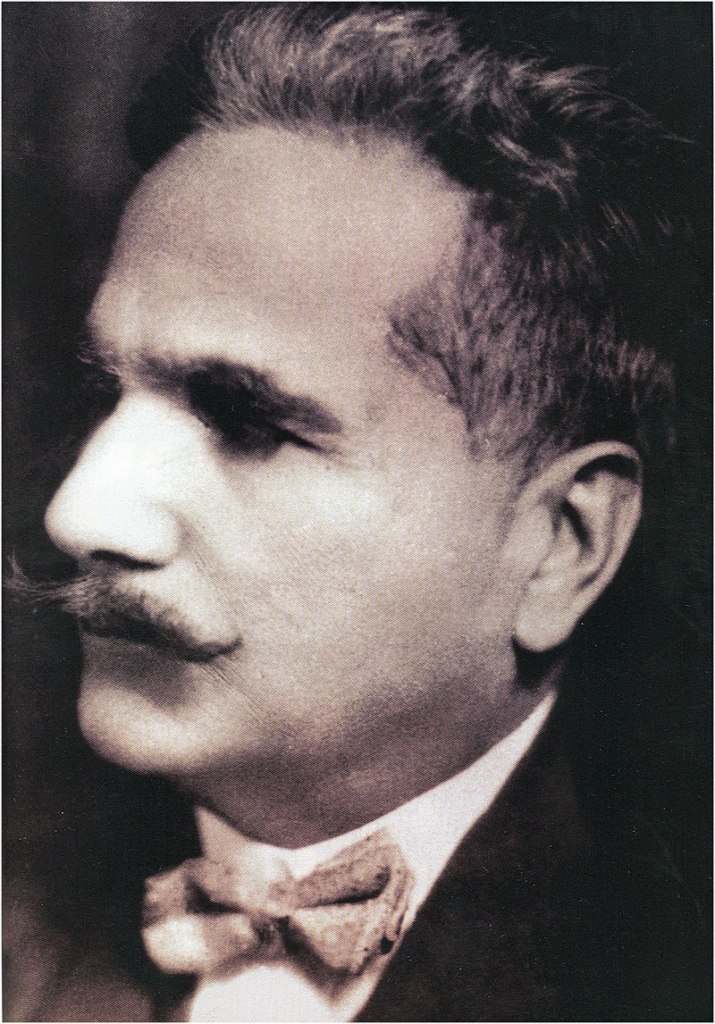
The name Hindustan got its proudest moment when in 1904 Sir Allama Muhammad Iqbal penned his famous patriotic poem “Sāre jahāṉ se acchā, Hindositāṉ hamārā”. Sir Allama Muhammad Iqbal was a poet, philosopher, theorist, and barrister in British India. He is held as the national poet of Pakistan.
The Constituent Assembly on 29 August 1947 constituted the Constitution Drafting Committee under the Chairmanship of Dr. B.R. Ambedkar. From February 1948 to November 1949, the members of the Constituent Assembly examined the draft, moving and discussing in the process almost 2,500 amendments.
On 26 November 1949, we finally adopted the Constitution of India and signed it on 24 January 1950. On 26 January 1950, the Constitution of India officially came into force, and the Constituent Assembly became the Provisional Parliament of India until the first general elections of 1952. It was Dr. Ambedkar who favoured the name Bharat and wanted Constituent Assembly to adopt Article 1 without much debate. However the name was approved after prolonged debates among the members of the Constituent Assembly.
So, four years after the publication of Nehru’s Discovery of India, the drafters of the Constitution decided to write “India, that is Bharat, shall be a Union of States”. The alternative Article “Hind, or, in the English language, India, shall be a Union of States” was not accepted.
The last speech of Shri Hargovind Pant on this issue is memorable. Let me extract it in full.
“Mr. President, during the early sittings of the Assembly I had moved an amendment to the effect that for the name of the country, we should have the word “Bharat” or “Bharat Varsha” in place of ‘India’. I am gratified to see that some change in the name has at last been accepted. I, however, fail to understand why the word ‘Bharat Varsha’ is not acceptable to the House when the importance and glory of this word is being admitted by all here. I do not want to repeat what the other Members have said in regard to the acceptance of this glorious word, but I would make only a few observations in respect of this word.
‘The word “Bharat” or “Bharat Varsha” is used by us in our daily religious duties while reciting the Sankalpa. Even at the time of taking our bath we say in Sanskrit:
“Jamboo Dwipay, Bharata Varshe, Bharat Khande, Aryavartay, etc.”
It means that I so and so, of Aryavart in Bharat Khand, etc………..
The most celebrated and word-famous poet Kalidasa has used this word in his immortal work depicting the story of his two great characters-King Dushyanta and his queen Shakuntala. The son born of them was named ‘Bharat’ and his Kingdom was known as “Bharat”. There are many fascinating descriptions of the heroism of Bharat in our ancient books. It is said that in his childhood he used to play with lion cubs and overpowered them. We are well acquainted with the story of Bharat. I fail to understand, in view of all this, why we are reluctant to accept, from the core of our heart the word ‘Bharat Varsha’ as the name of our country,
So far as the word ‘India’ is concerned, the Members seem to have, and really I fail to understand why, some attachment for it. We must know that this name was given to our country by foreigners who having heard of the riches of this land were tempted towards it and had robbed us of our freedom in order to acquire the wealth of our country. If we, even then, cling to the word ‘India’, it would only show that we are not ashamed of having this insulting word which has been imposed on us by alien rulers. Really, I do not understand why we are accepting this word.
‘Bharat’ or ‘Bharat Varsha’ is and has been the name of our country for ages according to our ancient history and tradition and in fact this word inspires enthusiasm and courage in its; I would, therefore, submit that we should have no hesitation at all in accepting this word. It will be a matter of great shame for us if we do not accept this word and have some other word for the name of our country. I represent the people of the Northern part of India where sacred places like Shri Badrinath, Shri Kedarnath, Shri Bageshwar and Manasarovar are situated. I am placing before you the wishes of the people of this part. I may be permitted to state, Sir, that the people of this area want that the name of our country should be ‘Bharat Varsha’ and nothing else.”

Mahatma Gandhi preferred Vande Mataram, which is part of Bankim Chandra’s novel Anandmath published in 1882.
Bharath Matha: It is interesting to note that almost all countries call their Homeland as ‘Motherland’. Only Nazis called their land as ‘Fatherland’. Russians refer to Mother Russia as a personification of the Russian nation. Within the British Empire, many natives in the colonies came to think of Britain as the mother country of one, large nation. India is personified as Bharat Mata i.e. Mother India. The French commonly refer to France as “la mère patrie”. Hispanic Americans and 19th century-upper-class-Filipinos, commonly referred to Spain as “la Madre Patria”. Romans and the subjects of Rome saw Italy as the motherland. “Fatherland” was mostly featured in news reports associated with Nazi Germany.
The word “Bharat” has a primary place in the foundational document of this nation i.e. the Constitution of India, in the very first article. The insertion was after much debate and discussion by some of the greatest legal/constitutional minds.
Indians calling their homeland as motherland has naturally made the slogan “Bharath Matha Ki Jai” a patriotic gesticulation.
Proclaiming “Bharath Matha Ki Jai” by citizens and soldiers is part of our constitutional spirit. Nothing can inspire a solider in the frontline than proudly shouting this slogan.
The controversy over this issue is the result of half-baked knowledge of lawyers participating in serious debates. This needs to be avoided and curbed.
S.Basavaraj, Advocate, Daksha Legal, Member, Karnataka State Bar Council, 9845065416
Bibliography.
 Daksha Legal